I take the bus more than any other form of transport. Whether it’s a short trip or a long journey, I’m used to waiting on a platform as the city moves around me. Most people don’t pay much attention to the space where they wait; bus stops rarely appear in books about architecture or design. Yet a peaceful bus stop, or one that makes you uncomfortable, already shows something important: our surroundings are always sending us messages, even when we aren’t paying attention.
The Quiet Intelligence of an Ordinary Space
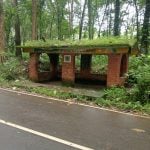
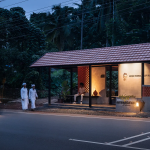
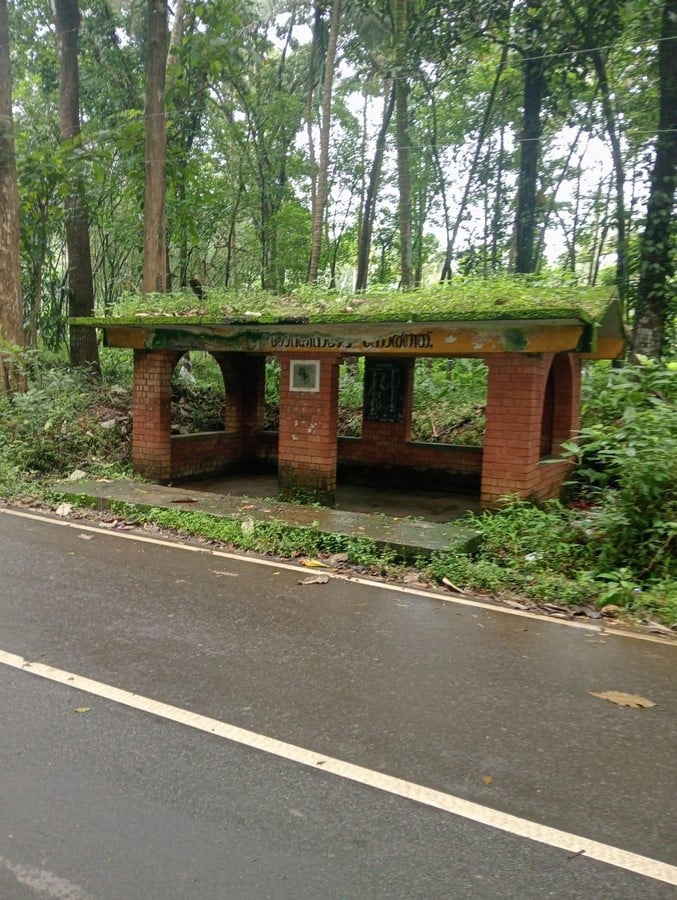
There’s a bus stop near my home in Kerala that I’ve thought about a lot. It isn’t famous, and no architect has shown it off in a portfolio. Still, it’s a great example of thoughtful architecture and design. It’s a brick structure that is common in Kerala, almost as if it grows out of the ground. The warm terracotta colour shifts with the weather and light. Its roof is a concrete slab that has, over time, been covered in moss and plants. Together, these choices do something many modern buildings don’t: they work with the local climate rather than fight it.
The brick walls slowly absorb heat and release it over time, so the inside stays cooler than the hot, humid air outside. The roof lets air flow through whilst keeping out the sun. Anyone who sits at this bus stop for twenty minutes on a June afternoon doesn’t need to know the science behind it; they just feel comfortable. That comfort is the point: good architecture and design make life better for people, even if no one notices how.
Designed for Everyone: The Social Architecture of a Bus Stop
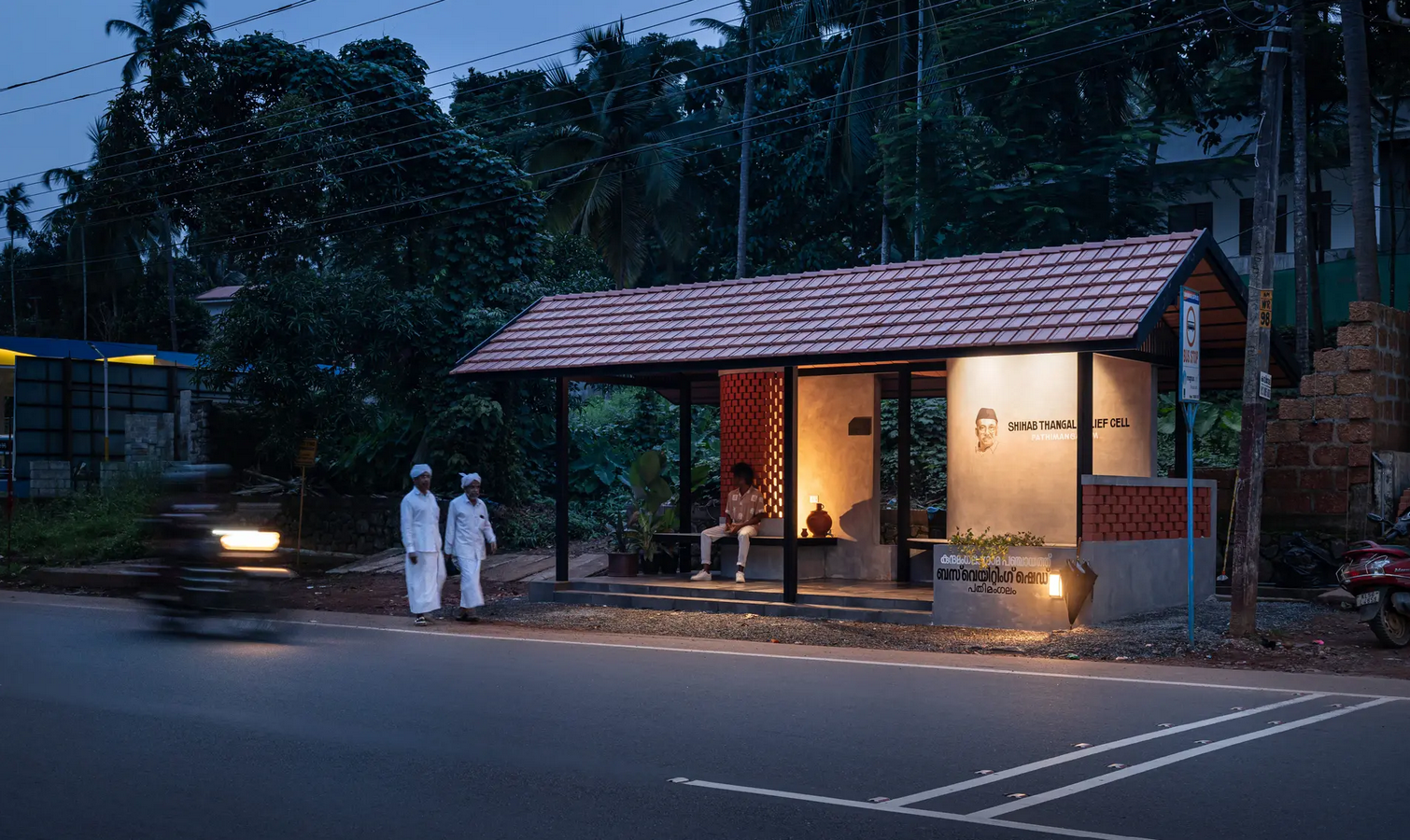
What stands out to me about this bus stop, besides its smart use of materials, is how generous the space feels. The seats are arranged around the edges, with several dividers between them. This quietly respects the way people in Kerala often prefer some separation in public spaces, especially between women and men. It’s not a flaw in the design, it’s a thoughtful feature. The space prioritises the community and makes everyone more comfortable without leaving anyone out. Even the low walls can be used as seats. The bus stop opens up to a green area, giving people something to look at while they wait. In this way, the design treats waiting not as a problem to solve, but as a normal part of life that deserves respect.
People don’t often talk about this kind of social awareness in architecture and design, but it might be the most important thing a public space can have. A bus stop is for everyone—children, older people, workers, students, and travellers with heavy bags. It has to work in the rain, the heat, early in the morning, and late at night. The design needs to be robust enough for all these situations while remaining easy and comfortable for everyone. This bus stop in Kerala does all this quietly, without showing off. It shows architecture and design at their fairest and most open.
When Architecture Works Against You: The Problem of Hostile Design
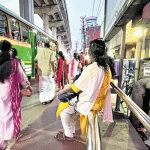
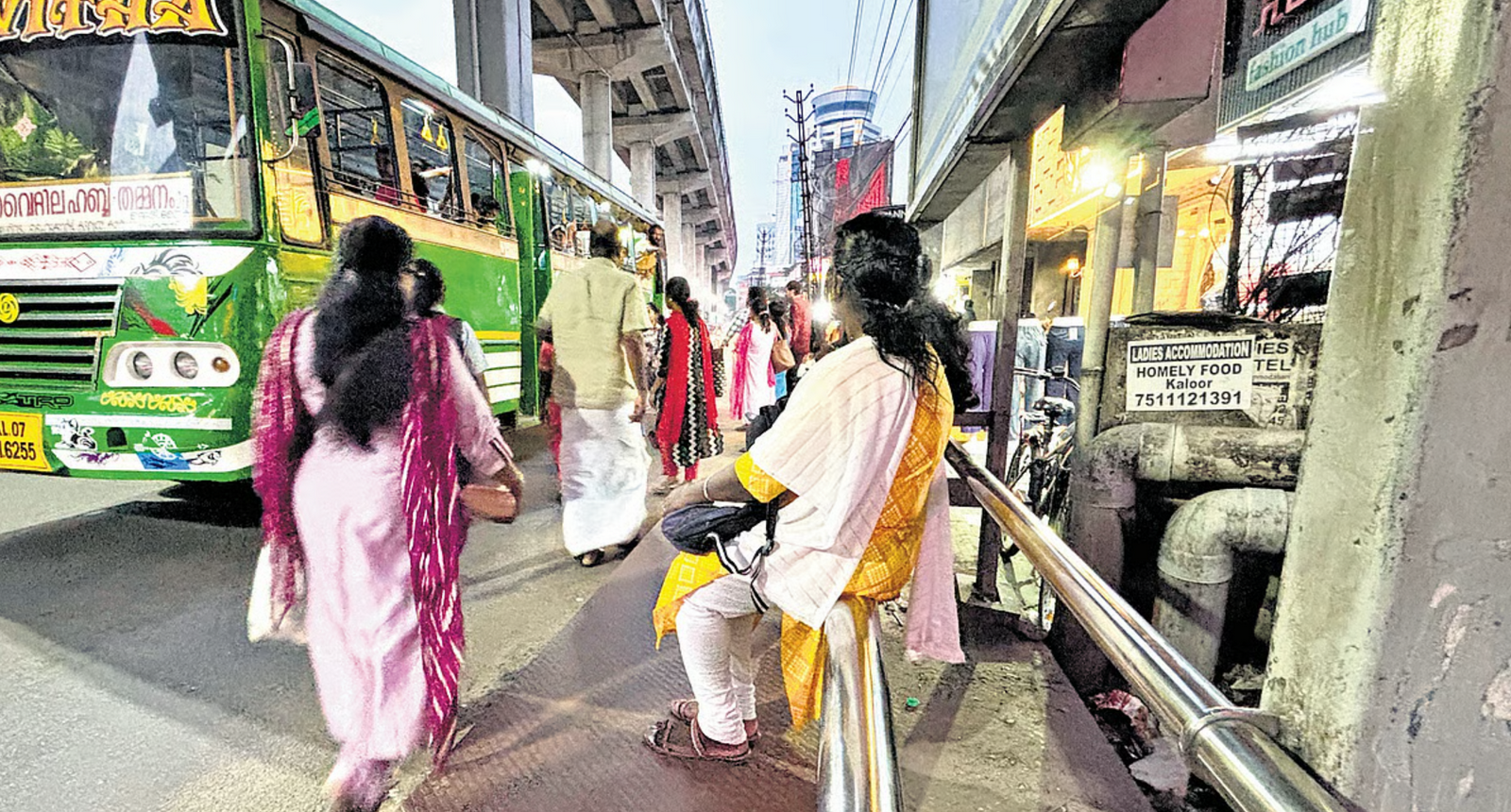
Not every bus stop is made with this kind of thoughtfulness. In the centre of Kozhikode, where hundreds of buses come and go each day, and people often wait a long time, I’ve seen bus stops with thin metal rods for seats—narrow aluminium bars set at such a sharp angle that it’s hard to sit for more than a few minutes. These aren’t mistakes; they’re done on purpose. This kind of uncomfortable seating is called hostile architecture. It’s designed to stop people from staying too long or to make some people, like the homeless or elderly, feel unwelcome.
The difference between the laterite bus stop and the one with metal rods isn’t simply about looks. It’s a political choice shown through design. One place says, “You are welcome here; rest as long as you need.” The other says: Move on. Through materials, shapes, and sizes, these messages come through without signs or guards. That’s the power of design in everyday life: it carries values and shares them with everyone who uses the space. Our surroundings are never neutral. Every choice about what to build and how to build it is also a choice about who is welcome.
Reading the Everyday: Architecture and Design as a Daily Practice
The bus stop is just one example. The same ideas apply to a stairwell that feels cramped or open depending on its ceiling and lighting, or to a grocery shop that either makes you want to stay or rushes you out. Even a street corner’s layout and paving can decide if it becomes a place to gather or just somewhere people pass by quickly. Across all these spaces, architecture and design make choices for us that we often don’t notice. Good design is invisible, whilst bad design just feels uncomfortable.
You don’t need special training to notice these choices. All it takes is slowing down and paying attention to how a space makes you feel—calm or anxious, welcome or rushed, noticed or ignored. Ask yourself who designed the space and who it’s for. Think about what the materials reveal about the builders’ resources and values. Consider if the space really serves its users or if it’s built for something else, for example, efficiency or profit, at their expense. Once you start asking these questions, you’ll see design decisions everywhere.
Every Space Is a Sentence
The bus stop, made of laterite and Mangalore tiles, is like a message written in stone and clay. It says, “We thought about you.” We considered the heat in May, the rain in June, how tired you might feel after a long day, and your wish for a bit of space from strangers. That’s what good architecture and design do, whether in a large city building or a small town corner: they think about people and respond with care.
The real problem with hostile architecture, like metal rods that stop people from resting or bus stops that treat people as problems instead of guests, isn’t simply about looks. It is a lasting failure of care, built into concrete and steel. These choices last long after they’re made, affecting thousands of people every day who never asked for this treatment. Good architecture and design, then, are acts of care that last far beyond the moment they’re created.
Images:
- Clay Coop Architects (n.d.) Bus Bay. Available at: https://claycooparchitects.com/architectures/bus-bay.
- Sooraj, T.P. (n.d.) A bus shelter with round steel rod seating at Lisie Junction, Kochi. The New Indian Express. Link: https://www.newindianexpress.com/states/kerala/2024/Oct/30/thanks-to-tilakan-the-crusader-soon-commuters-can-sit-comfortably-at-kerala-bus-shelters