Sitting on their balcony, Gita finishes her call and turns to her husband, “Membership is 5000 rupees a month, including access to the pool, but coaching will cost extra.” All morning, she has been browsing the maps app on her phone, looking for clubs nearby to enrol her daughter Maya in swimming lessons. She wants this for Maya…how quickly she took to swimming, almost like a fish to water! How she beamed with joy when splashing around! This could be good for their child’s future too…she’s heard from her friends how handy those sports quotas are, but 5000 a month is a steep price to pay, and that was the cheapest of all the clubs Gita has called so far.
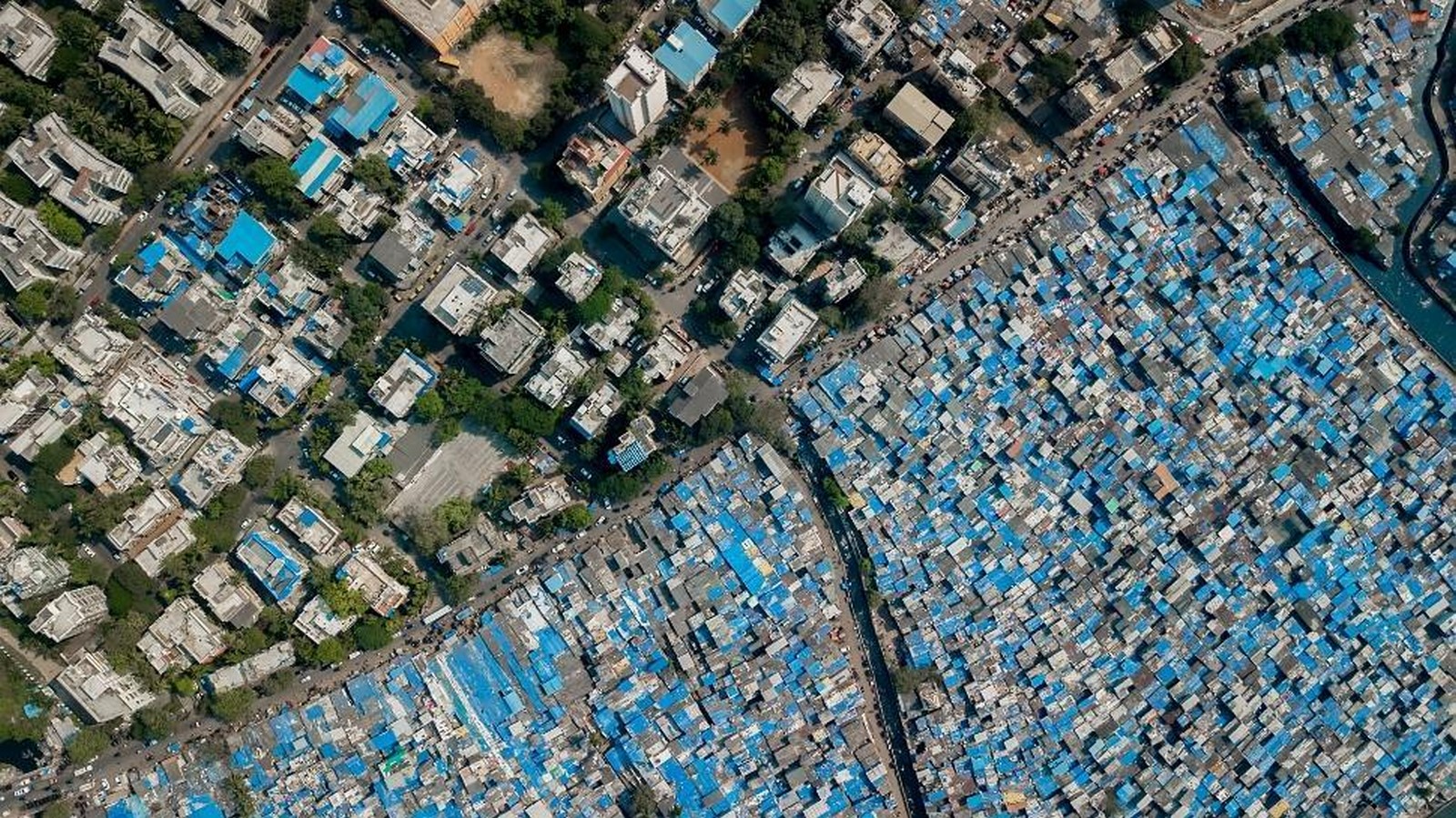
As she takes in the view from her balcony, an endless cascade of high-rises making up her vast Delhi-NCR housing complex, anger swells within her once more. Visible smack dab before her is one of the complex’s own perfectly usable pools – pools that tenants like them are not allowed to use without paying club fees, much more than the fees for public pools and clubs outside the society. “They charge us maintenance for that pool! Let’s take Maya here after all, I’ll see who stops us!” A month ago, Gita did exactly that – Maya was able to swim for, but two days before, on the third day, a busybody reported them to the society’s WhatsApp group, one that tenants are not a part of. The husband interjects, “It turned into a huge fuss last time. They even threatened to have the owner kick us out!” Gita asks, “What then, will we pay 5000 a month?” Hearing this, he looks down at his phone, presumably to check his savings, before looking back at his wife. Reading the pained expression on his face, Gita sighs and zooms out further on the map.
The New Caste System of Gated Housing
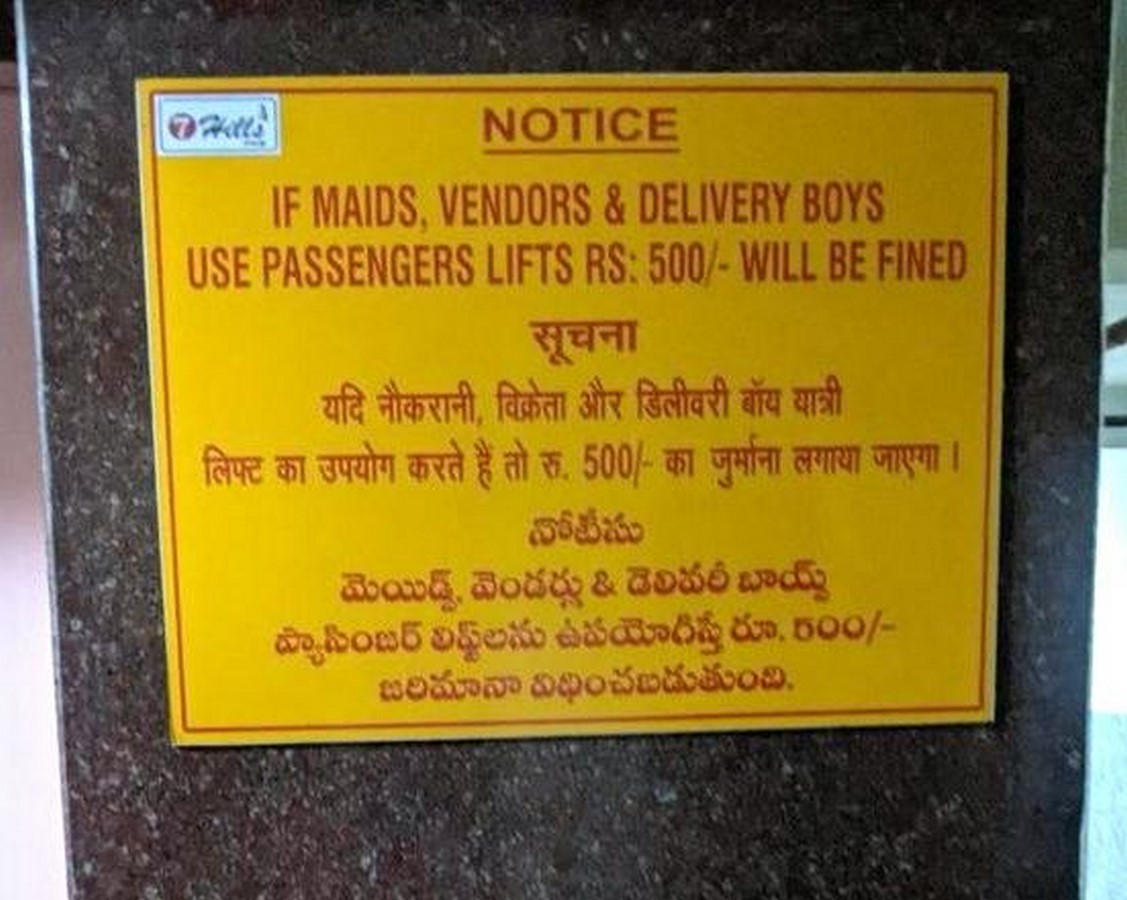
Gita’s predicament is not an isolated incident, but a common symptom of the malaise ailing India’s modern housing. Gated mega-housing developments are becoming increasingly common in India, especially in Tier-1 cities where land comes at a premium. However, the co-op societies forming within these developments have seemingly revived many of the feudal and hierarchical systems of yore. The exclusion of certain amenities from use by tenants, or by buyers of cheaper flats within the complex with fewer bedrooms, while still charging them maintenance fees (Bhargava, 2025). Requiring maids, delivery agents and working-class individuals providing essential services to take separate elevators (Kambiri, 2025), or even forcing them to use the stairs. The endless list of bans and bars, extending across time (No going out at night!), space (No loitering in gardens!), species (No pets!) and even culinary preferences (No non-veg deliveries!).
These are manifestations of the new caste system in gated communities – yet another way to enforce and perpetuate social stratification, discrimination and exclusion. Here, the nosey and prudish hold power, using every mechanism at their disposal to punish perceived deviancy, whether it’s a loud noise, a broken rule, or a person they have deemed to be lesser. But how did it get this way?
Modern Indian Housing is Anti-Communal
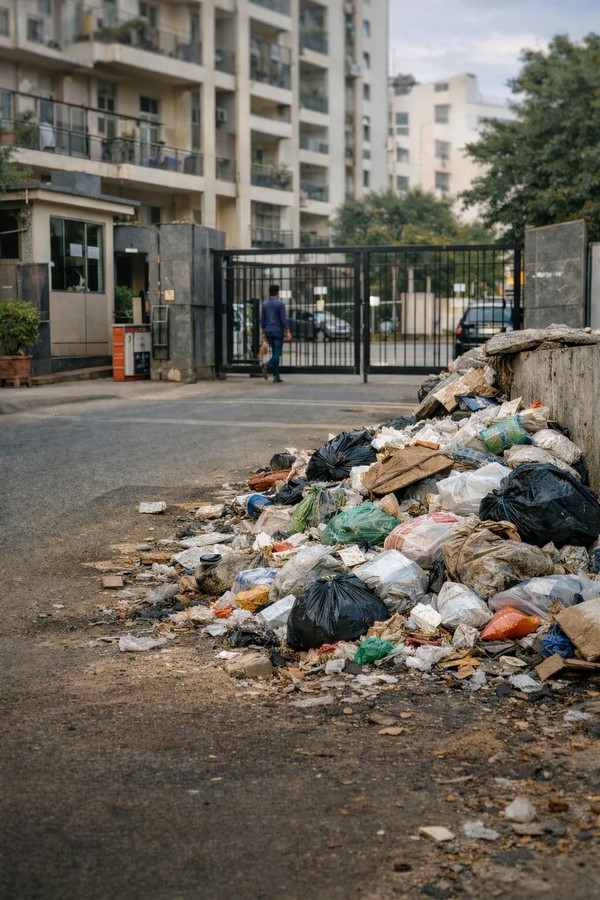
Imagine the integrated townships of today – the rigorous security checks for entry, the lavish lobbies where any extended presence is eyed suspiciously and the public plazas where nary a child is spotted playing. These townships are enclaves designed to create a sense of security and order, but as a by-product, also produce separation (Bahri, 2026). An environment such as this teaches people to avoid, rather than coalesce with each other, where many residents don’t know the names of their neighbours even years after moving in. They are no longer citizens of their cities, the peace and safety they sought having long deteriorated into disengagement and isolation. Having become ensconced in their dwelling fortresses, they feel no sense of affinity or responsibility towards the wider public realm (Blakely & Snyder, 1997). Often, trash is seen piled up just steps outside township gates, but is paid no heed by any of its residents. Though the gate is but inches thick, the separation it creates within the minds of the residents is absolute – everything on the other side of the gate is ‘outside’, and the outside is no concern of theirs.
Housing Models Fostering Equity & Community
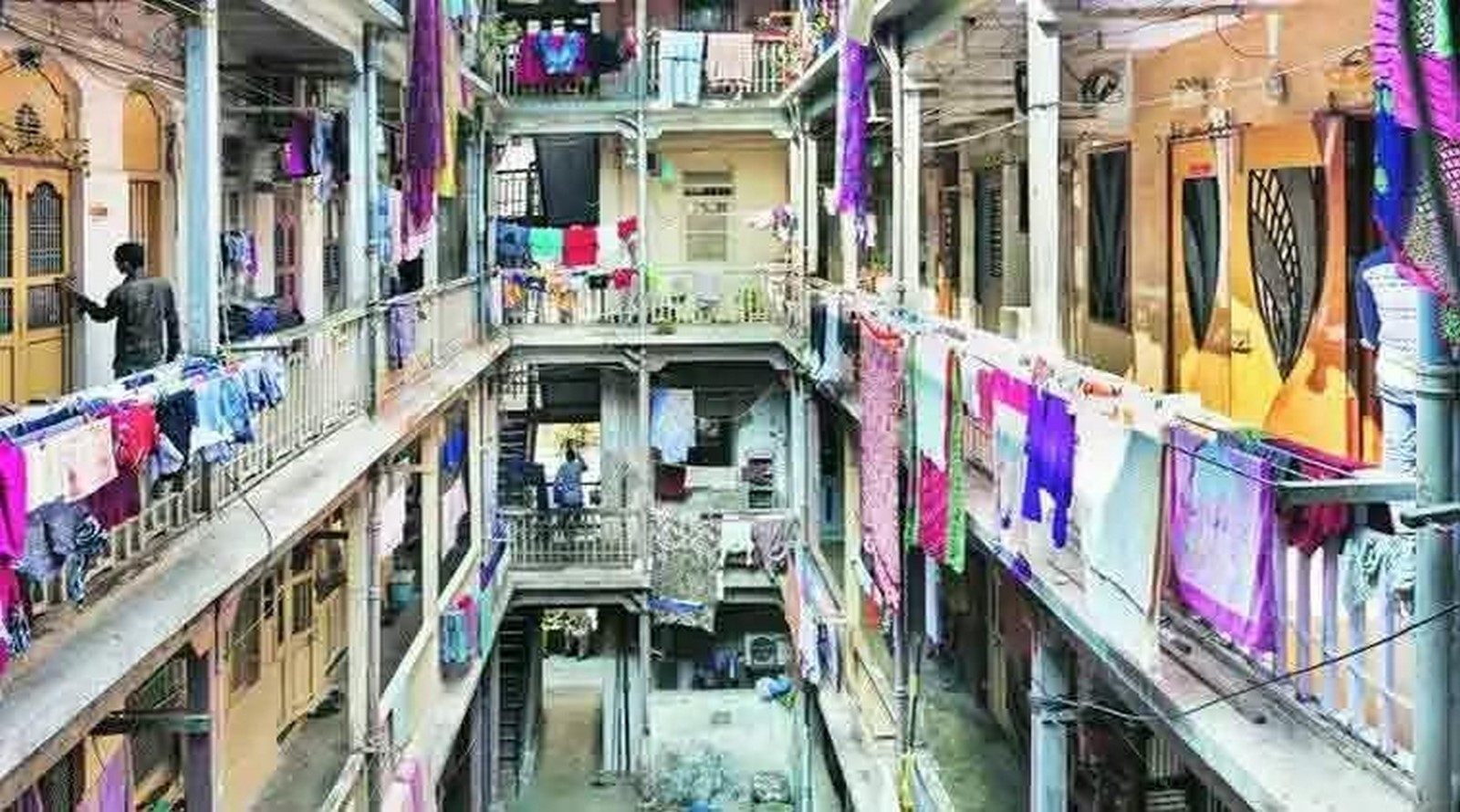
The language of mass housing was once different. Chawls have often been studied for their ability to foster strong social cohesion and interaction among the residents. Their open corridors act as shared living rooms where neighbours interact, while the central courts function as a platform for the celebration of festivals and cultural exchanges. This helps organise the whole building into informal support networks, where people help one another with everything from childcare to finding employment (Gupte, 2018).
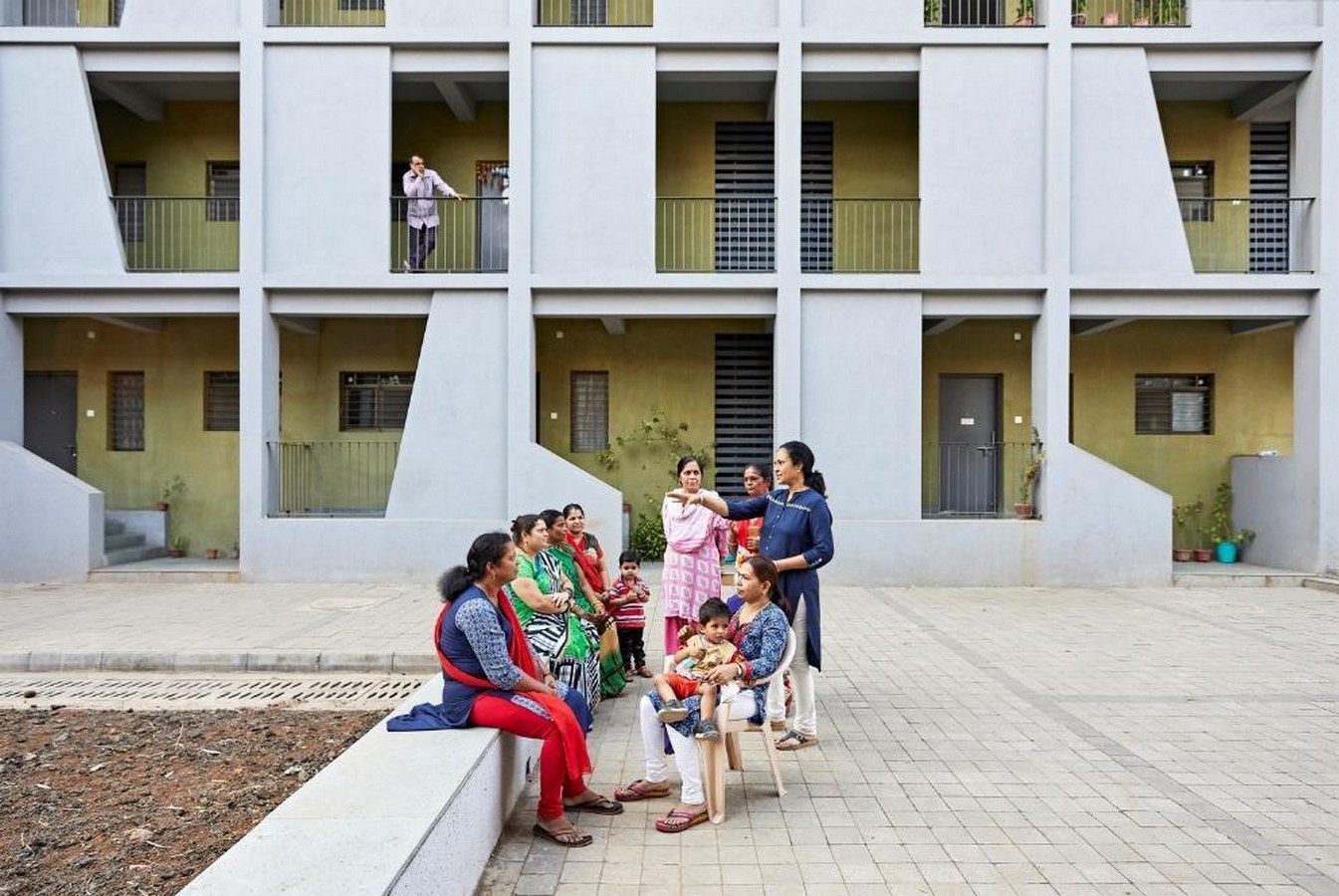
‘Sublime Ordinariness’ by DCOOP Architects is a housing project in Vasind, India that harnesses the spatial syntax of chawls, employing single-loaded semi-open corridors to act as catalysts for social interaction among its 54 households (ArchDaily, 2016 ).
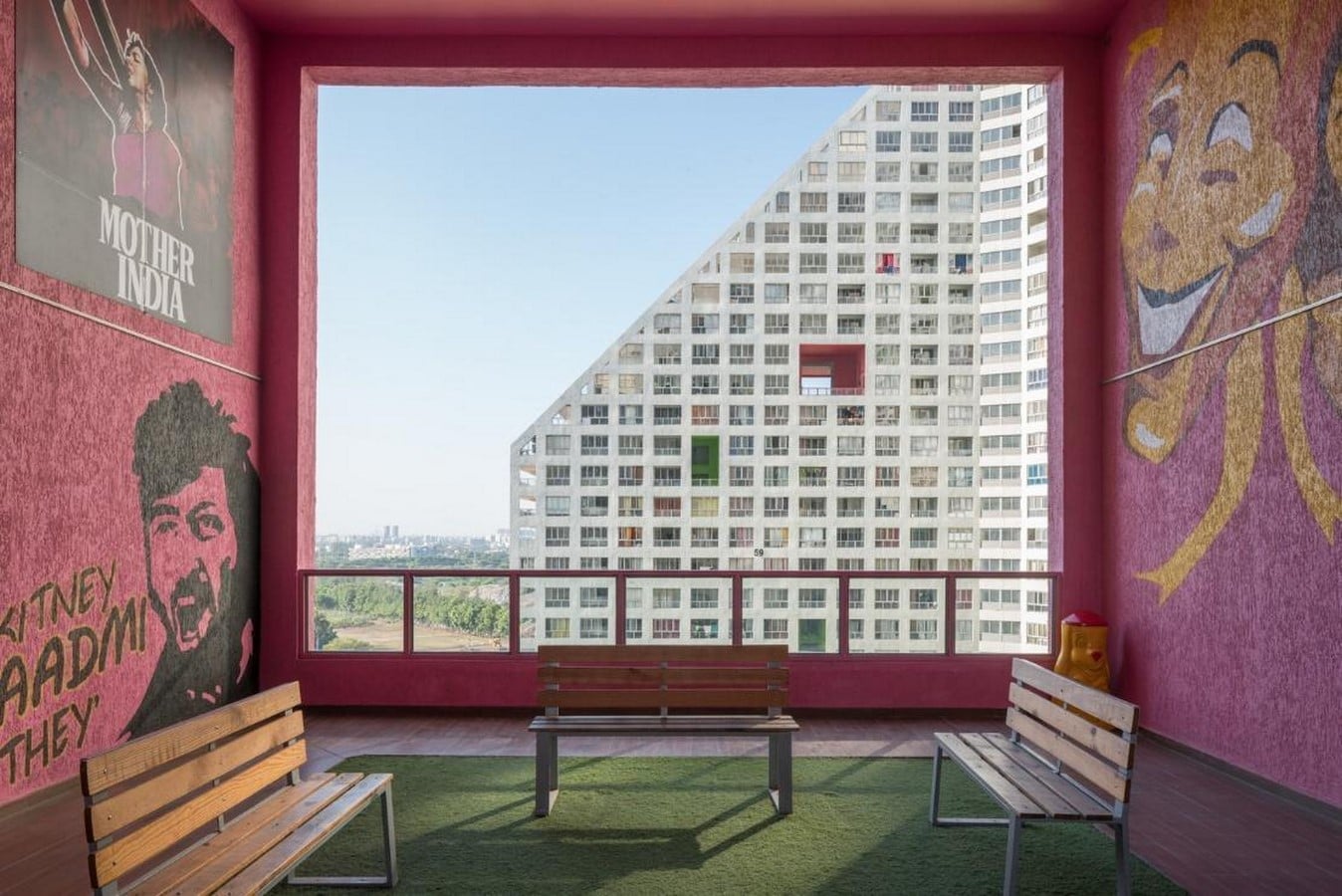
The ‘Future Towers’ in Pune, designed by the Dutch firm MVRDV, is described by them as a ‘vertical village’. While most developments segregate income groups into separate towers, Future Towers integrates apartments ranging from 45 Sq.M. to 450 Sq.M. into a single, massive shell, to have several demographics and income groups living as neighbours rather than in isolated enclaves. In doing so, it attempts to promote social mixing and prevent the formation of income-segregated cliques (Griffiths, 2018).
Adopting such models en masse will greatly improve the quality of shared living, but this must be reinforced by systemic infrastructure improvements in our cities, making them more pedestrian-friendly and accessible. Further needed is the promotion and propagation of spaces of collective commons such as ootas, bastis, and maidans. (Shannon & Gosseye, 2009). Collectively, this will mark a shift toward inclusive urban design that fosters shared citizenship and dismantles invisible social barriers.
Citations:
- ArchDaily, 2016 . Sublime Ordinariness Housing Project / DCOOP Architects. [Online] Available at: https://www.archdaily.com/878651/sublime-ordinariness-housing-project-dcoop [Accessed 26 April 2026].
- Bahri, C., 2026 . How the retreat of wealthy Indians into gated townships is worsening urban inequality. [Online] Available at: https://scroll.in/article/1092184/how-the-retreat-of-wealthy-indians-into-gated-townships-is-worsening-urban-inequality [Accessed 26 April 2026].
- Bhargava, V., 2025. The new war in gated communities. [Online] Available at: https://mumbaimirror.indiatimes.com/opinion/the-new-war-in-gated-communities/articleshow/124074553.html [Accessed 26 April 2026].
- Blakely, E. J. & Snyder, M. G., 1997. Fortress America: Gated Communities in the United States. s.l.:Brookings Institution Press.
- Griffiths, A., 2018. MVRDV’s “mountainous” Future Towers provide low-cost accommodation in India. [Online] Available at: https://www.dezeen.com/2018/12/06/mvrdvs-future-towers-low-cost-accommodation-india/ [Accessed 26 April 2026].
- Gupte, R., 2018. Physical and Social Configurations of the Bombay Chawls. [Online] Available at: https://www.sahapedia.org/physical-and-social-configurations-of-the-bombay-chawls#:~:text=Each%20of%20these%20rooms%20are%20inhabited%20by,toilets%20that%20are%20shared%20by%20the%20households. [Accessed 26 April 2026].
- Kambiri, K., 2025. ‘Classist’ Gurugram society fines domestic help, delivery staff for using the resident’s lift; notice viral. [Online] Available at: https://www.hindustantimes.com/htcity/htcity-delhi-junction/gurugram-society-fines-maids-for-using-main-lift-instead-of-service-lift-drying-clothes-outside-viral-notice-trolled-101740461897278.html [Accessed 26 April 2026].
- Shannon, K. & Gosseye, J., 2009. Reclaiming (the urbanism of) Mumbai. s.l.:Sun Publishers.