As the Climate Clock ticks by, sustainability is quite literally the need of the hour. Sustainable architecture aims to curb the negative impacts of built spaces on the natural environment and contribute towards a greener and equitable future. In recent times, we have seen a shift from sustainable design to a more ambitious goal of regenerative design. Regenerative design seeks to contribute towards the restoration of natural ecosystems by creating a net positive impact on the natural environment. This shift towards regenerative design allows architects to think beyond what is sustainable in the future, towards undoing the existing damage caused by the built industry.
Taking leverage from one of the most widely stated facts around the need for sustainable architecture, the building industry still continues to contribute to 40% of global carbon emissions. In such conditions, sustainable and regenerative design has moved on from being merely a choice to a necessity, for design professionals. Each step of the design process now involves an effort to make conscious choices in every structure that is built.

Sustainable Material Choices
The major contributor to carbon emissions in our built environment is due to the use of materials with high embodied energy contents. These materials, namely concrete, masonry, and steel, offer ease of workmanship, availability, and cost, and have thus become deeply embedded in the way buildings are designed all around the world. Innovations aimed at making these materials more sustainable offer limited progress in comparison to the net-zero goals that humanity aims to achieve. This calls for a complete shift in the way we build. The most effective way to replace existing materials is through the use of naturally available alternates.
Earth
It is estimated that even today, about 30% of the world lives in earthen buildings. The use of earth as a material for architecture involves a deeper look into how these local rural communities have been building with earth over the years. By carefully mixing the right proportions of sand, silt, clay, and water, earth in its vast abundance, can act as an important sustainable alternative to construction. Organisations like the Auroville Earth Institute are constantly developing techniques such as compressed stabilised earth blocks (CSEB) and rammed earth for widespread commercial use.
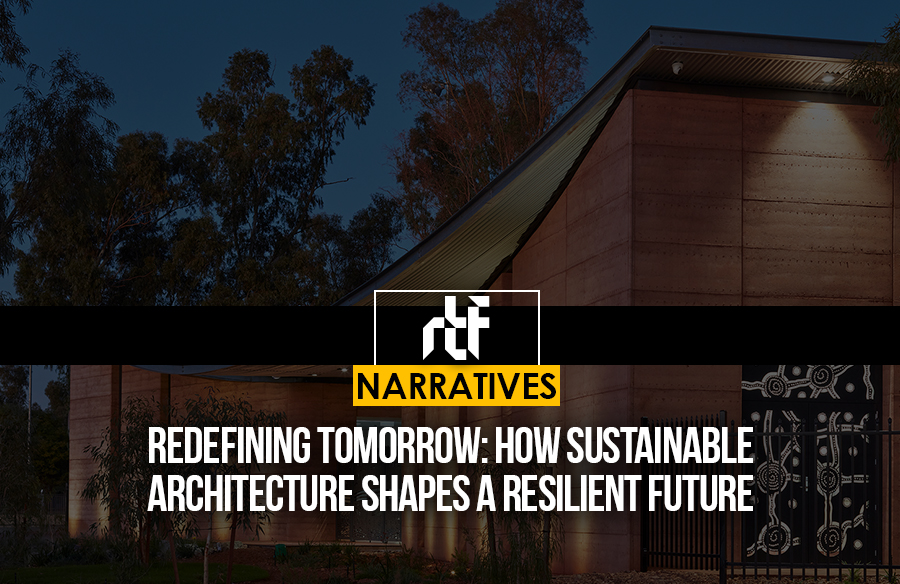
Today, earth construction has seen a resurgence in modern construction all over the world. An example can be seen in the PAMS Healthcare Hub in Newman, Australia that has been built using rammed earth sourced onsite. This not only reduces the carbon footprint due to the low embodied energy of earth but also reduces transportation costs of the typically used materials, which would otherwise be sourced from far off.

Biomaterials
Biomaterials are materials derived from living organisms like plants and animals and are thus a natural part of the biosphere. These materials are key to building sustainably since they sequester carbon and play an important role in decreasing the carbon footprint of a building. Amongst these, timber is the most widely used and feasible material that can be adopted in our building practices. Sustainable forest practices can ensure that wood becomes a sustainable renewable material, which with adequate engineering as seen in cross-laminated timber (CLT) and Glulam, can be used for high-rise construction at the same scales as steel and concrete.
The Bullitt Center in Chicago, often called the ‘World’s Greenest Commercial Building’, uses a heavy timber structure that has sequestered 545 metric tons of carbon for the next 250 years. In addition, this building adopts several sustainable practices including an extensive rainwater harvesting system, aerobic composters, and a roof covered with photovoltaic panels.

The only disadvantage with the global use of timber is the pressure that it creates on forests that are currently under threat of depletion. In these parts of the world, plant-based fibres offer a better alternative. Plant-based fibres like hemp are offering great potential for construction due to their widespread availability and excellent insulation. Innovations can also be seen through the use of fungi like Mycelium, due to their ability to grow at rapid speeds and create building blocks. An interesting example was the Hy Fy Experimental Pavilion which was made out of mycelium bricks that were grown in less than a week.

Efficiency in Design
The most effective way to achieve efficiency in design is by emulating natural systems through Biomimicry. Our design systems today are driven by standardised building blocks to achieve economic efficiency. These design systems have created a cookie-cutter model of grid-based boxy architecture, due to which designs end up using much more material than structurally required. Adopting critical regionalism and modelling each of our buildings to uniquely fit their physical and cultural environment is an important step towards more sustainable designs. One of the best examples of Biomimicry for sustainability is perhaps the Eastgate Centre in Zimbabwe. The cooling and ventilation systems in this building draw inspiration from natural cooling systems in the mounds of African termites, creating a stack effect that eliminates the need for air conditioners.

Tracking and reducing energy consumption in buildings is another important step towards sustainability. A variety of simulation software now allows architects to assess their designs in real-world environments and make more conscious choices during the design process. Rating systems like LEED (Leadership in Energy and Environmental Design) have developed a matrix to assess the energy efficiency of buildings, which helps compare design efficiencies on a global scale.
Journey Towards Circularity
The concept of circularity promotes a ‘cradle to cradle’ approach that aims to eliminate waste generated in one industry by converting it into a raw material for another. In their book Cradle to Cradle: Remaking the Way We Make Things, the authors draw inspiration from natural systems in the biosphere which eliminate the idea of waste by ensuring that at the end of their lifecycle, products can act as nutrients for other industries (technical cycles) or natural systems (biological cycles). From their inception, buildings need to be designed so that they can be integrated into these closed loops of the circular economy to create sustainable futures in the long run.

How does the Future Look?
At current trends, the future of our planet looks grim, but working in the field of architecture gives one a sense of power and ethical responsibility to work towards designing for a sustainable future. Projects such as the Bullitt Center and Eastgate Center create a hope that much can be done to ensure a lower carbon footprint from the building sector. Our ways of thinking about building design are changing with the adoption of better materials and newer technologies, changes at an individual level can snowball into communities and cities and eventually to a more sustainable future for our planet.
Reference List:
Books:
Braungart, M. and McDonough, W. (2019) Cradle to cradle: Remaking the way we make things. London: Vintage Classics.
Online Articles:
Blog (2024) The Future of Sustainable Architecture: Trends and Innovations. [online] . Available at:https://jgu.edu.in/blog/2024/02/27/the-future-of-sustainable-architecture-trends-and-innovations/ (Accessed: 30 October 2024).
Chalmers, J. (2024) What role can rammed earth play in the future of low-carbon construction?, create digital. Available at: https://createdigital.org.au/rammed-earth-low-carbon-construction/ (Accessed: 02 November 2024).
Kaunitz Yeung Architecture (2024) Rammed Earth Health Hub. Available at: https://kaunitzyeung.com/project/rammed-earth-health-hub/ (Accessed: 02 November 2024).
Ghisleni, C. (2022) What are biomaterials in architecture?, ArchDaily. Available at: https://www.archdaily.com/987658/what-are-biomaterials-in-architecture (Accessed: 02 November 2024).
DEI Creative in Seattle, W. (no date) Building features, Bullitt Center Structural Materials Comments. Available at: https://bullittcenter.org/building/building-features/tall-timbers/ (Accessed: 02 November 2024).
Autodesk (2024) Nature does it better: Biomimicry in architecture and engineering. Available at: https://www.autodesk.com/design-make/articles/biomimicry-in-architecture (Accessed: 03 November 2024).
Vbtkstarter (2016) Cradle to cradle product design challenge, William McDonough. Available at: https://mcdonough.com/cradle-to-cradle-product-design-challenge/ (Accessed: 03 November 2024).
YouTube Videos:
TED. (2023). The Natural Building Blocks of Sustainable Architecture | Michael Green | TED. [YouTube video]. Available at: https://youtu.be/KAiWdme6EEM?si=HrcjjMYoZuztbuhg. [Accessed 2 November 2024].
Undecided with Matt Ferrell. (2021). Exploring Green Building and the Future of Construction. [YouTube video]. Available at: https://youtu.be/wmoy27EZ8y0?si=8_pH6obYU9yLIUY_. [Accessed 2 November 2024].