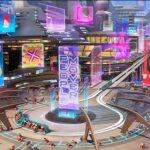
Architecture will always be around because humans need shelter from the elements. Even if we end up living on a spaceship as the human race does in Wall-E, architecture will be necessary to help sustain a comfortable living situation. The future of architecture cannot be predicted, but it doesn’t seem bleak. Many trends are already forming with new observations and innovations to address the ever-changing and growing needs of humanity and its environments.

Future architecture can only be hypothesised. Many aspects, such as technological advancements, changes in climatic and environmental conditions, and changes in society and culture, will play a role in the state of architecture in the future. The current-day awareness of climate change, sustainability and environmental concerns indicates that future architecture will likely incorporate renewable energy and materials, energy efficiency, and essential sustainability factors into all designs, creating intelligent and eco-aware buildings and environments.
Current trends and innovations can give us an idea of what we can expect soon and possibly future architecture further away from the current day. Here is a look at a few universal trends that are already informing architecture:
Smart cities & homes
More systems and objects can communicate with the advancement and growth of Artificial Intelligence (AI) and the Internet of Things (IoT). These intelligent technological tools will substantially impact and influence the future architecture, the environment and human well-being. Architectural robots are already used for structural calculations. At the same time, AI can assist in enhancing building systems regarding water and energy conservation, reduction, and efficiency by analysing a building’s performance, climate conditions, and inhabitants’ behaviours.
The future architecture will be innovative as buildings, services, infrastructure, and citizens become more interconnected and intelligent. Using smart systems and technologies in homes can help improve comfort. By keeping living spaces adjusted and regulated, smart homes allow inhabitants to control and manage their energy consumption, the temperature and lighting in their spaces, and their doors, windows, and appliances to suit their preferences. Smart homes will integrate convenience, comfort, and security into future architecture.

Vertical building
The natural environment and open, green spaces are once again becoming essential for well-being, and with population growth and urbanisation being so prevalent, building upwards seems to be a possible solution for future architecture.
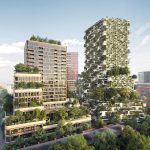
Vertical cities have already started forming and could become very popular. High-rise buildings, urban agriculture, green spaces, and vertical transport systems will be established. The vertical building will be a sustainable future architecture that efficiently protects the earth and its resources while housing the ever-growing societies and their lifestyles.

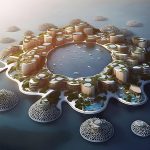
Floating Cities
Future architecture will probably move into more experimental realms. We already see new locations and places being utilised for new cities. The rising sea levels have made water a new location to explore, although we are not the first; centuries before this, communities in Peru, Iraq, and Benin, among others, have built their houses on the water: floating communities, floating cities.
Two principles are hot topics when considering future architecture, locally sourced materials and energy efficiency. Many examples of modern aquatic architecture are already being designed and tried worldwide. Future architecture will likely have floating cities with interconnected living spaces that can adapt to different climatic regions and issues. Floating cities would become a part of their environments and be resilient to extreme weather conditions per region.

Universal Biophilic Design and Wellness Architecture
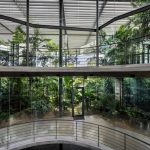
Liveability and human-centric design will also become a focus of future architecture, promoting and improving community health, quality of life, and well-being using the spaces. Through biophilic design principles, future architecture will promote spaces and ecosystems that stimulate a connection to nature and mental and physical well-being. Equal accessibility will also be a key component. People of any age and ability can easily use public spaces, infrastructure, buildings, and systems. Developments will be socially sustainable by promoting accessibility through social inclusion, dignity, and equity.
Green spaces, like gardens, parks, and green walls and roofs, will become an integral feature of future architecture as the benefits are crucial for sustaining a healthy lifestyle. Aside from the well-being and health benefits, green spaces will also help reduce urban heat island effects, control city climate conditions, and improve air quality.

Sustainability & Regenerative Architecture
The future architecture will be a sustainable, regenerative architecture that not only doesn’t harm the environment but also heals damaged ecosystems by setting up a grounded connection between people and nature.
Existing sites and buildings will be used and reused as locations for building instead of destroying the natural environment of forests and wetlands that will be protected. Retrofitting, renovating, and repurposing the existing will help reduce emissions and save resources, materials, and construction necessities. Circular economy and incorporated renewable energy features will become standard practice when designing buildings and setting up environments.
The future architecture will emphasise net zero principles like using recyclable materials, minimising construction waste, and reducing carbon offsets and emission-producing construction operations.

Advanced Materials and Construction Techniques
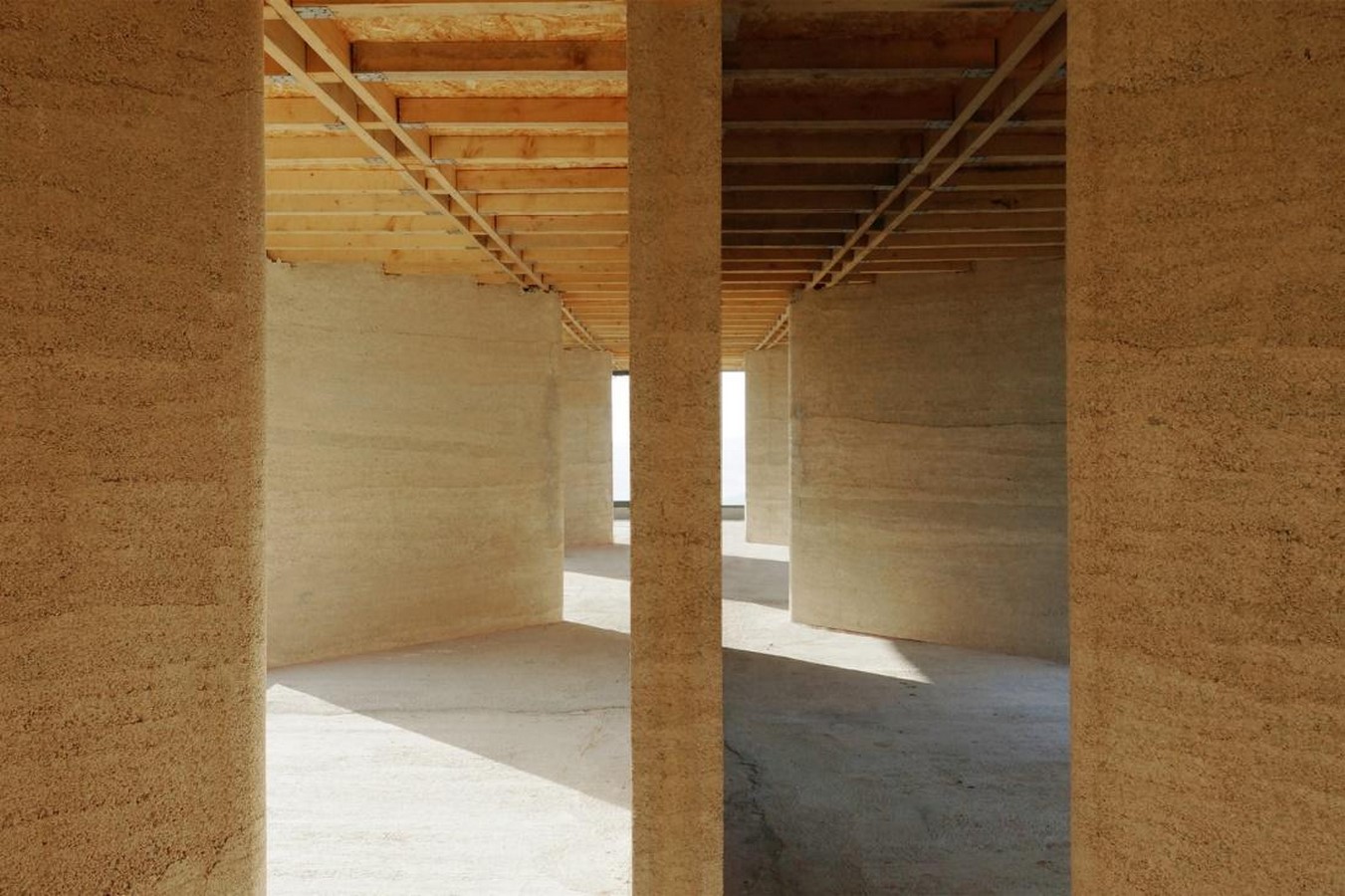
New possibilities for future architecture will come from innovations regarding materials studies and construction methods. There will be advanced materials like self-healing materials and carbon nanotubes, 3D-printed structures and biomaterials that will present revolutionary techniques and processes. Materials will be chosen for their sustainability, durability, resilience, and carbon footprint.
3D printed and modular architecture will feature highly in future architecture as it is a fast and cost-effective construction that is easily adapted and flexible and reassures space efficiency. Using multiple, independent components allows for relocation or re-accommodation for changing needs and varying functions while lowering energy consumption and noise pollution. Future architecture will facilitate adaptability, allowing buildings to evolve and be reused, remaining valid for a long time.
Environment and Disaster-Resistant Design
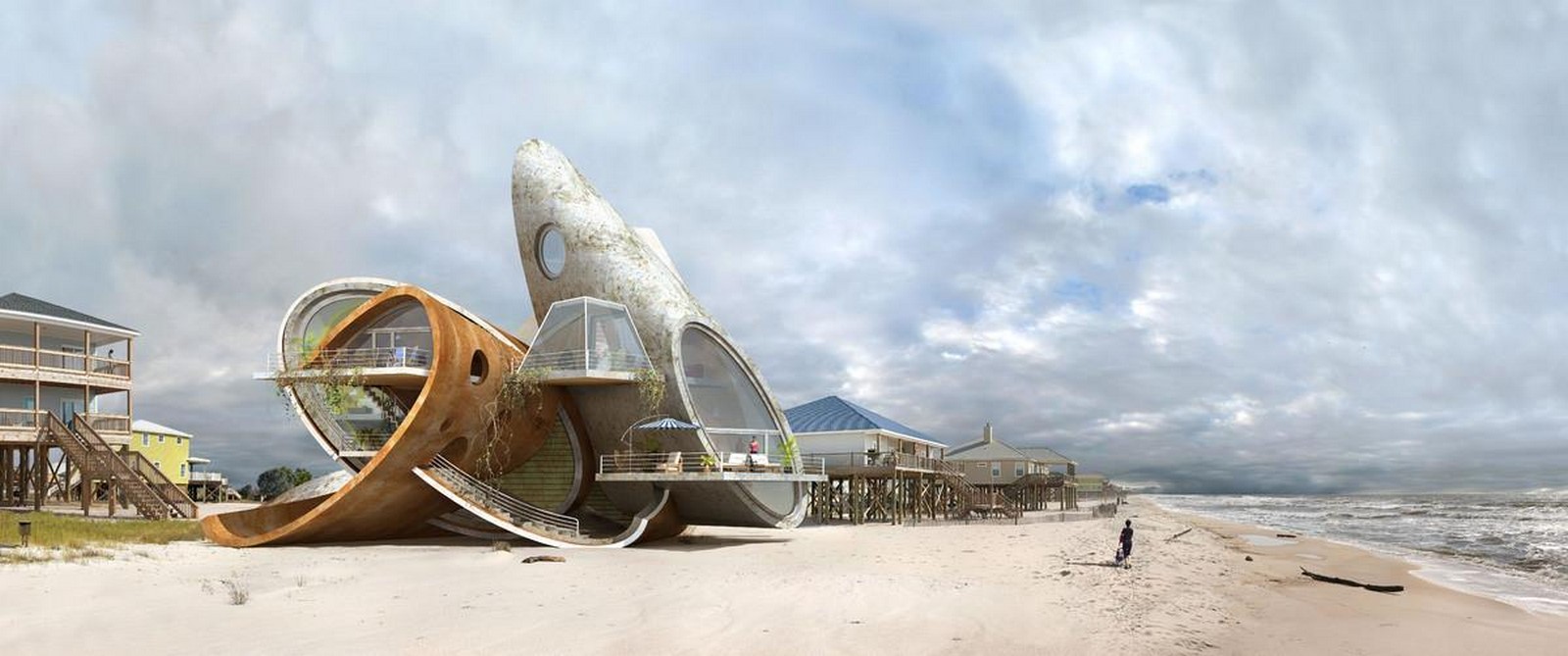
As climates change, future architecture will consider and acknowledge the extreme weather situations it will need to withstand. Buildings will be designed and constructed to be resilient towards natural disasters while protecting the environment and its occupants.
The future architecture will focus on the surrounding environment paying attention to sensitive construction techniques and practices. The building and environment become one by positioning and orientating the building following the natural light and possible weather effects. Energy efficiency, water conservation, and waste reduction will also be prioritised to consider and protect the surrounding environment.
Many of these concepts and movements are already present and growing at the current time. Since we cannot predict the future, some of these concepts could fall to the wayside or grow into an even bigger concept. Luckily humanity is always looking for a way to be better than it was yesterday, so we can rest assured that we will try everything, learn from the past and keep growing toward the future.
Bibliography
Reference List
Archisoup (2021). What does the future of architecture look like? …our big predictions! – archisoup | Architecture Guides & Resources. [online] archisoup | Architecture Guides & Resources. Available at: https://www.archisoup.com/future-for-architecture-and-architects [Accessed 8 Jun. 2023].
Brodka, C. (2023). Modern Aquatic Architecture: 5 Homes Around the World that Make the Case for Living on Water. [online] ArchDaily. Available at: https://www.archdaily.com/1000286/modern-aquatic-architecture-5-homes-around-the-world-that-make-the-case-for-living-on-water?ad_campaign=normal-tag [Accessed 8 Jun. 2023].
Farrag, H. (2023). “The Future of Sustainable Architecture: Leveraging AI to Build a Greener World”. [online] Linkedin.com. Available at: https://www.linkedin.com/pulse/future-sustainable-architecture-leveraging-ai-build-greener-farrag/ [Accessed 8 Jun. 2023].
Live Home 3D (2022). 10 Trends to Shape Future Architecture. [online] www.livehome3d.com. Available at: https://www.livehome3d.com/useful-articles/10-trends-to-shape-future-architecture [Accessed 8 Jun. 2023].
O’Malley, A. (2022). The Architecture of the Future: 2022 Research – PlanRadar. [online] PlanRadar. Available at: https://www.planradar.com/the-architecture-of-the-future-research/ [Accessed 8 Jun. 2023].
Image List
- Even if we end up living on a spaceship as the human race does in Wall-E, architecture will be necessary to help sustain a comfortable living situation.
Addey, D. (2018). The club deck’s circular PeopleMover loading area. WordPress.com. Available at: https://typesetinthefuture.files.wordpress.com/2018/08/walle_0_40_24_full.jpg [Accessed 10 Jun. 2023].
- Future architecture will have integrating intelligent systems, smart homes, and interconnected infrastructure for enhanced comfort, efficiency, and well-being.
NEOM Company (2023). A city without streets and cars. Unusual smart city project. [online] Portalkomunalny.pl. Available at: https://portalkomunalny.pl/wp-content/uploads/2018/10/depositphotos_221293130_l-2015.jpg [Accessed 10 Jun. 2023].
- Vertical cities will form a sustainable solution to protect the earth while housing humanity.
Luca Curci Architects (2023). The Link. Luca Curci Architects. Available at: https://lucacurci.com/architecture/the-link-city.html [Accessed 10 Jun. 2023].
- Future architecture will likely have floating cities with interconnected living spaces.
Luca Curci Architects and Tim Fu Design (2023). Floating City. Lucacurci.com. Available at: https://lucacurci.com/wp-content/uploads/2023/01/001-floating-city.jpg [Accessed 10 Jun. 2023]
- Spaces and ecosystems that stimulate a connection to nature and mental and physical well-being will be created using biophilic design principles. (Lin Ho Photography, 2017)
Lin Ho Photgraphy (2020). Gallery of Factory in the Forest / Design Unit Architects Snd Bhd – 6. ArchDaily. Available at: https://www.archdaily.com/947771/factory-in-the-forest-design-unit/5f60a8c763c0178c49000c76-factory-in-the-forest-design-unit-photo?next_project=no [Accessed 10 Jun. 2023].
- Existing cities will undergo urban regeneration healing environments and highlighting sustainability.
Stefano Boeri Architetti (2020). Gallery of Rome to Undergo an Ecological Transition by 2050 Through an Initiative Led by Stefano Boeri – 2. ArchDaily. Available at: https://www.archdaily.com/986955/rome-to-undergo-an-ecological-transition-by-2050-through-an-initiative-led-by-stefano-boeri/62f374d0d0893a56ba23725f-rome-to-undergo-an-ecological-transition-by-2050-through-an-initiative-led-by-stefano-boeri-photo?next_project=no [Accessed 10 Jun. 2023].
- Biomaterials, like hemp, will be used more due to their self-healing materials, sustainability, durability, resilience, and small carbon footprint.
Arsić, L., Fuchs, D. and Milovanovic, M. (2020). Gallery of What Are Biomaterials in Architecture? – 15. ArchDaily. Available at: https://www.archdaily.com/987658/what-are-biomaterials-in-architecture/62f4f45c2ed9e0016f4309a8-what-are-biomaterials-in-architecture-image [Accessed 10 Jun. 2023].
- Buildings will be designed and constructed to be resilient towards natural disasters while protecting the environment and its occupants.
GonzálezD. (2014). Gallery of Surreal Renderings of Disaster-Resistant Structures – 5. ArchDaily. Available at: https://www.archdaily.com/494404/surreal-renderings-of-disaster-resistant-structures/534413acc07a80d9e300021c-surreal-renderings-of-disaster-resistant-structures-image [Accessed 10 Jun. 2023].
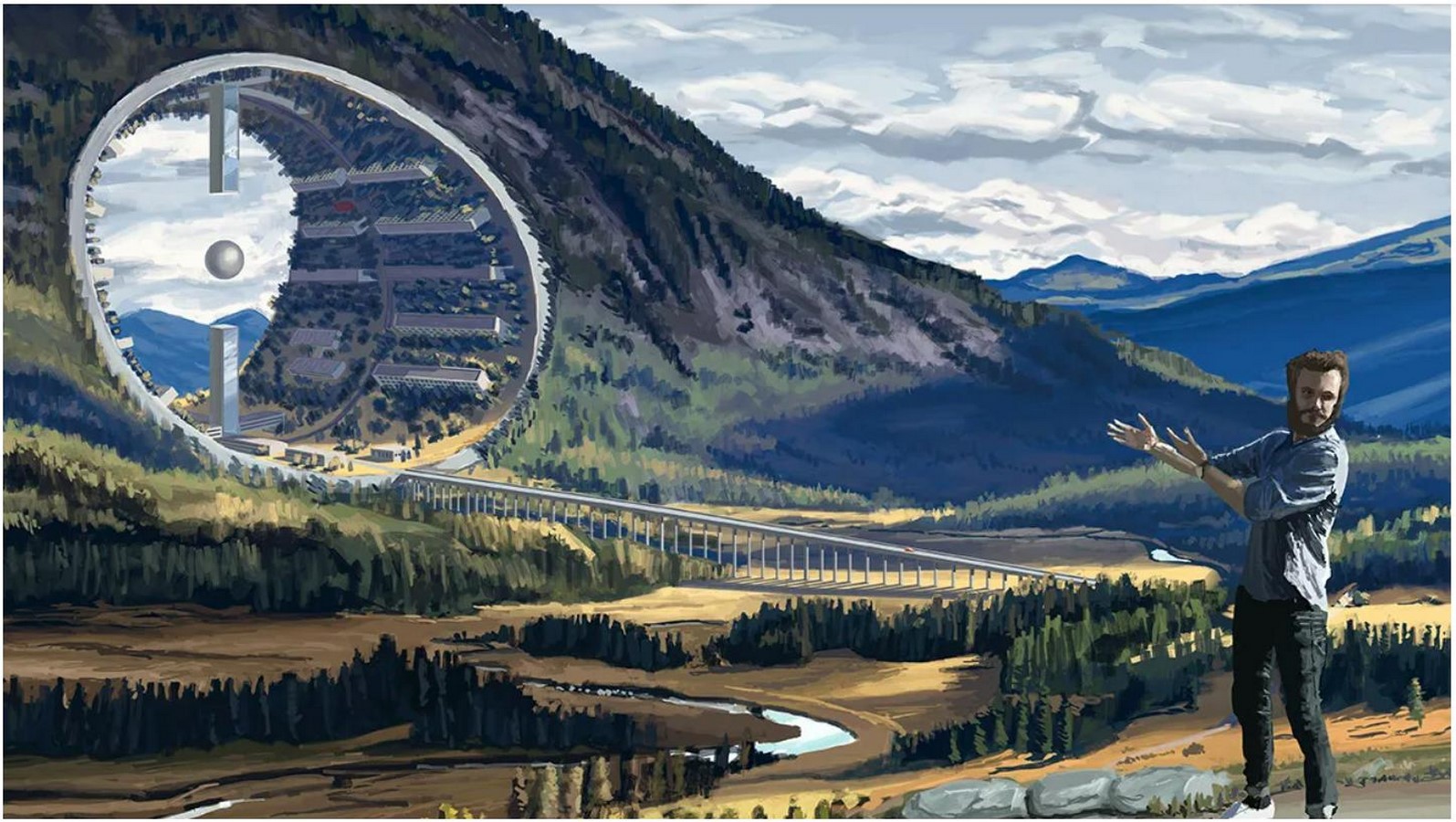
- Winning submission of the A Futuristic Peek into Architecture Through the World of Sci-Fi competition in 2017: “Last Day” showing an alternate world of impressive sci-fi megastructures built within and along lush scenes of nature.
Ponomarenko, M. (2017). Last Day. Architectural Digest. Architectural Digest. Available at: https://www.architecturaldigest.com/story/futuristic-peek-into-architecture-through-sci-fi [Accessed 10 Jun. 2023].