The power to hold and mould people is only possessed by architects, and to create such wonders, one must be enlightened enough to uncover the story within. Perception is the key to visualising and decoding the world with our understanding, be it a small corner of a house or a market as huge as a town. As the great architect Mies Van Der Rohe once said, “God is in the details”. To build great, start from the very small.

Colours Become Emotions
When a world so mystical is given such flawless gradients, liming to certain shades and tints doesn’t do justice. Studying architecture opens many directions regarding Emotions; one such basic path is colours. One that understands the importance of colours in architecture, he/ she has achieved a level par with general design principles. Because it is proven that colours impact human emotions depending on their perception of different colours. The colour represents brightness, harmony, beauty, mental equilibrium, ease, and excitement.
In architecture, colours are essential for enhancing, emphasising, illuminating, and dividing areas… as well as conveying emotions and comfort. A building’s colour, like how a product is presented, can influence people’s first impressions, whether positive or unfavourable. Interior colour schemes affect our physical makeup, personalities, behaviours, and emotions.
Therefore, in addition to static criteria, the choice of colour is also influenced by psychological, cultural, and social considerations. Mexican Architect Luis Barragan creates one such architectural marvel. His works are a unique blend of colours, light, and nature.


Light Matters
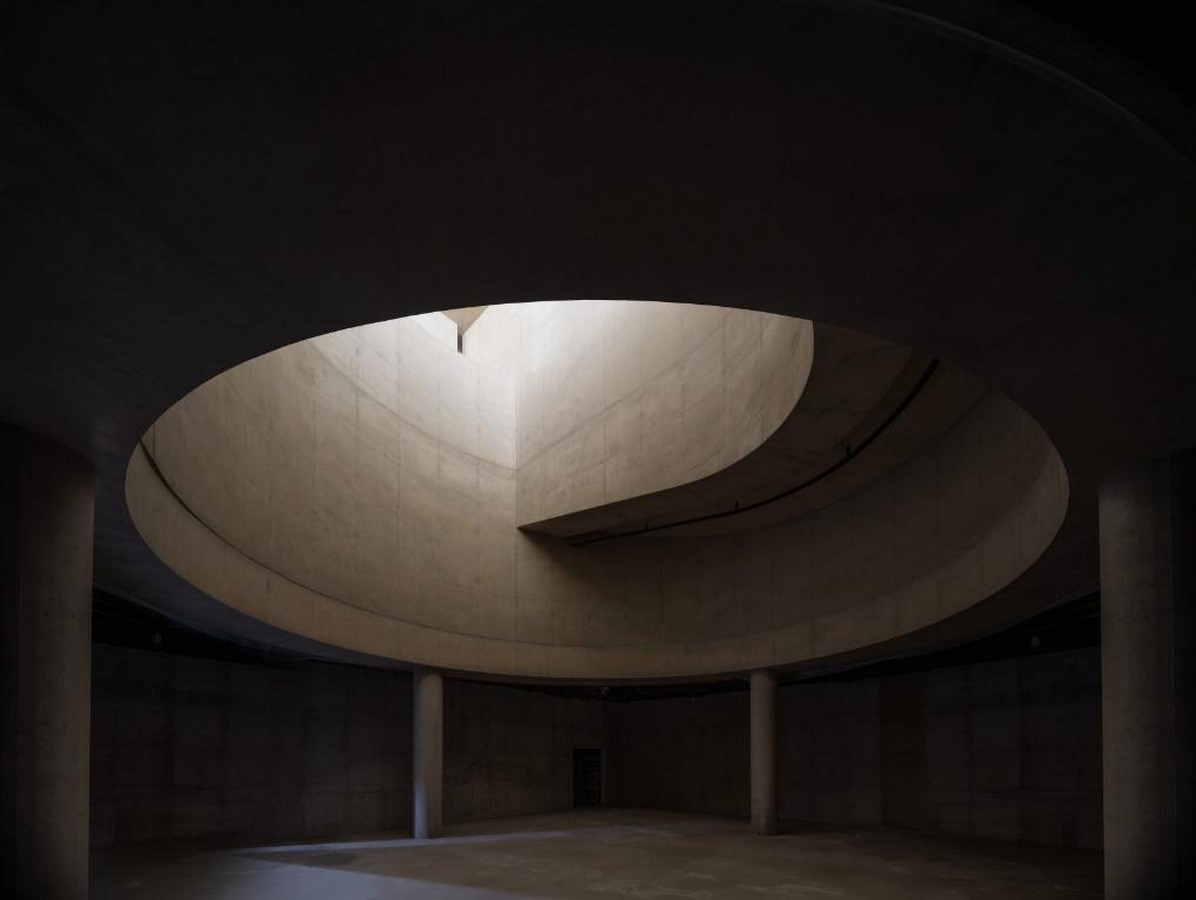
Architecture’s spaces and forms are defined by how light is perceived rather than by what is built. It produces atmosphere by rendering texture and materials, illuminating surfaces, and rendering texture and materials. It also has a significant impact on our biological and mental well-being. It has an impact on our overall attentiveness, well-being, and performance. While natural light is the ideal choice for illumination, it is only sometimes available. This is where artificial lighting comes into play. Artificial lights can augment natural light or give illumination in areas where natural light is insufficient.
There are several advantages of employing artificial lights in architecture. First, artificial lighting can generate different moods in a room. For example, to make an area more active, utilise brighter lighting. Softer lighting can be used to make an area feel more relaxed. There are a few books to gain deeper insights into the importance of lighting, like The Architecture of Natural Light by Henry Plummer and Light in Architecture by Chris van Uffelen.

Scale Of Spaces
Buildings with varied roles are essential components of a city, and if roads are the city’s blood arteries, buildings are the city’s flesh. Buildings are given when there are people. A building is like a massive work of art that permeates everyone’s daily existence. Many different buildings are needed to provide people with their basic needs, including commercial, residential, and transit facilities. Different building styles will cause people to engage in various psychological processes, including feeling, cognition, memory, association, and reasoning.
People typically scan their vision from left to right and up to down. Therefore, different perceptions of spatial magnitudes will be produced at different points depending on the form and location of the visual centre. To avoid giving people the impression that the front is heavy, the form’s top portion must be lighter than its lower portion in the plane space. The forms of low colour transparency, low purity, cool colour, and simple texture can produce a receding feeling, which can make people feel tranquil and reveals significant spatial magnitudes. Diverse colours and textures can likewise generate diverse spatial magnitudes.
And straightforward cultural deposits, forms with intense colour transparency, high colour purity, warm colour, and rich texture can evoke a sense of progress, boisterousness, and prosperity that can excite people. These forms are also simple to remember and can produce various front and back levels and a sense of space. Low buildings are stable, but high buildings are majestic and eye-catching.
In terms of shape, a simple form appears smaller than a form of the same size but with an irregular profile. To avoid feeling cramped, a large space must be left in the direction of the directive shape. The form’s completeness likewise impacts the psychology of space.
For forms with the same space, irregular edges may feel more spacious, while forms in the centre might feel cramped.


Lastly
As the creator of space, architecture is the one who gives this concept physical form. This is why, before we build it, we must first understand how we see and comprehend space. Thus, the last few decades can be understood as an effervescent period in which architects and psychologists attempted to connect architecture with the psychology of the individual seen as the user of these places. When interacting with space, perception is the initial step. It is our first point of touch with our surroundings. Understanding what perception is and how it influences our interactions with space as users and designers are critical. The link between cognition and perception is sometimes considered an integration and other times as two distinct, alternating processes. Cognition includes all forms of knowledge: cognition, imagination, reason, memory, and, of course, perception, which is a type of figurative knowledge in this case.
According to this perspective, perception is one of several ways to learn about the world. According to another viewpoint, perception is influenced by the cognitive architecture of the individual. These can alter perception’s selection ability; therefore, the image to be produced is refined and selected via the attention filter. To summarise, perception is a subsystem of cognition and a process of cognition.