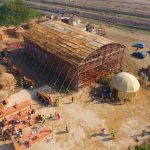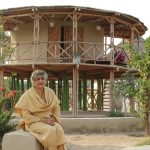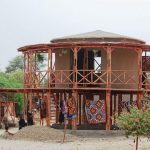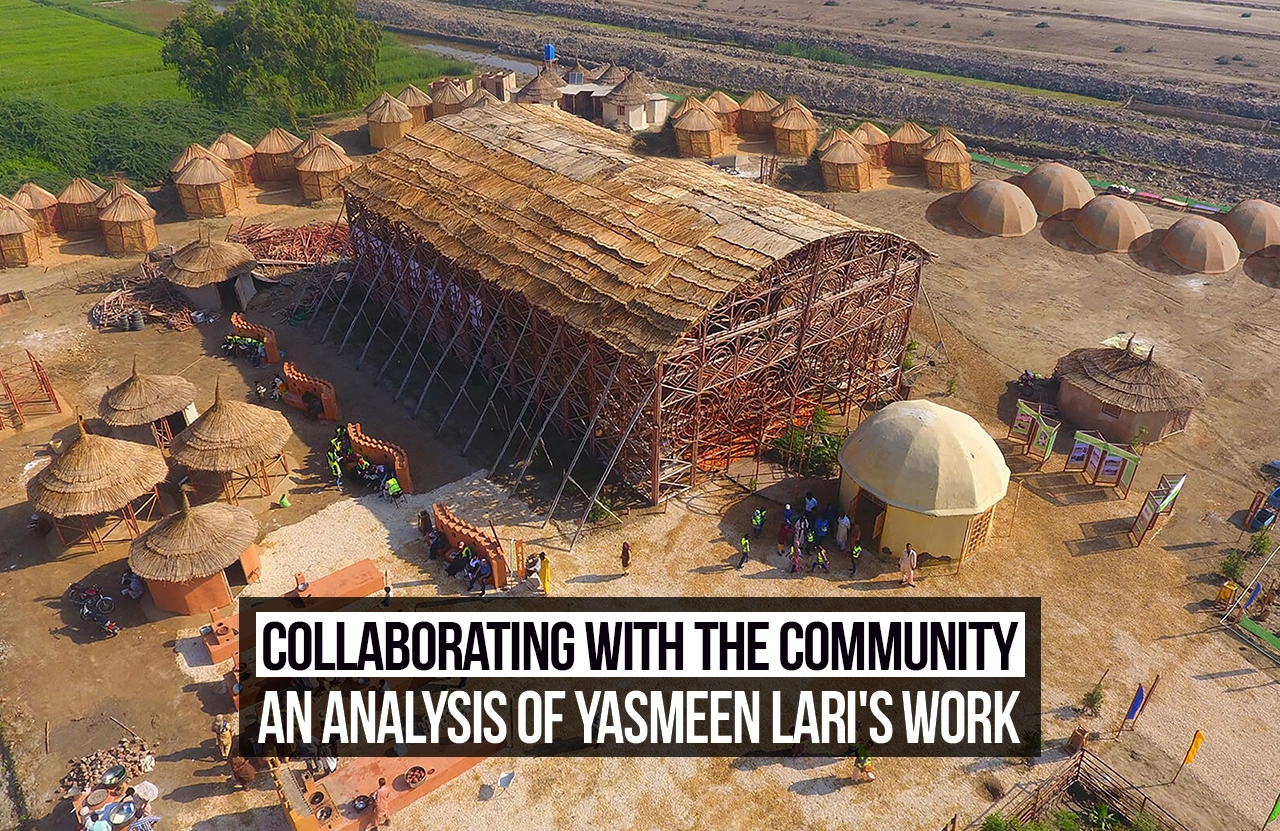
Yasmeen Lari, one of the most renowned architects of Pakistan and a RIBA award winner, is known for her community-driven and participatory architecture. Her work is especially associated with resilient architecture for the people, looking specifically at disaster-affected communities. Some of her more recognized works include her zero-carbon bamboo community center. She actively involves the users, making sure that the ancient wisdom of vernacular architecture and applied techniques are passed on.
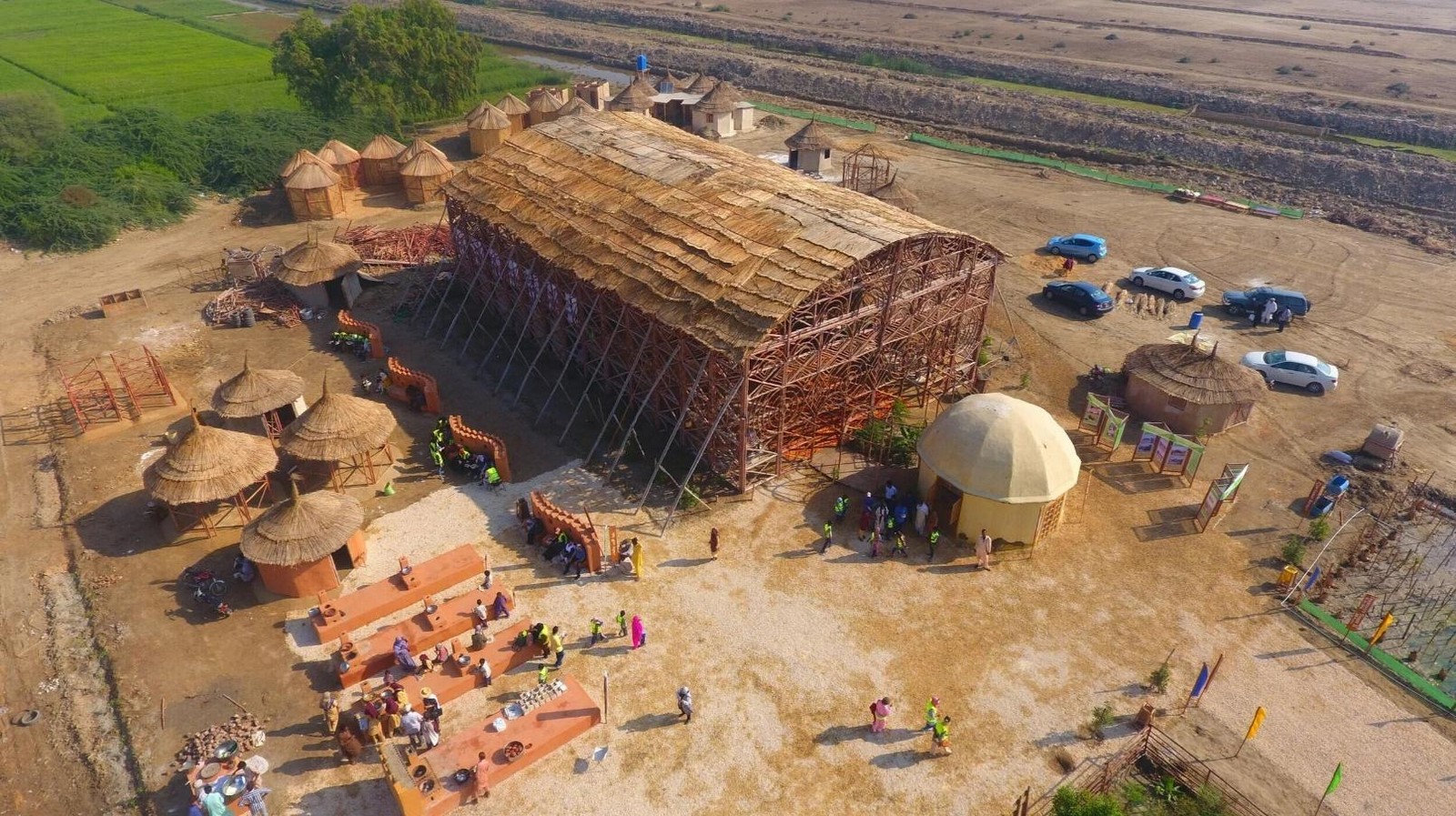
She essentially applies a philosophy that looks at empowering the majority of the population of Pakistan who are mainly people living below the poverty line without monetary access to the ‘modern architecture’. The entire ideology stems from rejecting architecture as a tool for the elite and making it accessible and viable for people of all financial classes.
Yasmeen Lari: An Introduction
Born in 1941 in Dera Ghazi Khan, Yasmeen Lari got her architectural education from School of Architecture, Oxford Brookes University after which she came to Pakistan to start her practice. With an initial outlook of brutalism, Lari could be credited with producing many of the known brutalist-style architectural pieces in modern Pakistan. However, a shift is seen in the later decades as Yasmeen Lari instead focused on building collaboratively with the marginalized people of the country especially the communities that had been exposed to disasters rather than building for the affluent 1%.
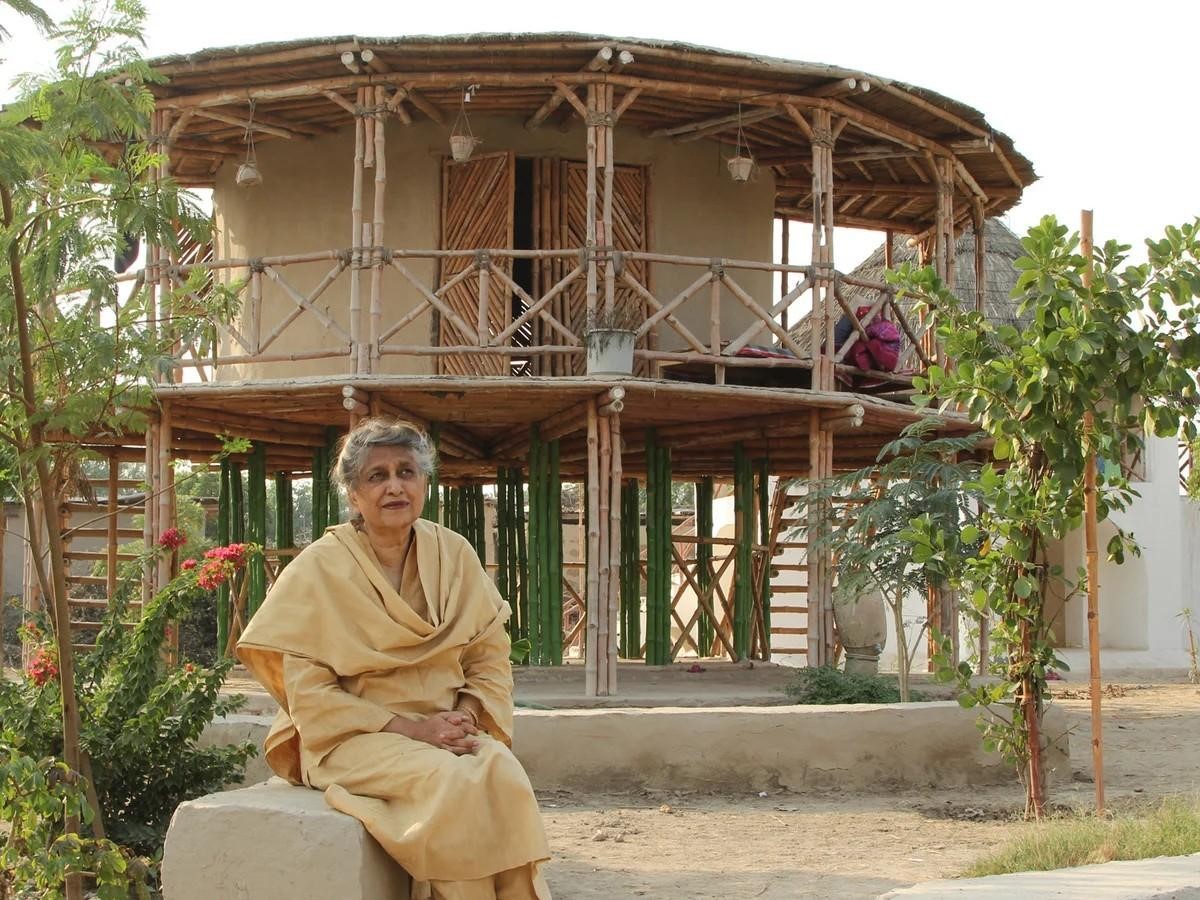
This along with her focus on heritage conservation and related architectural construction and building techniques and methodologies have put her in the running line of vernacular architects that absorb ancient wisdom of local traditions and morph it for the conflicted present.
Barefoot Social Architecture
BASA or Barefoot Social Architecture is the name of the architectural ideology that Yasmeen Lari has crafted and implemented for these rural communities. The entire philosophy behind it is the participatory design and community collaboration integrated within a low-energy and low environmental-impact model, one attached with the use of local resources and materiality.
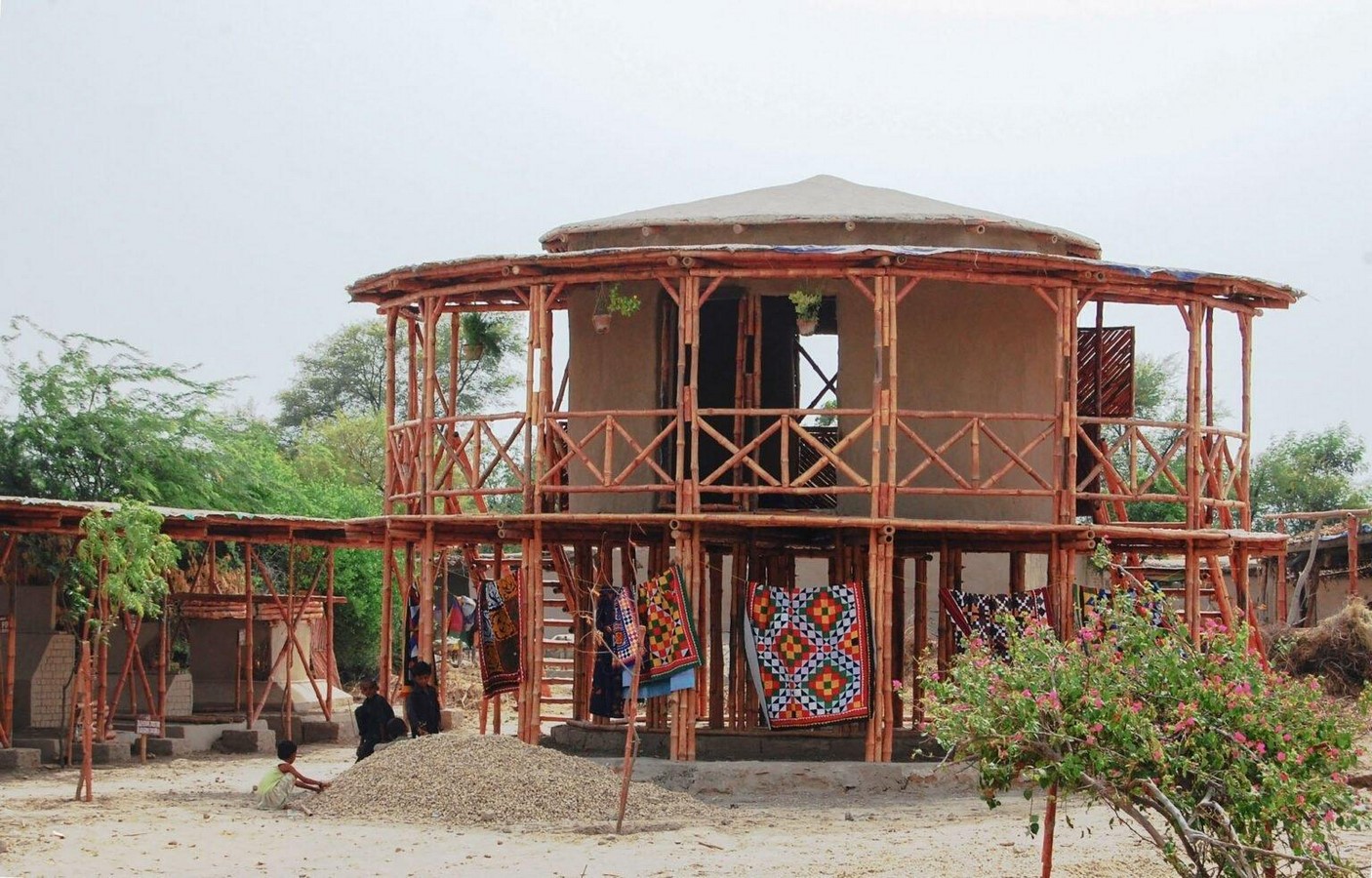
The model looks at the idea of ownership by the people themselves by involving them in the design and construction stage. Hence, architecture is not the sole factor responsible but instead that power is co-shared to empower the community and make structures they can relate to and proudly own. All of the construction techniques utilized are knowledge received from and shared among the people, and as it stems from the community itself, it provides very specific responses suited to the climatic situation of the region. Further discussion later.
Empowering the Women
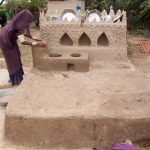
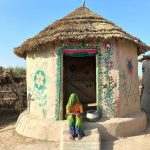
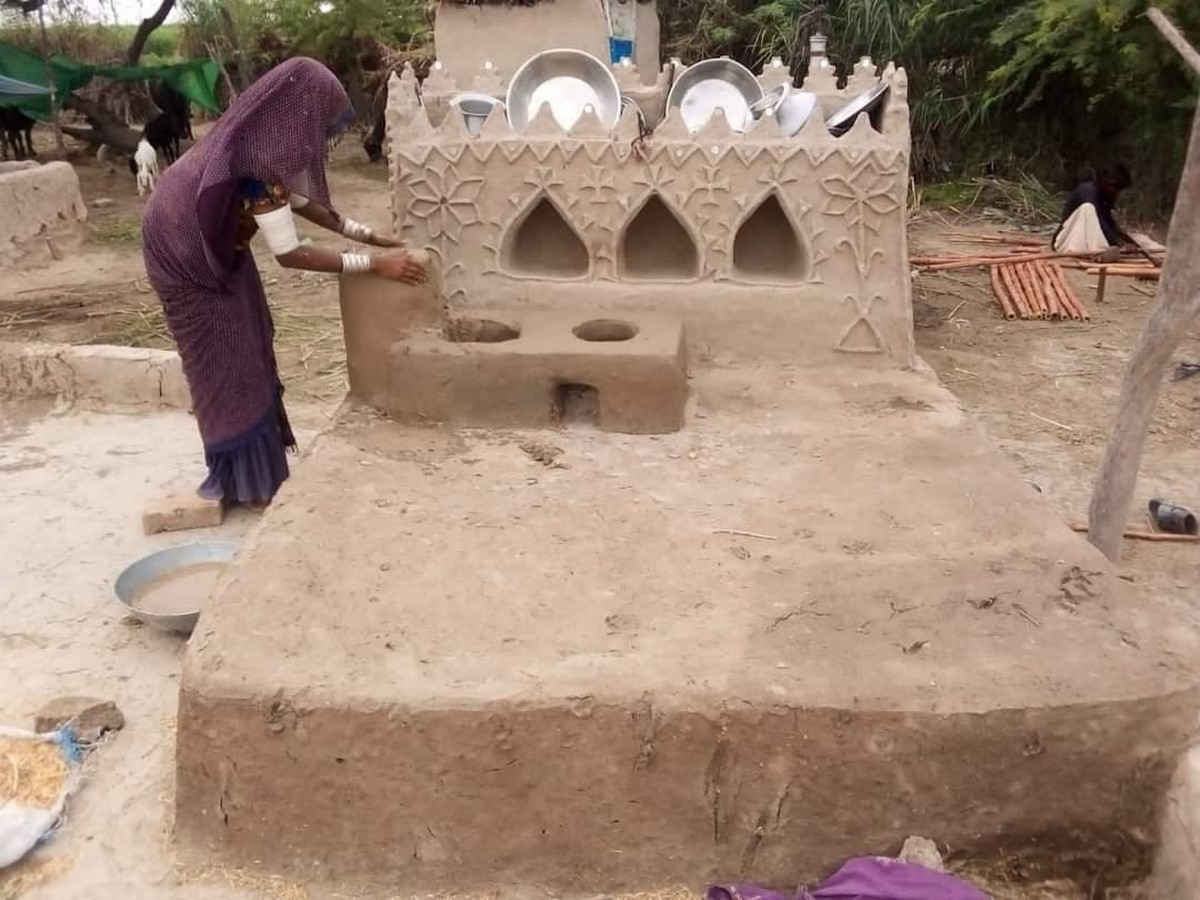
Another focus of Yasmeen Lari’s works is empowering women as well to craft their own ownership and identity in their spaces. One of the best examples of this is her take on the traditional mud chullah (stove). Built on a platform, it raises and differentiates the space where women sit and cook from the regular open space where the residents walk. The new prototype actually aids in redirecting the toxins from the air. It morphs not just the convention of spaces for women, but improves them in a manner that provides them with more agency while being healthier in terms of both mental and physical being.
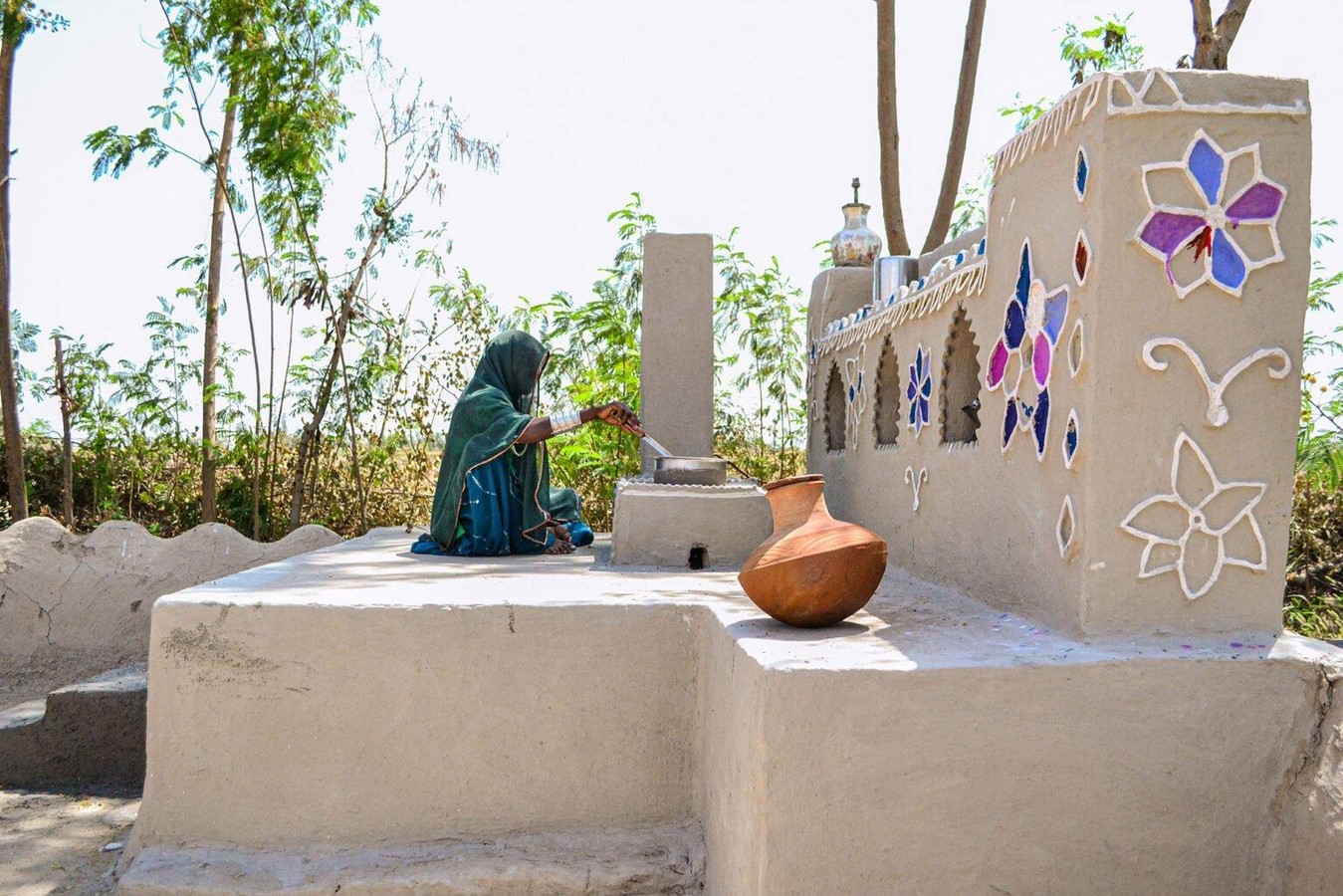
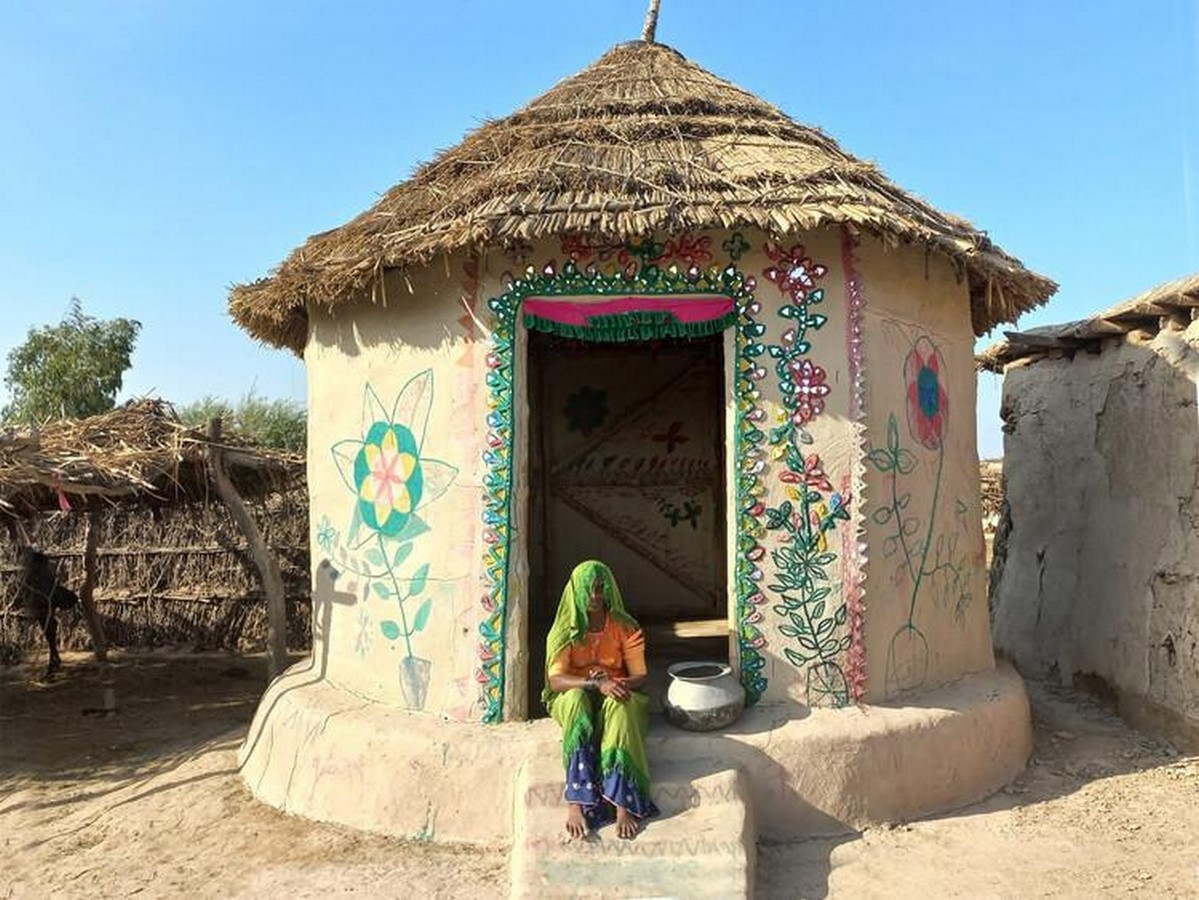
This approach is not about designing one chullah for all, but instead involving each individual in its process to reaffirm the idea of ownership. No two chullay are the same, as the women to who they belong, decorate it in their own colours, symbols, shapes and styles. It is the mark of individuality that differs them and makes each one specialized.
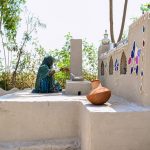
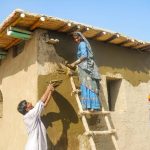
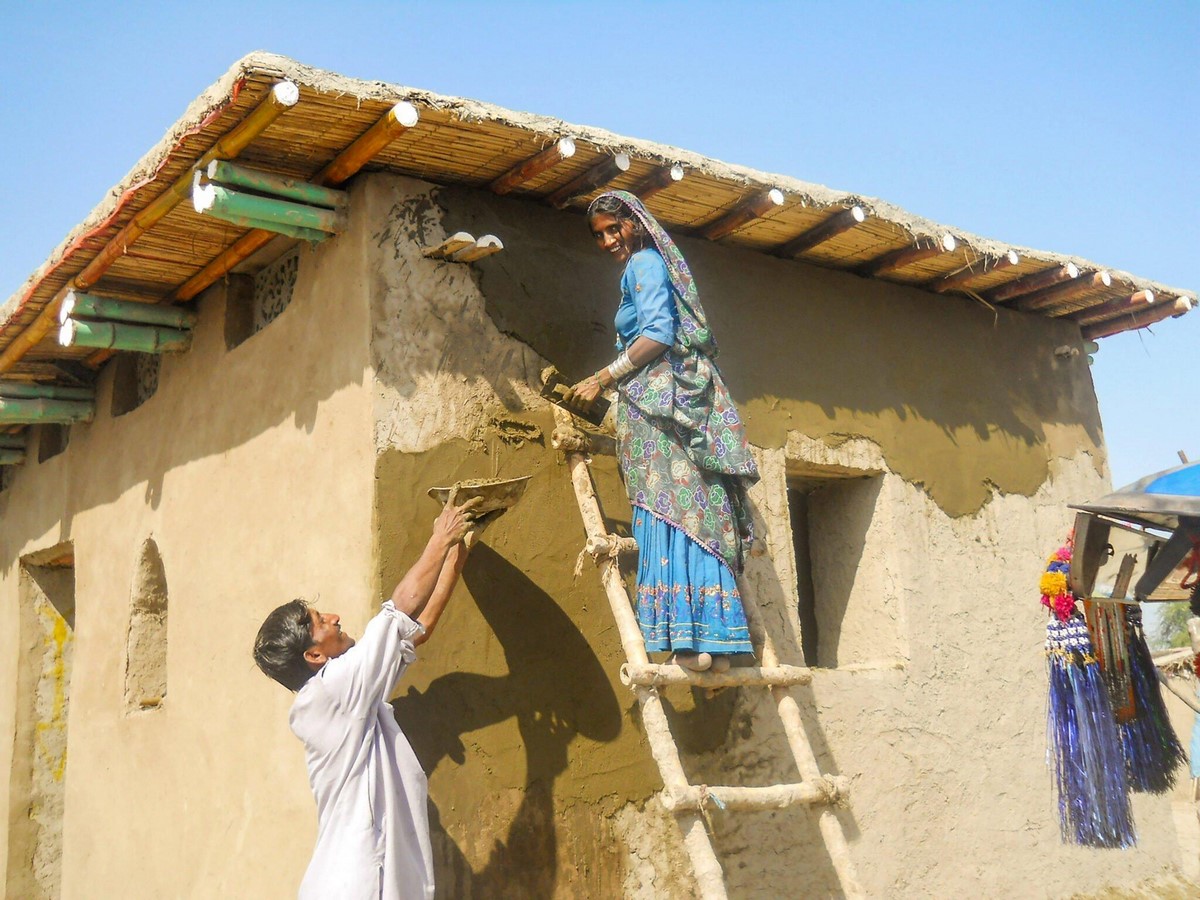
Another instance of this empowerment is involving the women in the construction and building process as well. The following image shows the women plastering the newly constructed house. Hence, defying the often recurring thought that the construction process is only for men. Involving women decentralizes the power while putting in their stakes and sense of ownership and independence. Sometimes, even the knowledge of the construction alone can empower them like no other.
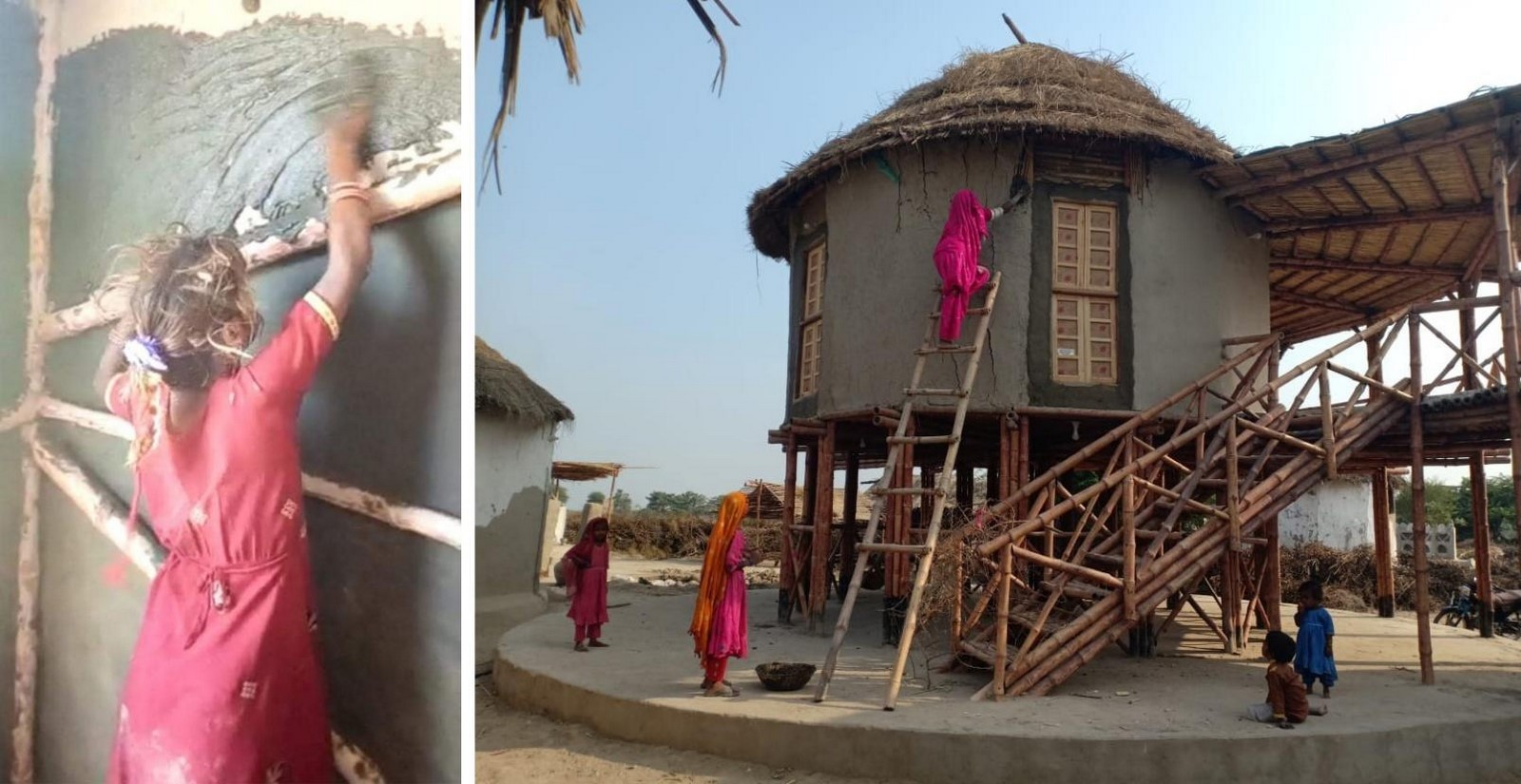
This further supports Lari’s method of making the architect “redundant” (“My Life’s Ambition is to Become Redundant”: Yasmeen Lari, Pakistan’s First Female Architect, on Decarbonization and Decolonization – Architizer Journal) by ensuring that the community people hold most of the stake and later design and construction of the buildings. The people themselves decorate their buildings according to their wants and wishes.
Materials and Methodology
Vernacular architecture becomes an important point of discussion whenever the question of low-energy or low-environmental impact is discussed. Particularly, when disastrous situations like aftereffects of earthquakes and floods are to be handled. Easily and quickly sourced materials are of utmost importance in disaster-inflicted areas where immediate and transitional shelters are required for the people. Much of this constraint has also defined Yasmeen Lari’s ideology.
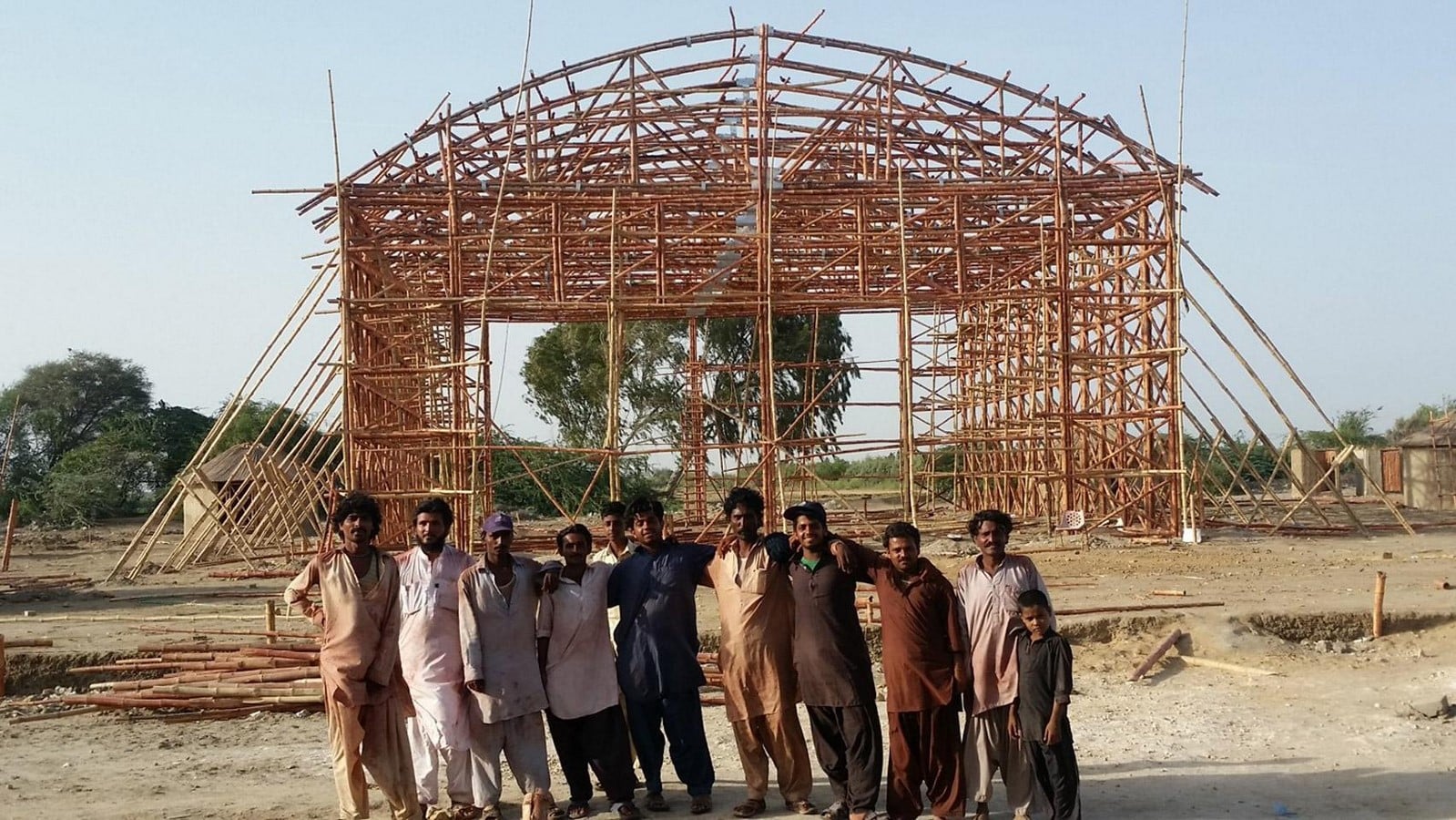
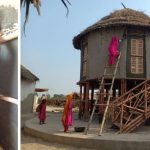
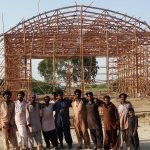
The most observed materials in her works; bamboo along with mud, lime and straw are the naturally occurring material within these regions of Pakistan that have been mainly affected by the floods in recent decades, lowering Punjab to significant areas of Sindh. Bamboo is one of the most sustainable materials out there considering its quick growth and varied usability, it sequesters carbon, hence further being good for the environment. Mud can be very easily locally sourced while lime for a long time has been the plaster of choice considering its cooling and other sustainable properties. The innovation essentially is done in how these materials are used together to create beautiful, grounded homes for people that do not require bank-breaking downpayments.
Decentralizing Architecture: From Architect to the People
All in all, this particular approach of Yasmeen Lari looks at decentralizing the power that architects hold over the built fabric and its influence on people to instead give this power to the people themselves. It is about empowering communities by resharing the old wisdom of building techniques and designing their own spaces using what they have at hand. It is also about recognizing the intelligence in methods that people have developed over time in remote regions, away from the ‘modern sense of development’ by relying on their own understanding of their living conditions and requirements.
Yasmeen Lari today stands at the forefront of architects actively collaborating with the people to create a sustainable built environment that they feel home in as well while empowering them enough to stand on their own.
Reference List:
2030, A. (2024) ‘My life’s ambition is to become redundant’: Yasmeen Lari, Pakistan’s first female architect, on decarbonization and Decolonization, Journal. Available at: https://architizer.com/blog/inspiration/stories/yasmeen-lari-decarbonization-decolonization/
In conversation with … Yasmeen Lari (2023) Parlour. Available at: https://parlour.org.au/series/in-conversation/in-conversation-with-yasmeen-lari/
designboom, christina petridou I. (2023) Explore the works of Yasmeen Lari, Riba’s 2023 Royal Gold medallist, designboom. Available at: https://www.designboom.com/architecture/works-yasmeen-lari-riba-2023-royal-gold-medallist-04-28-2023/
Seeking social and Ecological Justice for humanity: The World Around. Available at: https://theworldaround.org/watch/seeking-social-and-ecological-justice-for-humanity
Loho, B.P. (2023) Yasmeen Lari: Starchitect turned climate activist, Metropolis. Available at: https://metropolismag.com/profiles/yasmeen-lari-starchitect-turned-climate-activist/
Natasha Levy | (5 November 2021) Yasmeen Lari works with villagers to re-pave Karachi’s Old Town, Dezeen. Available at: https://www.dezeen.com/2021/11/05/yasmeen-lari-heritage-foundation-pakistan-terracotta-tiles/
Natasha Levy | (5 November 2021) Stove by Yasmeen Lari lets Pakistani women do eco-friendly cooking, Dezeen. Available at: https://www.dezeen.com/2021/11/05/stove-design-eco-cooking-yasmeen-lari/
Lizzie Crook | (5 November 2021) Prefabricated Bamboo Community Centre in Pakistan built by local people, Dezeen. Available at: https://www.dezeen.com/2021/11/05/zero-carbon-cultural-centre-prefabricated-bamboo-makli/
Figure 1_Bamboo Pavilion in Makli_©Heritage Foundation of Pakistan
Figure 2_Yasmeen Lari_©Heritage Foundation of Pakistan
Figure 3_Bamboo Structure_©Yasmeen Lari Archives
Figure 4_Chullah for the Women_©Yasmeen Lari Archives
Figure 5_Chullah for the Women_©Yasmeen Lari Archives
Figure 6_Women Applying Plaster_©Yasmeen Lari Archives
Figure 7_Woman Applying Plaster_©Yasmeen Lari Archives
Figure 8_Local Builders in Front of Bamboo Community Center_©Heritage Foundation of Pakistan
Figure 9_Resident in Front of Her Home_©Heritage Foundation of Pakistan