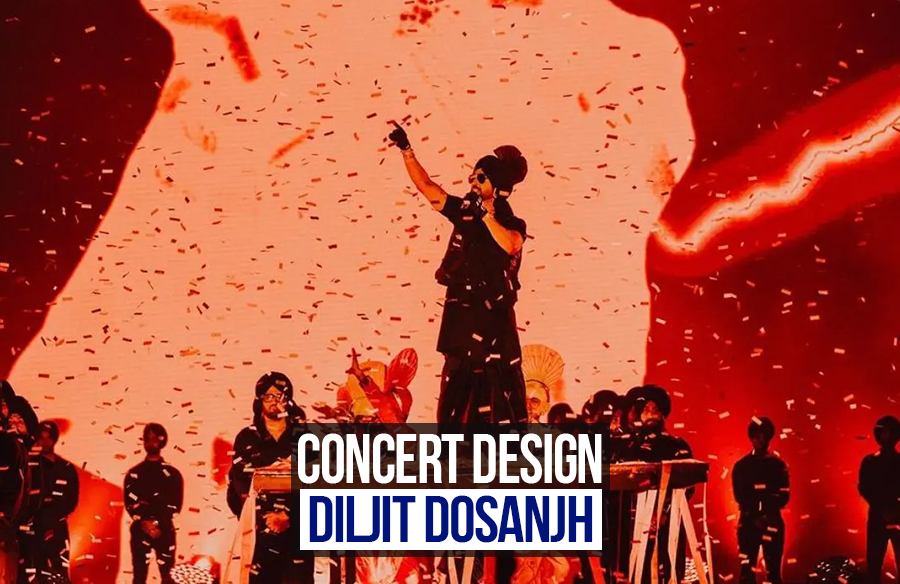
When music and architecture intersect, the result is a beautiful symphony of visual, spatial and emotional experience. Nowhere is this more evident than in the evolving concert designs of the Punjabi music icon Diljit Dosanjh; his shows have gone beyond performances and transformed into immersive environments. His concert architecture is revolutionising how spaces interact with sound, identity and culture. This artist has captivated audiences from both international arenas to stages in India; his latest concert, the Dil-Luminati World Tour (2024-2025), spanned.

India, North America, Europe, and the Middle East, delivering over 40 Global cities and over 650,00 attendees globally. For artists like Diljit Dosanjh, whose music blends traditional Punjabi music with contemporary pop, hip-hop, and R&B, the stage becomes the extension of their artistic identity.
The Evolution of Concert Spaces-
In Diljit’s concert, a telling escapade transpires while the attendees undergo introductions by way of ambient video montages. The main focus had to be on reverberation times, sound reflection, and clear sight, which led to shoe-box or fan-shaped halls. However, with the rise of popular music and large-scale touring acts and concerts, has ushered us into a new era of concert design, one that emphasises dynamic visual experience, audience interaction, audio experience and technological integration. The audience no longer attends just to hear music, they come to be inside a narrative. The shift marked the birth of architectural storytelling in concerts. The architectural elements are not just walls and ceilings but also the light, sound, and digital projections that define the space and its atmosphere.
The Rise of Experiential Architecture-
Modern concerts are no longer confined to the stage- they spill into the entire venue, extending into the audience and sometimes into the digital spaces. In Diljit’s concert, the audience experiences a narrative journey, beginning with ambient video montage introductions. In his Dil-Luminati tour, the lights dim gradually and not abruptly, and atmospheric music plays, slowly building in intensity. Subtle lighting cues might start to dance across the venue, making the entire space alive. He makes an elaborate and spectacular entrance. A film with a kaleidoscopic montage of Diljit traversing different terrains, accompanied by his voiceover in Punjabi.
Subsequently, an AI host materialises upon the screen plus establishes an ambience that is charming since it represents excited expectation before he presents us to the subject.
Diljit emerges from beneath the stage, through a rising platform or from behind a colossal LED screen, making his appearance a significant moment in unfolding this narrative. The order of that song has been created with great care. It is basically like a storyboard. The crowd’s energy isn’t just acknowledged, it is integrated into the experience. Diljit Dosanjh stated during an interview that he spends mostly on production, concentrating on performances his fans will always remember as outstanding and memorable. His shows are known for extravagant stage setups in addition to smooth performances. These shows additionally highlight lighting techniques integrating Punjabi folk, pop, and hip-hop.
Influence of Festive Culture and Global Tours-
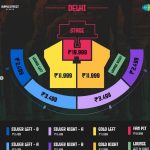
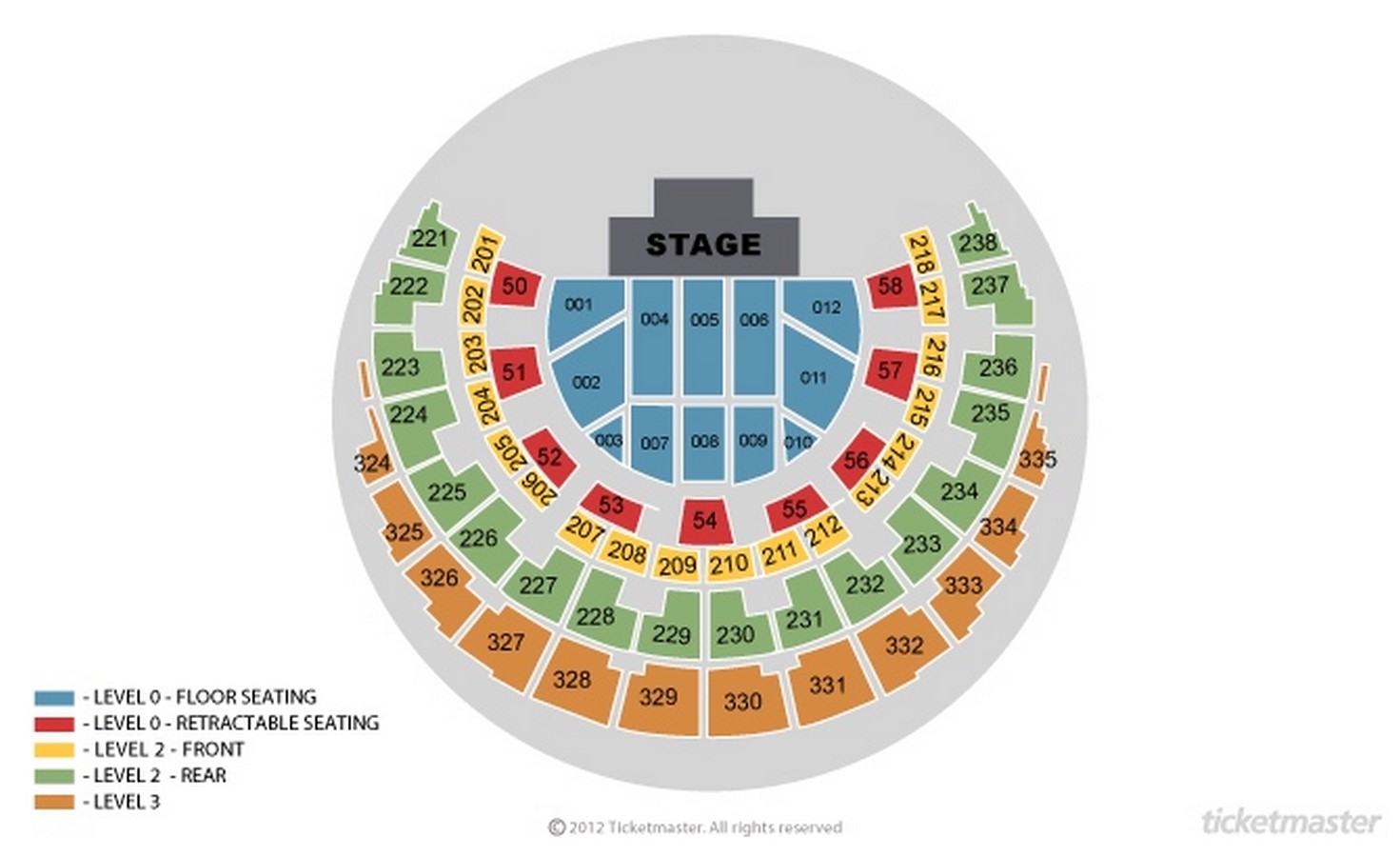
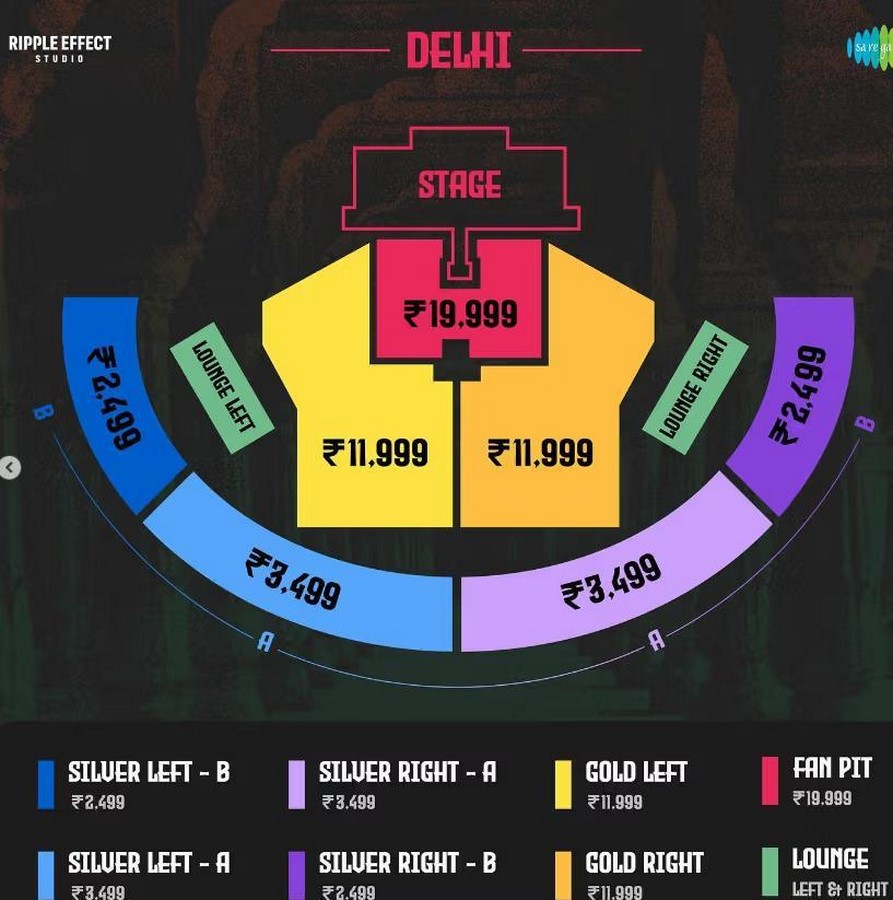
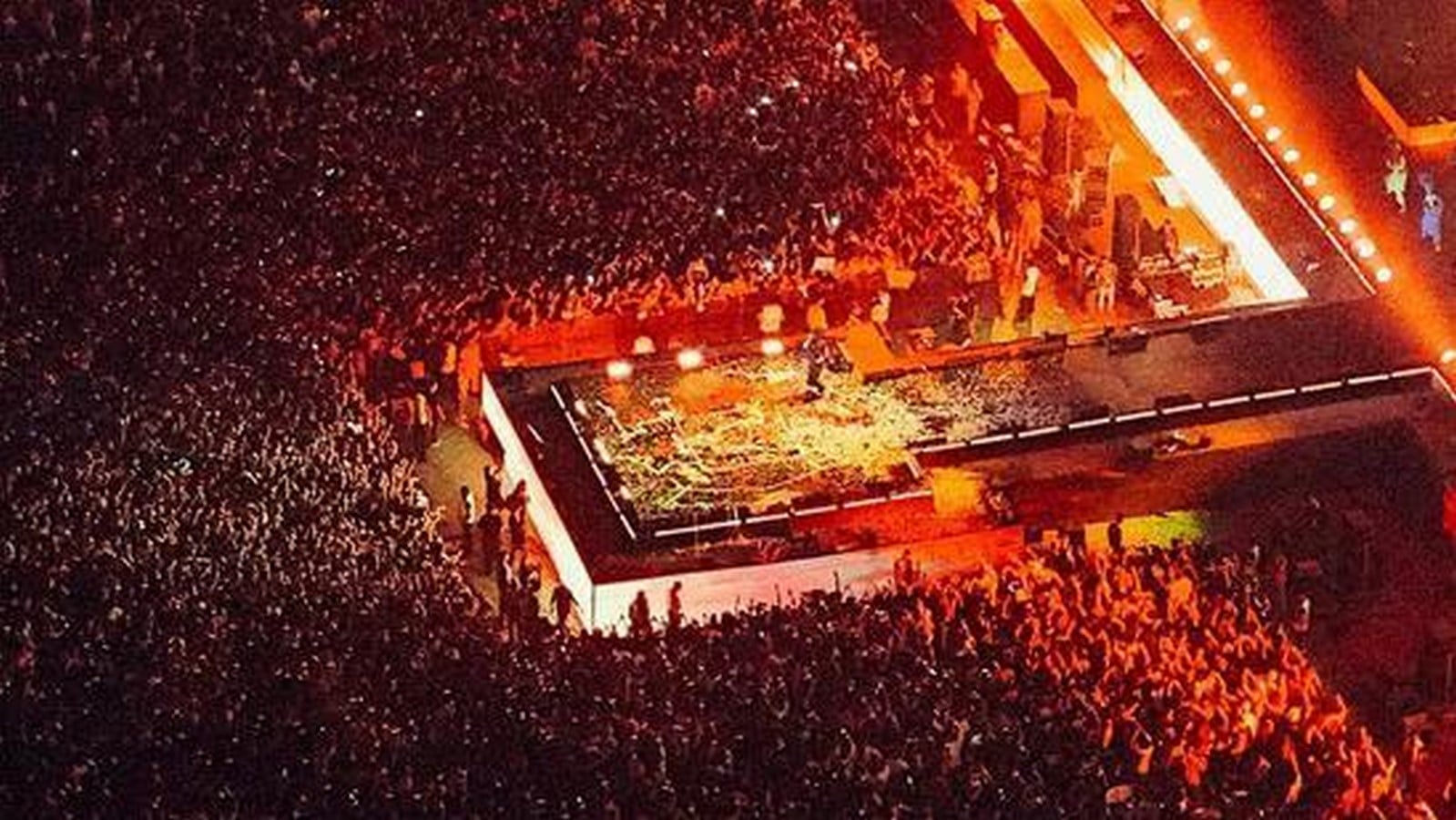
The architectural expectations of performance spaces have been fundamentally altered due to the widespread growth of music festivals, mega-concerts and tours. We are now no longer tethered to traditional and rigid spaces of proscenium stages and traditional areas. Today’s concert environment, especially in the outdoor and non-conventional venues, often embraces the language of pop-up architecture, blending spectacle with spatial intelligence. In the context of the Dil–Luminati Tour, the design had to flex across varied architectural typologies from North American stadiums to European arenas to Indian open-air grounds. The stage system is modular: central deck plus satellite platforms, flank trusses, wing extensions. This modularity allowed configuration within O₂ London, Glasgow Hydro, BC Place, and Indian stadiums like JLN Delhi and Hyderabad’s Aerocity Arena.
In order to maintain a uniform experience across different venues, designers preserve key visual elements, such as central lift and LED mapping, while intelligently adjusting the stage footprint size. This helps to maintain uniformity with the varying venue specifications, the core visual spectacle and brand identity remain consistent. Yet the contrasting experiences in India versus abroad highlight the importance of holistic venue planning-covering not just aesthetic but circulation, safety, visibility and basic services. For architectural practitioners in performance design, the tour offers both inspirational staging examples and cautionary lessons in event infrastructure integration.
Diljit Dosanjh’s “Dil‑Luminati” tour concert design is more than a spectacle- it is a convergence of architecture, culture, and emotion in motion. These stages are not static platforms for performances, but living environments that breathe with music, light, and crowd energy.
For architects, they serve as a unique blueprint for how design can be temporary yet profound, technical yet deeply human.
Diljit Dosanjh’s “Dil‑Luminati” tour concert design is a spectacle exceeding a simple blend of architecture, culture, and emotion set in motion. Rather than static platforms for performances, living environments breathe with music, light, and crowd energy. His concerts exemplify modularity for ease of transport with setup, as well as a multi-sensory design that engages sight, sound, with other senses. They challenge some customary ideas about architectural spaces. They prioritise the experience instead of permanence. These are ephemeral environments that leave lasting emotional impressions that are lasting. They show just how design can adapt well across contexts since it shifts easily from Toronto to Mumbai as it is still holding onto a very strong, unifying identity.
In the concert space, hybrid architecture is tested, so structure, projection, sound, and LEDs combine as physical and digital areas merge to create environments which engage. Design becomes an actor along with the stage in temporary cities of culture, not concert stages alone.
The world values experience, emotion, together with identity to an increasing extent. Architecture for concerts, especially about artists like Diljit Dosanjh, asks us to redesign spaces. Architecture’s future perhaps lies not only within structures, but in people’s feelings toward them.
References-
(No date) Login • instagram. Available at: https://www.instagram.com/diljitdosanjh/?hl=en (Accessed: 10 July 2025).
Diljit Dosanjh shares Unseen pics from Dil-Luminati tour Delhi concert, shows off massive crowd at JLN Stadium (2024) Hindustan Times. Available at: https://www.hindustantimes.com/entertainment/music/diljit-dosanjh-shares-pic-from-day-1-of-his-dil-luminati-india-tour-2024-in-delhi-fans-react-101729995690595.html (Accessed: 10 July 2025).
Limited, R.M. (no date) Diljit Dosanjh: Dil-Luminati tour seating plans, SeatingPlan.net. Available at: https://www.seatingplan.net/diljit-dosanjh-dil-luminati-tour (Accessed: 10 July 2025).
Official site (no date) Diljit Dosanjh. Available at: https://diljitdosanjh.com/ (Accessed: 10 July 2025).