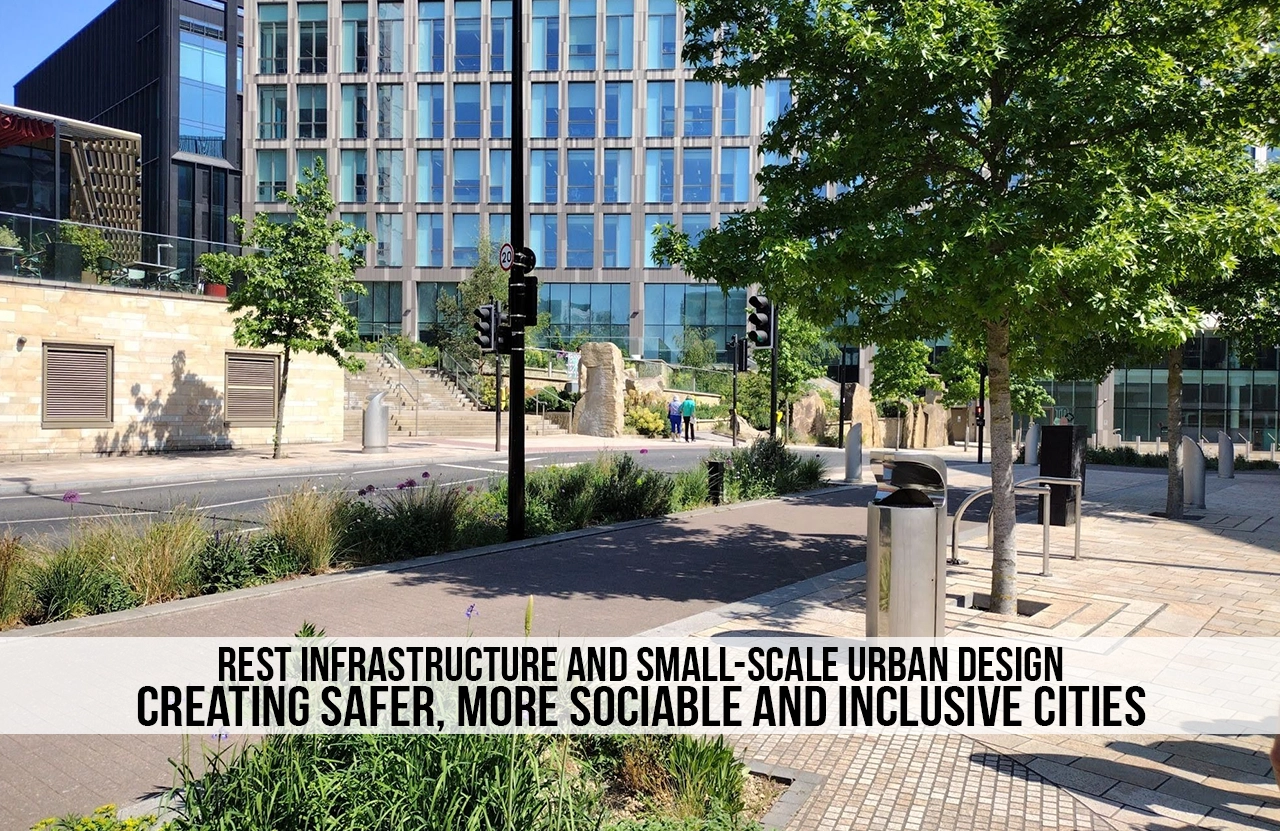
Rest infrastructure and small-scale urban design describe dedicated spaces within the built environment for rest, recovery and play. Examples include public seating such as benches and parklets, and recreational green spaces such as gardens and water features – both of which are designed to support the physical and mental wellbeing of local city dwellers by creating moments to stop, pause, reflect and/or commune.
Community
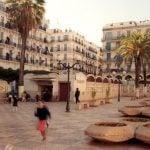
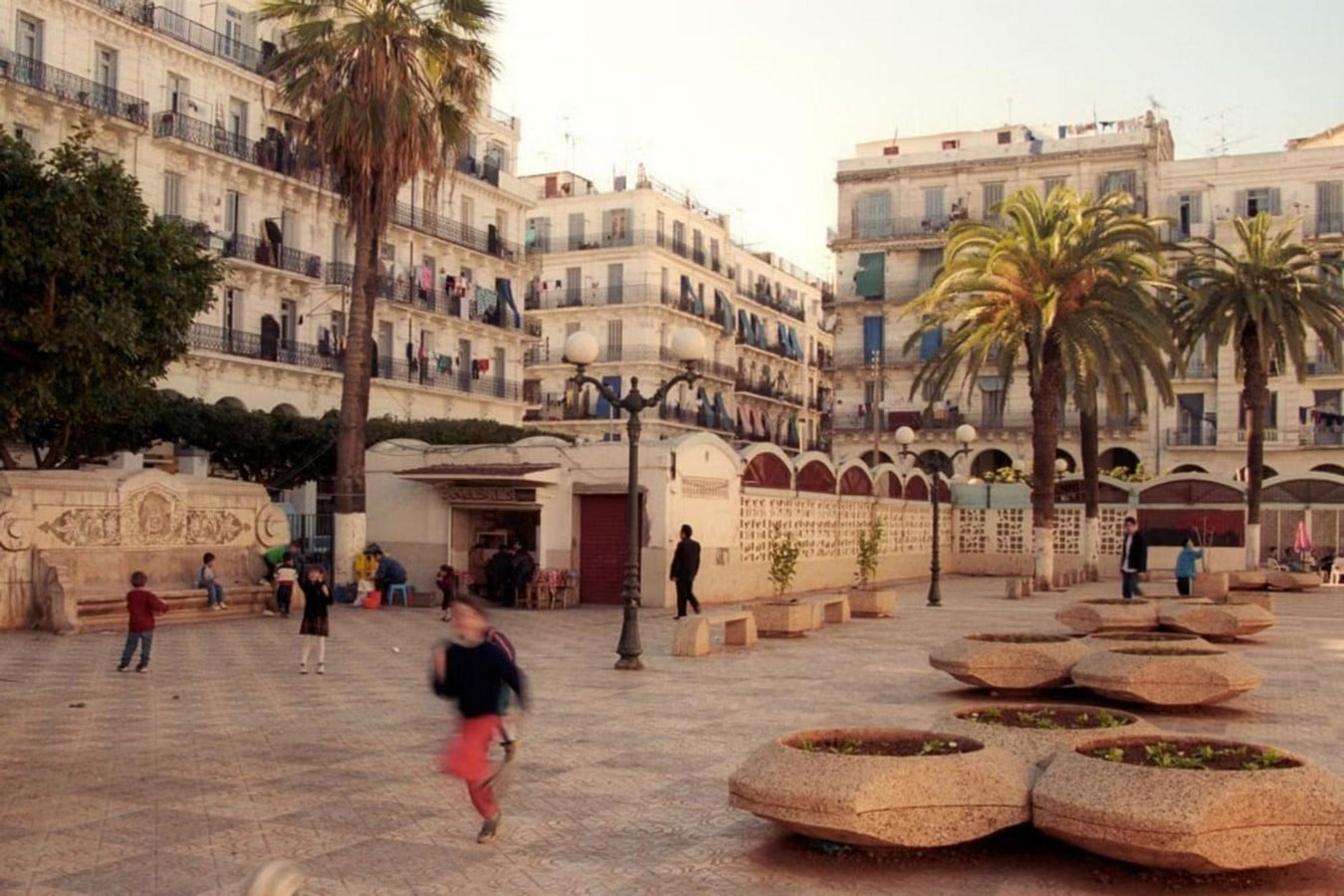
Small-scale urban design and rest infrastructure can foster a greater sense of community by transforming local streets into dynamic third spaces. In Algiers, the Algerian capital, Lara-Hernandez (2022) notes that whilst the ‘huge buildings, wide streets and large spaces’ caused people to feel ‘insecure and lost’, design elements such as ‘shady trees, benches and lights at night’ made people feel ‘comfortable’ carrying out activities such as ‘playing cards or gathering to chat’. Small-scale urban design in this case allowed pockets of the city to facilitate and reignite a sense of community in a new third space – not home, not school or work, but their local streets. This demonstrates the difference that rest infrastructure and small-scale urban design can have on local communities. In a city that otherwise felt isolating, overwhelming, disoriented and lonely, it was by integrating greenery, seating and lighting that city dwellers felt comfortable in their own cities once again.
Public Safety
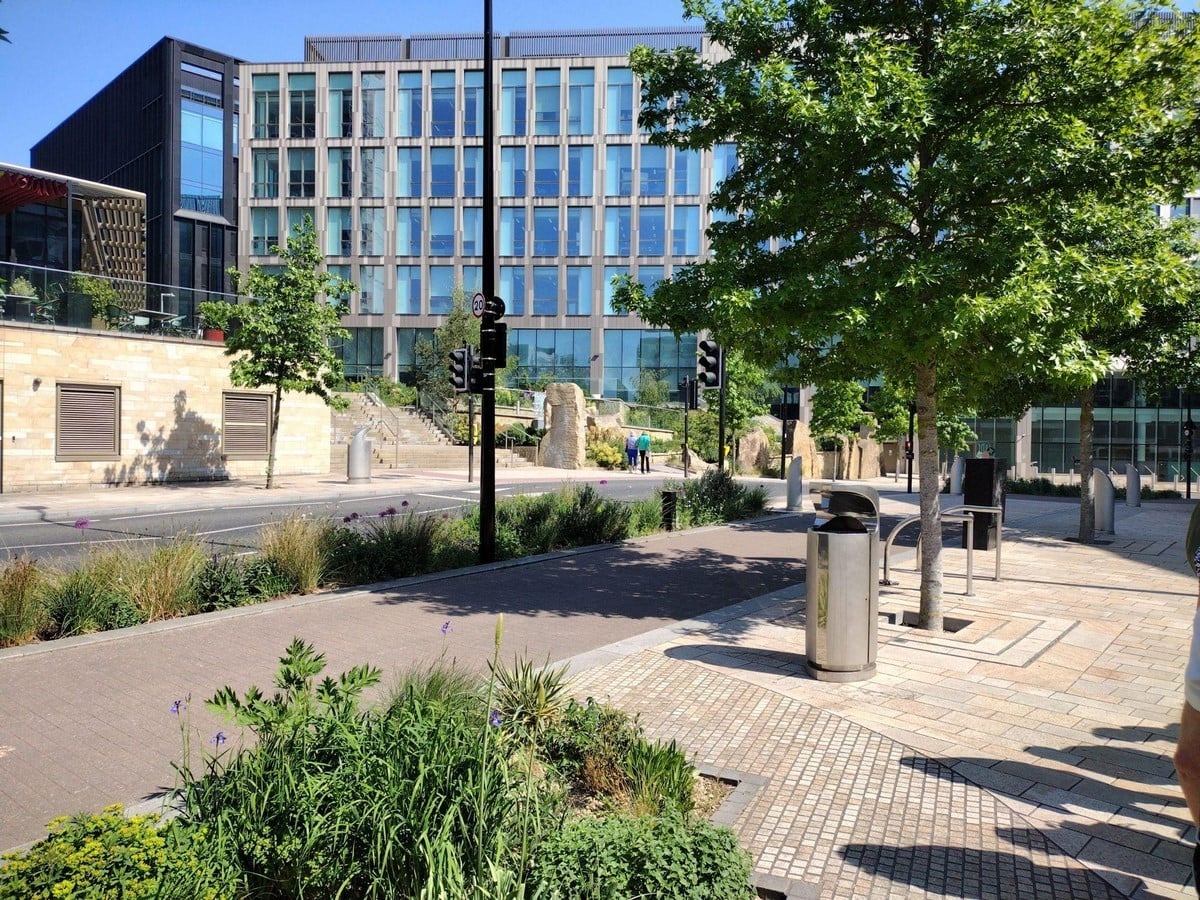
Public safety within cities describes the protections of people, property and institutions from hazards such as natural disasters, accidents, violence, crime, antisocial behaviour and harassment, particularly as it pertains to threatening the physical and mental wellbeing of others. In 2026, the British Government reported that 9 in 10 women reported feeling unsafe walking at night; Key issues raised were inadequate lighting, poorly maintained routes, personal safety fears and antisocial behaviour, with the majority of respondents saying they would feel safer walking in their neighbourhoods if these key issues were addressed (GOV.UK, 2026). Small-scale urban design and rest infrastructure can improve public safety by creating spaces to linger; this can improve natural surveillance by increasing the number of ‘eyes on the street’ (Jacobs, 1961). With regard to natural disasters such as flash flooding, Sustainable Urban Drainage Systems are examples of small-scale urban design interventions protecting the safety of local city dwellers.
Spatial Equity
The UN-Habitat recognises streets, parks and civic facilities as fundamental public goods and thus by 2030 aims to provide universal access to safe, inclusive and accessible, green and public spaces, in particular for women and children, older persons and persons with disabilities (UN-Habitat, n.d.). The absence of small-scale urban design and rest infrastructure, however, fails to consider many members of these groups who may require said infrastructure to have a positive experience of the city. Without moments of rest, this can negatively shape their experience of the built environment. This results in less time spent outdoors, given that moments of rest may not be catered for. Furthermore, when spending time outdoors to rest, recover or play in the city requires money for a coffee, sandwich or ice cream, this disenfranchises those of lower socioeconomic status.
Investing in small-scale urban design and rest infrastructure, therefore, demonstrates a commitment to creating more inclusive and equitable cities, as such infrastructure can also serve as access requirements, particularly for expecting women and children, older persons and persons with disabilities. Susan Fainstein (2010) identifies equity as a primary quality constituting urban justice. In the long term, this not only creates a greater sense of identity and belonging but also agency. This sense of empowerment is important, as the pride and ownership said groups are now able to take in their city can fuel further advocacy and participation, unique to their perspective and lived experience.
Investing in small-scale urban design and rest infrastructure ultimately demonstrates a commitment to creating safer, more sociable and inclusive cities. By transforming everyday streets into welcoming third spaces, small-scale urban design and rest infrastructure can nurture communities impacted by large-scale developments, facilitating community interaction and ultimately improving the mental wellbeing of city dwellers. Investing in rest infrastructure and small-scale urban design can also improve public safety, not only by creating spaces for people to linger, thus increasing natural surveillance, but also by implementing Sustainable Urban Drainage Systems (SuDS) to mitigate natural disasters such as flash flooding. Rest infrastructure and small-scale urban design can also contribute to the pursuit of spatial equity by ensuring that all city dwellers – including the elderly, disabled, expecting mothers, and children – can comfortably access and enjoy the city. By prioritising these small yet impactful design solutions, local authorities can indeed improve the physical and mental wellbeing of their inhabitants, fostering a greater sense of belonging and participation.
References List:
Active Travel England GOV.UK (2026). Nationwide plans announced to design safer streets as 9 in 10 women report feeling unsafe walking at night. [online] GOV.UK. Available at: https://www.gov.uk/government/news/nationwide-plans-announced-to-design-safer-streets-as-9-in-10-women-report-feeling-unsafe-walking-at-night [Accessed 6 Jun. 2026].
Fainstein, S.S. (2010). The Just City. [online] Ithaca, N.Y.: Cornell University Press; Bristol. Available at: https://www.jstor.org/stable/10.7591/j.ctt7zhwt [Accessed 7 Jun. 2026].
Lara-Hernandez, J.A. (2022). Cities: How Urban Design Can Make People Less Likely to Use Public Spaces. [online] The Conversation. Available at: https://theconversation.com/cities-how-urban-design-can-make-people-less-likely-to-use-public-spaces-184079 [Accessed 5 Jun. 2026].
UN-Habitat (n.d.). 11.7 Public Space | UN-Habitat. [online] unhabitat.org. Available at: https://unhabitat.org/11-7-public-space [Accessed 6 Jun. 2026].