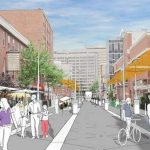
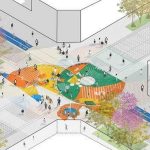
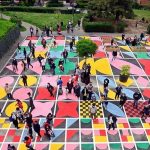
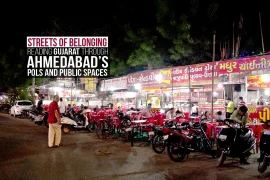
Streets, in many modern cities, have a great deal of influence and are sometimes underrated. They are generally considered to be the simple technical backbone for traffic patterns, to the point where their social, ecological, and experiential complexities are ignored. This article explores the notion that game design concepts such as levels, quests, and rewards might help make streets more game-like, readable, and engaging. Based in part on urban design principles, the tenets of environmental psychology, and the notion of responsive environments, it explores the possibility of thinking about streets not simply as routes, but more fully as game-like systems. Employing the framework of lines, lanes, and levels, it suggests that streets might not only engender empathy and facilitate negotiated pedestrian and vehicular flow, but that they might incorporate the environment and accommodate cars in a way that does not allow them to overpower the space.
-
Rethinking Streets as Everyday Urban Interfaces
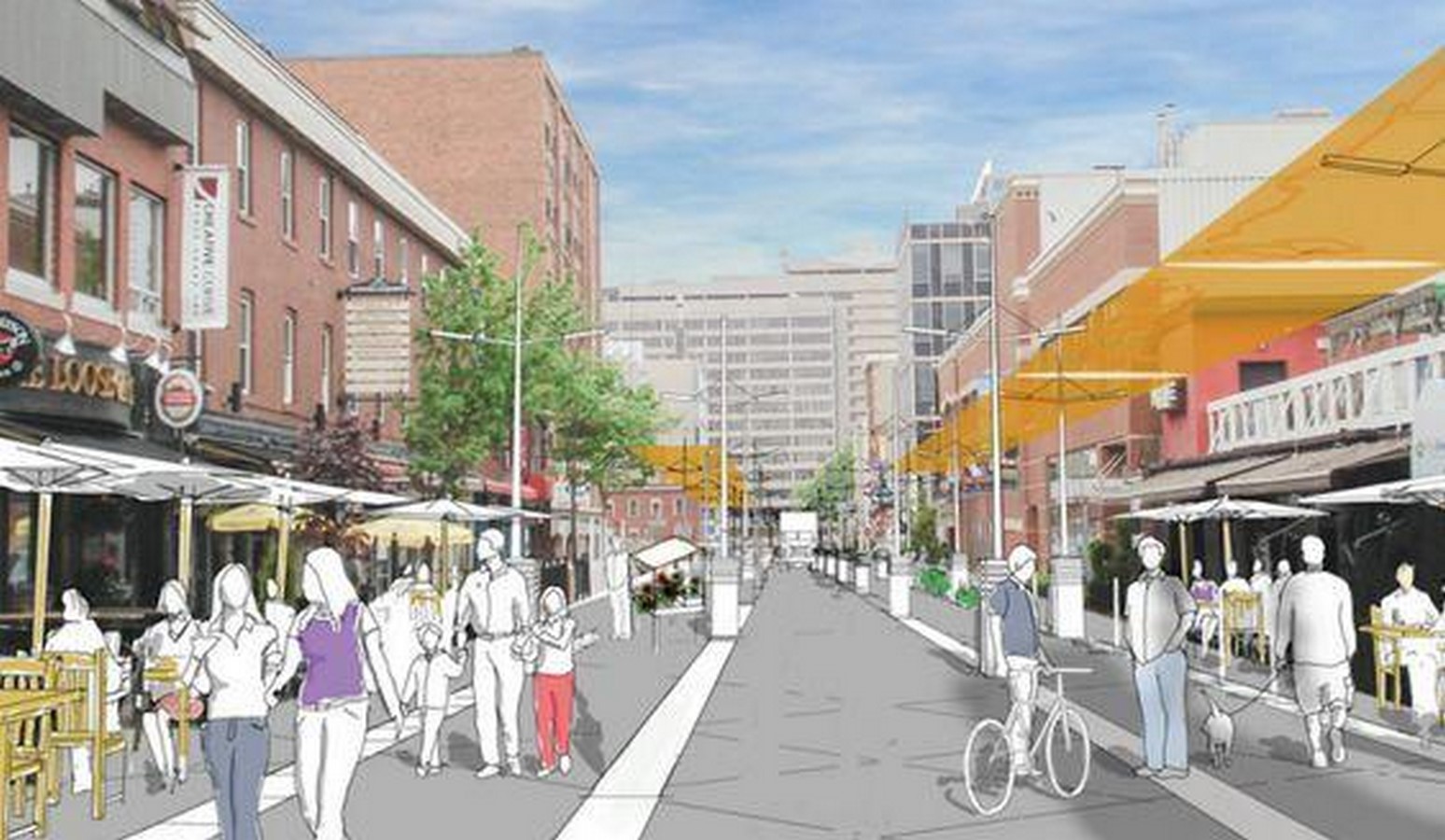
The streets are the most extensive and visible public realm in cities. They connect neighbourhoods, support economic life, enable mobility, and shape daily social interactions. Despite such centrality, modern street design has hitherto favoured vehicular efficiency over human experience, bringing about environments that are hostile to pedestrians, ecologically fragile, and socially fragmented (Appleyard, 1981; Jacobs, 1961).
So many streets are controlled by inflexible rules, strict hierarchies, and prescriptive zoning, which constrain adaptability and participation. This is in complete contrast to the historic street, especially in Asian, African, and European contexts, where movement was negotiated, multifunctional, and deeply embedded in social life. Such streets functioned less as engineered products and more as lived environments.
This article suggests that game mechanics-underlying systems that structure engagement in games-provide a useful conceptual lens for rethinking streets. Games rely on legibility, choice, feedback, progression, and participation. Translated into urban design, these principles can help streets to become more intuitive, empathetic, and engaging to diverse users.
This paper frames streets through lines, lanes, and levels to explore how game concepts like levels, quests, and rewards may inspire streets that balance human needs, ecological processes, and vehicular movement without reducing the street to a transport infrastructure.
2. Streets, Play, and Human Behaviour
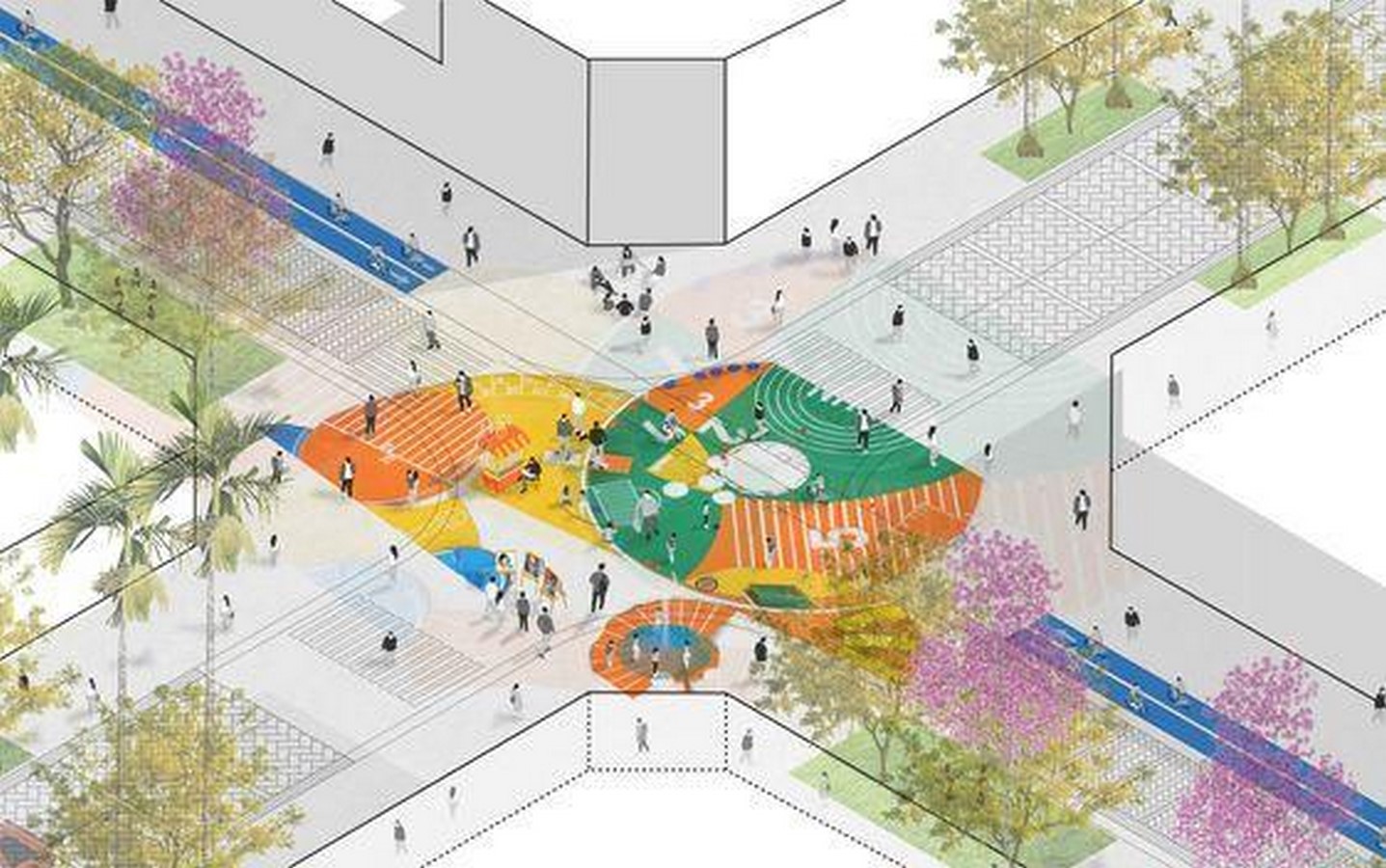
Play is a central part of being human. Learning, figuring out rules, and engaging with the world around us. Huizinga wrote, way back in 1955, that play was a condition of culture that imparts meaning to our lives. Streets are also where play has always occurred. Where kids play a game, where hawkers shout, where neighbours talk, where strangers move.
Jane Jacobs in 1961 stated that lively streets are dependent on “eyes on the street” – casual surveillance and interaction. Later in 2010, Jan Gehl stated that a successful street should allow for activities of choice and for socialising in addition to functional linear movement.
Yet, contemporary design aimed at accommodating traffic can take the fun out of the street. There are too many signs, barriers, and separated lanes to merely follow the rules rather than participate. Games, on the other hand, are successful by encouraging action, curiosity, and learning by experience (Salen & Zimmerman, 2004). Borrowing from the design of a game, the street itself can then be conceptualised as a system to which users respond and react, rather like gamers interacting with a shared space.
3. Lines: Rules, Cues, and Legibility
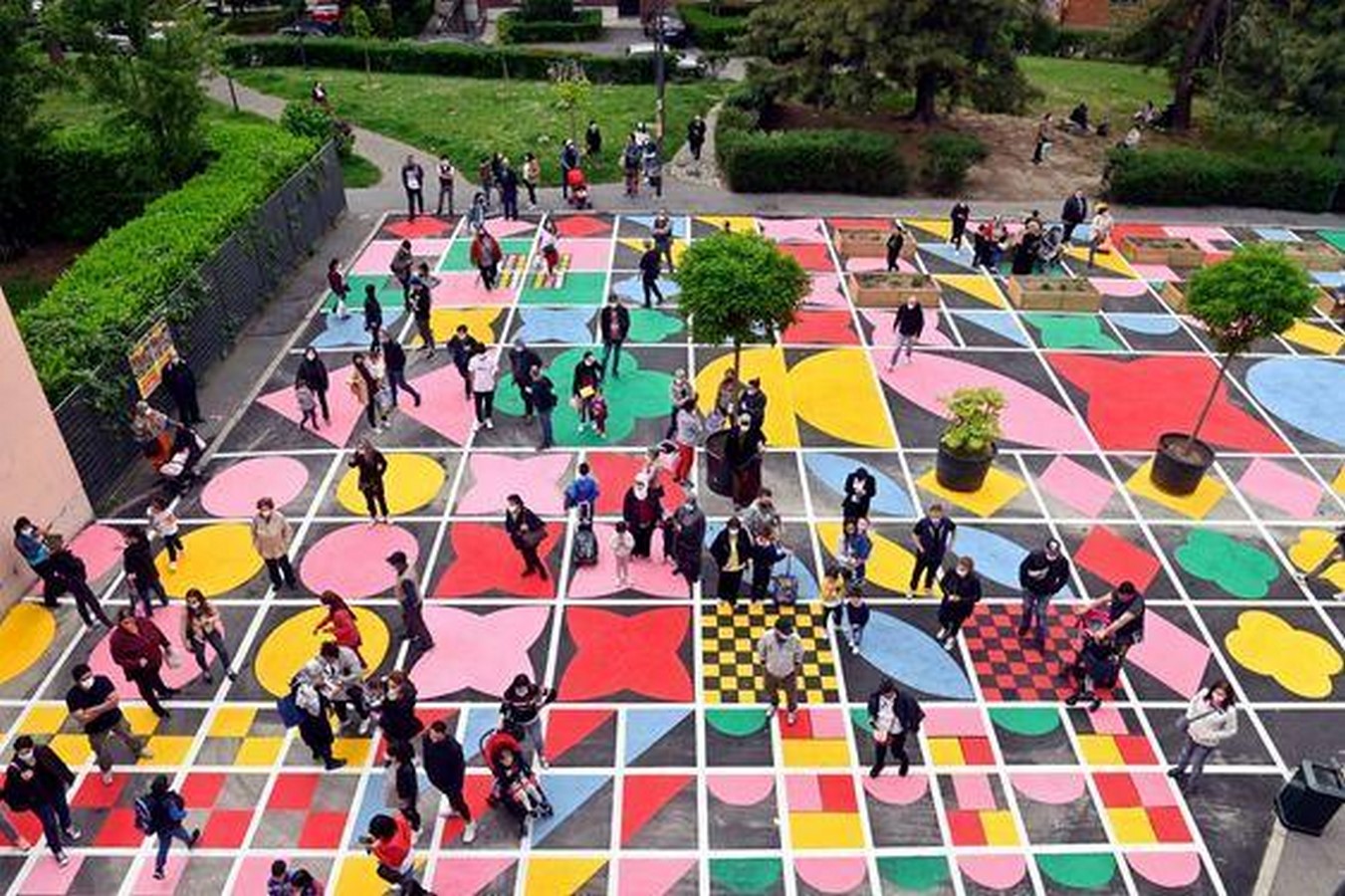
Lines are the most visible parts of streets: painted marks, curbs, edges, and the visual rhythm they create. Conventionally, lines serve as hard rules that separate users and police behaviour. Clarity saves lives, but when it is overblown, rigidity turns against attentiveness and empathy.
In game design, rules function best when they feel legible and intuitive, not tyrannical. The players intuitively understand boundaries through the environment-textures, cues, and visual signals. Similarly, streets could make use of design choices such as changes in paving, colour, material, or planting to guide behaviour without leaning only on signage or enforcement.
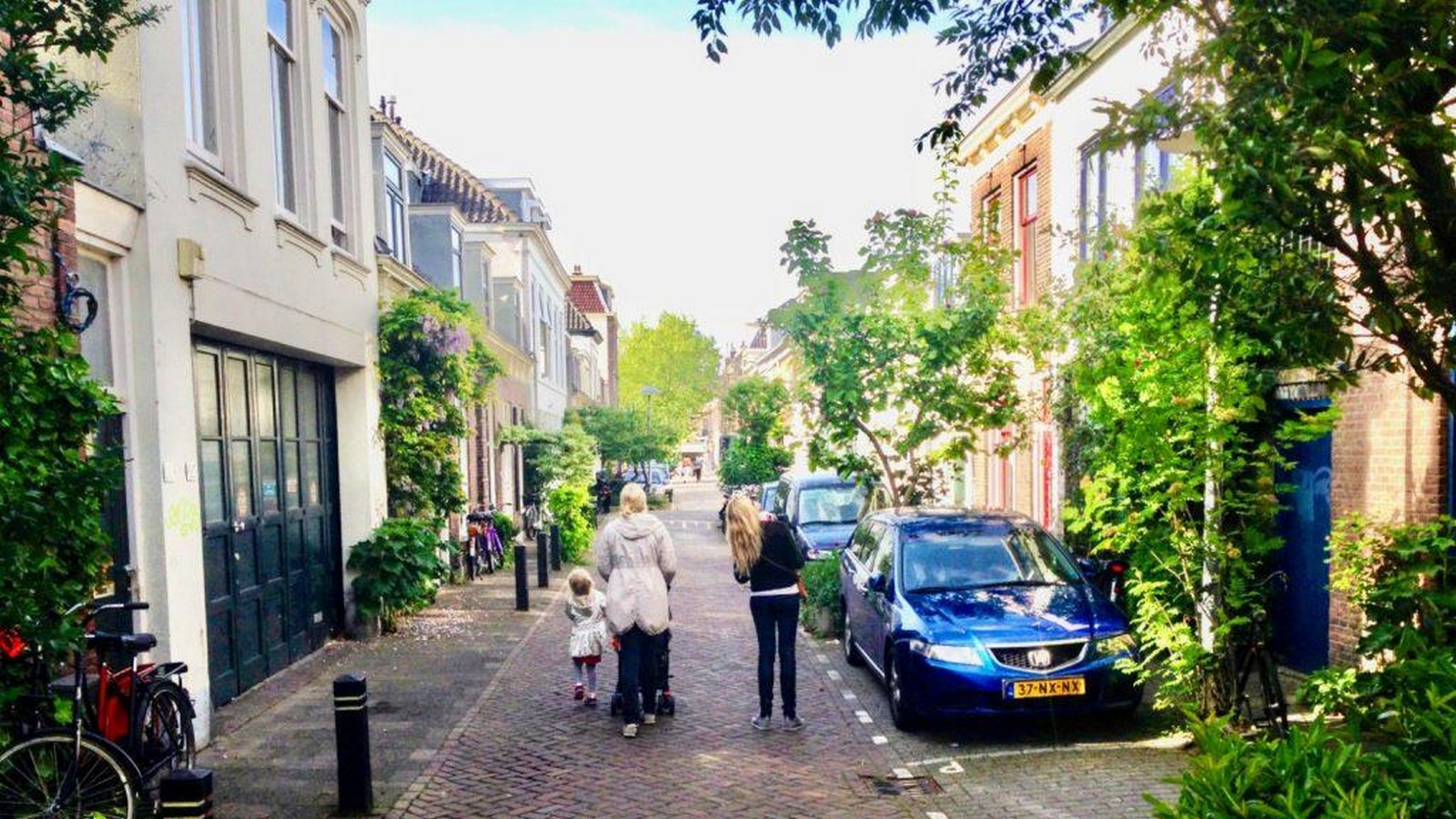
Shared streets and “woonerfs” illustrate how softened lines create eye contact and caution, particularly on the part of drivers (Hamilton-Baillie, 2008). Uncertainty here becomes a productive force, keeping people alert and considerate.
From a humanist perspective, these markings advocate inclusion: they acknowledge vulnerability through gentle speeds and mutual awareness for children, the elderly, and differently abled users. Ecologically, the lines can also conduct water, shadow, and greenery, lending weight to the concept that streets are living environmental systems and not sealed slabs.
4. Lanes: Negotiation, Choice, and Quests
Lanes are trajectories of movement, but they are also a question of choice within a system. In games, the choice of paths is based on abilities, desires, and preferences that come from skills, intentions, and comfort. In the same way, a street can create different possibilities for moving and being in public space.
Complete Streets frameworks advocate for multimodal lanes, but too often, these lanes are rigidly separated. A game-informed approach instead favours negotiated lanes: spaces whose function changes based on time and context. School streets closed at arrival time, festival streets giving pedestrians pride of place, market streets informally expanding onto the pavement create everyday “quests” in urban life.
These quests aren’t about winning or losing but participation. A pedestrian’s quest might be to find shade, to chat with someone, or to stay safe; a driver’s quest might be to move efficiently without causing harm. Streets that recognise multiple quests cultivate empathy by making people aware of each other’s aims.
This is crucially a view that doesn’t demonise vehicles. Cars, buses, and bikes are actors in a much more complex system, obeying various rules at various times. These streets feel like cooperative games where success depends on negotiation, not domination.
5. Levels: Vertical, Sensory, and Experiential Layers
The levels can also be described based on whether
Urban space, like game space, occurs in several levels of complexity. On the first level, tactile texture, sitting space, and movement afford the possibility of comfort. At eye level, the arrangement of shopfronts, selected trees, and definitions of enclosure and interaction occur (Gehl, 2010). Above that, balcony space, canopy definition, and light affect the microclimate. Below ground level is the drainage system with soil supporting the ecosystem.
“These layers of activation can convert thoroughfares into engaging spaces rather than simply route corridors. Sound, smell, light, and shade come more to the fore as streets are designed to be pedestrian-paced.”
Indeed, as Ulrik Soderlind writes: “The importance of sonic experience
Levels also bring nature into urban areas. Green infrastructure such as bioswales, rain gardens, and urban trees, provides feedback loops that react to climate and usage (Ahern, 2011). Thus, streets in cities transform to build resilience in street infrastructure so that the infrastructure adapts naturally rather than resisting nature.
6. Rewards, Feedback, and Behaviour Alterations
In games, the reward structure is a hook. Learning is sparked by rewards, and it reinforces the desired behaviour. Streets, by contrast, depend heavily on negative feedback—fines for speeding, traffic jams, and crashes.”
A game-based street turns the process around in subtle, potent ways. The use of shade presses people to walk. Busy edges pay off those who pause to look. Safe crossings pay off those who wait.
Studies also show that self-explaining spaces, which foster users in explaining why they are behaving in a certain way, are generally more effective than closely controlled systems (Hamilton-Baillie, 2008). If the street culture promotes alertness and cooperation, users will take on those qualities.
These feedback mechanisms represent the essence of humane urban design. These mechanisms serve the purpose of sustaining dignity and freedom rather than inspiring fear and compliance.
7. Responsive Environments: Streets That Adapt and Learn
Responsive environments offer a theoretical framework to incorporate game elements in the urban setting. According to Bentley et al. (1985), responsive environments should be permeable, varied, legible, robust, visually fit, and rich.
Responsive streets
When thinking about streets, responsiveness can be described as spaces that respond to changing users, seasons, and activity types. Responsive streets effectively communicate through form rather than heavy-handed controls. Responsive streets are also able to entertain a variety of uses and readings over time, in much the same way that an open-ended game is played.
Nature increases responsiveness by introducing variability and feedback. Rain, sunshine, and vegetation add visible changes to streets, making it a reminder that streets are dynamic, living entities. Cars, in their turn, respond to these stimuli to adjust their speed.
Therefore, empathetic streets create empathy not as a moral mandate but as a spatial fact that occurs through their usage.
-
Ethics, Empathy and the Right to the Streets
Thinking of streets through the lens of game-like mechanics yanks ethics right into view: who gets to write the rules, who gets to reap the rewards, who gets to stay protected. A humane street recognises that power and protection are not distributed evenly between users.
Following Lefebvre’s “right to the city,” streets should become shared spaces, rather than merely A-to-B routes. Empathy-driven design puts the most vulnerable first, while allowing for essential mobility.
And Nature, too, deserves a seat at the table. Trees, water, soil, and other-than-human life are not merely utilitarian; they have become significant agents in shaping the way a city might be experienced. Treating the streets as shared games invites coexistence rather than exploitation.
2. Streets as Playable, Living Systems
Streets are not just lines on a map, nor are they simply car lanes. Streets are complex, living systems influenced by human behaviour, culture, and ecology. By using game mechanics, such as levels, quests, and rewards, there is great potential to reimagine streets as engaging, legible, and humane spaces.
This piece uses lines, lanes, and levels to illustrate how streets can go beyond rigid hierarchies into negotiated, responsive, and empathetic environments. These streets do not reject vehicles; they reposition them within a cooperative system of valuing life, nature, and social interaction. Making streets playable might be how cities recover their balance in times of climate uncertainty and social fragmentation—where movement serves life and infrastructure becomes a conduit for care, rather than for control.
References (APA Format).
Ahern, J. (2011). From fail-safe to safe-to-fail: Sustainability and resilience in the new urban world. *Landscape and Urban Planning*, 100(4), 341-343
Appleyard, D. (1981). Livable streets. University of California Press
Bentley, I., Alcock, A., Murrain, P., McGlynn, S., & Smith, G. (1985). Responsive environments: A manual for designers. Architectural
Gehl, J. (2010). Cities for People. Island Press.
Hamilton-Baillie, B. (2008). Shared space: Reconciling people, places and traffic. Built Environment,
Huizinga, J. (1955). Homo ludens: A study of the play-element in culture. Beacon Press.
Jacobs, J. (1961). The Death and Life of Great American Cities. Random House.
Lefebvre, H. (1996). Writings on cities (E. Kofman & E. Lebas, Trans.). Blackwell. (
NACTO. Urban Street Design Guide. National Association of City Transportation Officials, 2013.
Salen, K., & Zimmerman, E. (2004). Rules of play: Game design fundamentals. MIT Press.
Shahid, M. (2024, October 20). Everyday Urbanism: Transforming daily life in cities. Urban Design lab. https://urbandesignlab.in/everyday-urbanism/?srsltid=AfmBOopOR-IZU90exdNWEFxKqzWScmZdK1vj_5WkLRks4cyDhp4jI41b
Shepard Scott ( April 29, 2025 ). Complete & Living Streets: Repurposing Public Spaces for People.UMX Urban Mobility Explained .https://urbanmobilitycourses.eu/blog/complete-living-streets-repurposing-public-spaces-for-people/