‘Being less bad is no good’ is a William Mc Donough approach towards designing buildings that are a positive, regenerative force to delight in. Regenerative design aims to create built volumes that not only minimise harm but also create a positive impact on the environment. It helps human and natural systems to seamlessly integrate, benefitting both people and the planet. At the urban level, they are capable of creating a remarkable impact that revitalises natural systems, fosters resilient communities, and creates self–sustaining urban neighbourhood. Although definitional inconsistencies and a lack of detailed implementation mechanisms make it challenging to adopt a regenerative approach, implementing a holistic strategy that considers the complex interactions (biodiversity, transportation, housing, infrastructure, community needs, water and food security, etc) within urban fabrics can effectively regulate the process.

Revitalising Natural Systems
Revitalising natural systems such as biodiversity, waterways, and green spaces is often done by integrating ecological principles into the urban fabric. Such intervention enhances and restores the natural ecosystem indicating that even minimal yet conscious actions can preserve environmental integrity. One notable example is the High Line in New York City, which transformed an abandoned elevated railway line into a vibrant green space. The project played a significant role in increasing biodiversity through the usage of native plants which attracted various species. The proposal not only provided a public park for the residents but also created a thriving 1.45-mile-long urban habitat.

Another prime example of enhancing biodiversity is the Cheonggyecheon Stream in Seoul, South Korea. The 11km long stream was buried under an elevated highway. The mission was to uncover and restore the stream and create a vibrant public place that enhances biodiversity. The project improved air and water quality, supported local wildlife, reduced the Urban Heat Island Effect (UHIE), and increased recreational spaces, all contributing to enriching biodiversity while boosting the local economy through tourism. This project is an ideal demonstration of how a regenerative city can capitalise on the site’s heritage and strengths to create ecological and social benefits.

Fostering Resilient Communities
Regenerative cities reduce their reliance on external sources by prioritising sustainable food systems, preserving heritage, and facilitating equitable prosperity. A grassroots initiative that turned vacant lots of unused land – once a symbol of urban decay into productive spaces for local food production was Detroit’s urban agriculture movement which began in the 1890’s. Ever since, Detroit has continuously evolved through numerous challenges highlighting the silver lining of such human-centric processes. The initiative reconnected the residents with their food sources, provided economic opportunities, and has continued to strengthen community bonds to this day.
If enhancing economic opportunities by generating revenue for a city to thrive is a pragmatic approach, preserving the heritage and designing spaces that promote cultural exchange to increase the quality of life is a holistic take on the concept of Regenerative Design. HafenCity in Hamburg preserved and repurposed its historic warehouses and structures to maintain the character of the old port while giving them new functions. The cutting–edge sustainable practices that blend history with modern design provide spaces for social interaction and recreation fostering social regeneration. The approach boosted tourism, stimulating Hamburg’s economy while retaining its historical charm.

Self Sustaining Neighbourhoods
The regenerative approach emphasises the importance of producing closed cycles of energy, water, and materials to ensure an efficient urban metabolism. Renewable energy sources, such as solar and wind, help reduce reliance on fossil fuels, lower greenhouse gas emissions, and promote energy independence, contributing to climate resilience. Masdar city in Abu Dhabi, Dubai is well known for its renewable energy integration with the solar power plant facility which aims to generate a significant portion of the city’s energy needs. Covering an area of 6 square kilometres designed by Foster & Partners, Masdar City draws inspiration from traditional Arabic settlements, incorporating narrow streets, intimate public spaces, small openings, and high density. With a strong emphasis on walkability and the use of public transport, the city employs electric and driverless transportation systems focused on minimising carbon emissions. The city’s commitment to sustainable energy development makes it a benchmark for future urban centres.

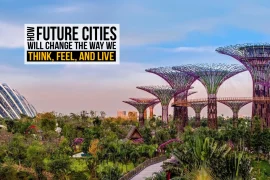
Cities like Singapore and Seoul exemplify self-sustaining urban environments through their water management and waste recycling processes. The Marina Barrage in Singapore acts both as a tidal barrier and a freshwater reservoir, managing up to 40% of the city’s stormwater contributing to their sponge city initiative. Seoul employs a pay-as-you-throw system, achieving a 60% recycling rate and encouraging community involvement. These cities not only minimise resource consumption but also enhance resilience and quality of life, showcasing the transformative potential of a regenerative approach to urban living.
The strategies outlined above may pose unique challenges, but they are essential for achieving a truly regenerative future. The strength of these approaches lies in their ability to design cities that are both sustainable and thriving. Ultimately, regenerative design should not be seen as a standalone strategy but as an integral part of any design process, seamlessly shaping spaces that benefit both people and the planet.
Citations for website:
- Planet Detroit (2024). Composting, water access and backyard chickens: Detroit’s urban farming evolution. [online]. Available at: https://planetdetroit.org/2024/03/detroit-urban-farming-tepfirah-rushdan/ [Accessed 10.10.2024]
- High Line (2000 – 2024). Design [online]. Available at: https://www.thehighline.org/visit/ [Accessed 10.10.2024]
- Landscape Performance Series (2024). Cheonggyecheon Stream Restoration Project. [online]. Available at: https://www.landscapeperformance.org/case-study-briefs/cheonggyecheon-stream-restoration-project [Accessed 12.10.2024]
- HafenCity. Urban Planning. [online]. Available at: https://www.hafencity.com/en/urban-development/urban-planning [Accessed 12.10.2024]