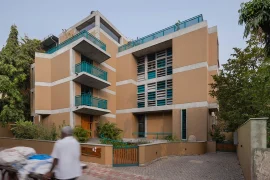
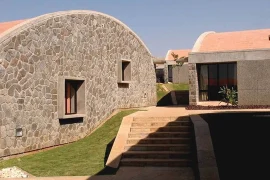
The Cultural Education Centre (CEC) at Aligarh Muslim University stands as a vibrant cornerstone of student life, a role it has embraced since the early 1950s. Originally nestled within the historic Sir Syed Hall, the Centre was surrounded by a constellation of academic and administrative offices.
The Cultural Education Centre (CEC) is dedicated to enhancing cultural and educational activities across campus and within the community. With its interdisciplinary approach, the Centre fosters a rich exchange of ideas and skills between the University and external entities. It serves as a platform for engaging in art, culture, literature, performing arts, and education, aiming to ignite meaningful conversations and promote the exchange of knowledge and skills among participants from various backgrounds.

Historical Context
Background of Aligarh Muslim University:
The Aligarh Muslim University was born from the vision of Sir Syed Ahmad Khan, a trailblazing Muslim reformer and statesman. To ensure that Muslims could continue to play a key role in society, Sir Syed Ahmad Khan recognized the importance of learning English and Western sciences. This realization came after the British decision in 1842 to replace Persian with English for official and legal purposes, which deeply unsettled Muslims in the subcontinent.
Sir Syed established the Muhammadan Anglo-Oriental College in Aligarh with the aim of blending British educational standards with Islamic values. Drawing inspiration from the Oxford and Cambridge universities he had visited in England, the college was inaugurated on January 7, 1877.
By 1920, the college had evolved into Aligarh Muslim University. It was one of the first fully residential institutions established in India, whether by government or private means.

Need and Evolution of Cultural Education Centre (CEC) at Aligarh Muslim University:
Maulana Abul Kalam Azad, India’s first education minister, proposed the idea of establishing the University Education Commission to address excessive specialization in education. To implement this vision, the Ministry of Education set up the Commission in 1948-49, aiming to introduce General Education principles and achieve a more balanced educational approach.
During his tenure, Col. Basheer Husain Zaidi, the Vice Chancellor of Aligarh Muslim University, remarked in 1958, “Aligarh University is a residential institution where most students reside on campus. Therefore, it is crucial to provide ample opportunities for them to engage in healthy activities during their free time.
To support this, the General Education Centre will offer a range of activities, including visits to museums, art galleries, and the planetarium, as well as music programs and workshops for technical and artistic development. This approach addresses the risks of excessive specialization and societal fragmentation by providing a well-rounded education that fosters intellectual awareness, social responsibility, and a balanced, integrated personality.”
Mr. C.D. Deshmukh, Chairman of the University Grants Commission, laid the foundation stone for the General Education Centre at Aligarh Muslim University on November 8, 1960. This initiative was made possible by a generous donation of ₹22 lakhs from the Ford Foundation. Renowned architect Padma Shri Joseph Allen Stein was chosen to design the project. Prof. Monis Reza, a key figure in securing the Ford Foundation’s support, was appointed as the Coordinator of the General Education Centre and served as the university’s primary liaison for the project.
The General Education Centre (GEC), established under the leadership of Prof. Monis Reza (1962-64) and Prof. K. A. Nizami (1970-72), aimed to provide educational enrichment beyond regular subjects. Its offerings included preparation for IAS and PCS exams through the Competition and Guidance Centre, short evening courses on topics such as the Aligarh Movement, health, and journalism; hobbies and workshops in photography, painting, sculpture, clay modeling, and woodworking; and various cultural clubs including the Film Club, Drama Club, Music Club, and Literary Club.
As time progressed, the Centre adapted to changing student interests and needs. Competition guidance became less relevant due to the availability of better resources and coaching. Short evening courses were partially replaced by specialized departments, and interest in hobbies waned with the establishment of dedicated departments. By 1982, the compulsory General Education paper was removed from the curriculum. Despite these changes, the cultural clubs within the GEC remained highly popular and continued to thrive. However, as funding agencies and the University Grants Commission shifted their focus towards cultural education, the GEC’s role evolved. Consequently, on November 12, 2013, the Academic Council of Aligarh Muslim University resolved to rename the General Education Centre as the “Cultural Education Centre.”

Location and Context
The Cultural Education Centre (CEC) is situated on the main campus along University Road, marked by the prominent Bab-e-Syed Gate, the main entrance to Aligarh Muslim University. The CEC’s central location enhances its visibility and integration within the university’s layout.
The CEC is surrounded by key campus landmarks: the Maulana Azad Library is adjacent, while Suleiman Hall is situated behind it. The Arts Faculty is located directly across University Road.

Design Concept and Philosophy
Stein & Co selected a site in the heart of the university for the General Education Centre. This location spans from the academic buildings to the area with most residential structures, placing the complex in a central position that bridges these two key zones. The central positioning has significantly enhanced the Centre’s planning and functionality.
He also wrote a beautiful preamble on the concept of his design.
“It has been the endeavor of the architects to design and inter-relate the buildings of the General Education Centre so that an integrated attitude toward culture will be encouraged and facilitated in the individual student, as well as to provide a workable background for carrying on the academic requirements of the Centre’s program.
- Reinforcement of classroom impressions through surroundings that illustrate that culture is within the scope of one’s immediate day-to-day surroundings and society, and
- Encouragement to transpose classroom impressions to deeper levels of awareness through stimulating interchange of ideas in informal discussions (non-academic, student staff student contacts) and comparisons (exhibitions).
The idea behind the Centre was to transition from passive learning to a model that emphasizes active personal engagement and accountability. This approach aligns with the ancient ideals of integrating the mind, body, and environment.

Planning and Spatial Organization
The Cultural Education Centre is seamlessly integrated into its surroundings with a thoughtfully designed vehicular entrance from University Road. This primary entry leads to a paved pathway offering access to the Centre. The road continues, connecting to the Kennedy Auditorium at the rear and looping back to University Road, creating a seamless flow for both entry and exit. Additionally, there is another vehicular entrance to the Kennedy Auditorium from the Maulana Azad Library side. This layout not only ensures efficient vehicular circulation but also enhances accessibility and connectivity within the complex.
The Cultural Education Centre (CEC) is designed with a layout that seamlessly integrates functionality and aesthetics. Upon entering from University Road, visitors follow a paved path to the central court. To the left, a serene fountain pool enhances the space’s tranquility, while adjacent is the Central for Professional Courses building block.
The central court acts as a hub, connecting various parts of the Centre. Directly across is the Musa Dakri Museum. To its left is the Department of Museology, and to the right, a covered corridor leads to the cultural studios and classrooms.
A U-shaped courtyard lies between the Central for Professional Courses and the cultural block, enclosed by a brick and jali wall at the back and designed for informal gatherings. The cultural block opens into a shaded open-air court with outdoor classrooms, which connects to the Open Theatre through a jali screen with an opening.
The Musa Dakri Museum is connected to the Kennedy Auditorium via a covered foyer. The auditorium, also accessible from the central court, is a key part of the complex, ensuring smooth circulation throughout the Centre. This well-organized layout enhances both accessibility and the integration of the Centre’s various elements into a cohesive space.

Building Blocks of the Cultural Education Centre:
Centre for Professional Courses / Admin Block:
A single-story block running parallel to the paved entry path, featuring a roof supported by a series of arches. It includes a corridor and cubicles used for administrative offices.

Department of Museology:
An L-shaped building located to the left of the central court, with a double-story section facing the court and a single-story section. Elevated on piers to allow passage underneath, the building features a roof with arches covered by thin concrete shells and windows opening into the central court.

Cultural Block:
Connected via a covered corridor to the central court, this block includes offices, a conference room, and cubicles for various clubs such as Drama Club, Eco Club, Film Club, Fine Arts Club, Music Club, and Literary Club, along with restroom facilities.

Musa Dakri Museum:
two-level museum building housing four lecture rooms, a museum hall, and a circular staircase leading to an art gallery on the first floor. The façade is adorned with high semi-circular arches with narrow window openings and complemented by a mural created by renowned painter M.F. Husain.

Kennedy Auditorium:
Linked to the museum building, this auditorium has a seating capacity of approximately 1,375 people, making it the largest auditorium in any Central University in India at the time of its construction. The auditorium features a 47-foot-high ceiling and a state-of-the-art stage ideal for theatrical and musical performances. Its hexagonal form, steeply dished floor, and shallow under-balcony space maximize seating. The exterior is decorated with high semi-circular arches with narrow window openings, providing ventilation.

Open Interactive Courts:
Designed to encourage interaction among people from diverse cultural backgrounds, these open spaces are integral to the Centre’s layout.

Materials and Construction Techniques
The façades of the blocks of the Cultural Education Centre (CEC) are characterized by exposed brickwork and concrete, complemented by decorative brick and sandstone jalis. The buildings feature high semi-circular arches with narrow window openings, framed with metal and glass and include rectangular and circular ventilators. The open courts and corridors are paved with sandstone slabs, with some courts using gravel.
The roofs of the complex are constructed with a series of arches covered by thin concrete shells. Water drainage is managed through strategically placed spouts between the roof arches to prevent damage to the façades.

Sustainability and Environmental Considerations
The compact arrangement of the building blocks promotes efficient airflow, allowing cooler, high-pressure air to circulate throughout the complex and enhance overall thermal comfort. The decorative jali work at the courtyard entrances is pivotal in directing and managing this airflow. As air flows through the openings, its pressure rises, which lowers its temperature and helps cool the space. This jali design also effectively filters light and creates a tranquil atmosphere, providing relief from the intense sun.
Additionally, the water fountain serves as a passive cooling system. During the hot, dry summer months, it helps regulate both temperature and humidity, further enhancing the comfort of the environment within the centre.

References List:
- Amu.ac.in. (2018). Home Page – Cultural Education Centre | AMU. [online] Available at: https://www.amu.ac.in/centres/cultural-education-centre/home-page [Accessed 11 Sep. 2024].
- Aligarh Muslim University. (n.d.). https://amu.ac.in/about-us/history. [online] Available at: https://www.amu.ac.in/about-us/history.
- History (2016) Cultural Education Centre, AMU. Available at: https://www.cecamu.in/history/ (Accessed: 12 September 2024).
- GEC to CEC (2017) Cultural Education Centre, AMU. Available at: https://www.cecamu.in/gec-to-cec/ (Accessed: 12 September 2024).
Images / Visuals
- Arif, H. (2024) Cultural Education Centre, AMU [Photograph].
- Arif, H. (2024) Victoria Gate, AMU [Photograph].
- Arif, H. (2024) Museum Rear View, Cultural Education Centre, AMU [Photograph].
- Wikimedia.org. (2022). File:Bab-e-Sayyad.jpg – Wikimedia Commons. [online] Available at: https://commons.wikimedia.org/wiki/File:Bab-e-Sayyad.jpg [Accessed 11 Sep. 2024].
- Arif, H. (2024) Museum Side View, Cultural Education Centre, AMU [Photograph].
- Arif, H. (2024) Site Plan of the Cultural Education Centre, AMU [Image of drawing]. Based on a reference from: Building Department, Aligarh Muslim University.
- Arif, H. (2024) Centre for Professional Courses, Cultural Education Centre, AMU [Photograph].
- Arif, H. (2024) Deaprtment of Museology, Cultural Education Centre, AMU [Photograph].
- Arif, H. (2024) Cultural Block, Cultural Education Centre, AMU [Photograph].
- Arif, H. (2024) Musa Dakri Museum, Cultural Education Centre, AMU [Photograph].
- Arif, H. (2024) Kennedy Auditorium, Cultural Education Centre, AMU [Photograph].
- Arif, H. (2024) Tree Courtyard, Cultural Education Centre, AMU [Photograph].
- Arif, H. (2024) Museum Windows, Cultural Education Centre, AMU [Photograph].
- Arif, H. (2024) Foyer Connecting Museum and Auditorium, Cultural Education Centre, AMU [Photograph].