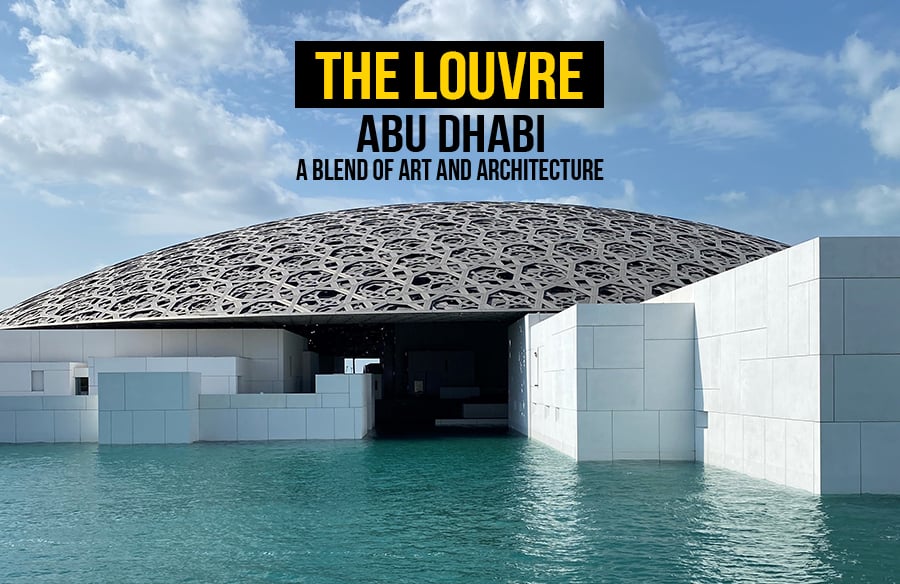
The Louvre Abu Dhabi, situated on Saadiyat Island in the capital of the United Arab Emirates, is not only a testament to the harmonious blend of culture and history but also a monumental piece of contemporary architecture. Designed by the renowned French architect Jean Nouvel, the museum opened in November 2017, marking a significant cultural milestone for the region. The building itself stands as a work of art, making a bold statement about the interplay between art, light, water, and space. This article explores the architectural wonders of the Louvre Abu Dhabi, diving deep into its design details and how they complement its function as a museum.

The Concept: A “Museum City” in the Sea
Jean Nouvel’s vision for the Louvre Abu Dhabi was to create a Museum City that integrates the natural environment of the surrounding Arabian Gulf. The structure is composed of 55 individual buildings, forming a microcosm of a traditional Arab city. These buildings, connected by walkways, plazas, and water features, sit beneath a vast dome that becomes the focal point of the entire complex.


The site’s proximity to the sea plays a crucial role in the architectural narrative. The buildings seem to float on water, echoing the historical connection between the Arabian Gulf and its people’s reliance on maritime trade and exploration. This blending of land, water, and built form evokes a sense of timelessness, connecting the museum to both the past and future of the region.

The Dome: Architectural Masterpiece
The most striking feature of the Louvre Abu Dhabi is undoubtedly its massive dome, which measures 180 metres in diameter and weighs 7,500 tons. Despite its size, the dome appears to float weightlessly above the museum complex. This effect is achieved through a complex system of supports that are hidden from view, allowing the structure to appear as if it’s suspended in mid-air.

The dome’s design draws inspiration from the region’s rich history of Islamic architecture, particularly the use of intricate geometric patterns. The latticework, known as the “Rain of Light,” is composed of eight layers of stainless steel and aluminium in a geometric configuration, filtering sunlight into the spaces below in a dazzling, dynamic manner. As the sun moves across the sky, the light shifts and changes, casting intricate patterns of light and shadow on the ground, walls, and water surrounding the museum.

This interplay of light is a deliberate nod to the Mashrabiya, a traditional element of Islamic architecture that regulates light and temperature while offering privacy. Here, Nouvel takes this concept and expands it into a modern, larger-than-life scale, creating an ever-changing, immersive experience for visitors.
Materials and Sustainability: A Reflection of the Environment
The Louvre Abu Dhabi’s architectural materials were carefully chosen to not only complement the museum’s function but also respect the environment. The use of high-quality materials like steel, aluminium, and concrete ensures the building’s durability in the harsh desert climate. The dome’s reflective properties, in particular, help reduce heat gain, minimising the need for cooling within the museum’s interior.

Sustainability was a key consideration in the design, with Nouvel aiming to minimise the environmental impact. The dome provides shade over much of the site, reducing the temperature by several degrees beneath it. This reduces the energy required to cool the internal spaces, an important factor in a region where temperatures can soar. The water features, aside from their aesthetic function, also aid in natural cooling through evaporation.


Moreover, the museum’s design takes full advantage of natural ventilation, with open-air walkways between galleries allowing breezes to flow through. The structure is a study in how modern architecture can incorporate sustainable practices while still achieving a monumental, awe-inspiring effect.
The Galleries: A Journey Through Time and Culture
Inside the museum, the Louvre Abu Dhabi contains 23 galleries spread over 6,400 square metres. The interior spaces are as thoughtfully designed as the exterior, with a layout that guides visitors on a journey through time, offering glimpses of human history and artistic expression from various civilizations.

The galleries’ minimalist design allows the artworks to take centre stage, with neutral tones and clean lines providing a serene backdrop. High ceilings and controlled lighting create an atmosphere that’s both spacious and intimate, enabling visitors to connect with the art in a deeply personal way. The galleries vary in size and orientation, reflecting the diversity of the collections, which range from prehistoric artefacts to contemporary masterpieces.

In contrast to the exterior’s dramatic play of light and shadow, the interior lighting is carefully controlled to preserve the art and ensure that each piece is illuminated perfectly. The result is a seamless dialogue between art and architecture, where the building enhances the visitor’s experience without overshadowing the works on display.
Integration of Nature: Water, Light, and Space
One of the key elements of the Louvre Abu Dhabi’s design is the integration of natural elements such as water, light, and space. These components are not merely decorative but are central to the museum’s identity. Water features are scattered throughout the complex, reflecting the dome’s light patterns and creating a tranquil ambiance.
Nouvel’s decision to incorporate water as a key element is rooted in the cultural and environmental significance of the Arabian Gulf. The pools of water mirror the surrounding sea, reinforcing the sense that the museum is part of the natural landscape rather than separate from it. Visitors walk alongside these reflecting pools, adding a meditative aspect to their journey through the museum.

Moreover, the interstitial spaces between galleries are open to the sky, allowing visitors to experience the ever-changing patterns of light and shadow created by the dome. This openness to the elements offers a stark contrast to the more controlled environment within the galleries, making the transition between indoor and outdoor spaces both refreshing and dynamic.

The Cultural Symbolism: Bridging East and West
The Louvre Abu Dhabi is not only a physical bridge between art and architecture but also a cultural bridge between East and West. The museum is the result of a collaboration between France and the United Arab Emirates, bringing together two different cultures and artistic traditions in a single institution.
Nouvel’s design reflects this cultural dialogue in subtle ways. The dome, for example, is a reinterpretation of both the Islamic architectural tradition and the classical Western dome structure. It acts as a unifying symbol, blending elements from both cultures into a contemporary form that speaks to the globalised world in which we live.

Inside, the museum’s collection furthers this dialogue, showcasing artworks from various cultures and time periods side by side. This curatorial approach emphasises the universality of human creativity and invites visitors to find common ground across cultures. The architecture, with its references to both regional and international styles, serves as a fitting vessel for this global narrative.

The Future of Museum Architecture
The Louvre Abu Dhabi represents a new direction in museum architecture, one that emphasises not just the display of art but the experience of space, light, and environment. By blending traditional Islamic architectural elements with contemporary design and sustainable practices, Jean Nouvel has created a museum that feels both timeless and forward-looking.
The success of the Louvre Abu Dhabi has set a precedent for other cultural institutions, particularly in regions where architecture is increasingly seen as a tool for global cultural dialogue. The building demonstrates that museums can be more than just containers for art—they can be works of art in their own right, deeply connected to their environment and reflective of the diverse cultures they serve.

Conclusion: A Masterpiece of Design and Culture
The Louvre Abu Dhabi is a masterpiece of modern architecture that brings together art, culture, and environment in a way that feels organic and thoughtful. Jean Nouvel’s design takes inspiration from the region’s heritage while pushing the boundaries of what museum architecture can achieve. The building’s dome, with its intricate play of light and shadow, is a symbol of the museum’s mission to bridge cultures, while its integration of natural elements highlights the importance of sustainability in contemporary design.
As both an architectural landmark and a cultural institution, the Louvre Abu Dhabi stands as a testament to the power of design to shape our experience of art and the world around us. Its innovative blend of form and function sets a new standard for museums and ensures its place as one of the most iconic buildings of the 21st century.
Citation:
Websites:
- BBC. (2017). Louvre Abu Dhabi: World’s largest museum of its kind. [online] Available at: https://www.bbc.com/news/world-middle-east-41929420
- Architectural Digest. (2018). Jean Nouvel’s Louvre Abu Dhabi is a Masterpiece of Light and Design. [online] Available at: https://www.architecturaldigest.com/story/louvre-abu-dhabi-jean-nouvel
Books:
- Nouvel, J. (2017). Louvre Abu Dhabi: A New Museum for a New Era. Paris: Actes Sud.
- Long, P. (2019). The Architecture of Jean Nouvel: A Study of the Louvre Abu Dhabi. New York: Rizzoli International Publications.