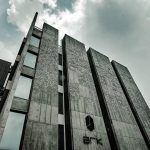
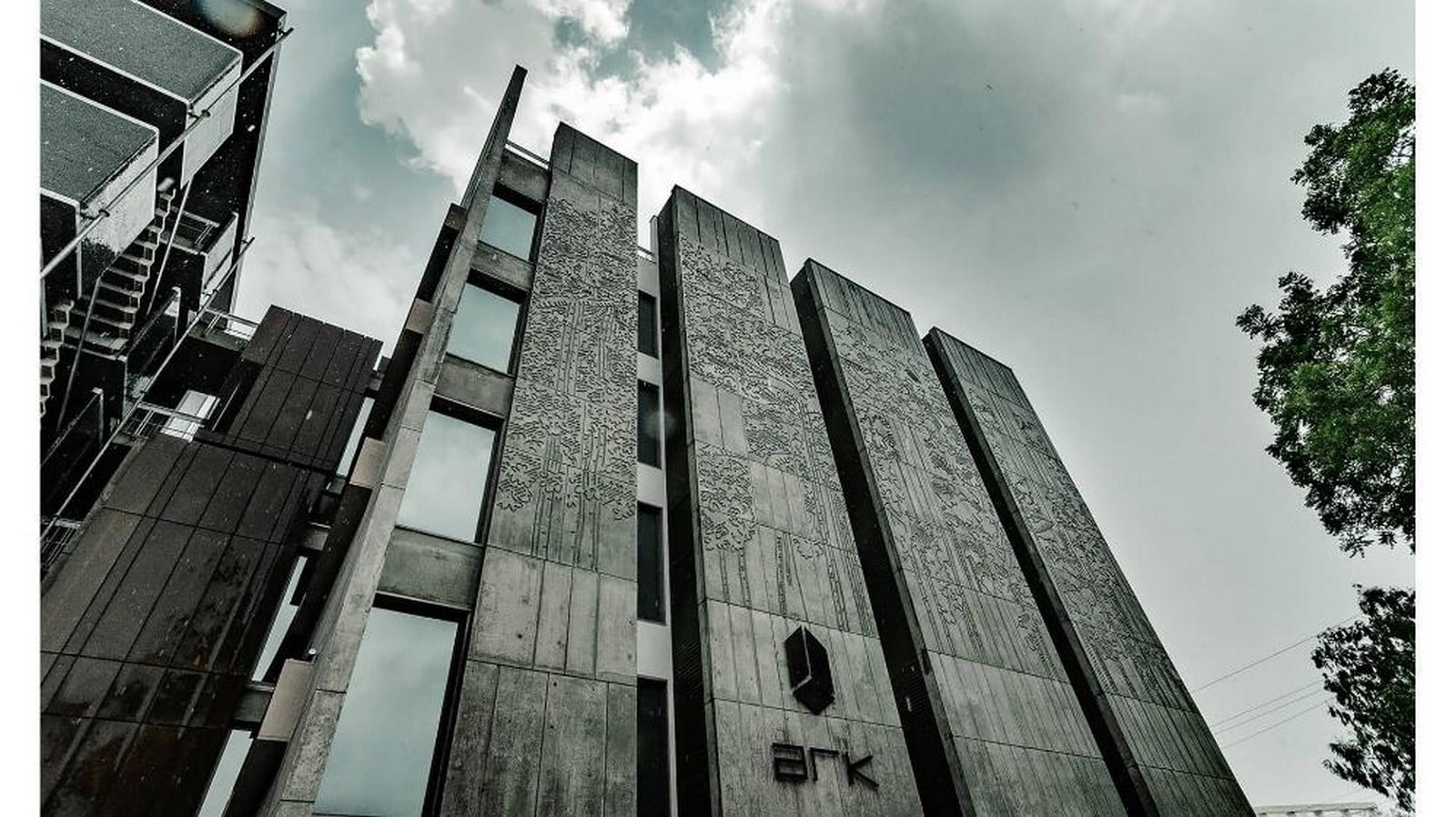
Vadodara is a city widely renowned as the “Sanskar Nagri” — the city of culture and civilization. It has offered patronage to artists since its erstwhile days as a princely estate. With its ethos rooted in art and a legacy tied to the Baroda School of Art, it emerged as a haven for artists. It is this rich cultural tapestry that ‘The Ark’ is woven into. The Ark is a mixed-use development hosting an art gallery, exhibition space, cafe and commercial offices. It is designed by the eminent Landscape India (M/s Prabhakar B. Bhagwat) under the leadership of Aniket and Smruti Bhagwat (Landscape India, n.d.). Serving as the headquarters of Rubamin Group, it functions beyond being merely an office building. It is rather a carefully curated narrative that celebrates the intersection of art, community, and industry.
The Alchemist’s Abode
The Ark was originally titled “The Alchemist’s Abode”, paying tribute to the patron’s trade of recycling for a sustainable tomorrow. The name hinted at the chemistry or the mystical alchemy required to elevate raw industrial space into poetry. The ultimate title, “The Ark”, is derived from the biblical metaphor of a naval vessel that protected life, culture and civilization in times of turbulence. (The Design Collective, 2020)
Planning and Spatial Narrative
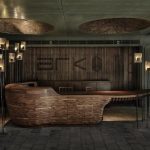
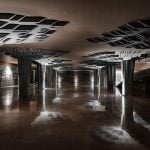
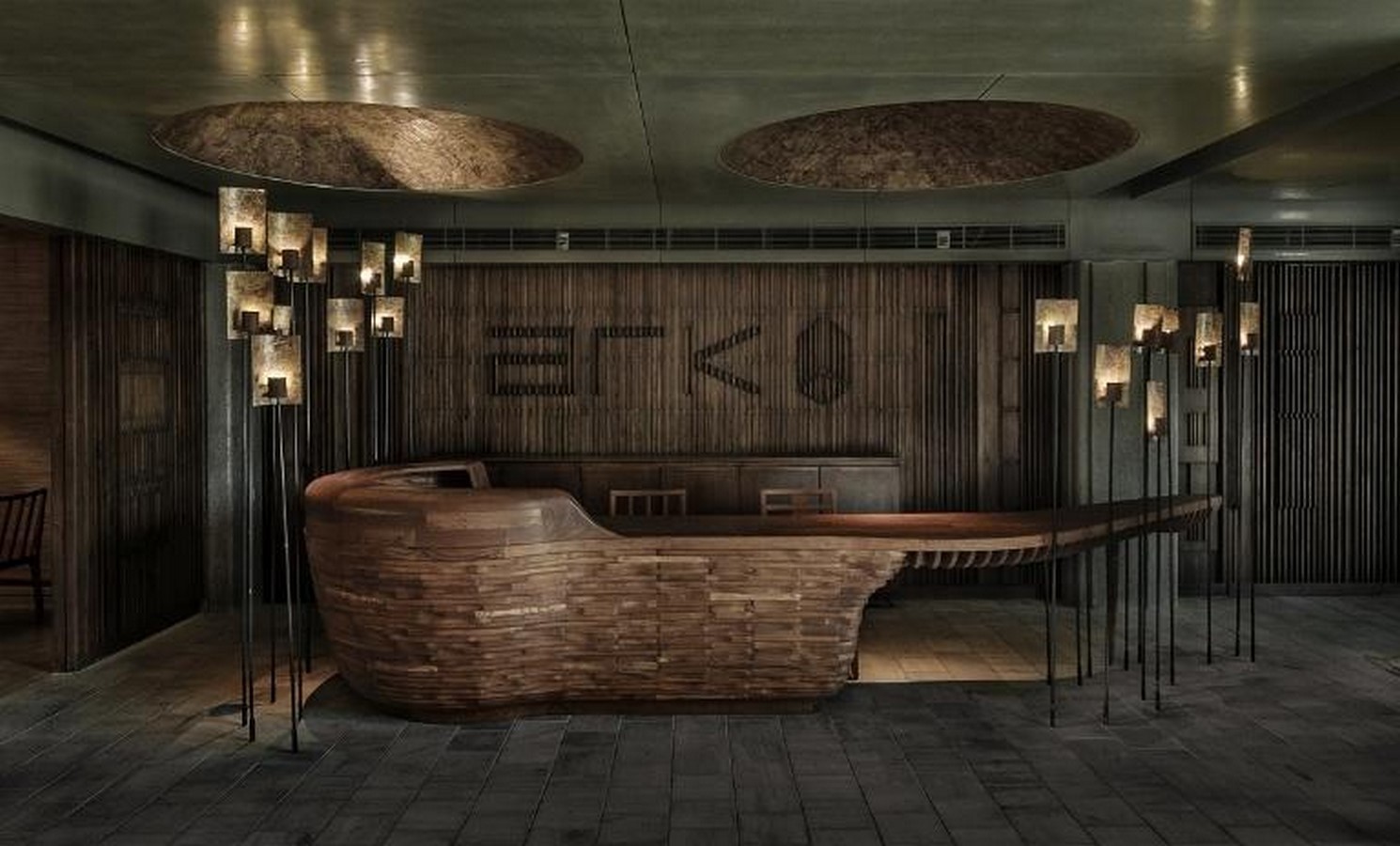
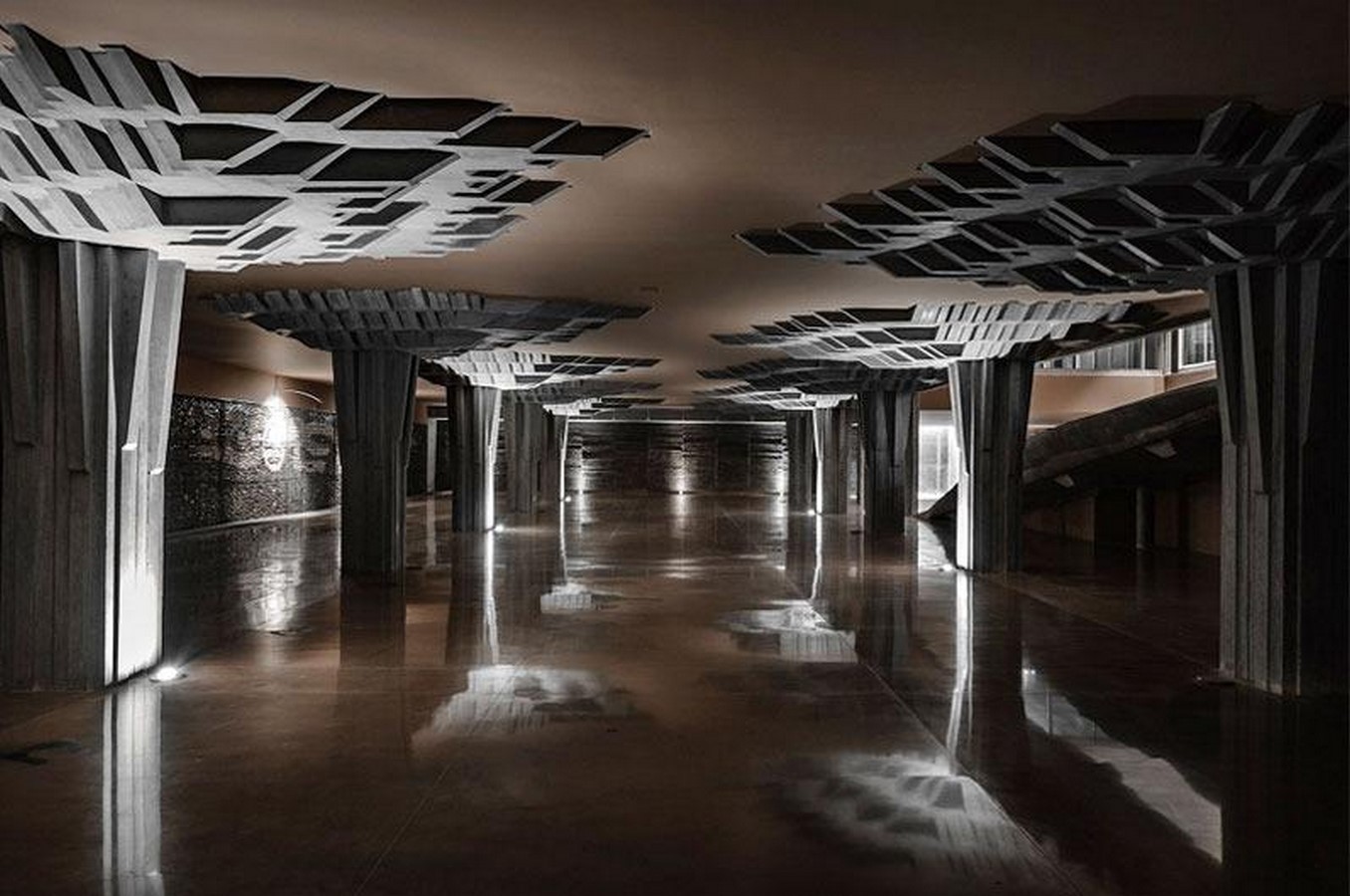
The spatial planning of this building is organised around a central internal atrium. A sequential unfolding from public to semi-public to private zones enables the building to function both as a corporate headquarters and a cultural hub. The basement of The Ark forgoes the archetypal functionality of a parking space and doubles as an experimental exhibition and performance space. It is designed with a “mining” aesthetic, with features like gabion walls and elaborate lighting (Landscape India, n.d.).
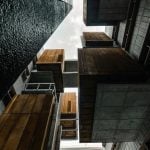
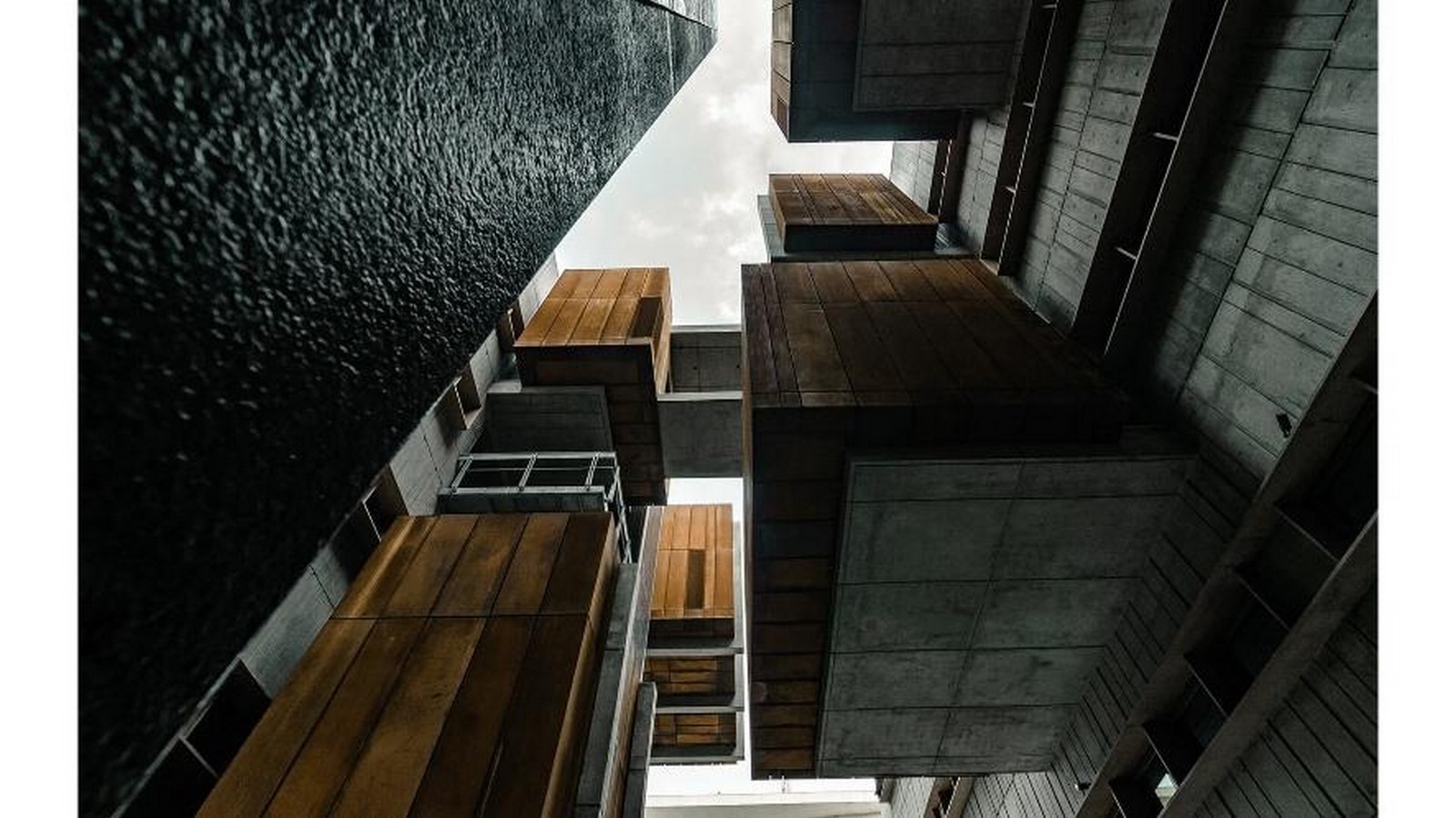
The ground floor houses Gallery Ark, an art space that, in itself, is a dynamically curated narrative, moving away from the standard “white cube” typology. Gallery Ark sits adjacent to a cafe, the atrium and informal gathering spaces that extend the social life of the building beyond its opening hours. The atrium on the ground floor serves as a public amphitheatre, opening the building to the city. Inspired by Paul Klee’s 1929 painting “Uncomposed Objects in Space”, it is the core of the structure. Multiple apparently floating volumes are featured in the atrium that seem to defy gravity (Landscape India, n.d.). These boxes house private meeting rooms and pockets of office space.
Design Philosophy
The architect has described the project as a collaboration that involves architects, artists and landscape designers right from its inception. Unlike a typical project in which an architect curates every design decision, The Ark was a “Jazz-like” symphony that allowed singular voices to contribute meaningfully to a collective. This showcases the patron’s approach of fostering a sense of ownership that is shared by the community. It relinquishes the stronghold of absolute control and generates trust (Landscape India, n.d.). The project is aimed at creating a dynamic space infused with culture for a city, and not just a private headquarters of a corporation.
Materials and Construction
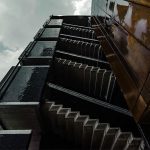
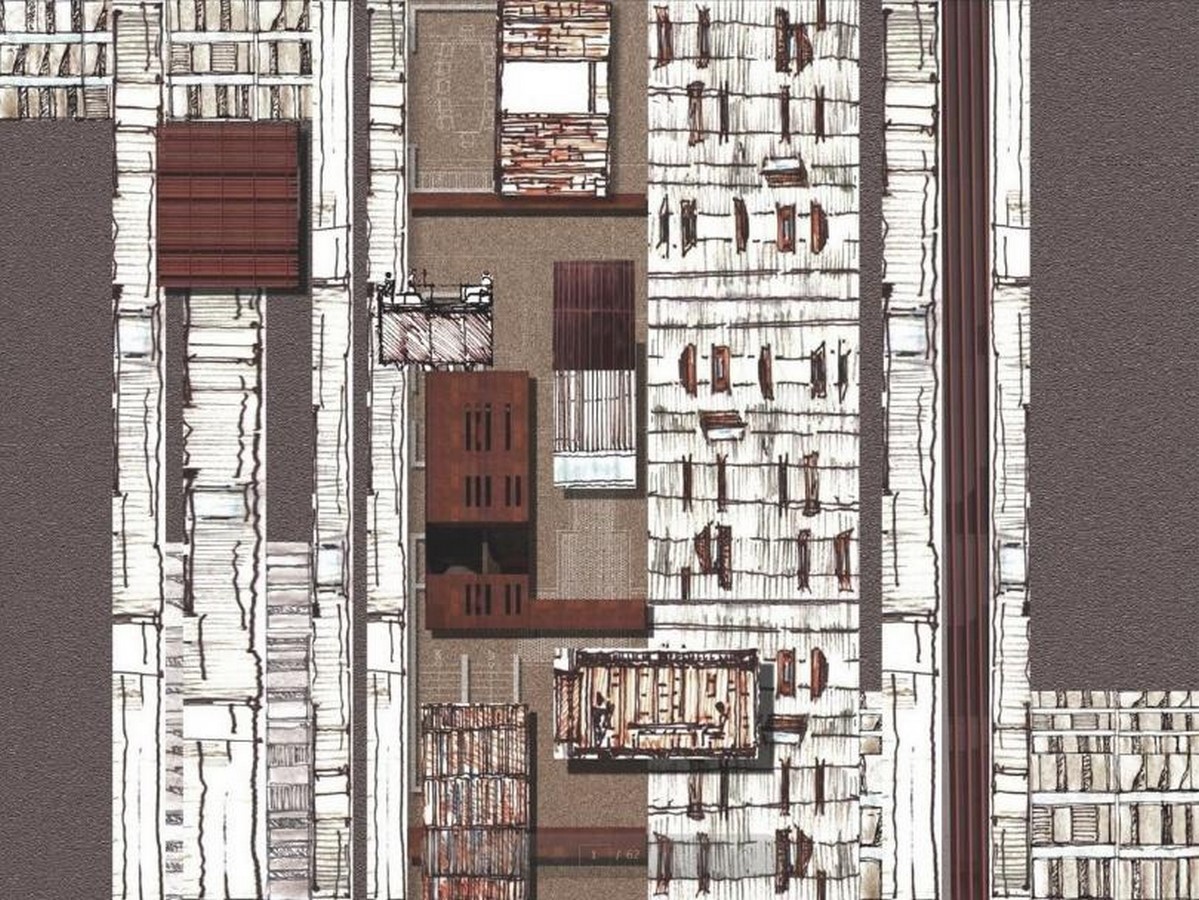
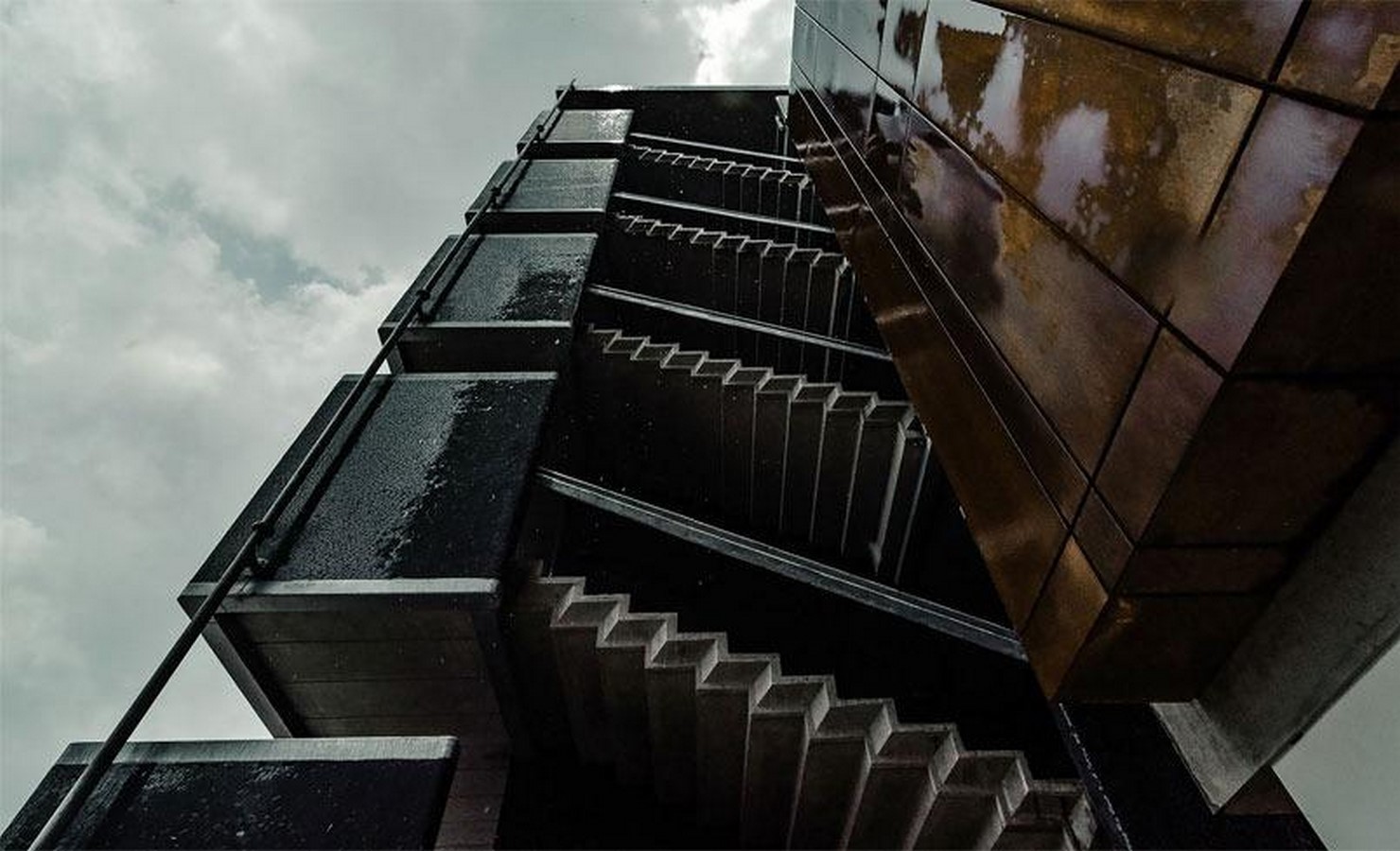
The material palette of The Ark departs from the classical, polished, glass-clad structures and collects clues of robustness from the surrounding industrial area. Its most prominent feature is the composition of suspended boxes of Corten steel. The Corten steel develops a stable layer of rust, making the building blend into its industrial neighbourhood over time. It is a building that is completely honest about its materiality, with no cladding on any outer surface (Design Owl, 2018).
Structure Integrated with Art
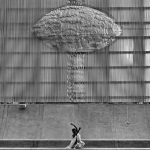
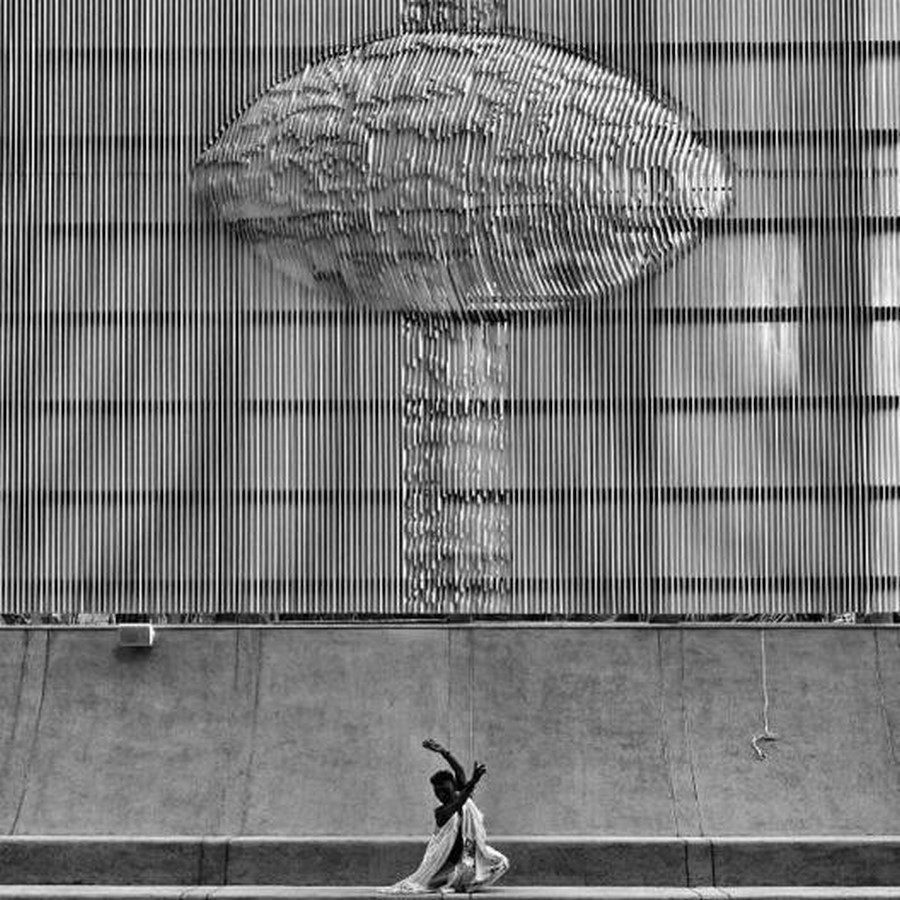
The art of this building is not an afterthought, but rather a primary element of the building. Artist Walter D’Souza collaborated with the design team to integrate his art directly onto the building façade of The Ark. The façade represents a banyan tree in full growth, paying homage to the “Vad” tree, the namesake of the city (Landscape India, n.d.). The gabion walls in the basement serve as an aesthetic feature, along with being functional. Made of wire cages filled with stone, they showcase the evolution of tree roots, drawing a parallel commentary of the ever-changing scenarios of the urban fabric (Design Owl, 2018). Furthermore, the columns of the building equipped with a pedestal at their base push forward the idea of a tree, through their unique form.
Sustainability and Urban Impact
During the design phase, the architects studied how light leaked into the atrium through the Corten steel boxes. This extensive study ensured that the lower floors got enough natural light without extensive solar 8gain. This helps in reducing the reliance on artificial lighting. The height of the atrium, paired with the floating boxes, creates a natural stack which helps reduce the load on HVAC systems (Landscape India, n.d.). Furthermore, the usage of materials like Corten steel adheres to the ideal of low maintenance, durable material that ages gracefully without the aid of frequent treatments and replacements.
In conclusion, The Ark emerges not just as a functional space for the Rubamin Group but as a vibrant intersection of art, culture, and community. Its design philosophy fosters collaboration and inclusivity, embodying the spirit of Vadodara as a cultural hub. By prioritising sustainability and integrating artistic elements throughout, The Ark transcends traditional architectural norms, positioning itself as a landmark of innovation. The interplay of materials, light, and public engagement within its spaces not only enhances the urban fabric but also invites continuous interaction among its visitors. Ultimately, The Ark stands as a testament to the power of thoughtful design in enriching lives and preserving the essence of a community.
Reference list:
Design Owl (2018). A Glimpse Inside The Ark: A Hub of Art and Design I Vadodara I S2E3. [online] YouTube. Available at: https://www.youtube.com/watch?v=znd-TjwNdA0 [Accessed 22 Dec. 2025].
Landscape India (n.d.). The Ark. [online] Landscapeindia.net. Available at: https://www.landscapeindia.net/projects/architecture/the-ark [Accessed 21 Dec. 2025].
The Design Collective (2020). The Ark in Vadodara Seamlessly Marries Art and Architecture in this Mixed Use Building. [online] TDC Magazine. Available at: https://www.thedesigncollective.co.in/post/the-ark-in-vadodara-seamlessly-marries-art-and-architecture-in-this-mix-use-building-landscape-india [Accessed 21 Dec. 2025].