Context and Historical Background
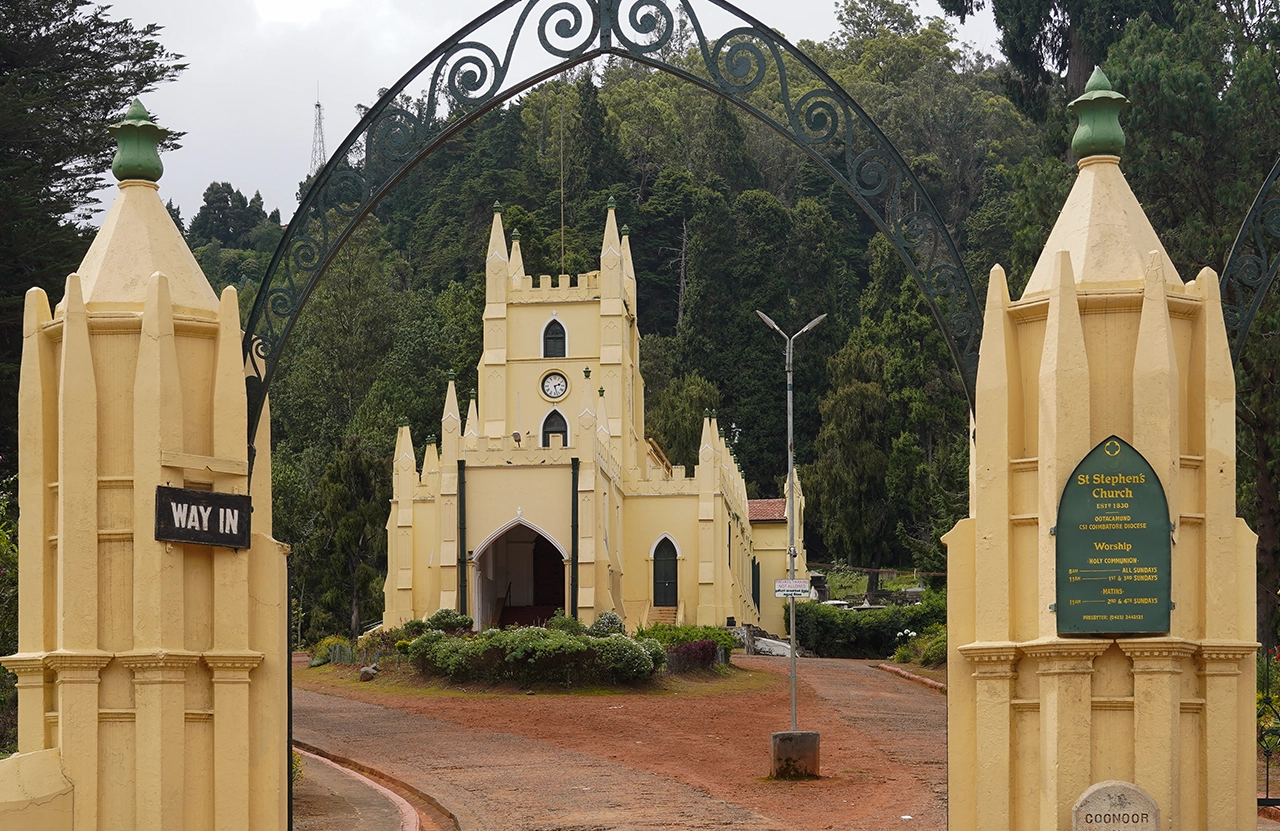
Ooty, known as the Queen of the Hills, originally served as a summer retreat and administrative hub for the British. It was well known for its churches, bungalows, and public buildings designed in a colonial style. The architectural style reflects a mix of European styles adapted to local conditions. St Stephen’s Church, one of the remarkable examples from the colonial era, still stands tall and has become a well-known landmark of Ooty. It was the first church built in the Nilgiris specifically for British officers stationed there. Many British officers lived in Ooty during British rule, making a church in the area essential. The foundation stone of the church was laid on 23 April 1829, coinciding with the birthday of King George IV, under the patronage of Stephen Rumbold Lushington, then Governor of Madras. The church was designed by Captain John James Underwood of the Madras Regiment, with a construction cost of ₹24,000, which was a significant sum at the time compared to the estimated ₹8,000. The church was designed during a period when colonial architecture was still evolving, and the British were learning how to create buildings suited to the unfamiliar terrain and weather. The church opened its doors to the public on Easter, 3 April 1831.
Architectural Style
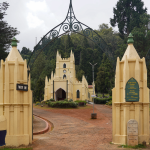
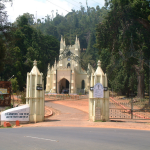
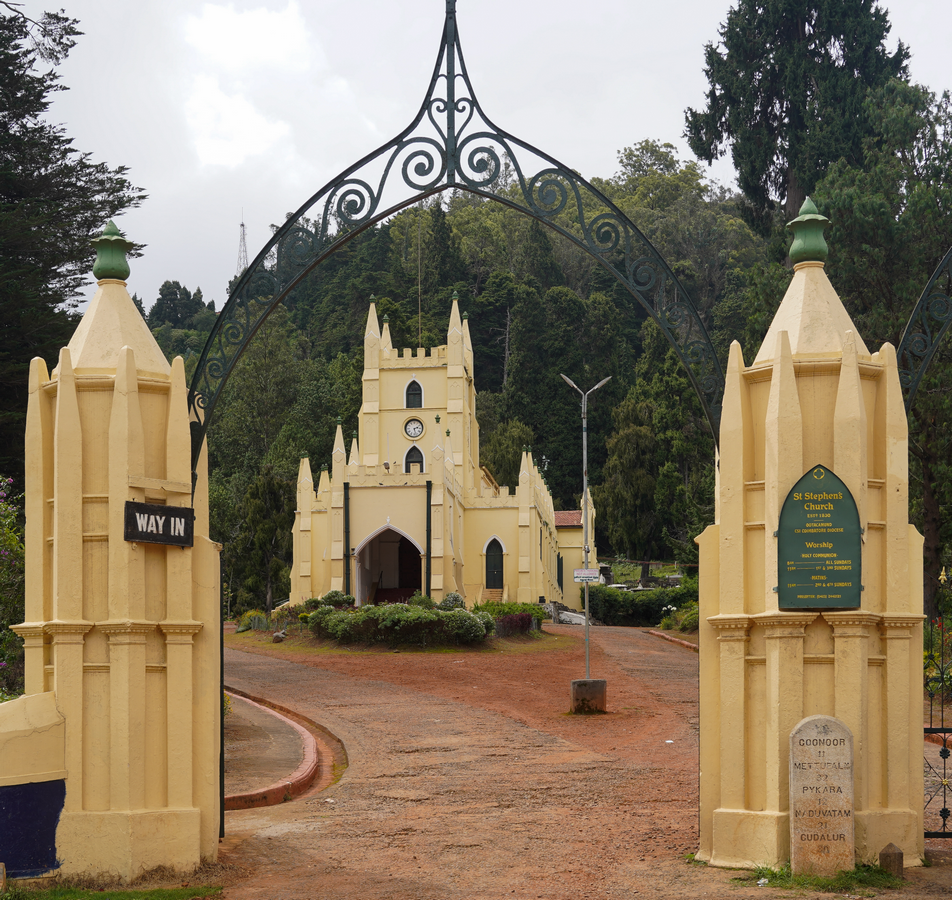
St Stephen’s Church can be classified as a Gothic Revival structure, featuring pointed arches, buttresses, a clock tower, and several steeples. Although it looks Gothic, it lacks true Gothic elements such as ribbed vaults and the technique of distributing weight through pointed arches. From the outside, the church has a pale and Gothic appearance that seems restrained and quiet. But as you step inside, the building tells a story of a gradual understanding of the place, climate, and purpose
Planning and Spatial Organisation
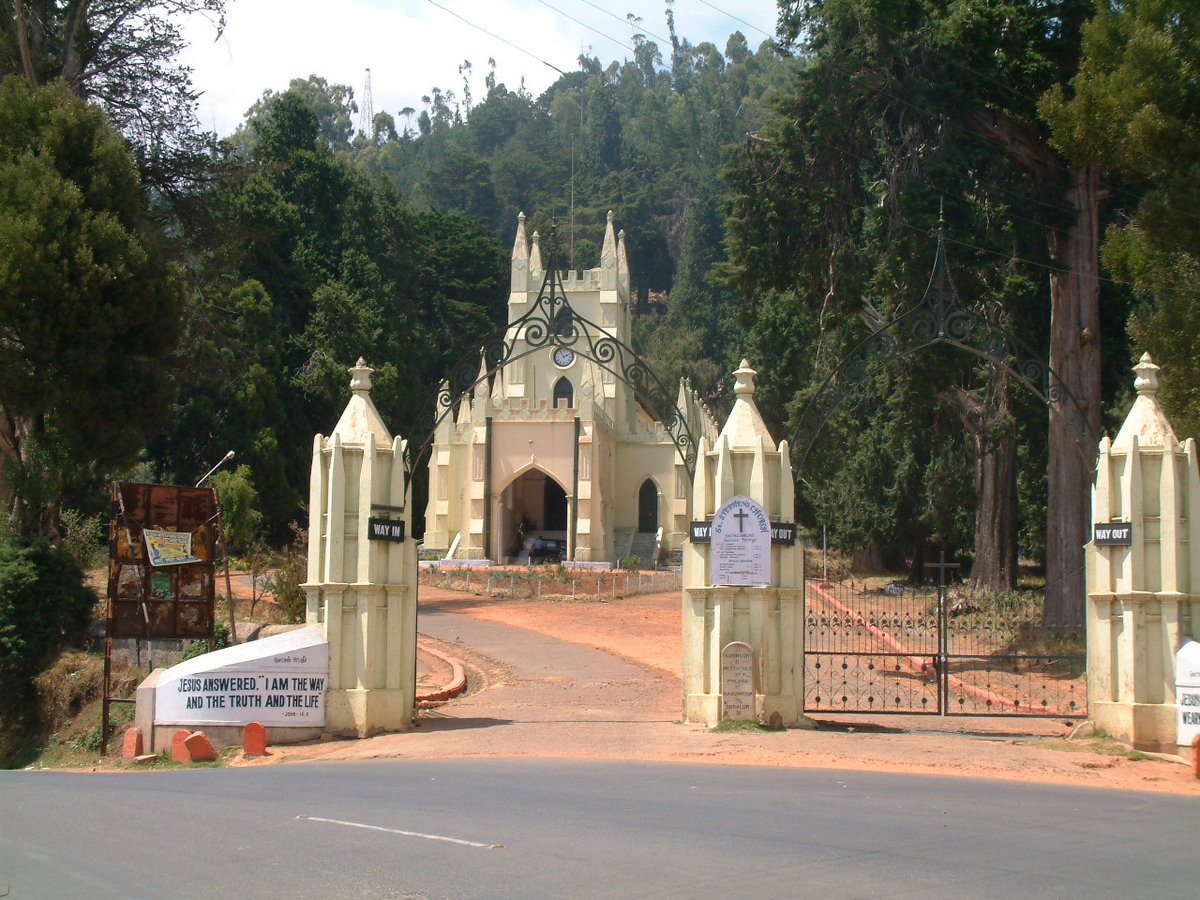
St Stephen’s Church is located within a spacious compound, accessed through a twin metal arched gateway. There are two decorative metal arches supported by three pillars, with the central pillar featuring a milestone at its base. The milestone shows the names of nearby places such as Coonoor, Mettupalayam, Pykara,naduvattam, and Gudalur along with their distances. Next to it is a small stone marked with zeros; this indicates that it was the reference point from which these distances were historically measured. Hence, the stone is called the Zero stone, signifying that this was the actual spot from which all the distances of the places within and outside the Nilgiris were measured. The church follows a Latin cross plan, with a long nave intersected by a shorter transept, forming a cross shape. The altar is positioned directly across from the entrance at the far end. The present ground floor plan of the church includes a pulpit with steps leading to the left of the chancel, a pew with a raised chancel area, a vestry, and pointed Gothic arches. It also includes the foundation plaque and welcomes visitors into the interiors of the church.
Materials, Construction, and Structural Modifications
The church was built using wood and mortar. The materials were sourced from Tipu Sultan’s Lal Bagh palace in Srirangapatna, and construction techniques were limited to the use of recycled flat timber beams and rafters supporting the roof. The roof was supported by timber trusses rather than masonry vaulting, further distinguishing the building from authentic Gothic methods.
In 1878, Mrs. McIvor donated a stained glass window depicting Joseph’s dream for the chancel, along with a new Communion table. The stained glass window was later moved to the south aisle when the vestries were constructed and the roof was raised to address issues such as poor lighting, inadequate ventilation, and roof leaks. These modifications included the addition of clerestory windows and revised roof slopes, which resolved the persistent problems of dim light, poor ventilation, and leaks.
Interiors, Ornamentation, and Legacy
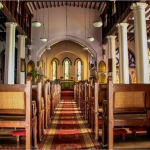
The interior of St Stephen’s Church includes wooden pews arranged in rows within the nave in a formal seating pattern typical of early colonial churches. The original seating was modified to accommodate a growing number of faithful. In 1842, the fixed pews were replaced, and the plastered floor was replaced with wooden flooring to improve comfort and durability. Further alterations were made in the late nineteenth century, which included the addition of a gallery and raising the roof; this greatly increased the church’s seating capacity. The pews, along with the pulpit, communion table, and chancel furnishings, show restrained Gothic Revival detailing and are made of polished timber that enhances the warm and inviting character of the space.
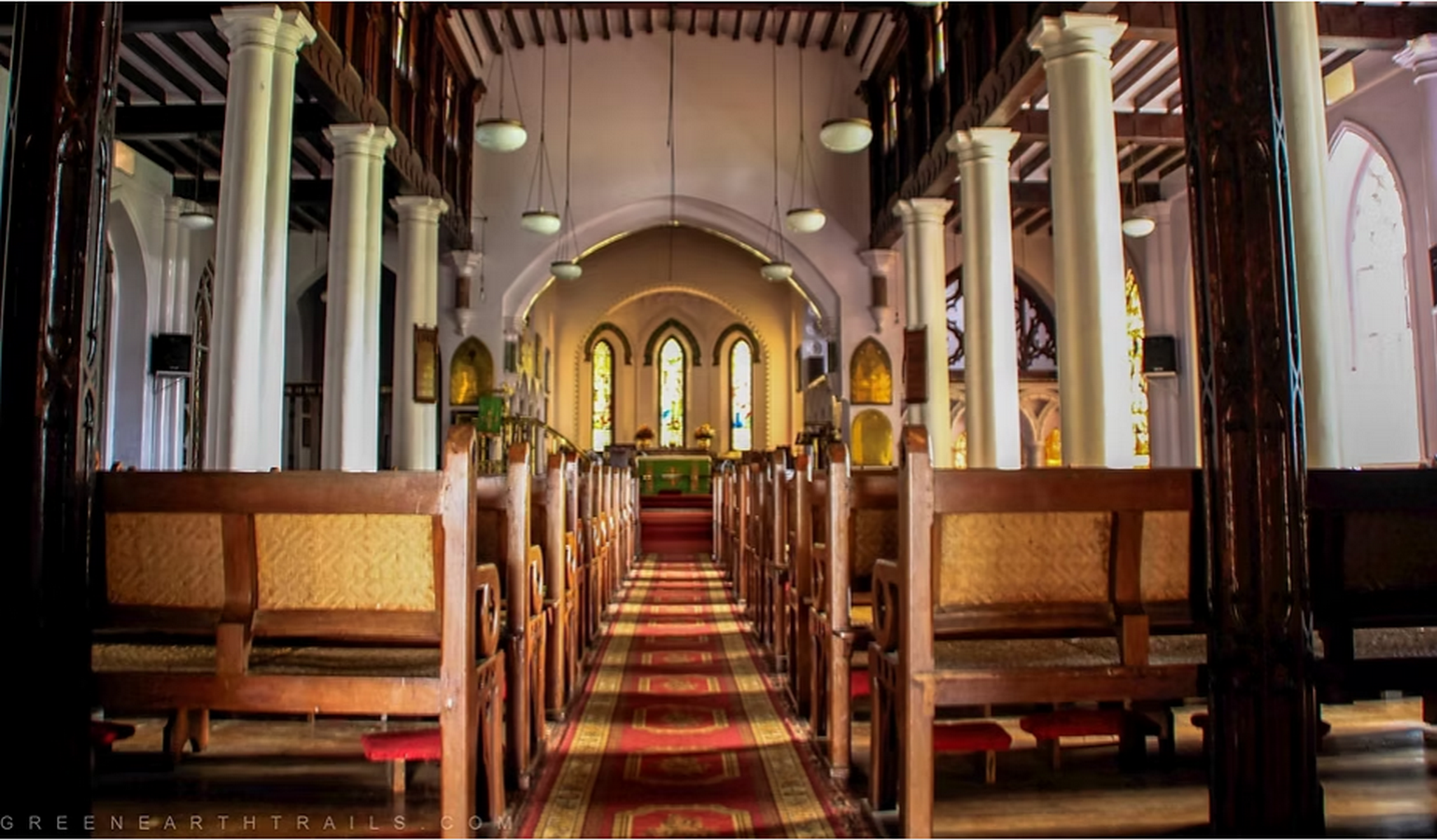
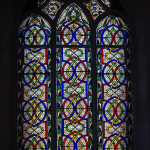
The current interiors feature a polished wood finish, with staircases leading to the upper levels of the church, which is restricted to ordinary visitors. Decorative elements include a baptismal font and a grand bishop’s throne contributing to the ceremonial atmosphere of the church. The interior walls also display numerous memorial plaques made of marble and brass, commemorating the British residents who died in Ooty and its surrounding areas. The stained glass windows are one of the most striking features of St Stephen’s Church; anybody who visits the church will not be able to step out without standing still for a moment admiring the stained glass. The windows are framed in pointed-arch openings and tracery allowing filtered light to illuminate the interior, lighting up the stained glass as well. Several panels depict biblical scenes, including Joseph’s dream, angels, and scenes from the Nativity, along with a stained glass panel featuring an intricate geometric design. Three stained glass windows are positioned as part of the altar composition, forming a strong visual and liturgical focus within the chancel.
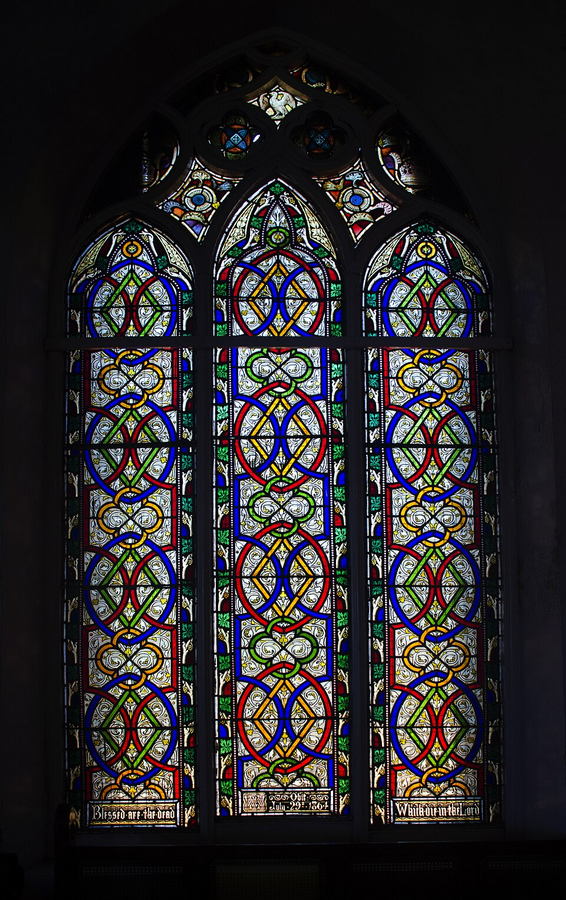
The church represents the architecture and construction techniques used by British officers in India. After the British left India, the church came under the Church of South India in 1947. There is an old cemetery located at the back of the church where many British officers of that time were buried. The church was initially plagued with design issues, but over time, through various repairs, additions, and modifications, it developed its current form. Today, St Stephen’s Church stands as an enduring example of colonial architecture
Citation:
Frederick Price (1908).Ootacamund: A History.Government Press, Madras.
Benjamin John(2019).St. Stephens Church: a mute witness to the colonial history of the Nilgiris.https://www.greenearthtrails.com/post/st-stephens-church-in-ooty-a-classic-colonial-legacy-in-south-india
Rangan Datta(2025).St. Stephen’s Church, Ooty ,Zero point of Ooty
.https://rangandatta.wordpress.com/2025/09/04/st-stephens-church-the-zero-point-of-ooty/