A Brand Built to Last
While some brands are simply digital tools of the future, there are a few that still manage to impress for their quality, trust, and consistency rather than for their mere presence in the digital world. STAEDTLER is one of those few. For nearly two hundred years, this brand has gone on to establish an identity mainly based on the three elements: one of them being the most creative, the other one the most reliable, and the last, but not least, the most authentic one. The power of STAEDTLER, the brand, is not only a reflection of its products, but it is also a reflection of a heritage, and that is something that was there long before “branding” was invented as a marketing term.
Origins: From Craft to Corporation
STAEDTLER’s journey is a story that goes back six centuries. The first person who made the family business the pencil-making one was Friedrich Staedtler, who was born in 1636, and started making wood-cased pencils himself, and at the same time, he manufactured both lead and its wooden casing.
After the authorities imposed a ban on production in Nuremberg, Friedrich didn’t give up, and by 1675, he had not only obtained the right to produce in the city but also the recognition of the city for his work.
Moreover, it was his great-grandson, Johann Sebastian Staedtler (1800–1872), who took the family business and turned the craft into the company. In 1834, he invented a better version of the colour/red-chalk pencil, which was able to be sharpened to a very thin point, and that would make bright, even, and continuous lines.
On 3 October 1835, Johann Sebastian was granted permission from the city council to build a factory, thus establishing J.S. Staedtler in Nuremberg – the STAEDTLER of today.

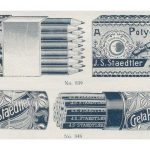
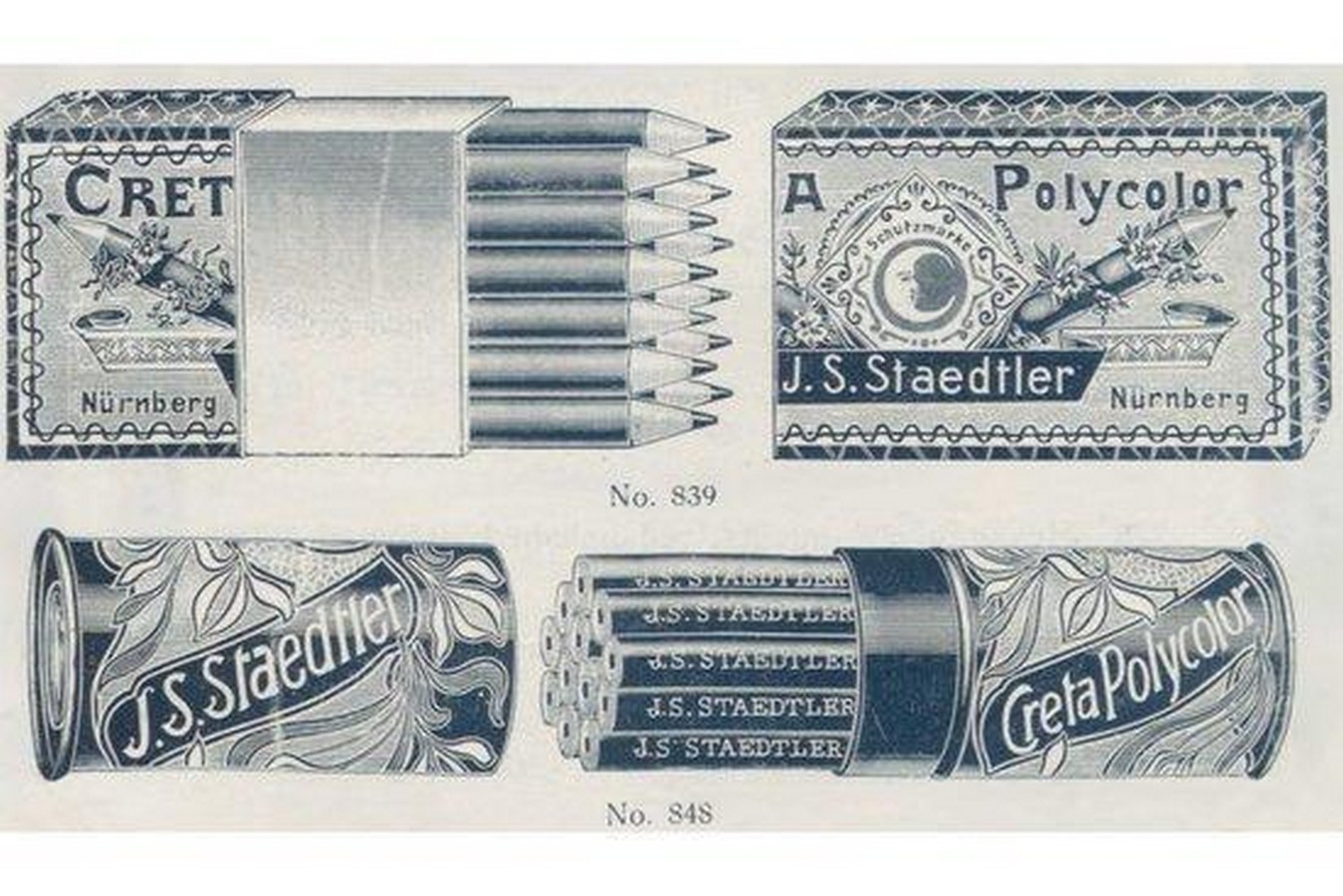
By the mid-19th century, the firm was making coloured pencils, and its first catalogue already featured a broad range of products under the brand “Creta Poly colour” as early as 1860.
In 1853, STAEDTLER was one of the exhibitors at the New York World’s Fair – a very early indication of the brand’s ambitions on a global scale. In a few years time, its pencils were going to be sold in Austria, France, England, Italy, Russia, America, and other places as well.
Hence, STAEDTLER began the transition from a family workshop to a global brand in stationery.
Growth, Innovation, and Global Spread
STAEDTLER is to be named as one of the very few German industrial companies that have stood the test of time, and have grown for over a century; in fact, it is one of those that have grown and survived for more than 125 years.
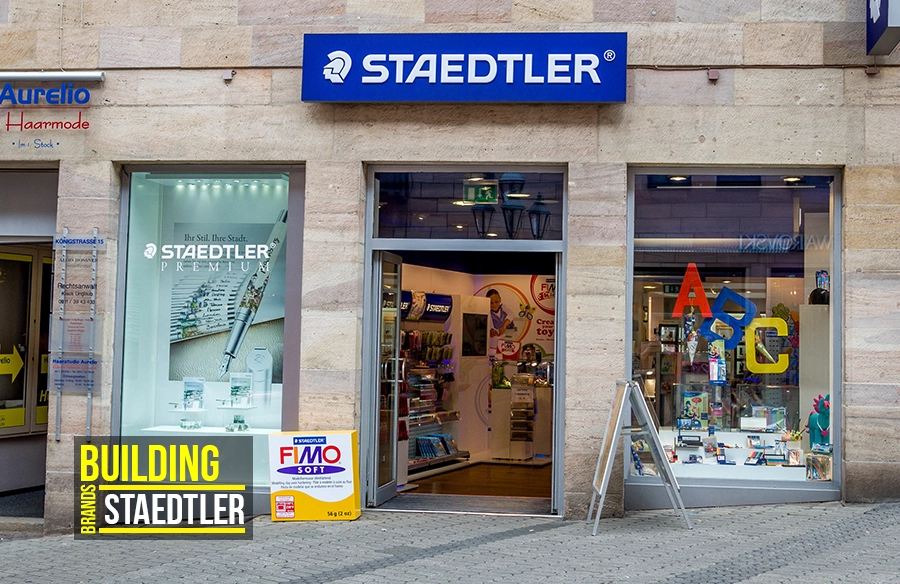
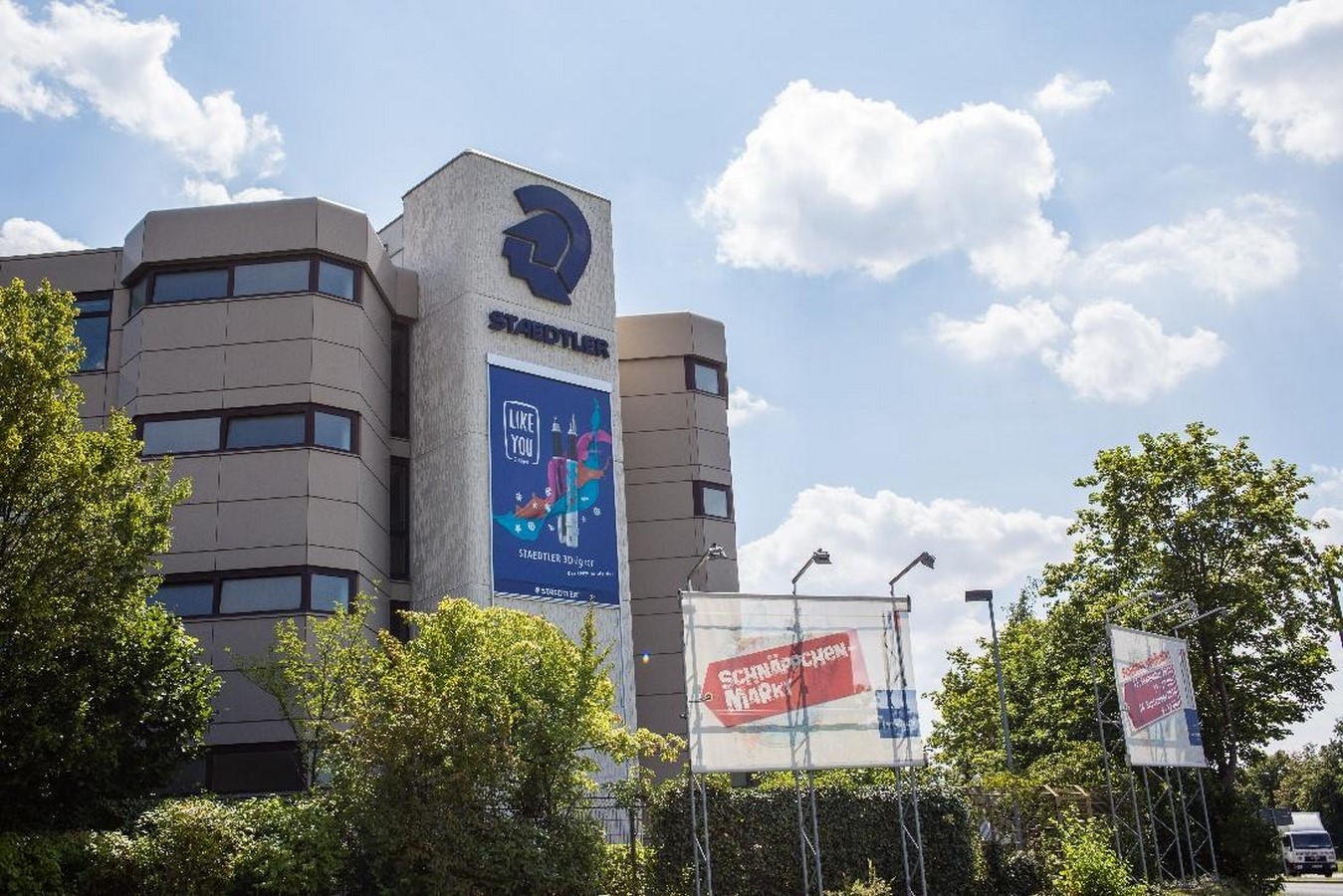
The company kept its headquarters in Nuremberg, the very place where the art of making pencils was born. In the present times, STAEDTLER is active in more than 150 markets worldwide and has offices and subsidiaries on different continents. It is a leading company in Europe in the production of wood-cased pencils, mechanical pencils, erasers, modelling clays, and various other writing and drawing instruments.
Despite the profound changes that have been made to the industry and its worldwide scope, the company still holds tightly to its tradition and quality. Not long ago, it launched the “WOPEX” series – pencils that are made from recycled wood shavings, the company’s way of showing that invention and environmental friendliness are still at the core of its belief system.
Brand Identity: Precision, Consistency, Creativity
Right from the start, STAEDTLER claimed and distinguished its brand through a few fundamental principles: one being the accuracy of the drawing and writing, another being the uniformity in quality, and the last, but not least, being the provision of creativity. Whatever the brand was – be it the first wood-case pencils, the revolutionary coloured pencils of the 1830s, or the present mechanical pencils and art materials – STAEDTLER was very faithful to these principles.
Precision and workmanship have always been the points that helped the brand to attract a varied pool of users, i.e., the students, the artists, the architects, the designers, and the professionals. Using a STAEDTLER pencil or pen was not merely a tool, but also a dependable partner that was indispensable in the process of creativity.
Moreover, simple, minimalistic, and at the same time distinctive, the visual identity of STAEDTLER helped the brand to be easily recalled. Over the eras, the constant design language of the brand has not only reinforced the feeling of being familiar but also the trust one puts in the brand.
Legacy, Trust & Global Presence
Very few of the brands are capable of connecting with their different generations. STAEDTLER is one of such brands. A pencil that may have been used by your parents can be handed over to you – not just as stationery, but as a legacy of quality. STAEDTLER is still very much alive because of its long existence and constant commitment to the standards; it has maintained a very strong brand loyalty among its customers.
Besides, the major part of the brand’s production is still done in Germany; however, it has a strong global export, so STAEDTLER is actually mixing the trust that comes with the craftsmanship of “Made in Germany” products with the ease of access and worldwide availability.
What STAEDTLER Teaches Us About Building a Brand
The history of STAEDTLER is an example that it is not only from marketing that a brand becomes a lasting one, but from its substance. This means:
Having a very clear and consistent value proposition: precision, quality, reliability. One hundred percent loyalty to craftsmanship and keeping on with the innovation. Showing respect for the past and one’s roots; Being able to adjust to the changing times without losing one’s identity. The global vision that is well balanced with the local roots. Which becomes a brand benchmark for anyone who is into branding, design, or business is STAEDTLER. But what is more important is its story of turning a small workshop of a 17th-century craftsman into a brand that is recognized worldwide and which teaches us that if quality, consistency, and identity are combined, then a brand is not simply a product but a legacy.
Citations:
- STAEDTLER. (n.d.). Nuremberg pioneers: How Friedrich and Johann Sebastian Staedtler wrote stationery history. [online] Available at: https://www.staedtler.com/intl/en/discover/nuremberg-pioneers-how-friedrich-and-johann-sebastian-staedtler-wrote-stationery-history/
- STAEDTLER. (n.d.). History / About STAEDTLER. [online] Available at: https://www.staedtler.com/intl/en/company/about-staedtler/history/
- STAEDTLER. (n.d.). Company facts and figures. [online] Available at: https://www.staedtler.com/intl/en/discover/staedtler-company-facts-and-figures/
- Wikipedia. (n.d.). STAEDTLER. [online] Available at: https://en.wikipedia.org/wiki/Staedtler