Jimmie Durham (1940-2021) was an artist, sculptor, writer, and activist whose work challenged and transformed our understanding of art, history, architecture, and space. Born in the USA, he identified himself as Cherokee, Native American, a claim which later became controversial. Regardless, Jimmie Durham’s work engaged with questions of representation, culture, and the structure of power to be found in both art and the built environment.
Jimmie Durham resisted being confined to an identity, whether artistic or cultural. During the 1970s, he was active in the American Indian Movement, which shaped his political outlook and his awareness of architecture, monuments, institutions, and public spaces acting as tools of authority and oppression. Durham could seamlessly move between writing, sculpture, and performance, using each medium as a tool of expression, but through a critical lens where society can self-reflect.
By the 1980s, Jimmie Durham relocated to Europe, where he would work for the rest of his life. His influence and presence grew on the international stage with exhibitions at prestigious events such as Documenta in Kassel and the Venice Biennale. His work was recognized as a major voice in contemporary art and started becoming the most thought provoking artist of his generation. An artist whose practice blurred and questioned the art, history, identity, and narratives embedded in monuments, architecture, and urban landscape. His work was intellectually sharp and visually striking.
Career – Philosophy, style of work
The Philosophy
Jimmie Durham’s philosophy was on resistance and exposing contradictions. He argued that the art, monuments, museums, and civic buildings are never neutral, but an instrument of power designed for a selective history. He stated that art should not just be for aesthetic admiration but should also function as a site for questioning the culture and power. His view on the existing art and architecture was that they were designed to legitimize a dominant narrative while erasing or overshadowing others.
He positioned art as a counter architecture, a practice that un-built the ideological walls of history. Through his work, he encouraged people to question how identities and institutions are constructed. Also, he created an awareness of the fragility of systems that are often assumed to be permanent. His work functioned as a critique and a proposal for an alternative perspective.
Style of work
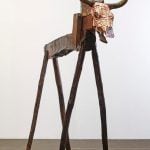
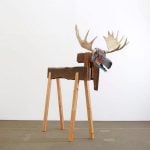
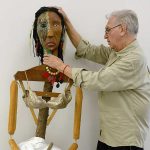
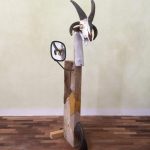
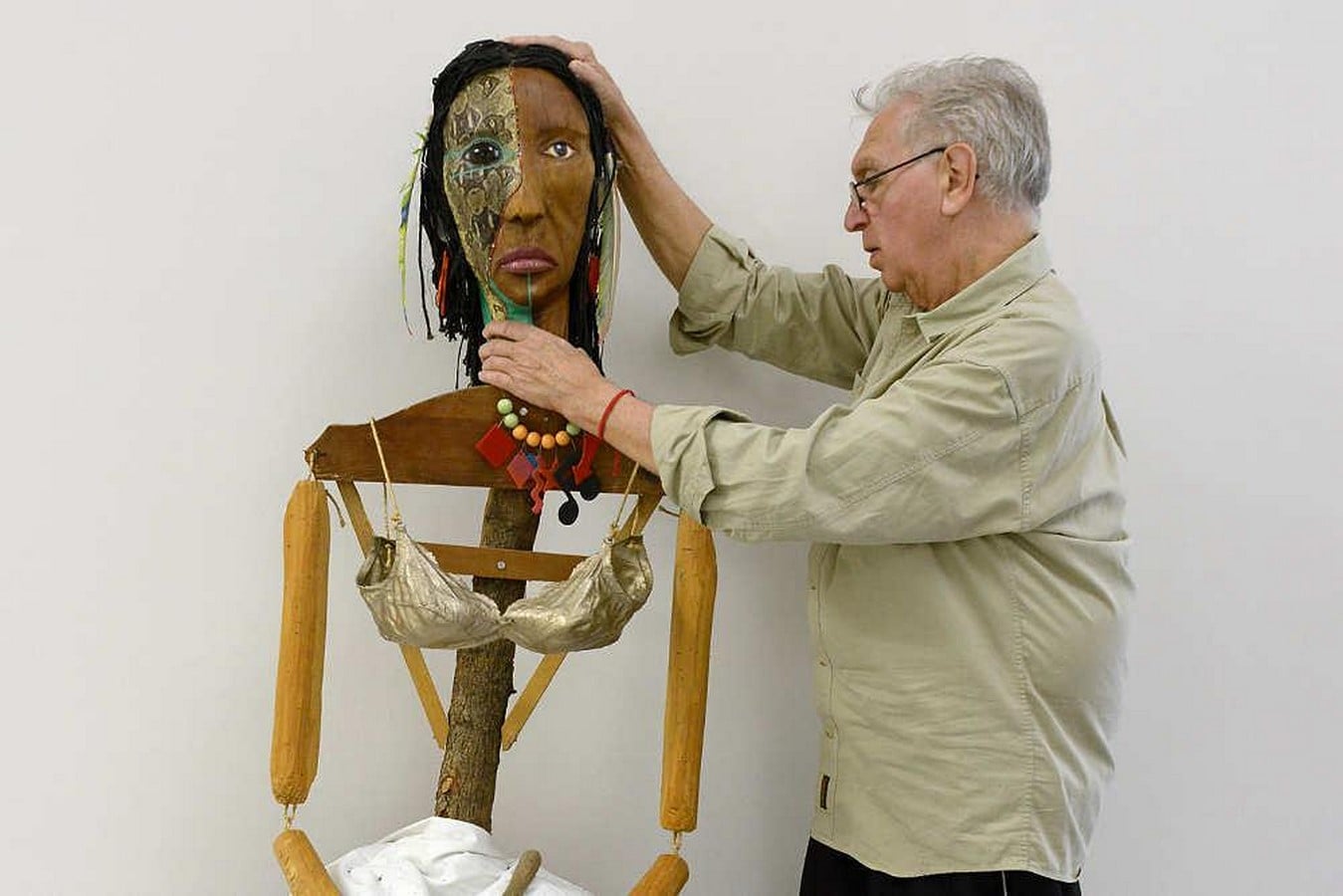
Jimmie Durham’s style of work was rooted in assemblage, raw materiality, and improvisations. He often combined material debris such as wood, metal, glass, timber, and stone into a sculpture which appeared unstable, precarious, and purposely unresolved. Unlike conventional art and architecture, which aspires to stability, his work embraced fragility. His intentional instability in his work symbolises the vulnerability of society, its cultural narratives and institutions.
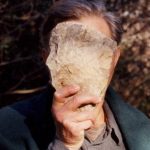
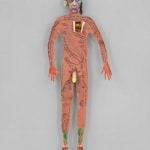
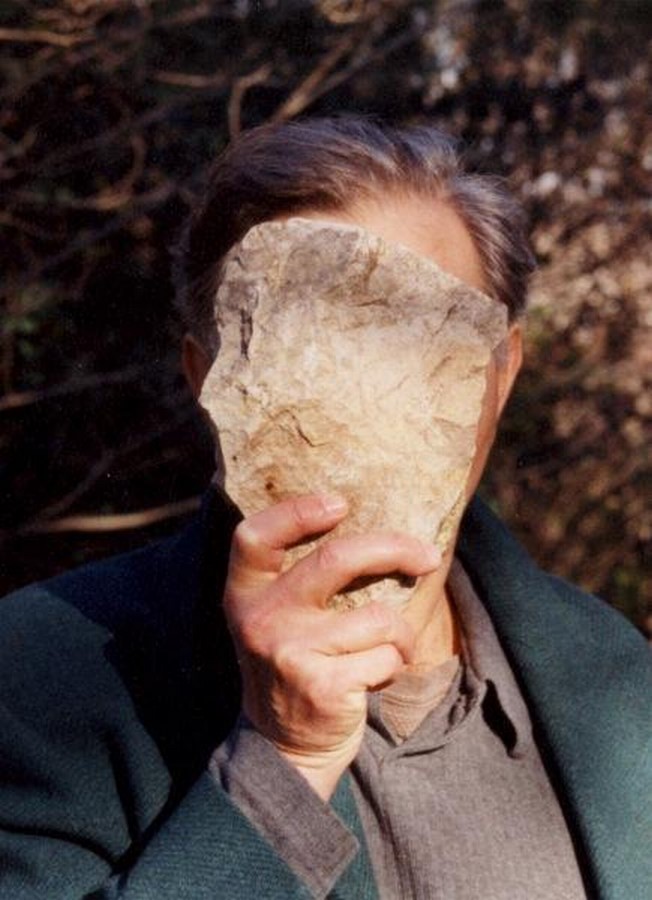
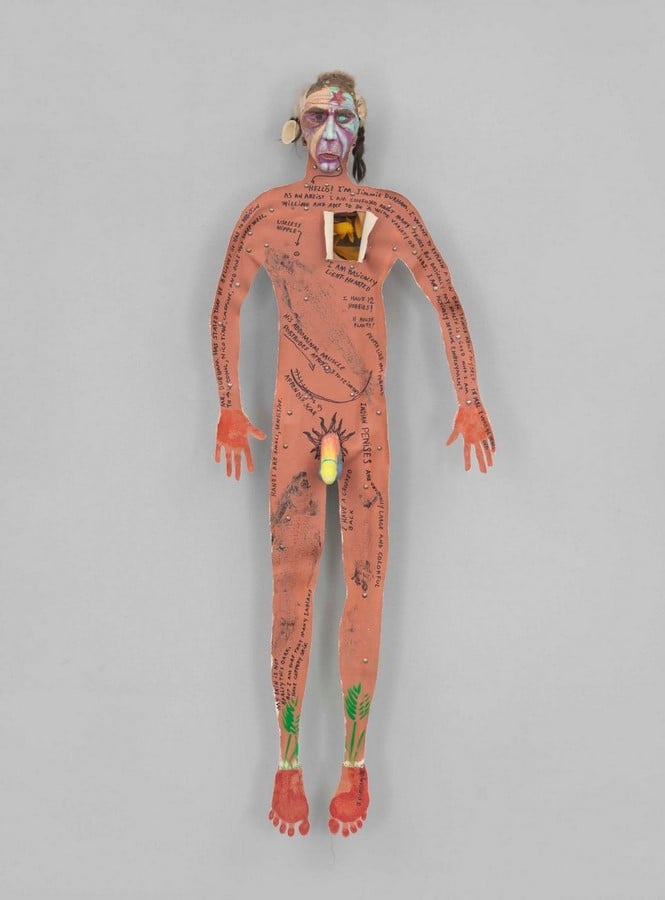
Durham’s humor and satire were distinctive. He mocked the seriousness of the monuments and the society that monumentalises certain stories while ignoring others. In his work “Self-Portrait Pretending to Be a Stone Statue in the Garden” (1986), he parodied the idea of cultural representation, expressing how identity is staged in public space.
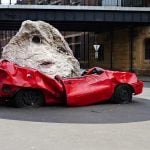
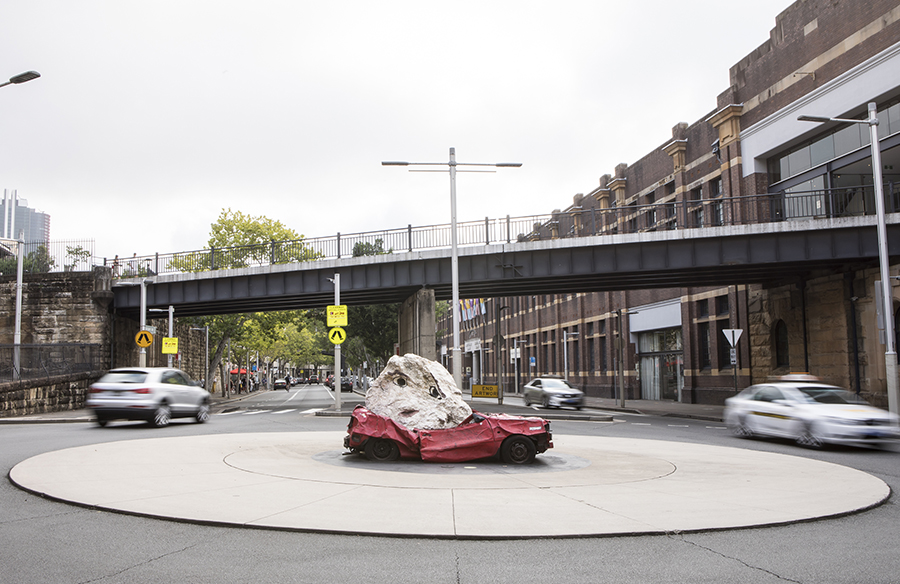
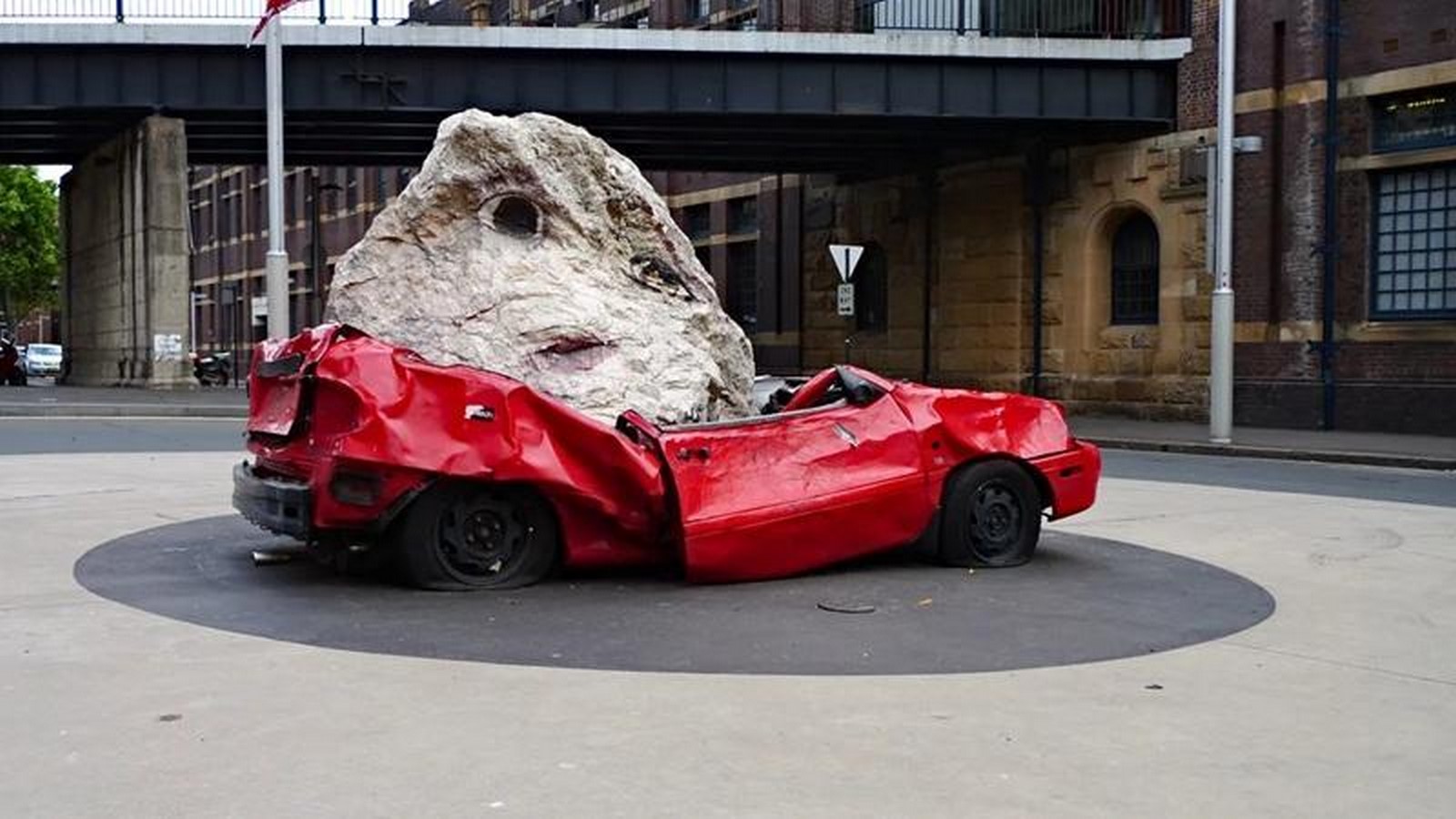
In another work of his, “Still Life with Stone and Car” (2004), he placed a giant boulder on the roof of the car, crushing it under the weight. This art humorously challenges the vulnerability of modern industrial products when confronted with nature. This was a critique on the architecture’s obsession with control and reminding the user that any human made structure is never truly invincible.
Medium and Concept
Durham’s medium was beyond just sculptures, he also worked with-
- Natural Material such as wood and stone, which carried time and environment.
- Industrial debris, such as steel and glass, is often used to compare natural elements, critiquing modernism and capitalism.
- Improvisation and assemblage, recalling vernacular building construction practices that emphasised impermanence.
- Writing and language, where he questions and challenges institutional authority.
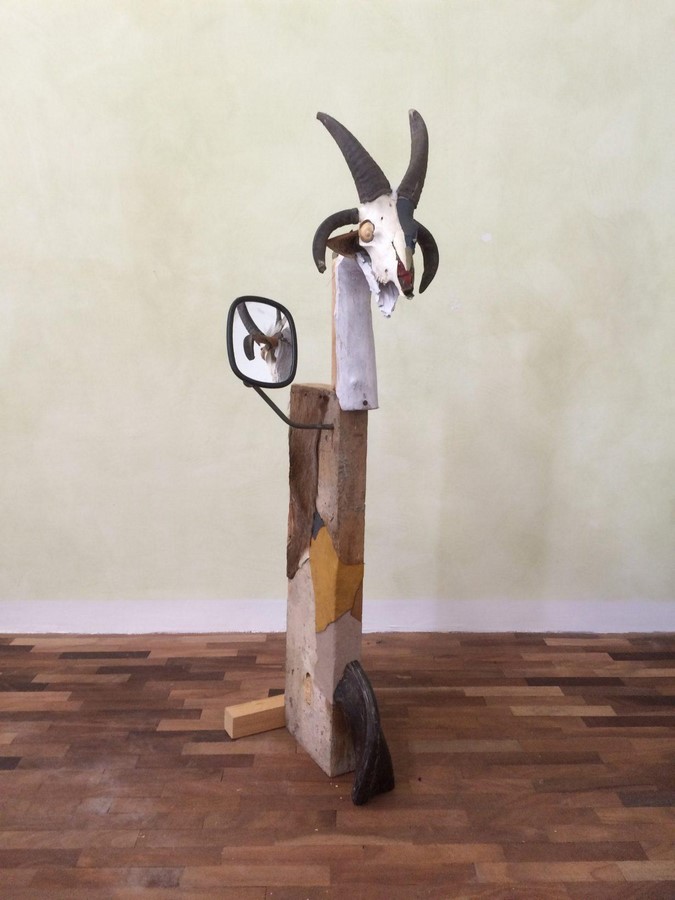
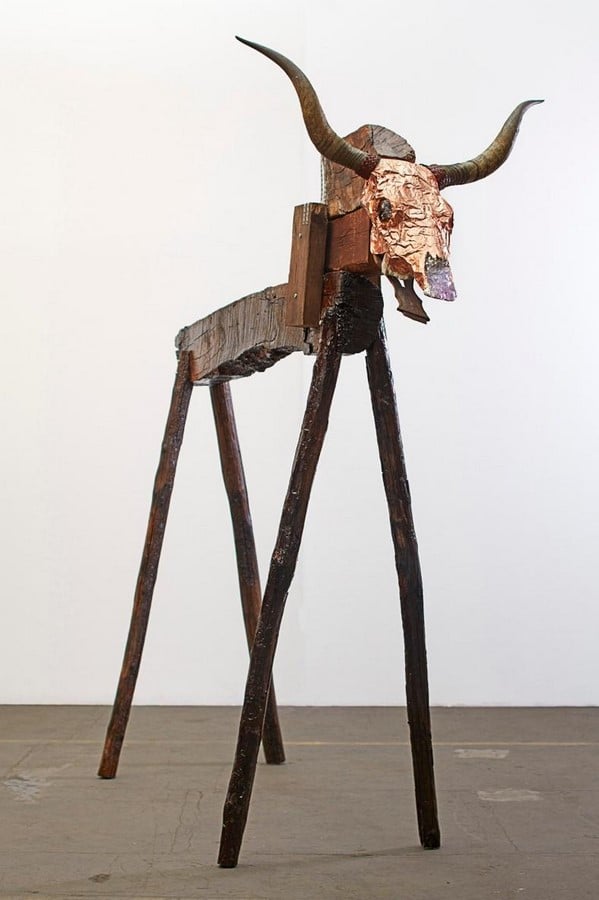
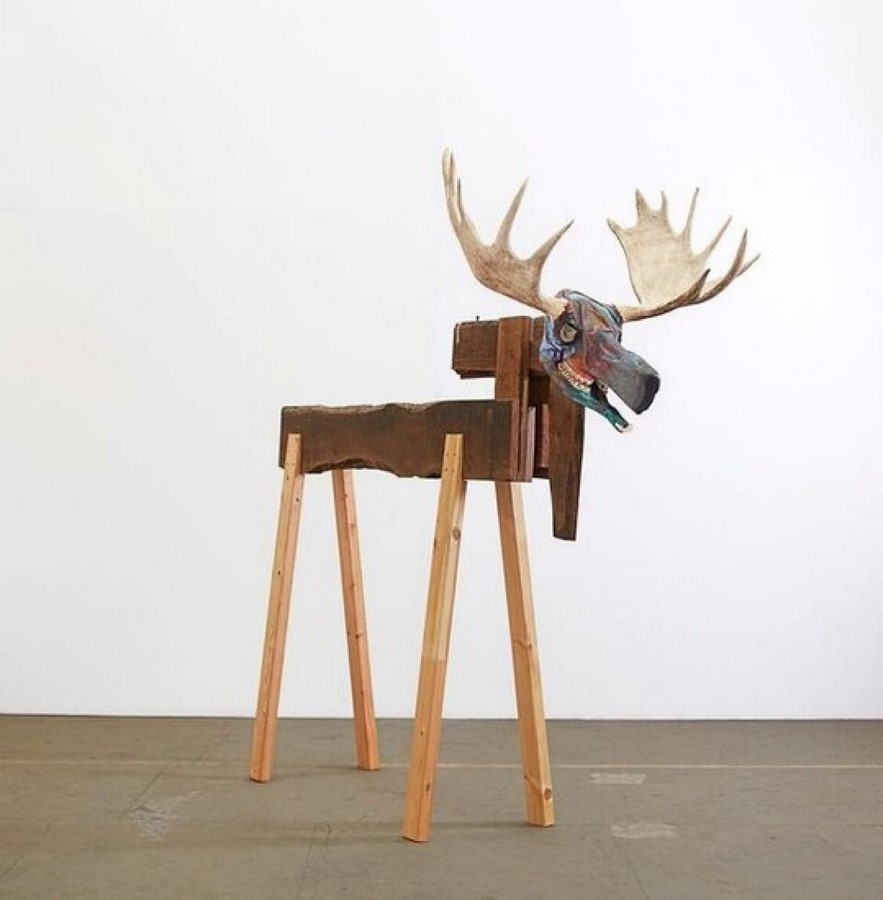
His concepts were rooted in a belief that materials carry stories. Timber reflecting on the cycle of growth, stone representing the geological time, and industrial debris as human extraction. By rearranging these materials into an unstable form, Durham revealed how culture is constructed and how fragile it is. Making it always provisional and never absolute.
Jimmie Durham’s architectural sensibility was clear. He used anti-monuments which were unstable, temporary and critical to the idea of permanence. Questioning power and revealing its vulnerabilities.
Recognition after death
Jimmie Durham passed away in November 2021, with an extraordinary legacy of art, writing, and intellectual provocation. His death prompted a major reassessment and critical retrospectives of his art. Institutions across the USA and Europe revisited his work and celebrated, making him as the most critical voice in contemporary art.
His work assisted the world in viewing art not as a static object but as a system of resistance. He questioned the unquestionable monuments, showing that they can be critiqued and reimagined.
For architects, Jimmie Durham’s practice showed how the built form can be interrogated and can never be purely functional. They are cultural statements that enshrine stories. How materials can be used to question power instead of reinforcing it.
Durham’s contribution and his ability to reframe art as a tool of resistance. He showed through his art the contradictions, dismantling myths, and proposing new ways of collective identities. In a time where debates around monuments and culture representation remains urgent, his work offers a framework for engagement, bringing a shift in perspective of art’s role in society.
Conclusion
Jimmie Durham’s life and his work represent how art can transcend aesthetics to become an architecture of resistance. Through his philosophy of questioning and his use of materials, he unsettled how the world views art and architecture. He redefined their relations.
Durham’s work and career dismantle the notion of monumental authority being permanent. The institutions are not neutral, and there is an instability of cultural narratives. His work was satirical and full of irony. Reshaping the way the world views art, shifting from an aesthetic object to a critical questioning of inquiry.
At the end, Jimmie Durham’s legacy was not just as an artist or just his artwork, but the critical lens that he offered. He was an architect of resistance and builder of thought that still echo in the discussion between art, history, culture, and identity. His work and his legacy continue to raise questions about representation, power, and permanence. These being the core of how we build, create legacy, and reimagine the world in the future.
References:
- Vetró Baji and Vetró Baji 328 posts View all posts by this author → (2017) Jimmie Durham: ‘god’s children, god’s poems’, Vetró Baji. Available at: https://www.vetrobaji.net/2017/10/01/jimmie-durham-gods-children-gods-poems/ (Accessed: 18 August 2025).
- Jimmie Durham, artist whose work explored Cherokee identity, 1940–2021 (no date) ArtReview RSS. Available at: https://artreview.com/jimmie-durham-artist-whose-work-explored-cherokee-identity-1940-2021/ (Accessed: 18 August 2025).
- Durham, J. (1970) Jimmie Durham: Maremmana Bull, 2017, Art Basel. Available at: https://www.artbasel.com/catalog/artwork/59239/Jimmie-Durham-Maremmana-Bull (Accessed: 18 August 2025).
- Jimmie Durham: At the center of the world (no date) Hammer Museum. Available at: https://hammer.ucla.edu/exhibitions/2017/jimmie-durham-at-the-center-of-the-world (Accessed: 18 August 2025).
- Meier, R.L. (no date) Portrait of self?, Revue Captures. Available at: https://revuecaptures.org/contrepoint/portrait-self (Accessed: 18 August 2025).
- Durham, J. (no date) Jimmie Durham: Self-portrait, Jimmie Durham | Self-portrait | Whitney Museum of American Art. Available at: https://whitney.org/collection/works/10021 (Accessed: 18 August 2025).
- Jimmie durham_still life with stone and car_2004 (2015) BlackFlash Magazine. Available at: https://blackflash.ca/jimmie-durham_still-life-with-stone-and-car_2004/ (Accessed: 18 August 2025).