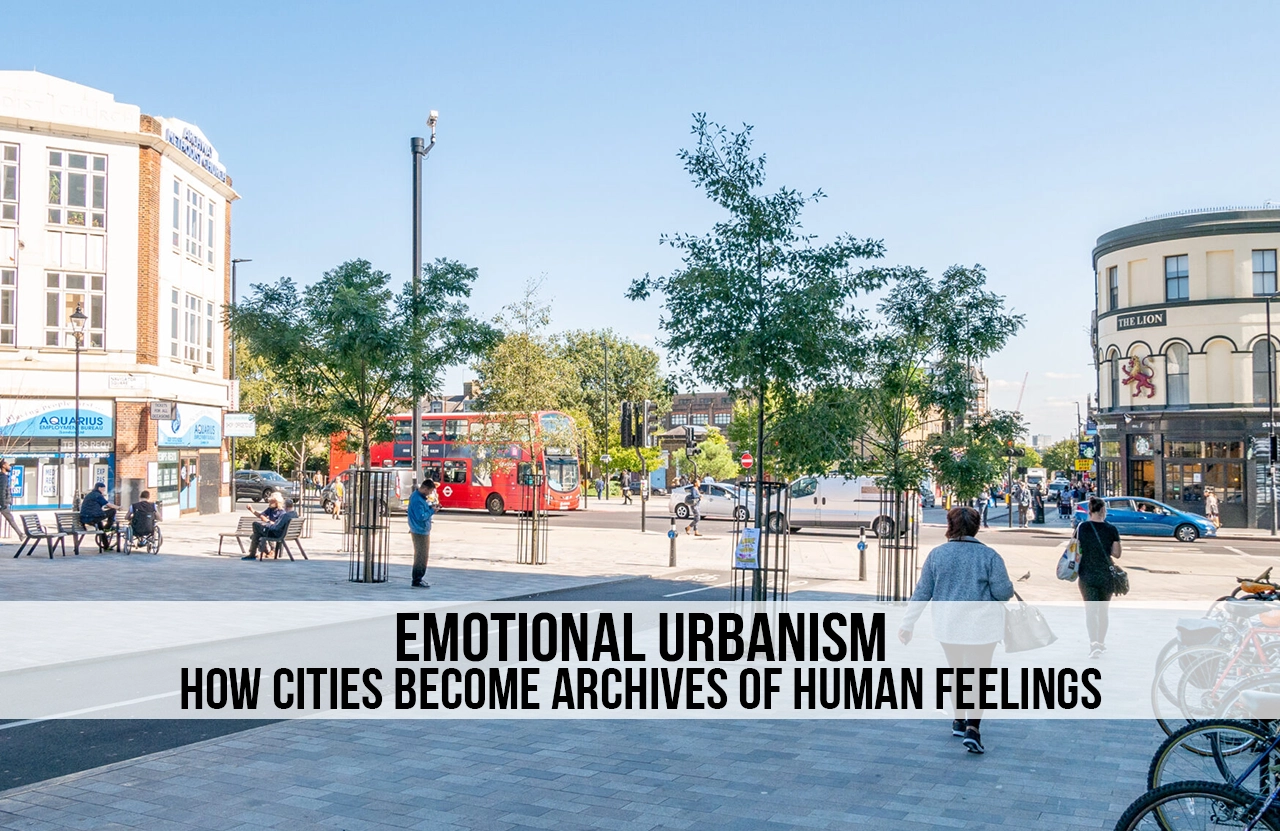
Cities are often measured by statistics such as population density, transportation efficiency, economic growth and infrastructure development. Yet beneath these measurable layers exists an invisible dimension that profoundly shapes urban life . Every street corner, public square, abandoned building and neighbourhood cafes carry traces of human experiences. These places silently accumulate memories of celebrations, heartbreaks, encounters, departures and returns. This phenomenon can be understood through the lens of emotional urbanism, a perspective that examines how cities absorb and reflect human emotions over time.
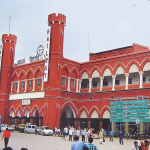
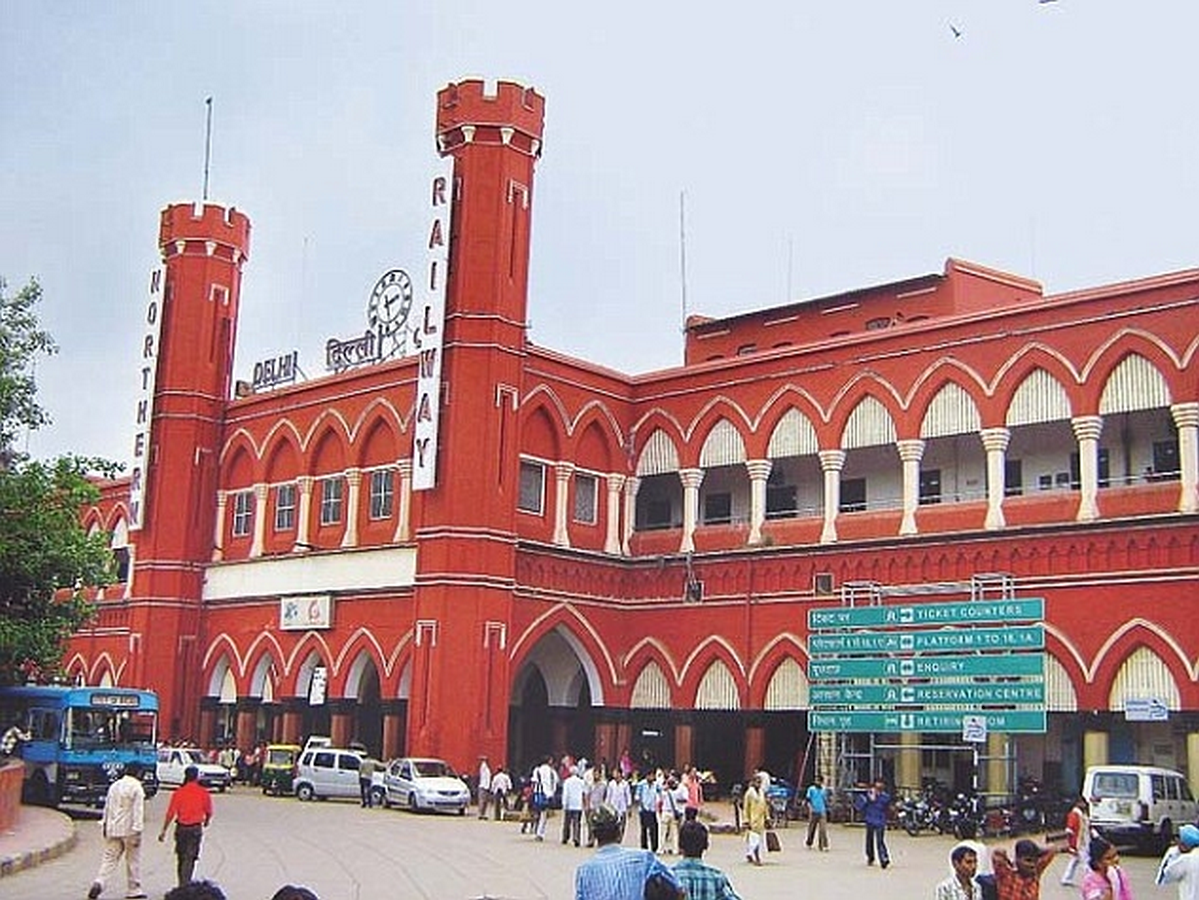
Unlike physical infrastructure, emotions leave no visible blueprints. Nevertheless, they influence how individuals navigate and remember urban environments. A railway station may symbolize opportunity for one person and separation for another. A neighbourhood park might represent childhood freedom, while an old marketplace evokes memories of family traditions. Through countless interactions, cities become living repositories of emotional experiences that extend far beyond their material form.
The City as a Collective Memory Machine
Every city functions as a vast memory machine where individual experiences merge into collective narratives. Urban spaces continuously witness life-changing moments such as weddings in public gardens, protests in civic squares, festivals along streets and daily routines repeated across generations. Over time, these experiences create emotional layers that become inseparable from the physical environment.
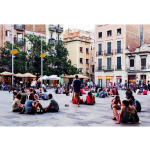
The concept of emotional urbanism suggests that architecture is not merely a backdrop for human activity but an active participant in the formation of emotional memory. Consider a centuries-old public square. Its stones may have witnessed celebrations, revolutions, mourning ceremonies and everyday conversations. Even newcomers can sense a unique atmosphere in such a place because emotional histories often become embedded in a city’s cultural identity.
This emotional accumulation explains why residents frequently resist the demolition of familiar landmarks. Their attachment is rarely based solely on architectural value; rather, these places represent chapters of personal and collective history. Losing them can feel like losing a piece of memory itself.
Streets that Remember
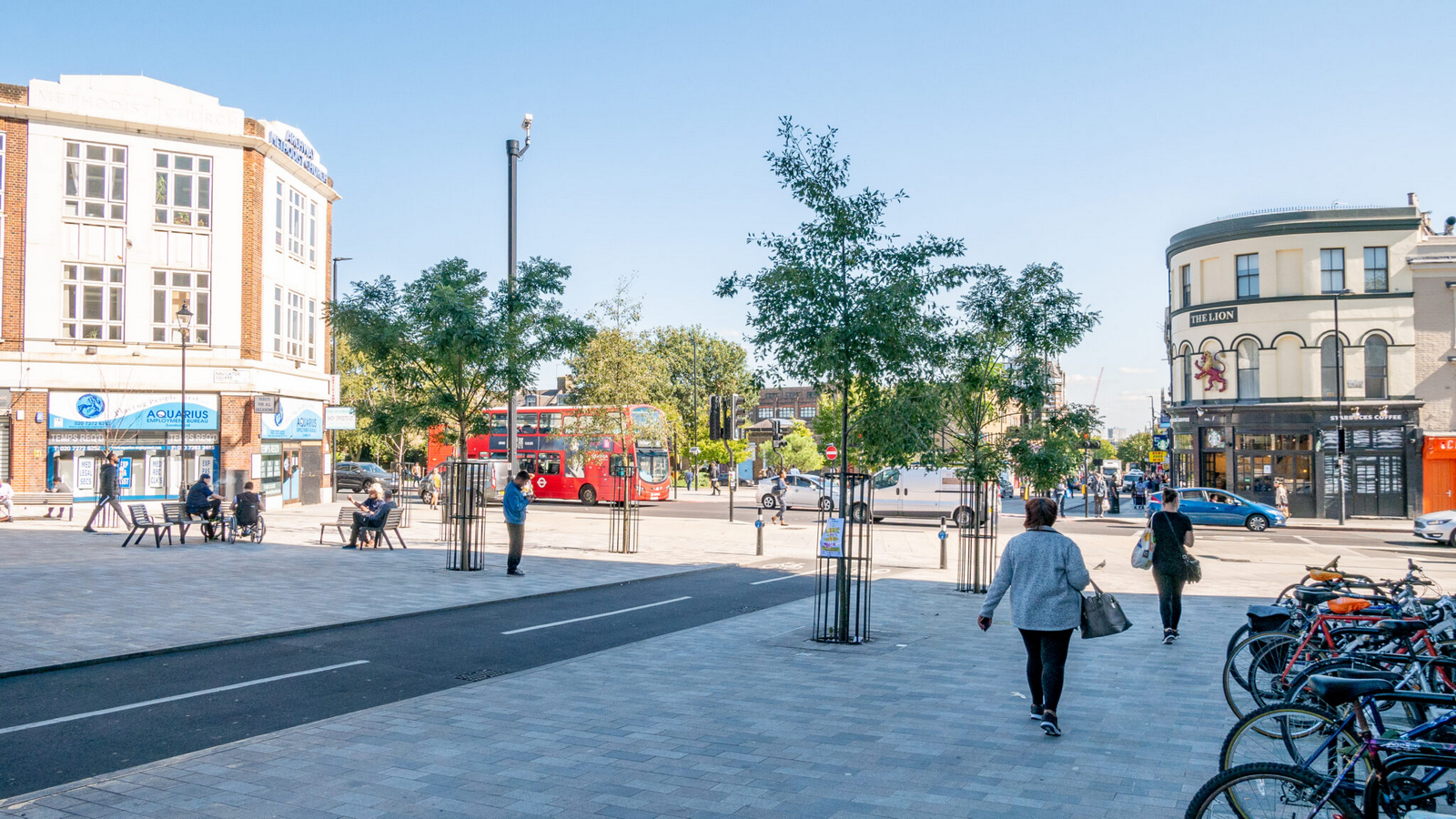
Urban streets are among the most emotionally charged elements of the city. They serve as stages where countless personal narratives unfold simultaneously. A single street may witness first dates, childhood games, farewell conversations, spontaneous celebrations and moments of solitude within the same day.
Through emotional urbanism, streets can be understood as emotional pathways connecting people to their memories. The sensory experiences associated with a particular route, the smell of food from a corner vendor, the sound of local musicians, the sight of familiar storefronts, often trigger powerful recollections even after years. Such emotional associations contribute significantly to a person’s sense of belonging.
Interestingly, many individuals remember cities through specific routes rather than monuments. The journey from home to school, a walk through a neighbourhood market, or an evening stroll along a waterfront often becomes more meaningful than iconic landmarks. These everyday pathways create intimate relationships between people and place, transforming ordinary streets into emotional landscapes.
Architecture Beyond Function
Modern architecture is frequently evaluated according to efficiency, sustainability and performance. While these aspects remain essential, emotional urbanism emphasizes the importance of emotional resonance in architectural design. Buildings do not merely provide shelter; they influence how people feel, interact and remember.
Natural light, material textures, proportions and spatial sequences can evoke comfort, awe, nostalgia or tranquility. A well-designed library may inspire contemplation, while a community center encourages social connection. Likewise, neglected or hostile environments can contribute to feelings of anxiety and alienation.
Architects increasingly recognize that successful urban spaces must address emotional needs alongside functional requirements. The most beloved buildings often achieve this by balance by creating environments that support meaningful human experiences. Their significance extends beyond aesthetics because they become woven into the emotional fabric of everyday life.
Urban Loneliness in Crowded Places
Paradoxically, cities can be both emotionally rich and emotionally isolating. Millions of people may occupy the same urban environment while experiencing profound loneliness. The rise of high-density living, digital communication and increasingly privatized spaces has altered the emotional dynamics of contemporary urban life.
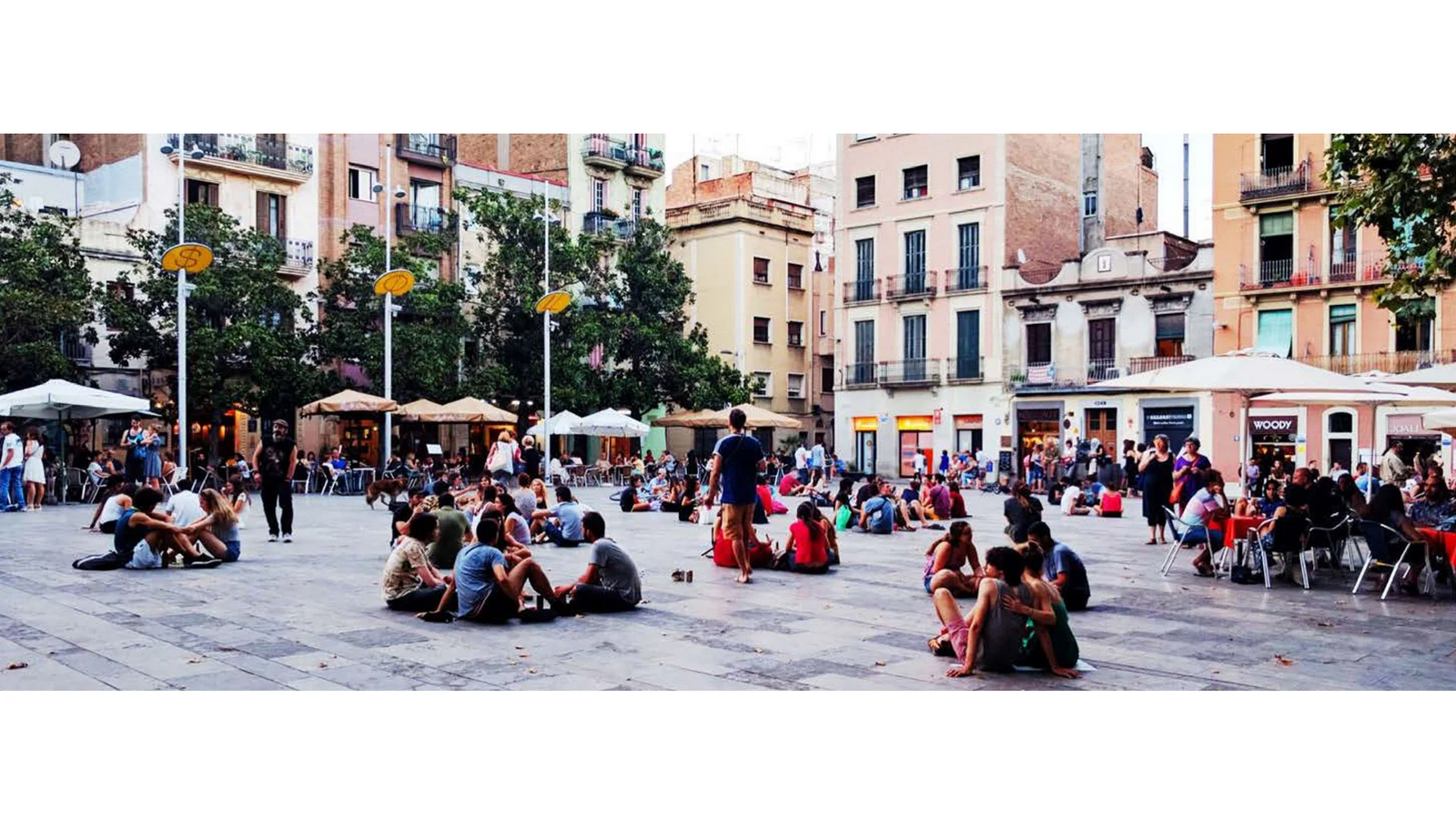
From the perspective of emotional urbanism, loneliness is not simply a personal condition but also a spatial one. Public spaces that discourage interaction, neighbourhoods lacking communal gathering spaces and car-dependent urban environments can reduce opportunities for meaningful social encounters. In contrast, plazas, parks, markets and pedestrian-friendly streets often foster spontaneous connections that strengthen community bonds.
The emotional health of cities, therefore, depends not only on economic and infrastructural systems but also on their capacity to facilitate human relationships. Designing for connection has become an increasingly important challenge for urban planners and architects seeking to create more emotionally resilient cities.
Nostalgia and the Emotional Geography of Cities
Nostalgia plays a powerful role in shaping urban identity. People frequently develop emotional attachments to places that no longer exist or have undergone significant transformation. Former cinemas, old markets, demolished houses and vanished neighbourhoods often remain vivid in memory long after their physical disappearance.
This aspect of emotional urbanism reveals that cities exist simultaneously in physical reality and emotional memory. Residents carry mental maps shaped by personal experiences, creating an invisible geography layered over the built environment. These emotional maps influence how individuals perceive urban change and adaptation.
As cities evolve, balancing development with emotional continuity becomes increasingly important. Preserving heritage structures, cultural landmarks, and meaningful public spaces helps maintain connections between past and present. Such efforts ensure that urban growth does not erase the emotional narratives that define a city’s unique character.
Designing Cities That Feel
The future of urban design may depend as much on emotional intelligence as technological innovation. Smart cities equipped with advanced infrastructure can improve efficiency, but truly successful cities must also nurture human well being, belonging and emotional connection. This is the central proposition of emotional urbanism.
Designing cities that feel involves creating environments that encourage interaction, support memory making and respect cultural identity. It means prioritizing public spaces where people can gather, reflect, celebrate and connect. It also requires recognizing that every building and street contributes to the emotional experience of urban life.
Ultimately, cities are not collections of structures but collections of stories. Their true value lies not only in what they contain physically but in what they mean emotionally. As people move through urban environments, they leave behind traces of their lives, transforming cities into living archives of human feelings. In this way, every city becomes a shared emotional landscape; one continuously written and rewritten by the people who inhabit it.
Cities are often celebrated for their skylines, infrastructure and architectural achievements, yet their deepest significance lies in the emotions they hold. Through this lens of emotional urbanism, urban environments emerge not merely as physical settings but as living archives of human experience. Every street, building, park and public square accumulates layers of memory, attachment, loss, joy and belonging that shape how people perceive and inhabit the city.
As urbanization accelerates across the world, architects and planners face a critical challenge: designing cities that not only function efficiently but also resonate emotionally with their inhabitants. The most successful urban spaces are those that foster connection, preserve collective memory and create opportunities for meaningful experiences. In recognizing the emotional dimension of the built environment, we move beyond viewing cities as collections of structures and begin to understand them as evolving narratives of human life.
References:
Lynch, K. (1960) The Image of the City. Cambridge, MA: MIT Press.
Gehl, J. (2011) Life Between Buildings: Using Public Space. Washington DC: Island Press.
Pallasmaa, J. (2012) The Eyes of the Skin: Architecture and the Senses. 3rd edn. Chichester: Wiley.
Relph, E. (1976) Place and Placelessness. London: Pion.
Tuan, Y.F. (1977) Space and Place: The Perspective of Experience. Minneapolis: University of Minnesota Press.
Jacobs, J. (1961) The Death and Life of Great American Cities. New York: Random House.
Montgomery, C. (2013) Happy City: Transforming Our Lives Through Urban Design. New York: Farrar, Straus and Giroux.
Alexander, C., Ishikawa, S. and Silverstein, M. (1977) A Pattern Language: Towns, Buildings, Construction. New York: Oxford University Press.
Carmona, M., Heath, T., Oc, T. and Tiesdell, S. (2010) Public Places Urban Spaces: The Dimensions of Urban Design. 2nd edn. Oxford: Architectural Press.
Casey, E.S. (1996) ‘How to Get from Space to Place in a Fairly Short Stretch of Time’, in Feld, S. and Basso, K.H. (eds.) Senses of Place. Santa Fe: School of American Research Press, pp. 13–52.
Low, S.M. and Altman, I. (1992) ‘Place Attachment: A Conceptual Inquiry’, in Altman, I. and Low, S.M. (eds.) Place Attachment. Boston: Springer, pp. 1–12.
Norberg-Schulz, C. (1980) Genius Loci: Towards a Phenomenology of Architecture. New York: Rizzoli.
Oldenburg, R. (1999) The Great Good Place. New York: Marlowe & Company.
Pallasmaa, J. (2014) Space, Place and Atmosphere: Emotion and Peripheral Perception in Architectural Experience. Available at: https://www.juhanipallasmaa.com (Accessed: 18 June 2026).
Seamon, D. (2014) Place Attachment and Phenomenology. London: Routledge.
Zumthor, P. (2006) Atmospheres: Architectural Environments, Surrounding Objects. Basel: Birkhäuser.
Bachelard, G. (2014) The Poetics of Space. Boston: Beacon Press.