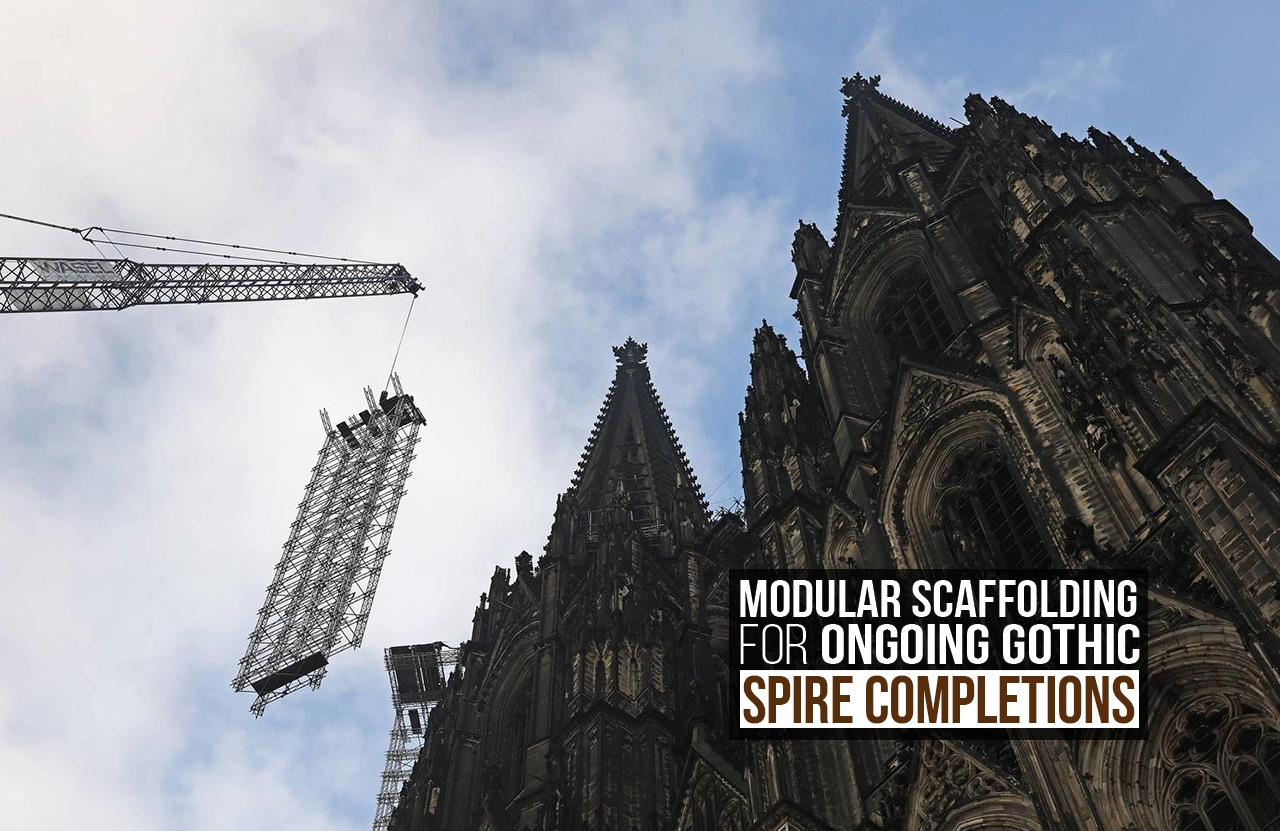
What does it take to reach the top heights of Gothic architecture?
Not metaphorically, but physically? Historically, Gothic architecture has been a strong declaration of faith and ambitions. They were never built with reach, repair, or maintenance in mind! And yet, even today, we continue to return to them for conserving them or even completing what was left unfinished.
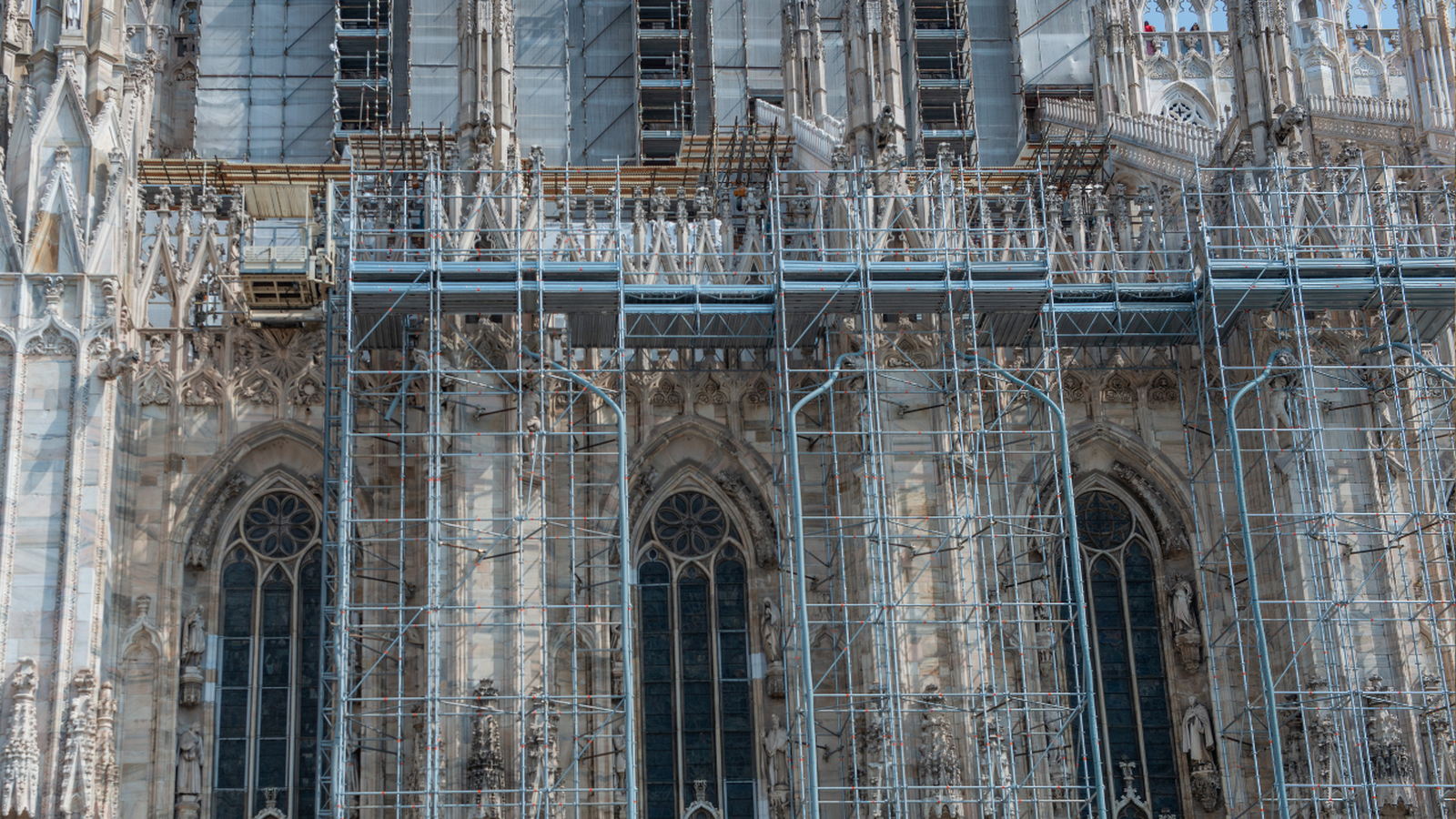
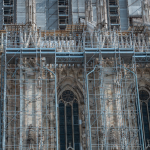
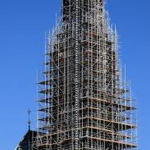
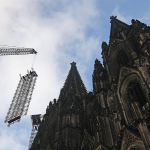
Scaffolding here plays the role of a crucial architectural enabler that is frequently disregarded. It emerges, envelops, sustains, and vanishes. Can we still treat scaffolding in Gothic architecture as invisible, though? Or should we take a closer look at it as a system that shows how we interact with the past?
The Unnoticed Framework
Scaffolding is a temporary structure that is used in construction to provide a stable and safe working platform for workers at heights that would otherwise be impossible. But the simplicity here is deceptive.
There are important aspects to consider before installing a scaffolding system, such as: how close can it get to the surface? How much weight is it capable of carrying? Where does it avoid contact with the surface, and where can it make contact?
Scaffolds are traditionally made from timber. It is inherently flexible and intuitive. Steel tube-and-coupler systems are relatively newer systems that show better strength. Moreover, they are more durable and repeatable. One major drawback still was the reliance on manual assembly and on-site judgment. Though they work incredibly well for flat and predictable geometries, the question arises about forms that defy predictability. Forms like the Gothic architecture that are not rigidly geometric or flat?
Gothic Architecture: Why They Demand More
Gothic architecture represents one of the most complex achievements of pre-modern construction. Their characteristics include:
- Extreme verticality and slenderness
- Non-linear, tapering geometries
- Dense ornamentation (tracery, pinnacles, crockets)
- Fragile stone elements subject to weathering
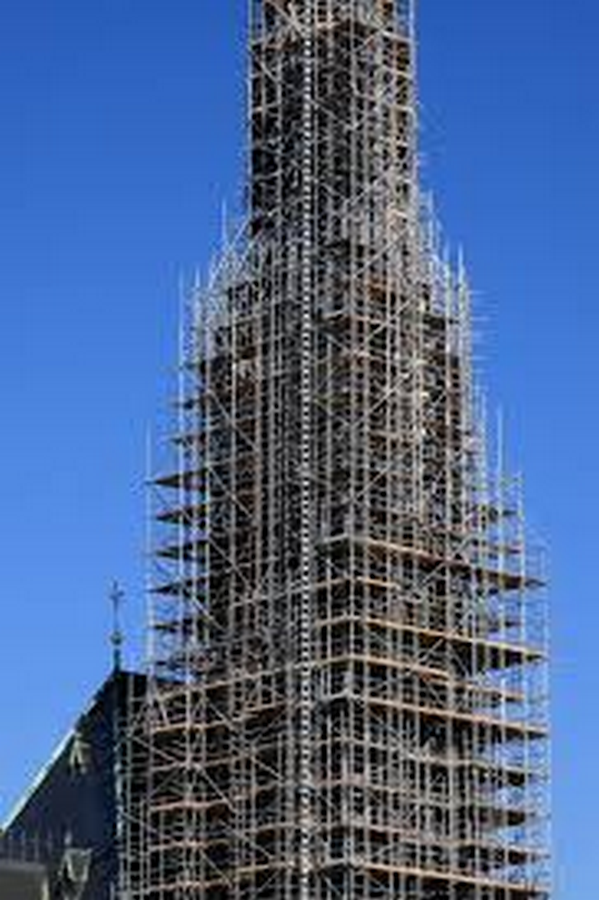
As articulated by Eugène Viollet-le-Duc, Gothic systems were both structurally expressive and materially efficient, but they were never designed for repeated external intervention.
Therefore, even though traditional scaffolds were flexible, they struggled here. The design demanded constant adjustments, improvisations, and often physical anchoring to the structure- something that conservation practitioners today try to avoid. At extreme heights, like in the case of Gothic architecture, these challenges are multiplied. Stability becomes harder to guarantee, and safety becomes more difficult to control.
Hence, modern restoration requires access systems that can negotiate forms that resist standardisation.
Modular Logic
Modular scaffolding systems propose a different approach. Instead of building from scratch each time, they rely on pre-engineered components which have standard nodes, fixed connections and repeatable modules.
They reflect clear improvements in terms of faster assembly, predictable structural performance, reduced reliance on anchoring and easier scaling to reach great heights. It sounds much more efficient and perhaps inevitable. But, here’s where it gets interesting- Does a system built on repetition truly understand a structure built on variation?
Where the Fit Isn’t Perfect
- Geometric rigidity vs. Organic form
While modular scaffolds are flexible within their limits, they are still based on repetitive grids. This is the major drawback of this system. They often sit slightly away from the surface, unable to align fully with its intricacies. Additional adjustments might negotiate the efficiency the system promises.
2. Visual vs. cultural impact
Another concern is the visual traffic of the dense steel framework, which dominates the structure for months or even years. It affects the public perception of the monument. Which raises an important question about aesthetic intrusion.
3. Environmental Cost
Though reusable, steel inherently has an energy-intensive production process with a transportation and logistics footprint. Their overall sustainability does not merely depend on their reusability but also on the Life Cycle Assessment, which is often overlooked.
4. Standardisation vs. Craft Sensitivity
Most importantly, the craftsmanship associated with Gothic architecture might be risked in this system. It reduces the role of tacit knowledge and intuitive adjustments that skilled workers once made to respond to the building.
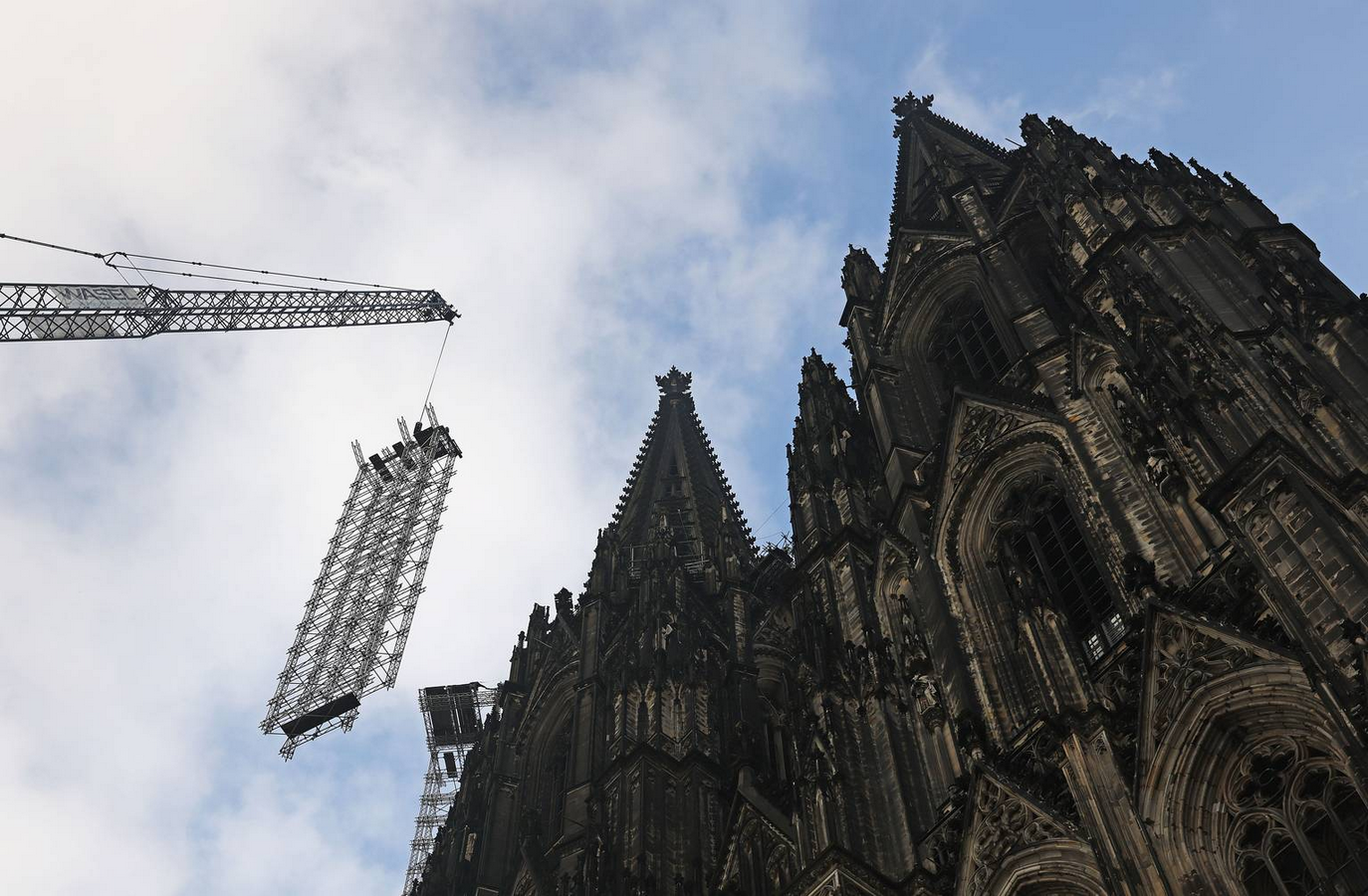
Case Reflection: Notre-Dame Cathedral, Paris
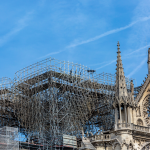
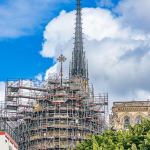
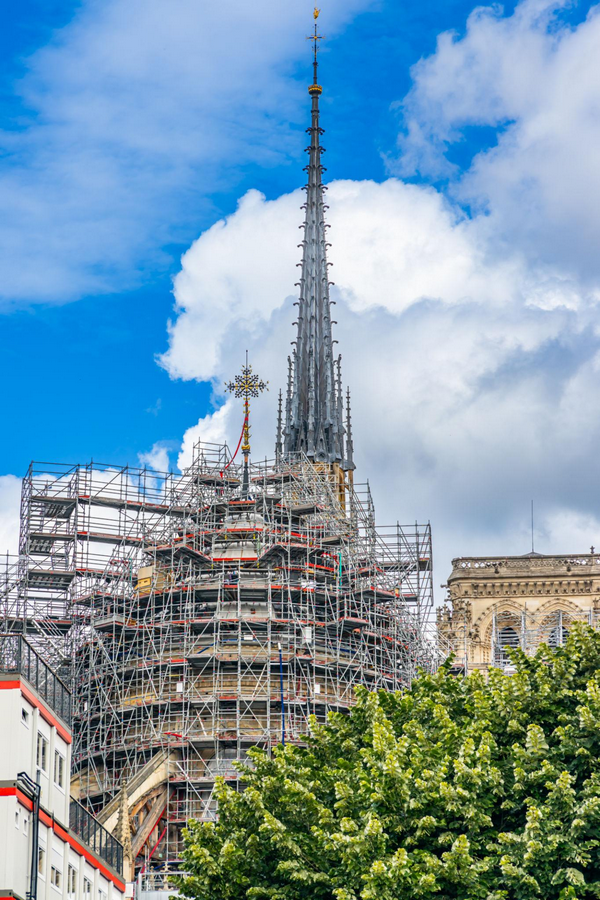
The Notre Dame Cathedral restoration after the fire reveals both the necessity and limitations of contemporary scaffolding.
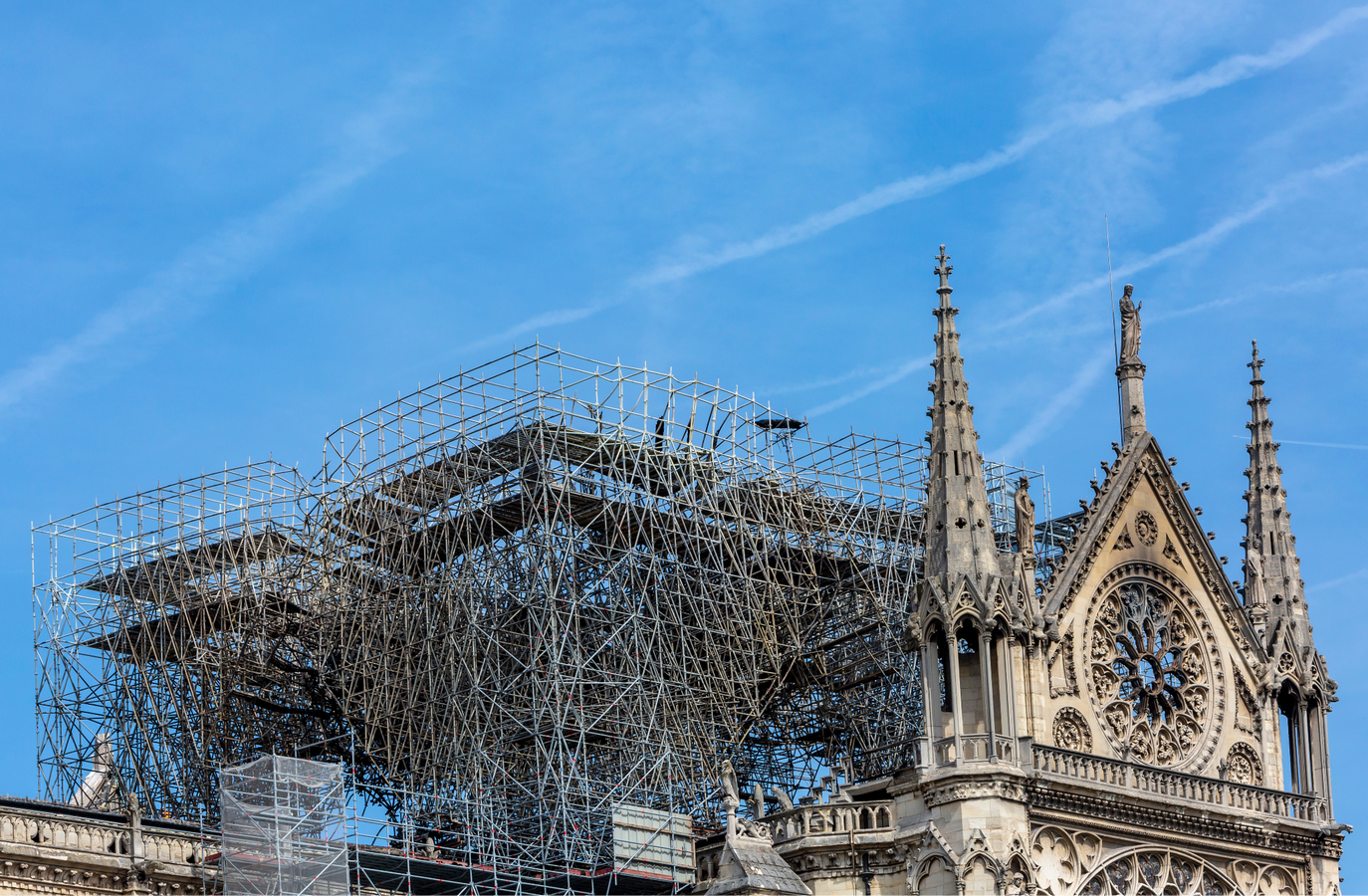
- Existing scaffolding became hazardous after the fire, demonstrating how temporary systems can become liabilities
- New modular systems had to be carefully designed to avoid further structural stress
- Digital tools (laser scanning, BIM) were integrated with physical scaffolding, suggesting a hybrid future
Scaffolding is a tool of interpretation that can frame our heritage.
Some thoughts to then tinker upon are- should scaffolding be designed more carefully in heritage contexts? Can it respond visually, not just structurally? Can it be lighter and more adaptive, less intrusive?
What comes next?
The future of scaffolding in Gothic architecture is definitely not going to be purely modular.
A combination of custom- fabricated components that integrate digital scanning or BIM modelling, exploring lighter and less resource-intensive materials, might take over. This will retain the sensitivity to both the structure and how people perceive the architecture.
A system that is more responsive and negotiates complexity rather than overrides is the aim. Scaffolding emphasises the fact that buildings are never truly finished. Even the most monumental structures, like Gothic architecture, depend on temporary systems to sustain them.
So next time you see a Gothic architecture wrapped in steel, it might be worth asking:
Are we just repairing the past or quietly redesigning how we engage with it?
References:
National Geographic (2019) ‘Notre-Dame Cathedral fire: What we know’, National Geographic. Available at: https://www.nationalgeographic.com/history/article/notre-dame-cathedral-fire (Accessed: 5 April 2026).
The Guardian (2020) ‘Notre-Dame: The story of the fire and reconstruction’, The Guardian. Available at: https://www.theguardian.com/world/notre-dame (Accessed: 5 April 2026).
Historic England (2026). Temporary works and scaffolding in historic building conservation. Available at: https://historicengland.org.uk/advice (Accessed: 5 April 2026).
Engineering Timelines (2026) Cologne Cathedral construction history. Available at: http://www.engineering-timelines.com (Accessed: 5 April 2026).