Architecture and intimacy are arguably the most disconnected concepts. Architecture emphasises monumentality, creating structures intended to endure for centuries. It emphasises grand gestures, city skylines, and buildings that make a statement to the world. It operates on a large scale. Even a small building makes a physical statement – the act of building itself signals presence. Conversely, intimacy occurs behind closed doors; it is personal, transient, and reserved for a select few. This article examines where these opposing concepts intersect, exploring how architectural spaces might honour both monumental ambition and intimate human experience.
Architecture as Intimate Concept
Two approaches are considered, examining Architecture and Intimacy. First, which specific forms, spatial arrangements, and landscape relationships define intimate architecture? Are there identifiable patterns that reliably evoke intimacy? The best way to find an answer is to take a close look at adult-only hotels.
Most romantic hotels listed on platforms like Mr&Mrs Smith tend to share certain features. These traits are typically recognised as part of the intimate architectural standard. What emerges is a vocabulary of intimacy – a set of design moves that consistently produces the desired emotional response.
Initially, most hotels are located in remote areas. The more secluded the location, the better suited it is for an adults-only hotel. Typically, these hotels are near the sea or in mountainous areas, offering panoramic views. This is logical – guests should enjoy such scenery, even if they never leave their hotel room. Remoteness creates psychological distance from daily obligations, enabling the transition from public to private self.
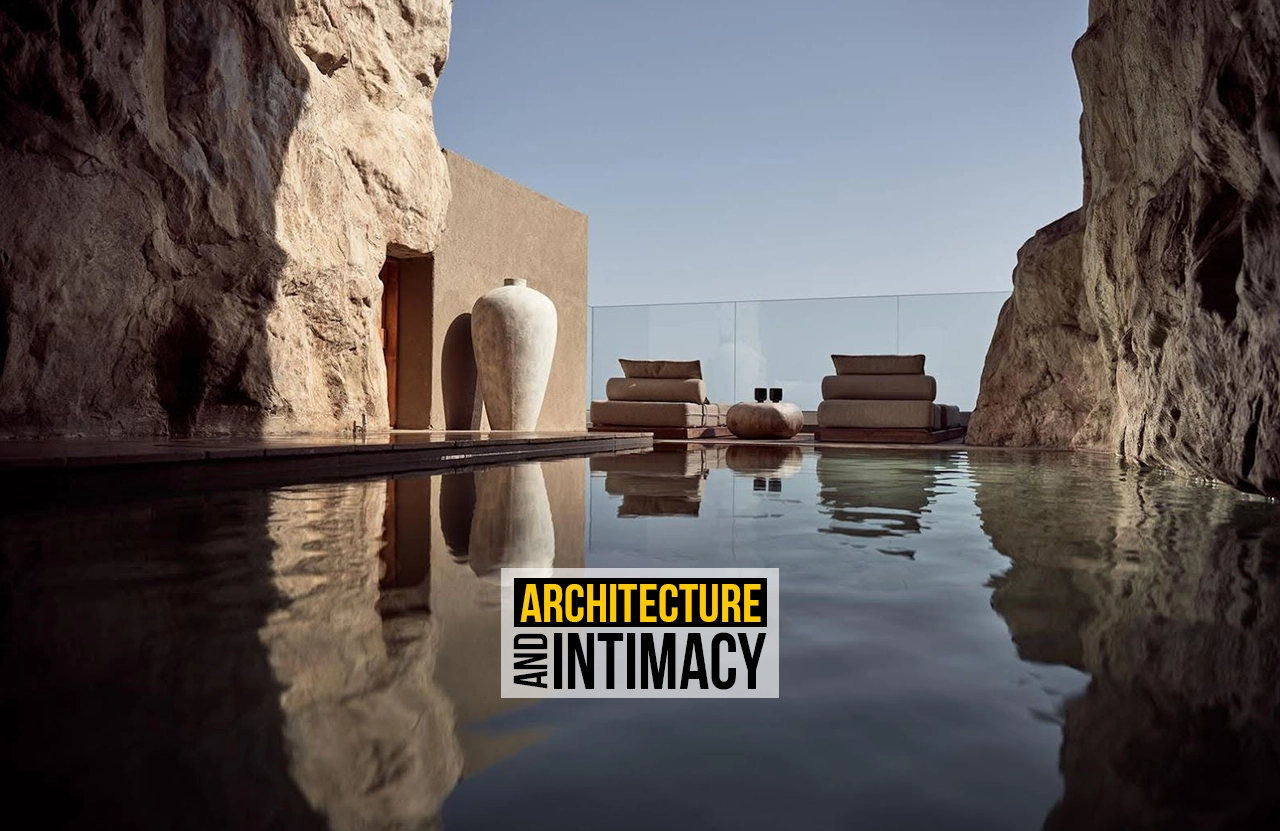
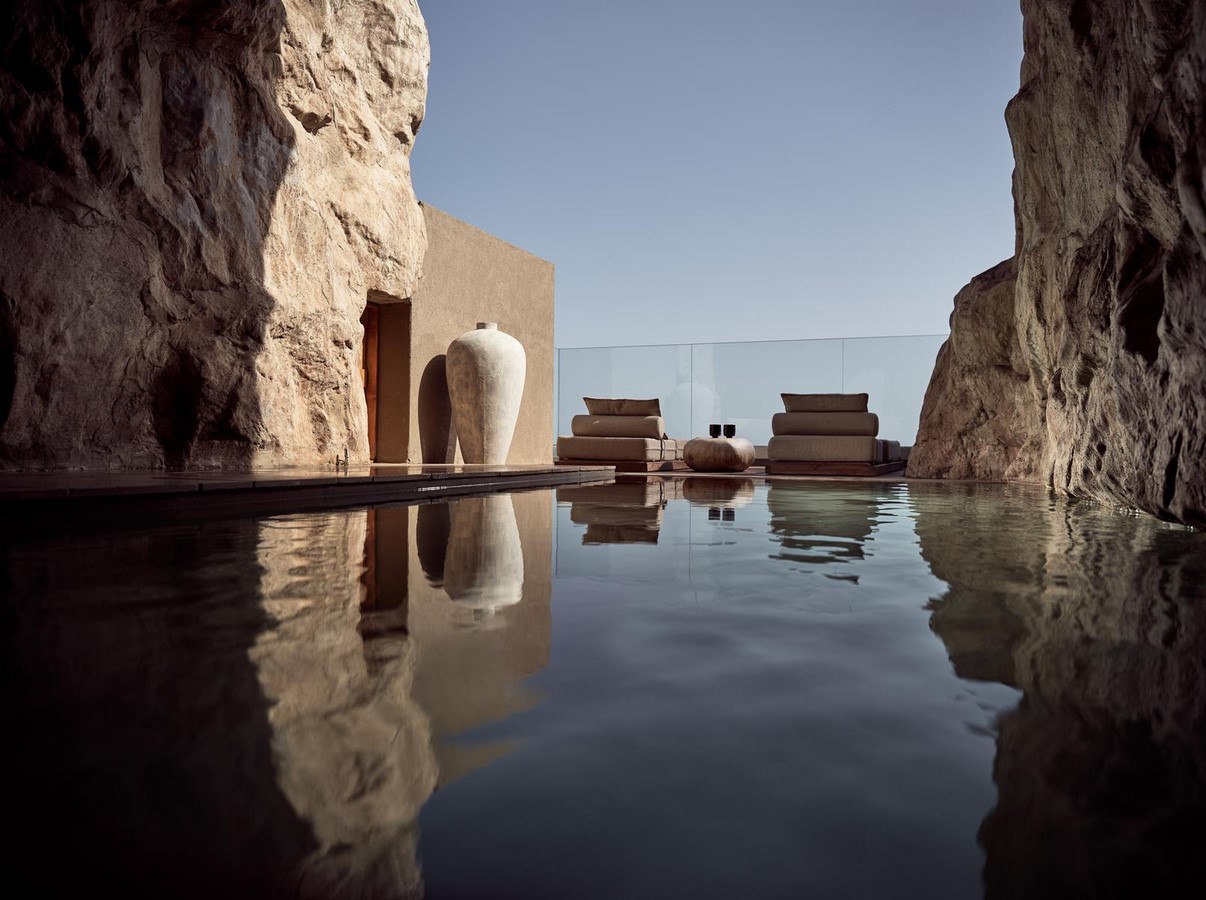
Water features serve more as spatial organisers than mere amenities. Private pools do more than add luxury – they shape spatial use and influence light. Material choices lean toward raw, elemental materials such as stone, marble, and volcanic rock. The architecture communicates through mass and void rather than intricate details. These materials carry weight – literally and metaphorically. Stone reads as permanent, ancient, rooted. When paired with water, which shifts and reflects constantly, the contrast heightens awareness of both elements. It also evokes a sense of elitism, achieved through premium materials and spatial planning – key strategies in Architecture and Intimacy that balance the number of guests with available space.
Exceptional intimate hotel architecture creates the impression that the space was designed specifically for the current guest experience. The sunset viewed from this pool in the cave is distinctive, emphasising the setting’s uniqueness. This feeling of unmatched distinctiveness exemplifies architectural intimacy at work, making the process of reaching the space as meaningful as the space itself. The architecture refuses generic solutions. Each space responds to its specific site – the curve of the cliff, the direction of prevailing winds, the angle of afternoon light.
Intimacy as Architectural Concept
The second way to examine Architecture and Intimacy is to ask whether intimacy can become a fundamental architectural principle, influencing not only private spaces
but also how buildings shape user experience from the outset.
The answer isn’t immediately clear, but the best way to grasp the question might be to recall the feeling before entering an ancient temple – those times when something meaningful is hidden behind a wall but remains unseen. Temples were built to facilitate a close connection with God, and similar principles could be applied to human intimacy and architectural design. The temple’s power derives not from revelation but from deferral. The architecture makes you aware of the threshold, of crossing from profane to sacred space.
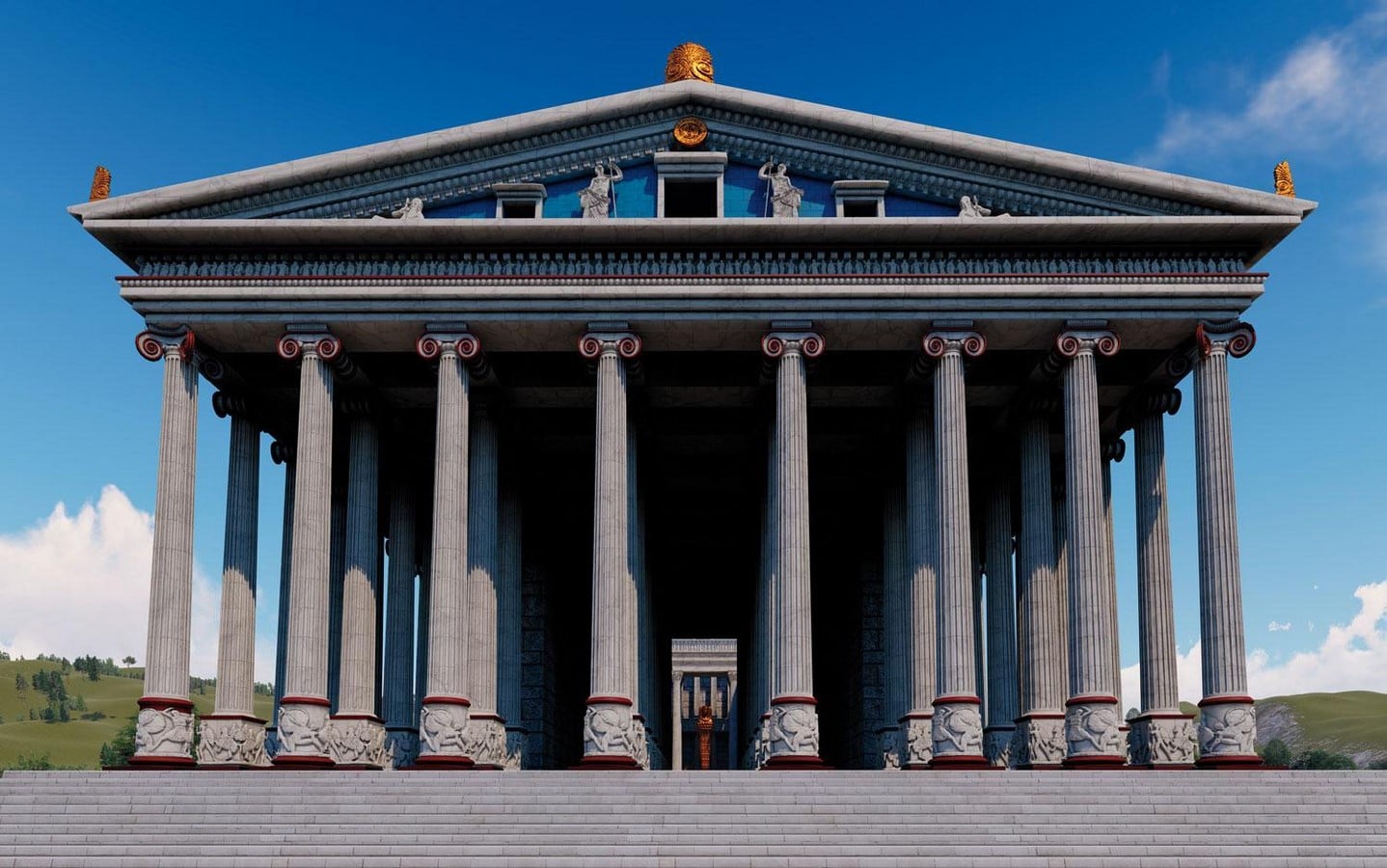
What are these principles of Architecture and Intimacy? First, anticipation is rooted in architecture. The sequence of approach matters as much as the destination. Second, a simple form doesn’t guarantee a simple experience; the converse is also true. The complexity of form often produces a shallow experience; simplicity invites deeper engagement. Third and most importantly: mystery depends on concealment. Modern architecture‘s focus on transparency undermines intimacy, as glass shows everything instantly. However, intimacy depends on slow revelation – spaces that spark curiosity about what’s beyond. Because the most personal conversations occur in rooms where the full space isn’t visible all at once.
Genuine Intimacy
We, as individuals, deserve more than just the vulgar or the dull. Our desire for authentic intimacy – across almost everything we do – calls for architecture that recognises this essential human need. Instead of architecture that merely promotes romance, we need spaces that allow people in love to be alone together, shielded from the outside world but still connected to it. This might be the true essence of Architecture and Intimacy: buildings that acknowledge our need for both shelter and horizons, for both retreat and perspective, for private moments within a larger context. The apparent contradiction isn’t something to fix; it’s the core of the concept.