Are we designing riverfront projects to give precedence to rivers or to enhance social displacement? India’s riverfront projects possess large parcels of land, which have not only given rebirth to urban-scale projects but also narrate an ecological cautionary tale. Development alongside rivers is considered a means of rejuvenating neglected riverbanks and performing an urban makeover using specific parameters. Riverfronts in small towns often accommodate traditional and cultural aspects of the particular region, which creates an impactful source for natives, but at the same time, the apprehension of the stratigraphic destruction remains constant.
Indigenous life along the river
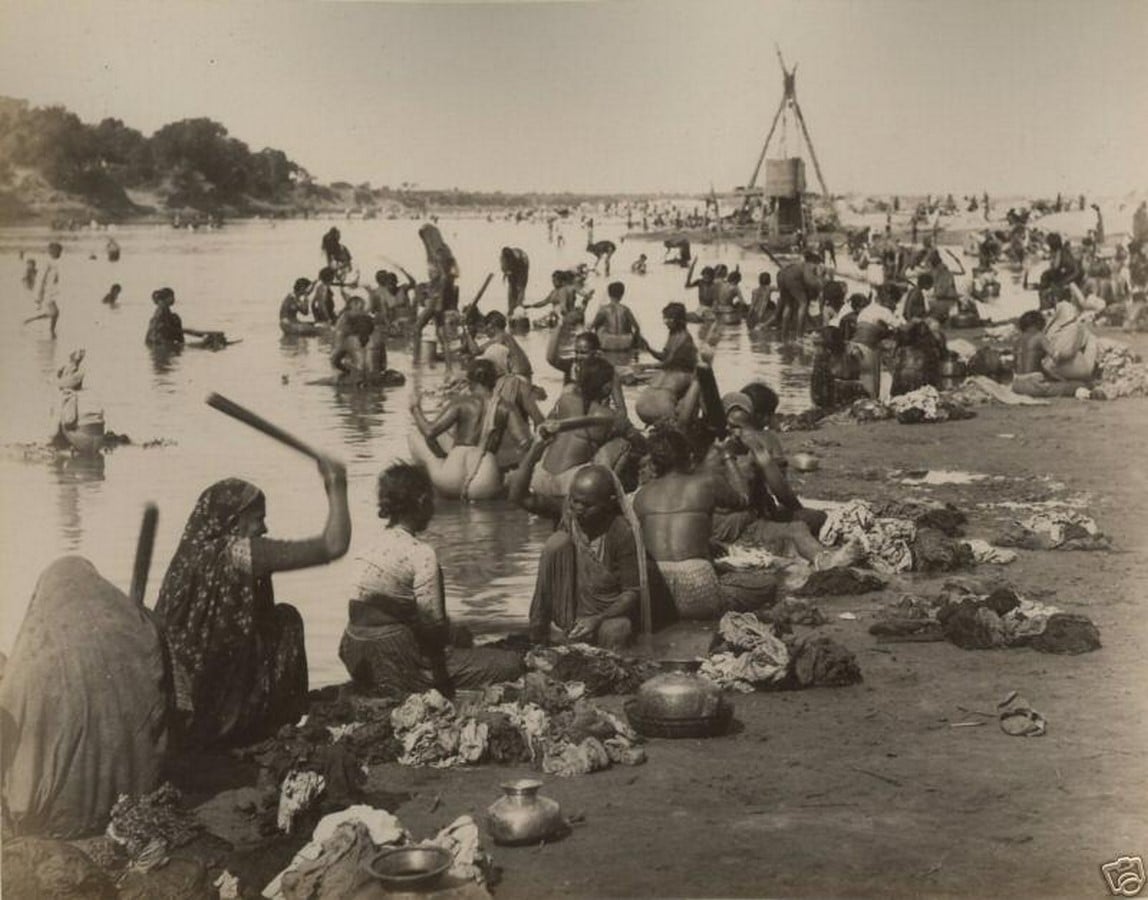
In the early ages, the habitat dependency on these rivers was intense and apparently, communities started to rely on rivers for their daily errands. Back in 3300 BCE, the Indus Valley Civilisation was a major outbreak for how the development of complex settlement was developed alongside the river. For some of the regional communities, these riverbanks are not just riverbanks, but it is their livelihood, cultural convention, and for some, their daily revenue generator. From fishing to seasonal flooding, agriculture to conducting Aarti (lamp ceremony), and pottery to performing cremation, the riverfront merely represented urban architecture because it was primarily a living laboratory.
Riverfront revival favoring an urban dense fabric
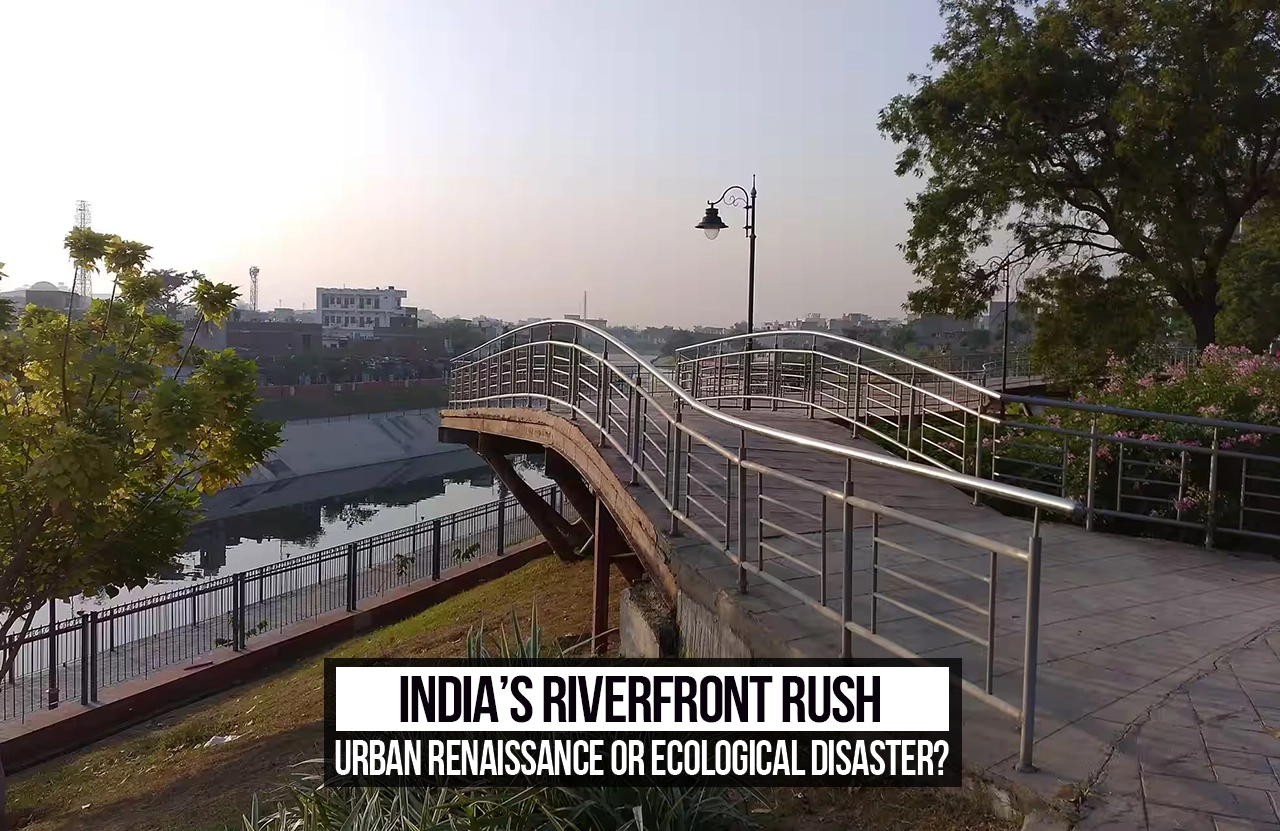
India’s Riverfront Projects are an epitome of embankment beautification. A promise by the urban rebirth of riverfront projects that endorses civic participation and transforms the city’s river banks. A public space which encompasses leisure activities, exhibit halls, pavilions and one of the foremost things is that it acts as a commuting corridor for citizens.
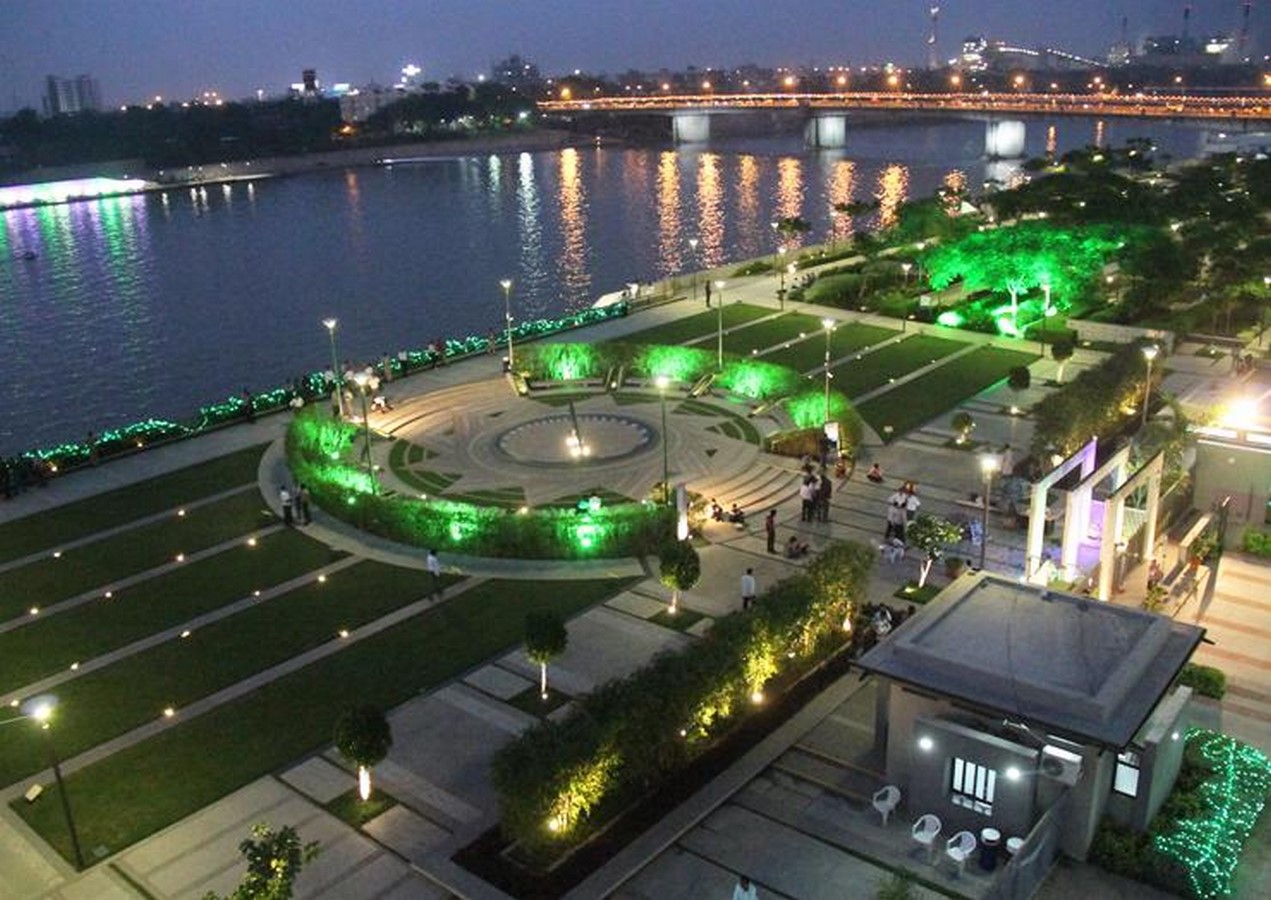
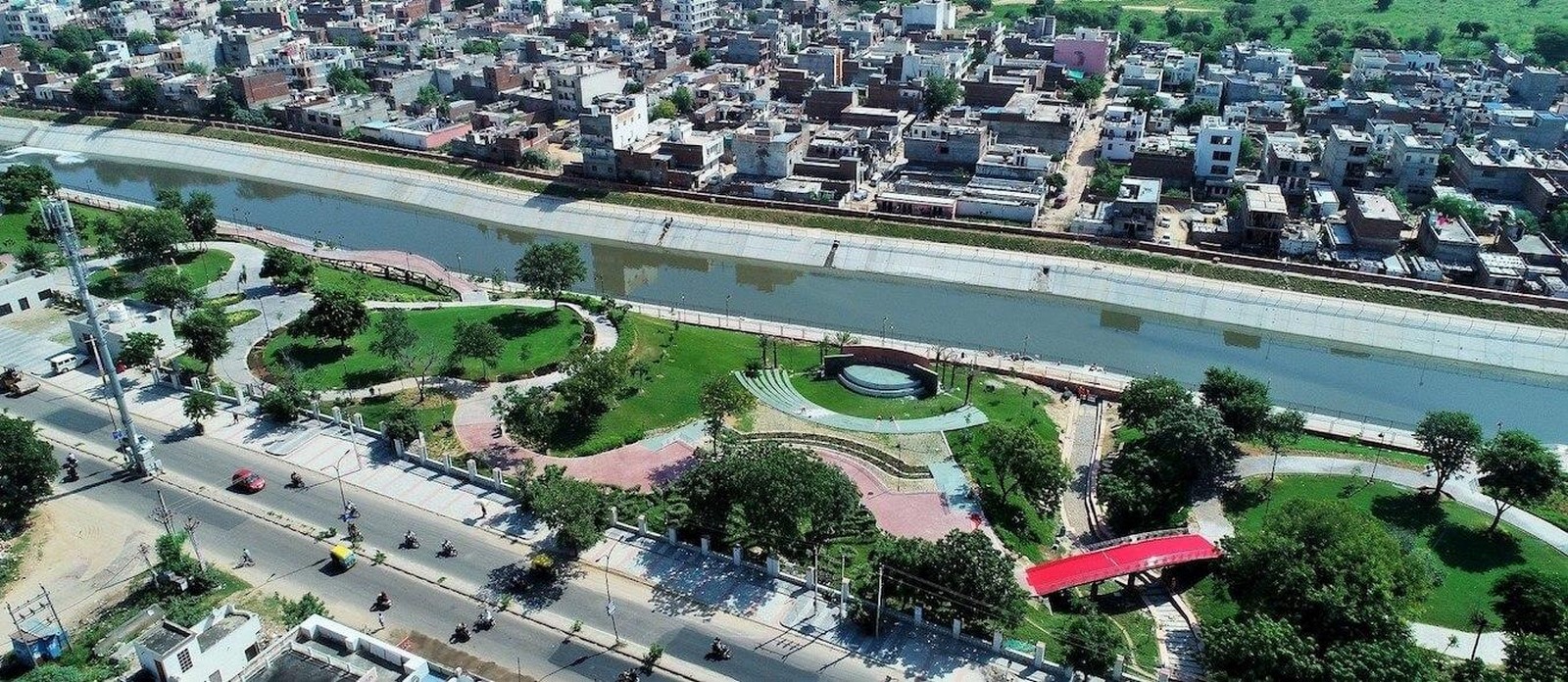
Cities like Ahmedabad and Jaipur have adapted the urban redevelopment of the riverfronts by introducing continuous promenades and small patches of built form that unfold extensive, wide public areas with carefully engraved landscape features. These interventions precisely redefine the rejuvenation of Indian riverfronts, which function as a city-centric urban design and involve public engagement in an informal system of the space.
Architectural Character summoning locals
What experiences invite people to the riverfront? Integrating familiar recreational activities, mobility open passageways, and something prominent responding to the local tradition and culture. Architectural character plays a vital role in shaping the riverfront’s surroundings by using sustainable building technologies, vernacular techniques, addition of regional flora and fauna and making it an extent of cosmopolitan lifestyle.
It does not stop here, because monumental-scaled large open patches absorbing excruciating heat or a claustrophobic chamber will not seem inviting to individuals; therefore, human-scaled urbanism comes into play with the incorporation of semi-open shaded spaces, informal seating arrangements at short intervals, and adaptable open spaces that would assemble a space into a pleasant and enjoyable one.
Urban Beautification Vs Ecological Caution
Urban beautification alongside rivers refers to the design intervention of public leisure spaces and plenty of accessible hardscape features that gives complex to the natural river entity. On the contrary, the ecological balance of the river depends on an efficient maintenance of the floodplains, regulation of seasonal flows and letting the river generate levels according to the weather.
An example of India’s Riverfront Project, which rather focused on exterior decoration than nature’s protection. The Chambal riverfront, Kota, has been designed on a stretch of 2-3 Km on both banks of the river with a massive inheritance of heritage embellishments, but the construction proceeded further without obtaining environmental clearance and violating green norms. The news gets worse with the hearing of untreated sewage and waste dumping in the river that plays havoc on the whole surrounding area. Architecture should reflect the aesthetics of a space, keeping in mind the ecological sensitivity.
Measures for Disaster Resilience
India’s Riverfront Projects are usually undertaken by the government, and a rapid increase in potential disaster threats forces them to integrate disaster management systems in riverfront projects. Disaster resilience emphasises greywater treatment, adaptive restoration of promenades, management of water level during excessive rain and incorporating soft landscape and water features like bio swales and wetland. Bio swales/ vegetable swales are channels that are installed along the pavements and function as a landscape element to slow down and treat the storm water runoff, whereas wetlands create an ecosystem where the water lies above the soil or is present near the land, creating an adequate difference between land and water, which helps in filtering water and controlling floods.
Spiritual Infrastructure adjoining Historical River
Indian sacred pilgrimage sites along the river curate a relationship between the communities and water, which has been continued for a prolonged period of time. These riverfront projects have been conceptualised as corridors that generate direct connection with the holy river.
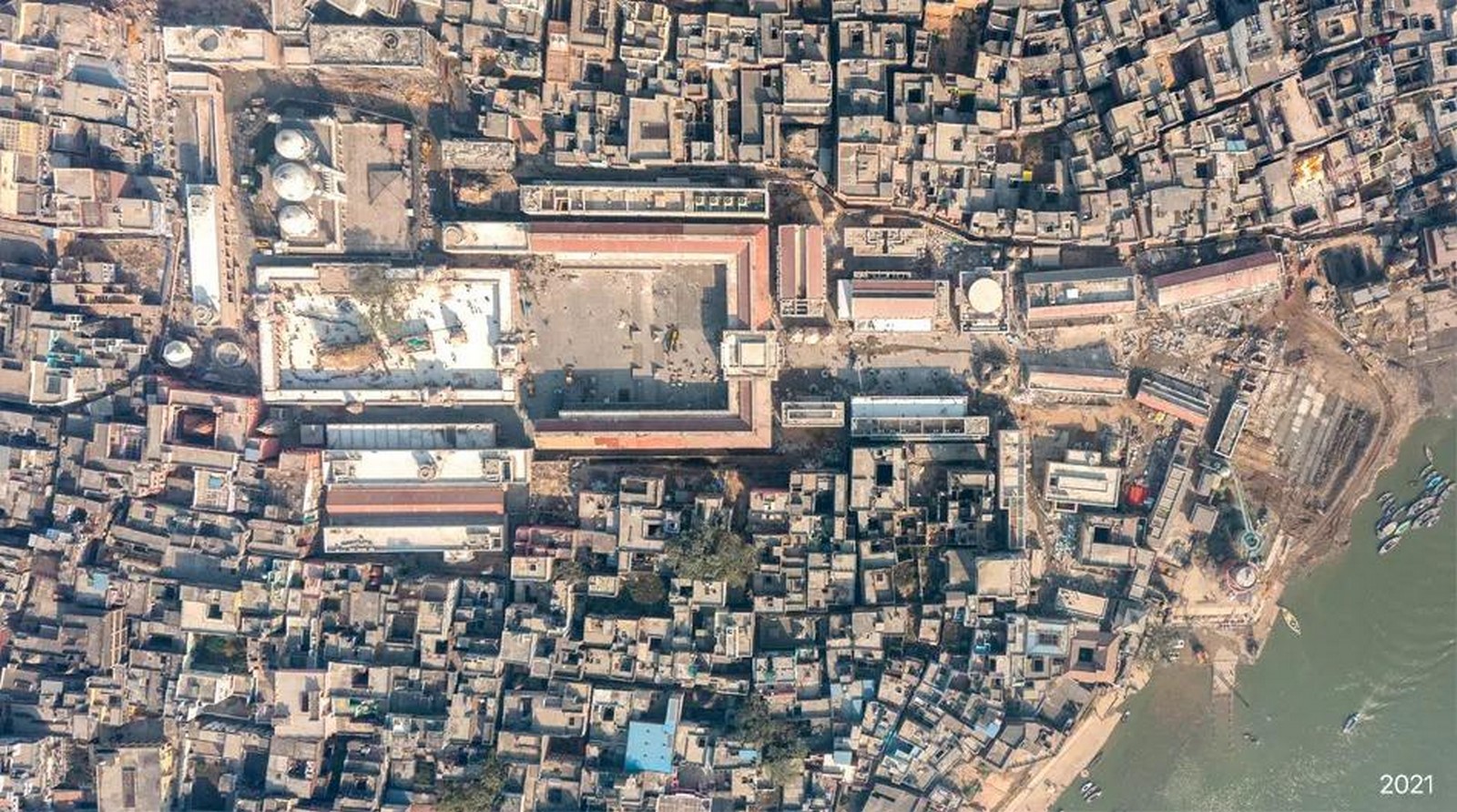
“Kashi Vishwanath Corridor, Varanasi” profoundly exemplifies India’s Riverfront Project, where Ghats and the temple not only act as sacred spaces but are also focused on social and climatic experiences. Accessibility-resolved, restoration-preserved, amenities-organised and employment-boosted, preserving the tradition and representing a solution for anticipated risk is what makes the contemporary riverfront development an accomplishment.