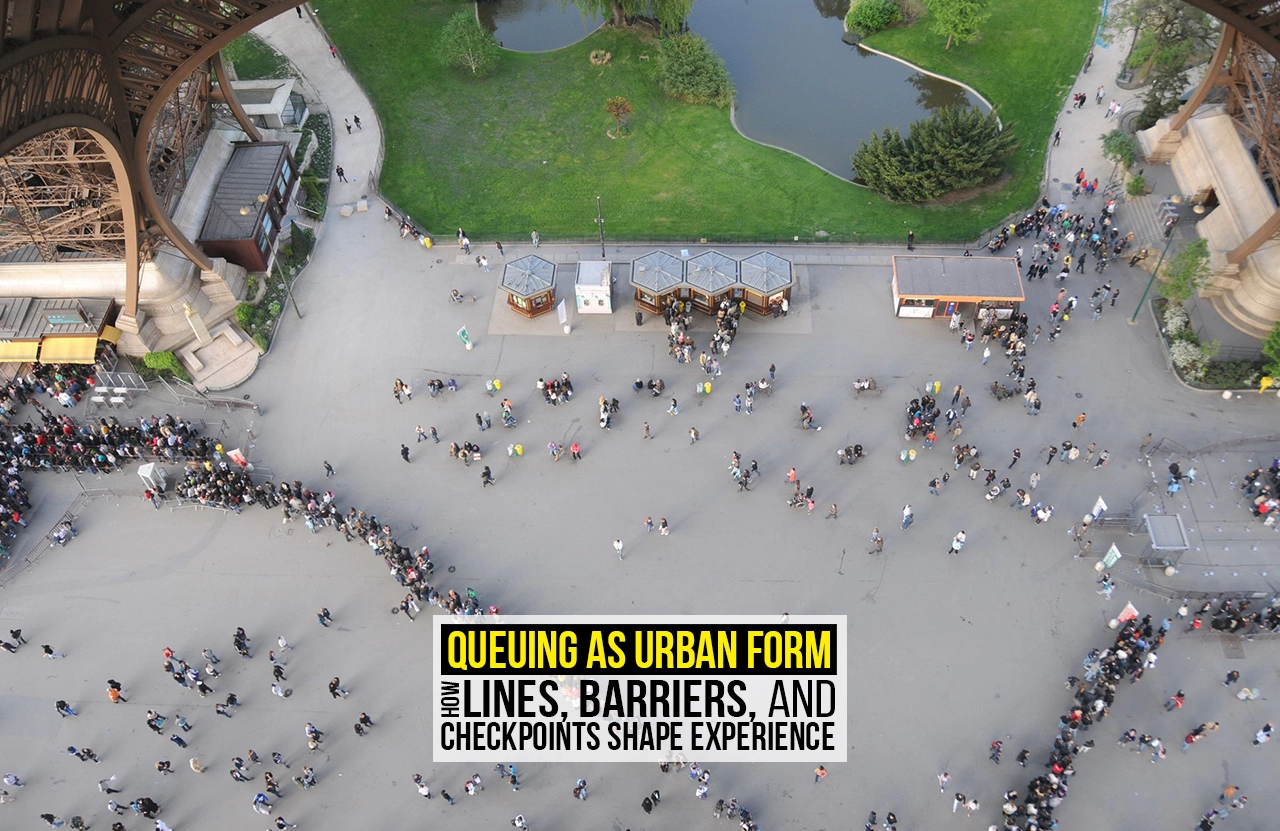
Waiting is one of the most recognizable spatial experiences in cities, which are not defined by buildings or streets. The queue is a vernacular kind of urban form, which scants itself on the master plans, but it silently coordinates movement, behavior, and emotion. People form queues at temples, metro stations, forts, airports, and ration shops within neighborhoods, which are straight, curved, narrowed, and collapsed. These lines are not neutral. They are choreographing the experience of the city, where someone is first, someone waits more, and the perception of space is determined in this process.
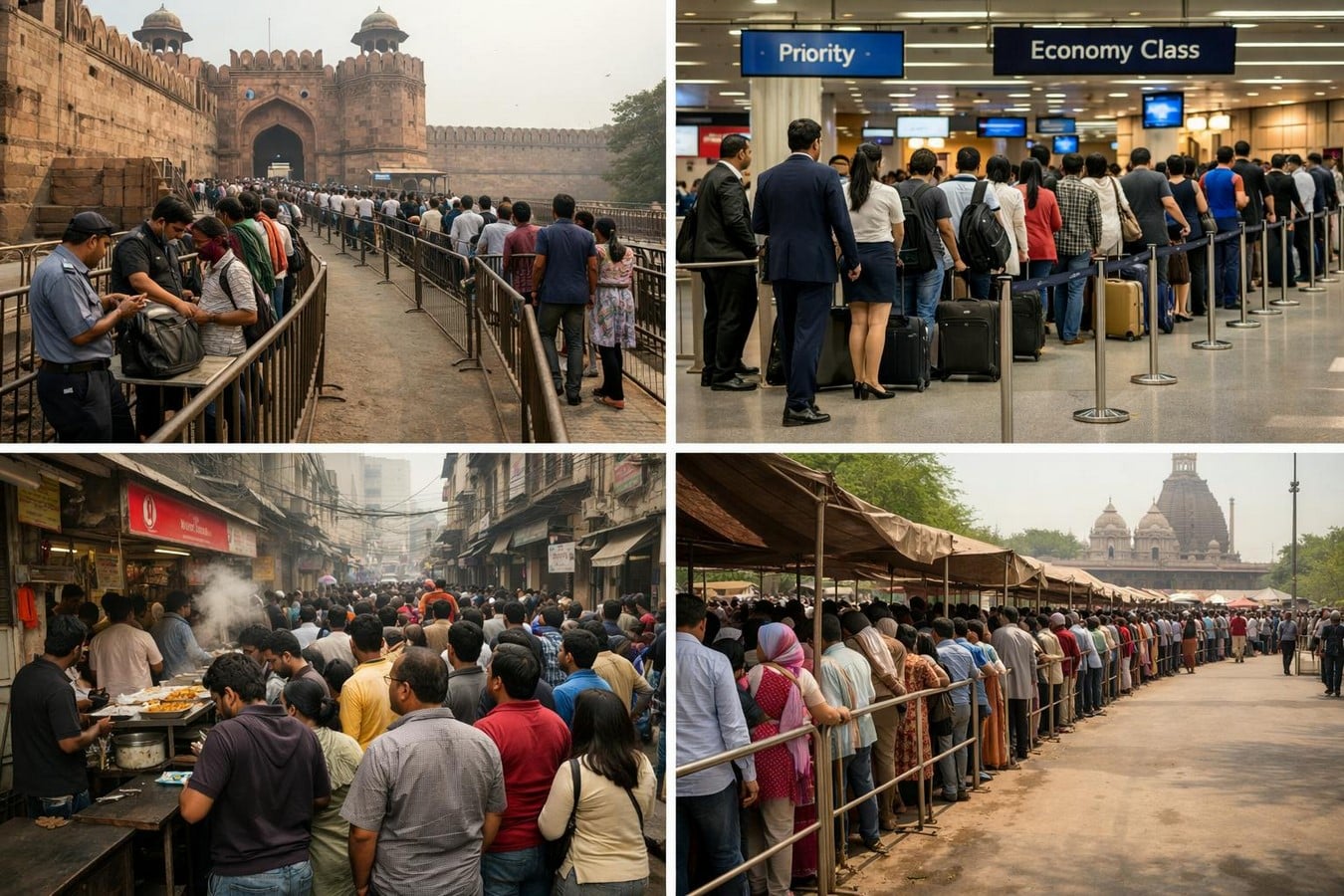
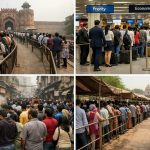
Think of the way of getting to a historic fort in North India. A succession of metal barricades should be encountered by visitors before the huge gates and stone walls become visible. The road gets smaller and turns and turns in the sun. The architecture is not the first thing that is observed but the crowd and the movement speed. The replacement of free walking is a slow shuffle. Voices echo differently. Where the fort had once regulated entry and exit via moats and drawbridges, now temporary railings and checkpoints are the means of domination. The line formed a modern kind of protection, one that sieves persons and not armies. This change contributes to the change in power, with the experience of controlled entry being unchanged.
Queuing acquires a more casual nature in crowded streets in the neighborhood. Beyond one of the more popular street food vendors in Old Delhi, the queue overflows into the street. There are no ropes or signs. It is by means of eye contact, minor negotiations, and mutual understanding that the order is upheld. Anyone who goes out of line is easily captured. In this case, the queue serves as a social contract. It is indicative of a culture in which there is little space and great acuity in social awareness. Waiting is made easier by chatting, food smells, and the passing of days. The very street turns into a place of patience, urgency, and community coexistence.
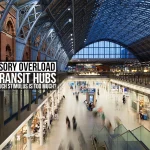
Different lessons are provided in transportation hubs. Waiting lines at metro stations are created to perfection. Floor signage, railings, and automated gates determine where to stand and when to move. The sequence is clear. Security check followed by ticketing, then access to platforms. The journey is divided into manageable units with each step. The first thing that catches the eye is the barrier, which is followed by the scanner and then the train behind the glass windows. This visual arrangement results in a mental arrangement. It is an efficient yet impersonal experience. The city, in this case, is brought down to the streams and pieces of information. This brings about comfort as things are predictable, but the individuality is momentarily removed.
Queuing also brings out inequality in a low level manner. At the airports, there are special queues for priority and economy passengers in the same hall. These lines can be separated by a few meters, but the experience is much greater. One is swift and moves without much friction, whereas the other is slow and moves by checking himself several times. This separation is reified by architecture in terms of signage, light, and space. A queue turns out to be the spatial manifestation of economic hierarchy. Waiting time becomes a perceptible sign of status.
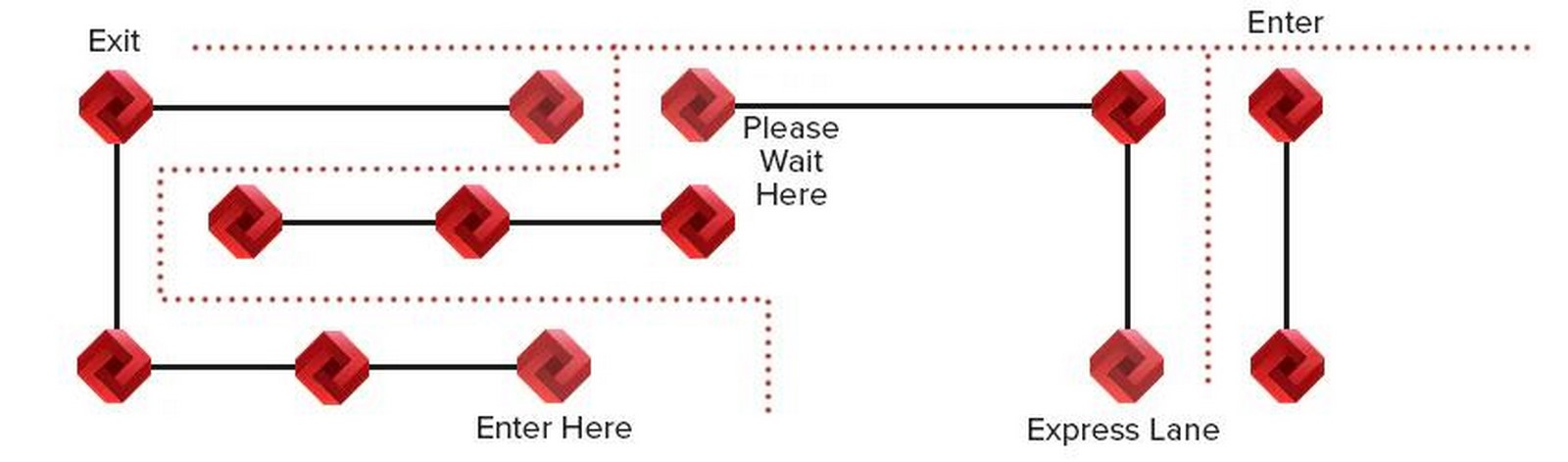
There is another aspect of queuing as an experience found in religious spaces. In big pilgrimage places, the worshippers have to wait for several hours to days just to have a few minutes of darshan. The line puts in shaded paths, provisional tents, as well as wide open courtyards. As one goes, the body adapts to unpleasantness and the mind changes into expectation. The sequence matters. The clatter of the people first, then the quiet around the sanctum, when there is a jolt of experiencing the deity. It becomes a ritual because of waiting. It is a journey of not doing it efficiently, but preparing and giving up. Architecture aids this through framing the views, management of light, and movement.
Barriers and checkpoints are also the determinants of how safe or unsafe a location is. At places of high security, e.g., government districts, the use of barricades, armed guards, and the formation of various queues produces a feeling of alertness. The experience is so dense, wise, and official. On the contrary, temporary barriers form a unique order in festivals and other mass events without intimidation. Waiting is made soft by the use of bright colors, volunteers, and music. Threat or care may be against or with the same object, a metal railing.
Climate is an insidious, but very important part of the queuing of experience. Where there is not enough shade, waiting may be a punishment in hot cities. Where there are no seats and cover in bus stops, the queue is spread out in groups to find shade. Individuals sit on the curbs or lean against walls. The projected line breaks and the design tend to leave the body out, as seen in the design. Waiting becomes pleasant, even where there are trees, canopies, or water. These facts demonstrate that climate responsive design can change such an inevitable latency to a human one.
Queuing imposes an alternative interpretation of urban time. Cities are generally praised because they are fast and moving; however, queues emphasize inactivity and slowness. They expose the amount of urban life that is spent in between places. It is these in between awarenesses that create the memory rather than the destinations. One will recall how dull it has been to wait in line up fronting a cinema and the anticipation, with each step, of the arrival of something exciting. The strain experienced in the line of standing without relying is remembered by an elderly person. These experiences linger.
When viewed in this manner, queues are not merely objects of solution but locations to comprehend. These narratives relate to governance, culture, and economics, as well as care. They demonstrate the impact of choices made in designing on dignity and comfort. The approach of considering queues as an urban form challenges architects and planners to approach waiting as a form just as purposeful as movement.
When daily experience is delivered silently by lines and barriers, whose burden is it to design to make waiting not only fair and comfortable but also meaningful?
Are queues spaces of relaxation, engagement, or introspection, as opposed to aggravation? And in a city that will be addicted to speed, is it possible to create a human place of waiting, as well as attempting to eliminate it?