Imagine waiting in a place for a bus or train where loud announcements repeat constantly, advertisements are everywhere, and people rush in different directions. It feels overwhelming, does it not? The body stays alert, the mind feels restless, and there is hardly any space to slow down. Now imagine if these transit hubs had a place to pause. A corner to sit, think, or relax for a bit before continuing the journey. Even a small moment of stillness could change how these spaces are experienced.
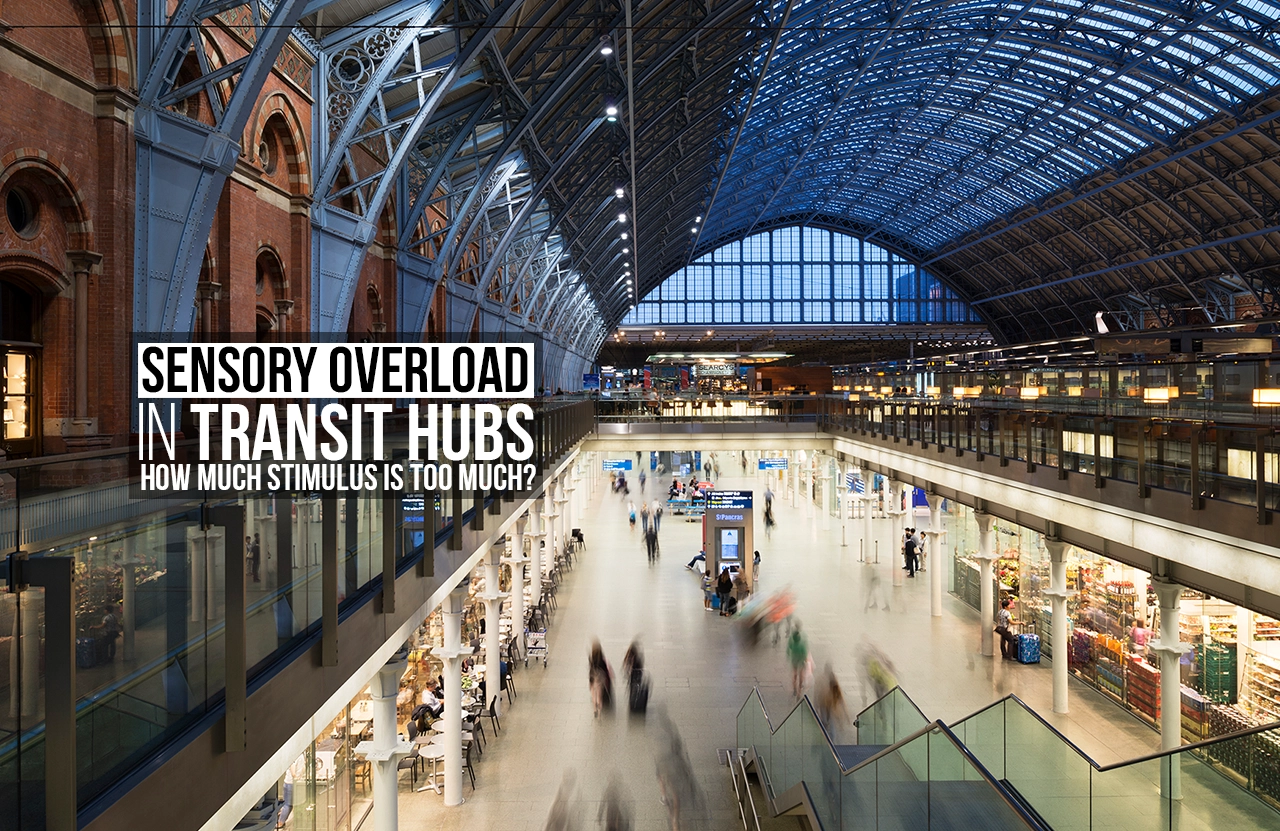
Transit hubs such as railway stations, metro terminals and airports are designed mainly for efficiency and movement. Their primary goal is to manage large flows of people, information and time. In doing so, these spaces often become intense sensory environments. Sound, light, signage and constant motion overlap, demanding attention from every direction. While these elements are meant to guide users, they often result in confusion, fatigue and stress, especially for frequent commuters, elderly users or first-time visitors.
As cities expand and mobility increases, transit hubs continue to grow in scale and complexity. Yet, the human experience within them remains overlooked. What if these spaces offered moments to pause, breathe or slow down? What if transit hubs were not only about movement, but also about human balance? This raises an important question for contemporary architecture: how much stimulus in transit hubs is necessary, and when does it become too much?
When movement turns into sensory overload
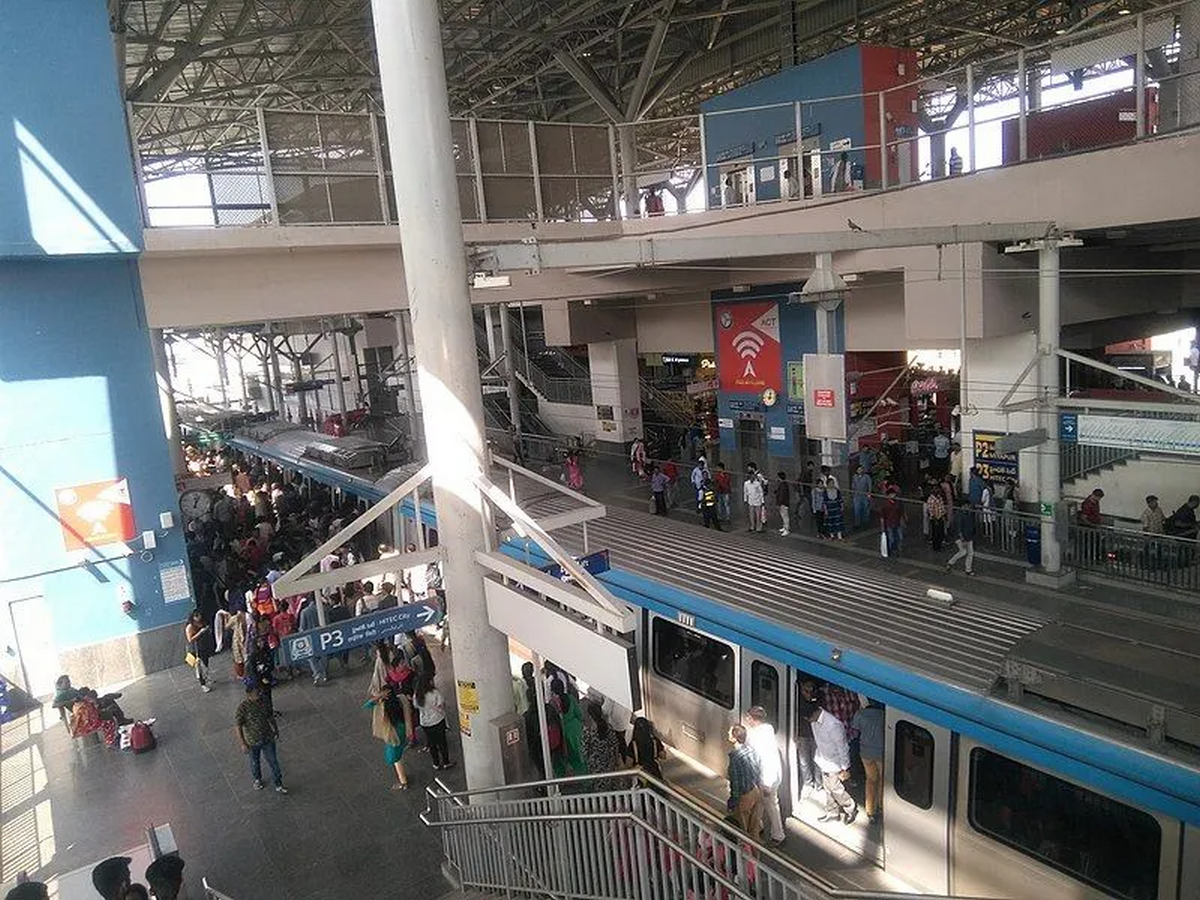
Transit hubs are designed to keep people moving, but the experience inside them often feels mentally heavy. Loud announcements repeat continuously, digital screens flash information, and advertisements compete for attention. People move fast, change directions suddenly, and there is very little space to pause. In such environments, the senses are constantly active, trying to filter useful information from noise. Over time, this results in sensory overload, where the mind feels tired even before the journey begins. Studies on public environments show that excessive sensory input increases stress and reduces comfort, especially in spaces meant for short stays like transit hubs (Therapy Partners, n.d.).
This overload affects people differently. Daily commuters may grow used to it but still feel drained, while elderly users, children or people sensitive to sensory stimuli often feel confused or anxious. Instead of supporting movement, the space demands constant attention. Research suggests that when sound, light and visual clutter overlap without hierarchy, users struggle to orient themselves calmly (ScienceDirect, 2025). Architecture plays a key role here. When design focuses only on efficiency and capacity, human sensory comfort is overlooked. Transit hubs then become spaces people rush through, not because they are efficient, but because they feel overwhelming and emotionally exhausting.
The role of architecture in calming sensory chaos
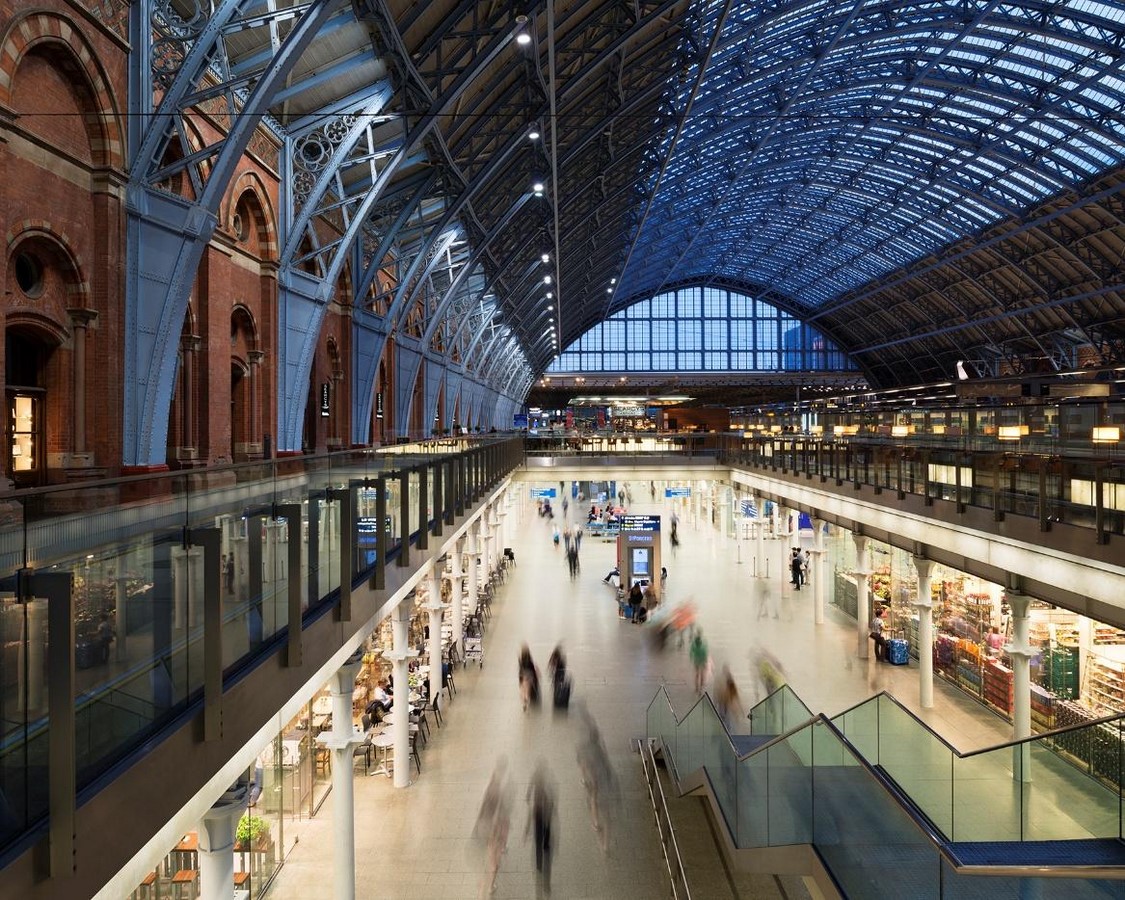
Architecture has the power to organise sensory information without adding more stimulus. In many transit hubs, confusion comes not from lack of information, but from too much of it presented at once. Multiple signs, overlapping announcements and inconsistent spatial cues force users to constantly search for direction. When architectural design establishes clear visual axes, logical circulation paths and legible spatial hierarchy, movement becomes intuitive rather than stressful. Research in transit design suggests that spatial clarity reduces cognitive load, helping users navigate complex environments with less mental effort (Architizer, n.d.).
Material choices also influence how spaces are perceived. Hard surfaces such as glass, metal and concrete amplify noise and reflections, increasing sensory stress. Introducing softer materials, acoustic panels and textured surfaces can absorb sound and reduce echoes. Lighting design is equally important. Excessively bright or uneven lighting causes discomfort, while controlled, evenly distributed light supports orientation and calmness. Architecture that considers sound, light and material together creates environments where the senses are guided rather than overwhelmed. In transit hubs, such design decisions may seem subtle, but they significantly affect how long people can remain comfortable within the space. When architecture responds to the human body, transit hubs shift from being purely functional infrastructures to environments that respect sensory balance (Uncommon Arch, n.d.).
Designing pause within places of rush
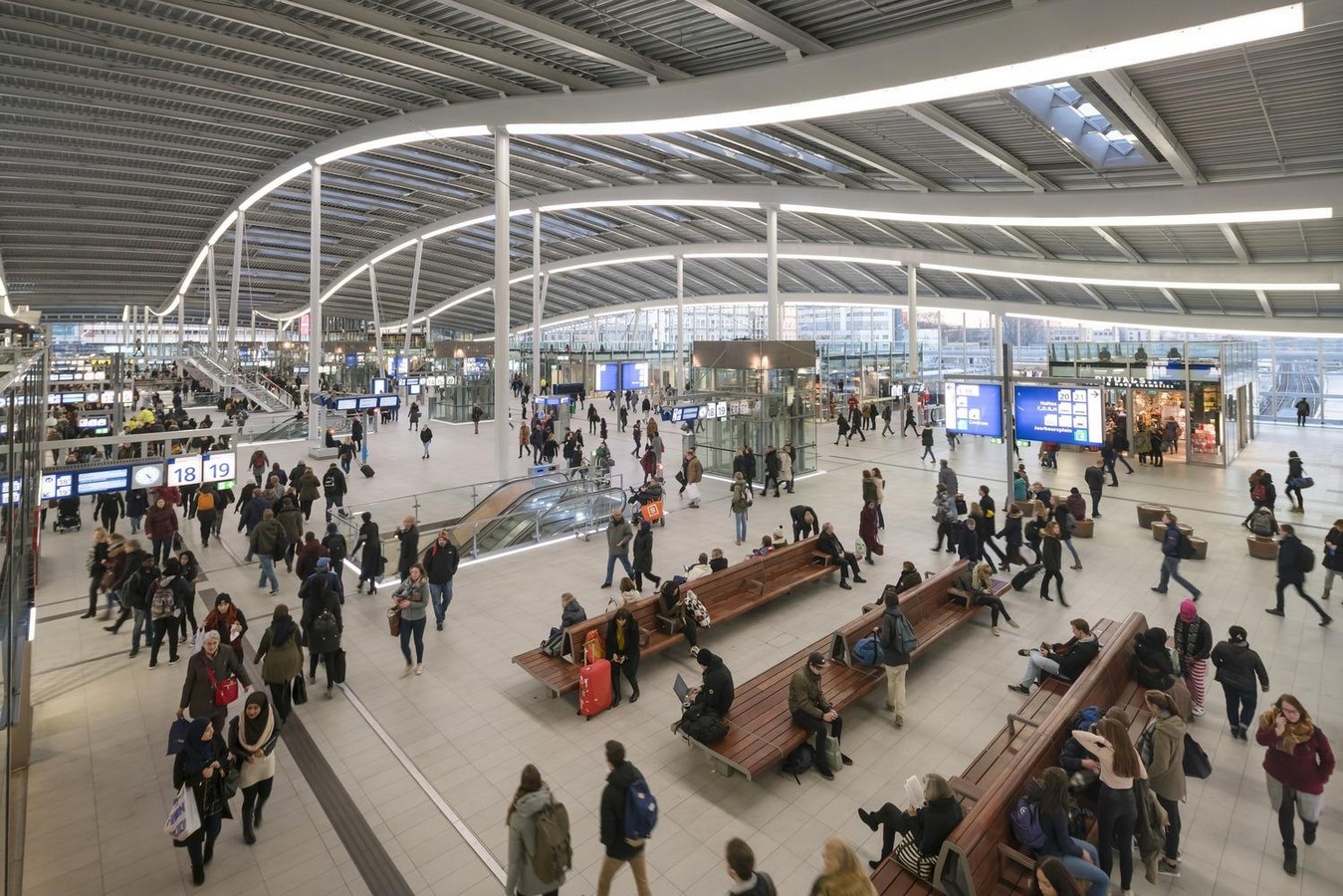
Not all transit hubs have to feel chaotic. Some spaces show that movement and calm can exist together. When design allows daylight to enter, reduces visual clutter and introduces greenery, the atmosphere changes immediately. Biophilic elements such as indoor plants, views to the outside or natural materials help soften the harshness of large transit interiors. Studies show that contact with nature, even briefly, reduces stress and mental fatigue in high-stimulus environments like transit hubs (Garden on the Wall, n.d.). These elements do not slow movement, but they make movement feel less aggressive.
Along with nature, clarity in design plays an important role. Clear wayfinding, fewer but well-placed signs, controlled lighting and acoustic treatment help users process information without feeling overwhelmed. Research highlights that when spatial information is organised hierarchically, users feel more confident and less anxious while navigating complex transit spaces (ScienceDirect, 2025). Some contemporary transit hubs are beginning to introduce quiet waiting zones, seating areas away from circulation paths and transitional spaces between platforms and exits. These moments of pause allow people to reset before continuing their journey. By balancing efficiency with sensory comfort, architecture can transform transit hubs from stressful environments into spaces that support both movement and human well-being (Uncommon Arch, n.d.).
Transit hubs are essential parts of everyday urban life, yet their design often prioritises efficiency over experience. When sound, light, movement and information overlap without control, these spaces become overwhelming rather than supportive. Sensory overload turns simple acts of travel into mentally tiring experiences. As cities continue to expand and mobility increases, ignoring the sensory impact of transit hubs risks creating environments that people endure rather than use comfortably.
Architecture has the ability to change this. By organising sensory input, introducing moments of pause and designing with human limits in mind, transit hubs can become calmer and more balanced spaces. Small design decisions such as daylight, clear wayfinding, acoustic control and places to rest make a significant difference. Transit hubs do not need to lose their efficiency to gain comfort. When designed thoughtfully, they can support both movement and well-being. Asking how much stimulus is too much is not a limitation on design, but an opportunity to create transit spaces that respect the human experience as much as the journey itself.
Bibliography:
Architizer. (n.d.). Designing transit hubs for future cities. Architizer.
https://architizer.com/blog/inspiration/collections/designing-transit-hubs-for-future-cities/
Garden on the Wall. (n.d.). Biophilic design in transportation hubs and aviation projects: Enhancing the travel experience. Garden on the Wall.
https://www.gardenonthewall.com/blog/biophilic-design-in-transportation-hubs-and-aviation-projects-enhancing-the-travel-experience
ScienceDirect. (2025). Sensory perception and cognitive load in complex public transit environments.
https://www.sciencedirect.com/science/article/pii/S2046043025000346
Therapy Partners. (n.d.). Managing sensory overload in public spaces. Therapy Partners Australia.
https://therapypartners.com.au/blog/occupational-therapy/sensory-processing/managing-sensory-overload-in-public-spaces
Uncommon Architecture. (n.d.). Architectural design for transportation hubs: Balancing efficiency, comfort and connection. Uncommon Architecture.
https://www.uncommonarch.com/blog/architectural-design-for-transportation-hubs-balancing-efficiency-comfort-and-connection