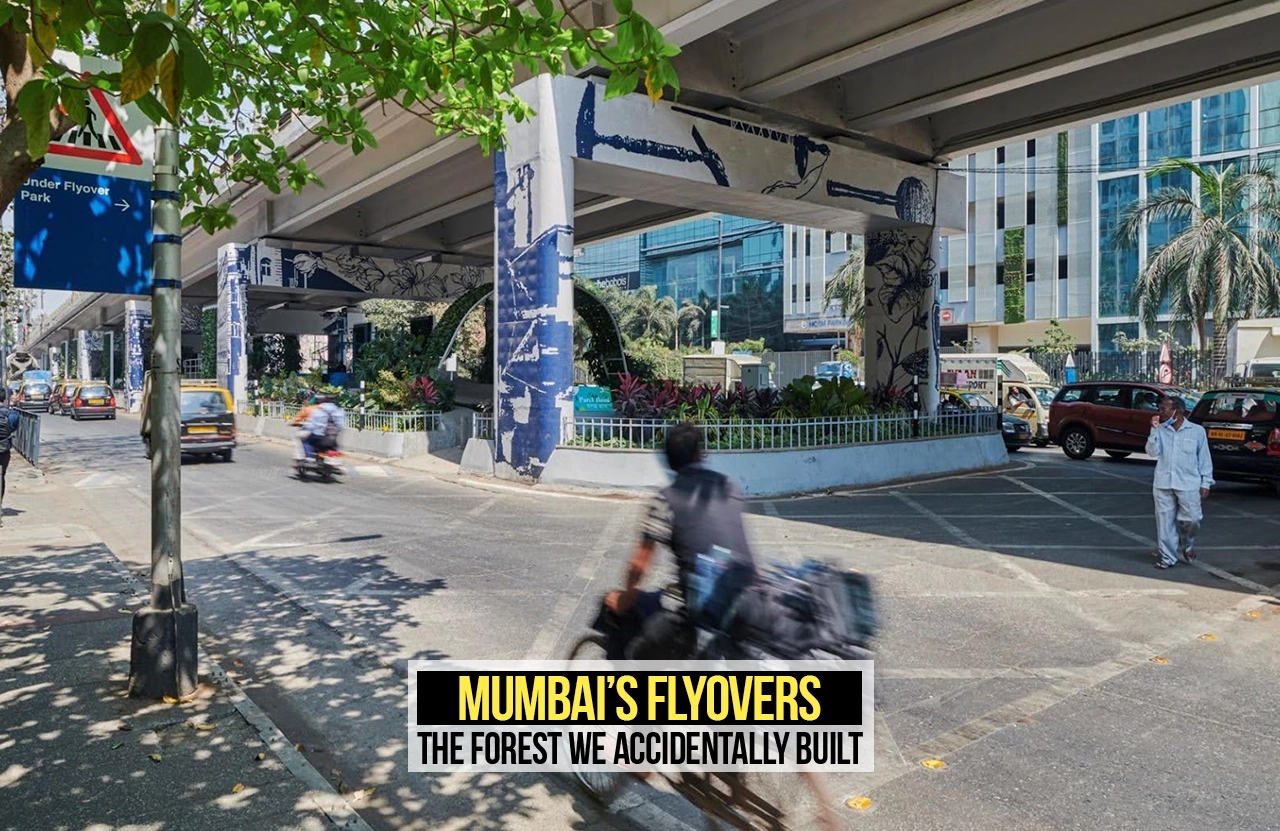
Mumbai’s flyovers were conceived as infrastructural solutions, swift responses to congestion, inefficiency, and a city perpetually in motion. Yet, over decades, they have evolved into something far more complex. Rising above roads like concrete canopies, these structures have unintentionally redefined how the city breathes, shades itself, and is experienced at street level. In a city once defined by tree-lined boulevards and shaded promenades, shade has slowly migrated upwards, from foliage to infrastructure. This shift marks a critical moment in Mumbai’s urban story. Flyovers no longer function merely as conduits for vehicles; they act as elevated landscapes, visual corridors, and environmental modifiers. Below them, pedestrians navigate dimmer, louder, and fragmented spaces, often neglected, sometimes improvised, occasionally reclaimed. Above them, traffic glides through a city increasingly experienced in layers rather than at ground level. Mumbai’s flyovers act as an accidental urban forest, one built not with ecological intent, but through cumulative infrastructural decisions. Rather than condemning or celebrating flyovers outright, the article seeks to understand their unintended architectural and urban consequences.
From Canopies to Concrete: How Shade Shifted Upwards
Historically, Mumbai’s streets relied on natural canopies, such as rain trees, banyans, and peepals, to moderate the climate and regulate human movement. These trees shaped walking rhythms, informal gathering, and micro-economies along footpaths. With rapid road widening and infrastructure expansion, many of these natural systems were removed, replaced by flyovers that now perform a similar climatic function, albeit unintentionally. Flyovers cast long shadows, reduce surface temperatures below, and create continuous shaded corridors. However, unlike trees, this shade is heavy, impermeable, and often hostile. It lacks softness, biodiversity, and social invitation. What was once a porous canopy filtering light has become a solid slab blocking sky views and airflow. This upward shift of shade has altered how people inhabit streets. Vendors cluster beneath flyovers for relief from the heat; pedestrians instinctively move towards the shadowed edges; informal settlements sometimes anchor themselves in these zones of climatic refuge.
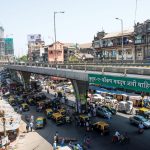
Along Senapati Bapat Marg, multiple overlapping flyovers create near-continuous shade. While traffic flows efficiently above, the space below has become an improvised pedestrian realm used for parking, vending, and informal crossings, demonstrating how infrastructure has replaced ecology as the city’s primary shading device.
Vertical Urbanism and the Fracturing of the Street
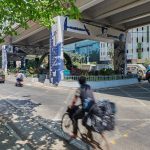
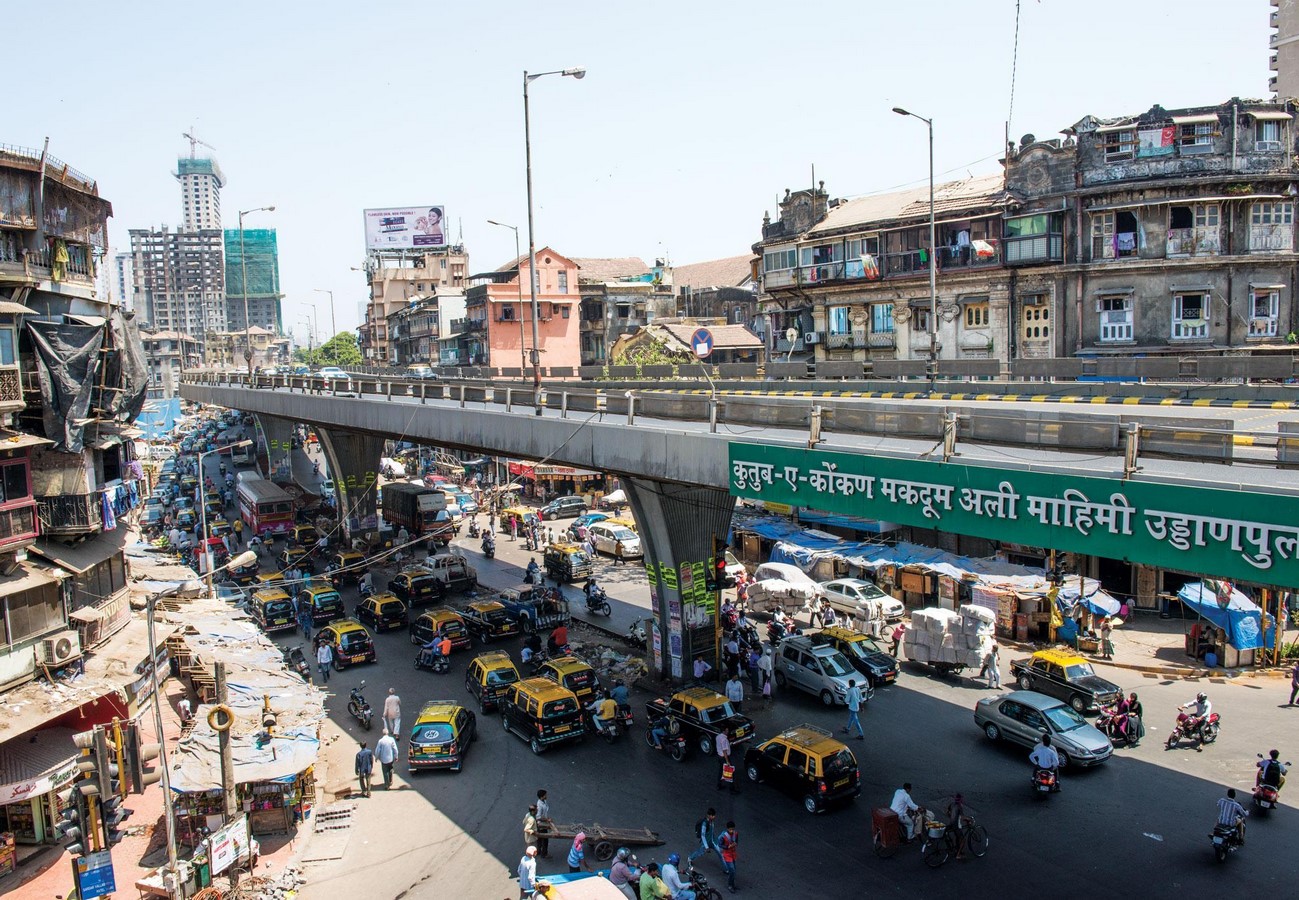
Flyovers introduce a vertical hierarchy to a city that once functioned largely at grade. Movement is no longer horizontal and shared; it is stratified. Vehicles dominate the elevated plane, while pedestrians are pushed beneath, navigating leftover spaces shaped by columns, ramps, and low clearances. The street, once a continuous civic surface, becomes fractured into zones of priority and neglect. This vertical separation changes perception. For motorists, the city becomes a fast-moving visual sequence, rooftops, hoardings, and skylines. For pedestrians, the experience is compressed, darker, noisier, and often disorienting. Wayfinding becomes difficult as visual landmarks are obscured by infrastructure. Importantly, flyovers disrupt traditional street edges. Shops lose visibility, crossings become longer and unsafe, and social interactions thin out. The street ceases to be a destination and becomes a residual condition. The JJ Flyover severs historic neighbourhoods, creating sharp contrasts between elevated speed and ground-level congestion. Beneath it, pedestrians negotiate narrow passages and blind crossings, illustrating how vertical urbanism prioritises vehicular continuity over street cohesion.
Life Beneath: Informality, Adaptation, and Urban Survival
Despite their harshness, spaces beneath flyovers are rarely empty. In Mumbai, they are absorbed into the city’s informal systems with remarkable resilience. Vegetable vendors, parking attendants, repair workshops, places of rest, and even religious shrines find refuge under these concrete canopies. What planning neglects, people adapt. These spaces offer protection from the sun and rain, making them valuable in a climate of extremes. Yet, they are also zones of ambiguity, neither fully public nor private, often poorly lit, unsafe at night, and excluded from formal maintenance regimes. Their use is tolerated rather than designed. This duality exposes a larger urban truth: Mumbai’s flyovers are not just transport infrastructure; they are social infrastructure by default. The city’s informal economy fills the spatial gaps left by top-down planning.
Under the Andheri–Ghatkopar Flyover, shaded pockets have been informally claimed for parking, vending, and rest. Though unplanned, these uses reveal a latent potential for intentional design, transforming neglected undercrofts into safer, multifunctional public spaces.
Rethinking the Concrete Forest: Design Opportunities Ahead
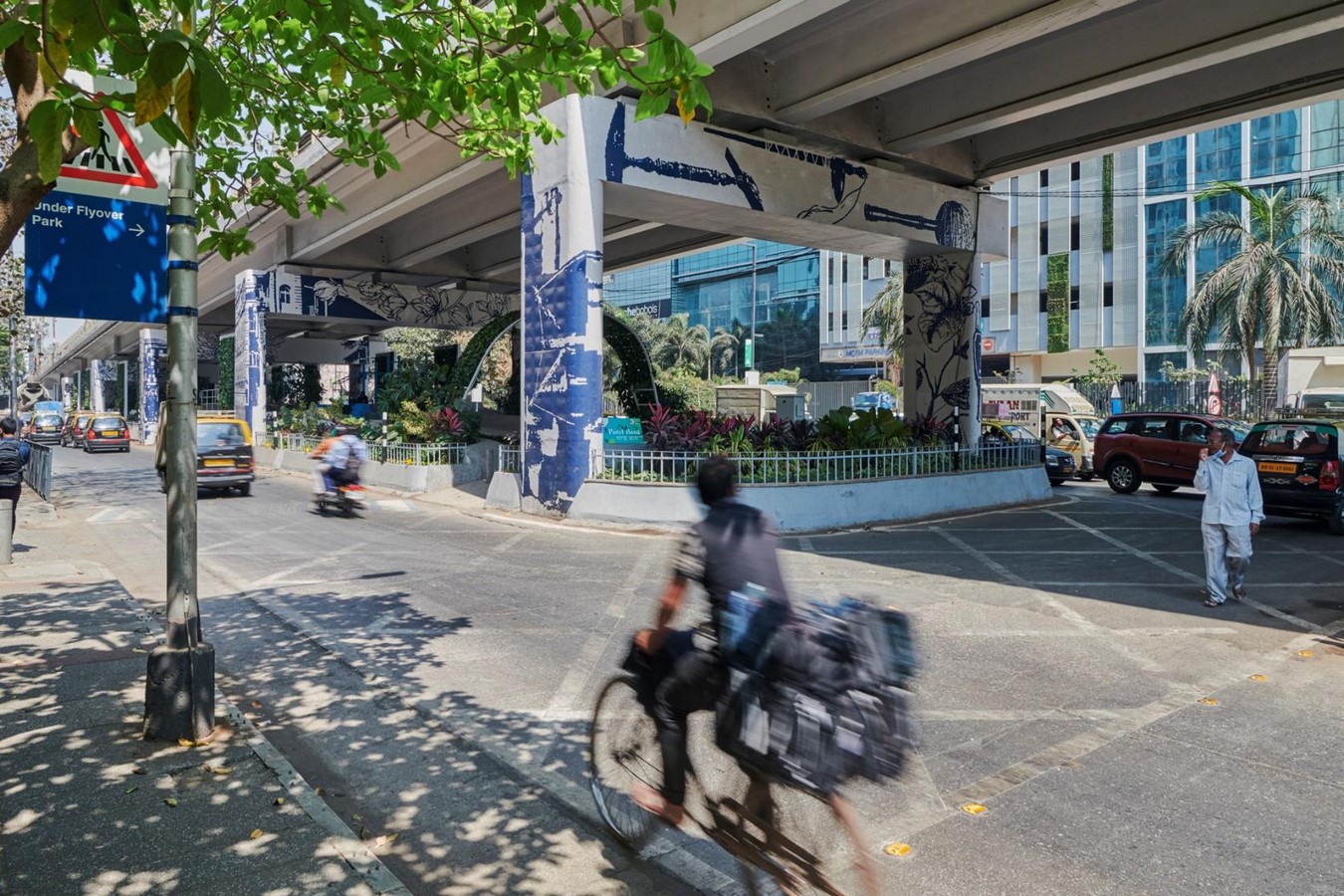
If flyovers are Mumbai’s accidental forest, the question is no longer whether they should exist, but how they can evolve. Across global cities, infrastructure is being reimagined as public space: shaded plazas, linear parks, cultural corridors. Mumbai’s extensive flyover network presents a similar opportunity. Design interventions could address lighting, drainage, noise mitigation, pedestrian continuity, and active edges. Columns could support art, wayfinding, or green systems. Underspaces could host markets, cycle paths, or shaded pedestrian promenades. Crucially, this requires a shift in mindset, from seeing flyovers as isolated transport objects to recognising them as urban architecture. Such transformations would not undo past ecological loss, but they could restore social value at the street level. The goal is not beautification alone, but about the dignity in making the pedestrian experience safer, legible, and humane. Sections beneath the Eastern Freeway remain largely unused despite their scale. With thoughtful design, these shaded corridors could become continuous pedestrian and cycling networks, reconnecting neighbourhoods long divided by infrastructure.
Mumbai’s flyovers tell a story of urgency, of a city racing to keep itself moving, often at the cost of its streets. In doing so, they have inadvertently created a new urban layer: a concrete forest that offers shade, shelter, and continuity, but also casts long shadows over pedestrian life. This is vertical urbanism, not by design, but by accumulation.
The challenge now is not to dismantle this infrastructure, but to reinterpret it. As the city continues to densify, street-level experience becomes more important. Flyovers must be understood as spatial actors that shape perception, behaviour, and social equity.
By acknowledging their architectural presence and urban impact, Mumbai can begin to design with its flyovers rather than merely around them. The accidental forest can become intentional, layered, inclusive, and responsive. In doing so, the city may rediscover what it once knew instinctively: that shade, movement, and public life must coexist at the human scale, even in a city built in layers.