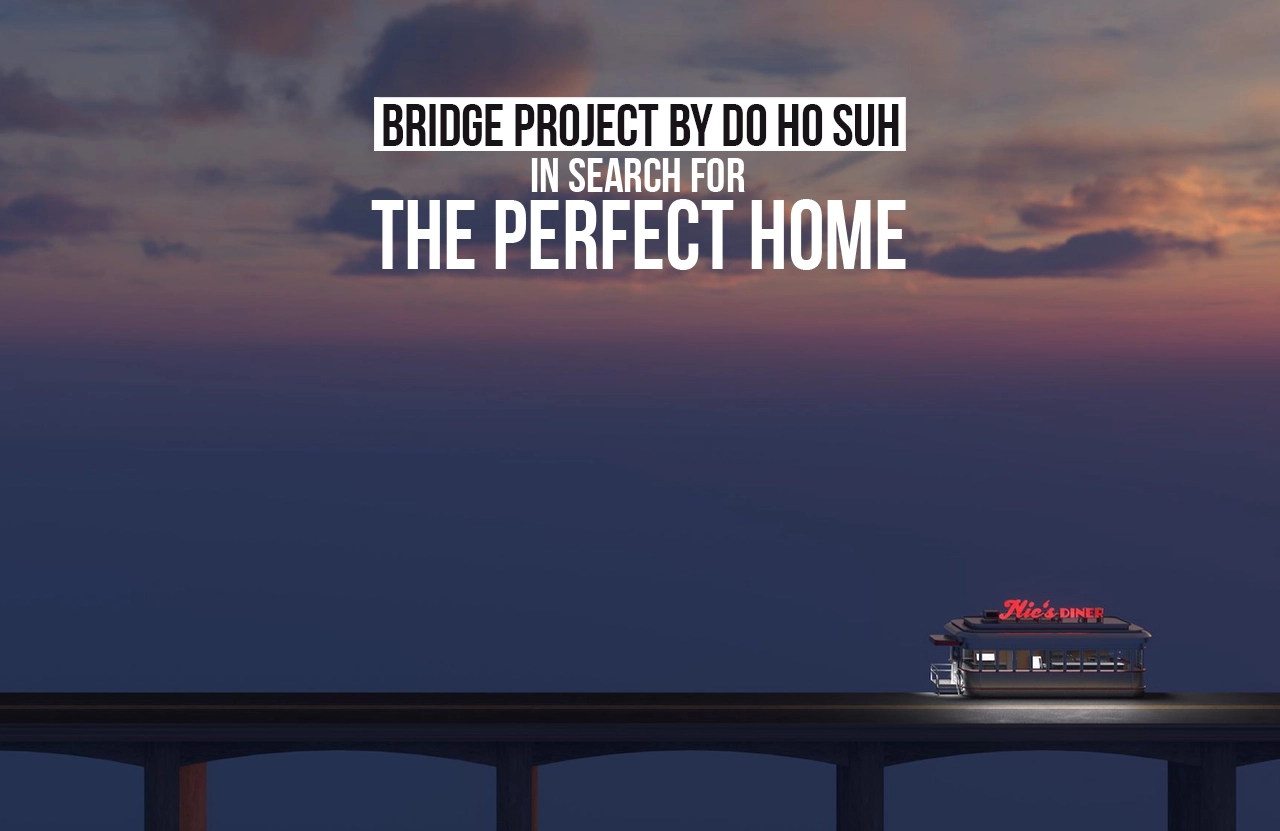
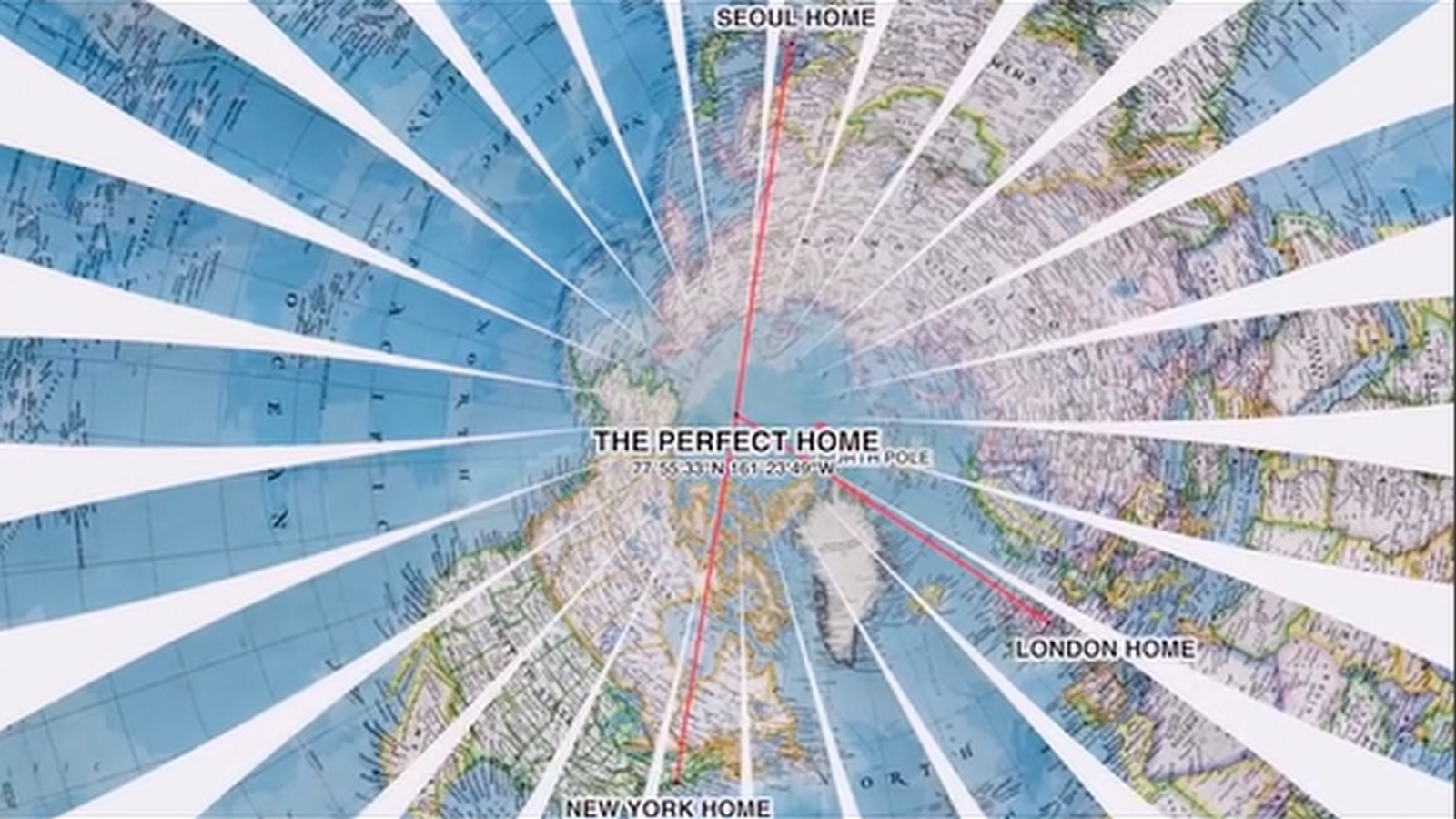
What is the perfect home? How do we locate it? Can it be achieved at all? And if so, what social, geographical and structural borders need to be crossed to do so? South Korean Artist, Do ho Suh, explores all these questions in his search for the ‘perfect home’, through an interdisciplinary vision of the Bridge Project – incorporating architecture, mapping, engineering, archeology, and even clothing design. For Suh this hypothetical place exists in the intersection of the three cities he called home throughout his life: Seoul, New York, and London. Located in the middle of the Arctic Ocean and connected to each city by bridges, the exact coordinates of his ‘perfect home’ are calculated to be at 77° 55′ 33″N 161° 23 ’49″W.
Architecture as a discipline is just as much about creating psychological spaces as physical ones, because that is what distinguishes a home from a house. The latter is merely a structure; and while it may be brilliantly designed and executed, it remains incomplete until it is inhabited and filled with the memories, emotions, and rituals of human life. Suh expands on this conundrum, suggesting that a home can be portable and evolving through different stages of our lives. However, the Bridge Project is also ironic in the sense that the journey to the ‘perfect home’ is a solitary one. Hundreds of kilometres away from places of belonging, it is located in an imperfect world where geographical and political borders need to be crossed, and environmental impact imposed on the areas and communities it traverses – thereby contributing to this imperfection.
Setting The Scene for The ‘Perfect Home’
In close proximity to the North Pole, the Arctic Ocean is not a forgiving environment for human habitation by any means. At 77° North and 123° West, the intersection of Suh’s three bridges is in an Arctic desert, subject to extreme weather conditions all year around. Temperatures may drop to -60°C (-76°F) during winter, while the summertime is hardly suitable for a beach day either at around 0°C (32°F). The sky offers little relief, with storms of great force lasting for days and burying the porch and decks of the ‘perfect home’ deep in snow. Light is a constant reminder of the unruly polar conditions, from continuous sunlight circling the sky in summer to months of darkness in winter, occasionally broken by the moonlight or the starry sky. The ice also follows its own cycle, melting and reforming as the seasons change, at times creating vast frozen expanses for travel, patterns of pools as the sun softens the surface, or breaking into drifting blocks that may surround the structure once again.
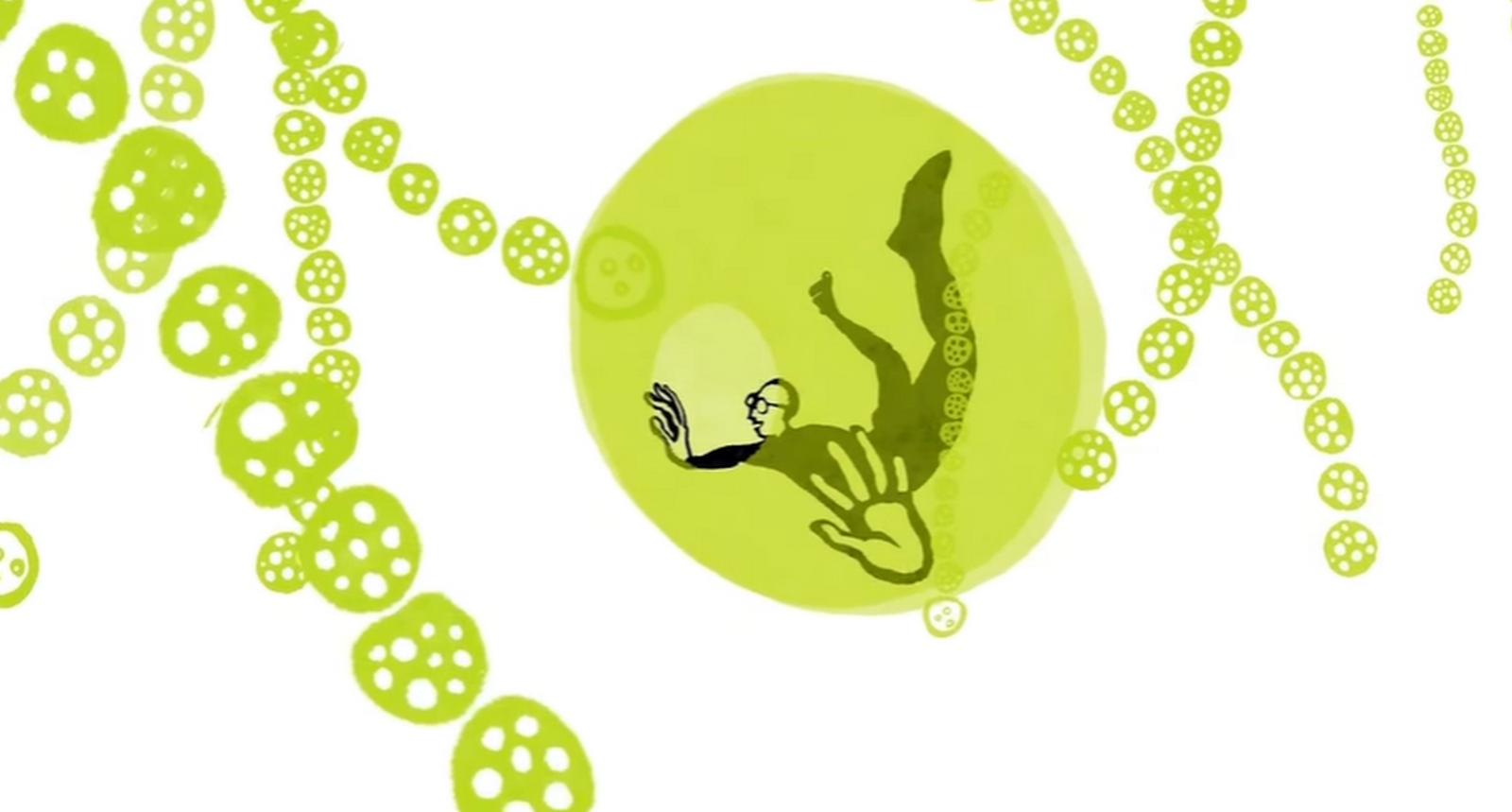
As the ‘perfect home’ is located near the Chukchi Plateau and the Mendeleev Ridge, the closest neighbours are over 700 km away: the Chukchi from the Chukotka Peninsula and the Iñupiat people of Alaska. In the freezing waters beneath the ice, microscopic organisms such as algae thrive, forming the base of a rich ecosystem, and larger sea creatures, including whales, swim in the depths around the bridge. Far away, on the Siberian and Alaskan coasts, when travel is possible, millions of birds from seagulls to ducks can be observed during the spring.
Even in its remoteness, the Arctic is not untouched by human ambition. The waters and lands of this region carry traces of competing claims and strategic interests, from the hydrocarbon-rich slopes to vast oil developments. Military outposts, pipelines, and distant surveillance remind of the human priorities and conflicts that reach across the ice to this very edge of the world. Unable to escape these everchanging conditions, indigenous communities remain resilient as they watch their seas and shores transform. The bridge, and the ‘perfect home’ at its heart, sits in solitude in the Arctic, yet it is quietly surrounded by these forces of geopolitics, resource extraction, and climate change.
Architecture and Engineering of The Bridge Project
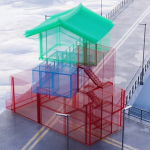
The three globe-crossing bridges are not only connecting Suh’s three dwellings, but gathering pieces of them into one place – a ‘perfect home’ that merges the architectural identities of three cities and three cultures. At the top sits his childhood home in Seongbuk-dong, Seoul: a traditional ‘hanok’ reconstructed from a nineteenth-century building. In Korean, ‘hanok’ simply means ‘Korean house’, yet the term also encapsulates a way of landscape building, typically with mountains at the back and water at the front, with local winds, sunlight, and terrain movements considered. In Suh’s case, the family home was assembled through wooden joinery, its timber treated using an old method of soaking and drying, allowing the structure to subtly expand and contract across different climates.
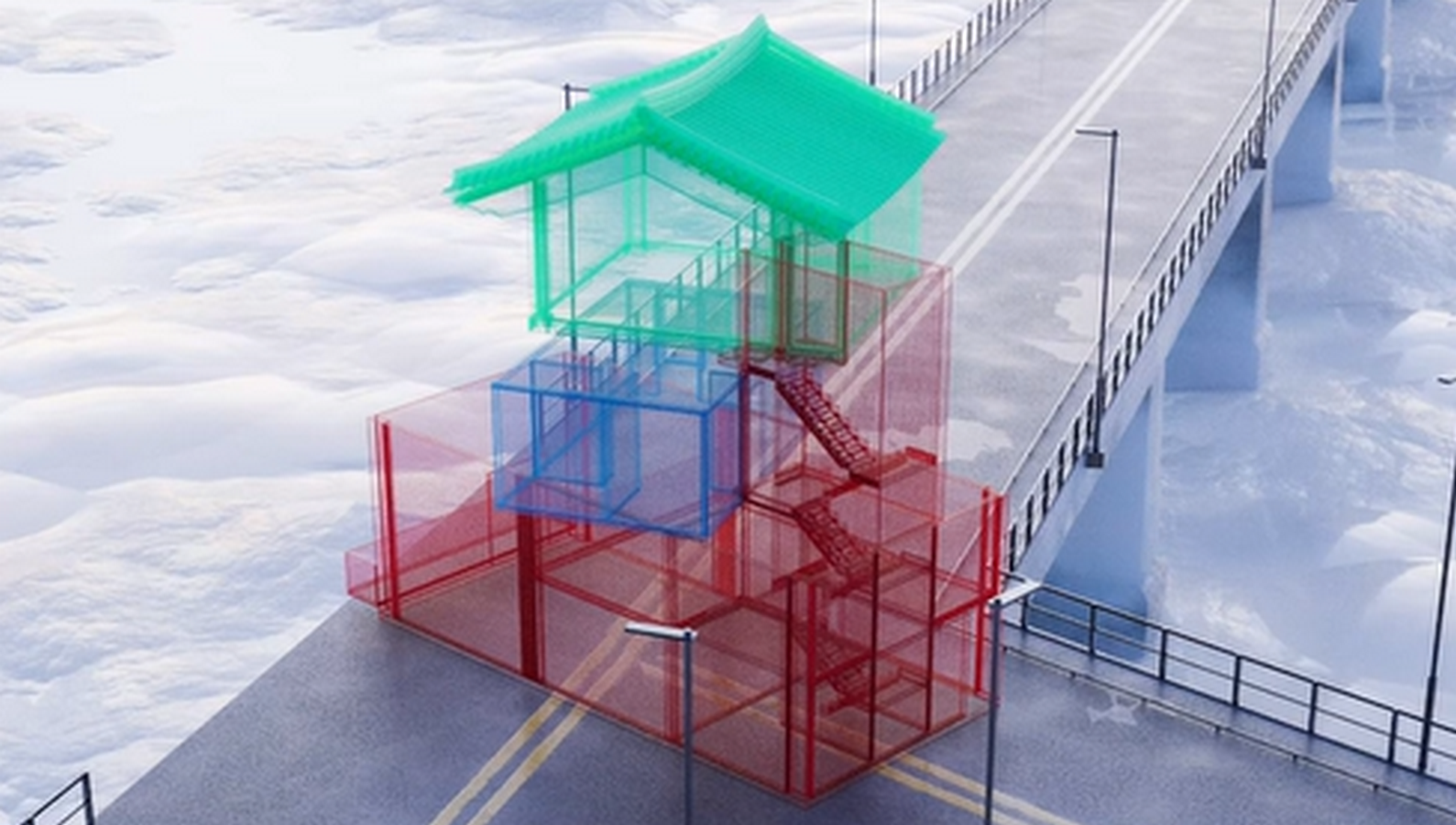
His next home, a half-basement studio apartment at 348 West 22nd Street in New York, offers a radically different way of living. Set within a classic New York brownstone, this compact, half-basement environment is organised around small, multifunctional rooms, thereby introducing Suh to the dense, vertical living of Manhattan. Later, his apartment in Hackney, London, added a third layer to his ‘perfect home’, not only architecturally but emotionally – a shift from New York’s early-career individualism to a space of family life. The resulting hybrid floats above the Arctic Ocean as a multi-layered domestic organism. It is less a practical building than a spatial autobiography and a physical manifestation of how home can be carried, reassembled, and continuously evolving across a life.
While Suh’s ‘perfect home’ itself is not a highly architecturally challenging structure, the bridges leading to it face extraordinary obstacles. There are many aspects to consider from costs to materials, climate, sociopolitical factors and the carbon footprint of not only the bridges themselves but the construction equipment used. While the Bridge Project remains largely conceptual, engineering students at Rice University explored ways to translate Do Ho Suh’s vision into feasible designs. One approach involved constructing bridges between decommissioned offshore oil and gas platforms, many of which are nearing the end of their operational lives and could be moved, partially dismantled, or toppled onto the seabed, repurposing existing structures. Students also examined the use of high-performance materials with lower embodied carbon than traditional concrete or steel, and more efficient construction methods to minimise the carbon footprint of building.
Real-world Applications of Imaginative Architectural Art
Suh’s search for the ‘perfect home’ mirrors the experiences many encounter in an increasingly globalised world, moving between places, cities, countries and even continents, while carrying pieces of past dwellings. By imagining this home in the unforgiving and solitary nature of the Arctic, the Bridge Project considers not only where a home could be, but how it could be shaped, connected, and sustained. Though largely hypothetical, the project offers bold perspectives on what architecture and engineering can accomplish through out-of-the-box thinking and interdisciplinary approaches. Exploring the deeply human challenges of the concept of home, along with the communities and environment surrounding it, not only evokes a philosophical conundrum and a sense of whimsy, but also inspires future-forward thinking that could lead to real-world innovations down the road.
References:
Brody, H. n.d. The Bridge. HughBrody.com. Available at: https://www.hughbrody.com/film-catalogue/thebridge
Domus 2025. The Tate displays the evolution of the concept of “home” according to Do Ho Suh. Domusweb. Available at: https://www.domusweb.it/en/art/gallery/2025/05/15/do-ho-suh-exhibition-evolution-home-tate-modern-london.html
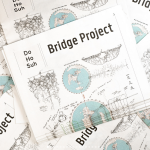
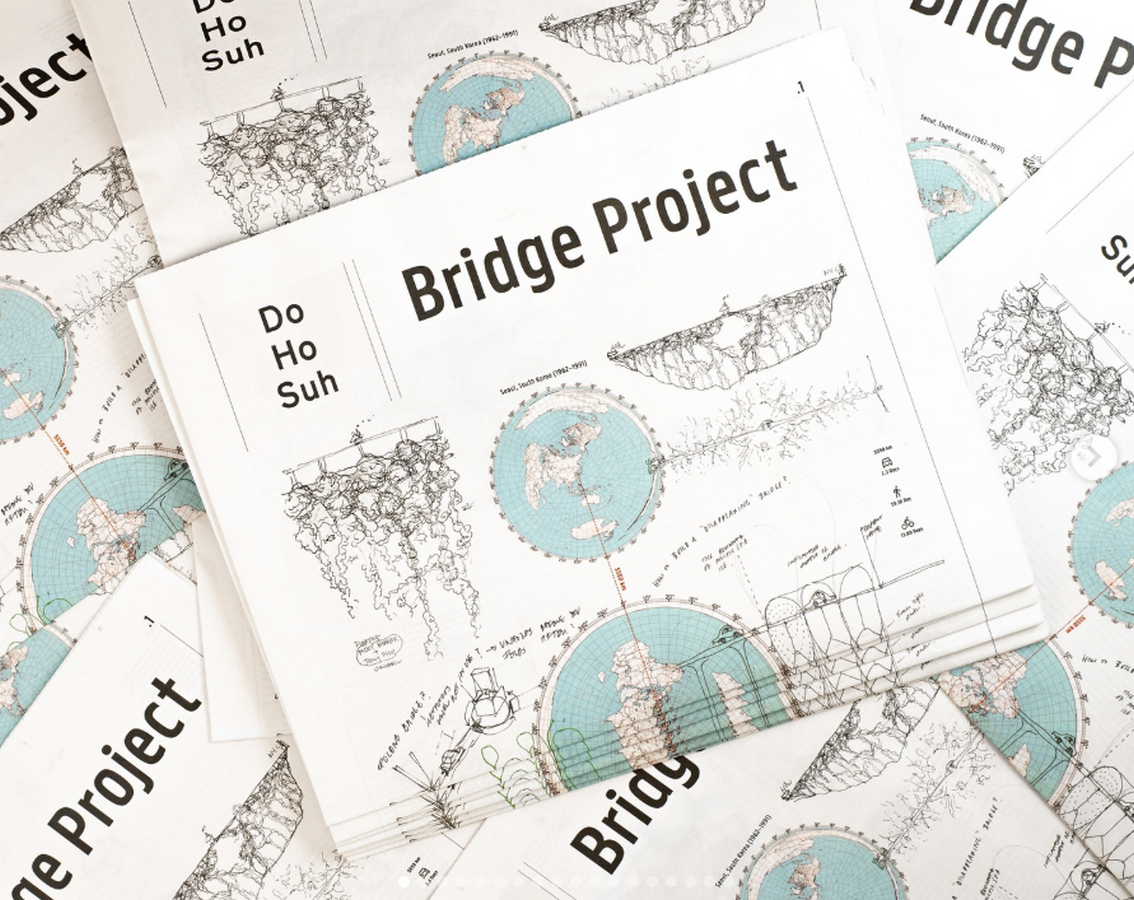
Do Ho Suh, Brody, H., Erazo, K., Fine, S. & Simmonds, D.N. 2025. Bridge Project (1999–ongoing). Newspaper published on the occasion of The Genesis Exhibition: Do Ho Suh – Walk the House, Tate Modern, London, 1 May–19 October 2025
Grimshaw Foundation 2025. What makes a home? Do Ho Suh’s journey through memory and space. Grimshaw Foundation. Available at: https://www.grimshaw.foundation/stories/what-makes-a-home-do-ho-suh-s-journey-through-memory-and-space