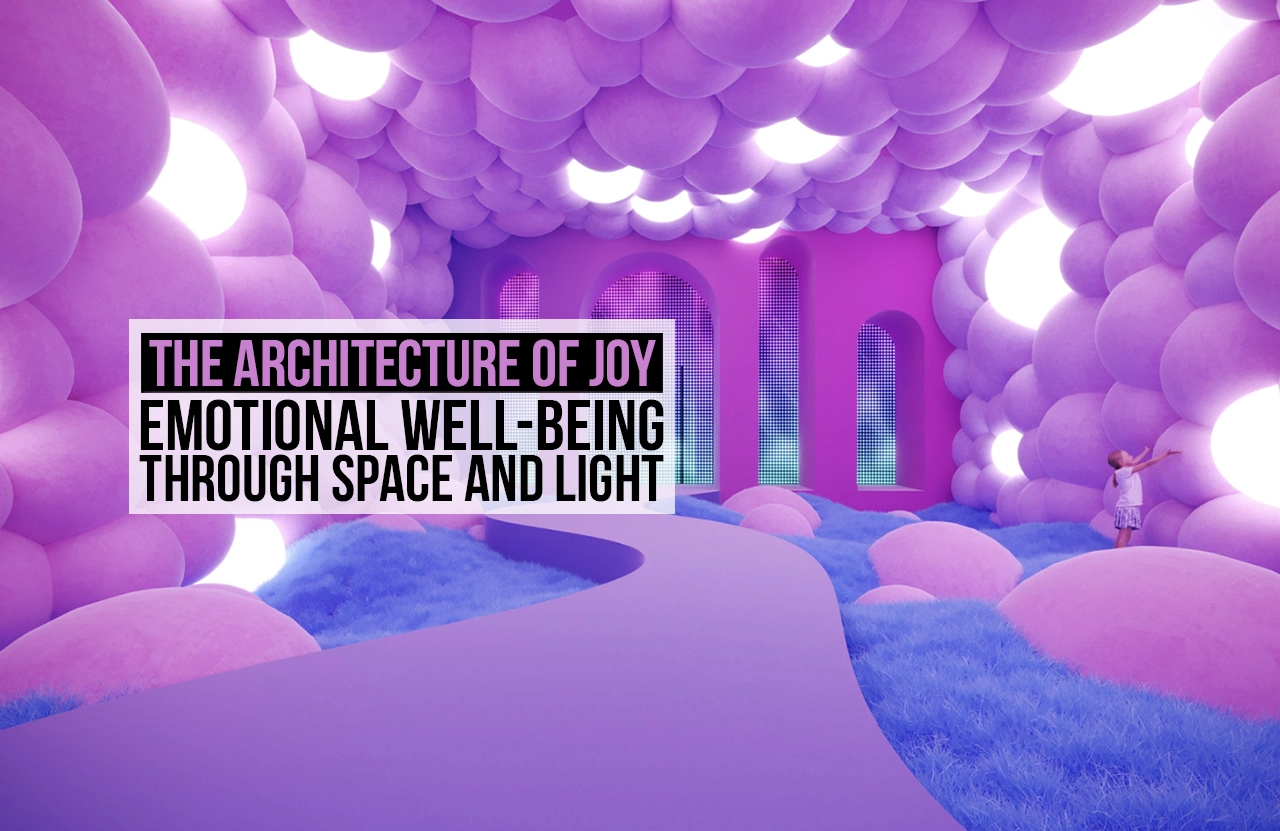
Joy is not a grand feeling. It never uses trumpets to announce itself. The sound of footsteps in an old hallway, a glimpse of sunlight on the floor, or the abrupt expanding of space after passing through a tiny alley are some of the modest ways it arrives, frequently in the middle of a typical day. Even while the field rarely discusses “joy” with the same gravity as structure, sustainability, or economics, architecture has always known how to orchestrate such moments.
Yet, joy may be one of architecture’s most radical responsibilities. A well-designed place can be a tiny but effective remedy in an era characterized by anxiety, overstimulation, and sensory exhaustion. It can remind the body that it is alive, calm breathing, and ground the mind. There is a difference between creating for luxury and designing for delight. Creating spatial experiences that make individuals feel lighter emotionally than when they first arrived is the goal.

When Light Becomes a Feeling
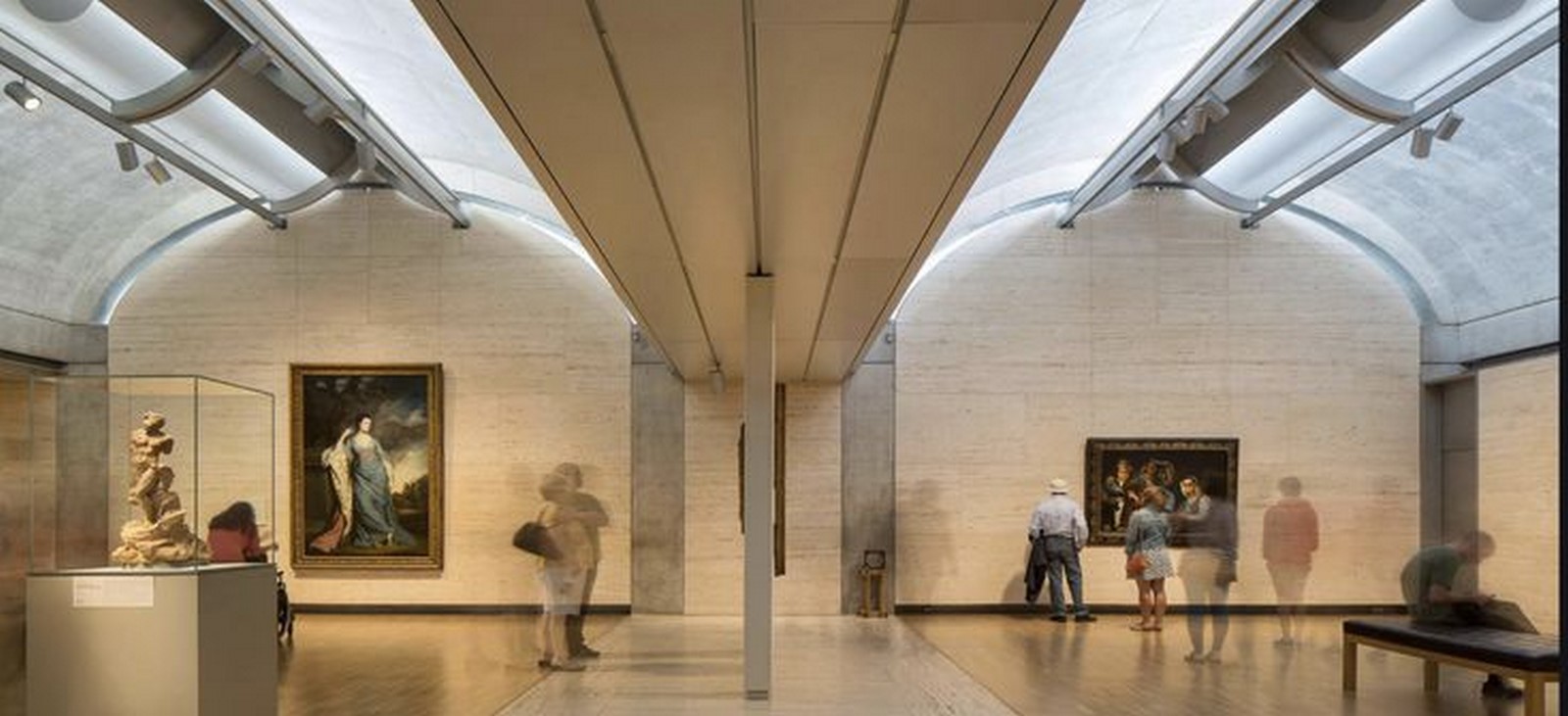
Louis Kahn’s Kimbell Art Museum in Texas is one of the few structures that manages light with such emotional clarity. As they stroll beneath the cycloid vaults, visitors frequently express a subdued joy that rises almost subconsciously. Instead of flooding the space, the light diffuses through perforated reflectors and drapes gently, creating a lovely sky on the ceiling. Unmistakably, there is a sense of stillness, a comfortable, almost domestic quiet, rather than the icy silence of a museum. Joy is like a gradual breath in this building.
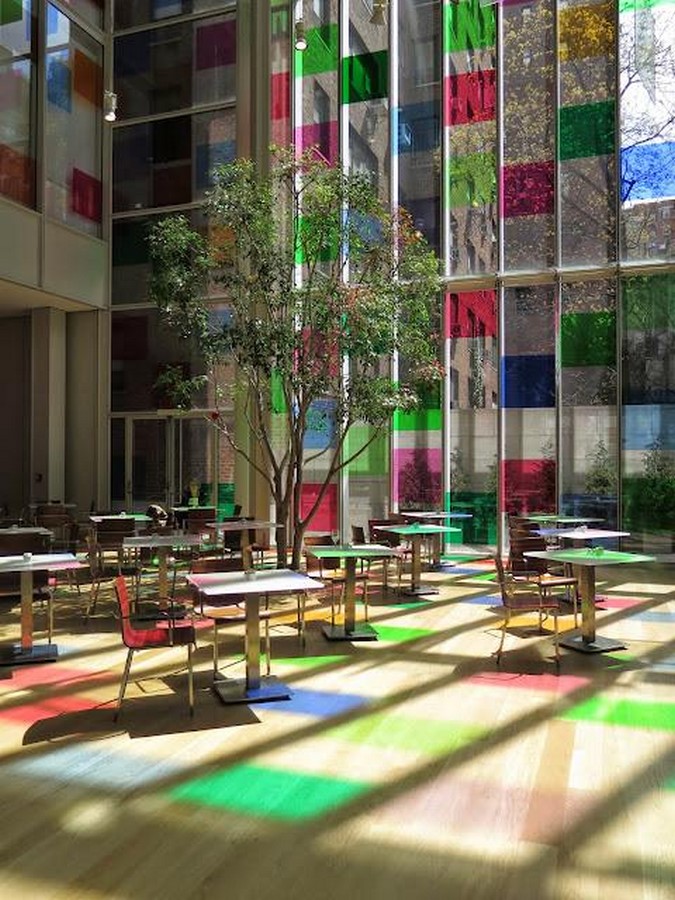
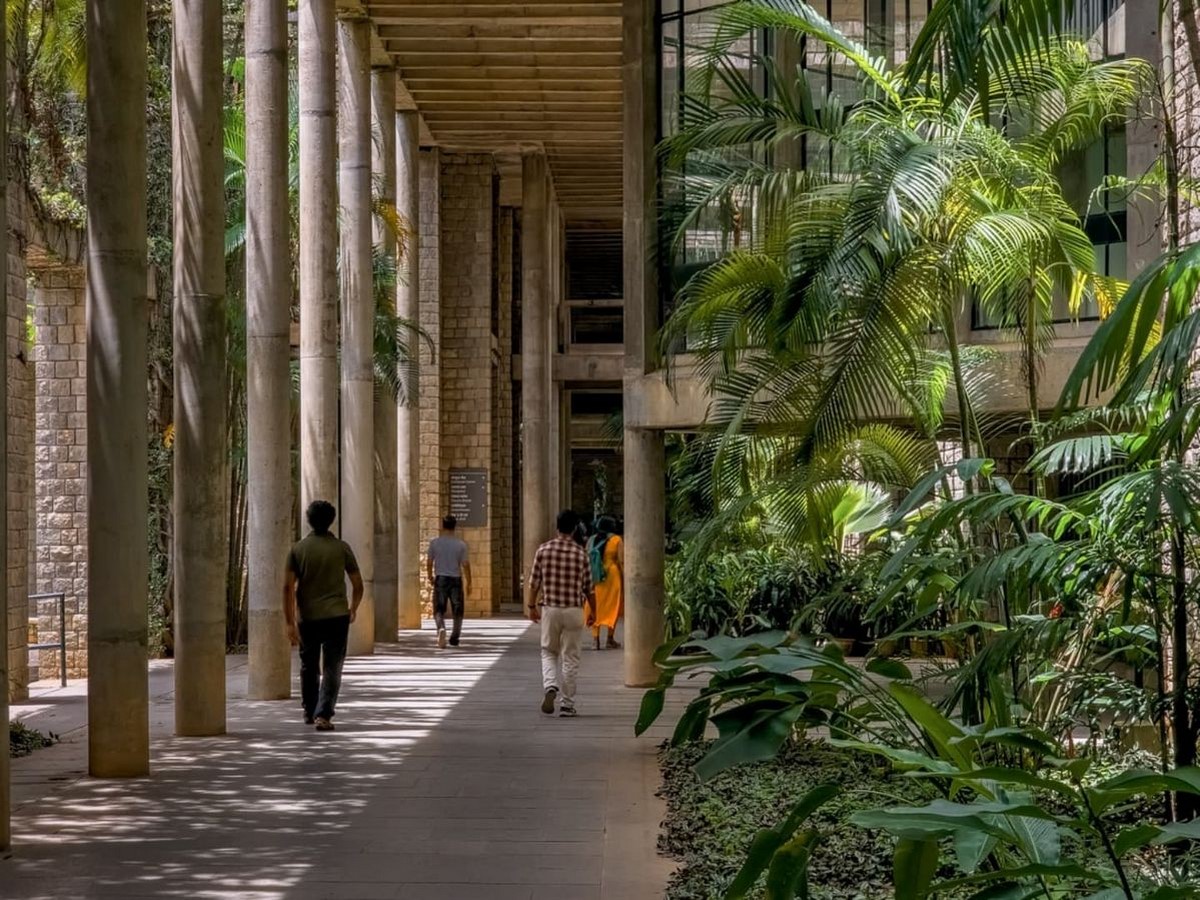
Balkrishna Doshi‘s IIM Bangalore exudes a particular type of happiness. Here, light dances across stone hallways, slides through pergolas, and forms minute-by-minute patterns. Students develop attachments to the spaces rather than just using them. A stone step with a square of sunlight becomes a gathering place. Between courses, a lengthy hallway that is softened by shadows becomes a place to reflect. The dance of brightness and darkness, periods of exposure interspersed with moments of safety, is what gives the architecture its emotional impact.
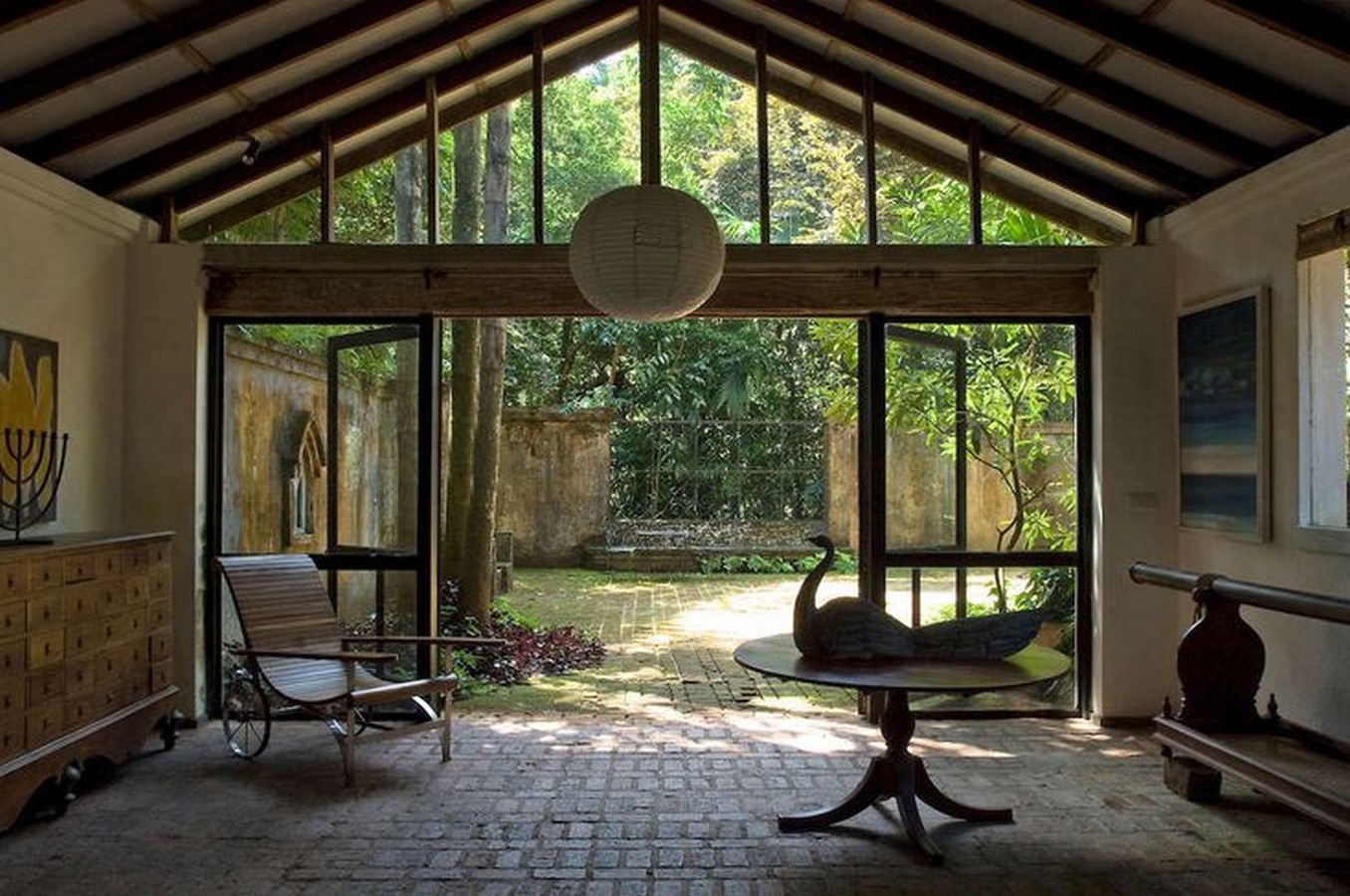
The happiest moments in tropical towns are frequently found in the shade. Geoffrey Bawa was well aware of this. At the Lunuganga Estate in Sri Lanka, the transitions, the deep verandahs, the abrupt darkness beneath a canopy, and the framed views of sunlight beyond, are what bring happiness rather than the wide lawns. Perception is sharpened by the contrast. The building suggests that happiness is found in both the lit world and the comfort of leaving it.
Geometry That Lifts the Spirit
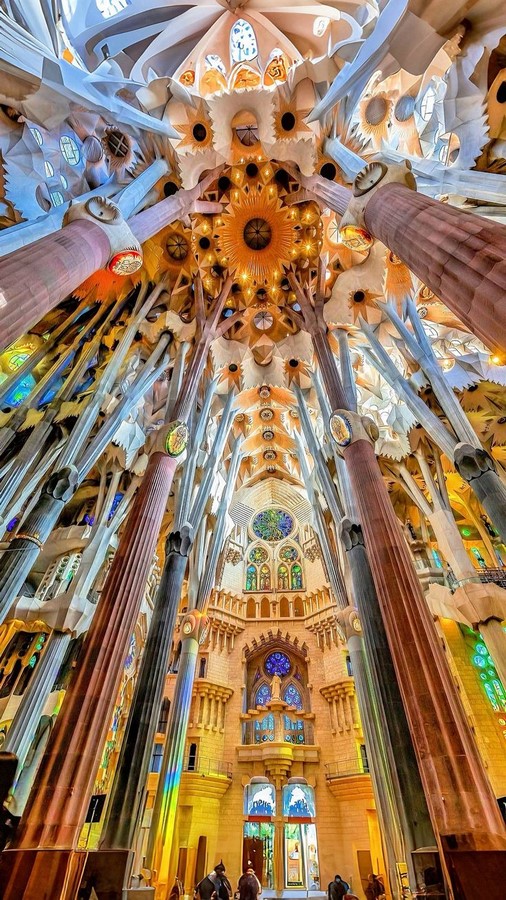
Scale has emotional repercussions as well. All you have to do to see this is to stand in Antoni Gaudí‘s Sagrada Família’s central nave. The visitor is not diminished by the tremendous verticality. Rather, the height seems uplifting, as though the structure were opening your chest, lifting your eyes, and gently stretching your posture. This feeling of being a part of something greater is what psychologists refer to as “self-transcendent awe.” Gaudí uses geometry, color, and proportion instead of ornamentation to accomplish this.
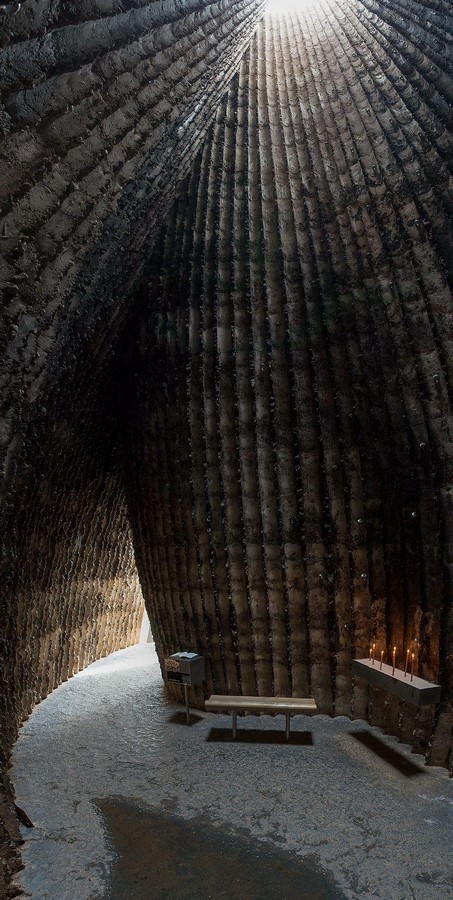
However, happiness isn’t always found in large settings. It can occasionally be found hiding in a tiny space that is just big enough for two people. The entrance to Peter Zumthor’s Bruder Klaus Field Chapel in Germany is a low, narrow entryway sculpted into the shape of a mound. The body must bow somewhat because of the nearly womb-like entrance. However, once inside, the room opens into a tall, unfinished, conical emptiness that is only illuminated by roof punctures. The light feels valuable because of the scale’s closeness. The room is quiet in a way that is rarely possible in today’s world. This peaceful, reflective joy serves as a reminder that intimacy can have just as much emotional impact as grandeur.
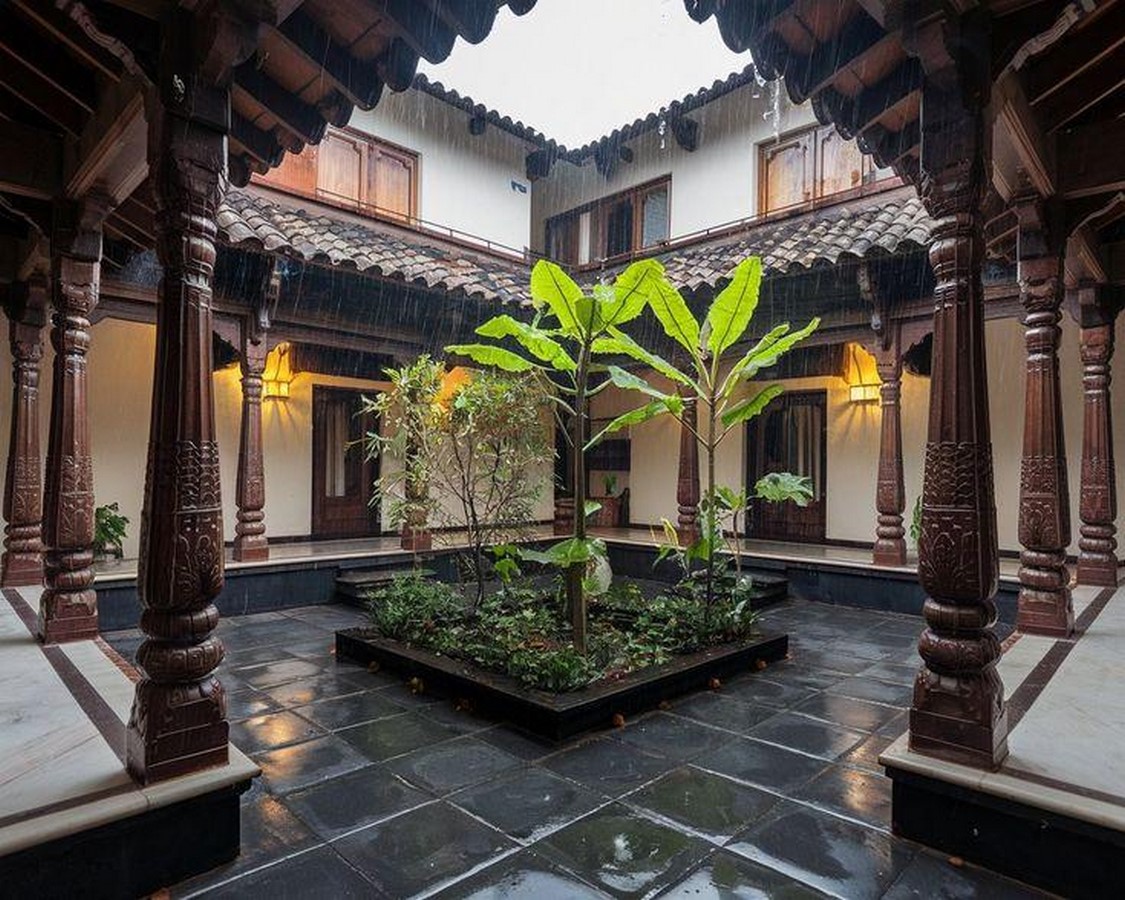
In traditional Indian houses, the same idea holds. A small inner courtyard that is only four meters wide, a raised board by a window, or a darkly lit alcove can all have profound emotional meaning. These are frequently the locations where a child reads after school, where a granny peels peas, and where families get together. Scale turns into memory. And joy follows from recollection.
The Secret Life of Thresholds
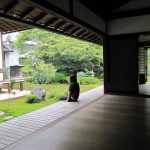
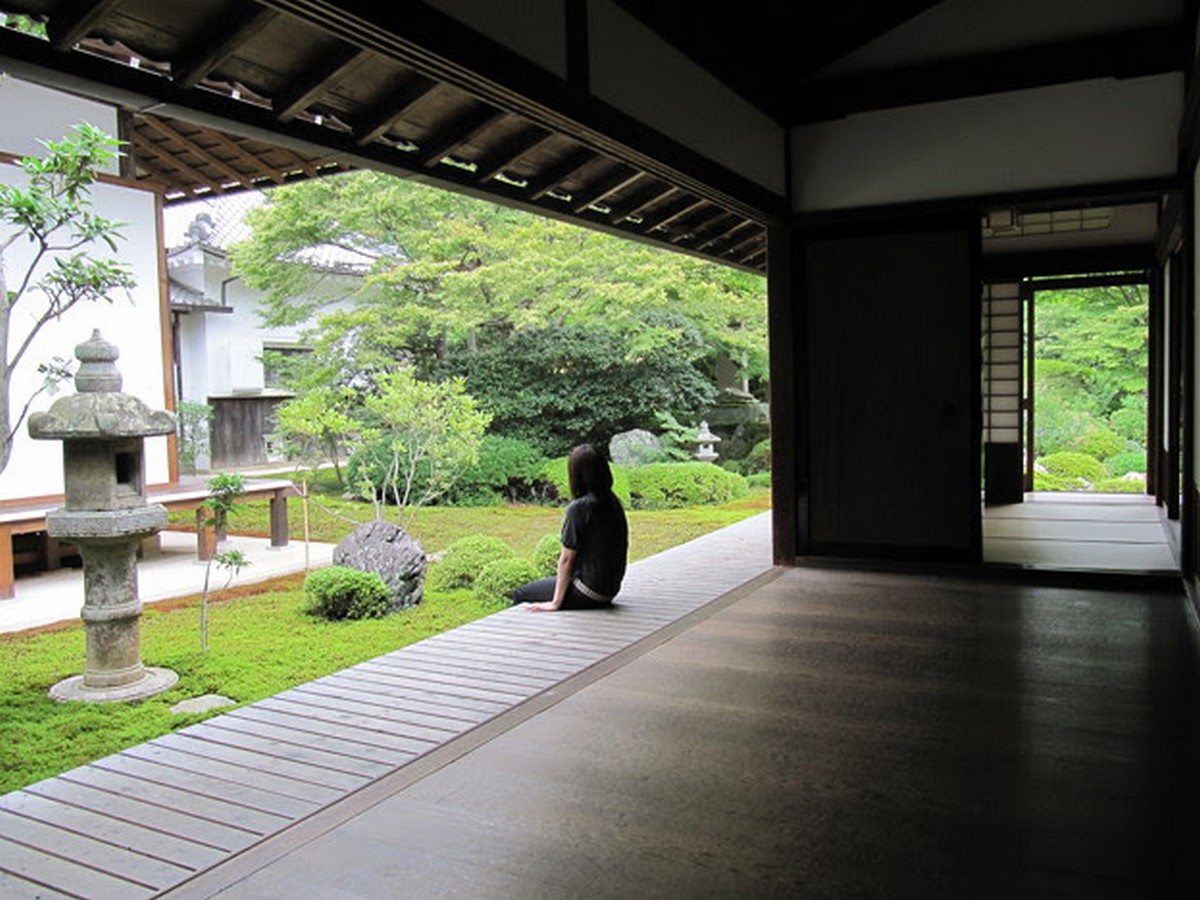
If there is a space where joy most often appears, it is the threshold, the in-between zone of movement and anticipation. Traditional Japanese architecture celebrates this with the engawa, a narrow verandah that mediates between interior and garden. Sitting on an engawa during late afternoon, when shadows begin to lengthen, one feels an inexplicable ease. You are neither inside nor outside. You are suspended in a moment of pause, and the architecture gently encourages this suspension.
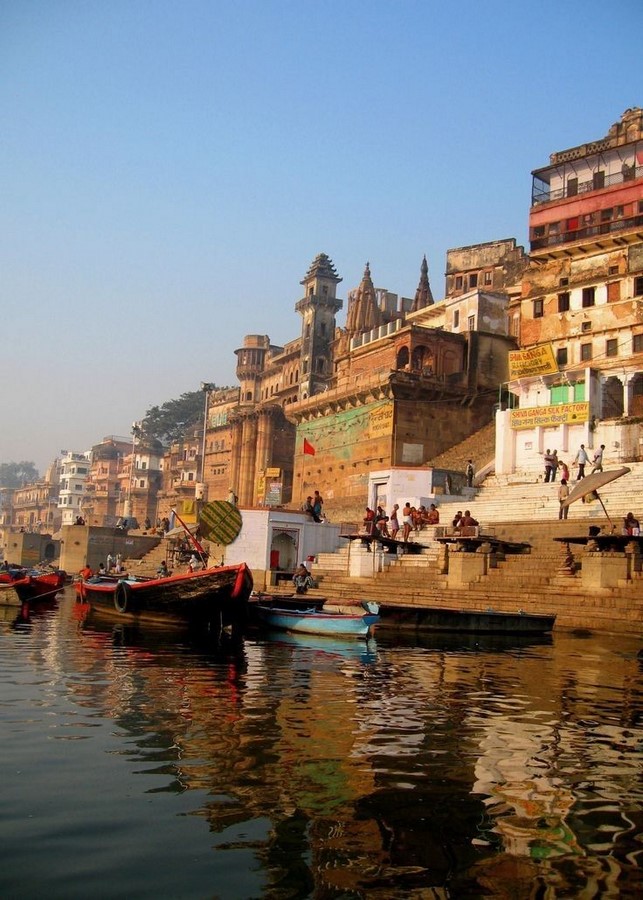
Another type of threshold bliss can be found closer to home at Varanasi’s ancient ghats. The visitor travels through a gradual revelation as they descend the steps toward the Ganga: crowded streets, sky, water, and finally openness. There is a purpose behind the transition from compression to expansion. It is a centuries-old urban choreography. Even those who are not conversant with architectural theory get an innate sense of relief when they see the river.
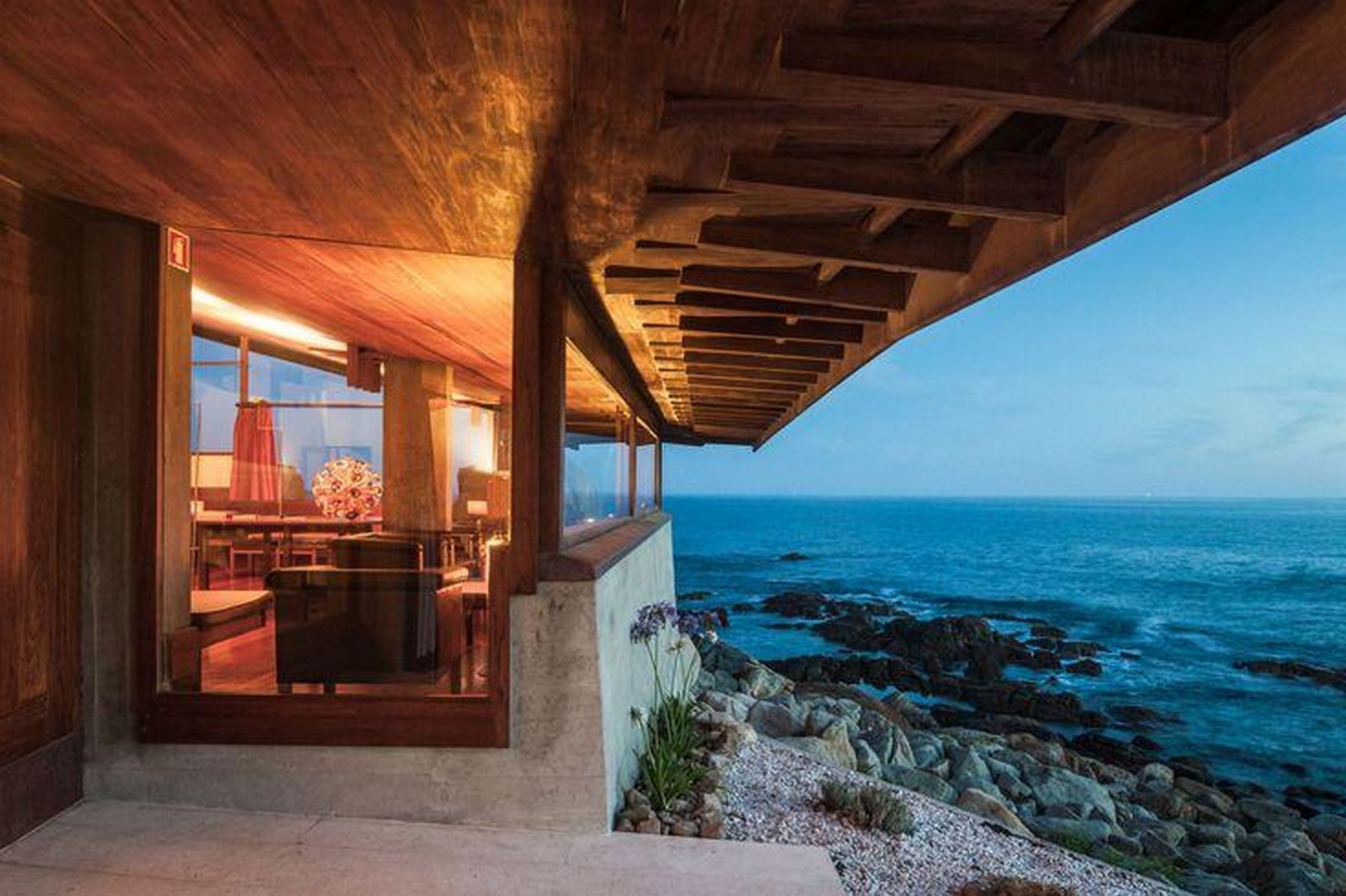
Évaro Siza is a master of this emotive sequencing in modern architecture. Visitors to Portugal’s Boa Nova Tea House take a meandering, seemingly unremarkable path until the structure abruptly frames the Atlantic in a dramatic, thrilling reveal. Calibrated delay gives rise to joy. The architecture recognizes that the hidden is just as significant as the visible.
Touch, Memory, and the Skin of Architecture
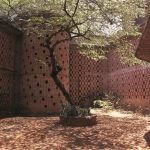
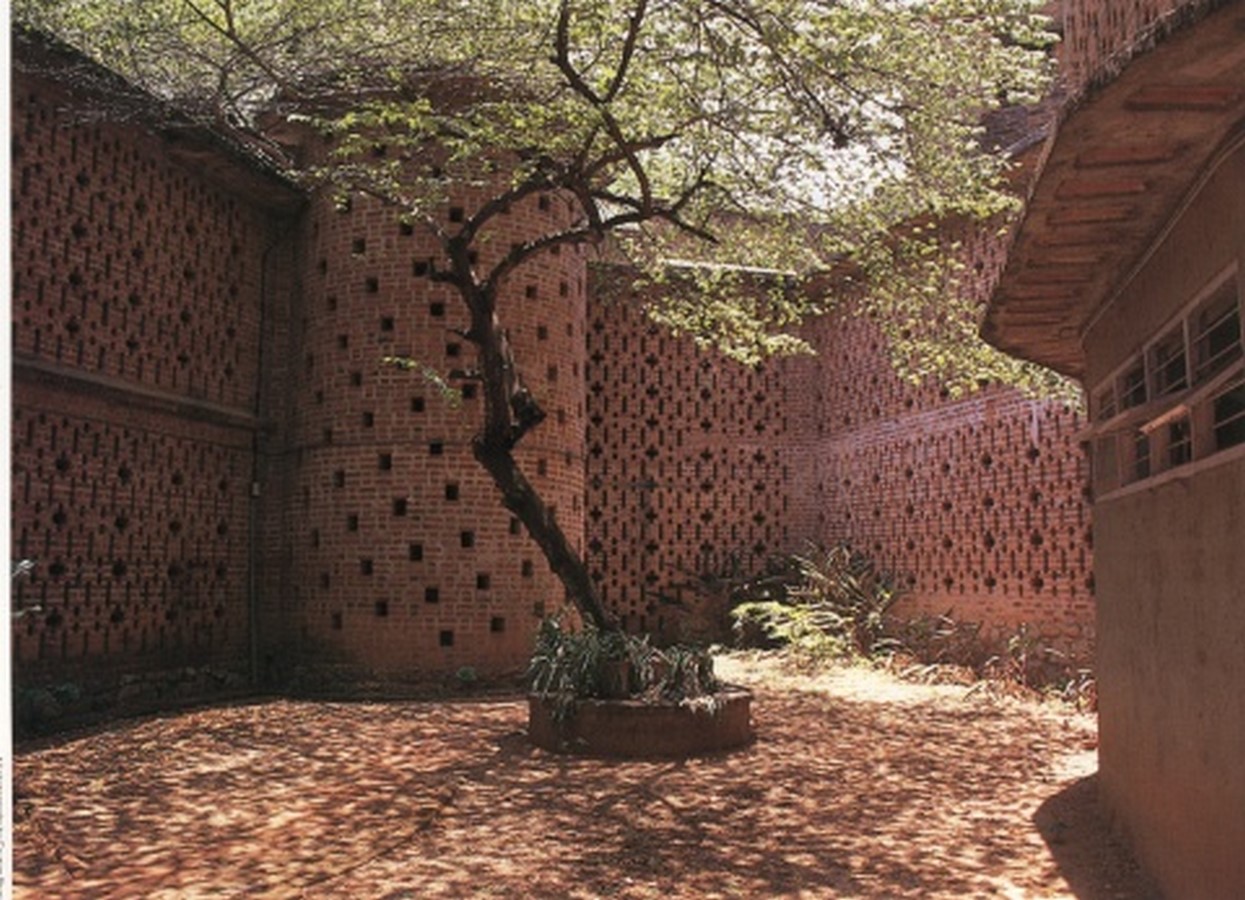
Just as a melody can evoke memories, a piece of music can evoke delight. Juhani Pallasmaa frequently discusses how our skin “remembers” textures even after we have left an area. Laurie Baker’s architecture is perhaps the best illustration of this. His brick walls have hand-marked grooves, minute flaws, and changing shadows throughout the day. A childlike sense of fulfillment is evoked by running a hand down them, the delight of coming into contact with something unmechanized and obviously bearing the mark of human craftsmanship.
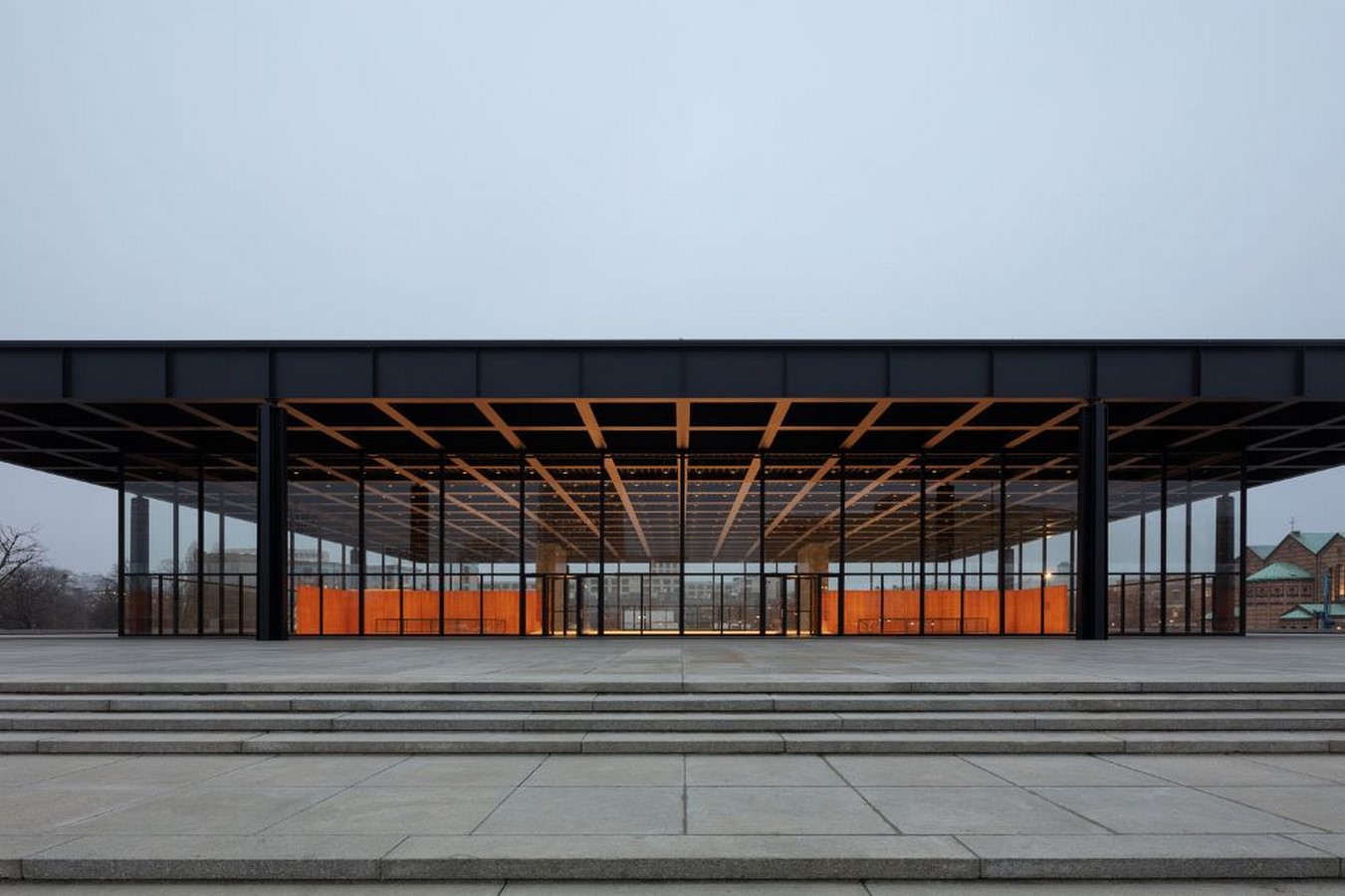
In a similar vein, Mies van der Rohe finds satisfaction in material accuracy at the Neue Nationalgalerie in Berlin. The granite floor, glass panes, and steel beams have a precise yet tranquil vibe. Here, tactile clarity, the delight of coming into contact with objects that are authentically themselves, is more enjoyable than tactile roughness.
The coolness of the stone underfoot, the faint echo in the air, and the scent of moisture from centuries of water, on the other hand, offer another aspect of material satisfaction in Indian stepwells like the Chand Baori in Rajasthan or Rani ki Vav. A subtle pleasure is produced by the sensory imbalance created by the lowering steps and carved pillars, which combine elements of decline and discovery. Long before wellness became a business, these places provided a traditional kind of well-being.

Nature as a Quiet Co-Author
The presence of nature in architecture is one of the most generally positive feelings. However, the link between nature and constructed form is what creates well-being, not just greenery.
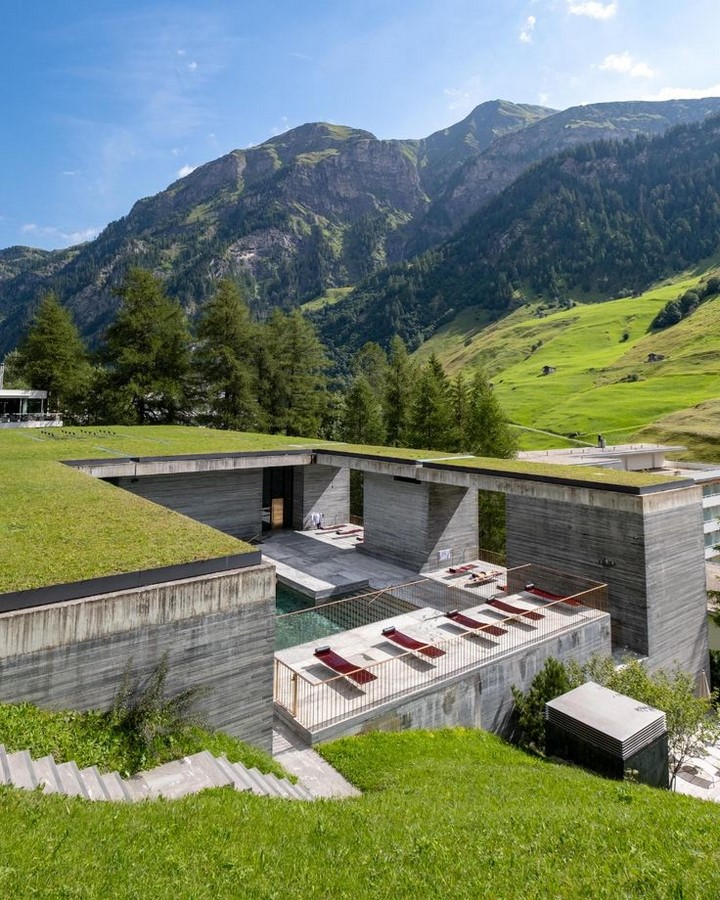
Perhaps the most obvious example is Zumthor’s Therme Vals. The water echoes the alpine streams; the stone walls echo the surrounding mountains. Moving from the warm pools into a chilly outside basin while snow is falling is both a physical and an emotional experience. The contrast between confinement and exposure, warmth and cold, is where joy can be found.
Charles Correa’s Jawahar Kala Kendra in India uses courtyards to accomplish this. Every courtyard has an own personality, such as being sunny, spacious, small, or shaded, which creates emotional microclimates. Due to the peaceful atmosphere of the open sky bounded by constructed edges, visitors frequently report staying in these areas longer than they had planned.
A similar impression can be achieved even in a basic dwelling with a window framing a tree. It’s a kind of slow cinema to watch leaves move, rain hit glass, or sunlight change color throughout the day. Nature is a silent remedy for the restless mind, transforming time into something soft and perceptible.
Designing Joy as an Architectural Duty
In order to create enjoyable architecture, one must acknowledge the psychological influence of environments. They have the power to either hurt or heal the spirit. They can either deplete or replenish. Joyful architecture is characterized by attentiveness rather than extravagance.
A small flight of stairs leading to a bright landing.
A seat beside the window overlooking a busy street.
A verandah where the wind is audible before it is felt.
A doorway that extends when it compresses.
Even if these choices are minor, they add up to emotional resonance.
Emotional well-being must be taken seriously in architecture going forward, not as a luxury or an afterthought, but as a design requirement. A structure is fulfilling one of its highest purposes when it improves the everyday lives of its occupants and creates moments of lightness, pause, closeness, or connection.
Joy is not ornamentation. Joy is architecture at its most profound.
References:
Aureli, P. V. (2019). The architecture of thresholds. MIT Press.
Bawa, G. (1995). Geoffrey Bawa: The complete works (D. Robson, Ed.). Thames & Hudson.
Baker, L. (1998). Laurie Baker: Life, work & writings. Penguin Books.
Chand Baori. (2015). In J. Michell & G. Davies (Eds.), The Penguin guide to the monuments of India (Vol. 1). Penguin Books.
Correa, C. (2010). A place in the shade: The new landscape & other essays. Penguin Books.
Doshi, B. V. (2019). Balkrishna Doshi. In K. Frampton (Ed.), Modern architecture: A critical history (5th ed.). Thames & Hudson.
Frampton, K. (2001). Studies in tectonic culture: The poetics of construction in nineteenth and twentieth century architecture. MIT Press.
Gaudí, A. (2021). Sagrada Família: The church of Antoni Gaudí (J. Faulí, Ed.). Ten Speed Press.
Kahn, L. I. (2013). Louis Kahn: The power of architecture (J. W. Prown & W. Whitaker, Eds.). Yale University Press.
Kimbell Art Museum. (n.d.). History and architecture. Kimbell Art Museum. https://kimbellart.org
Varanasi Ghats. (2011). In P. Michell, G. Davies, & G. Tillotson, The sacred India: Architecture of India’s sacred places. Thames & Hudson.
Zumthor, P. (1999). Thinking architecture. Birkhäuser.