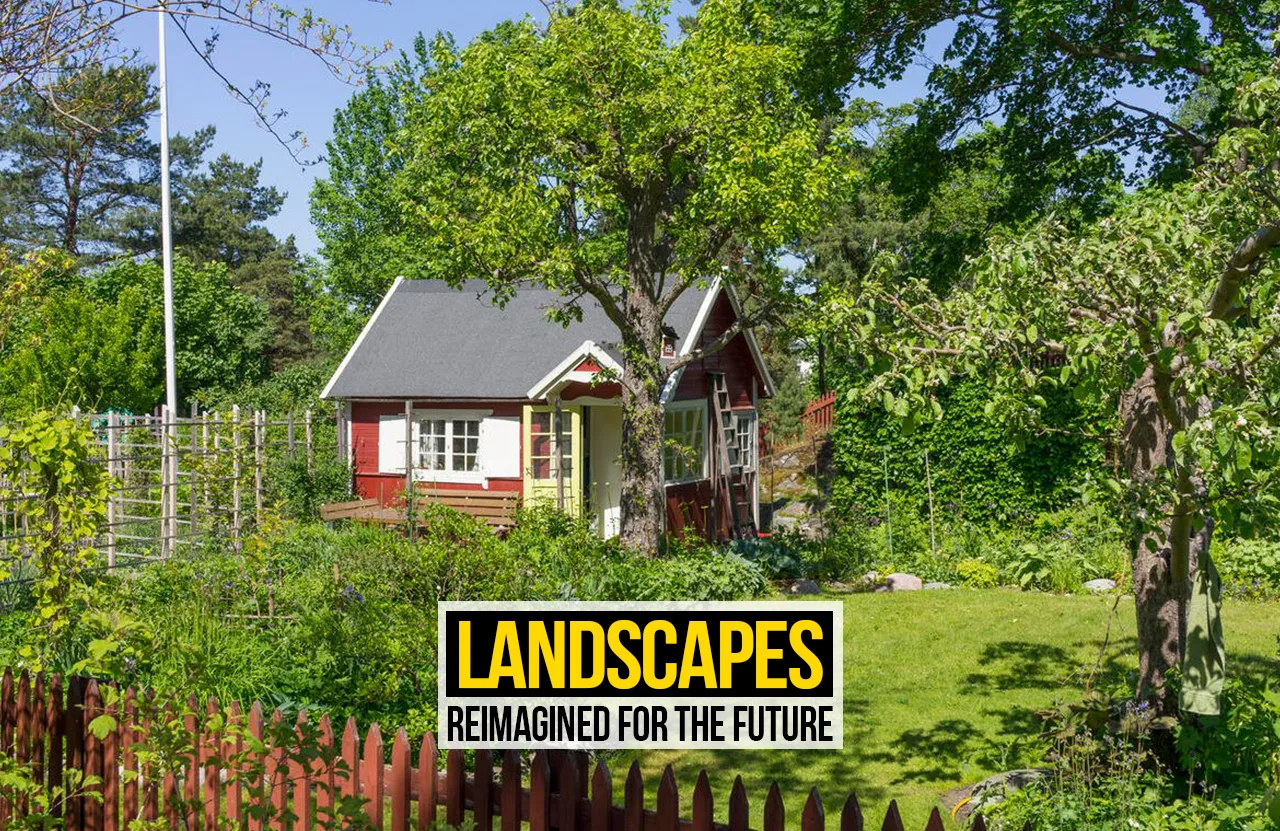
The word ‘landscape’ is often associated with the notion of representing the grandeur of lawns, perfectly trimmed hedges, and flowers arranged in geometric patterns, which are remarkable icons of gardens from different dynasties. Landscaping is often perceived as something that adds beauty to a place, rather than something that adds meaning or depth of functionality, which is again a debatable perception.
As the nations are exploring new methods to tackle carbon emissions, greenhouse gases, and sustainability, self-sustainability can not just be solved with infrastructure but also from an integral part of the environment – the landscapes.
How can landscapes shape the development of living standards and be a key point in creating a self-sustaining society?
Traditional systems like Kerala’s homegardens and the rising global trend of shared urban farms give us a lens to explore towards this approach, which unlocks new possibilities inspired by culture wrapped in innovation.
Kerala’s Home Gardens: a case study of cultural practice
Home gardens, the term which has been receiving more and more attention in the current timeline, is the idea of growing at least microgreens or a few vegetable plants in window sills or kitchen utility is coined the new beginning of sustainability, but this has been a home practice in Kerala sense centuries.
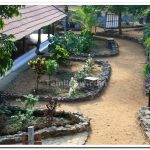
Once we step into almost any traditional household in Kerala, we might notice something unique: the backyard is not ornamental but edible and life-saving. Coconut palms quenching thirst and the staple ingredient of the regional food, pepper vines climbing up trunks of the tree; yam, jackfruit, banana, and so on, which meets out the daily consumption and medicinal herbs that also eliminate the need for drugs to great extent . A single patch of land becomes a layered forest of nutrition and healing.
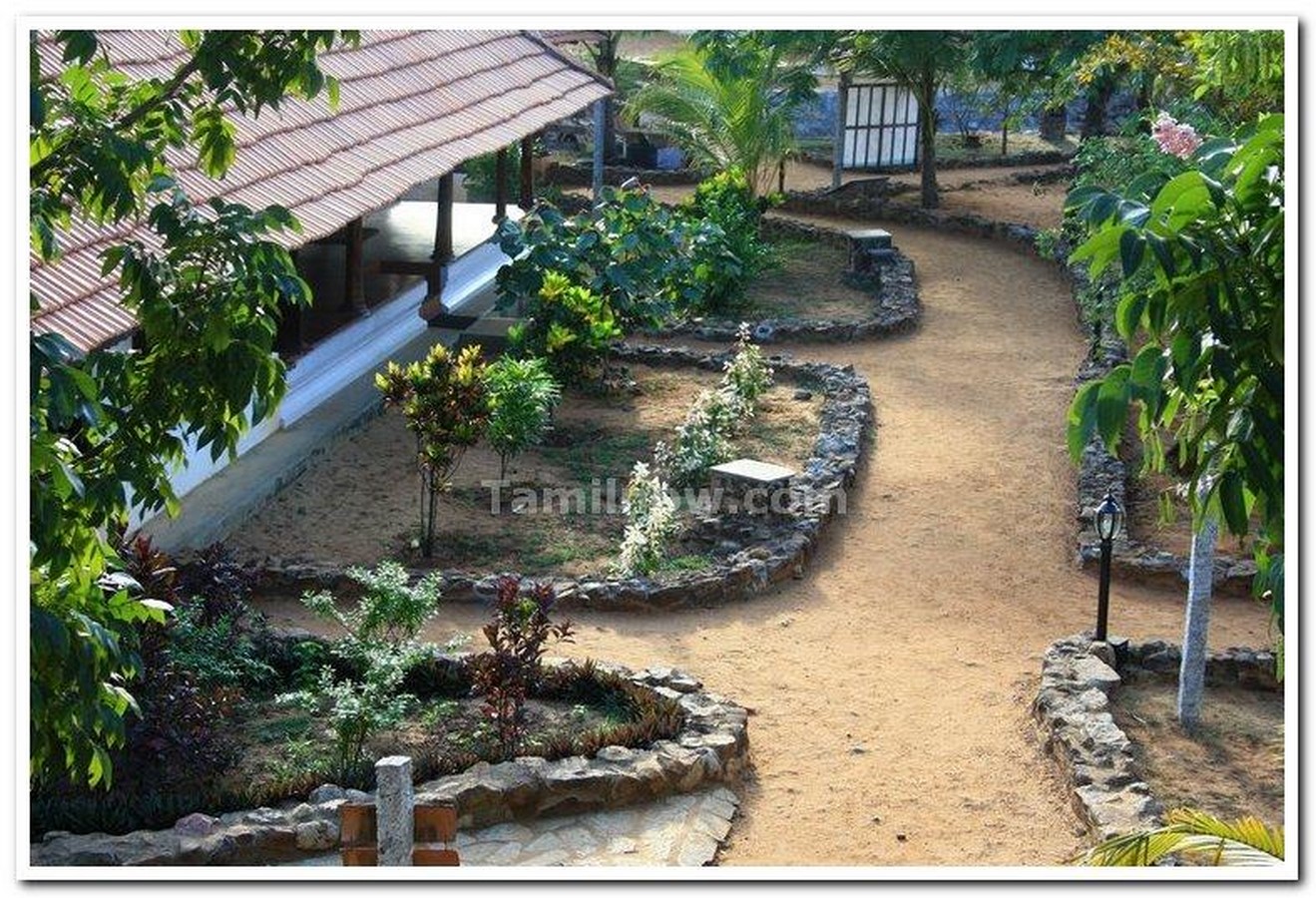
These home gardens are not just horticulture — they are a cultural philosophy. Every family of that region cultivates the spices, vegetables, and herbs required for the kitchen and for Ayurvedic remedies. The garden is not arranged aesthetically in patterns but is grown to mimic their homeplace – the forest; tall trees at the top, climbers using them as support, shrubs and herbs filling the middle, and tubers occupying the soil below. This multilayered structure helps not just in creating a self-sustaining family but also lowers temperature, soil erosion, and retains the fertility of the land.
The most sustainable agrosystem is something that combines both self-sustainability and social well-being, and this is perfectly carried out by Kerala’s home garden system. The surplus produce is often shared with neighbours and the community, which creates a holistic community living that benefits from one another.
A Striking contrast of Tamilnadu
While Kerala had its garden integrated as a part of its household just across the border in Tamil Nadu, a different pattern has historically prevailed. Rather than growing everything at home, families often owned or leased farmland that was located in a walkable or reachable distance from their residence. These plots are either small or extensive, and they become the primary source of grains, vegetables, and other produce, not just for self-sustainability but mainly for commercial produce.
Climate and demography play a central role in instilling this difference. Tamil Nadu’s climate is generally drier, hotter, which requires a regulated irrigation system, and the forest ecosystem for daily produce crops might fail here as rain is scarce in most places. Wells and canals fed the fields, while homes in urban or semi-urban areas had limited space or water to sustain a multilayered food garden.
The stark contrast between the adjacent states itself explains that neither of the methods can be universally adopted, while Kerala can sustain and grow in backyard gardens, Tamil Nadu’s population density, and the climatic conditions demand otherwise. Design must respond to ecology, water availability, and social patterns.
Urban Shifts: The Bengaluru case study
As Indian cities densify, the luxury of having a backyard is almost nullified to zero, while the plot share for a person in flatsystems is barely 25sq.m, which is covered by the parking lot and common amenities. In 2019, about 45% of newly launched housing projects in Bengaluru were high-rise, and it continues to grow till today. But innovation often emerges from necessity.
Ittina Anai Apartments in Bellandur, Bengaluru —
This is a residential complex of 72 flats built on about 1.87 acres situated in Bellandur, a densely populated area.
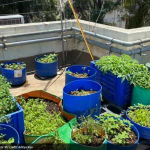
With keen interest towards gardening, the Roas were the pioneers of farming in this apartment terrace. They started off with a humble setup consisting of recycled cans, which were treated as growcans by layering cocoa blocks, soil, and straw with proper waterproofing. Which was started as a small terrace, then soon grew into a community kitchen garden with vegetables, spinach and greens
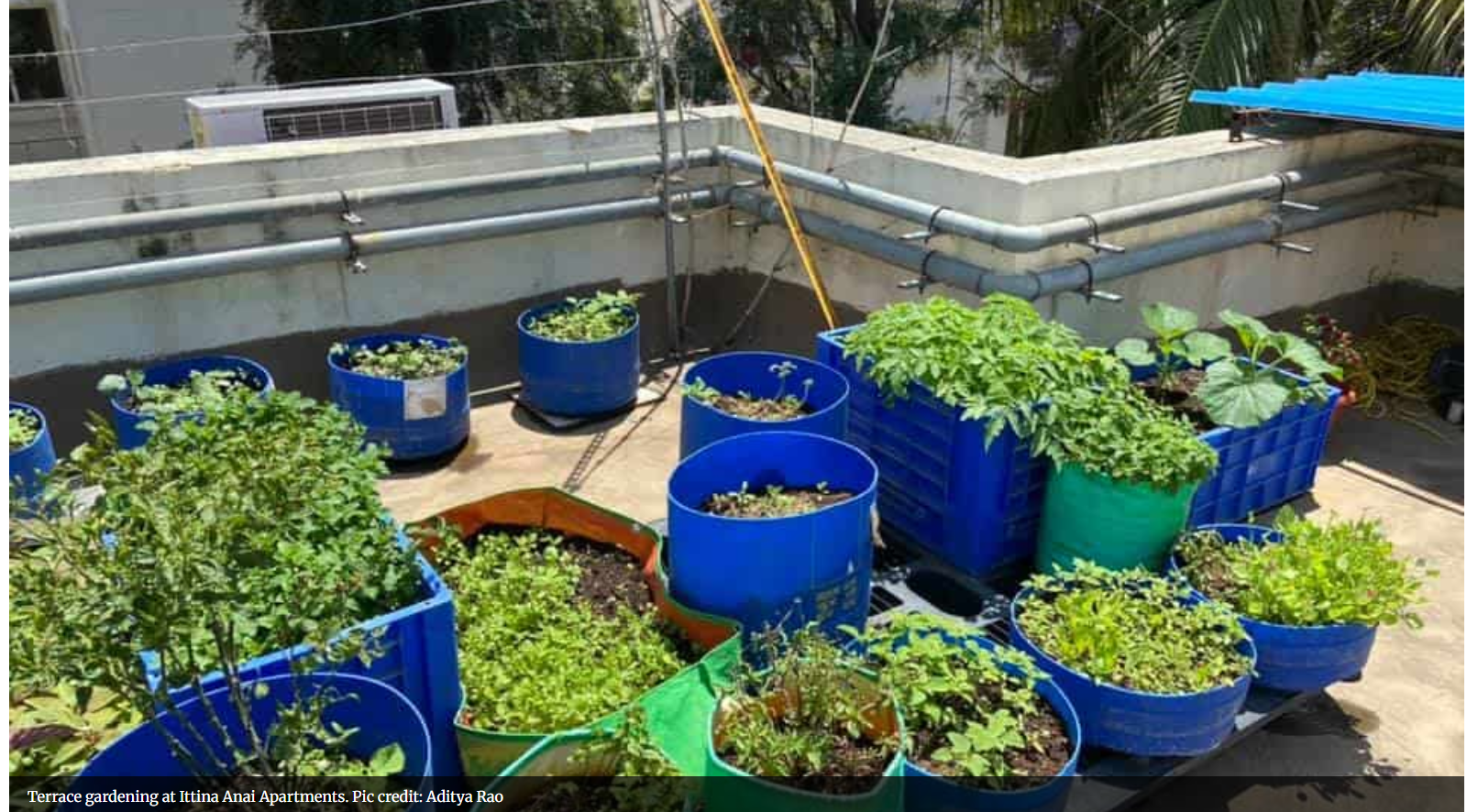
- Weekly harvests are at an average of 12 kilograms of fresh vegetables — spinach, coriander, beans, gourds, capsicum, chillies, tubers, and even papaya.
- Families have reported that their grocery expenses had dropped by up to 60%.
- The terraces cool down top-floor apartments by 3–5 °C, in turn easing the load on air conditioners.
- Recycled containers and composting keep the maintenance costs minimal, while waterproofing also ensures no leakage.
This case study proves that farming is possible even in dense urban areas when there is a community sense of togetherness and shared responsibilities.
Global Trends: From Community Gardens to Vertical Farms
The Bengaluru story is not isolated. Across the world, cities are rediscovering food-based landscapes.
- United States: Community gardens flourish in vacant lots, while suburban families often “pick-your-own” strawberries or pumpkins from nearby farms and pay for them according to the weight you harvested. This acts as an activity for recreation and significantly cuts the costs of harvesting labor.
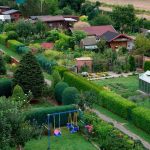
- Europe: Germany’s “Schrebergärten” is a method of allotment gardens within cities. These have existed for over a century, and is continuing to provide food , recreation and vegetables.
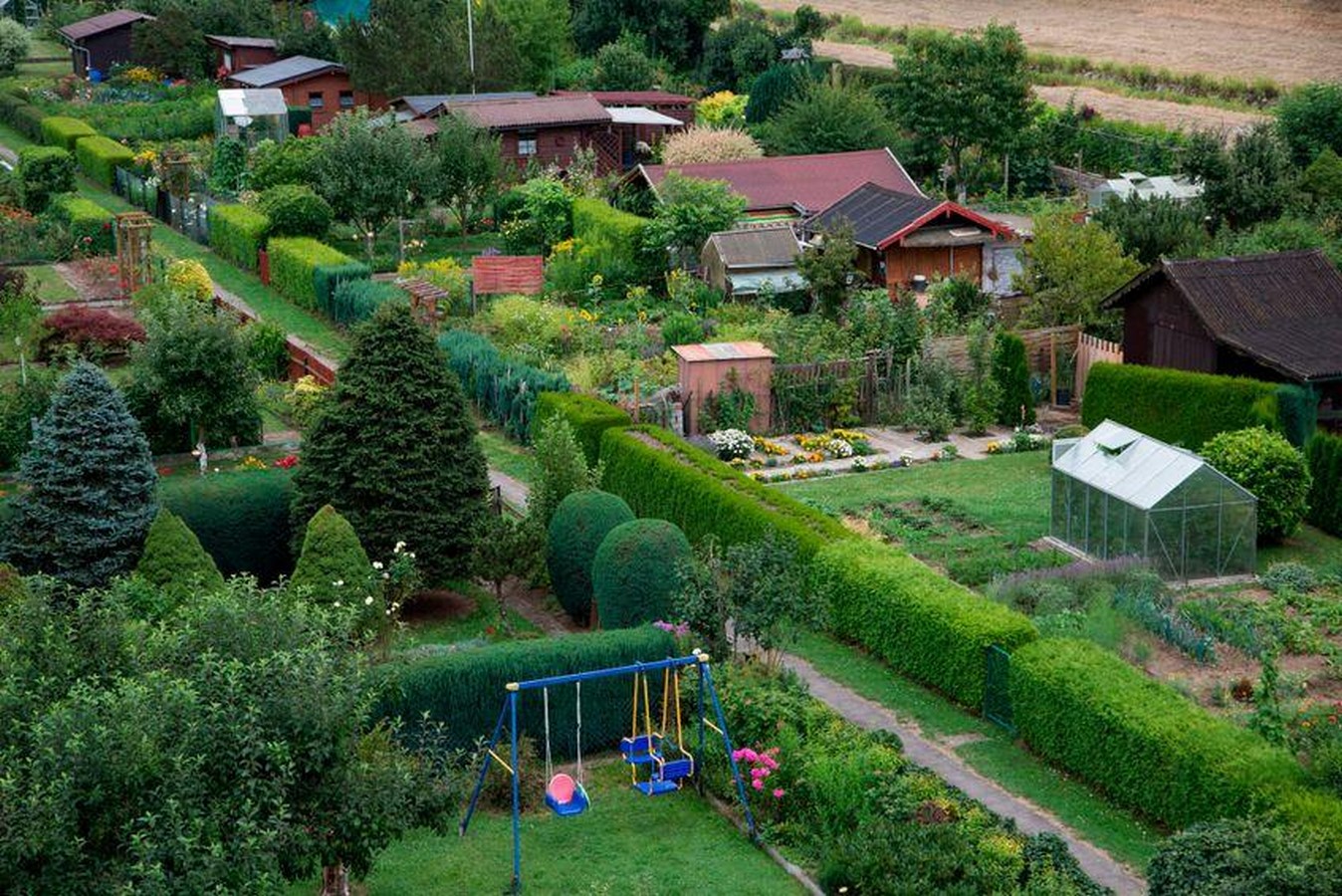
- Asia: Singapore also promotes rooftop farms as part of its food security strategy. This involves turning public housing blocks into productive terraces.
These examples put forth a shared reality to the public realm: as urban life disconnects people from nature, small-scale, localized farming systems are making a comeback — not as nostalgia, but as necessity.
New Proposals:
1.Parking Lots and Farming Lots
The question then arises: if we can design common parking lots for every residential block, why not common farming lots?
Imagine multi-level structures where each family receives a small, designated plot — just as they would receive a parking slot, but with a twist where the slots are to be filled with green growbags, hydroponic towers, and plant pots instead of cars stacked in concrete boxes. These structures would hold tiered gardens with sunlight, irrigation, and composting systems built in where families could cultivate herbs, leafy vegetables, or flowers, and share surplus with neighbors.
Such spaces would not only supplement food needs but also:
- Reduce the carbon footprint of transporting vegetables.
- Cool the microclimate of congested neighborhoods.
- Create new social spaces, where children and elders alike participate in nurturing plants.
-
TERRARIUMS
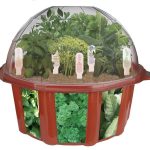
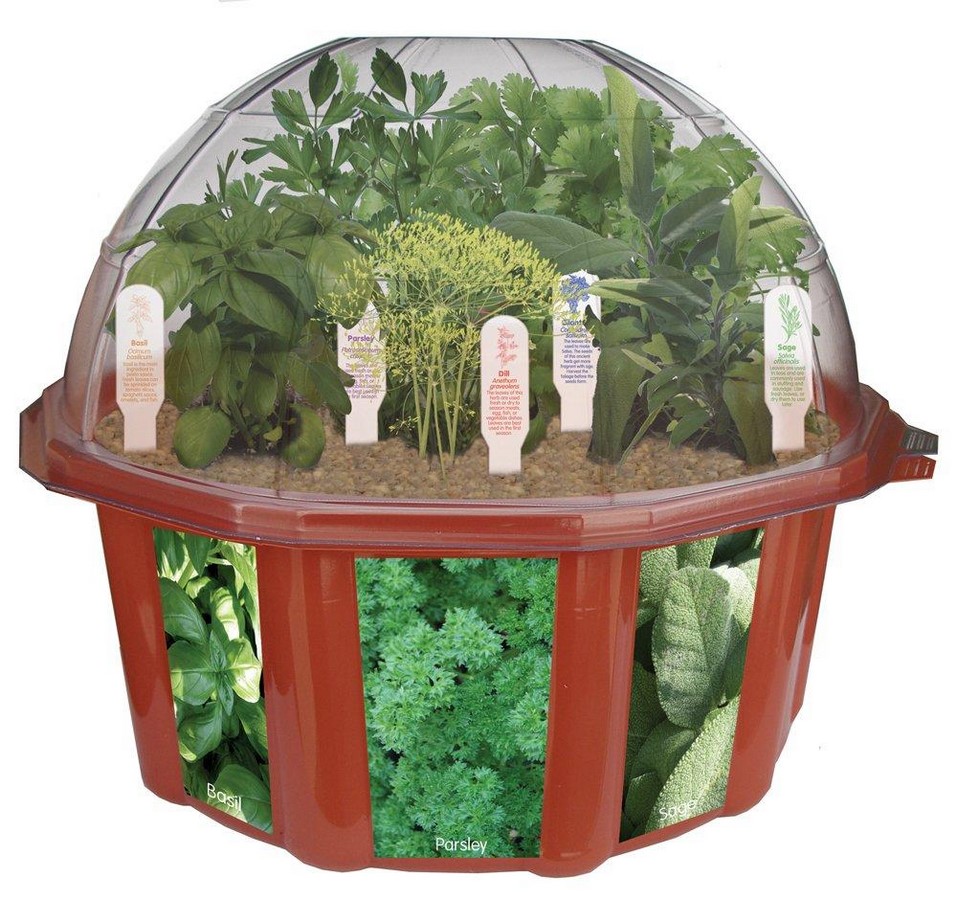
There are also other alternatives like the terrarium setups, which are now gaining popularity in cities — compact, self-sustaining ecosystems that can even thrive under staircases or balconies with a humidity regulator and UV rays setup. This shows that farming need not always be large-scale. With one-time investment, even shaded or indoor areas can support micro-gardens. By extending this principle into communal, architecturally designed structures, the landscapes could redefine how we integrate food into the urban fabric.
Beyond Miyawaki: A Regionally Rooted Future
In recent years, Miyawaki forests — dense micro-plantations promising rapid greening — have become fashionable in urban design discourse which is also adopted by many social organisations to improve the environment. The NGO SayTrees in India has created 100+ urban forests using Miyawaki, and planted 50,000+ trees across 20+ cities. While being a Japanese method, these forests are now replenishing and rejuvenating more barren lands into lush green forests.
The lesson is distinct: indigenous practices deserve the same recognition as imported models. By documenting, adapting, and celebrating systems like Kerala’s multilayered gardens or Bengaluru’s terrace farms, we can craft more regionally grounded, culturally resonant approaches to sustainability.
Towards a Shared Landscape Ethic
The landscapes of the future need a strong reason behind it, the landscape in the future is not just about view and vista, it’s about survival. They hold the responsibility to be able to produce, cool, recycle, and connect. Kerala’s homegardens show us how biodiversity and households can thrive together. Tamil Nadu’s model reminds us that climate shapes practice, and one solution cannot be universalised. Bengaluru’s terraces prove that even high-rise communities can grow their own food.
What if every residential block had its farming lot, just as it has its parking lot? What if every child grew up not only knowing where their food came from, but also tending it with their own hands? It is just a matter of rethinking the future of landscapes — not as decorative add-ons, but as productive, sustainable, and communal systems.
REFERENCES:
Citizen Matters, How this Bellandur apartment set up a kitchen garden on the terrace, Citizen Matters, 2021, https://citizenmatters.in/how-bellandur-apartment-set-up-kitchen-garden-on-terrace/ [accessed 5 October 2025].
The Better India, Bengaluru Family Converts Terrace Into Lush Organic Farm, Cut Household Expenses by 60%, The Better India, 2021, https://thebetterindia.com/281206/how-to-grow-organic-vegetables-on-terrace-aditya-rao-bengaluru-gardener/ [accessed 5 October 2025].
Krishi Jagran, This Bengaluru Family Reduced Household Expenses by 60%; Turned Their Terrace Garden into Lush Organic Farm, Krishi Jagran, 2021, https://krishijagran.com/success-story/this-bengaluru-family-reduced-household-expenses-by-60-turned-their-terrace-garden-into-lush-organic-farm/ [accessed 5 October 2025].
SayTrees, Urban Forestry Projects, SayTrees, https://www.saytrees.org/urban-forestry [accessed 5 October 2025].
The Hindu, Food for Thought: Students Growing Vegetables, The Hindu, 2015, https://www.thehindu.com/features/metroplus/society/food-for-thought/article7788286.ece [accessed 5 October 2025].
Lokalmatador.de, Schrebergarten – Urban Allotment Gardens in Germany, https://www.lokalmatador.de/schrebergarten/ [accessed 5 October 2025].
TamilNow, Kerala Homegarden, <www.tamilnow.com> [accessed 5 October 2025].