Landscape urbanism is a theoretical and applied methodology that emphasizes the interconnection of ecological systems, hydrology, topography, and public space in urban development (Waldheim, 2006). It conceptualizes the city not merely as a built form, but as active interactions between earth, water, vegetation, infrastructure, and people. Historically, most premodern cities reflected such principles—albeit under other technologies and cultural logics. South Indian cities, such as Hampi/Vijayanagar and Kumbakonam, offer evocative evidence that water systems were not marginal but central to urban planning, ritual life, administration, and sustainability.
This article attempts to rediscover and analyze sophisticated water systems in these ancient South Indian cities. Attention is drawn to the means by which reservoirs, temple tanks (Pushkarinis/Kalyanis), aqueducts, canals, stepped wells, drainage channels, and related water-management methods were used, cared for, and incorporated into city life. Under the umbrella of water urbanism, the article demonstrates how the city form was produced with water-oriented infrastructure and environmental awareness. Incorporating archaeological accounts, hydrological research, heritage conservation materials, and peer-reviewed papers, the article reinterprets these systems within landscape urbanism. It contends that what can be learned from these historical systems can be applied to urban development in South India’s water-scarce regions today.
The paper goes on as follows. First, we trace recent findings and historiography concerning water infrastructure at Hampi/Vijayanagar and Kumbakonam. Second, we document the technical anatomy of the systems. Third, we review how water systems conditioned urban morphology and social life. Fourth, we place the findings in landscape urbanism theory. We then present detailed case studies of Hampi/Vijayanagar and Kumbakonam. Lastly, we draw lessons for current design, policy, and research, and conclude with musings.
Historiography and New Findings
- Hampi and Vijayanagar
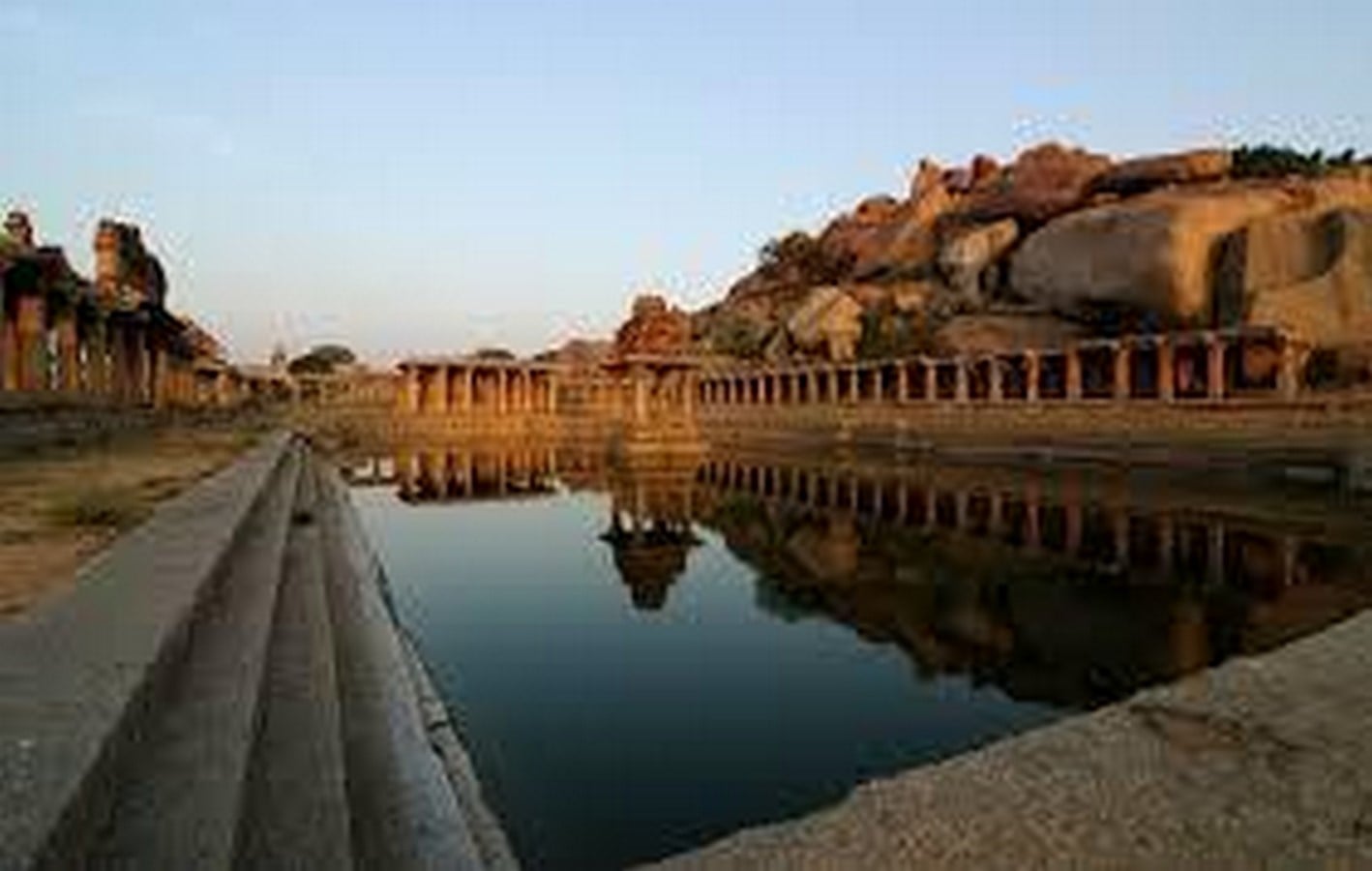
The Vijayanagar kingdom (c. 1336–1565 CE) focused around Hampi, has been known for years for its monumental ruins and architecture, but only in the recent past has the complete sophistication of its water and hydraulic systems come to be highlighted.
Recent archaeological and hydrological studies have found a complex interlinked system of canals, aqueducts, rock-cut channels, terracotta pipes, stepped tanks, and wells. They are used for various purposes: ritual bathing, house use, cooling, and irrigation (Shreedhara, 2018; Hamilton, 2000).
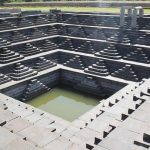
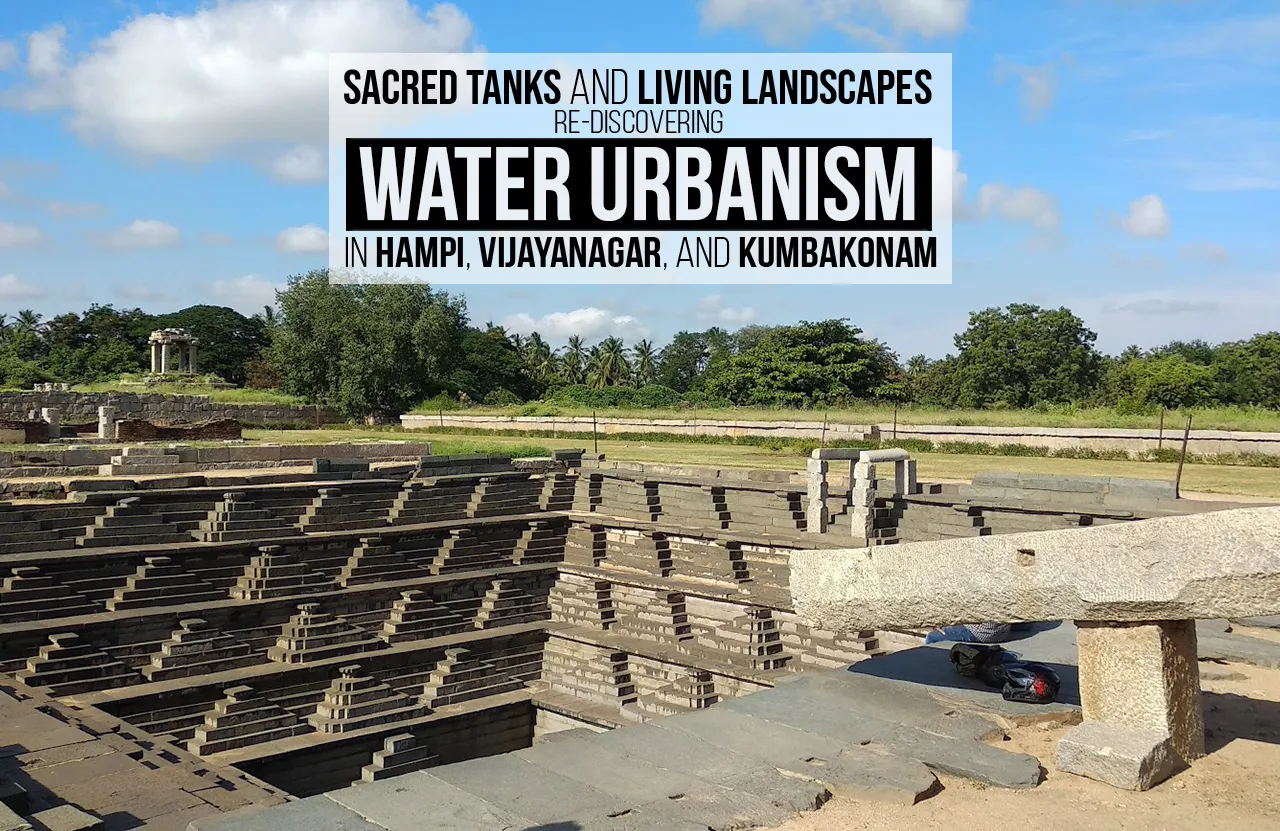
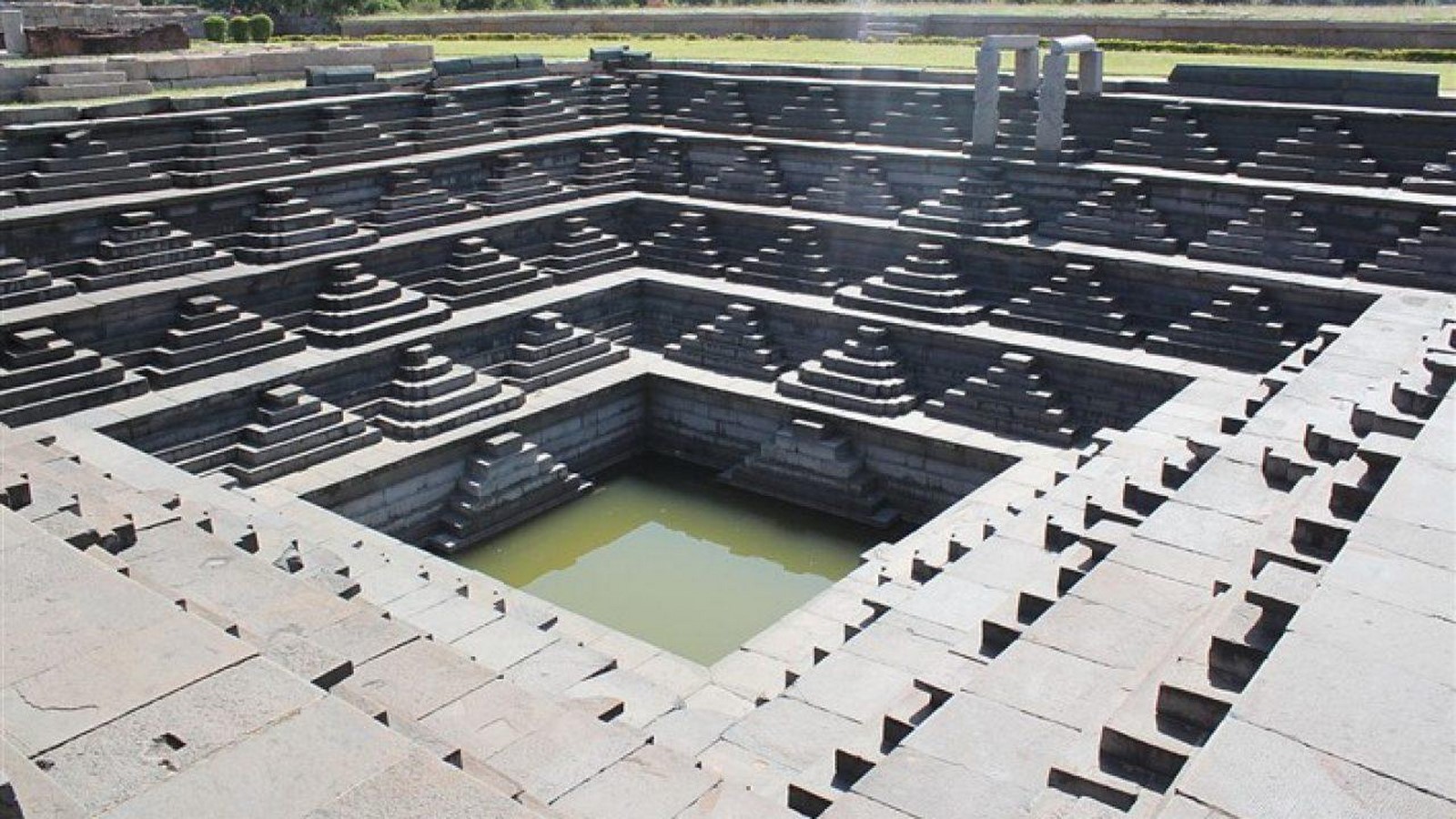
Specifically, Excavations within the Vittala Temple complex yielded a pushkarini (stepped tank) whose chamber could not be drained to any extent, even when pumped, suggesting the potential for concealed feeder systems or groundwater links that supply the tank perpetually (Shreedhara, 2018).
The presence of a terracotta pipeline found close to the Octagonal Pavilion indicates subsurface or underground conduits to supply water discreetly within precincts (Bhuvaneshwari, 2019).
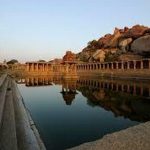
The Kamalapura Tank (east of Hampi) is attested by inscriptions and physical evidence; it was estimated to have irrigated extensive tracts as well as supplied water to the royal centre through canals (Settar, 1992; Bhan, 2013).
Several aqueduct sections, open channels, and stone conduits have been reported connecting tanks and water bodies with temple precincts (Kakati, 2003; ASI, 2014).
These findings update previous assumptions that water works in Vijayanagar were marginal or ornamental; instead, they reveal a ubiquitous, engineered water infrastructure central to urban existence.
- Kumbakonam and the Kaveri Delta
Kumbakonam, within the rich Kaveri delta of Tamil Nadu, has long been renowned for its temples and temple tanks, but the recent deterioration in their upkeep, coupled with methodological analyses of water quality, has focused attention anew.
Key findings:
Water quality analyses (e.g., Rakesh & Kavitha, 2020) indicate higher total dissolved solids (TDS), turbidity, hardness, and alkalinity in most temple tanks (e.g., Varaha Perumal, Chakrapani). The reasons are ritual bathing, washing, direct discharges, and surface runoff (Rakesh & Kavitha, 2020).
Most of the feeder channels and distributaries of the Cauvery River are either encroached or blocked, which keeps water from entering the tanks. Even during periods of plentiful river flows, local tanks stay dry (The Times of India, 2022).
Surveys show that among 44 temple tanks in the Kumbakonam municipality, a number are abandoned or nonoperational (The Times of India, 2015).
Tamil Nadu’s wider tradition of classifying sacred water bodies—yeri (irrigation tanks), kulam (ponds), kuttai (small tanks)—sheds light on various scales of water infrastructure within the region (CPREEC, n.d.).
Kumbakonam is therefore a fine example of both the richness of ancient water systems and the vulnerability of their persistence in the contemporary cityscape.
Technical Anatomy of the Water Systems
In Hampi/Vijayanagar and Kumbakonam, water infrastructure reveals an advanced application of structural, hydraulic, geological, and maintenance techniques. Following is a typology and analysis of their technical characteristics.
Typologies of Infrastructure
- Reservoirs / Large Tanks: These are large embanked bodies of water designed to hold monsoon runoff or river water. They frequently catered to irrigation and also urban supply purposes. E.g., Kamalapura Tank near Hampi, large yeri tanks in the Kaveri delta.
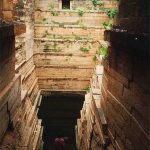
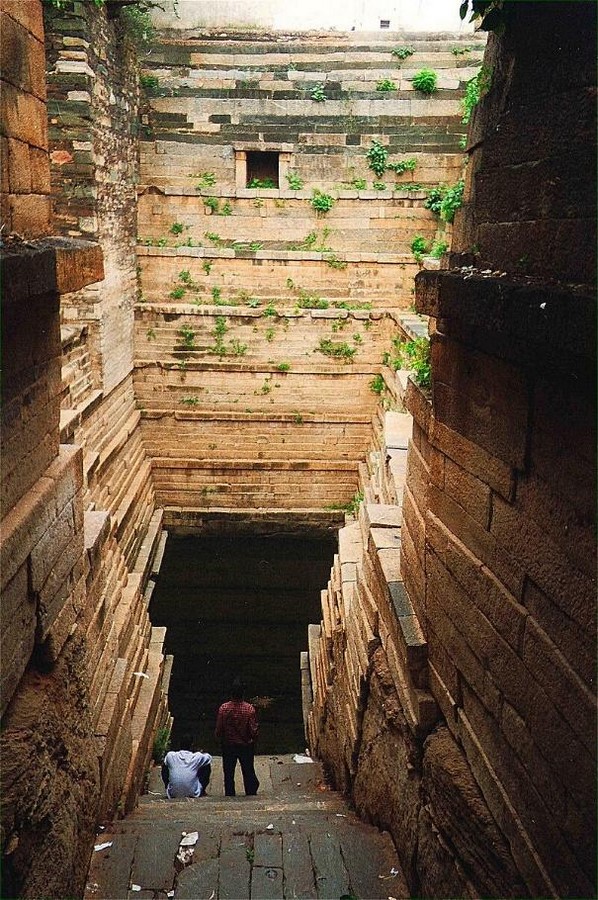
- Pushkarinis / Kalyanis / Temple Tanks / Stepped Wells: These are low-scale tanks, typically located near temple precincts or public areas, often with stepped banks (ghats). They were used for ritual bathing, water storage, domestic supply, and social interaction.
- Canals and Aqueducts: Open or semi-enclosed channels constructed to carry water from tanks, springs, or rivers to points of use.
- Pipelines / Buried Conduits: Terracotta or stone pipes that transport water under the ground to deliver it quietly—e.g., Hampi pipeline.
- Drainage / Overflow & Spillways: Conduits and sluices for taking away surplus water or diverting flood currents harmlessly without causing damage to buildings.
- Filtration Structures and Collection Pits: Collection pits for runoff, sedimentation basins, and shallow pools to clean surface water before supplying it to tanks, especially vital in rocky terrains such as Hampi.
- Materials, Construction, and Techniques: Stone work (granite, laterite, etc.) was employed extensively in tank walls, steps, embankments, canal linings, and aqueduct stonework (Rao, 1985).
Terracotta pipes, fired but unglazed, were employed for underground conduits (Bhuvaneshwari, 2019).
- Hydraulic gradients: slope design carefully managed so that gravity-fed flow was achievable; calculated to prevent erosion, stagnation, or excessive velocity.
- Geological adaptation: systems were tailored to local slope, rock outcrops, natural springs, and fractures. For Hampi, rock substratum and boulders formed part of the catchment planning.
- Maintenance regimes: periodic desilting, cleaning of feeder channels, clearing vegetation, repairing masonry, and managing silt inflows. Temple administrations, local communities, and royal bureaucracies in the past conducted these tasks.
Urban Morphology & Social Life: How Water Shaped Cities
The water infrastructure impacted not just supply and sustainability but also urban structure, social life, ritual practice, and government.
- Spatial Organisation and Distribution
- Location of tanks and wells: In Hampi, one survey recorded 23 wells and cisterns within the metropolis—13 outside city boundaries and 10 within—reflecting dispersed access (Sastry, 1986). A few wells were near roads, homes, and temples—implying decentralized access to water.
- Water passes through the urban fabric: Aqueducts and canals followed street and precinct alignments. Water frequently followed parallel courses along road edges or in the rear of built facades.
- Stepped tanks and ghats: Temple tanks often featured steps along one or more sides; steps and connected mandapams (pavilions) surrounding tanks provided ritual bathing, seating, assembly, and festivals.
- Ritual, Governance, and Social Dimensions
- Sacredness: Temple tanks were not functional only; they were ritual in importance, usually associated with belief in purity and sacred rivers flowing into them (e.g., Mahamaham).
- Patronage and inscriptions: Numerous tanks and canals are mentioned in epigraphs, endowments, and temple accounts—kings or donors ordered them, with donors assigned perpetual rights and obligations (Sastri, 1955).
- Community engagement: Operation of water systems in the past had several stakeholders involved: temple trusts, village communities, village assemblies, and royals. Maintenance, repair, and desilting usually had communal labor requirements.
- Social recreation and civic life: Water bodies offered shade, rest, social interaction, cooling microclimates, and visual relief. Tanks were not only water reservoirs—they were social infrastructure.
Interpretive Framework: Landscape Urbanism & Water Urbanism
This part brings the historic systems into dialogue with modern theory—highlighting continuities, lessons, and critical thought.
- Key Ideas from Theory
- Landscape as structure: Landscape urbanism argues that ecological and hydrological systems can be the structural foundation of cities (Waldheim, 2006; Corner, 1999).
- Blue-green infrastructure: Water (blue) and vegetation (green) together to deliver ecosystem services: flood prevention, cooling, water cleaning, recreation (Benedict & McMahon, 2006).
- Socio-hydrology: The field that investigates feedback between human societies and water systems (Sivapalan et al., 2012).
- Adaptive, multifunctional design: Urbanism systems can play multiple roles, adjust to variability, and react to environmental change.
- Mapping the Historic Cases to Theory
- Multi-scalar hydrological networks: Hampi and Kumbakonam systems exhibit vertical and horizontal stratification: hill catchment ponds → mid-level tanks → temple tanks → domestic wells. This parallels cistern, retention pond, and street infiltration trench hierarchies of contemporary practice.
- Multifunctionality: Tanks in the cities performed functions as water storage, ritual areas, public places, cooling devices, and sometimes as groundwater recharge structures.
- Temporal dynamics: These systems were defined seasonally—monsoon overflows, dry season drawdown, refill cycles. They were robust to fluctuations.
- Cultural embedding: Historic systems, unlike much contemporary infrastructure, were culturally and religiously embedded—ritual, symbolism, collective responsibility.
- Resilience & redundancy: There were multiple water sources (runoff, springs, river, wells) providing redundancy. Overflow channels, spillways, and standby storage reduced extremes.
These attributes foresee many issues of contemporary water-sensitive urban design, providing a bridge between past ingenuity and future solutions.
- Detailed Case Study: Vijayanagar / Hampi
Landscape, Hydrology, and Challenges
Hampi landscape is rocky, rolling, punctuated with hills of boulders, interfluve ridges, and the Tungabhadra River as the dominant riverine corridor. Monsoon rainfall is bunched; dry periods are extended. Strategic containment and routing of water, utilization of runoff, and recharge were therefore necessary.
Key Water Features & Infrastructure
- Kamalapura Tank: Located east of the royal center, Kamalapura Tank is thought to have been constructed in the early fifteenth century. It was likely constructed for twin purposes: to irrigate the agricultural fields and provide water via canals to the city center (Settar, 1992).
- Pushkarini in Vittala / Virupaksha complexes: The pushkarini belonging to the Vittala temple complex has architectural and hydraulic connections with other buildings, and its continuous holding of water implies that it is not surface-fed (Shreedhara, 2018).
- Terracotta pipeline & buried conduits: The find of a terracotta pipeline close to the Octagonal Pavilion indicates that underground conduits were employed to distribute water, which may have minimized evaporation and kept the water free from contamination (Bhuvaneshwari, 2019).
- Aqueduct channels and stone conduits: Countless masonry aqueducts and stone gutters connect tanks and temple precincts. For instance, a stone aqueduct on the site of the Hazara Rama temple is still identifiable according to ruins (Kakati, 2003).
- Water & Urban Form Interactions: Water bodies were closely connected with palace precincts, temple ensembles, and residential areas. The web of wells, cisterns, and tanks went beyond the central core and serviced suburban areas too (Sastry, 1986). The orientation of some roads and precincts appears to be responding to water-channel plans, providing access to water and management of runoff. Steps, terraces, and decoration surrounding tanks mirror functional access and ceremonial incorporation of water in architectural terms.
Value of Recent Discoveries
The non-drainable pushkarini indicates secret inputs or linkages with groundwater systems—a more advanced hydrological connection than realized previously (Shreedhara, 2018).
The terracotta conduit find suggests that distribution was not just through open gravity flow but also through engineering of buried conduits—a sophistication underestimated previously (Bhuvaneshwari, 2019).
These findings increase the known size and complexity of the water infrastructure, and the previous reconstructions may have underestimated the integrative scale of waterworks in Vijayanagar.
- Detailed Case Study: Kumbakonam & the Kaveri Delta
Landscape & Hydrological Setting
Kumbakonam is situated in the wide, flat alluvial deltas of the Kaveri, supplied by distributary streams and a complex system of channels, with heavy rainfall and productive soil. The hydrology is quite bountiful, but the requirements of ritual, domestic, agricultural, and urban expansion make demands.
Important Water Features
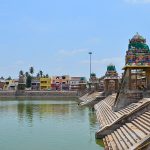
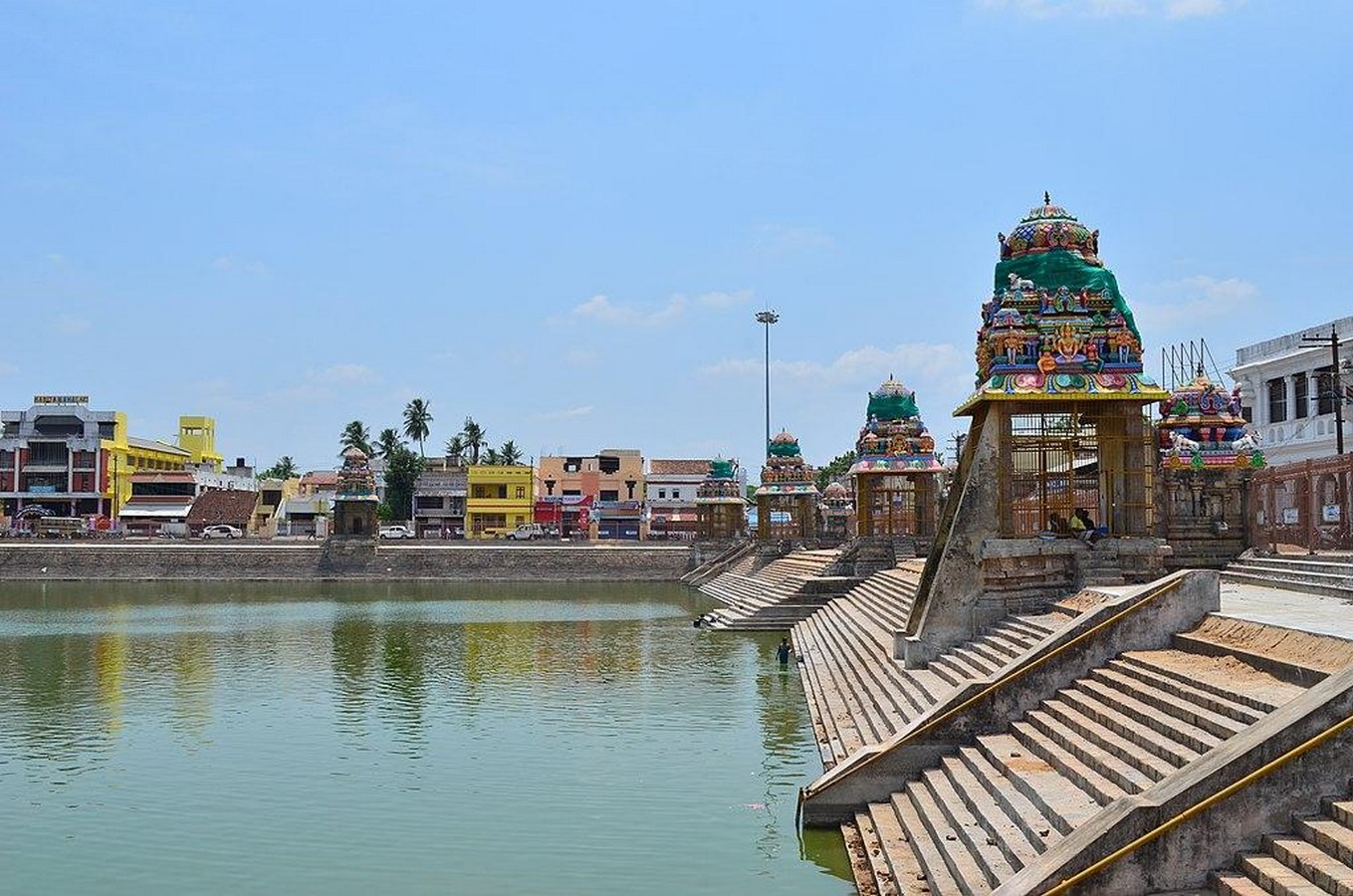
- Mahamaham Tank: A prominent ritual and city landmark, the tank consists of numerous wells (21 wells within the tank), enclosing mandapams and steps. It is said that the confluence of sacred rivers enters it every 12 years in myth, representing its ritual significance (Rengarajan, 2014).
- Potramarai Tank: Linked to the Sarangapani Temple, historically significant, and a part of temple water stories.
- Other temple tanks in Kumbakonam: Most temples have side tanks—rectangular or polygonal—with steps of access, ghats, inlets, and outlets of water. These are spread throughout the city’s historic center (Subramanian, 1998).
Challenges, Decline & Findings
- Water Quality Degradation: Empirical studies reveal high turbidity, TDS, hardness, and alkalinity in most temple tanks (Rakesh & Kavitha, 2020). Ingress of ritual wash water, direct discharge, stormwater runoff, and organic load are major contributors.
- Feeder Channel Encroachment and Non-Functionality: Most distributary channels of the Kaveri, once feeding tanks, are either blocked or constructed over, cutting off replenishment even at peak flows (The Times of India, 2022).
- Neglect and Abandonment: City records indicate that several tanks are non-operational or abandoned; maintenance funds are scarce (The Times of India, 2015).
- Cultural & Social Impacts: The loss of such tanks impacts ritual life (e.g., festival bathing), group identity, public open space, microclimates, and urban appearance.
- Interaction of Water & Urban Living: Tanks were/were used in pilgrim groupings, ritual bathing, temple processions, and festival rounds (e.g., Mahamaham).
Tanks as civic nodes: steps, ghats, mandapams, shade trees, and peripheral gardens promoted movement and congregation.
- Water infrastructure was connected to larger drainage and field irrigation networks—therefore, the urban temple-tank system was integrated into regional hydrology.
Comparative Observations & Theory Mapping
When Hampi/Vijayanagar and Kumbakonam are placed side by side, some patterns and contrasts are evident, which serve to generalize lessons and connect to landscape urbanism.
Common Patterns
- Hierarchical and networked water systems: In both examples, there are systems from large reservoirs, mid-size tanks, smaller temple tanks, and wells—thereby replicating multi-level water networks.
- Irrigation and urban water supply duality: The tanks in both examples were used for agricultural and urban purposes, thereby being multifunctional.
- Ritual intertwining: Water bodies are socially, religiously, and culturally central—not marginal. Ritual, mythology, and symbolic significance made tanks sacrosanct.
- Adaptation to terrain and seasonal fluctuation: Rocky terrain in Hampi necessitated innovative catchment design; monsoon flooding and siltation in Kumbakonam required overflow and cleaning regimes.
Contrasts and Contextual Differences
- Topography: Hampi hilly/rocky; Kumbakonam flat deltaic. This influences the catchment, runoff, seepage, and gravity design methods.
- Abundance of water: Kumbakonam is river-fed; Hampi relies more on rain and catchment.
- Level of decay: Kumbakonam tanks are more greatly affected by modern encroachment and pollution; Hampi ruins are better conserved but need archaeological restoration.
Theoretical Resonance
These historical practices correspond strongly to ideas in landscape urbanism:
The historic systems are landscape as infrastructure (Waldheim, 2006): the water bodies are structural to urban form.
- They embody blue-green infrastructure principles: integration of water and vegetation, delivering ecological services (stormwater infiltration, cooling, recharge).
- They illustrate socio-hydrological feedbacks: human settlement influenced water systems; water systems influenced settlement patterns.
- They are characterized by adaptability and resilience to seasonal variation, varying supply, floods, and droughts.
Therefore, through rediscovery of these systems, we can connect ancient wisdom with contemporary paradigms of sustainable urbanism.
Lessons for Contemporary Urban Design, Policy & Research
From the above study, we learn actionable recommendations for contemporary cities in South India (and similar regions) experiencing water stress, urban sprawl, pollution, and climate change.
- Restoration and Protection of Existing Water Bodies
- Desilt, clean, and restore tanks and their masonry.
- Clear encroachments over feeder channels.
- Legally preserve historic water channels, pipelines, and aqueduct remains.
- Reinstate Multiscale Hydrological Networks
- Utilize small catchment ponds, rainwater harvesting, and infiltration basins to feed bigger tanks.
- Link rooftop harvesting, street swales, and micro ponds into a hierarchical network.
- Design for Multifunctionality
- Tanks should function as ritual, ecological, social, and cooling features.
- Shade trees, seating, planting, and walkways to surround tanks.
- Filtration zones, wetland margins, and planting to purify water.
- Governance & Community Engagement
- Temple bodies, municipal corporations, and local communities must co-share responsibility.
- Restore traditional maintenance systems (community labor, volunteer days).
- Raise awareness of residents of symbolic, ecological, and functional benefits of tanks.
- Water Quality Monitoring & Pollution Control
- Regularly monitor physico-chemical and microbiological parameters.
- Prevent ingress of direct sewage; segregate ritual wash channels; designate upstream settling areas.
- Integrate into Urban Planning and Policy
- Incorporate water bodies in master plans as a part of essential infrastructure and not as ornaments.
- Appropriate funding for water restoration schemes.
- Encourage developers to conserve or incorporate historic tanks instead of filling them up.
- Research, Documentation & Technological Support
- Apply GIS, remote sensing, LiDAR, and ground-penetrating radar to detect concealed channels, buried pipes, and remnants.
- Develop open databases for water-heritage mapping.
- Promote interdisciplinary research (archaeology + hydrology + urbanism).
- Climate Adaptation & Resilience
- Construct overflow spillways, buffer areas, and flood retention capacity.
- Implement tanks to buffer intense rain, mitigate urban flood risk.
- Plan for climate variability (more intense monsoons, longer dry periods).
The ancient towns of Hampi/Vijayanagar and Kumbakonam show that water was not a marginal utility but a central aspect of urban life—defining form, ritual, social convention, microclimates, and ecological equilibrium. Their water systems—reservoirs, tanks, aqueducts, conduits, stepped tanks, and drainage pipes—are exemplars of a sophisticated water urbanism.
Recent finds—terracotta pipelines, undraining pushkarinis, concealed feeder systems—enlarge our knowledge about their sophistication. Interpreted in the context of landscape urbanism, these systems prefigure many of the aims of today: multi-functioning green-blue infrastructure, resilience, adaptive design, socio-hydrological integration, and ecological anchorage.
For contemporary South Indian cities, re-learning these systems is not an exercise in romance but a prerequisite. With water shortages, flooding, climate change, pollution, and urban expansion increasing, we require design, governance, and policy systems that address water and landscape as a fundamental structure. Revival of temple tanks, conservation of water courses, revitalizing community governance, incorporating hydrological networks into master plans, and investigation into concealed infrastructure are all calls to action.
References:
Benedict, M. A., & McMahon, E. T. (2006). Green infrastructure: Linking landscapes and communities. Island Press.
Bhuvaneshwari, R. (2019). Terracotta pipeline unearthed at Hampi. Deccan Chronicle. Retrieved from https://www.deccanchronicle.com/nation/current-affairs/130618/hampi-ancient-terracotta-pipeline-unearthed.html
Corner, J. (1999). Recovering landscape: Essays in contemporary landscape architecture. Princeton Architectural Press.
CPREEC. (n.d.). Sacred tanks of Tamil Nadu. Retrieved from https://ecoheritage.cpreec.org/sacred-tanks-of-tamilnadu/
Hamilton, D. (2000). The hydraulic infrastructure of Vijayanagar. South Asian Studies, 16(1), 47–62.
Kakati, R. (2003). Vijayanagar: Cities and water systems in peninsular India. Indian Historical Review, 30(2), 122–148.
Rakesh, P. S., & Kavitha, K. K. (2020). Water quality status of main temple tanks in Kumbakonam city, Thanjavur District, Tamil Nadu. International Journal of Innovative Science and Research Technology, 5(4). https://ijisrt.com/water-quality-status-of-main-temple-tanks-in-kumbakonam-city-thanjavur-district-tamil-nadu
Rao, P. R. (1985). Historic water systems in South India. Journal of Indian History, 63(3), 120–142.
Rengarajan, K. (2014). Mahamaham: The sacred festival of Kumbakonam. Journal of Ritual Studies, 28(2), 89–103.
Sastri, V. V. (1986). Hampi: A brief history of Vijayanagara. Bharatiya Kala Prakashan.
Settar, S. (1992). Water and settlement in medieval South India: The case of Vijayanagara. In A. K. Biswas & C. N. Chandrashekhar (Eds.), Perspectives in water resources development (pp. 211–235). Tata McGraw-Hill.
Shreedhara, B. (2018). Rediscovering ancient water systems in Hampi. Journal of Archaeological Studies, 7(1), 14–29.
Sivapalan, M., Savenije, H. H. G., & Blöschl, G. (2012). Socio-hydrology: A new science of people and water. Hydrological Processes, 26(8), 1270–1276.
The Times of India. (2015, August 1). Restore all temple tanks in Kumbakonam, activists say. The Times of India. Retrieved from https://timesofindia.indiatimes.com/city/trichy/restore-all-temple-tanks-in-kumbakonam-activists/articleshow/49346604.cms
The Times of India. (2022, April 3). Rivers brim in Kumbakonam, but temple tanks remain dry. The Times of India. Retrieved from https://timesofindia.indiatimes.com/city/trichy/tamil-nadu-rivers-brim-in-kumbakonam-but-temple-tanks-remain-dry/articleshow/93629925.cms
Waldheim, C. (Ed.). (2006). The Landscape Urbanism Reader. Princeton Architectural Press.
Madur, & Madur. (2016, December 20). Pushkaranis, Hampi – the sacred water tanks of ancient times. Karnataka.com. https://www.karnataka.com/hampi/pushkaranis/
Wikipedia contributors. (2025, July 13). Temple tank. Wikipedia. https://en.wikipedia.org/wiki/Temple_tank#/media/File:Krishna_Pushkarani_-_Hampi_Ruins.jpg
Chauhan, S. (2024, June 19). Kumbakonam Travel Guide: Hidden Gems & Local Insights. Ghum India Ghum. https://www.ghumindiaghum.com/blog/kumbakonam-travel-guide-hidden-gems-local-insights/