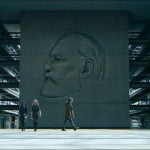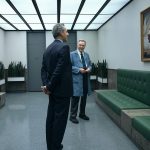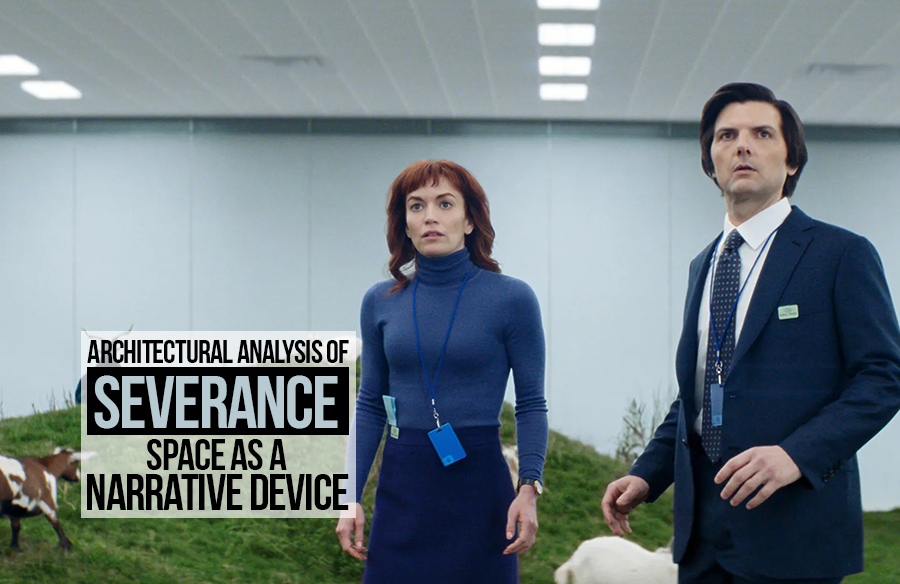
In Apple TV’s Severance, architecture is not just a backdrop; it behaves like a character, shaping moods, decisions, and even identities. The series imagines a workplace where employees’ memories are surgically split between office and home, but it is the physical environment that does most of the psychological heavy lifting. The endless white corridors, the sterile workstations, the cavernous atrium and very spatial detail intensifies the workers’ alienation and dependence.
Although architecture dominates the storytelling, styling and art also play vital roles in shaping Lumon’s unsettling atmosphere. Together they reinforce themes of control, identity, and indoctrination, building one of the most layered design languages seen on screen in recent years.
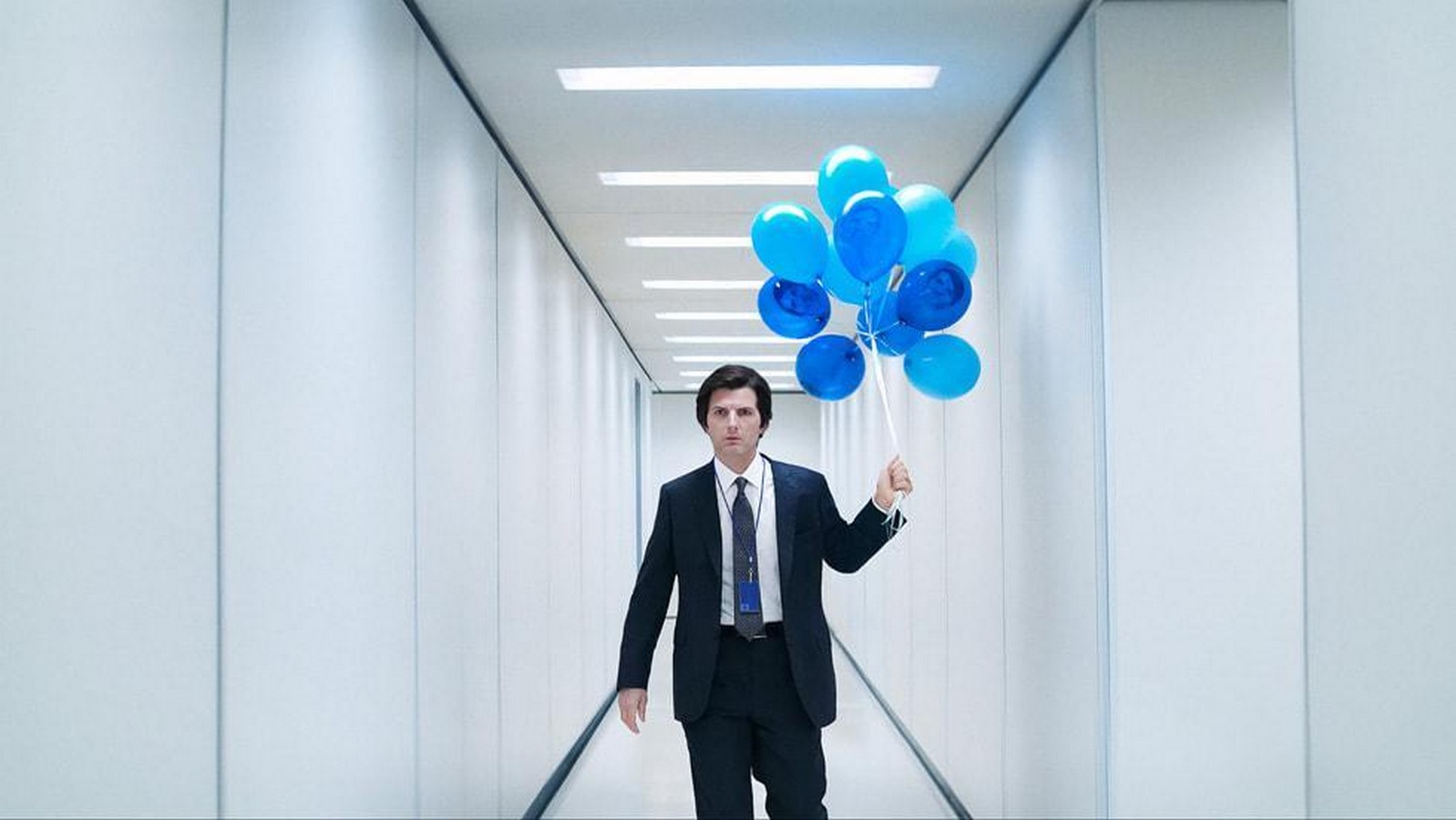
At the heart of Severance lies Lumon’s workplace, a vast interior that erases orientation and identity. The architecture does not simply contain the characters; it actively conditions their behavior, enforcing submission and mirroring their fractured selves.
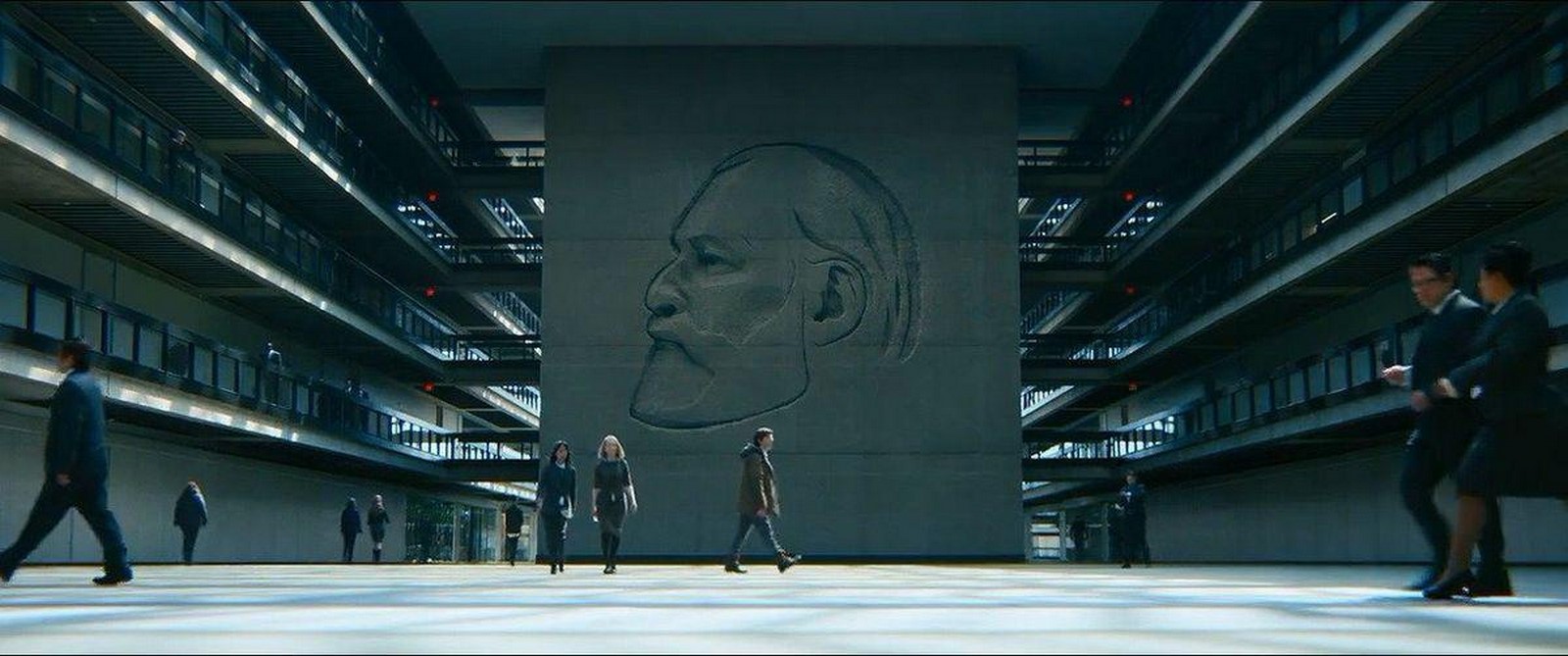
Lumon’s headquarters channels the brutalist ethos : fortress-like, imposing, and deliberately intimidating. The exterior’s concrete bulk and stark geometry symbolize the permanence of the company’s power. Brutalism has long been associated with institutions of control, and here it becomes the perfect architectural language for a corporation that literally divides human consciousness.
Step inside, however, and the paradox becomes clear. The minimalist interiors feel open but suffocating, neutral but oppressive. It is architecture stripped of ornament, echoing modernist ideals, but those ideals are turned against the workers, used as tools of authority rather than liberation.
- Corridors and Labyrinths
The endless white hallways are perhaps the show’s most haunting feature. They stretch without orientation, disorienting both viewer and character. This maze-like design removes autonomy, workers never quite know where they are, and that uncertainty reinforces Lumon’s control over their physical and mental maps. These corridors echo institutions such as hospitals, prisons, and bureaucratic offices, places designed to regulate movement and suppress individuality.
- The Quad Desks and Office Layout
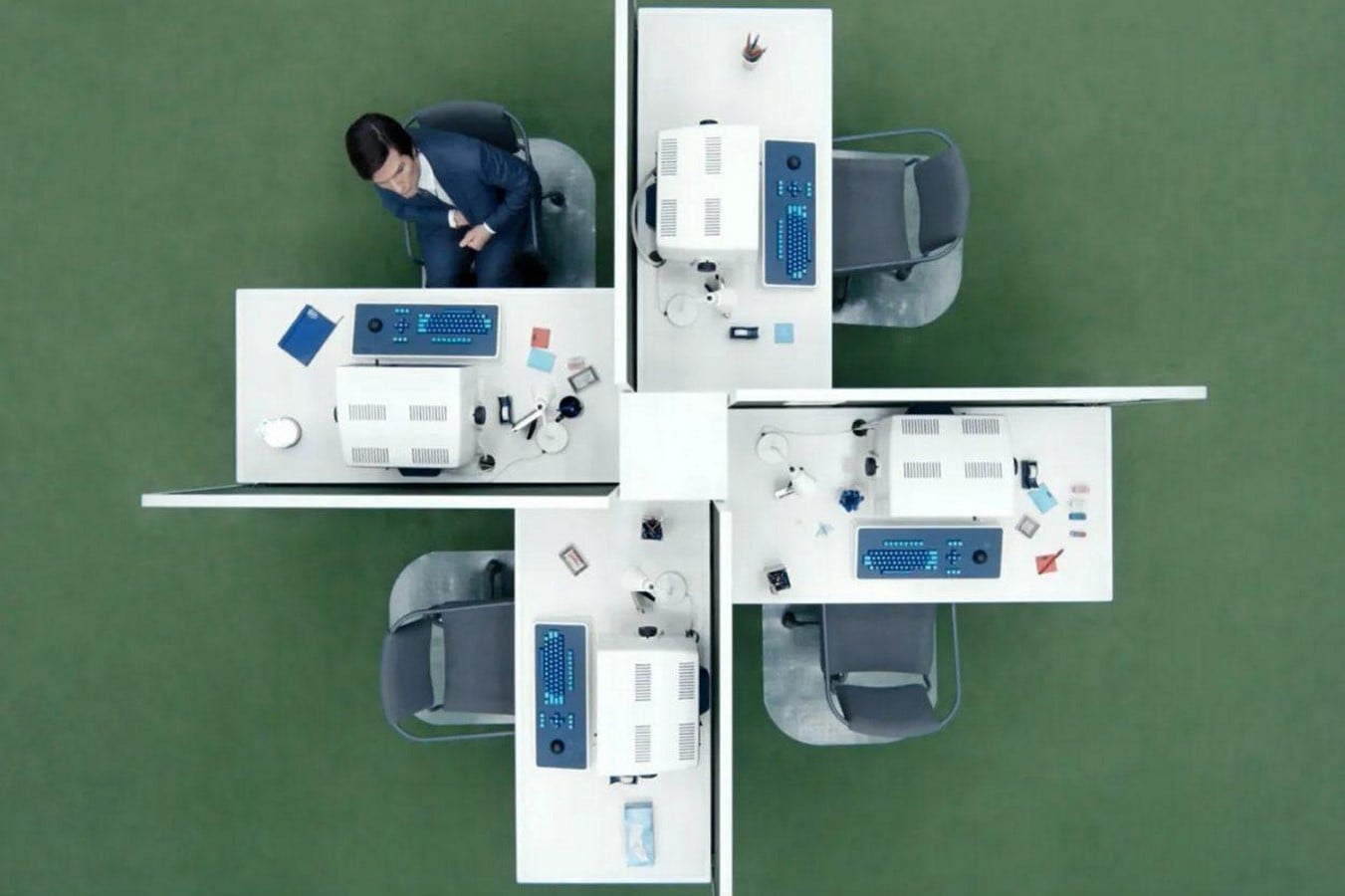
At the center of Macrodata Refinement stand the famous quad desks: oversized, monolithic stations where four employees sit back-to-back. The configuration ensures constant isolation while keeping everyone within sight of surveillance. The sheer scale of the desks, dwarfed by the surrounding emptiness of the office floor, creates a cruel paradox. Workers appear to have all the space in the world, yet they are confined within rigid boundaries. It is a sharp inversion of open-plan design space is abundant, but freedom is absent.
- Lighting and Materiality
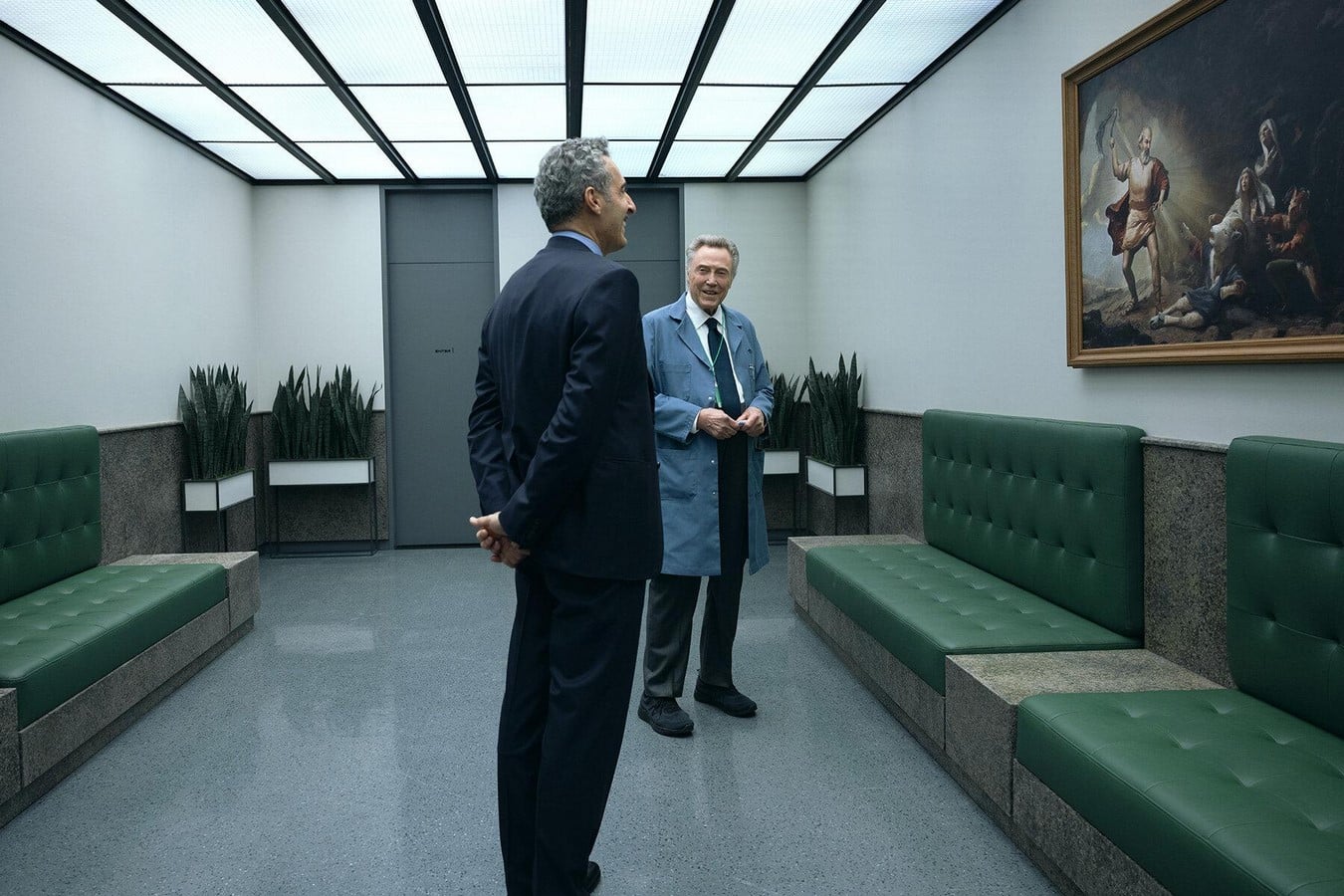
Lighting is central to Lumon’s oppressive mood. Harsh fluorescents wash the spaces flat, removing depth, shadow, and texture. The total absence of natural light reminds viewers that the “innie” workers are cut off from the outside world. Material choices reinforce this atmosphere: smooth walls, muted flooring, sterile surfaces. Everything feels placeless, a setting that could exist in any decade or location.
- Scale and Proportion
The building manipulates scale to unsettle perception. The grand atrium of the Bell Works building, used for Lumon’s headquarters, radiates corporate power and timelessness. By contrast, the inner office spaces are tight, monotonous, and low-ceilinged. This shift between overwhelming vastness and suffocating confinement mirrors the workers’ divided existence, alternating between awe and claustrophobia.
- Historical and Architectural References
Lumon’s architectural language borrows heavily from modernist and brutalist precedents. The Bell Works atrium designed by Eero Saarinen embodies mid-century optimism about corporate modernity, while the endless, institutional interiors echo the controlling spaces of brutalism. The combination is both nostalgic and futuristic, grounding Lumon in a style that feels at once familiar and alien. This ambiguity makes it difficult to place Lumon in a specific time or geography, reinforcing its eerie, otherworldly presence.

Brutalism and Control
The exterior of Lumon’s headquarters captures the brutalist ethos perfectly: fortress-like, unyielding, and designed to intimidate. Its severity conveys the company’s permanence and its philosophy of absolute control. Brutalism’s historic links to power structures, government complexes, universities, and bureaucratic hubs make it a fitting skin for a corporation that quite literally rewrites human memory.
Inside, however, minimalism dominates. The interiors feel stripped bare, neither comforting nor expressive. This paradox is deliberate: the spaces feel open but are laced with restrictions, neutral but suffused with pressure. Here, modernist ideals of honesty and openness are turned inward, serving the corporation’s authority instead of the individual.
Styling: Mid-century Nostalgia or Corporate Nightmare?
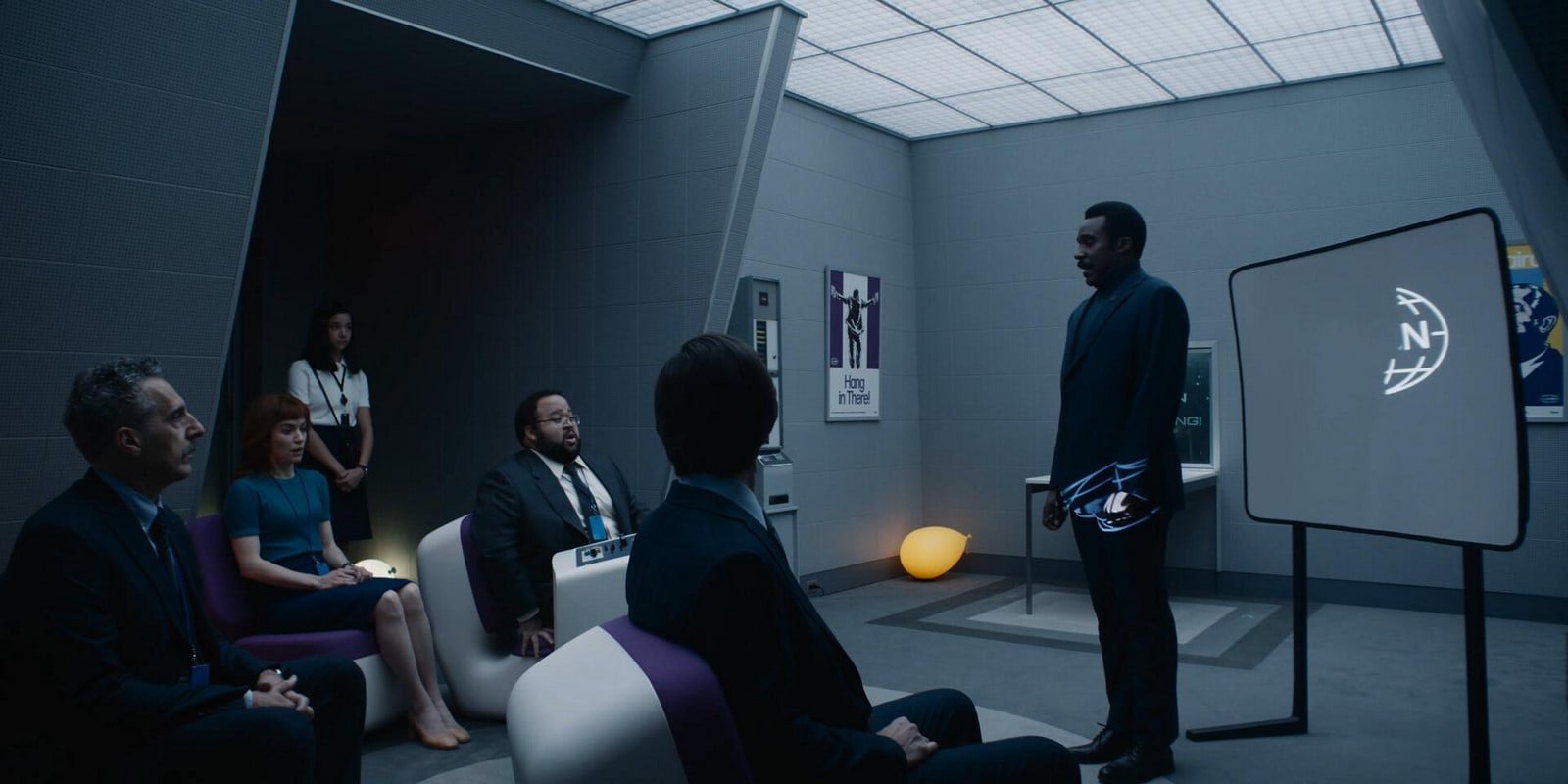
If architecture provides the skeleton of Lumon, styling gives it flesh. Costumes avoid individuality altogether: pastel shirts, muted ties, and simple skirts could belong to any era. This timeless corporate uniform blurs workers into the sterile surroundings, making them seem like extensions of the building itself.
Props heighten the effect. Computers with green-on-black screens, clunky keyboards, and outdated telephones all remove Lumon from any clear timeline. The absence of contemporary devices gives the office an isolated, self-contained identity.
Styling works hand in hand with architecture. Both erase personal expression, both deny temporal context, and both fold the characters seamlessly into Lumon’s carefully crafted world.
Art and the Narrative of Control
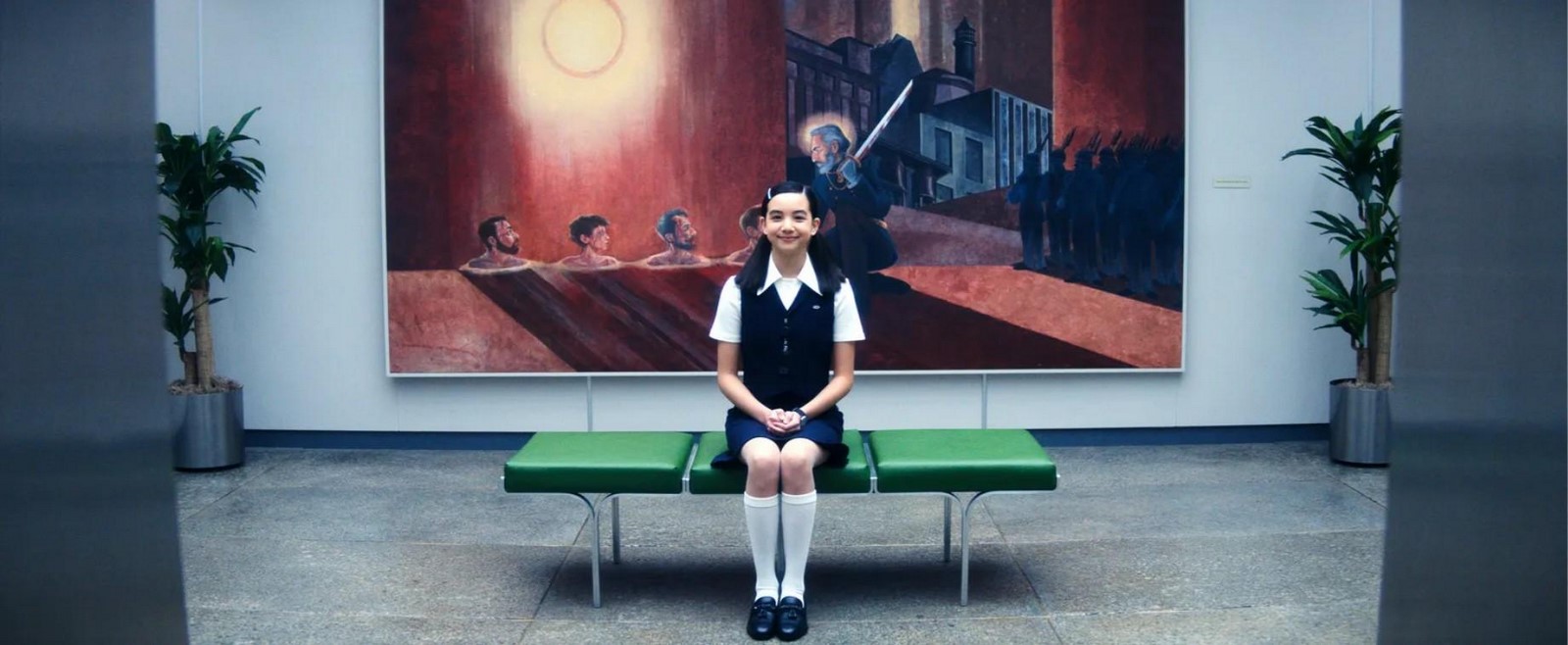
Where architecture and styling erase identity, art replaces it with mythology. The walls of Lumon are adorned with murals and paintings that function as propaganda: corporate heroes, exaggerated allegories, and bizarre historical scenes that glorify company lore. These visuals transform the office from a workplace into a shrine.
Ceremonial objects and sculptures parody the rituals of everyday office life. What might otherwise be simple tokens of recognition are elevated into sacred artifacts. Workers are no longer employees; they are followers within a faith-like system.
In this way, art has two roles. It interrupts the monotony of sterile interiors while reinforcing Lumon’s cult-like ideology. It demonstrates how even decorative design can be weaponized, becoming a tool for indoctrination rather than inspiration.
Interplay Between Architecture, Styling, and Art
What makes Severance so compelling is not simply the presence of these design elements but how seamlessly they interlock.
- Architecture creates the framework of alienation and control.
- Styling erases individuality and identity.
- Art adds symbolic weight, crafting the myth of Lumon.
The Macrodata Refinement floor captures this interplay vividly. The quad desks isolate workers in physical space, the muted uniforms erase them visually, and the propaganda art grants them a false sense of ideological belonging. Each layer supports the others, producing a total environment of psychological manipulation.
Real-world Parallels: The Architecture of Power
Nowhere is the idea of architecture as a psychological cage more evident than in the modern workplace. Offices, once celebrated as engines of productivity, are increasingly being critiqued as environments that confine both physically and emotionally.
For decades, the cubicle epitomized this reality. Introduced as a tool for efficiency, the cubicle became a symbol of monotony and control. Identical partitions reduced individuality and erased identity, boxing employees into grids that mirrored the rigidity of corporate hierarchy. Workers were free to enter and leave, yet within the walls, their autonomy was constantly restricted. Even open-plan offices, which promised freedom, often delivered the opposite. With constant visibility and the noise of unbroken expanses, they replaced physical walls with the mental cage of surveillance and distraction.
The workspace also enforces hierarchy through architecture. Corner offices with sweeping views tell stories of power, while junior employees are stationed at the center of crowded halls, constantly exposed. Architecture becomes a silent but powerful reminder of organizational structure.
This phenomenon extends beyond corporate offices. In call centers, for example, long rows of desks mirror industrial assembly lines, echoing control and predictability rather than creativity. Similarly, logistics hubs or shared service offices designed with minimal variation emphasize repetition, training workers to fit into the rhythms of the machine rather than encouraging individuality.
Yet workplaces also reveal how the cage can be reimagined. Contemporary design has begun to break these molds, introducing wellness-focused layouts, biophilic interventions, and flexible work zones. A workspace that incorporates natural light, greenery, and quiet corners acknowledges the psychological needs of its users rather than trapping them. By embracing diversity in space, workplaces demonstrate how architecture can move from confinement to liberation.
In this way, the modern workplace becomes a mirror for the larger truth: architecture holds the power to imprison, but equally, it holds the power to set free.
Severance is a rare example of television where design tells as much of the story as dialogue or performance. The series makes it clear that architecture is never neutral. Corridors, desks, lighting, and scale are active participants in the narrative, influencing both character behavior and audience perception.
Styling and art deepen this architectural framework, layering anonymity, nostalgia, and ideology onto the workers’ experience. Together, these elements build a world that is at once unsettlingly familiar and chillingly alien.
For architects and designers, Severance is more than a piece of entertainment. It is a case study in how environments shape human identity and behavior, and how even the most sterile spaces can carry immense psychological weight. Fiction here mirrors reality, reminding us that the spaces we occupy do not just contain us, they define us.