While we encounter spaces and the feelings in them, walking through some spaces feels like somehow, they belong- not to function, not to aesthetics but to the surroundings, to the history and even to us. Why do we not feel this everywhere? It is not a coincidence! There is a small nuance that is at work here. It is contextual intelligence that works wonders in making you belong to a specific setting of a space. Contextual intelligence is a designer’s ability to read, analyze and respond to cues received from the site and translate them into a meaningful built form. This idea is not neophyte! A veteran, rethinking about which has become a challenge and a necessity. As an influence of globalization, buildings look like they could be anywhere, reassertion of contextual thinking has become inevitable.
Delving into definitions
Contextual Intelligence is an architectural version of emotional intelligence. It is about sensitivity and responsiveness. Aldo Rossi quotes the idea and emphasizes on the very idea of urban memory and that the city is a repository of collective meanings, in his book “The Architecture of the city”. If translated into simpler terms, he is trying to convey that people have memories associated with places and architecture should converse with them.
This kind of awareness is not just about climate or site slope or otherwise only the physical attributes. It is about understanding why people prefer to gather in certain parts of a village or how light traverses through certain part of the form at a certain time of the day. It is about local belief systems, local traditions, construction technology, and unspoken social norms that underline the fact of how a space is being used or responded to. Contextual intelligence is the nuanced sensitivity of understanding the tangible and intangible aspects and then realized into designing of the architecture.
Context matters more than ever.
Modernism progressed to global capitalism, exporting the design templates across the world, cities from Tokyo to Toronto, have begun losing their spatial identity. Steel and glass towers that appear neat and sleek, sometimes feel out of place for a city’s skyline or the native topography. The resultant is not only loss of aesthetic but also cultural rootedness.
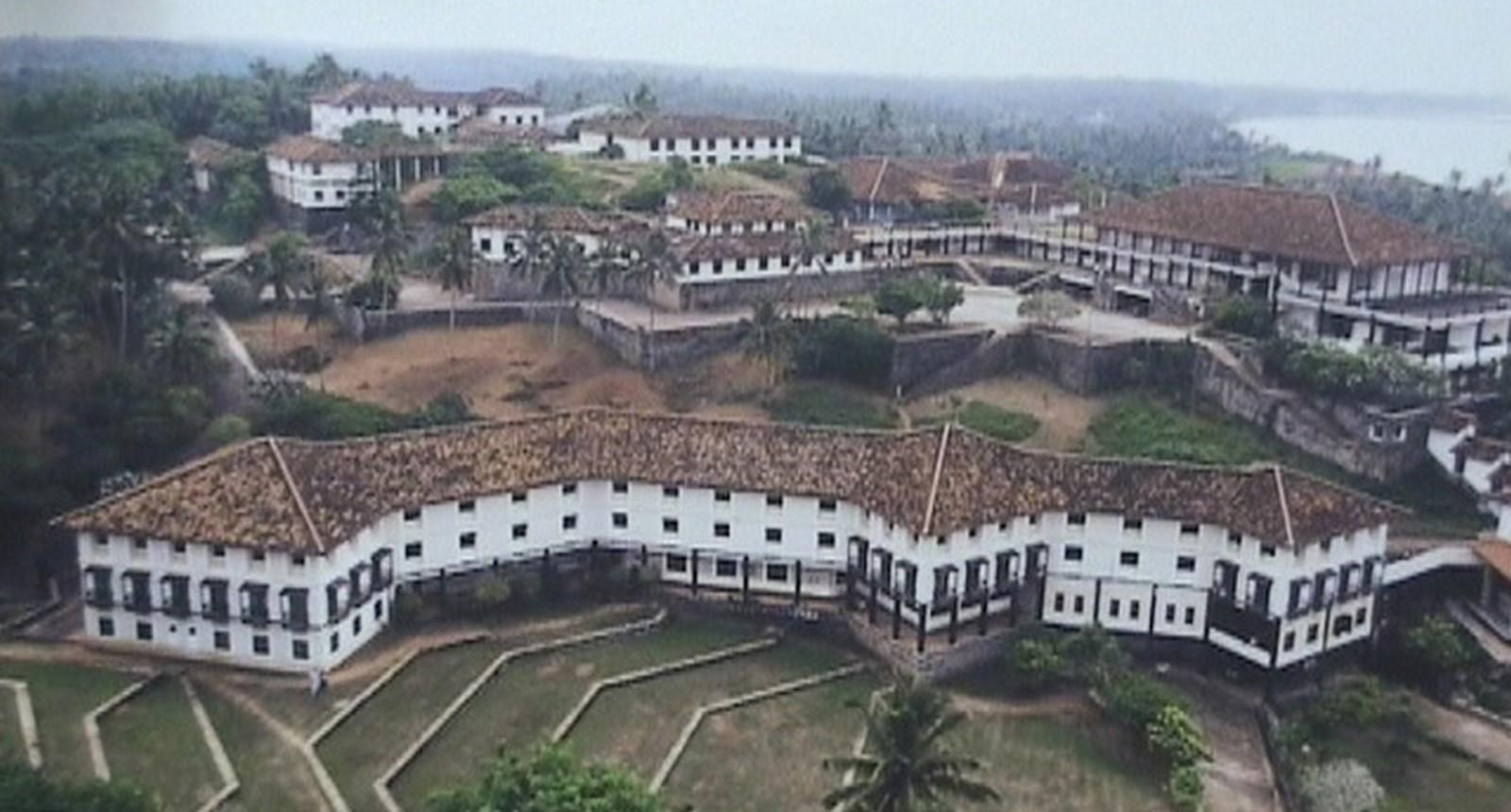
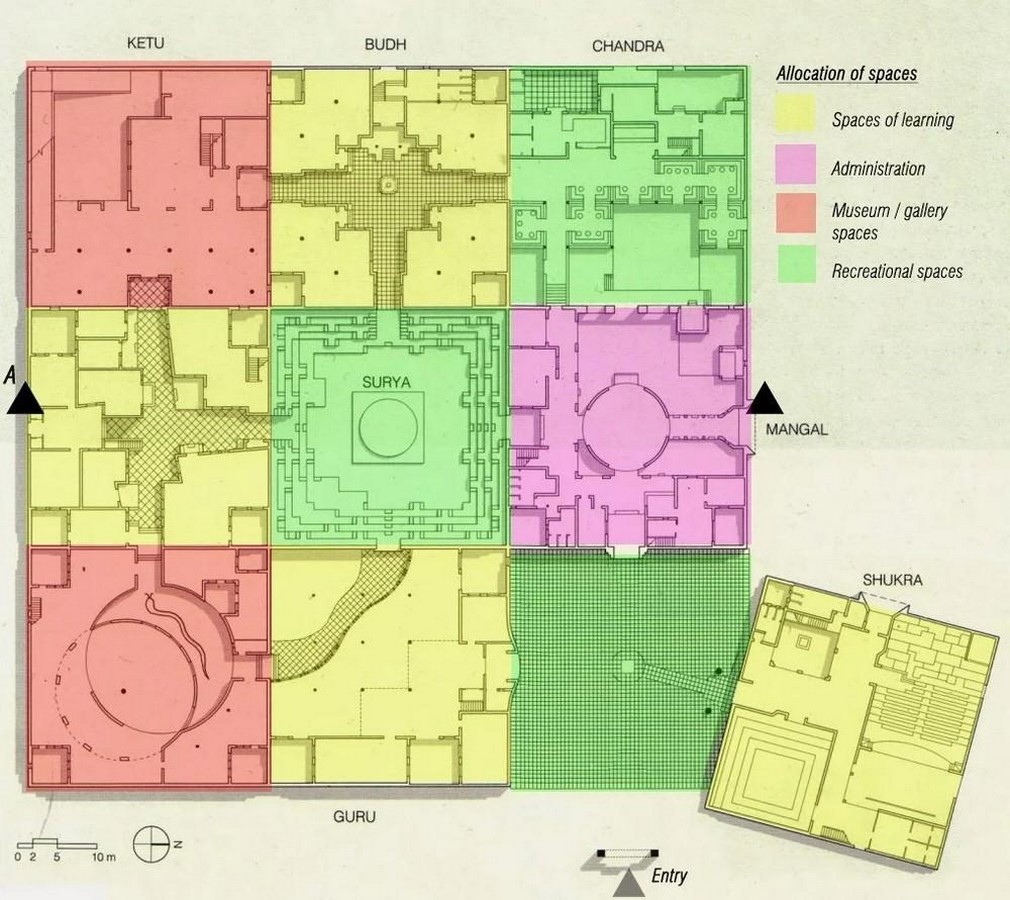
This is where looking at works of master architects like Geoffrey Bawa and Correa can lead us to realize how context plays a crucial role to justify the building. Bawa’s buildings, for instance, respond to the tropical climate of Sri Lanka and it seems as if they have grown from the ground itself. With Correa’s Jawahar Kala Kendra in Jaipur reinterpreting the Navagraha Mandala one can see a beautiful marriage of Rajasthani Culture into a contemporary cultural center- contextual, yet timeless.

Beyond the physical- Catching clues from the site
Lets unpack the bag of clues that sites throw at us. Often, we talk about responding to the site, and as complex and layered is this realm, it simply gets reduced to responding to the practical aspects like the sun path, wind direction and other attributes, which form only one basic layer of responding to the context. As architect Juhani Pallasmaa aptly notes that the task of architecture is to make us see how the world touches us.
Every site has a story- a colonial past, a demolished market and many more. Each one comes into picture while ideating for design.
Context also includes cultural rhythms and connections. In parts of Gujarat, courtyards become community gathering spaces during festivals. An architect designing homes here must account for this communal pattern not for function, but to celebrate this architectural spatial feature on occasions.
The famous I.M Pei’s Louvre Museum stands as a nuanced and a sensitive response to deeply layered site that holds a strong significance in history. The intervention demanded architectural sensitivity and also cultural diplomacy. Instead of resorting to mimicry, Pei’s solution was a steel and glass pyramid set with the Cour Napoleon. The form revered the spatial hierarchy and axial alignments of the renaissance backdrop. The form stands out but does not overpower, where the new amplifies the old instead of mimicking it, helping Louvre’s historical facades to retain the visual dominance and preserving their integrity. Reiterating the museum’s circulation underground and juxtaposing the glass pyramid in the center, Pei resolved the circulation inefficiencies that had plagued the Louvre for decades. The transparency of glass mediated between old and new , setting an example of how contemporary architecture can elevate rather than dilute historical evidence. This was an exercise of merely inserting a new object into historic setting- it is an intervention that privileges spatial continuity, human scale and respectful contrast over imitation, redefining how that setting can be experienced, talked-to, understood and navigated.
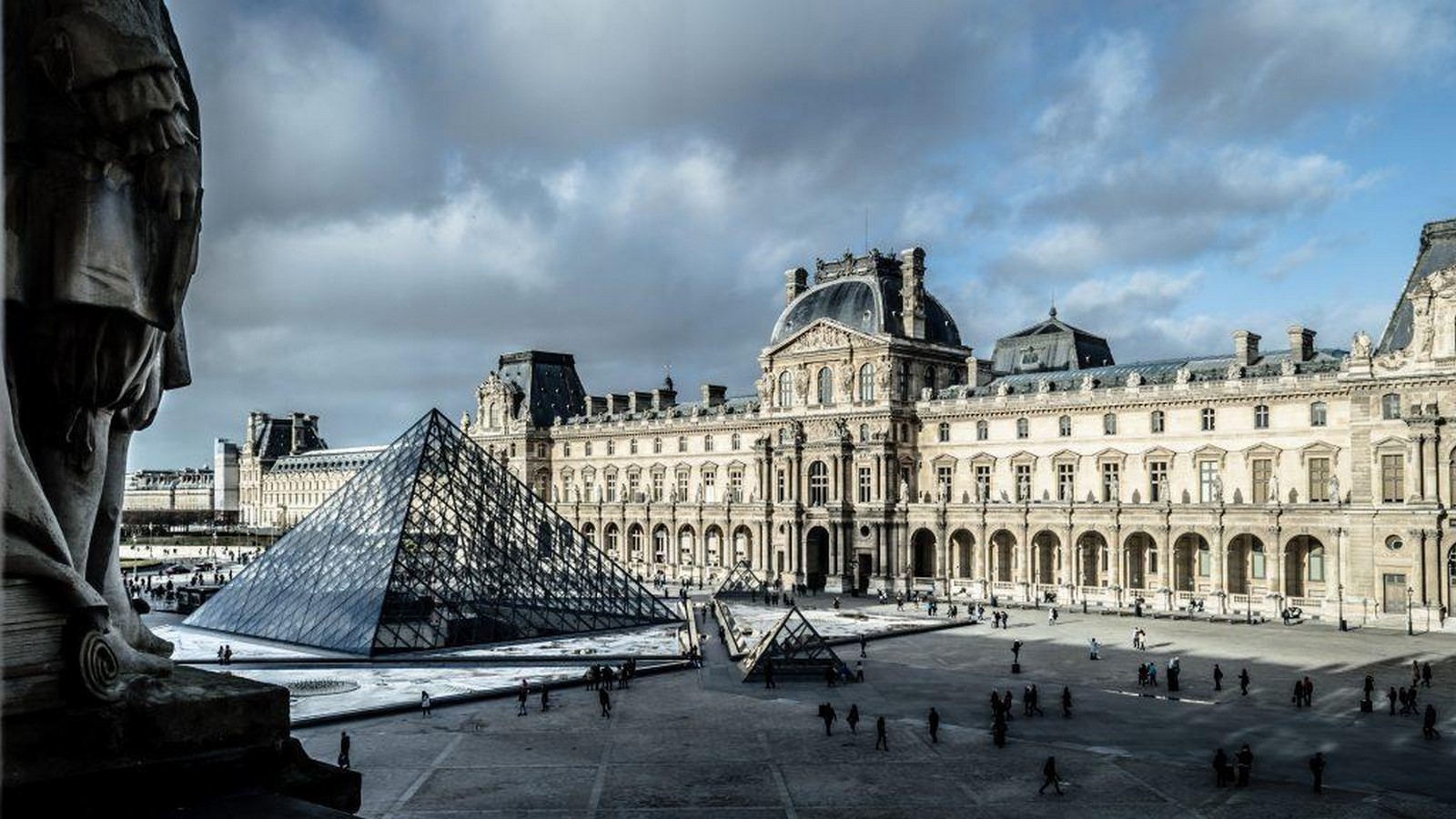

That is contextual intelligence. It is just like striking a conversation with an old friend. Not copying the past but conversing with it.
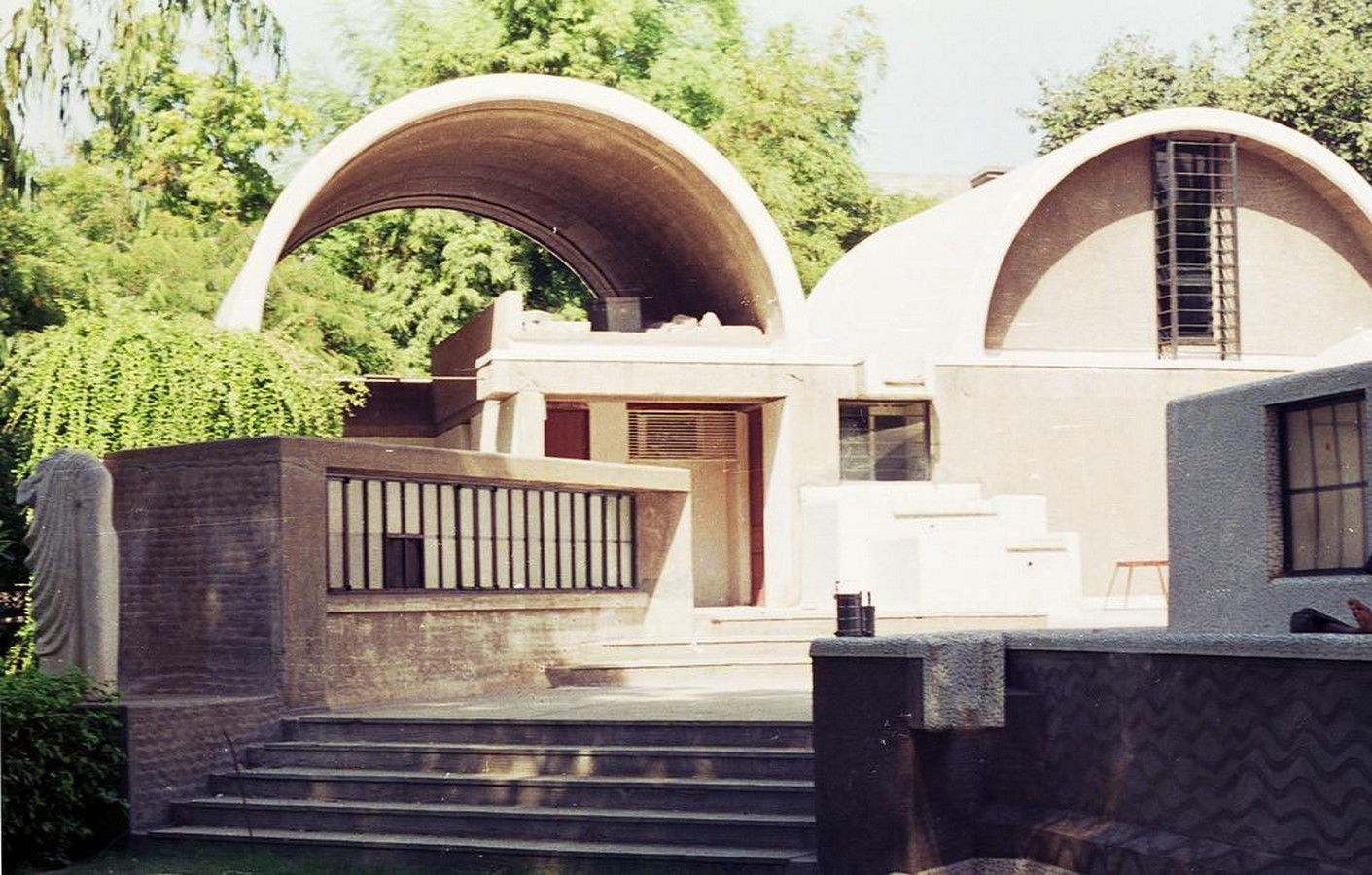
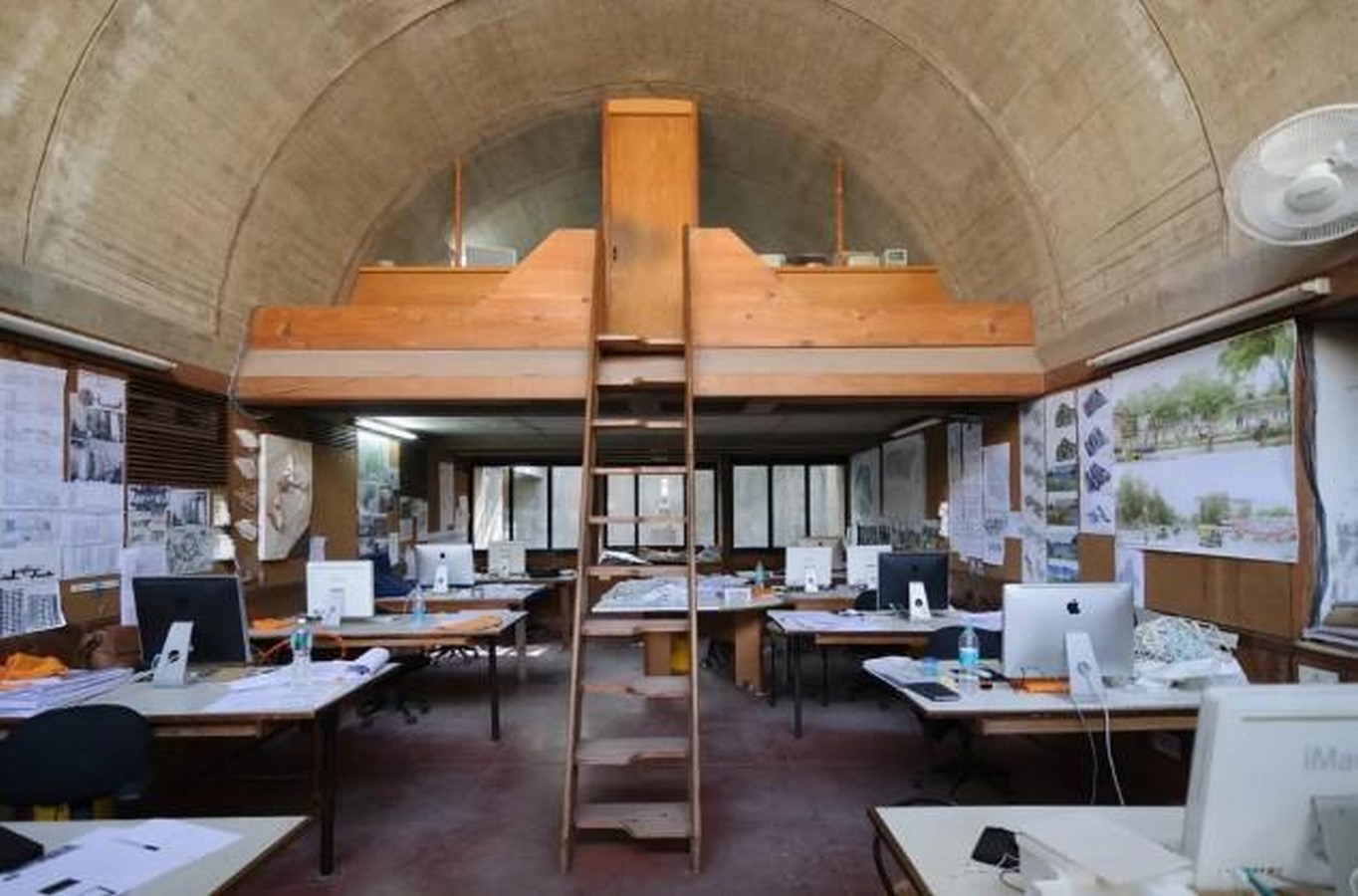
If we look at Balkrishna Doshi’s “Sangath”, it is perhaps one of the most poetic embodiments of contextual awareness.
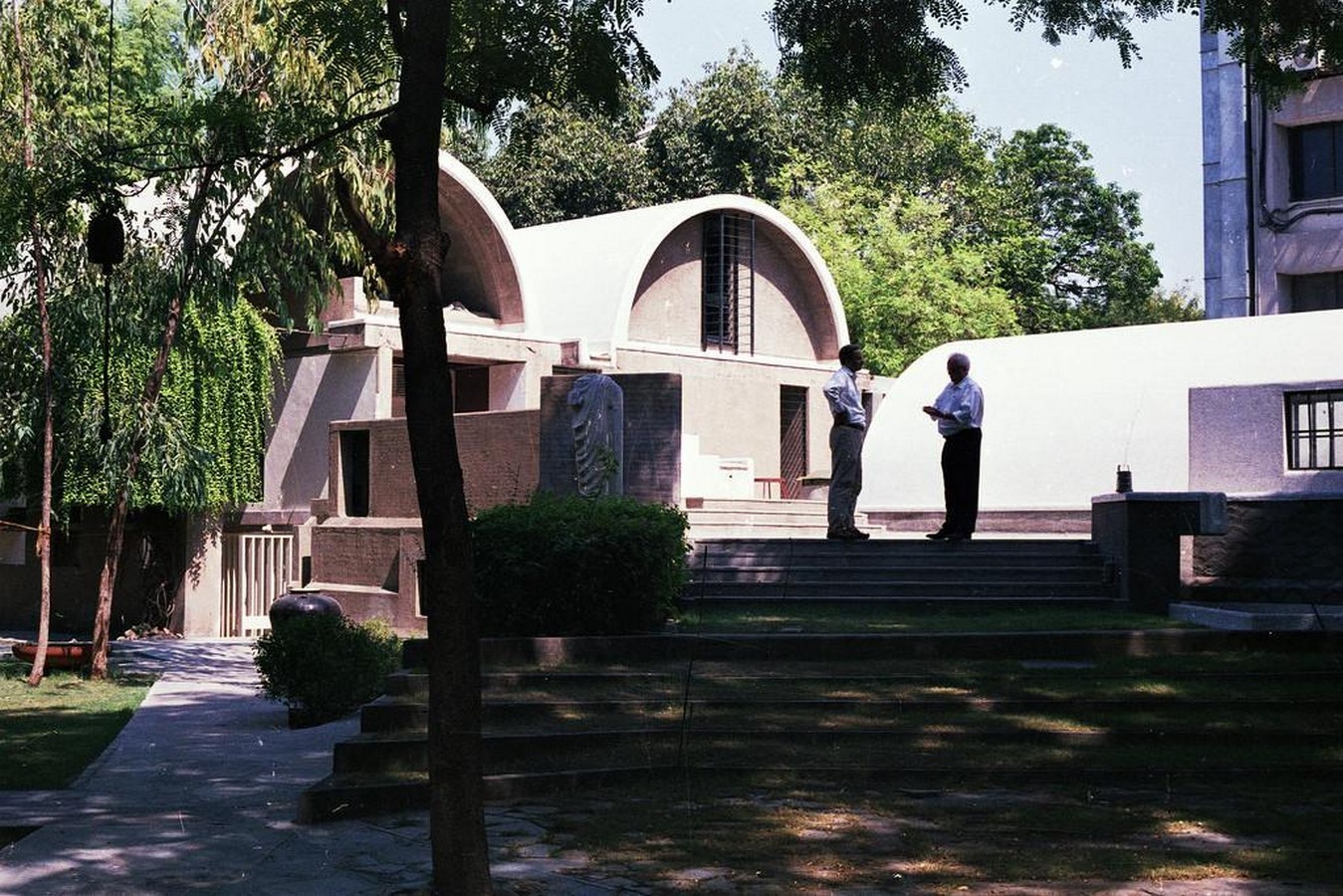
A humble sub-terranean form, the structure does not dominate its site. It quietly sits there with mosaic-clad vaulted roofs to avoid heat gain, and water channels around the periphery for passive cooling. The building performs, but more than building performance it feels like it belongs here. It just co-exists with its surroundings- serene and rooted, as if it was meant to be here.

It is remarkable how Sangath interprets a lot of cues, layer by layer. Ahmedabad’s hot and dry climate, traditional stepwells and temple typologies all at once- blending them into a modern-day working space. It is not a pastiche; it is a synthesis.
Materials as Mediums
Construction materials and techniques are also powerful mediums of a context that build a visual character of the built form. Earth, brick, Laterite are just materials, they carry emotional and ecological meaning. Hassan Fathy’s loyalty to mud and brick was beyond a nostalgic return. It was a response to economic, environmental, climate and cultural decisions.

Contemporary challenges of practicing Contextual Intelligence
With AI and BIM being extensively used, architecture today is becoming data-driven. The fear is that the more automated design becomes, the more we might lose touch with the smaller nuances of the context. Looking at the brighter side, these tools can be helpful in understanding the microclimate, or historical spatial patterns at granular level. The idea is to use technology as a means and not the mind of design.
Practicing contextual intelligence today also means posing a resistance to the inertia of imitating global styles and it often means slower processes- more research, more conversation, more collaboration that calls for humility. As authors of spatial narratives, we are not imposing stories on a blank page. We interpret space, history and human behaviour which perhaps is the baseline of contextual intelligence.
Designing with Empathy
The very core contextual intelligence is about empathy- with people, with place and with time. It is about designing not just on a site but weaving with it. Irrespective of the function the built might have the question here remains the same: how do we create spaces that belong?
In a sensitively stratified, culturally rich and ecologically vulnerable country like India- must lie in designs that are about echo. Echoes of land, light and laughter.
References:
Jain, K. (2002). Narratives from the Ground: Architecture as embedded Knowledge. Journal of the Society of Architectural Historians, 493-495.
Pallasama, J. (2005). The Eyes of the Skin- Architecture and the senses. John Wiley & sons.
Rossi, A. (1982). The Architecture of the City . MIT Press.
Till, J. (2009). Architecture depends. MIT Press.