Architecture has always been a part of the dialogue between tradition and innovation. Modern Design has seen a significant shift from the traditional design approaches, elements like roofs, arches, and columns are being reinterpreted from their basic structural roles to rather innovative, expressive, and more functional forms. This reinterpretation is not just a design trend but also a way to achieve cultural continuity in this rapidly developing world and challenge the traditional definitions of cultural sustainability with the help of modern technology, thereby creating a design that speaks both to the past and the future.

Roofs: From Shelter to Structure

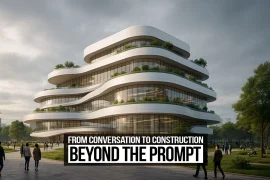
Traditionally, the roof served as a shelter, only providing weather protection, light, and ventilation. But, in modern design, the role of the roof is expanding from static shelters to a rather dynamic, integrated system that not only provides shelter but rather a new narrative to the built form with spatial sculpting. Roofs are being reinterpreted to help design a sustainable built environment. Modern Architects are breaking the conventional dynamics of designing in rigid, straight lines and embracing more free-flowing forms, creating roofscapes that respond to the climate, and natural light and speak to the cultural identity of the space. Parametric tools and computational fabrication have helped explore this concept of free-flowing roof forms, by enabling the creation of complex shell roofs. Inspired by historical domes and vaults, these roofs carry the visual language of traditional forms in their ways. Still, they are significantly lightweight, and made with advanced materials like tensile fabrics, steel grids, and composite panels.
Furthermore, in modern design, there is a growing trend of designing while keeping the environment in mind, also known as sustainable design. Therefore people are combining local, sustainable materials with modern construction, creating hybrid roof structures that not only look beautiful but also reduce the environmental footprint. This hybrid roof structure for sustainable design is often seen in several vernacular-modern projects in the Middle East and Africa. This fusion of the blending the old and new using technological innovations, promotes cultural sensitivity, and a climate conscious design approach.
Aches: Reimagined to Expressive Fluidity

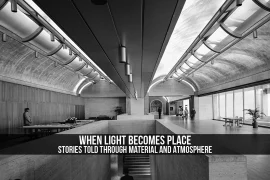
Historically, Arches mainly served as a solution to structural problems to span large spaces and distribute load evenly. Arches are among the most iconic and enduring forms in architecture, in modern design in the contemporary world they are not just load-bearing forms but rather storytellers, emotional anchors, and symbolic gestures within a space. The hybrid forms in Arches have been often stripped of their structural function and have been used more as design features, framing entrances, creating movement, or even acting as light-filtering elements. Designers are drawing inspiration from the Roman, Moorish, and Gothic traditions, experimenting with different materials like metal, glass, and engineered wood to give arches new meaning. These reinterpreted forms of arches still carry the nostalgia of ancient architecture but are now being presented in playful, fragmented, or abstract forms. They are also becoming lighter, more interactive, and creating fluid spaces. Not only this but because of parametric modeling, arches can now also be adapted to dynamic forms by twisting, tilting, or fanning out, this allows them to anchor the spatial narrative without being confined to their traditional forms.
Columns: Beyond Structural Necessity

Columns, long regarded as vertical supports, have now been liberated and reinterpreted in modern design. They have evolved into expressive devices that blend structure, function, and aesthetic storytelling. In modern design columns need not be vertical or uniformly shaped, they have emerged as hybrid forms capable of integrating lighting, working as display units, or even green walls, thereby breaking the notion that they are just structural posts. For example, In timber architecture, curved wooden ribs can replace conventional columns, producing fluid, organic spaces reminiscent of natural forms.
Designers are playing with the curvature, materials, and even the use of the columns and providing them with a new meaning. These new-age hybrid forms of columns are special and they contribute to not just the structure but the spatial experience of a space. They don’t just hold weight, they bring character, rhythm, and an organic flow to the interiors. With the advancement in technology, robot fabrication has allowed architects to manipulate columns into uni-form, textured, or even kinetic structures, challenging the binary of structure and ornament.
Importance of Hybrid forms in Modern Design

In this evolving architectural landscape, reinterpreting roofs, arches, and columns enables cultural continuity, allowing modern buildings to stay connected with the roots visually and in conceptually resonant ways. This reinterpretation of roofs, arches, and columns in modern design is about moving away from conventional uses and creating multi-layered experiences that connect the past, present, and future by beautifully combining technology, tradition, and sustainability. Moreover, these interpretations allow for functional innovations. Advances in materials, digital modeling, and construction techniques make it possible to push beyond the limitations of past forms while retaining their essence.
In conclusion, these hybrid forms not only bring an aesthetic appeal but also the narrative of old and new to the design. With the help of parametric design and advanced digital tools, architects can now experiment with complex forms that would have been difficult to build in the past. There has also been a visible shift towards using local craftsmanship and eco-friendly materials in creating these hybrid forms, which adds an emotional and ethical depth to the design. They make architecture an active participant in cultural and sensory experiences. It’s not just about building beautiful structures anymore but building responsibly towards a better future, and as time continues, architecture and its elements will also keep transforming, offering spaces that are more responsive, sustainable, and deeply connected to the human experience.
Reference List:
- Hameed El-Eqapy, A.H. and Kassid Al-Zaidy, M.M. (2020). Coexistance of form and structure in contemporary architecture. IOP Conference Series: Materials Science and Engineering, 881(1), p.012003. doi:https://doi.org/10.1088/1757-899x/881/1/012003.
- Hameed El-Eqapy, A.H. and Kassid Al-Zaidy, M.M. (2020). Coexistance of form and structure in contemporary architecture. IOP Conference Series: Materials Science and Engineering, 881(1), p.012003. doi:https://doi.org/10.1088/1757-899x/881/1/012003.
- DesignHorizons. (2024). The Evolution and Modern Applications of Architectural Arches. [online] Available at: https://designhorizons.org/the-evolution-and-modern-applications-of-architectural-arches/ [Accessed 29 Jun. 2025].
- Mohamed (2025). Life-cycle assessment of hybrid vernacular-modern technologies: a comparative study of the ecofordable house and conventional RC structures. Frontiers in Built Environment, 11. doi:https://doi.org/10.3389/fbuil.2025.1568067.
- Fosterandpartners.com. (2025). Vault, Arch and Dome: Constructing Complex Forms at Foster + Partners | Foster + Partners. [online] Available at: https://www.fosterandpartners.com/insights/plus-journal/vault-arch-and-dome-constructing-complex-forms-at-foster-plus-partners [Accessed 29 Jun. 2025].
- ArchDaily. (2020). Round Pillars in Architecture: From the Classical Column to the Modern Sculptural Support. [online] Available at: https://www.archdaily.com/948544/round-pillars-in-architecture-from-the-classical-column-to-the-modern-sculptural-support.
- Architect. (2025). Design Beyond Tradition: The Competitive Edge of Innovation in Architecture. [online] Available at: https://www.architectmagazine.com/technology/design-beyond-tradition-the-competitive-edge-of-innovation-in-architecture.