We are now in the 21st century, seeing urban landscaping constantly undergoing a profound transformation, not just in the form of structure and building but also in its foundational values. Under these varied values, one is architectural equity, which is vital and creates more need and impact as we move further. The commitment to creating spaces that are valued with an attempt to include the full spectrum of human’s varied abilities. Among these, the most significant challenge faced by urban planners and designers is to design cities and environments that are inclusive and welcoming for people with special needs.

Beyond Compliance: From Minimum Access to Meaningful Inclusion
The world is an interesting amalgamation of diverse individuals with unique personalities, abilities, ideologies, and needs. Our built environment, however, more than often falls in terms of embracing the rich diversities that we endure. There is a need for change to hear the requirements and demands of these specially-aided abilities. We as humans face situations in our lives where we undergo certain life events like temporary situations or disabilities, and we are all aging each day passing by. All of us may have encountered challenges negotiating with the environment around us or happening in our lives at some or the other point. That challenge was posed not by our conditions or abilities but by the environment not designed to suit our diversity or any other specific needs. Imagine navigating built environments around you with ease and comfort, regardless of what your abilities may restrict. This is the vision we are striving for a world where every space is not just functional but rather feels inclusive to cater to every individual. The term Universal Design is not just a decorative concept but an underlying strict commitment to creating environments that are welcoming and inclusive. It speaks of the fundamental need for equitable design, where accessibility is a mandate that fulfills the cardinal right to equal access by everyone with varied scale of abilities, ages, genders, or socio-economic backgrounds. Historically, accessibility has been handled as a legal checkbox for ramps, elevators, and reserved parking spaces. True architectural equity calls for a deeper and more systemic rethinking on various levels. Inclusion isn’t about adding features or any built masses to accommodate a minority, but it’s about designing from the starch for everyone to feel inclusive. This essence of Universal Design is an approach to create environments usable by different ability-possessed people, to the greatest extent possible, without any adaptation or specialized design.

Understanding Disability as a Social Construct
Disability isn’t solely a medical or physical condition. It can also be a product of design. When we fail to consider people with diverse physical, sensory, and cognitive abilities, they create disability and lead to steep curb becoming an impassable barrier. A poorly lit subway station disorients the visually impaired or even causes discomfort for any other person, or a public event with no sign language interpreting the outcast of the deaf community. Hence depicts that the built environment either empowers or marginalizes defined communities. They relatively become a reason to differentiate people into particular communities. The society argues to reframe the role of the architect and designers to act accordingly. Not as neutral creators of built structures, but as powerful agents of perform the act of equity.
Key Principles for Designing Inclusive Cities
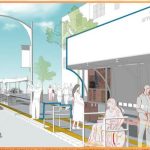
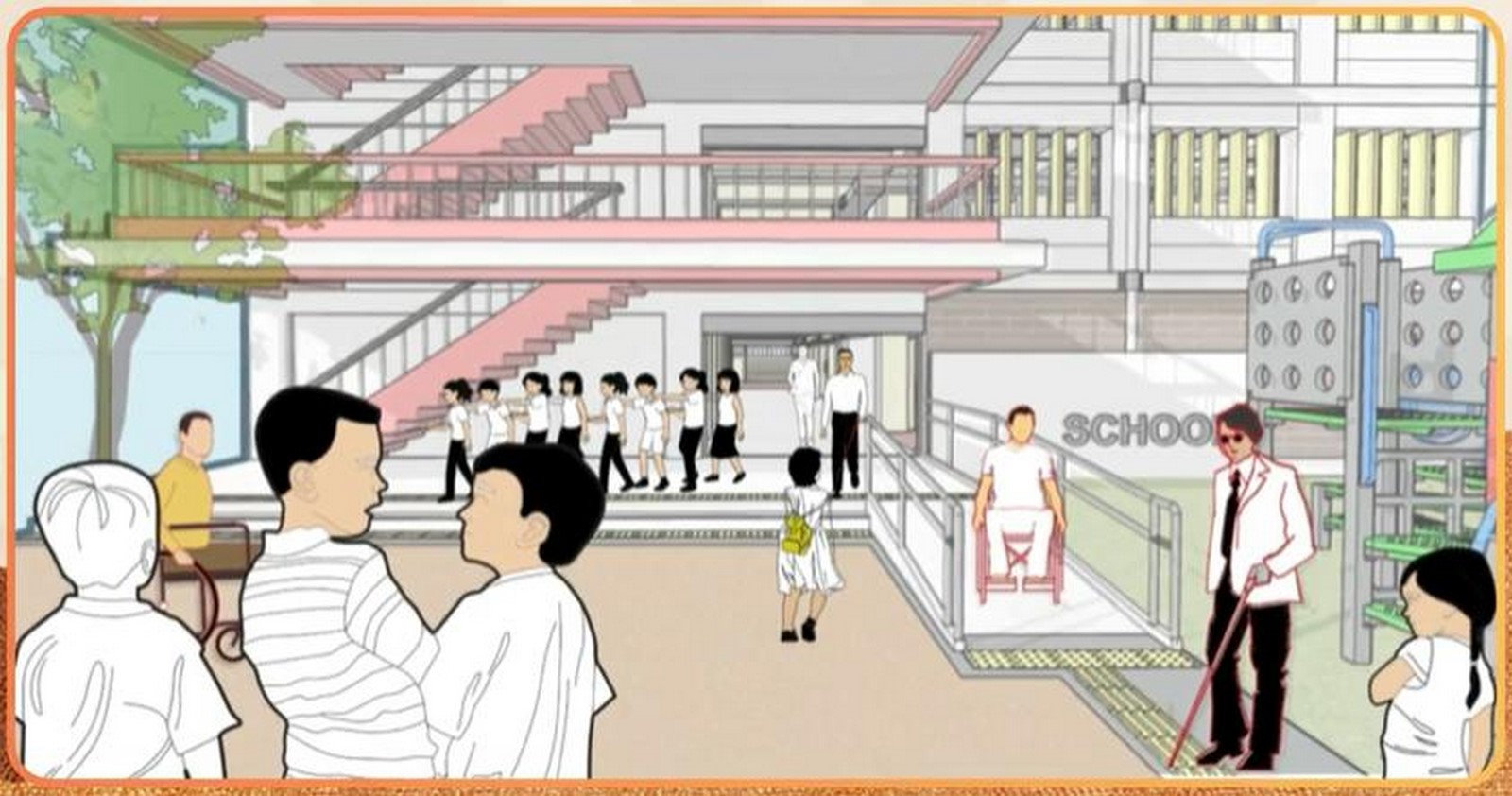
Urban streets must be designed with pedestrian accessibility, tactile paving, audible signals, clear visual markers, and avoiding blind accident spots. Shared spaces should not endanger those who rely on physical or cognitive cues to navigate. Public transportation systems should be barrier-free roads, with low-floor access buses, accurate and real-time information systems, and trained staff for disability assistance. Parks, plazas, and markets should include seating with backrests and armrests, wheelchair-accessible routes, sensory-friendly zones, and inclusive play equipment for children making them child-friendly. Designs should consider neurodivergent individuals by reducing sensory overload in wayfinding systems, using clear signage, and offering quiet, low-stimulus zones in busy public areas. Housing policies must ensure that adaptive and accessible dwellings are inclusive to all economic types and not isolated. Mixed-income, mixed-ability communities foster empathy, inclusion, and shared citizenship.


Technology and Innovation as Enablers
Smart city technologies open up new paths to accessibility from navigation apps for the visually impaired to AI-driven crosswalk systems that adapt timing based on user needs. The future is with multi-crore potential. But technology must complement—not replace—thoughtful physical design. The built environment still plays a vital factor in accommodating this technological development and requirements according to the expansive spectrum of personality-held people. Technological advancement doesn’t mean having any scope of negligence in built mass environments.
Toward an Ethic of Empathy
Designing for disability or any certain needs is not an act of charity—it is an act of serving justice. A truly inclusive city not only recognizes that ability but acts accordingly. Age, injury, illness, crisis, or any specific context can alter anyone’s mobility or perception at any point in life. When cities are designed for those on the margins keeping check with all solutions, they end up with better working environments for everyone—parents with strollers, the elderly, delivery workers, children, and more. Architectural equity is not a destination but a continuous process of asking, listening, adapting, and delivering results accordingly. And in this process of effort, we reshape not just our cities, but our collective sense of belonging, perspective, and ideologies. Resulting in cities where nobody has an afterthought.
Believing that from young children to elders, from those with mobility challenges to those with sensory sensitivities, everyone deserves equal access to the world around them with the same enthusiasm. Universal Design is about catering to the needs of all users from the very beginning rather than retrofitting solutions later. It’s about putting together empathy into the fabric of our design environment and understanding that diversity. As students, teachers, designers, architects, and creators, every stakeholder should take responsibility for transforming the built environment around us in various capacities. Our design choices impact the daily experiences of countless individuals. And that’s where the course comes in, as an enabler. Together, we are the responsible and catalyst for change, creating a world where accessibility is not an afterthought but an integral part of every design.
Citation:
- ACEDGE. (2016). Universal Design for the Built Environment | Project UDita. [online] Available at: https://www.acedge.in/courses/UDita [Accessed 26 Apr. 2025].
- The Universal Design Project (2024). What is Universal Design? [online] The Universal Design Project. Available at: https://universaldesign.org/definition.
- Center for the Study of Social Policy. (2025). Promoting Inclusive Social Dynamics in Mixed-Income Communities: Promising Practices – Center for the Study of Social Policy. [online] Available at: https://cssp.org/resource/promoting-inclusive-social-dynamics-in-mixed-income-communities-promising-practices/ [Accessed 26 Apr. 2025].