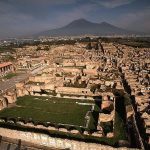
The Vesuvian Lava formed Pompeii, located on a plateau overlooking Sarno, 30m above sea level. Greeks, Etruscans, and indigenous people developed the city in the late 7th century BC and early 6th century BC. They also constructed a fortified limestone wall. In the 4th century BC, the Samnite people conquered Pompeii, followed by strong urbanization. The eruption of Mount Vesuvius buried the city in ash in 79 AD.
The Rediscovery of Pompeii
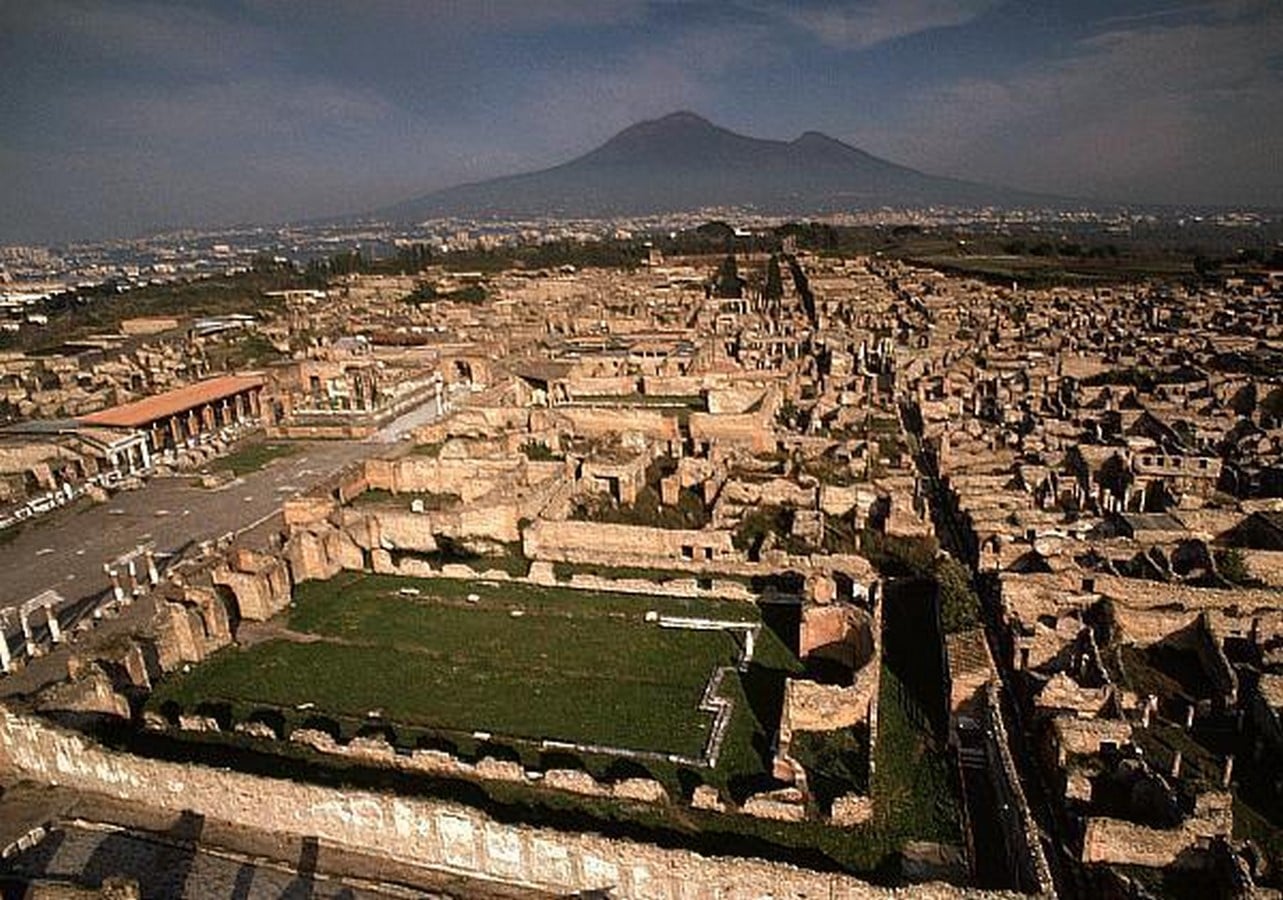
While digging a new course for the river Sarno, the remains of the city of Pompeii were discovered in 1599 by Domenico Fontana, an architect. He simply examined the artifacts before burying them again. Later in 1748, the first official excavation was done by a group of explorers led by the survey engineer Rocco Gioacchino de Alcubiere. Ancient Roman streets, houses, temples, shops, cafes, and an amphitheater were found. One-third of the city remains undiscovered even today.
The Archeological Site of Pompeii
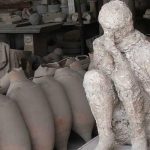
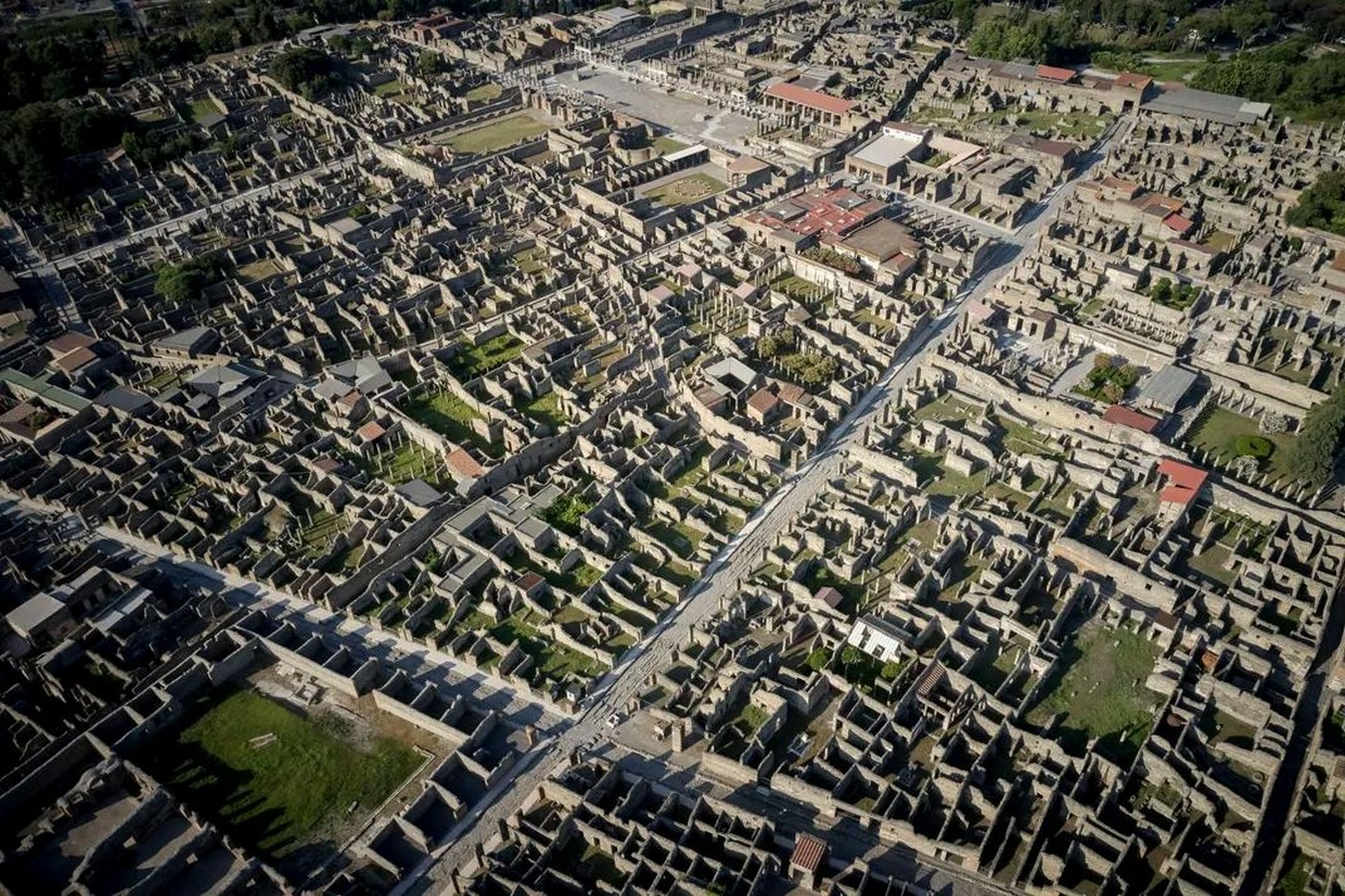
Pompeii is the longest continually excavated archaeological site in the world and one of the most famous UNESCO World Heritage sites. The most interesting discoveries of the site are the preserved bodies of around 2000 victims. Although decayed or destroyed, the skeletons of these bodies remain intact. Liquid plaster was poured into the cavities left in the volcanic ash by bodies. Once the plaster had set, workers chipped away the layers of ash, pumice, and debris to remove the casts, revealing the posture of Pompeians. Built on a prehistoric lava flow, the city is irregularly shaped and seven city gates have been excavated, with the main street in southeast-northwest direction, the Via Stabiana connecting the Porta Vesuvio, or Vesuvius Gate, in the highest part of the city, and the Porta di Stabia, or Stabiae Gate, in the lowest part. The traffic from the Sarnus River and Stabiae came through this gate. Two other main streets, the Via dell’Abbondanza and the Via di Nola, were crossed by this street.
The public buildings are grouped as the Forum, located on the southwest, the Triangular Forum, standing on a height at the edge of the south wall, and the Amphitheatre and Palaestra, in the east. The Forum, a rectangular area surrounded by two colonnaded porticoes, was the centre of economy, religion, and municipal life for the city.
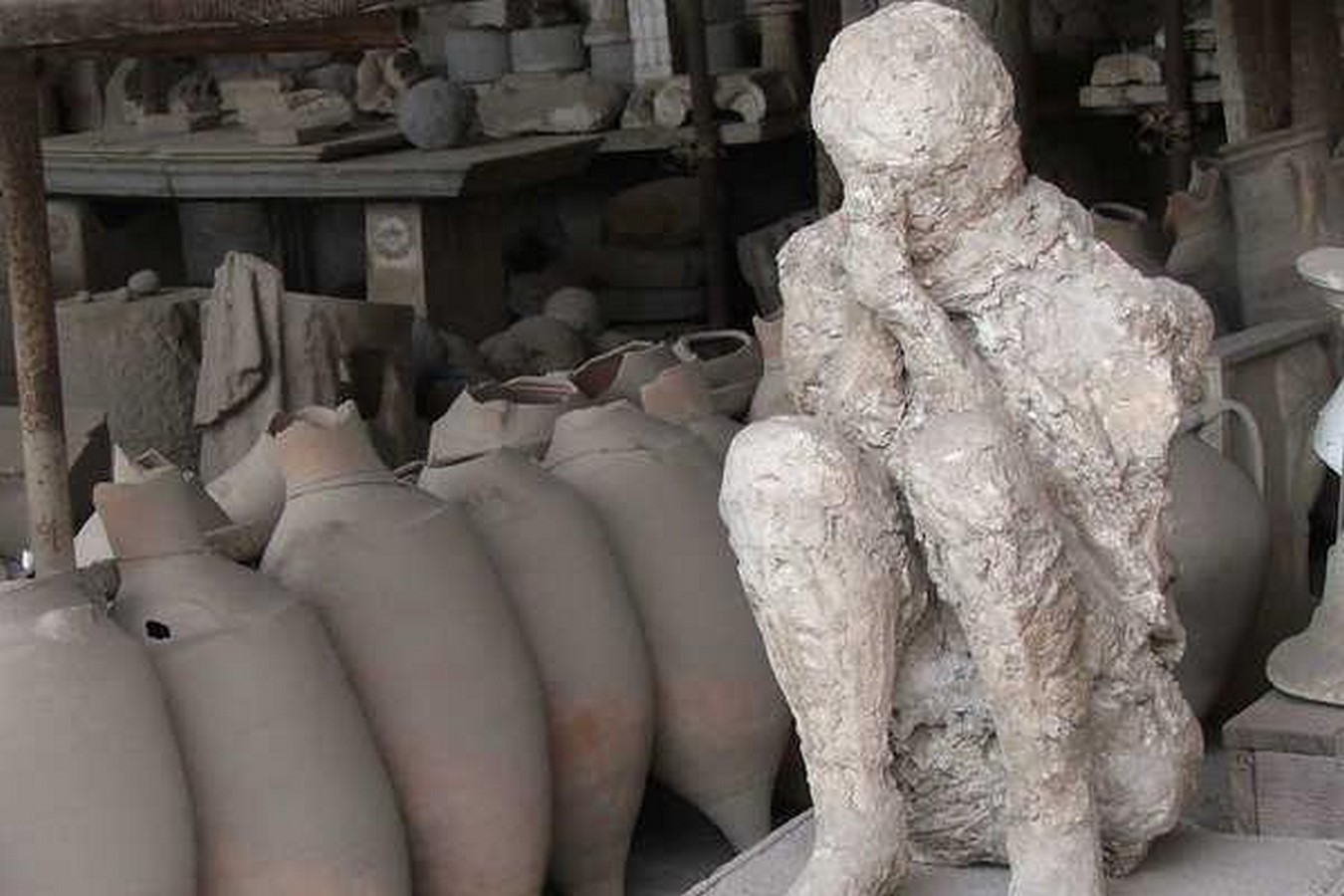
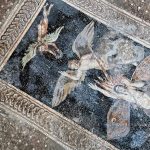
The discoveries also include the amphitheatre, which can include around 2000 spectators. The history, wealth, class separation, and everyday life of the inhabitants are evident from the remains of Pompeii. Preserved frescos, sculptures, bowls, jewelry, and even ancient graffiti were found along with other artworks on the city wall.
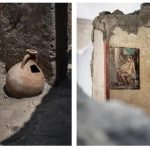
The city is said to have had a population of about 12,000 at the time of the volcanic eruption. Only about 1,200 bodies have been recovered. Excavators recently uncovered the skeletal remains of four women, along with five or six children, in the innermost room of a villa.
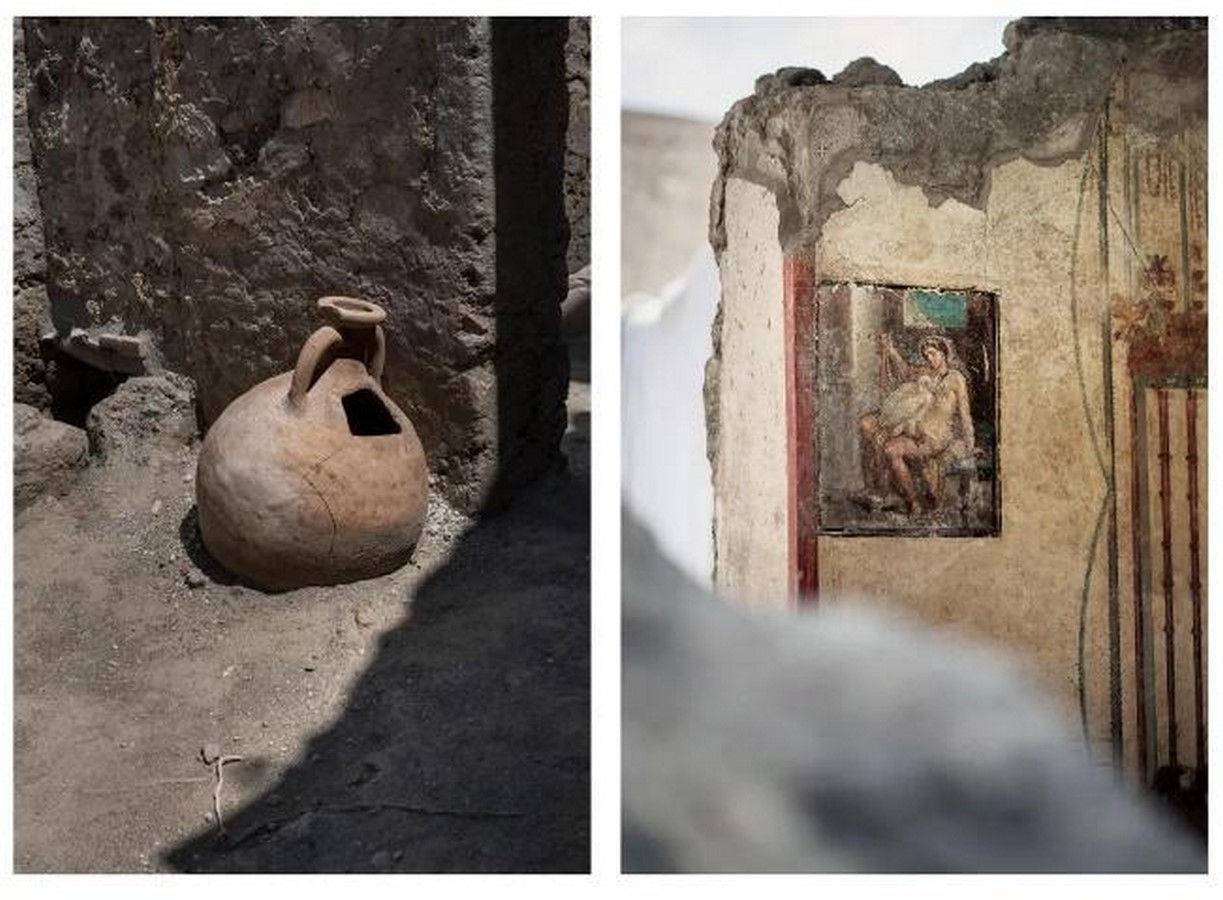
Pompeii had more than 160 bombs dropped during World War II, demolishing the site’s gallery and some of its most celebrated monuments. Over the years, around 90 bombs have been found and inactivated. The new excavation has discovered a new dimension of early post-Hellenistic culture. The image of the fertility god Priapus was found in the entrance hall of an elegant home, and a fresco of the hunter Narcissus leaning languidly on a block of stone while contemplating his reflection in a pool of water was found on an atrium wall.
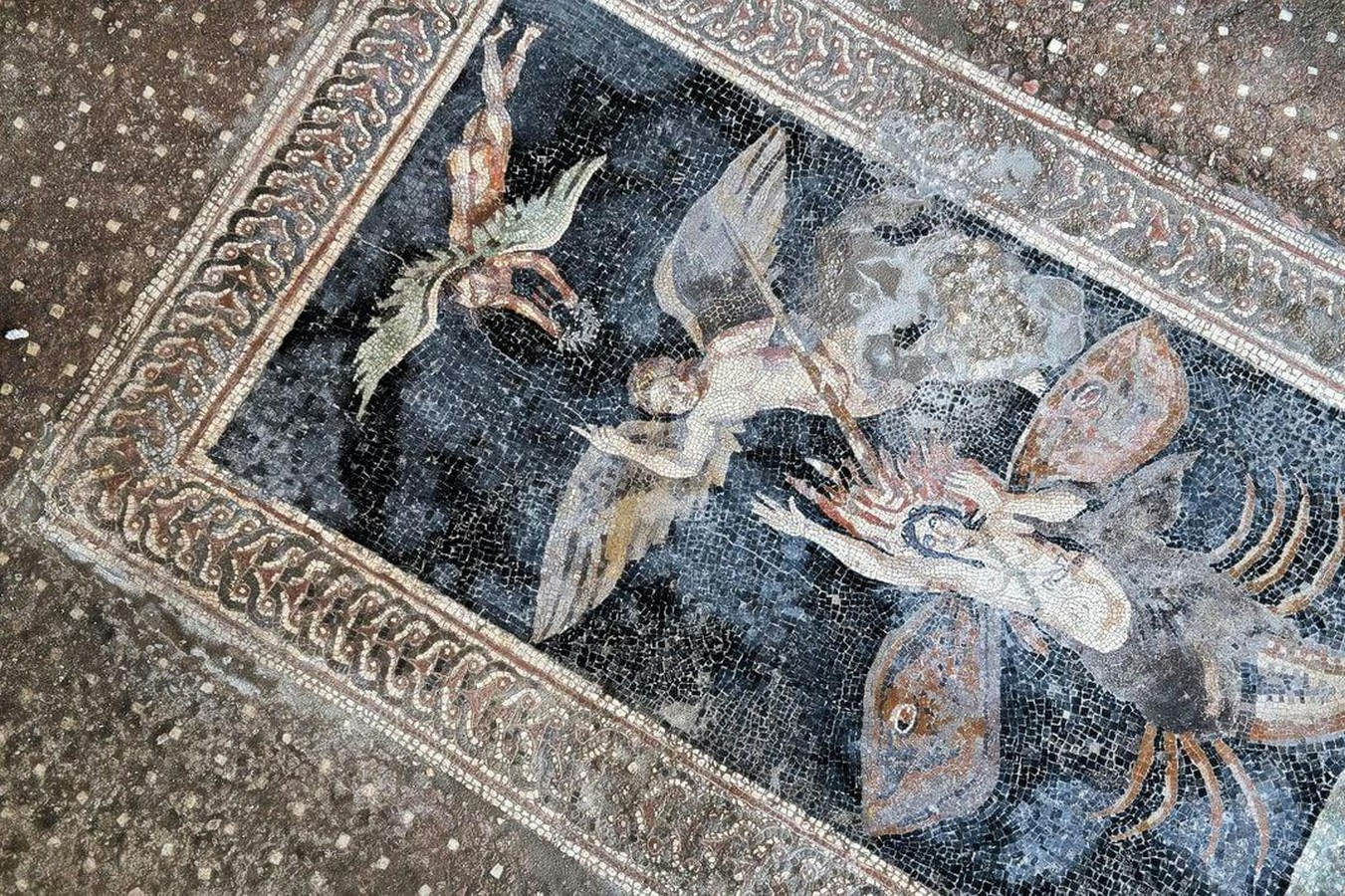
The excavations of the city of Pompeii are continuously endangered by weather, tourist traffic, and vegetation. In July 2008, the Italian government declared a one-year state of emergency for the site and appointed a special commissioner to oversee Pompeii and preservation and recovery efforts continue in the city of Pompeii even today.
- Online sources
Google Arts & Culture. (2021). Archaeological Park of Pompeii, Italy – Google Arts & Culture. [online] Available at: https://artsandculture.google.com/story/archaeological-park-of-pompeii-italy-unesco/AwURI1Q9k963oA?hl=en.
Pompeii Tours. (n.d.). The Archaeological Site of Pompeii. [online] Available at: https://www.pompeiitours.it/attractions/archaeological-site-of-pompeii/.
Britannica (2019). Pompeii – Influence on European culture. In: Encyclopædia Britannica. [online] Available at: https://www.britannica.com/place/Pompeii/Influence-on-European-culture.
- Images/visual mediums
Villa Signorini Hotel. (2016). The Archaeological Site of Pompeii – Villa Signorini Hotel. [online] Available at: https://www.villasignorini.com/us/1184-2/ [Accessed 27 Apr. 2025].
Pompeii Tours. (n.d.). The Archaeological Site of Pompeii. [online] Available at: https://www.pompeiitours.it/attractions/archaeological-site-of-pompeii/.