The Need for Floating Cities
With the rising sea levels which threaten about 90 percent of cities and 410 million people, the issue of climate change is rising. Coastal cities are consuming limited lands with high-rise buildings, and congested highways. Architects from all around the world have proposed floating cities as a possible solution to these issues. Imagine communities that run on renewable energy, rise and fall with tides, and coexist with aquatic ecosystems. Floating cities realize this idea by creating structures that rest on water rather than land. They prioritize using environmentally friendly products and conserving marine life. Floating cities and biodiversity are becoming essential discussions in urban planning, as they present both challenges and opportunities for sustainable development.
The Relationship Between Floating Cities and Marine Biodiversity
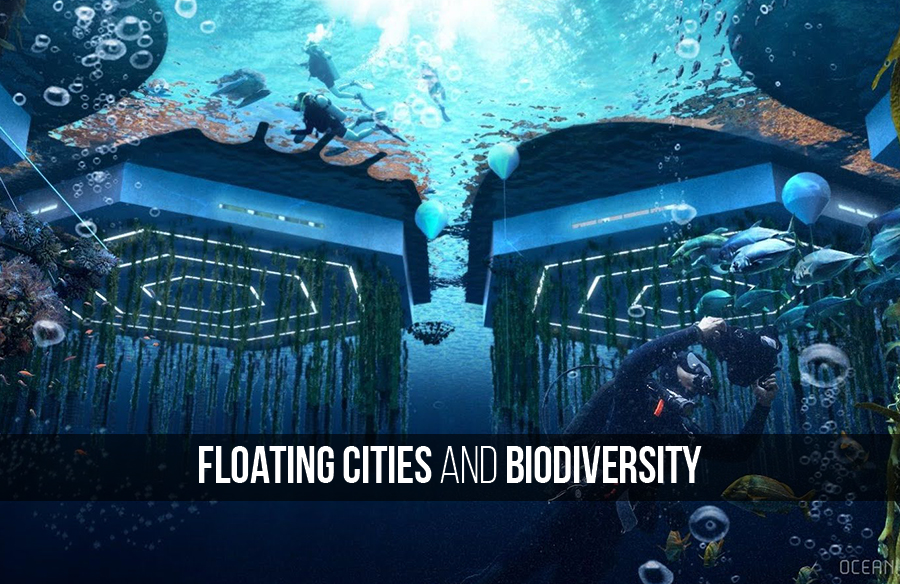
There are many effects of floating cities on biodiversity. One of the significant issues is the damage that will be caused. As the cities are developed, the floating structure can potentially harm, or change the ecosystem which is used by the marine creatures for breeding, feeding, and shelter. This can reduce the local biodiversity. Understanding the impact of floating cities and biodiversity requires careful study of how these structures interact with marine life. Structures interact with marine life.
Another concern for floating architecture and biodiversity is pollution. The building process of these settlements can release pollutants into the marine environment. Pollutants such as construction waste, sewage, and runoff from different activities can endanger marine life, pollute the quality of water, and upset ecological equilibrium. This calls for effective water and waste management strategies. To ensure that floating cities and biodiversity coexist, implementing strict environmental policies and sustainable construction techniques is necessary.

The existence of these floating cities can also influence marine animal behavior. Water flow and temperature changes generated by these structures can disrupt migration patterns, feeding habits, and reproductive cycles. For example, artificial illumination from floating metropolitan areas might confuse marine organisms, especially those that rely on natural light cues for navigation and reproduction. To address these behavioral implications, a thorough understanding of the marine environment is required, as well as the adoption of mitigation measures. A well-balanced approach to floating cities and biodiversity can minimize disruptions to aquatic ecosystems while allowing urban expansion.
It is the duty of an engineer and urban planner to consider the ecological impact of their designs ensuring that these areas benefit rather than harm the marine ecosystem.
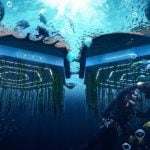
Artificial reefs in Dubai have been used successfully to rehabilitate damaged coral ecosystems and enhance biodiversity. By adding similar elements into floating city designs, metropolitan places can support a diverse spectrum of marine species while also helping to save fragile environments. Furthermore, floating gardens can act as natural filtration systems, improving water quality by eliminating contaminants and introducing oxygen into the marine environment. This integration of floating cities and biodiversity-friendly initiatives can create a balance between human settlements and nature.
Design Strategies for Biodiversity-Friendly Floating Cities
Buoyancy and Stability
Any floating city’s ability to remain steady and afloat serves as its basis. This is accomplished through the use of buoyant materials like reinforced concrete or lightweight composites, as well as clever designs that distribute weight uniformly. Some floating towns are built on pontoons or floating platforms, while others use amphibious constructions that may rise and fall with the water.
Sustainable Materials
Floating cities prioritize using sustainable and recyclable materials to reduce their environmental impact. Cross-laminated wood (CLT) is a popular choice for its strength, lightweight qualities, and low carbon emissions.
Additionally, materials such as recycled plastics and composites are being investigated for their durability and environmental friendliness.
Energy Efficiency
Energy efficiency is a key aspect of floating city architecture. Buildings are frequently outfitted with innovative technologies that optimize energy consumption, while renewable energy sources such as solar, wind, and wave power generate clean electricity. Some designs even include algae-based bioenergy systems, which produce electricity while absorbing CO2. The intersection of floating cities and biodiversity is also seen in energy solutions that reduce environmental impact.
Oceanix City: The Ultimate Floating Metropolis
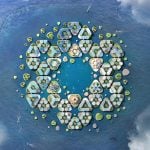
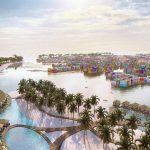
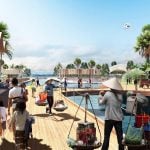
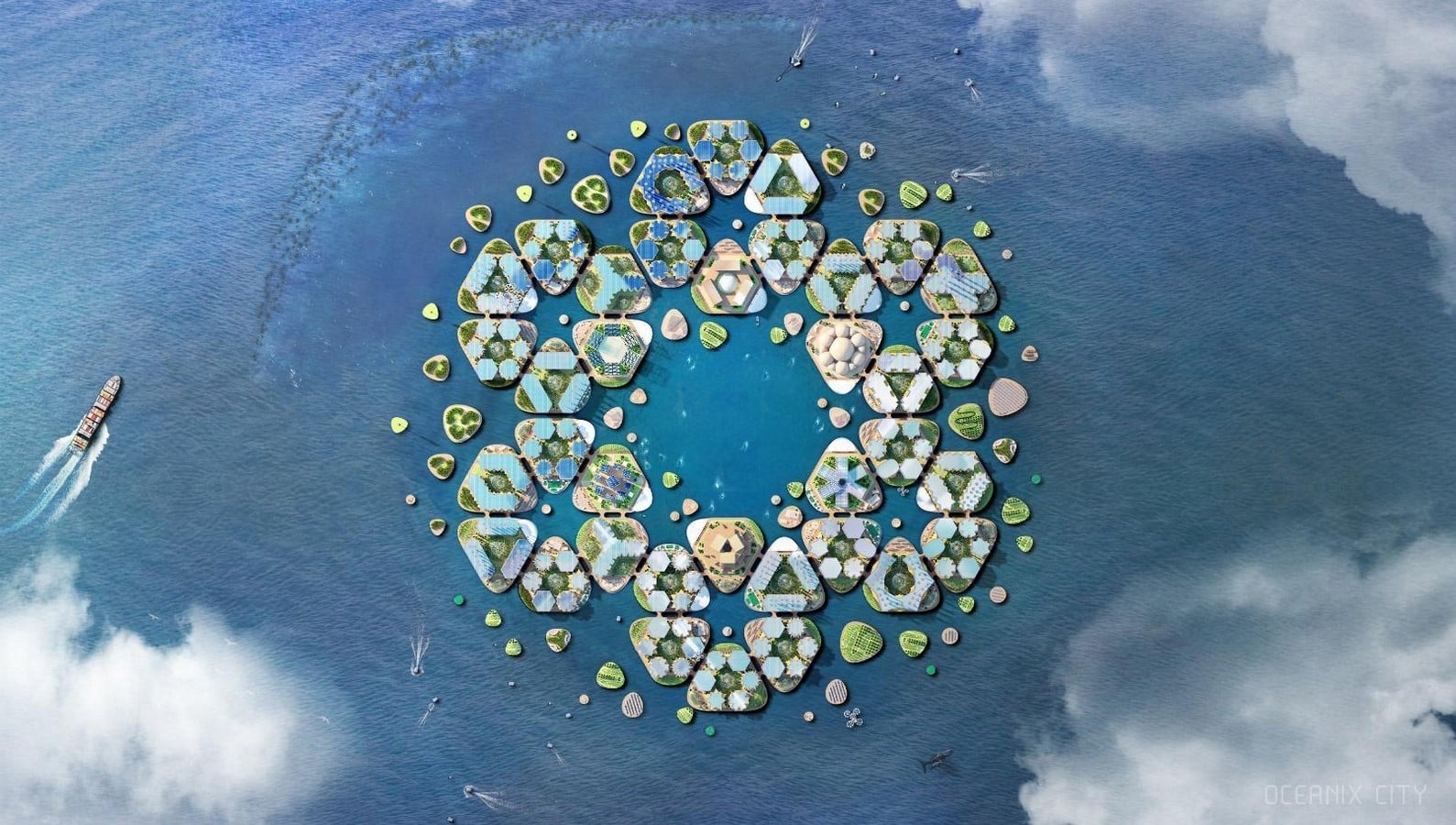
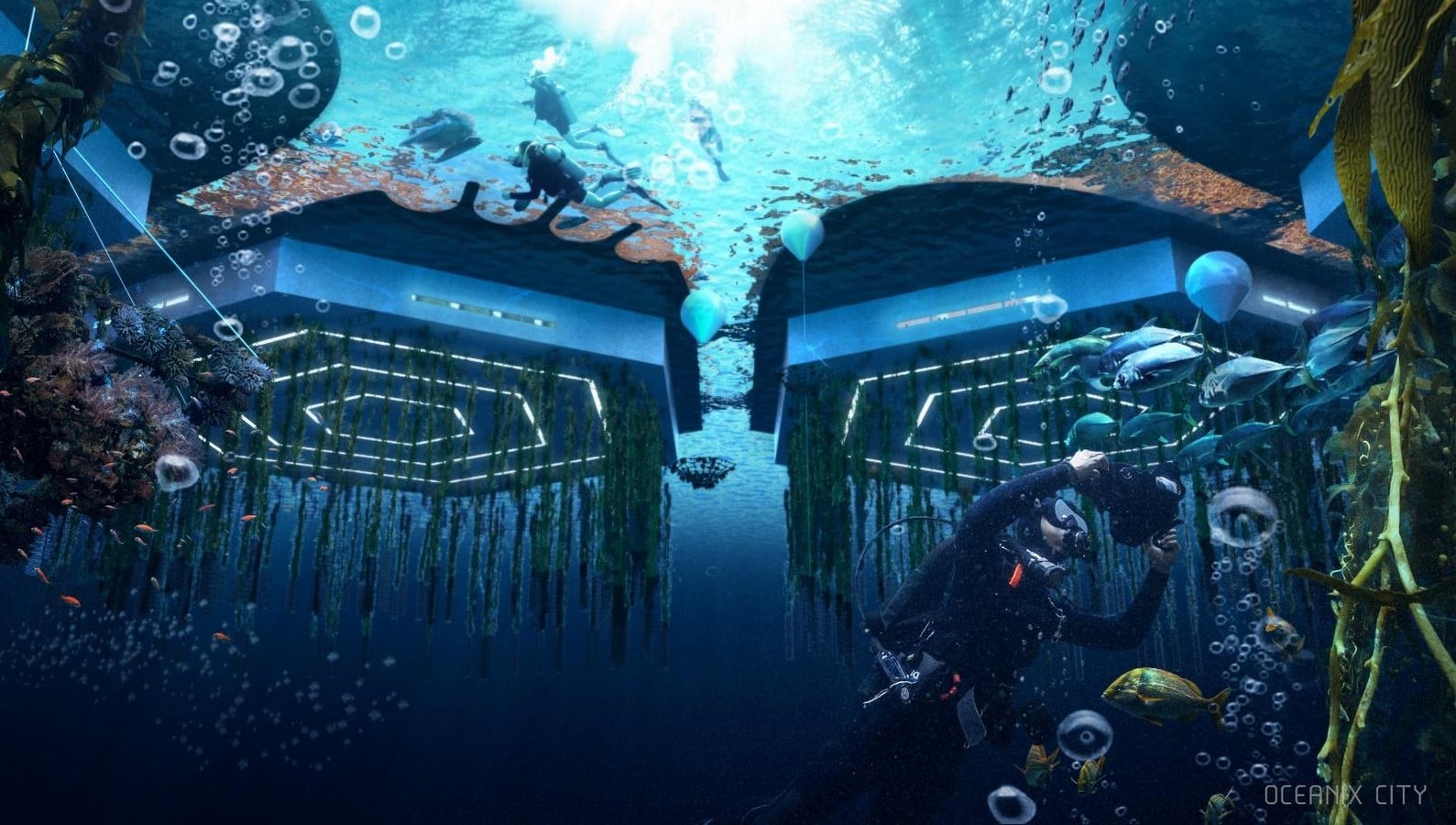
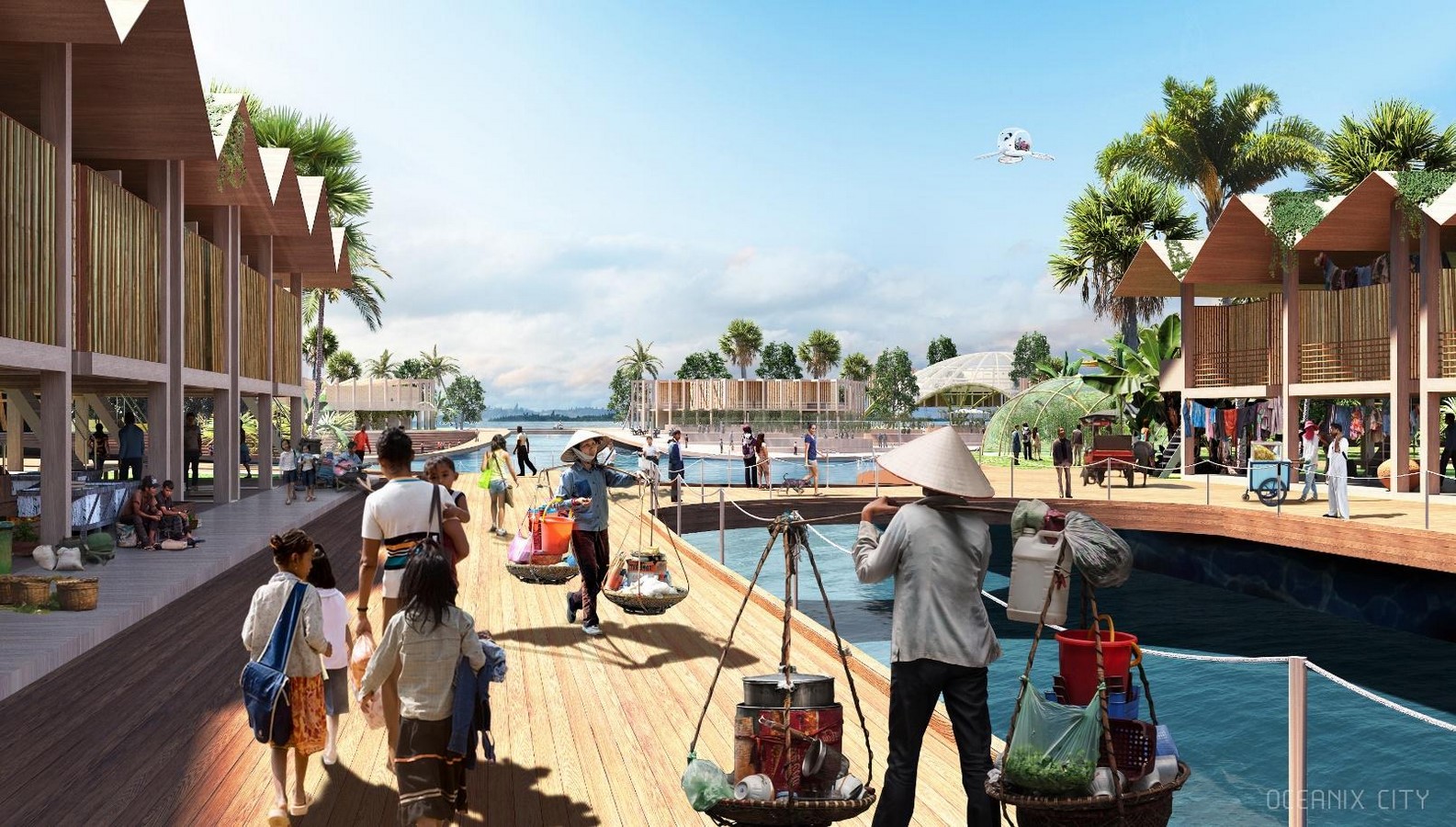
Bjarke Ingels Group (BIG) and the United Nations collaborated on the design of Oceanix City, which floats on water. It is built to survive floods, tsunamis, and category 5 storms. It uses biorock, a substance with limestone covering created by exposing underwater minerals to an electric current. It is a self-repairing material that becomes stronger over time. Hence, it can survive adverse weather conditions. The settlements would prohibit high-emission vehicles and trucks, instead transporting garbage to a sorting plant where it could be identified and recycled. Other future technologies that could be used in this notion include driverless cars, drone delivery, and ocean farming, which includes growing food beneath the water’s surface. Such innovations in floating cities and biodiversity conservation can set a new standard for sustainable urban living.
Challenges & Ethical Considerations
While evident environmental damage has prompted discussion about floating cities, doubt continues. The stakeholders are concerned regarding the feasibility and expense. There’s also the question of expertise that might be required to create offshore infrastructure. There will be other considerations regarding ownership and jurisdictions. These pricey initiatives may only be accessible and affordable to specific segments of society. Environmentalists have also criticized land reclamation projects for disturbing maritime ecosystems and increasing the risk of flooding. Balancing floating cities and biodiversity with economic and ethical considerations will determine their future success.
Effective design and management are crucial for reducing the impact of floating urban zones on marine biodiversity. One of the ideas is to add green spaces, artificial reefs, and undersea structures that serve as habitats for marine creatures and can help to promote biodiversity. These solutions can improve the environmental value of floating urban areas while also providing recreational and aesthetic benefits to people. Careful planning of floating cities and biodiversity-friendly features can lead to long-term environmental benefits.
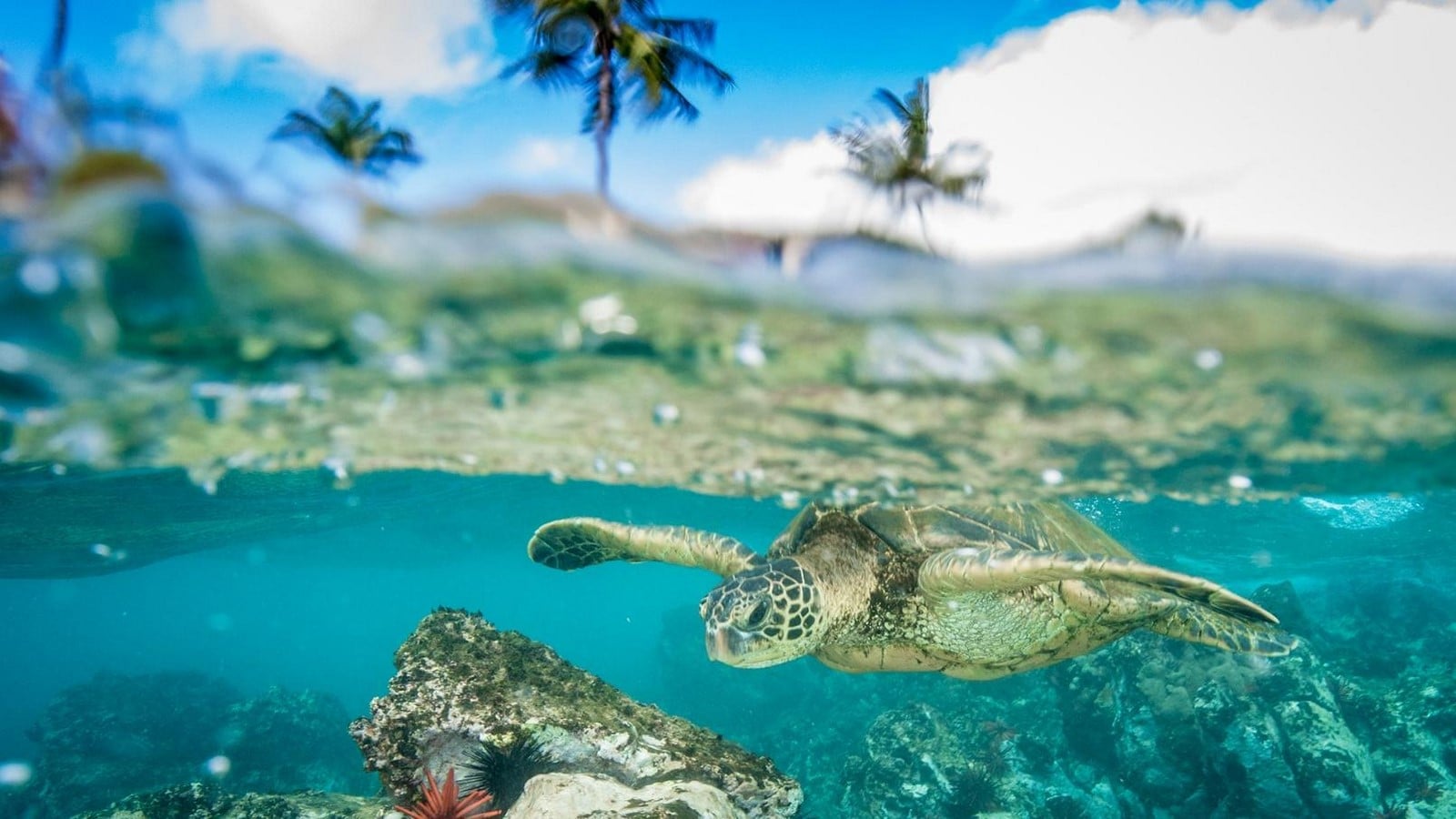
To summarize, floating urban zones offer both potential and problems for urban growth and maritime biodiversity. Understanding the environmental implications, applying best practices, and utilizing sophisticated technologies. Floating cities are not a single solution to sea-level rise and climate change, but they could represent a significant step toward remediation. This transformation will necessitate a reevaluation of living patterns, legal institutions, and man-made ecosystems. A new frontier of aquatic lifestyles appears promising. If designed responsibly, floating cities and biodiversity can coexist to create a sustainable future for urban living.
References:
designboom | architecture & design magazine. (2019). bjarke ingels group unveils floating city concept made up of hexagonal islands. [online] Available at: https://www.designboom.com/architecture/bjarke-ingels-big-floating-city-oceanix-04-04-2019/.
Hilton, A. (2025). Floating Cities: Resilient Architecture for the Challenge of Climate Change – Green Feeling. [online] Green Feeling. Available at: https://greenfeelingnow.com/floating-cities-resilient-architecture-for-the-challenge-of-climate-change/ [Accessed 30 Mar. 2025].
Oceanix. (n.d.). Technology. [online] Available at: https://oceanix.com/technology/.
Gattupalli, A. (2022). Floating Cities of the Past and Future. ArchDaily. [online] 14 Nov. Available at: https://www.archdaily.com/992148/floating-cities-of-the-past-and-future.
The Swiss Quality Consulting (no date) ‘Floating Urban Areas and Marine Biodiversity: Impacts and Mitigation Strategies’. Available at: https://theswissquality.ch/floating-urban-areas-and-marine-biodiversity-impacts-and-mitigation-strategies/ (Accessed: 31 March 2025)
The Swiss Quality Consulting (no date) ‘Designing Floating Cities for Biodiversity: Promoting Marine Life Conservation’. Available at: https://theswissquality.ch/designing-floating-cities-for-biodiversity-promoting-marine-life-conservation/ (Accessed: 31 March 2025).