When a disaster hits hard, the entire world shatters—crumbled houses, vanished roads, and lives torn apart. Yet amidst the entire chaos, architecture still stands as an unsung healer. It doesn’t just rebuild; it rekindles. Disaster recovery isn’t just about bricks and beams; it’s about restoring dignity, culture, and hope. From temporary shelters to long-term rebuilding, architects sculpt a bridge between despair and resilience.
Disaster resilient architecture is no more just a strategy but more of a necessity marked by the highly frequent and intense natural calamities and disasters. It emerges with elements related to climate-responsive architecture that prioritizes designing a building with the utmost priority of safety and well-being of occupants in a structure being able to sustain the harsh forces of natural disasters.
With respect to the unpredictability of natural disasters causing fatal effects on people and urban setups, resilient architecture is brought into the picture. Disaster resistant architectural design helps in minimizing the deadly impact caused on the people, lives and their surroundings.
As built environment professionals, architects, and as designers are we aware of the alarming climate change because of the way we design and construct? Globally, most of the architectural practices continue to indulge in extravagant construction processes that can only be executed using carbon-emitting industrialised materials. As we know, many experts around the world are supporting the creation of eco-cities, eco-urbanism, sponge cities, de-growth, transition design and principles of circular economy, including reuse of all buildings, even contemporary buildings. It is well known that 40 percent of emissions are due to the use of industrial materials and current construction methodologies.
What is Disaster-Responsive Architecture?
The definition of resilience varies across different disciplines. In architectural context, it can be explained in four key concepts: rebound, robustness, extension, and adaptability. These concepts elaborate a building’s response in the times of natural disasters, including its capability to withstand shocks, recover, and maintain functionality. Natural forms and structural systems have continued to demonstrate resilience to disturbances by adapting to changing conditions and maintaining their structure, function, and identity along similar notions.
Best practices for disaster resilient architecture primarily includes identifying regions according to their specific locations. A proper study and research of the site and its climatic conditions help in taking design decisions. It is extremely vital to collaborate with professionals from various fields like geology, engineering, meteorology, etc. for expert advice. Building hazard assessment in case of disaster prone areas helps in mitigation and prevention of fatalities. Resonating to flexibility and adaptability and the usage of strong, resilient, and durable materials holds key importance.
Principles of Disaster-Responsive Architecture?
Disaster-responsive architecture is guided by several core principles:
Resilience
Structures must be able to withstand the initial impact of disasters through disaster responsive elements such as seismic-resistant materials, reinforced foundations, and flexible designs that reduce damage.
Adaptability
Structures must be designed for quick and easy adaptation to various emergencies along with spaces convertible for emergency shelters, medical aid centers, or supply storage.
Sustainability
By using locally sourced materials, renewable energy, and water management systems, designers can ensure long-term resilience while reducing environmental impact.
Community-Centric Design
By involving local communities in the design process, helps in fostering a sense of ownership and ensures culturally accepted solutions.
Integration with Nature
Landscaping and natural elements, like flood-absorbing green spaces and mangrove buffers, act as additional layers of defense.
Case study- Rebuilding Christchurch Town Hall
_© https://en.wikipedia.org/wiki/Christchurch_Town_Hall
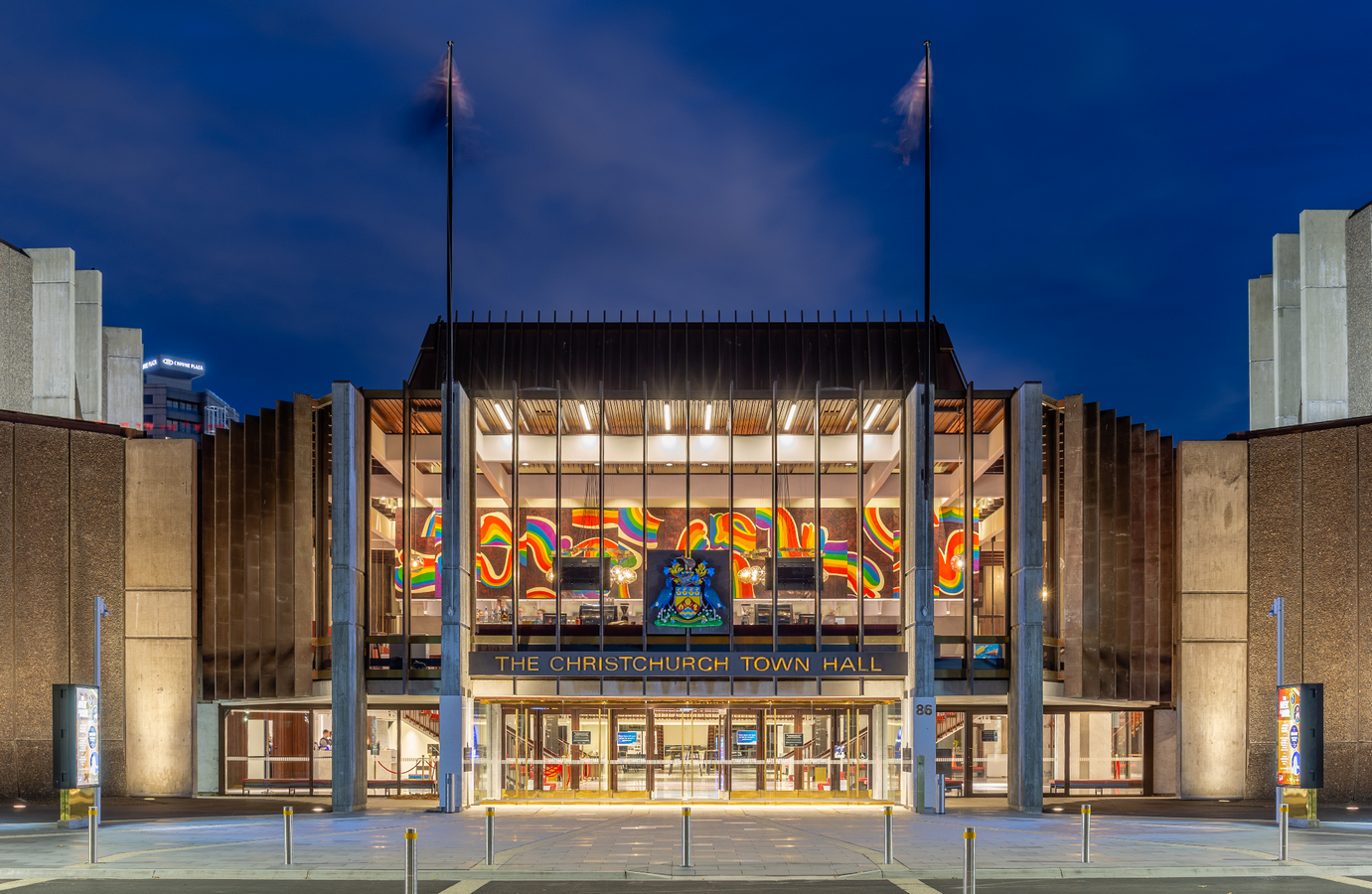
Like many other buildings in the surroundings, the Christchurch Town Hall suffered severe damage during the 2010 and 2011 Christchurch, New Zealand Earthquakes. In February 2011 particularly, the Town Hall site suffered significant earth plate movement, damage and liquefaction and that forced the town hall to be shut for 8 years.
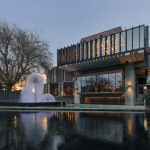
The Christchurch Town Hall, designed by Sir Miles Warren and Maurice Mahoney, has been an important cultural landmark of the Garden city since its opening in September 1972. Situated along the Avon Riverbank, it has served a variety of purposes for public gathering, functions, conventions and exhibitions over the years.
Due to the building’s immense importance to the city, its citizens, and the Christchurch community, there was overwhelming support from the citizens to restore it. In August 2013, the council confirmed its commitment to the Town Hall’s restoration.
The Christchurch Town Hall was a part of a five-year conservation project and was completed in 2019. The restoration brought the building up to completely the New Building Standard (NBS) while preserving its original essence and creating a modern facility. Four of the original areas, the Auditorium, the entrance foyer, the James Hay Theatre and the Limes Room were retained as they were. The Boaters Restaurant and the Cambridge Room were to be rebuilt.
Outside the building, one can find the iconic Ferrier Fountain. After being able to sustain significant damage during the earthquakes, the fountain returned to its former glory with new ponds that merge into the Avon River.
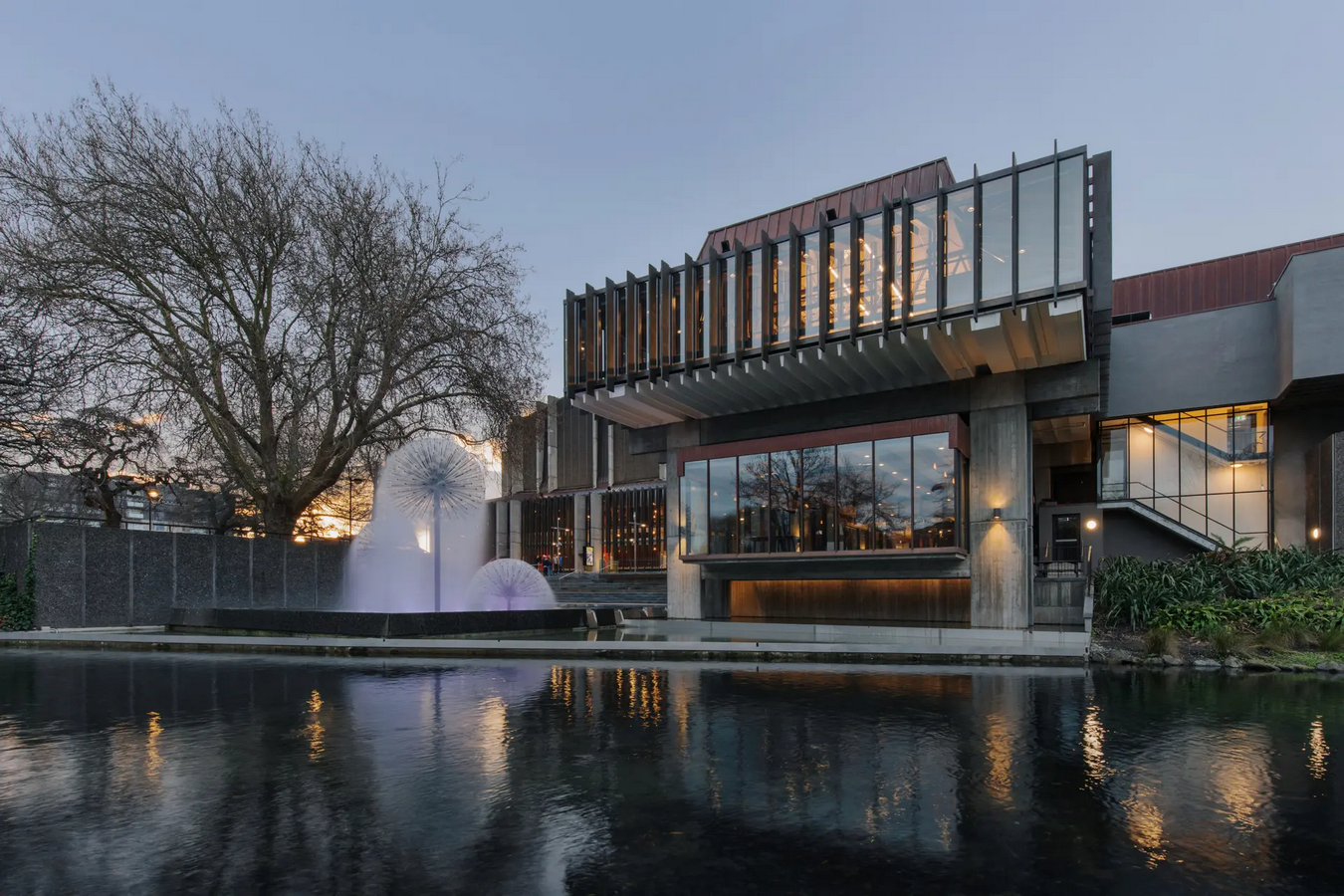
On February 23rd 2019, eight years and one day after the earthquake that forced the building’s closure, the Town Hall was reopened. With the remaining rooms being opened to the public a few months later. The original characteristics and the style of the exterior, while the essence of the interiors of the building with its white marble, dark timber, rich red fabrics and vibrant artworks, were preserved as part of the restoration process.
Disaster-responsive Architecture mainly involves a proactive design approach that integrates resilience in every decision of the design process, including site studies, selection of materials, etc. Architects play a crucial role in planning and strategically developing evacuation plans, emergency shelters, repurposed furnishings, etc.
A well-planned disaster-resilient structure is not just about saving the urban environment and town but also many lives and prevention of fatalities. The design should be a transformative, holistic, sustainable, and collaborative approach to a resilient building design and construction while abiding to all the necessary government codes and regulations.
References:
Team Kaarwan (2025). The Role of Architects in Disaster Management and Recovery. [online] Kaarwan blogs. Available at: https://www.kaarwan.com/blog/architecture/the-role-of-architects-in-disaster-management-and-recovery?id=1303
Lari, Y. (2023). ‘It is time for all of us to become aware of the gravity of the situation’. [online] Dezeen. Available at: https://www.dezeen.com/2023/11/13/yasmeen-lari-designing-for-disaster-opinion/
ArchDaily. (2023). The Role of Biomimicry in Disaster-Resilient Architecture. [online] Available at: https://www.archdaily.com/1009289/the-role-of-biomimicry-in-disaster-resilient-architecture.
SMART. (2024). Designing Structures For Survival: Disaster Resilient Architecture – SMART. [online] Available at: https://smartinitiative.in/designing-structures-for-survival-disaster-resilient-architecture/.
worldsteel.org. (2020). Rebuilding Christchurch – making a city more disaster prepared. [online] Available at: https://worldsteel.org/media/steel-stories/construction-building/rebuilding-christchurch-earthquake-disaster-prepared/.
Equus Industries Ltd. (n.d.). Case Study: Christchurch Town Hall. [online] Available at: https://equus.nz/project-references/case-study-christchurch-town-hall/.