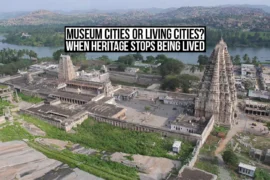
The culture and the history of a region can be seen from four aspects that include, the weather conditions, the type of food, the inhabitants, and the architecture there. While the weather changes due to global warming, the food supply is improved by globalization, and the population is an outgrowth of their habitat; it is the buildings of a region that will return the present people to the past days of that region. However, the external observations are not sufficient to understand the culture and the past of a region. The interior arrangement of a fortress, a mausoleum, and a place of worship are the main ways through which the historians have spoken of the past in an elaborate and part-by-part way. As one passes through different parts of the fortress, their narrow pathways suggest the security methods of the fortress, yet a marvelous mirror wall in the room illustrates how much the King loved his Queens. The detailed artistry on the walls of the Church reflects the people’s strong connection to their religion and the layered design of a temple describes the order in which people would worship. While the architecture of a place introduces people to the region, it is the interior design that narrates the story and cultural preservation facilitates it.
Understanding Cultural Significance
The consequent increase in modernized designs has led to a gradual downfall of interior designs that depicted craft values or aesthetic traditions based on historical and cultural backgrounds. However, a lot of cultural preservation is emphasized as people realize the importance of knowing their cultural background. The interiors under the domain of cultural preservation require profound knowledge of traditional design elements and their related symbolism as well as the societal values represented by them. “Traditional spatial arrangements and design elements are not arbitrary but rather embody cultural values, social hierarchies, and spiritual beliefs that have stood the test of time.” Rahman (2023, p. 12). In the use of traditional techniques or symbols, contemporary interior designers opt to work hand in hand with local artisans and experts so that the representation will be authentic but the techniques preserved as well. This collaboration represents the spiritual and social meaning of design elements rather than just reflecting traditional aesthetics in a modern design.
An example of using traditional techniques to meet modern demands is The Aman Tokyo Hotel. From Zen gardens adapted to urban settings to tatami rooms reinterpreted for modern use, it uses traditional elements like lanterns and washi tape screens to blend into the modern hotel interiors. A great example of cultural preservation using interior design, it honors and preserves Japanese traditions while providing state-of-the-art facilities and top-notch hospitality.

Symbolism and Spatial Organization
Cultural preservation through interior design, in essence, is the use of particular design techniques, patterns, or motifs that are associated with a certain culture. The visual components such as colors, or symbols are, however, a means of expression that can even affluently communicate a modern and a traditional theme, the styles can range from wall hangings to textiles to even architectural details. To have the ability to think and produce genuine designs, one must be aware of the traditional context and then apply innovative methods in the modern context be it the home or the work setting where the design background serves as a story. However, it is not limited to the utilization of traditional design items or crafts; it is also reflected in the allocation and organization of space. An interior designer is supposed to be aware of all these while designing a space. Spatial arrangement so far as different cultural systems are concerned, can be based on social levels, daily customs and routines, and even philosophical and religious thoughts. It is about learning Vaastu the Indian way, getting to understand ma or negative space the Japanese way, or grasping the principles of feng shui in Chinese designs. Age-old practices can be continued while preserving culture through the means of interior design.

One of the examples that highlights cultural preservation in interior design is The Sheikh Abdullah Al Salem Cultural Centre in Kuwait. On the one hand, educational programs are devoted to imparting traditional design techniques which are the roots of local craftsmanship. On the other hand, we can also see the usage of modern interpretations of these traditional design elements to show the local craftsmanship which is also beautifully expressed. It uses traditional Middle Eastern design practices and modifies them to be relevant to the contemporary functions of the Non-Profit Organization. For instance, it uses the traditional mashrabiya patterns but also uses the traditional courtyard concepts in a modern context. The space features traditional design practices in a modern context and becomes a living testament to how traditional practices can be continued while preserving culture through the means of interior design.
References:
Rahman, S. 2023, ‘Traditional Design Elements in Contemporary Spaces’, International Journal of Interior Architecture, vol. 28, no. 1, pp. 8-24.
Image references:
- The Aman Tokyo Hotel. (n.d.). Available at: https://www.aman.com/hotels/aman-tokyo [Accessed 19 Jan. 2025].
- The Sheikh Abdullah Al Salem Cultural Centre in Kuwait. (n.d.). Available at: https://www.sshic.com/our-projects/the-sheikh-abdullah-al-salem-cultural-centre/ [Accessed 19 Jan. 2025].