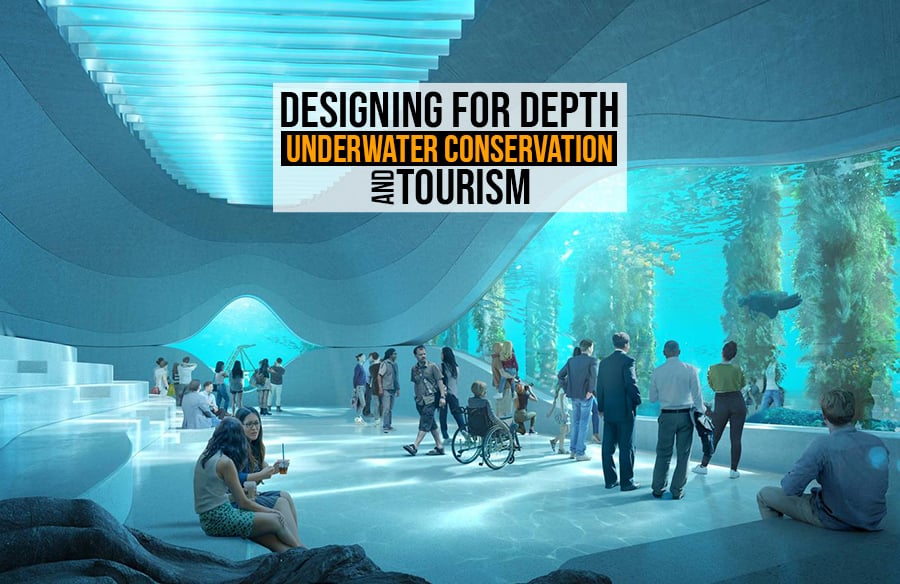
In recent years, both tourists and architects have been driven to the depths by the underwater wildlife world’s attraction, seeking adventure and preservation. Today, the dual missions of underwater animal conservation and tourism combine environmental protection with public involvement. Architects and engineers are essential in creating structures that prioritize the ecosystem’s health while providing enthralling underwater experiences through creative architecture and marine engineering. This method of designing underwater buildings reflects a dedication to both ecological protection and human interaction. The end effect is a fresh, immersive chapter in architectural innovation, where underwater areas encourage future generations to preserve the vast, colourful marine environment while bridging conservation and experience.
This article explores the changing interrelationships among sustainable tourism, architecture, and underwater conservation.
Tracing The Roots
Underwater architecture‘s fascinating history reflects how people’s relationship with the sea has changed over time. Early attempts to use aquatic resources can be seen in the ancient civilizations, where simple structures were submerged for storage and fishing. Visionaries like the Italian architect Paolo Soleri envisioned subterranean homes that combined architecture and ecological consciousness as technology developed in the 20th century. Scientists could now live and operate under the waters thanks to the introduction of experimental underwater research stations in the late 1960s. This cleared the path for modern undersea architecture that makes use of cutting-edge materials and environmentally friendly design concepts. Some current fascinating underwater projects include Underwater Ocean Discovery Centre by Baca Architects, Atlantis Sanya by Hellmuth Obtat Kassabaum (HOK) and Subsix by Poole Associates. With a strong historical foundation, the future invites us to delve deeper and foster a long-term relationship with the maritime environment.

Designing for the Maritime
To design any maritime structure, one needs to be mindful of aspects that will cater to engineering and will not harm nature in any way possible. These aspects include-
- Minimal Disturbance Foundations: Piling or floating foundations are frequently used in buildings to minimize habitat loss by preventing major bottom disturbance.
- Reef Restoration and Marine Nurseries: Architects help restore ecosystems by implementing artificial reefs or coral nursery buildings. Coral growth and marine biodiversity are promoted by materials such as environmentally friendly concrete.
- Natural Filtration Systems: Certain designs include filtration systems that clean the surrounding water, shielding marine habitats from dangerous pollutants brought in by human activity.
- Light Management: Architects frequently employ natural lighting whenever possible because marine life depends on sunlight levels. When artificial light is required, it is either reduced or made bioluminescent-friendly to prevent upsetting the natural cycles of marine life.
- Low-Impact Materials: Non-toxic, environmentally friendly materials lessen the chance of chemical pollution. Bio-enhancing materials, such as 3D-printed components or unique coatings, encourage the growth of underwater plants and animals.
- Community Partnerships: By collaborating with neighbourhood organizations, these initiatives not only support conservation objectives but also enhance the quality of life for local populations while generating steady revenue from ecotourism.

Possibilities Are Endless
With innovative designs showcasing self-sustaining, closed-loop habitats driven by renewable resources like solar electricity, wave energy, and sophisticated bioengineering, innovation is at the heart of this movement. These habitats, which are designed to be minimally invasive and sustainably powered, represent a paradigm leap in underwater living. The constructions incorporate cutting-edge water filtration systems, renewable energy grids, and environmentally friendly materials to create settings that complement fragile marine ecosystems rather than interfere with them. Underwater buildings can range from marine research stations and public art pieces to eco-lodges that encourage conservation tourism, and provide areas where both tourists and scientists can discover the ocean’s hidden treasures. Innovative design is only one aspect of underwater architecture; another is a dedication to ocean management. Underwater wildlife and tourism architecture invites everyone from all areas of life to engage in marine conservation by enabling such direct engagement, bridging the gap between the natural and constructed ecosystems. This typology of architecture is revolutionizing our relationship with the ocean through this special fusion of study, recreation, and duty, providing a promising avenue for a future that is more conservation-focused and sustainable.
An unmatched chance to promote a conservation ethic in the tourism industry is provided by the planning and building of underwater structures. Architects establish a symbiotic, transformative interaction between architecture, conservation, and tourism by bringing visitors up close to marine environments while maintaining their natural nature. Even while construction in such dynamic environments poses many difficulties, from maintaining ecological balance to dealing with pressure and corrosion, the future is still full of possibilities for advancements. Furthermore, technological developments like the application of artificial intelligence and self-healing materials could significantly increase the robustness and sustainability of these underwater architectural wonders. We can undoubtedly create underwater habitats that evoke wonder and support the well-being of marine ecosystems by encouraging cooperation between architects, legislators, and environmentalists. The study of underwater architecture is only the start of an enthralling adventure that invites us to imagine a time when the ocean and human inventiveness can coexist together.
References:
Parametric Architecture. (2024) 8 Underwater Architectural Projects. Parametric Architecture. Available at: https://parametric-architecture.com/8-underwater-architectural-projects/ (Accessed: 26 October 2024).