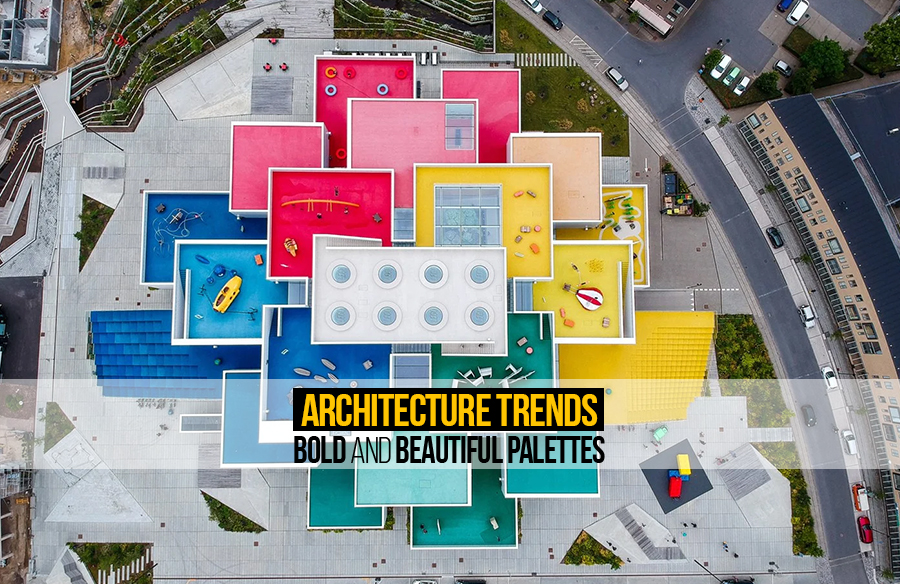
Bold and distinctive colour palettes are becoming more popular in architecture, giving the buildings a more captivating appearance. Bright palettes are popular these days since they not only have aesthetic value but also make things stand out and create an identity that expresses one’s taste, style, and perspective. Architects no longer play it safe; instead, they make sure to design and build more amazing structures that cause people to pause, stare in amazement, and realise that these structures give cities and places life, personality, and vitality. It has evolved into a dynamic art form with the building telling a tale, whether it is a bold splash of yellow or a whimsical flash of pink in a sleek modern urban high-rise.
Historical Context of Color in Architecture
Throughout history, colour has played a significant role in shaping the ambience . From vibrant temples of ancient Greek and Egypt to richly adorned Roman palaces, they were adorned with rich hues and shades with the power of power and spirituality which were used accordingly for functions like religious or social conventions.

However, after Neoclassicism and Modernism in the 19th and 20th century, the architectural world started embracing neutral and subdued aesthetics. Movements like Bauhaus and Modernism prioritised simplicity and function, replacing vibrant colours with whites, greys, and earthy tones. Architects like Le Corbusier championed minimalism, seeing colour as secondary to structure. This preference for neutral tones dominated architecture well into the late 20th century.
However, there were always exceptions. Movements such as Art Deco in the 1920s and De Stijl in the Netherlands celebrated bold, geometric designs with vibrant colours, pushing against the mainstream tide. The playful, vivid façades of the Memphis design movement in the 1980s also hinted at the potential for colour to return to the architectural forefront.

The Rise of Bold Palettes in Contemporary Architecture
In today’s Architectural world, the use of colours has a strong comeback challenging minimalism and adding creativity to spaces. From making daring facades to playful interiors, bold colours have been embraced to make strong and impactful statements.
Bold palette in Commercial Spaces
Lego House- BIG


This trend is especially visible in urban areas, where a burst of colour can transform the monotonous cityscapes. Projects like the colourful exterior of BIG’s LEGO House in Denmark and the bright hues of Mexico City’s Conjunto Habitacional Tlatelolco demonstrate how architects are using colour to inject energy and personality into contemporary designs.The LEGO House in Billund, Denmark, designed by BIG, is a playful architectural marvel that embraces bold colours inspired by LEGO bricks. The exterior’s bright, stacked blocks mirror the creativity and fun of LEGO, while the interior uses primary colours like red, yellow, blue, and green to guide visitors through different interactive zones. Each colour represents a different aspect of play, making the building not only visually striking but also functionally engaging. The LEGO House demonstrates how vibrant palettes can transform architecture into dynamic, imaginative spaces.
Bold palette in Residential Spaces
Bold colours in residential spaces are transforming the way homeowners express their individuality and style. Vibrant hues are being used to create striking exteriors, making houses stand out in neighbourhoods, while interiors are infused with energy and personality. From daring accent walls to colourful furniture, these bold choices can influence the mood and atmosphere of a home. By embracing colour, homeowners are redefining traditional design norms, crafting spaces that reflect their unique tastes and foster a sense of warmth and creativity.It’s not just about aesthetics, either; colours are being employed to evoke emotions, define spaces, and foster a stronger connection between buildings and their occupants.
Rainbow Village Taiwan

Taiwan’s Rainbow Village is a striking illustration of how vivid colour can change public areas. It was revitalised from what was once a military settlement in Taichung by Huang Yung-Fu, popularly known as “Grandpa Rainbow.” Huang started painting bright murals of people, animals, and whimsical designs on the walls, streets, and homes in an attempt to stop it from being demolished. Through his artwork, the once-drab village was transformed into a vibrant, whimsical destination that attracts tourists from all over the world.Rainbow Village is an example of how colour can change a mundane area into a significant cultural icon. In addition to saving the town, the use of vivid colours produced a lively, participatory atmosphere that encourages community involvement and connection.
Bold palette in Commercial Spaces
Bold and bright colours in commercial and public spaces are revitalising urban environments and enhancing user experiences. Coruscating façades and lively interiors attract attention, foster engagement, and create memorable identities for businesses and institutions. By embracing bold palettes, architects and designers are transforming spaces into inviting, zestful environments that encourage socialisation and community connection.
Lollipop Street- 100 Architects

Designed to turn urban landscapes into colourful, participatory spaces, 100 Architects’ Lollipop Street project is a colourful and entertaining public space installation which is a beautiful example. This project was carried out in Shanghai, China, and was finished in 2020. It is a great illustration of how vibrant colour and design can change the metropolitan environment.The project’s huge, candy-like sculptures, which serve as both urban furniture and public art, are inspired by the quirky design of lollipops. Reds, yellows, purples, and blues make up the majority of the space’s vibrant, stunning colour scheme, which makes it feel lively and welcoming to visitors of all ages. Through its whimsical design, the project invites interaction. It provides walkways that lead visitors through the colourful area and shaded lounging spaces beneath the “lollipops.”

The Lollipop Street project reflects 100 Architects’ philosophy of bringing joy and interaction to urban environments by using colour and design to stimulate imagination and playfulness. By transforming a simple pedestrian street into a visually captivating and socially engaging space, the project demonstrates how architecture and urban design can elevate public spaces and foster community interaction.
The Future of Bold Palettes in Architecture
The use of vivid colours in architecture is being revolutionised by technological breakthroughs. Brighter, more resilient colours that can resist harsh climatic conditions are now possible because of advancements in paint formulas and coatings. Using digital tools like 3D modelling and virtual reality, architects may test out several colour schemes for their projects before they are implemented. These technological advancements not only expand the creative options but also guarantee that vivid colours may be successfully incorporated into contemporary architecture, increasing the accessibility and usefulness of strong design choices.


Bold colour schemes in architecture appear to have an optimistic outlook as society trends increasingly value uniqueness and self-expression. The use of eye-catching colours will be made possible by developments in environmentally friendly paints and sustainable materials that also address environmental issues. Bold colours will be vital in creating warm, welcoming spaces that connect with communities and capture their distinct identities, as wellness and emotional impact become more and more important in design.
To sum up, the return of vivid colours in architecture is a big step away from the previous austere styles and reflects our shared desire for uniqueness, creativity, and life in our built surroundings.Notwithstanding ongoing difficulties, creative use of striking colour schemes is transforming architectural narratives and producing enduring experiences that unite people with their environment. In the end, this movement emphasises how colour has the ability to change not only buildings but entire communities, promoting a feeling of identification and belonging in a world growing more varied.