A historical epithet synonymous with India’s name is the “Golden Bird”. A country so rich that travelers and explorers used to tell tales of the luxurious forts and darbars, the hospitality of the kings, and the generosity of the common man.
Prosperity and the Age of the Golden Bird
The country’s richness was a product of business and trade. The rich resources made India a trade favorite among businessmen, thus leading to the rulers having an immense pool of gold, silver, and precious stones. The allure of these resources was so strong that an Italian explorer by the name of Columbus staked everything on his journey to discover India.
Being the center of the world’s trade and an exporter of perfumes, spices, food items, precious stones, and handicrafts, a thriving economy that benefitted the entirety of the subcontinent and awarded India the name “Sone ki Chidiya” or “The Golden Bird”.

Along with traders and explorers, this wealth attracted invaders and conquerors. The arts which flourished in the 1800s in cities like Bengal, Calcutta, Lucknow, and Bombay suffered deeply from this pillage. When the British initially landed in India, they came with the intention of trading, which soon turned into an open looting process. The British Empire ruled and ransacked numerous countries, everything they touched was left in shambles at the end of the day, including India’s heritage.
Lost in Museums
Colonization cost Indians their identity, democracy, regality, prosperity, and culture. The habits of the West were deemed correct and proper and replaced the native habits of the East, a pattern observed in almost every former colonized society. Along with an intellectual loss (a trend that is still observed), the antiquity loss is deeply felt and creates a feeling of national loss in every citizen.
An old joke goes: Why are there pyramids in Egypt? Because they would not fit in the British Museums. It is often asked why British museums look like vaults of stolen artifacts and don’t house many of their own.
Drain of Wealth
The loss of the Kohinoor, the lesser-known Pearl canopy of Baroda, Maharaja Ranjit Singh’s throne, Amravti Marbles, Shah Jahan’s wine cup, Tipu Sultan’s ring, and many more are felt deeply by all Indians, especially when British Museums are publicizing these very artifacts to attract tourists. A civil sense of duty and diplomatic relations should make the British government repatriate these items. But that hasn’t been the case. Numerous attempts made by India to restore their cultural wealth have been made in vain as the Britishers provide claims how each artifact was apparently gifted or presented to some East India Company dignitary and is a product of hospitality, not open looting and oppression.


British Museum Act of 1963
The British Museum Act of 1963 forbids the British Museum and the Natural History Museum from disposing of any of its holdings, except to lend them out for predetermined periods in special circumstances. This law has enabled the museum to withhold all of its artifacts, even when claims have been made with valid evidence from the artifact’s origin companies.
This act also separated the National History Museum from the British Museum, providing the two with their boards of trustees.
Museums of Britain
Mentioned below are some of the most prominent British Museums housing Indian Artifacts. This is not a complete list and was generated randomly.
British Museum
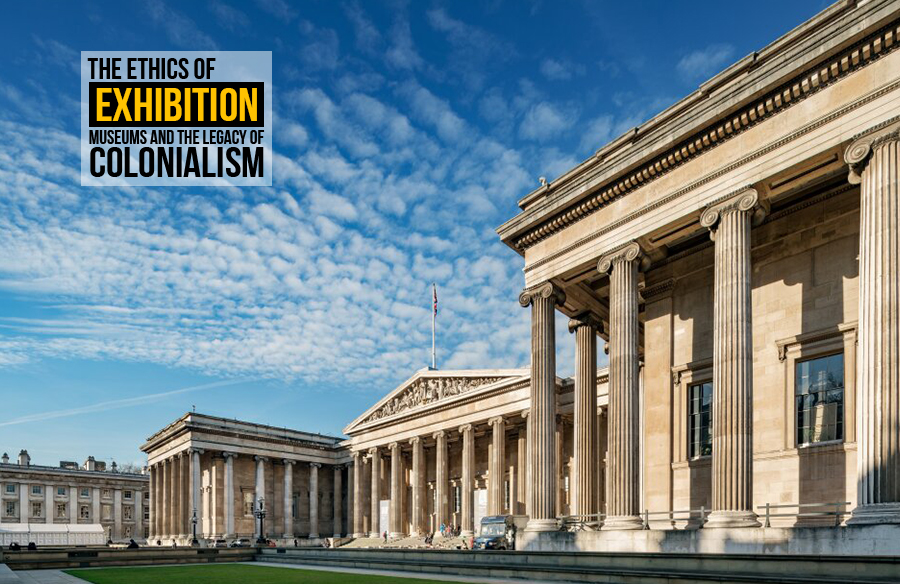
Documenting the history of human culture from inception to the present day, the British Museum is one of the world’s biggest public museums carrying a permanent collection of over 8 million artifacts from all over the world. Situated in London, the museum hosts several exhibitions and events throughout the year.

With a façade inspired by classical Roman and Greek Architecture, the museum showcases artifacts plundered from every corner of the world.


Kew Gardens
The Kew Gardens in London house the largest botanical collection. With over 50,000 living plants, they house the illustrations collections which is a world-renowned resource for botanical illustration. Over 200,000 drawings assembled over the last 200 years, the gardens have their fair share of Indian participation.

The Indigo Factory model depicts the production of Indigo Dye in India. It was commissioned by the British Authorities and shows indentured labor. The artist credited with this model is Rakhal Chunder Pal, an unusual recognition awarded to the creator, unlike most artifacts on display at the museum.

Victoria & Albert Museum
World’s largest museum of applied arts and decorative arts, they house a permanent collection of 2.8 million objects.


Powis Castle, Clive Museum
Filled with the artifacts amassed by Robert Clive and his son, the men responsible for establishing the British Raj, the Clive Museum transports the visitor to the Court of Tipu Sultan. The collection of Indian weapons and jewels garnered from Tipu Sultan’s defeat is the most precious part of the collection.


Cultural Restitution
While Indian officials hold a no-comment stance on the topic of restitution, the government has offered unwavering support to individual activists who go about discovering stolen Indian artifacts in Western collections and try to establish a legitimate trail, tracing them back to their origin. This passive strategy has not gone unnoticed by the press. But this attempt hasn’t been easy.
The method observed involves the individuals actively sourcing information about the object and proving it has been stolen, then approaching the government to return it which in turn applies pressure onto the museum. Having to work around the rules, these independent organizations such as India Pride Project haven’t had it easy to trace back the thievery of an artifact within the last fifty years, let alone all the objects removed from India during the British Raj.

The UK’s legislation is specially designed to prevent the repatriation of Britain’s imperial looting and protect them from surrender and legal action. Unless and until the UK legislation is amended, there is no chance of India recovering its heritage
Bibliography:
- Pmsaifworld.com. (2023). India – Resurgence of the Golden Bird – PMS AIF WORLD. [online] Available at: https://www.pmsaifworld.com/blog/india-resurgence-of-the-golden-bird/#:~:text=India%20was%20the%20world [Accessed 9 Aug. 2024].
- in.mashable.com. (2023). From Kohinoor To Tipu Sultan’s Ring, 8 Priceless Indian Artifacts That Are In The Possession Of British Museum. [online] Available at: https://in.mashable.com/culture/51812/from-kohinoor-to-tipu-sultans-ring-8-priceless-indian-artifacts-that-are-in-the-possession-of-britis.
- Legislation.gov.uk. (2018). British Museum Act 1963. [online] Available at: https://www.legislation.gov.uk/ukpga/1963/24.
- Bhatt, Parth. “Ancient Indian Artefacts Back Home: Explaining Government’s Commitment to Rejuvenate India’s Civilizational Heritage – Kartavya Blogs.” Kartavya Blogs, 18 June 2023, www.kartavyablogs.in/ancient-indian-artefacts-back-home-explaining-governments-commitment-to-rejuvenate-indias-civilizational-heritage/.
- Returning Heritage. “Is India Really Serious about Recovering Its Looted Heritage?” Returningheritage.com, 5 June 2023, www.returningheritage.com/is-india-really-serious-about-recovering-its-looted-heritage
- Sharanya Gopinathan. “Meet the Amateur Art Sleuths Fighting to Bring Back India’s Looted Cultural Heritage.” VICE, VICE, 7 Sept. 2021, www.vice.com/en/article/india-pride-project-bringing-artefacts-back-from-colonisers-art-thieves/.
- “The Clive Museum at Powis Castle | Wales.” National Trust, www.nationaltrust.org.uk/visit/wales/powis-castle-and-garden/the-clive-museum-collection-at-powis-castle
References:
- India the Golden Bird [digital]. https://medium.com/@Pravin1989/why-was-india-called-golden-bird-fd1a0d8a8cfa
- Pearl Canopy [digital] https://historyofvadodara.in/baroda-pearl-canopy/
- Kohinoor Diamond [digital] https://www.naturaldiamonds.com/rare/diamond-hall-of-fame-the-koh-i-noor-diamond/
- The British Museum [digital] https://www.visitlondon.com/things-to-do/place/285709-british-museum
- Hara-Parvati at the British Museum [digital] https://www.soas.ac.uk/about/blog/looted-art-and-missing-context-indian-history-british-museum
- Stone Bracket from Hoysala Temple [digital] https://kevinstandagephotography.wordpress.com/2021/04/07/indian-artifacts-at-the-british-museum-asian-gallery/
- Bronze Image of Shiva Natraja [digital] https://kevinstandagephotography.wordpress.com/2021/04/07/indian-artifacts-at-the-british-museum-asian-gallery/
- Reliquary Deposit [digital] https://kevinstandagephotography.wordpress.com/2021/04/07/indian-artifacts-at-the-british-museum-asian-gallery/
- Portraits of Indian Princes [digital] https://www.britishmuseum.org/collection/object/W_1974-0617-0-11
- Amravati Slabs [digital] https://www.britishmuseum.org/collection/galleries/india-amaravati
- Indigo Factory Model [digital] https://www.kew.org/read-and-watch/kew-empire-indigo-factory-model
- Indigo Printing Block [digital] https://www.kew.org/read-and-watch/natures-true-colours
- Tippoo’s Tiger Mechanical Organ [digital] https://www.vam.ac.uk/collections/south-asia
- Jewels and turban ornament [digital] https://www.vam.ac.uk/collections/south-asia
- Cotton chintz fabric from Tipu Sultan’s tent [digital] https://www.nationaltrust.org.uk/visit/wales/powis-castle-and-garden/the-clive-museum-collection-at-powis-castle
- Tipu’s tiger head [digital] https://www.nationaltrust.org.uk/visit/wales/powis-castle-and-garden/the-clive-museum-collection-at-powis-castle#rt-tp-sultn-and-indian-artefacts
- Silent Protest [digital] https://www.vice.com/en/article/india-pride-project-bringing-artefacts-back-from-colonisers-art-thieves/