

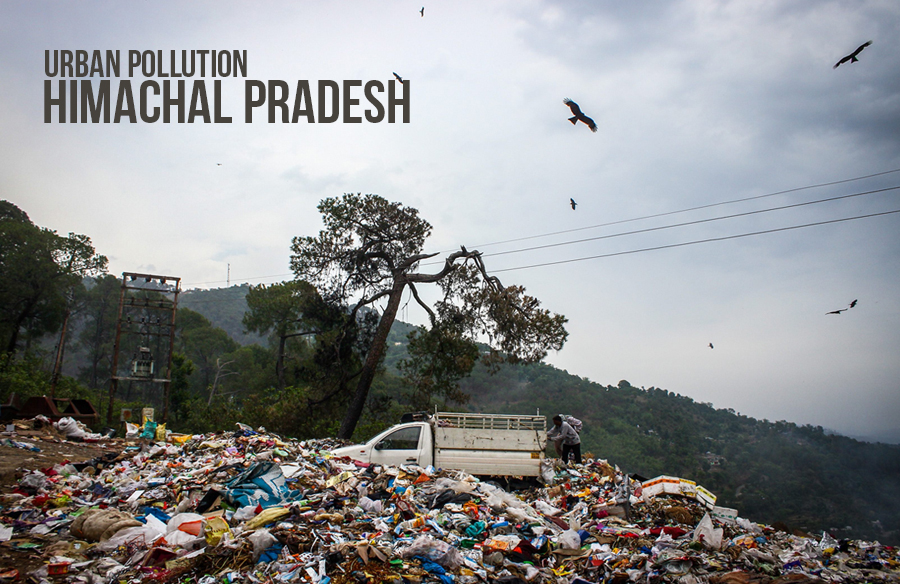
Himachal Pradesh is famous for its natural beauty and resources. However, as it seeks urbanization and industrialization, it faces a pressing threat to sustaining its natural beauty and wealth. Striking a balance between preserving the local ecosystem and urban development has become the need of the hour in the realm of Architecture. Urban pollution has remained the center of public and policy discourse debate due to its harmful implications on the environmental ecosystem and public health.
Urban Pollution and Himachal Pradesh
In simple terms, urban pollution is understood as pollution and harm caused to the surrounding ecosystem due to human activities. More precisely, vehicular emissions, industrial activities, construction and deforestation activities, solid waste, and many others are examples of urban pollution.

The increasing popularity of Himachal Pradesh as a tourist destination has led to an increase in the flow of vehicles on the road. Over 1.5 million registered vehicles are currently operating in the state as per the State Transport Department in 2022 in urban areas like Shimla, Dharamshala, and Solan. This spike in traffic has certainly contributed to higher carbon emissions, leading to deteriorating atmospheric conditions. Like in other parts of the country, urban air pollution in Himachal Pradesh has several factors. Here are some of the major causes of urban pollution in the state:
Vehicle Emissions: This may be due to increased vehicle growth to and from various destinations in cities such as Shimla, Dharamshala, Solan, and others, which has consequently contributed to air pollution. Automobile emissions emit various byproducts, such as carbon monoxide, nitrogen oxide, and particulate matter.
Construction Activities: Tourism has seen urban development increasing at a fast rate as the population looks for accommodation; construction work creates a lot of dust and particulate matter. For instance, the existing crux of new hotels and resorts currently being developed across Manali to cater to the increasing potential tourists augments air pollution.
Tourism: This is because Himachal Pradesh, being a popular tourist site, has a high incidence of waste generation and pollution. Tourists visiting places like McLeod Ganj are found to unpack chewing gums and litter the area, while the increased number of vehicles adds to the adverse emissions.
Agricultural Practices: In peripheral urban areas, chemical fertilizers and pesticides pollute the soil and water. Finally, farmers burn crop residue in certain areas, such as Kangra Valley, further causing air pollution.
Waste Management: The lack of a proper waste management system contributes to the increase in the volume of solid waste, eventually affecting air and water quality. In towns such as Kulli, people dispose of their wastes by open burning, increasing air pollution.
Deforestation: Residential and commercial development activities, as well as other infrastructure developments, destroy green land and water bodies, damaging the soil. Likewise, in Shimla, construction expansion, including road expansion works, has had negative impacts, such as openly converting forest areas into roads, causing pollution, and reducing the efficiency of natural air filtering means.
Way Forward: Measures taken to combat environmental degradation include enforcing strict environmental laws, encouraging the construction of more efficient means of transport such as railways and buses, managing general waste, and supporting afforestation exercises. Addressing these concerns is imperative to sustain ecological equilibrium and a better quality of life in Himachal Pradesh.
Responses from different Architectural Practices
With regard to the impact on the built environment and urban pollution, architects in Himachal Pradesh are effectively responding to this challenge by using technological inventions, research studies, and awareness campaigns. Green building projects like the award-winning Dharamshala International Meditation Centre by Architecture Discipline, which incorporates rainwater harvesting and recycled materials, and the Himachal Pradesh Secretariat Building by Morphogenesis, with complete integration of solar energy and passive cooling strategies, are now setting a new pace towards green building. Sustainable campus designs that are being implemented in educational Institutions, including the IIT Mandi campus designed by Christopher Charles Benninger Architects, which has recently won the National Award for Excellence in Sustainable Architecture in the year 2023 because of its energy-efficient building designs and the natural landscape preserved are defining the future of structures.

Eco-village concepts like the “Himalayan Eco Village” by Architects 49 propose self-sufficient communities with solar energy, waste recycling, and community-based agriculture (“Himalayan Eco Village: The ‘’New Generation of Sustainable Living’’ initiatives, also known as the ‘’A Concept for Sustainable Living’’, are programs that seek to re-introduce sustainable living practices. Urban regeneration projects, for example, the “Shimla Urban Regeneration Project” by Morphogenesis, involve aspects like pedestrianization, public realm improvements, and green infrastructure, which is in line with architects in Dharamshala campaigning for pedestrian-friendly city designs.
Some ongoing research and academic activities include the new sustainable architecture program at Himachal Pradesh University Launched Sustainable Architecture Program at Himachal Pradesh University” Times of India, April 2022) and future studies and architects produced by institutions such as Shoolini University. Promotion by advocacy organizations such as the Indian Green Building Council (IGBC) and the Indian Institute of Architects (IIA) Himachal Pradesh Chapter, among others, also supports sustainable practices. As the data and references show, such sustained, multifaceted action by architects is bringing about this positive change and helping Himachal Pradesh build a more sustainable urban environment that remains true to the state’s natural beauty and clean air.
References:
- Himachal Pradesh Air Quality index (AQI) and India Air Pollution (no date) IQAir. Available at: https://www.iqair.com/in-en/india/himachal-pradesh (Accessed: 26 May 2024).
- This award winning Waste Management Plant in Himachal’s Palampur has turned into a Garbage Hill (no date) Down To Earth. Available at: https://www.downtoearth.org.in/blog/pollution/this-award-winning-waste-management-plant-in-himachal-s-palampur-has-turned-into-a-garbage-hill-90965 (Accessed: 26 May 2024).
- Migrator (no date) This Indian architect is building walls out of plastic bottles, Homegrown. Available at: https://homegrown.co.in/homegrown-explore/lifestyle/this-indian-architect-building-walls-out-of-plastic-bottles (Accessed: 26 May 2024).
- Plastic Waste Management; a case study, District Kullu (himachal pradesh) (no date) Integrated Mountain Initiative. Available at: https://www.mountaininitiative.in/plastic-waste-management-a-case-study-district-kullu-himachal-pradesh/ (Accessed: 26 May 2024).







