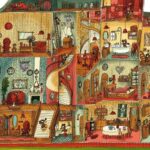
“Are attitudes to architecture shaped by the images of buildings that young children see in picture books?”, (Buxton, 2019) this was the primary question raised and investigated by Dr Torsten Schmiedeknecht of the University of Liverpool. The development of cognitive processing in humans allows information to be uniquely stored since childhood.
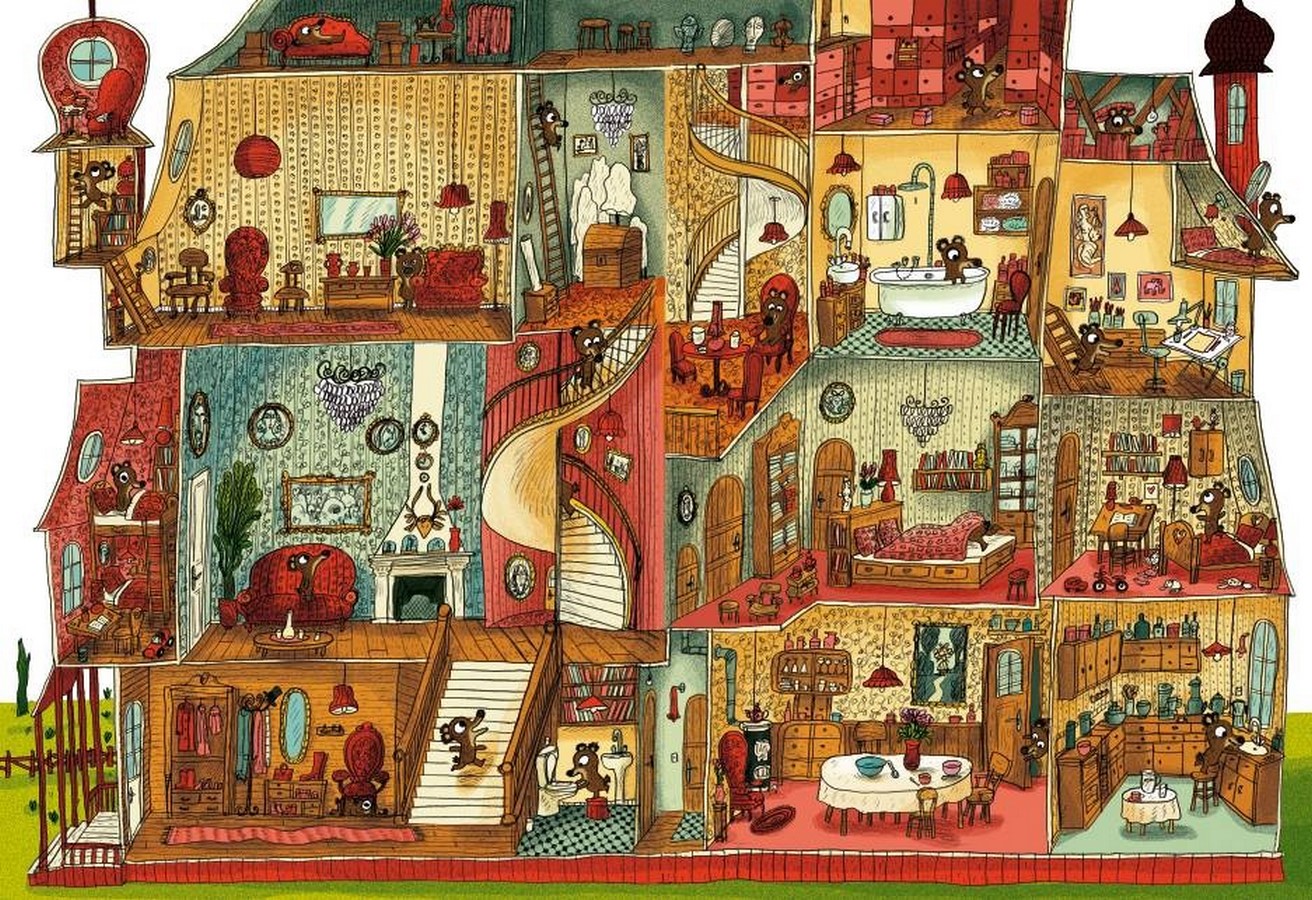
Considering this psychological phenomenon, it’s conceivable that the atmosphere children encounter could integrate with their cognitive resonance. For instance, their viewpoints on architectural illustrations in children’s books could be shaped subconsciously. In this exploration, we delve into the influence of architectural imagery in children’s literature, drawing from a meticulously curated collection of books. From igniting curiosity about spaces and urban awareness to identifying spatial story enhancers, the impact of architectural representations extends far beyond the surface. Through intricate cross-sections and isometric views, these detailed graphics unravel the layers of characters’ tales.
Layers through Cross-Sections and Isometric Views
6 children’s illustration books have been identified to substantiate the claim of their importance surrounding the perception of children. The books are the Brambly Hedge series by British author Jill Barklem, Need a House, Call Ms. Mouse by George Mendoza, Trouble for Trumpets by Peter Cross, Full Moon Soup by Alastair Graham, How Cities Work by James Gulliver Hancock, and Inside Out: New York City by Josh Cochran.
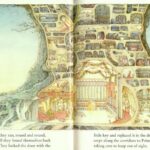
The Brambly Hedge series by British author Jill Barklem
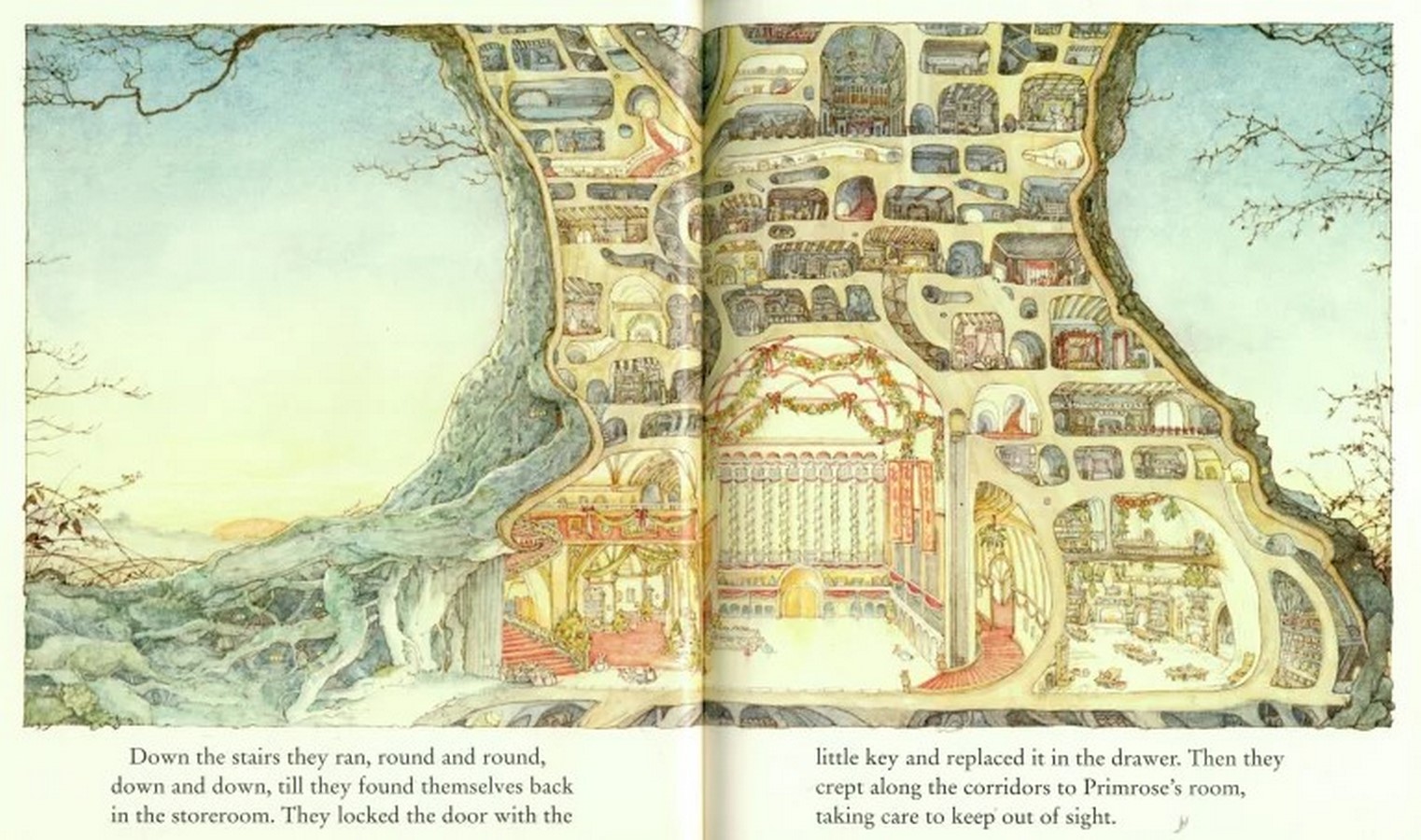
This sectional cut through the tree is a crossover between a parallel projection and perspective drawing, allowing the young eyes to gauge the depth of the spaces, and interpret the setting in greater detail. The readers are privy to an exploration of the primal kind here, removed from didactic methods.
The accurate representation in thickness of tree bark, followed by the tangible proportions intended for functionality for each room- be it the stately hall, dark dungeons, or sparse wood-beamed bedrooms enhances the story’s atmosphere. The Hedge’s warm appearance conveys a sense of charm and nostalgia, abetted by the saturated color palette.
Need a House, Call Ms. Mouse by George Mendoza
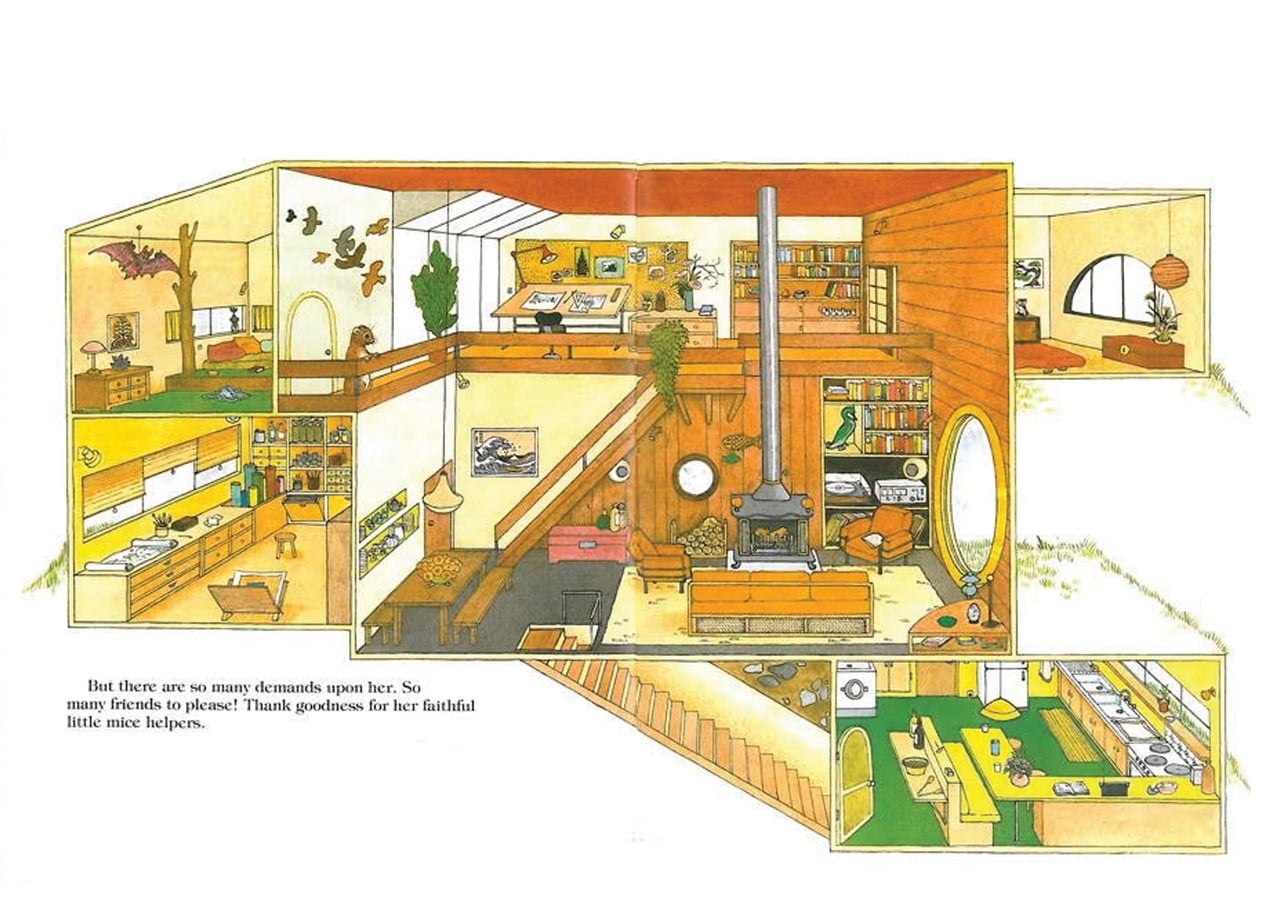
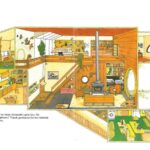
This book’s sectional perspective drawings have been expertly crafted, providing a glimpse into the private sphere of domestic life designed by “Ms. Mouse” suiting various animals. It is serious in its visual immersion while ingeniously associating architectural imagery with a storytelling narrative between a designer and her unique clients.
For young readers, the illustrations are extravagant introductions to architectural drawings that are uncomplicated to read and yet complex in their undertaking. The Otter’s home as seen above, follows the imaginative rendition of a Mid-century modern residence, tethered to their primary occupation and exposure to wood- driving the entire material palette. The surroundings indicate the underground nature of the habitat, and the section diligently adheres to the anthropometry of the Otter, allowing imagination to run rampant with a touch of realism.
Trouble for Trumpets by Peter Cross
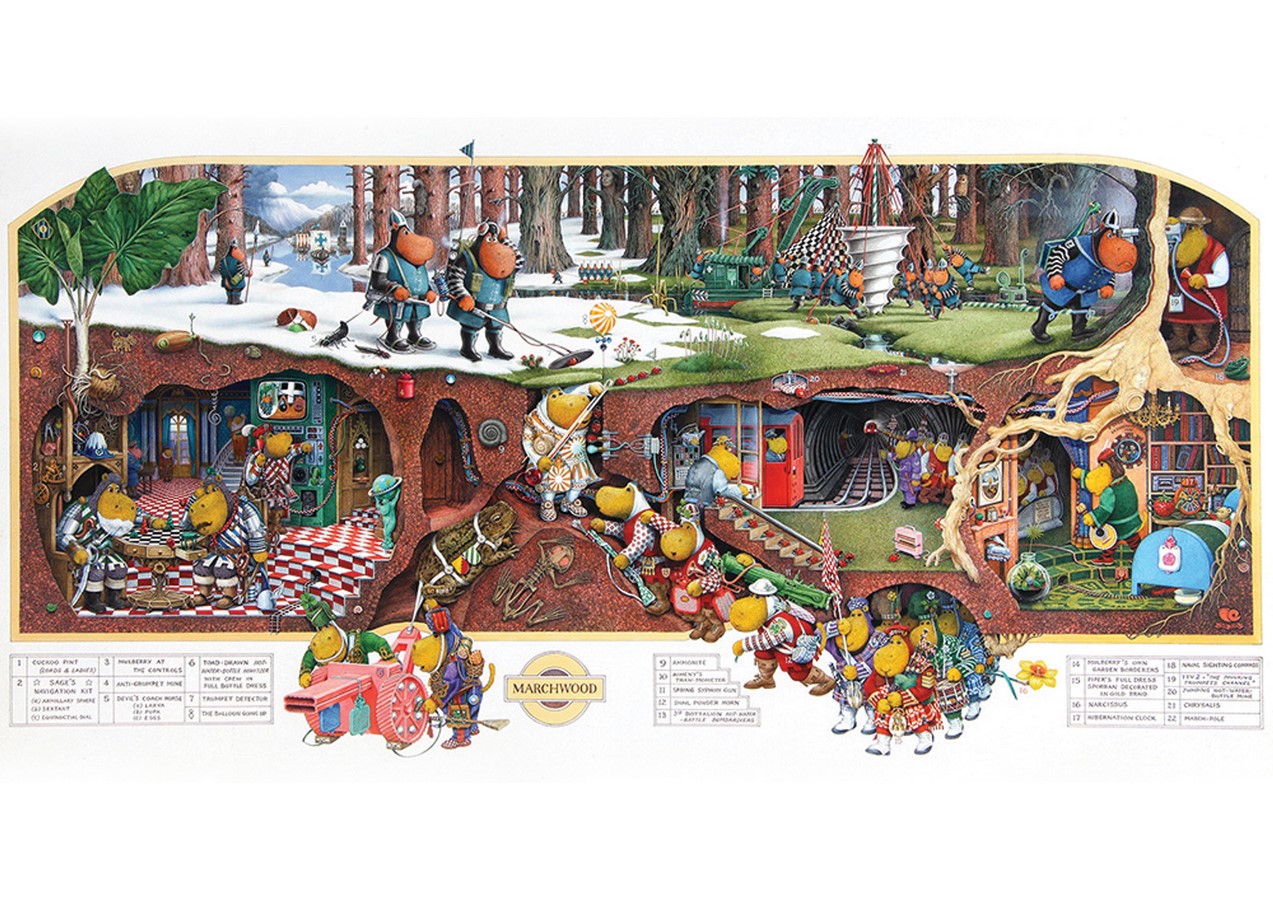
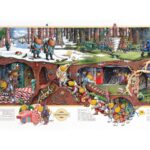
This was a fantasy book illustrated and written surrounding the premise of the four seasons and their conflict emulated through creatures called Trumpets and Grumpets.
The above-rendered sectional illustration is a treasure trove of details, plot points, and nuances that might go unnoticed at first glance. It urges the readers to engage with the colors and characters, tying the story together with their comprehension. The quality of providing a legend to navigate the elaborate visual is reminiscent of reading architectural drawings- never underestimating the intellect of children. The section shows the story unraveling above and below ground, electric lines running along the spaces with individual activities seeming symbiotically connected.
Urban Sprawls and Modern Architecture
Books like How Cities Work and Inside Out – New York City are rare elements of conventional children’s illustrated literature. They revolve around cities as they are and how people know them, spiced up with illustrations that infuse a sense of imagination into them. There are no fantastical creatures, dragons, gnomes, or Victorian architecture- but information narrated of everyday city life for children and adults alike.
How Cities Work by James Gulliver Hancock
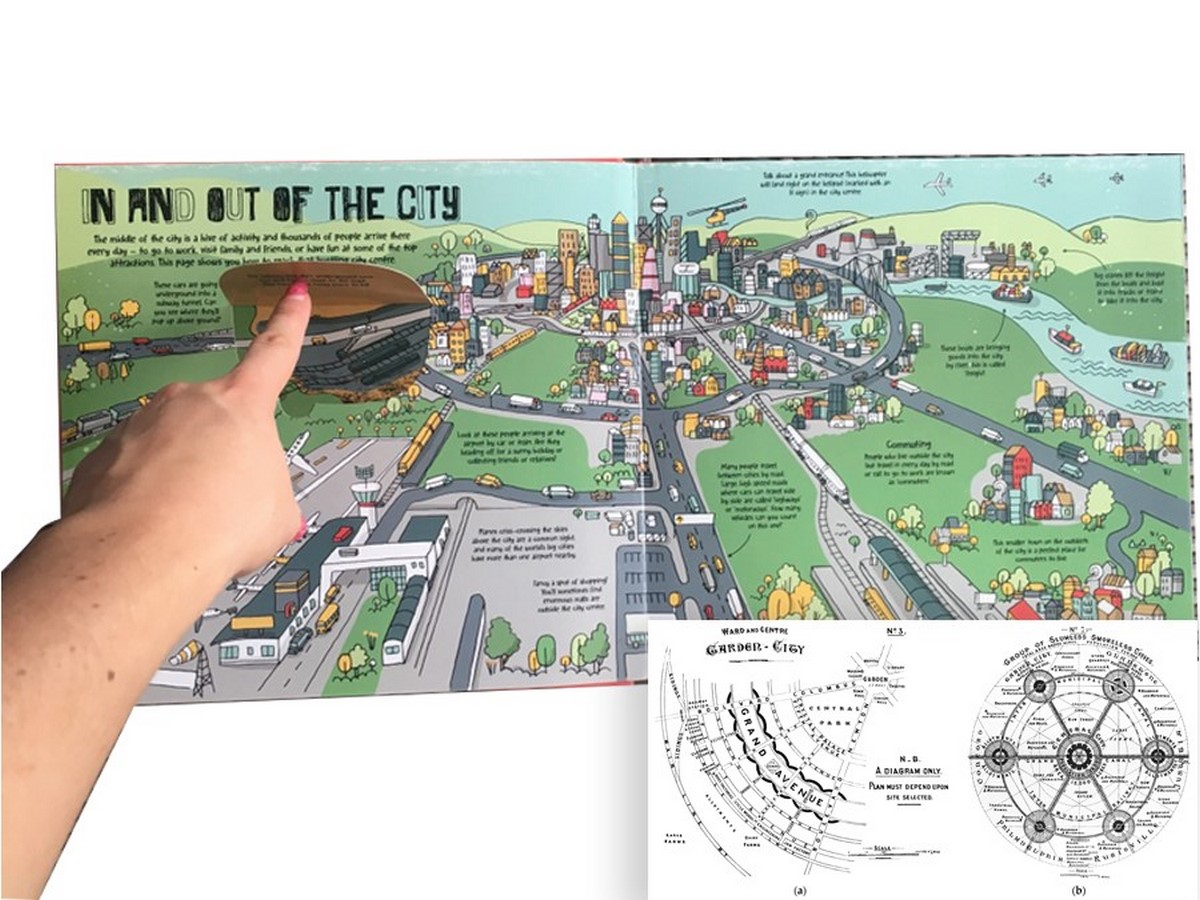
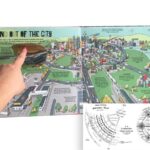
In “How Cities Work ” by James Gulliver Hancock, the cross-section and detailed drawings revealed under flaps, serve as invaluable tools for exploring urban landscapes and circulation patterns. Through intricate illustrations, readers are provided with a visual narrative of the complex infrastructure and layout of cities. These architectural and urban imageries “How Cities Work” showcase vibrant and livable urban environments. Readers gain insights into the interconnectedness of various urban elements and the dynamic nature of city life. The layout above vaguely emulates the Garden City Planning by Ebenezer Howard, facilitating an early introduction to Urban theories.
Inside Out: New York City by Josh Cochran
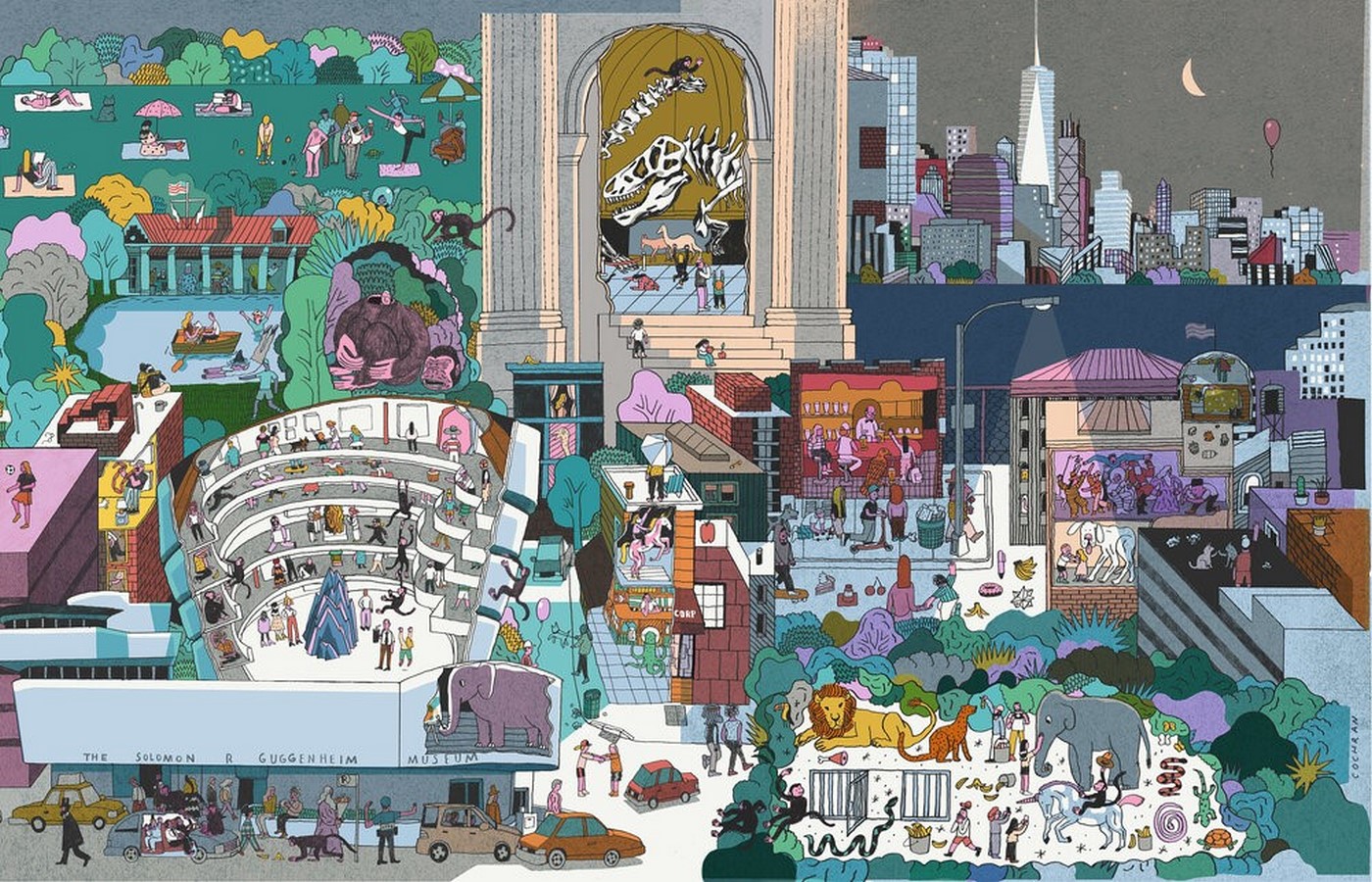
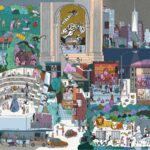
The part-section views are effective tools for exploring urban landscapes and conveying the essence of New York City’s memory, morphology, and urban life. The drawing depicts prominent monuments such as the American Museum of Natural History, the Guggenheim Museum, and the Central Park Zoo, as well as lesser-known regions and hidden gems, providing readers with a comprehensive view of New York City as a thriving metropolis.
Furthermore, the portrayal of public places and plazas adds greatly to the entire urban fabric depicted in the book. These images show people interacting with their surroundings, ranging from families picnicking in parks to commuters racing through subway stations. This focus on human-scale relationships gives the architectural representation more nuance and complexity, bringing the city to life on paper.
Impact on Spatial Awareness
As children, perceiving the surroundings as a whole an image rather than vignettes of puzzle pieces is challenging due to their warped sense of proportion and limited exposure from their cone of vision. Books and stories fill in the spaces they have not envisioned and impact their spatial awareness. Architectural imagery in children’s literature indulges young eyes in dramatic versions of the built environment in their entirety.
Full Moon Soup by Alastair Graham
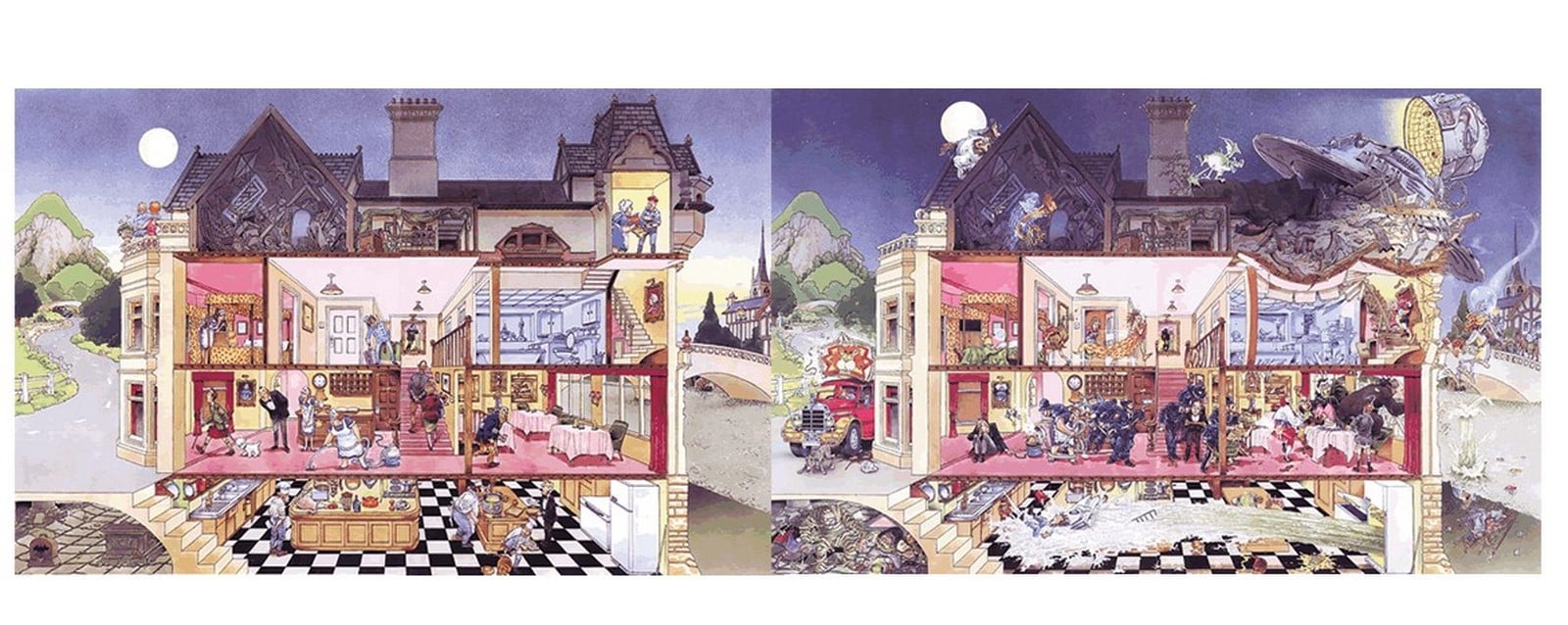
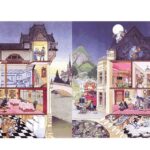
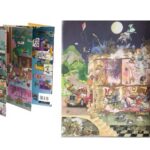
Unhinged and wild storytelling takes the front seat in this storybook; wordless and visually spell-binding. Over the course of one night, a hotel that first seems normal turns chaotic. How? Since unimaginable things materialize at the full moon. Each of the book’s twelve spreads depicts a different area of the four-story Hotel Splendide. A narrow country road winds to the left of the hotel, and a town lies on the other side of a river that is crossed by a bridge, setting the context for this sectional drama. The plot points overlap each other spilling out of the confines of the walls, floor, and roof of the Hotel. The reader is reminded of each story’s cause and effect when it intervenes with the physicality of the Hotel’s elements- the roof destroyed by a spaceship, a specter roaming in the attic, and the kitchen flooded.
The facet of spatial awareness cultivated through architectural illustrations in “Full Moon Soup” goes beyond mere visual perception. Children are encouraged to actively engage with the depicted environments, mentally mapping out pathways, identifying points of interest, and imagining themselves within the spaces. This interactive process not only deepens their understanding of three-dimensional spaces but also promotes critical thinking, problem-solving, and imaginative play.
How Cities Work by James Gulliver Hancock
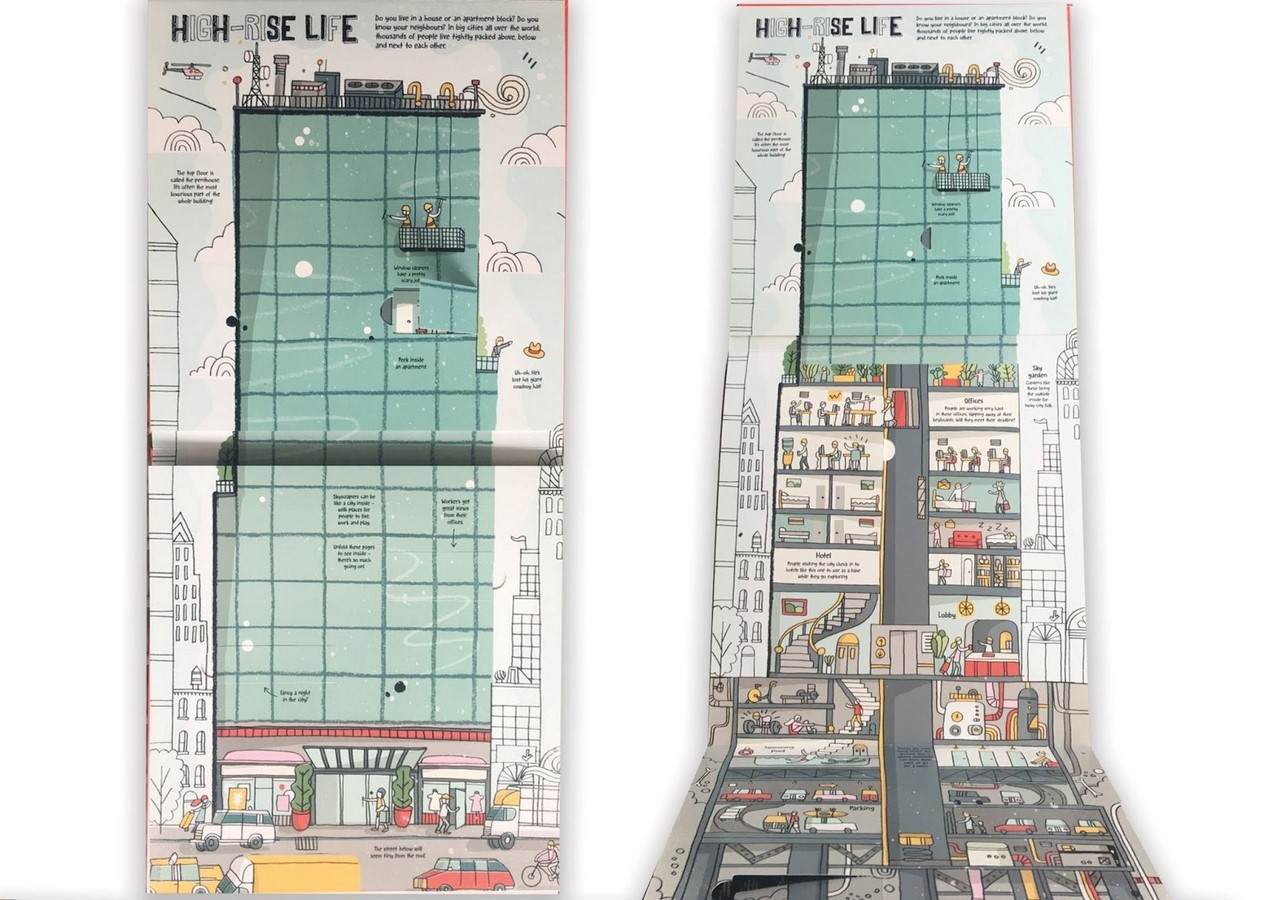
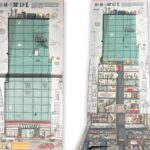
The book explores the workings of cities, encompassing their formation, construction, services, and structures above and below ground, including futuristic city concepts. It offers a glimpse into modern architecture – including skyscrapers, and streetscapes by seamlessly narrating the story of the building in tandem with the busy lives of its occupants through semi-accurate sectional drawings.
Information is disseminated with the open flaps- unveiling the inner workings of spaces that are shielded by the glass facades. Though two-dimensional, these sections project the opportunities presented to users, allowing children to read and relate to these buildings that they would have engaged with in real life.
Need a House, Call Ms. Mouse by George Mendoza
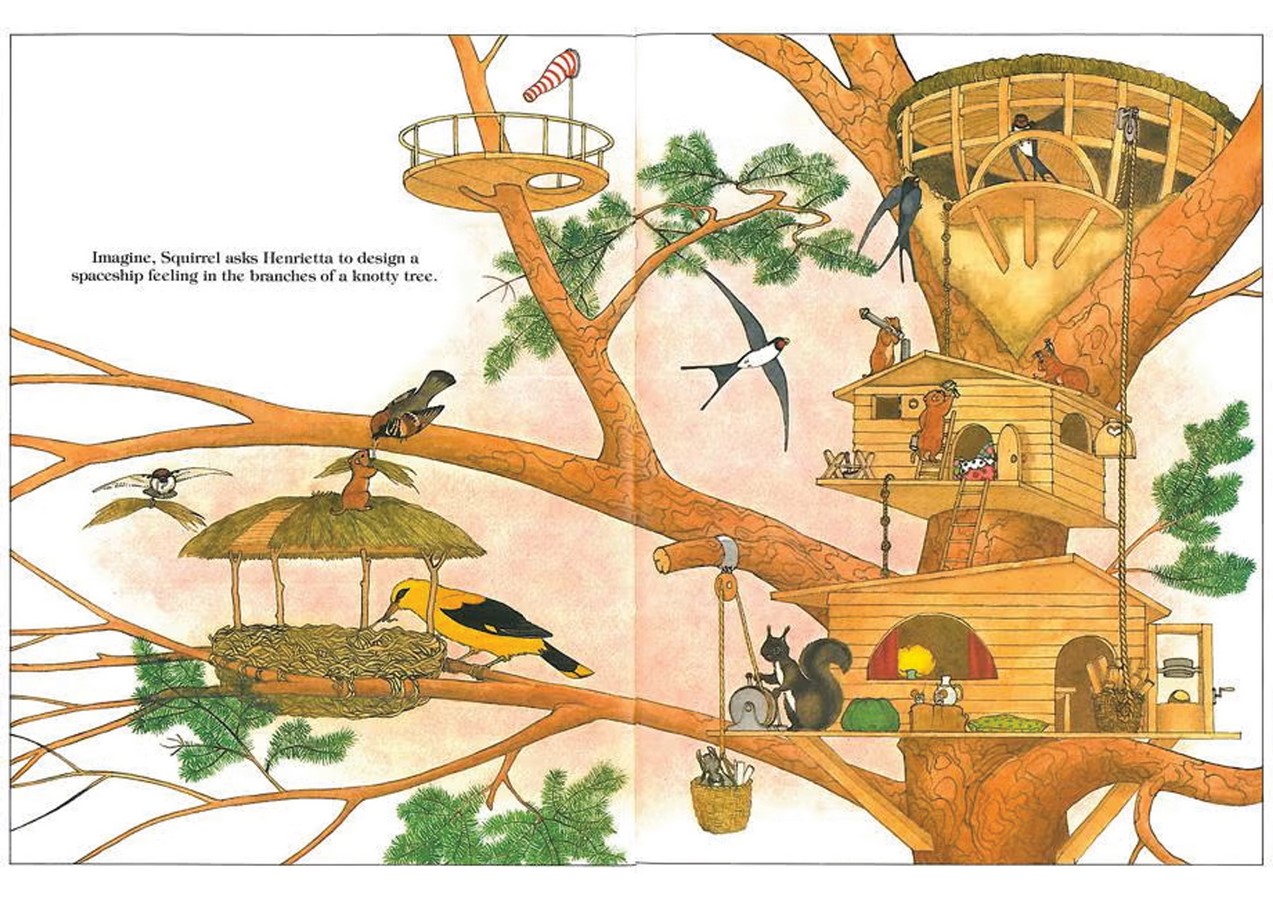
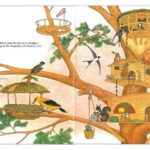
A residence illustrated by Doris Smith, seamlessly integrated into its surroundings, with both interior spaces and exterior context visible, will cleave unto the readers, visually immersing them.
The mechanisms employed in the design of residences for the squirrels and birds allow children to grasp the basic tenets of gravity and physics, and provide a twist in the perception of tree-houses. The above illustration is an architectural dialogue with young readers, communicating thresholds, connectivity, and a sense of community.
Real-world Inspirations and Story Enhancers
Architectural reflections from real life are often inspirations for many children’s literature. The meta-referencing extends from memory-mapping existing cities with exaggerated twists, integrating plumbing services and wiring as story enhancers and other elements that are lifted from reality to fiction- to provide some gravitas to the colorful plots.
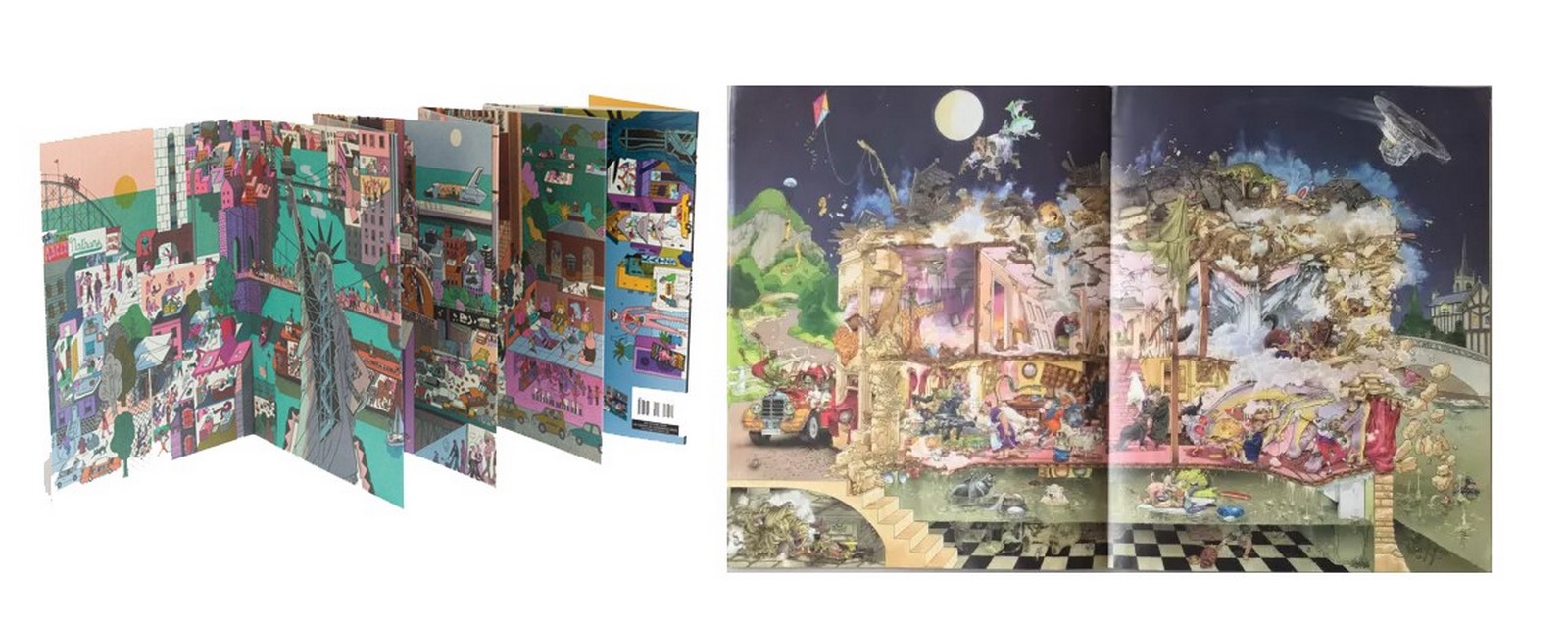
In “Inside Out: New York City” by Josh Cochran, the drawings showcase specific details of New York City’s iconic landmarks and neighborhoods. These details, such as the distinctive shapes of skyscrapers, the intricate designs of bridges, and the bustling activity of streets outside bodegas, enhance the plot by immersing readers in the dynamic atmosphere of the city. The architectural elements serve as both backdrop and catalysts for the narrative.
In “Full Moon Soup” by Alastair Graham, the drawings feature imaginative landscapes that transport readers into a whimsical world. While not explicitly architectural, the illustrations often depict unique structural features, hidden passages, and secret doors that enhance the plot by adding layers of mystery, and adventure. Functional and utilitarian details like fridges, furniture, and wall hangings provide the illusion of normalcy when juxtaposed with conflicting storylines. These architectural details contribute to the overall narrative by inviting readers to explore the fantastical settings, peeling away each layer of intrigue.
Impact on Future Architectural Literacy
In conclusion, exposure to architectural representations in children’s books holds immense potential for shaping the development of architectural literacy in adulthood. Through interactive learning experiences facilitated by books, children are encouraged to explore and understand complex architectural concepts, fostering curiosity and a deeper appreciation for the built environment. As these images become established in young minds, they serve as essential aspects that shape perceptions and attitudes toward architecture as adults. Children’s books play an important part in developing future architects, urban planners, and informed citizens who can critically engage with the built environment by establishing a feeling of wonder and excitement with architectural design at a young age. Thus, the instructional value of children’s illustrated books goes well beyond their pages, influencing how people view, comprehend, and interact with their surroundings for years to come.
References:
- Buxton, P (2019). Why is there so little modern architecture in children’s picture books? [online]. Available at: https://www.ribaj.com/culture/building-children-s-worlds-post-1945-picture-books-mann-island-liverpool-dr-torsten-schmiedeknecht-pamela-buxton [Accessed date: 28/01/2024].
- Hong, C (2019). Welcome to the Dollhouse: The Best Cross-Sections in Picture Books [online]. Available at: https://mrslittle.com/welcome-to-the-dollhouse-the-best-cross-sections-in-picture-books/ [Accessed date: 28/01/2024].
- Tyger Tale (2016). Brambly Hedge: The Secret Staircase By Jill Barklem. [online]. Available at: https://tygertale.com/2016/12/08/the-secret-staircase-a-winters-tale-from-jill-barklems-brambly-hedge/ [Accessed date: 28/01/2024].
- Stead, N. (2013). The Enchanting Mouse Architecture of Need a House? Call Ms. Mouse! [online]. Available at: https://slate.com/human-interest/2013/09/animal-architecture-in-the-george-mendoza-s-out-of-print-children-s-book-need-a-house-call-ms-mouse.html [Accessed date: 28/01/2024].
- Cross, P. Trouble for Trumpets. [online]. Available at: https://petercrossart.com/books/trumpets/trouble-for-trumpets [Accessed date: 28/01/2024].
- Kelly (2017). How Cities Work by James Gulliver Hancock. [online]. Available at: https://www.beafunmum.com/2017/01/how-cities-work-by-james-gulliver-hancock/ [Accessed date: 28/01/2024].
- Wordless Books. Full Moon Soup. [online]. Available at: https://wordlessbooks.co.uk/books/full-moon-soup [Accessed date: 28/01/2024].