Architectural education demands years of study, design exploration, technical coursework, and continuous assessment. Yet completing a degree does not necessarily mean that a graduate is prepared for the responsibilities of professional practice. The transition from academic projects to actual building projects introduces demands that cannot always be replicated within a design studio.
In India, the pathway extends from the Bachelor of Architecture to postgraduate specialisation, doctoral research, and continuing professional development. Each serves a different purpose, but academic progression should not be confused with professional competence. A graduate may demonstrate strong conceptual thinking and visualisation skills while still requiring further experience in construction documentation, multidisciplinary coordination, regulatory compliance, and project delivery.
The concern is not that architectural education lacks value, but whether it connects academic learning sufficiently with the changing demands of the profession. As digital workflows evolve and practices increasingly rely on coordinated information and technical collaboration, the relationship between qualifications and workplace readiness deserves closer scrutiny. The question is not simply what students learn, but how effectively they can apply that knowledge when architecture moves from an academic proposal to a building that must actually work.
Degrees, Specialisation and Practical Competence
The progression from a Bachelor of Architecture to a master’s degree or PhD represents different forms of learning, not a single ladder towards professional readiness. Undergraduate education establishes a foundation in design, building technology, and architectural thinking. Postgraduate study may develop expertise in areas such as urban design, sustainability, computation, or advanced building systems, while doctoral research prioritises original knowledge and critical investigation. Each has value, but none automatically guarantees the ability to manage the everyday demands of architectural practice.
The distinction matters because academic achievement is often treated as a broad measure of competence. A graduate may possess advanced theoretical knowledge yet have limited experience coordinating consultants, preparing construction documents, interpreting project constraints, or managing revisions across a live project. Conversely, a practitioner may develop considerable technical and delivery expertise through supervised experience without pursuing postgraduate research. These capabilities are complementary, but they are not interchangeable.

Architectural education therefore needs to be evaluated against the purpose of each qualification, rather than expecting every degree to deliver the same outcome. India’s Council of Architecture sets standards for recognised architectural education, including undergraduate and postgraduate programmes, but formal educational requirements and the specific workflows of individual practices are not identical.
The challenge is not to make every academic programme vocational, but to ensure that students understand what their qualifications prepare them to do and what further learning their chosen career paths may require. This distinction becomes particularly visible when graduates move from academic design projects into the technical and organisational realities of practice.
The Gap Between Studio and Practice
The design studio is central to architectural education, providing space for experimentation, conceptual development, critique, and visual communication. Yet the skills rewarded in academic design projects do not always correspond to the full range of responsibilities encountered in professional practice. A compelling presentation may communicate a design vision, but delivering that vision requires detailed drawings, material decisions, building regulations, services coordination, cost awareness, and responses to changing site conditions.
This difference does not make studio-based learning inadequate by definition. The concern is whether design exploration is consistently connected to the technical and organisational processes that turn proposals into buildings. A mixed-method study of architectural interns and fresh graduates in India identified a discrepancy between academic preparation and industry requirements, and highlighted the value of stronger collaboration between educational institutions and practices.

The culture surrounding studio work also deserves scrutiny. Long hours and repeated submissions can encourage persistence, but they should not be mistaken for evidence of deeper learning. Interviews with 12 architecture students in the United Kingdom identified heavy workloads, a culture of constant effort, subjective aesthetic judgement, and tutor criticism among the sources of academic stress. Although this small study cannot represent every Indian institution, it raises relevant questions about how educational rigour is defined.
A stronger connection between design studios, technical coursework, live projects, and structured internships could help students understand not only how to propose architecture, but how to develop and coordinate it. This becomes even more important as the digital systems used to deliver buildings continue to evolve.
Digital Skills and Evolving Workflows
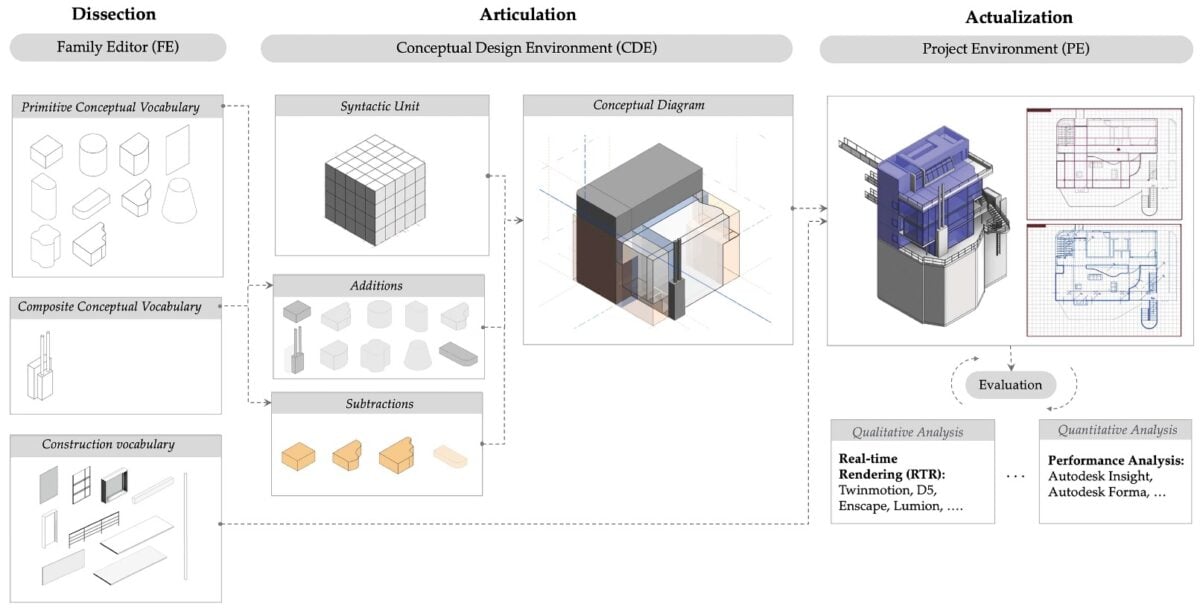
The digital transformation of architectural practice has made the relationship between education and professional competence increasingly complex. Building Information Modelling (BIM), for instance, is not simply a method of producing three-dimensional models. It involves managing building information, coordinating disciplines, maintaining consistent documentation, and supporting decisions throughout a project’s development. A student may learn to model a building successfully yet remain unfamiliar with how that model operates within a coordinated professional workflow.
This distinction exposes an important challenge for architectural education. Teaching individual software packages can introduce essential skills, but those skills become professionally meaningful when students understand how digital tools connect design, construction documentation, consultant coordination, and project delivery. Abdirad and Dossick’s systematic review of BIM curriculum design highlights the complexity of integrating BIM into architecture, engineering, and construction education, including decisions about competencies, teaching methods, industry engagement, assignments, and assessment.
The emergence of artificial intelligence adds another layer to this problem. AI-assisted visualisation, generative design, and automated production can accelerate certain tasks, but their outputs still require evaluation. Students must learn to recognise inaccuracies, assess design consequences, understand limitations, and retain responsibility for decisions rather than accept generated results uncritically.
The challenge is therefore not to make every architecture student proficient in every available tool. It is to ensure that architectural education develops adaptable digital competence alongside design judgement and technical understanding. As professional workflows continue to change, the question of where these skills should be taught becomes increasingly important.
Vocational Training and Industry Experience
If academic qualifications cannot cover every practical skill required by a changing profession, specialist training and structured workplace experience deserve a more prominent role. Short courses in BIM, computational design, construction documentation, building performance, and project management can help graduates develop specific competencies that may not receive sufficient attention within their degree programmes. However, these courses should complement architectural education rather than become a substitute for its broader intellectual and design foundations.
The distinction between training and professional experience is equally important. A software certificate may demonstrate familiarity with a tool, but it cannot replicate the judgement developed through coordinating consultants, responding to site conditions, managing revisions, and working within actual project constraints. Structured internships, supervised placements, live projects, and mentorship can help connect academic knowledge with these responsibilities.
India has taken a step towards more structured vocational training in this field. In April 2026, the Council of Architecture and the National Council for Vocational Education and Training signed an agreement recognising the Council as a dual awarding body. The initiative enables the development of industry-aligned courses for students, technicians, artisans, and professionals, with the stated aim of strengthening competency-based training and addressing industry skill requirements.
This creates an opportunity to connect formal qualifications with targeted training. However, additional courses should not become a financial burden that graduates must bear simply to meet basic workplace expectations. Universities need to identify essential competencies within their curricula, while employers should contribute through meaningful placements, supervised project work, and continuing mentorship. Graduates, in turn, need opportunities to update their skills as technologies and professional responsibilities change.
Rethinking Architectural Education
Architectural education should not be judged solely by the qualifications it awards, the designs students produce, or the technologies they learn to operate. Its value also lies in preparing graduates to apply knowledge responsibly, collaborate across disciplines, and adapt to changing professional demands. Achieving this requires a closer relationship between academic institutions and architectural practices, with each recognising its role in developing future professionals.
Universities must preserve the creative and intellectual foundations of architecture while connecting design learning more closely with construction, technical coordination, and contemporary digital workflows. Vocational courses can address specific skill requirements, while internships and mentorship provide opportunities to develop judgement through experience. Employers, meanwhile, must recognise that graduates are entering the profession to learn as well as contribute, and provide appropriate supervision rather than expect immediate competence in every aspect of project delivery.
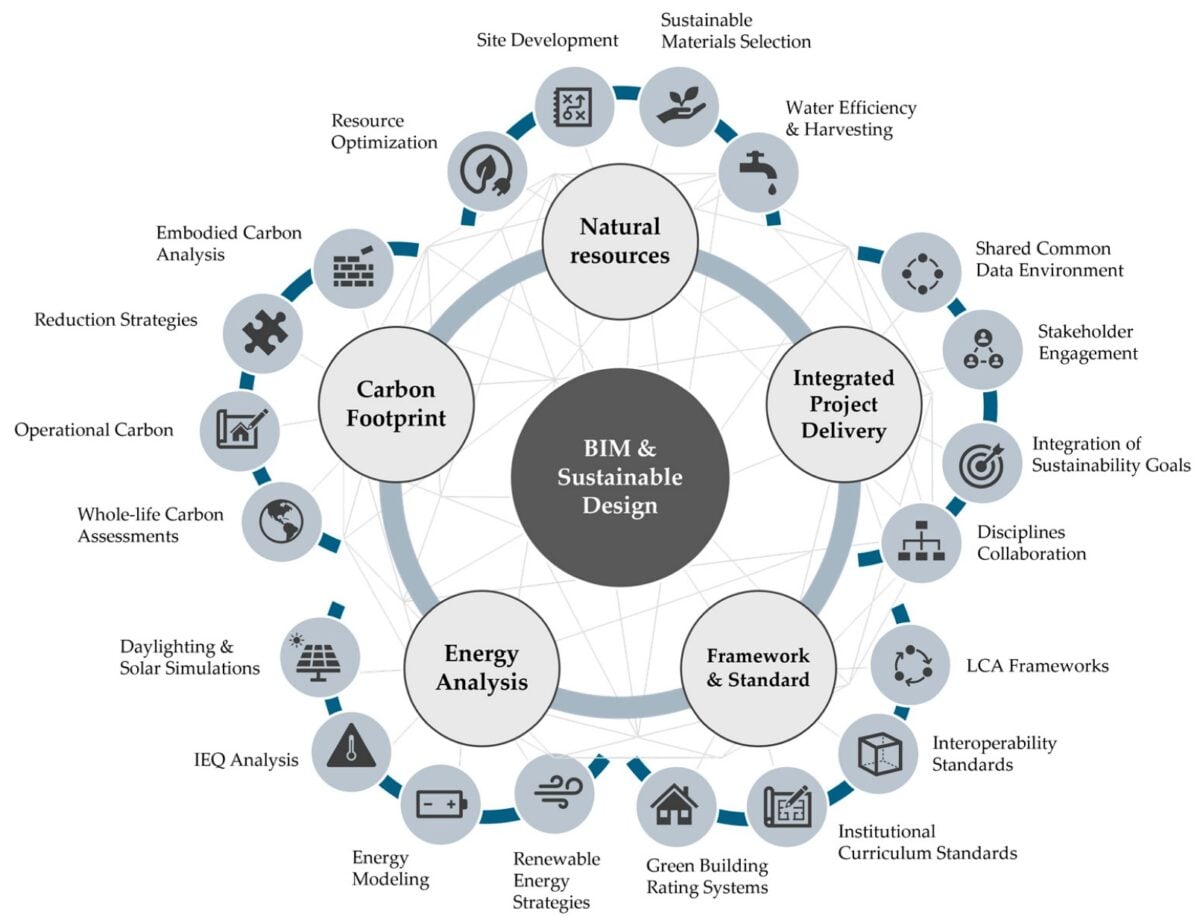
The challenge extends beyond digital proficiency. Architects must also understand material choices, resource use, climate-responsive design, and the long-term consequences of their decisions. Preparing graduates for the future means developing both the technical capability to use new tools and the judgement to decide when, why, and how to use them.
Ultimately, architectural education should not end at graduation, nor should professional readiness be left entirely to individual graduates. Degrees provide essential foundations, specialist training develops targeted competencies, and professional experience builds judgement through application. Connecting these elements more effectively would allow architectural education to preserve its creative and intellectual purpose while responding more directly to the realities of practice.
Abdirad, H. and Dossick, C.S. (2016) ‘BIM curriculum design in architecture, engineering, and construction education: A systematic review’, Journal of Information Technology in Construction, 21, pp. 250–271. Available at: https://www.itcon.org/paper/2016/17
Alamasi, R. and Asfour, O.S. (2026) ‘Applications of Generative AI in Architectural Design Education: A Systematic Review and Future Insights’, Digital, 6(1), Article 6. Available at: https://doi.org/10.3390/digital6010006
Council of Architecture (2024) Council of Architecture (Minimum Standards of Architectural Education) Regulations, 2024. Available at: https://coa.org.in/education/standards
Konduri, S., Kumar, B. and Choudhury, D. (2024) ‘Bridging the gap: Industry-academia collaboration in architecture’, ShodhKosh: Journal of Visual and Performing Arts, 5(ICoMABE), pp. 69–81. Available at: https://doi.org/10.29121/shodhkosh.v5.iICoMABE.2024.2155
Ministry of Skill Development and Entrepreneurship (2026) ‘NCVET & Council of Architecture signed agreement for NCVET Recognition as Awarding Body (AB-Dual) to Council of Architecture’, Press Information Bureau, Government of India, 10 April. Available at: https://www.pib.gov.in/PressReleasePage.aspx?PRID=2250935
Xie, Y., Yaqoob, A., Mansell, W. and Tai, S. (2021) ‘A qualitative investigation of stress related to studying architecture at degree level in the UK’, Arts and Humanities in Higher Education, 20(1), pp. 3–20. Available at: https://doi.org/10.1177/1474022219871001