Politics and National Unity
Brazil moved the capital from Rio de Janeiro to Brasilia in 1960 because the country’s population, resources, and political power were concentrated in a narrow strip of land along the southeastern coast. The idea of moving the capital was first mentioned in the constitution of 1891, but President Juscelino Kubitschek gave it political momentum. He argued that moving the capital to the centre of the country would shift attention from the coast to the underdeveloped heart of Brazil.
It was also important to ensure balance, both geographical and symbolic. Brasília was planned as a new capital, 1,000 km away from the coast, and served as a reminder that the capital of Brazil is not the port city of Rio de Janeiro. It was intended to contribute to territorial cohesion in a huge country, make it easier to provide services to people living in remote areas, and ensure the political and social unity of the country. In other words, this city was to become the centre of Brazil’s strategy for developing its territory.
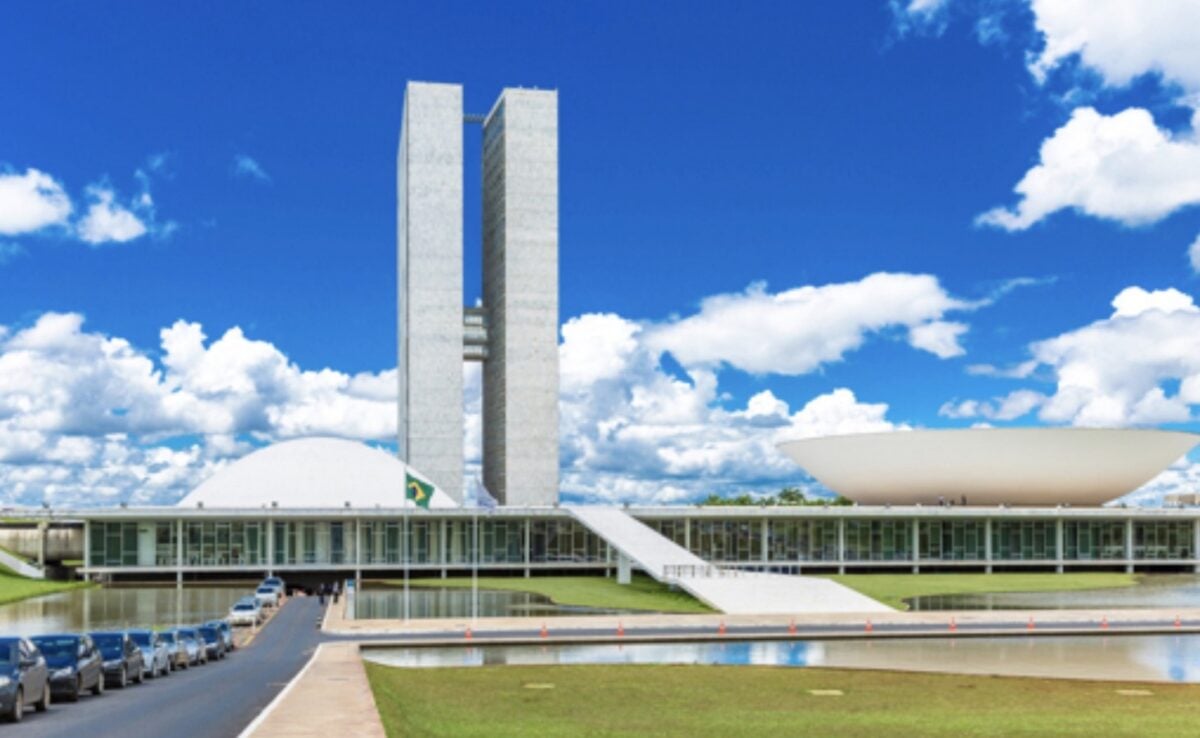
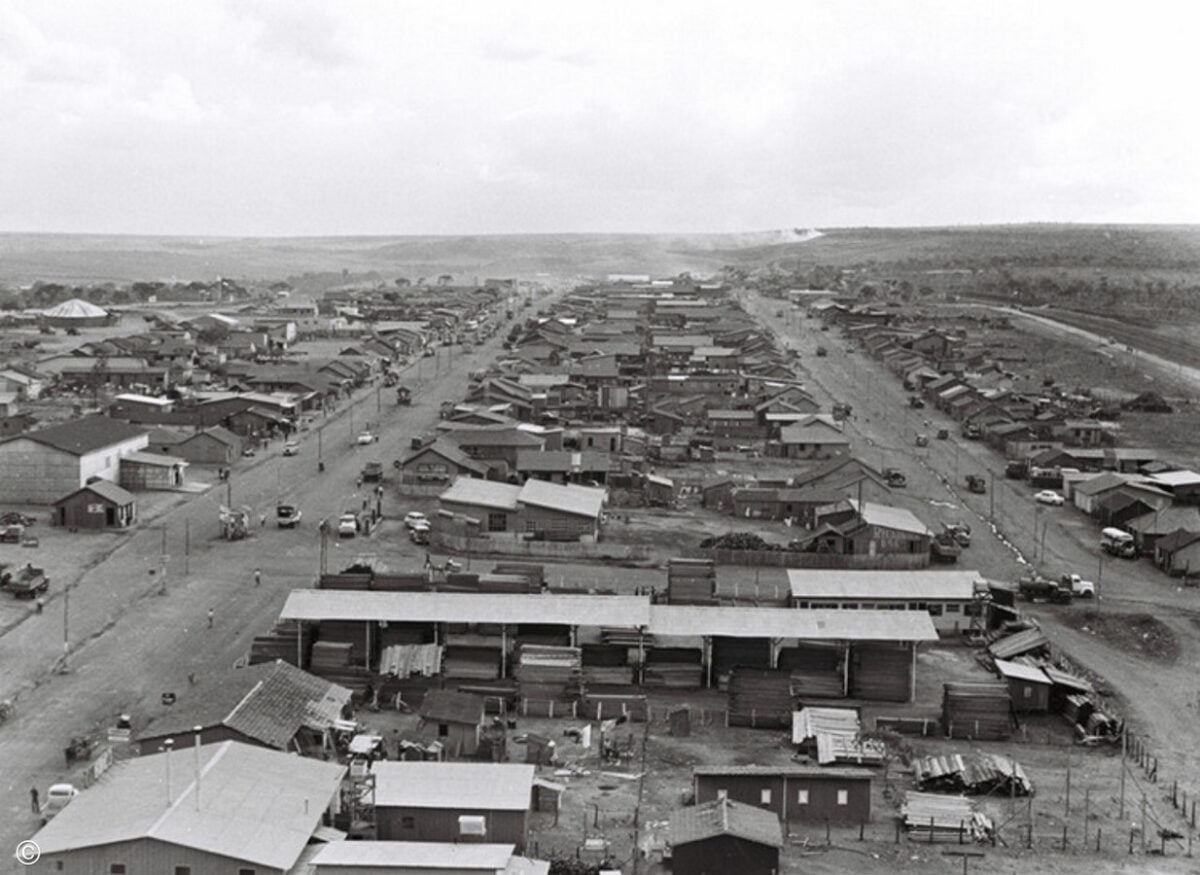
The construction of Brasilia was a bold project for its time, but it fit perfectly into Kubitschek’s programme of rapid development of the country. He even managed to build a new capital in a relatively short period of time (41 months) and present it to the people of Brazil on April 21, 1960. This was another step in Brazil’s path to development and expansion. The new capital was designed to meet the requirements of modern architecture and technology.
The Geography of Brasília
Brazil selected the Planalto Central, or the Central Plateau, to construct its capital city because of the region’s strategic location inland as a means to satisfy the policy of developing the interior and connecting Brazil’s interior with the capital, rather than using an existing coastal city. It was advantageous because the land was spacious and relatively flat, which allowed it to build a planned capital instead of adapting to the existing urban centres.
The expanse of land also allowed the planners to create a unique design that consisted of government centres, housing, cultural institutions, transportation infrastructure, and space for future development. The plan by Lúcio Costa could be realised, as it provided an opportunity to organise monumental buildings, residential superblocks, transportation routes, and natural areas as the composition of the capital city. The location was preferred because of the land’s consistency and good drainage capacity and the possibility of forming lakes by damming the Paranoá and São Bartolomeu rivers.
The selection of the site was primarily determined by hydrology and geography. The capital was built on a large tableland at 1,000-1,200 metres above sea level, which has a tropical savanna climate with well-defined rainy and dry seasons. The location was appropriate because the rivers in this area provided an opportunity to construct several artificial lakes by damming and impounding. For example, the Paranoá River was used to create Lake Paranoá, while the water supply infrastructure was secured through the Torto/Santa Maria and Descoberto reservoirs.
The last reason for selecting this site was its central location, as it was intended to serve as the growth pole for Brazil’s interior. New infrastructure, services, housing, and jobs were expected to follow, which would help redirect the population growth from the coastal cities to the interior. Therefore, the capital’s location was chosen because of its centrality to Brazil’s central-western region, which would provide access to the development opportunities and services previously only available to large coastal cities.
Urban Vision and Reality
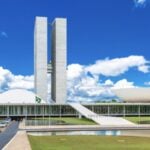
Being built on the open plateau, Brasilia presented a unique opportunity for Lúcio Costa to design the capital from scratch. His Plano Piloto utilised two intersecting axes, with monumental buildings arranged along the east-west axis and a north-south residential axis, which followed the contours of the land. The United Nations Educational, Scientific, and Cultural Organization (UNESCO) considers it a model of modernist urban planning. The plan was realised with the help of Oscar Niemeyer, who designed numerous buildings of white modernist architecture of the capital, including the National Congress, the Cathedral, and ministries’ buildings, located at the heart of Brasilia – the Monumental Axis. They, along with the plan itself, were meant to project Brazil’s image as a progressive nation that rejects the colonial legacy of its capital cities of the past.
From one perspective, Brasilia has contributed to the development of the Central-West region, as the capital provided essential infrastructure for connecting the region to the rest of the country, generated employment opportunities, stimulated migration and the rise of new urban centres around it, and triggered agricultural production.
However, the opportunity to promote balanced regional development was not seized, as the majority of Brazilians who migrated to the capital settled in the outlying cities, where they had limited access to job opportunities and resources and had to commute back to Brasilia, being unable to afford living in the capital. Therefore, the capital is underdeveloped as an integrated urban area, with many of the lower-class citizens still living in the distant suburbs, commuting to and from work daily, and encountering many inconveniences due to the lack of infrastructure and expensive transport. Hence, while embracing the idea of equal and integrated capital, the authorities failed to address the issue of social stratification and regional development gaps, resulting in a capital of inequalities.
REFERENCES
Brazil (2017). Brazil ready to pack up capital and move to Brasilia – UPI Archives. [online] UPI. Available at: https://www.upi.com/Archives/1960/04/21/Brazil-ready-to-pack-up-capital-and-move-to-Brasilia/2791709261001/ [Accessed 17 Oct. 2026].
Brown University (2019). Brasília | Brazil: Five centuries of change. [online] Brown.edu. Available at: https://library.brown.edu/create/fivecenturiesofchange/chapters/chapter-6/brasilia/ [Accessed 17 Oct. 2026].
Costa, C. and Lee, S. (2019). The evolution of urban spatial structure in Brasília: Focusing on the role of urban development policies. Sustainability, 11(2), p.553. doi:10.3390/su11020553.
Df.gov.br. (2020). 3.1 – History – federal district atlas. [online] Available at: https://atlas.ipe.df.gov.br/en/?p=1124 [Accessed 17 Oct. 2026].
el-Dahdah, F. (2021). Brasilia: Relocating Brazil’s capital inland. [online] Oxford University PressNew York, NY. Available at: https://academic.oup.com/edited-volume/61800/chapter-abstract/546396039 [Accessed 17 Oct. 2026].
Encyclopedia Britannica. (n.d.). Juscelino Kubitschek | president of Brazil. [online] Available at: https://www.britannica.com/biography/Juscelino-Kubitschek [Accessed 17 Oct. 2026].
Google Arts & Culture. (n.d.). Creation and symbolism of the National Congress Palace. [online] Available at: https://artsandculture.google.com/story/creation-and-symbolism-of-the-national-congress-palace/tAVxtEhM0Dsh6Q [Accessed 17 Oct. 2026].
Planned from scratch: Brasilia at 60 in pictures. (2020). BBC News. [online] 21 Apr. Available at: https://www.bbc.com/news/in-pictures-52369133 [Accessed 17 Oct. 2026].
Szulc, T. (1960). Brazil’s Juscelino and the city he built; Brasilia symbolizes a nation’s growth under Kubitschek. Brazil’s Juscelino. The New York Times. [online] 3 Apr. Available at: https://www.nytimes.com/1960/04/03/archives/brazils-juscelino-and-the-city-he-built-brasilia-symbolizes-a.html [Accessed 17 Oct. 2026].
UNESCO World Heritage Centre (2026). Brasilia. [online] Unesco.org. Available at: https://whc.unesco.org/en/list/445/ [Accessed 17 Oct. 2026].
Waldek, S. (2020). 60 Years ago, the Modernist City of Brasília was built from scratch. [online] Architectural Digest. Available at: https://www.architecturaldigest.com/story/60-years-ago-modernist-city-brasilia-built [Accessed 17 Oct. 2026].
Www.gov.br. (2024). Brasília – DF. [online] Available at: https://www.gov.br/g20/en/about-the-g20/host-cities/brasilia-df [Accessed 17 Oct. 2026].