Architecture is often discussed through the discourse of creation. Architects create buildings, cities, identities, and experiences. The discipline is framed in terms of invention, originality, authorship, and visual expression. Buildings are photographed when they are new, published when they are complete, and praised when they appear to represent innovation. But there is another way of looking at architecture. Instead of asking, “What does architecture create?” one might ask, “What does architecture care about?”
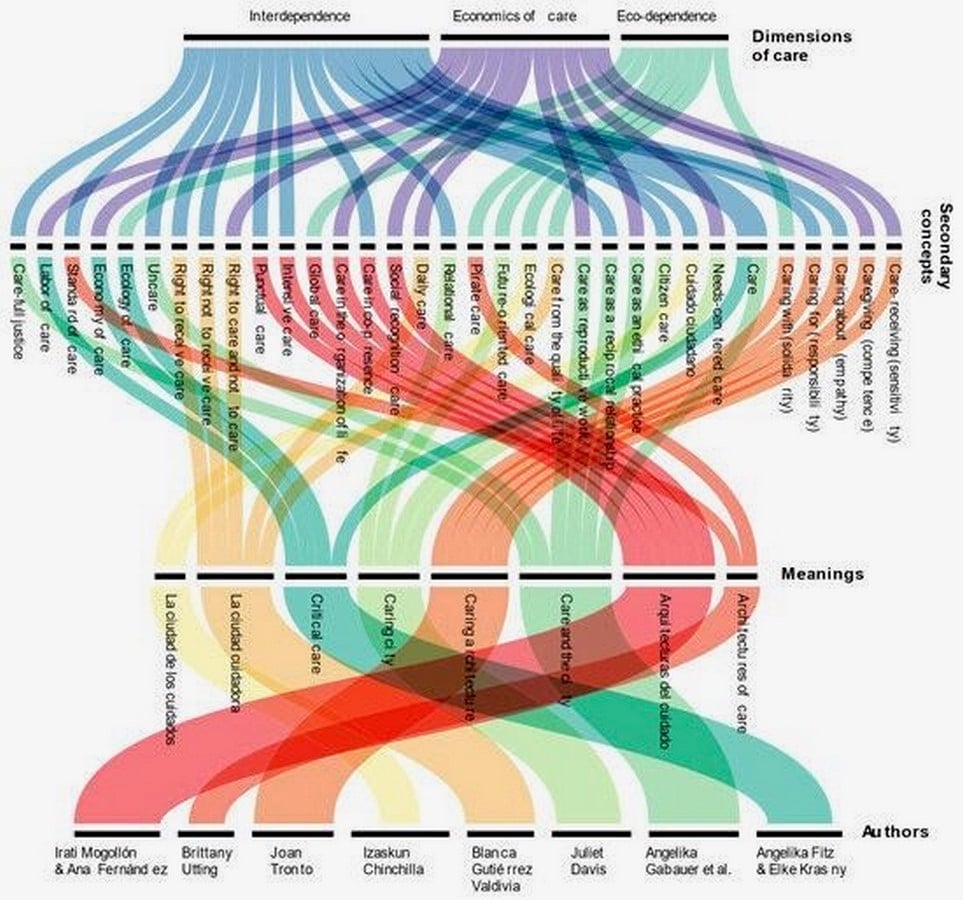
The question may seem naive, but it shifts the moral and philosophical foundations of design. A building is not merely an object. It occupies space, consumes materials, requires maintenance, regulates environmental conditions, shapes behaviour, and affects the lives of people who may have had no involvement in its design. It also exists in time. Its impact continues long after the architect leaves the project, the client moves on, and sometimes even after the original brief has outlived its purpose.
Architecture is not merely an activity of creation. It is also an act of preservation, adaptation, protection, memorialisation, and repair. This perspective assumes particular significance in light of the challenges facing the built environment, including climate change, resource exhaustion, rapid urbanisation, housing disparity, displacement, and the enormous amount of waste generated during construction. According to the United Nations Environment Programme’s Global Status Report for Buildings and Construction 2024/2025, buildings account for approximately 32 per cent of global energy consumption and 34 per cent of global carbon dioxide emissions. Materials such as cement and steel alone contribute considerably to building-related emissions (United Nations Environment Programme [UNEP], 2025).
In this context, architectural excellence cannot be understood solely in terms of novelty and aesthetics. The philosophical challenge becomes even more pressing:
Can architecture be considered an act of care?
Care, in this context, is not sentimentality. It is an ethical stance that demands attentiveness to circumstances, accountability for consequences, expertise in addressing needs, and responsiveness to the people and environments involved. Contemporary architectural discourse has increasingly explored this territory, including the possibility of shifting architectural ethics from competition towards care (Fraser et al., 2025).
An architecture of care offers more than an alternative approach to design. It proposes a new way of evaluating architecture as a practice in its entirety: a shift from object-making to world-making.
The traditional image of the architect remains closely associated with object-making. A building is designed, represented, constructed, and eventually photographed. The completed object becomes evidence of architectural knowledge. Yet, philosophically, architecture has always extended beyond the production of physical objects.
A building transforms the conditions of everyday life. A courtyard shapes social interaction. A window mediates our relationship with light and climate. A street determines possibilities for movement, while a door establishes a threshold between public and private life. A wall can offer protection, enforce exclusion, facilitate communication, or create separation. Architecture, therefore, has always participated in what Hannah Arendt (1958) described as human world-building.
Human beings inhabit a world of objects that outlast individual lifespans. Buildings are among these enduring objects, framing the lives of successive generations. Architecture consequently carries a distinct ethical responsibility: decisions made today can shape how people live for decades, or even centuries, to come.
The choice of materials determines future requirements for maintenance, repair, and demolition. A building’s orientation and placement influence its energy consumption over its lifetime. The location of housing affects access to employment, education, and transportation. Preserving or demolishing a building can alter collective memory, while a welcoming public space may encourage social encounters where an inaccessible urban environment discourages them. Architecture is not merely a backdrop to human life. It actively shapes the conditions in which that life unfolds, making the language of care essential to architectural practice.
To care is to recognise that something matters enough to deserve attention. Architecture constantly makes such judgements, whether intentionally or otherwise. It determines which trees are retained and which are removed, whose movement is prioritised, which histories are preserved, and who is made comfortable. It also determines which materials are extracted, how much maintenance a building will require, and what happens to it when it becomes economically obsolete.
Every architectural decision, therefore, involves a judgement of value. This is precisely where architecture acquires its philosophical significance.
Care as architectural ethic
The ethics of care emerged within feminist philosophy as a challenge to ethical theories that place abstraction, autonomy, and universal principles at the centre of moral reasoning. Philosophers such as Carol Gilligan (1982), Nel Noddings (1984), and Joan Tronto (1993) emphasised relationships, dependence, attentiveness, and responsibility.
According to Tronto and Fisher (1990), care encompasses the actions people undertake to preserve, sustain, and repair their world. This definition is particularly relevant to architecture. Buildings and cities require continuous maintenance and repair. People need places to live and work, spaces that must be protected, and heritage that requires interpretation as well as preservation. Materials, too, demand responsible procurement and careful handling at the end of their useful lives.
From this perspective, architecture is inherently intertwined with care. Contemporary research into architectural ethics explicitly argues that professional responsibility extends far beyond the client (Fraser et al., 2025). The architect’s ethical obligations, therefore, cannot be limited to fulfilling contractual requirements. They may also extend to communities, future generations of users, construction workers, ecosystems, and other forms of life.
This represents a significant shift in perspective. Professional ethics tends to ask: What is an architect permitted to do, and what falls outside those boundaries? The ethics of care, by contrast, asks: Whom or what might an architect’s actions affect?
The difference is subtle yet substantial. A technically sound building can cause social harm. A legally compliant project can damage communities. A beautiful building can waste energy, while constructing a new building may be environmentally irresponsible when refurbishing an existing one would be a better alternative.
Care brings the consequences of architectural decisions into sharper focus. Its first step begins with the human body.
Architecture begins with the body. Before it becomes a representation of style, ideology, or itself, architecture is experienced physically. We move through buildings, sit within them, touch their surfaces, hear their sounds, and experience their temperature and light. Juhani Pallasmaa (2012) argues for an understanding of architecture as a multisensory experience rather than one dominated by vision alone.
This understanding of sensory experience has significant philosophical implications. A building that looks beautiful in photographs may prove uncomfortable to inhabit. An interior that appears serene may be acoustically unpleasant. Glass windows may create visual transparency while producing glare and overheating. A grand staircase may convey a sense of monumentality while excluding people with physical disabilities.
The body reveals the gap between the image of architecture and the experience of inhabiting it. An architecture of care requires us to begin with questions that may seem mundane but are fundamentally important.
Can an older person move through a building without fear? Can a child find a place to rest? Can a person with disabilities access the building independently? Can an employee work without thermal discomfort? Can someone navigate the building without getting lost? Can people feel safe without being subjected to excessive surveillance? Can a patient retain their dignity within a healthcare environment?
These questions may not produce dramatic photographs, but they can lead to better architecture.
The philosopher Maurice Merleau-Ponty (1962) understood the body as an active agent in experiencing and engaging with the world, rather than a passive object through which the world is perceived. From this perspective, accessibility becomes more than a regulatory requirement. It becomes a philosophical question about inclusion and belonging.
A ramp is more than a technical intervention. It reflects an understanding of who is entitled to participate in a space. A shaded waiting area is more than a response to climate. It expresses an understanding of the comfort and needs of those who must wait. A public toilet is more than a piece of infrastructure. It reflects an understanding of whether bodily needs are recognised as legitimate within the public realm.
Care makes the ordinary visible.
Listen to Place: Architecture Must Listen Before It Speaks. One dominant trend in contemporary architecture is the tendency to create structures that communicate. Architecture is expected to speak, express, and make a statement.
Yet a place already has many voices before a new building arrives. These include geology, weather, plant life, infrastructure, history, labour, culture, ritual, and occupation. Christian Norberg-Schulz (1980) highlighted the importance of the spirit of place. Although the concept has been critiqued and interpreted in various ways since its introduction, it remains useful because it challenges the assumption that architecture begins with a tabula rasa, or a blank slate.
There are no tabulae rasae. There are only sites whose existing relationships have yet to be understood.
This is particularly significant in urban contexts undergoing rapid change. A vacant site may contain informal routes used by the local community. A dilapidated structure may hold collective memories. A seemingly lifeless tree may be decades old, predating the proposed development by generations. A traditional building technique may embody environmental knowledge that cannot be adequately captured through material specifications alone.
Architectural care, therefore, begins with listening. Instead of asking, “What can be built here?”, an architect might first ask: What has already taken place here? What processes shape the environment? Who uses the space, and who is denied access? What memories does it hold? What materials already exist on the site? What can remain? What can be restored? What can be transformed rather than replaced?
This approach shifts the design process away from imposition and towards negotiation.
The Ethics of Non-Building
Perhaps the most radical architectural question is not what we should build, but whether we need to build at all.
Traditionally, architecture has been closely associated with construction. Professional success is often measured through completed buildings, while development economics frequently prioritises the expansion of built-up floor area. The climate crisis complicates these assumptions. Given that buildings and construction account for a substantial share of global energy consumption and emissions, every new development raises an ecological question (UNEP, 2025).
This does not necessarily mean that construction must stop. Housing, education, healthcare, infrastructure, and employment opportunities depend on the built environment. Growing populations require additional space, and in many parts of the world, the problem is not an excess of architecture but a lack of adequate buildings and infrastructure.
The philosophical question, therefore, concerns necessity. When should we build? When should we adapt? When should we restore or demolish? And when should we leave a place untouched?
These questions challenge the cultural privilege accorded to newness. An architectural achievement that emerges from adapting an existing building may be more meaningful than one achieved through new construction.
Recent research on adaptive reuse demonstrates why this question cannot be reduced to sustainability jargon. Retaining an existing building can reduce material consumption, but renovation itself may generate significant embodied greenhouse gas emissions, depending on its scale and nature (Bekzhanova et al., 2026). Adaptive reuse, therefore, requires critical evaluation rather than automatic approval.
Care does not necessarily mean preservation. Sometimes it means retaining what already exists. At other times, it calls for transformation, the removal of hazardous structures, or even allowing a place to gradually disappear.
What matters is that such decisions emerge from an understanding of the relationships between people, places, materials, and ecosystems, rather than from an automatic preference for either construction or conservation.
Materials Have Biographies: Architectural design often treats materials as specifications. Concrete is quantified by its strength, steel by its grade, timber by its section dimensions, and stone by its volume and cost. Yet materials also have biographies. Before arriving at a construction site, each material passes through landscapes, extraction processes, industries, transportation networks, and systems of labour. After demolition, a building does not simply disappear. Its components become waste, rubble, recyclable materials, or resources for new construction.
Timber carries the history of forests. Steel is tied to mining and industrial production. Concrete has geological origins and requires substantial industrial energy to produce. Bricks bear the imprint of labour, soil extraction, and firing processes, while glass embodies the histories of sand, heat, and manufacturing. Responsible design, therefore, requires an understanding of these material histories.
Tim Ingold (2013) presents making as an engagement with material forces rather than the imposition of preconceived forms onto passive matter. This perspective is valuable to architecture because materials are not merely obedient substances. They weather, age, crack, stain, bend, and decay, gradually acquiring signs of use.
An architecture of care must, therefore, accommodate ageing. A building does not necessarily deteriorate simply because it grows older. Sometimes, ageing is evidence of a life well lived. A scratch on a door, a worn corner on a stone step, or wood darkened by the repeated touch of hands can become part of a building’s history.
The pursuit of perpetual newness threatens to erase these traces. Care recognises that buildings change over time and that such changes can hold cultural and emotional value.
From Sustainability to Responsibility: Sustainability has become an almost unavoidable term in architectural discourse. However, its widespread use has created a problem: the concept is often reduced to a checklist of technologies and interventions.
Solar panels, green roofs, energy-efficient glazing, rainwater harvesting, low-carbon concrete, and environmental certifications can all contribute to better building performance. Yet sustainability, understood merely as a collection of technical solutions, remains philosophically limited. An energy-efficient building can still be socially exclusive. A green building can consume excessive amounts of land. A certified project can still contribute to displacement.
A building equipped with advanced technologies may perform efficiently while relying on complicated systems that cannot be repaired or maintained locally. Architecture, therefore, needs to move beyond sustainability as a measure of performance towards responsibility as an ethical commitment.
This is where the concept of care becomes useful. Responsibility requires us to consider not only a building’s operational efficiency but also its entire life cycle.
Who extracts the materials? Who processes them? Who constructs the building? Who maintains it, and who bears the cost of that maintenance? Who benefits from the building, and who is displaced by its development? Who will inherit it? What happens when its original purpose is no longer relevant? And what becomes of its components when the building reaches the end of its useful life?
These questions shift the discussion from environmental performance towards ethics. The building is no longer understood solely through its carbon footprint. It becomes part of a wider network of relationships involving people, materials, economies, and ecosystems.
The care for the unseen worker
Architectural production often celebrates the architect and their work while rendering the contributions of construction workers almost invisible. Yet, a building is always the product of many hands, including those of architects, engineers, contractors, craftspeople, manufacturers, logistics workers, cleaners, maintenance workers, and many others.
Architectural photography often conceals these relationships. The ethics of care calls for making them visible. This is particularly relevant in the context of globalisation in the construction sector, where materials may travel across continents before becoming part of a building. Architecture cannot claim to be environmentally responsible while disregarding the labour conditions involved in its production.
Similarly, architecture cannot value traditional craftsmanship solely for its aesthetic qualities while overlooking the artisans who sustain it. Craft should be recognised not as decoration, but as a form of knowledge. Traditional builders often possess a deep understanding of climatic conditions, material behaviour, repair techniques, and locally available resources. This knowledge can offer alternatives to expensive systems that are difficult to maintain. An architecture of care, therefore, must also care for the people whose contributions make architecture possible.
Architecture and the Politics of Belonging
Architecture is inherently political. A gate determines who gains access. A border defines who belongs. A road shapes who can travel, while a public square influences who can gather. Housing policies determine who can afford to stay. As Henri Lefebvre argued, space is socially produced. The built environment, therefore, is not merely a physical setting but also the outcome of social and political processes.
This understanding is essential when considering public spaces. A plaza may technically be public while remaining psychologically or physically inaccessible to certain groups. A commercial street may be open to everyone, yet primarily serve the interests of consumption. A gated community may provide security for some while excluding others.
An architecture of care raises an uncomfortable question: For whom is the care intended?
This question moves care beyond vague expressions of concern. Every design serves particular interests, whether explicitly acknowledged or not. When a project prioritises cars, pedestrians may lose space and freedom of movement. When private development takes precedence, informal users may be displaced. When security becomes the primary concern, freedom of movement may be restricted. When tourism is prioritised, local residents may face rising costs and increasing pressure on their neighbourhoods.
Care, consequently, requires political awareness. Good intentions alone are insufficient. The central question is whose needs are prioritised, whose interests are protected, and whose experiences are ignored.
Learning from feminist philosophy
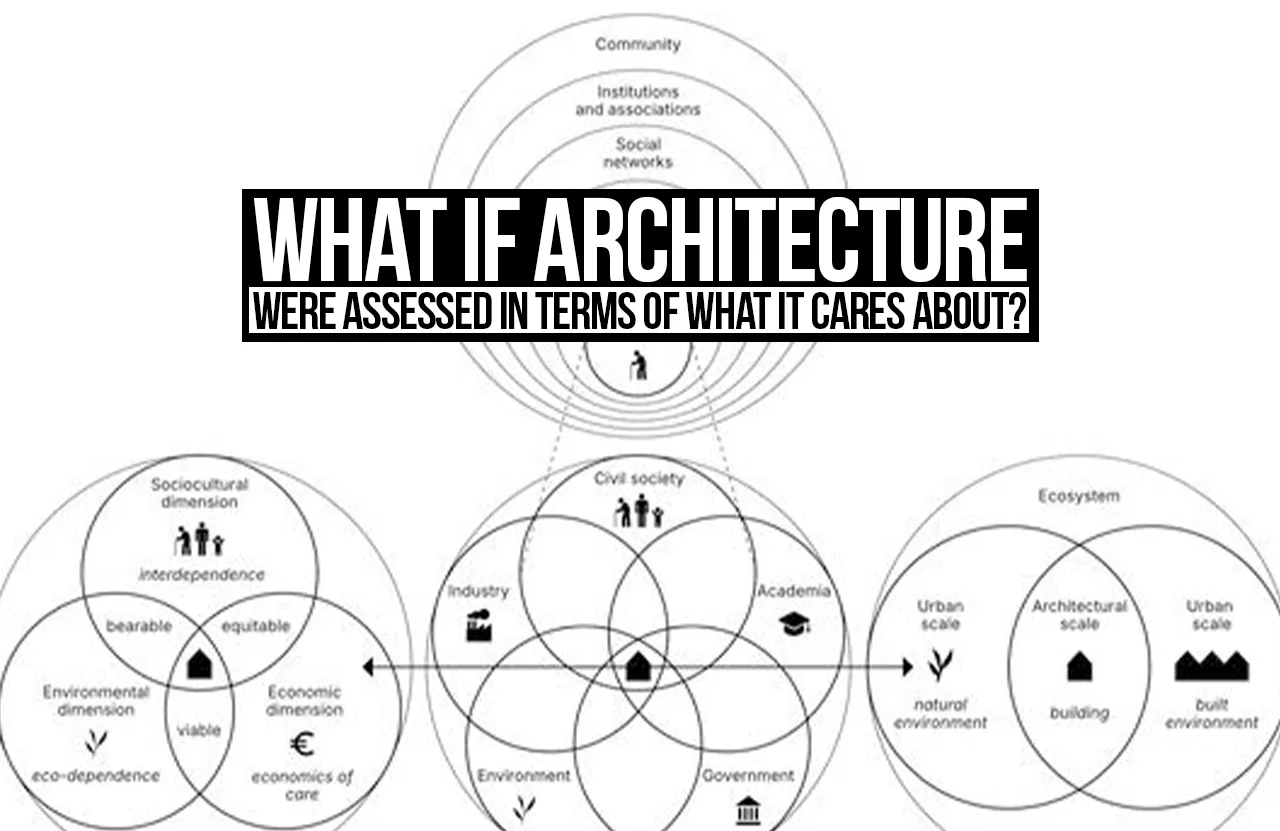
One way in which the ethics of care informs architecture is by challenging the conventional representation of the autonomous individual. Modern architectural culture has often celebrated the independence of the creator, elevating the architect as an author, genius, or visionary. The ethics of care offers an alternative perspective: human beings are fundamentally relational.
People depend on one another, as well as on organisations, infrastructure, and the natural environment. This interdependence has significant implications for architecture because architecture itself is relational. Hospitals depend on patients, doctors, nurses, cleaners, and support systems. Schools rely on children, teachers, parents, and communities. Homes depend on domestic labour, often performed by people whose contributions remain unrecognised.
Cities, too, rely on sanitation, transportation, energy, and water systems. These relationships often remain invisible because they are treated as ordinary or mundane aspects of everyday life. Architecture can reinforce this invisibility or challenge it by making the systems and people that sustain our environments more visible.
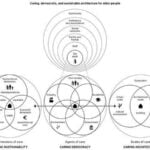
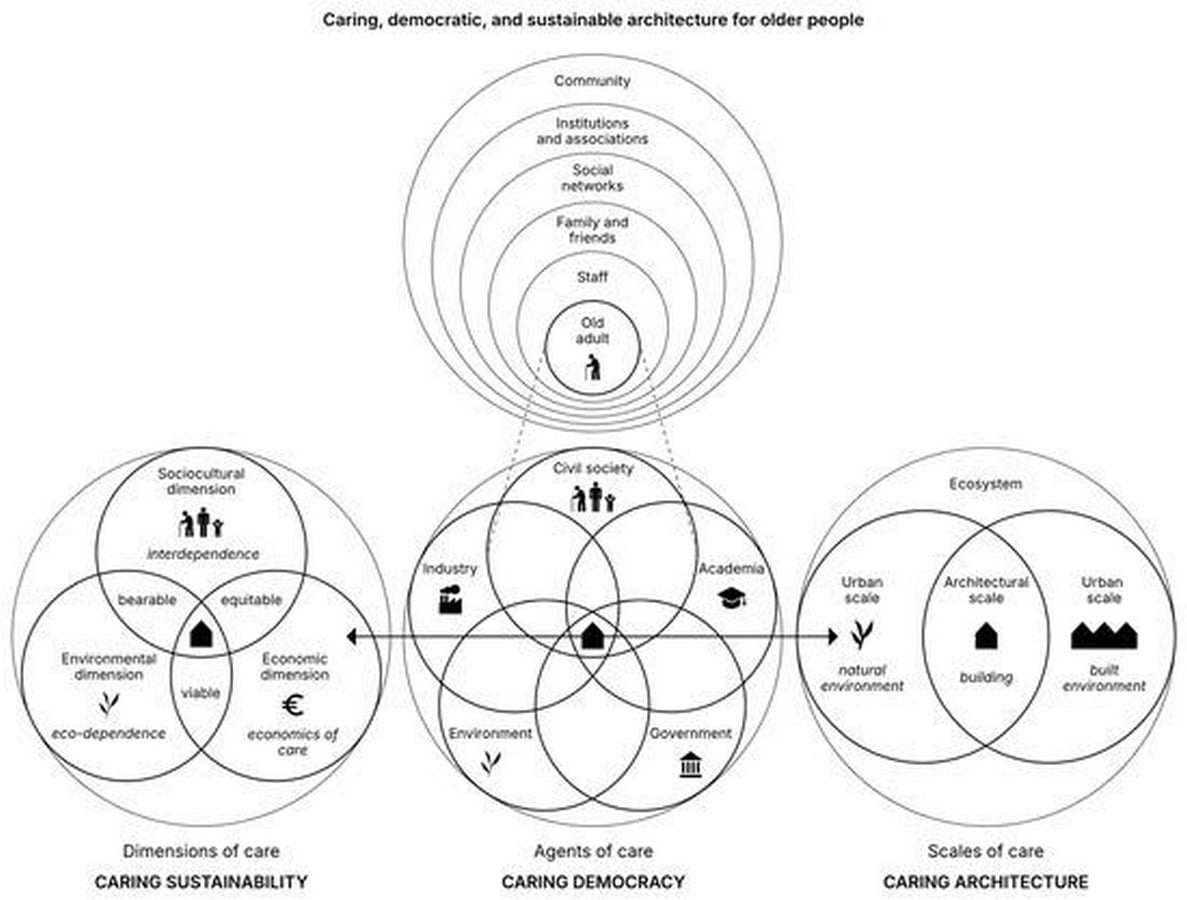
Joan Tronto’s (1993) model identifies four central elements of care: attentiveness, responsibility, competence, and responsiveness. Together, these concepts offer an unexpectedly powerful foundation for architectural practice.
Attentiveness
The architect must begin by paying attention. Whose needs are being overlooked or violated? Which environmental systems are under threat? Who might be displaced by the proposed development? Which building elements may be difficult to maintain or manage over time?
Responsibility
The architect must understand the consequences of their decisions. An action cannot be considered ethically neutral simply because it is undertaken at the client’s request.
Competence
Good intentions alone are not enough. Care requires knowledge, skill, and the ability to translate ethical values into meaningful spatial decisions.
Responsiveness
Architecture must remain open to criticism. Building users are not passive recipients of design but active participants in shaping their spatial experiences. These principles suggest that architectural ethics cannot be confined to professional standards alone; they must be embedded in the design process itself.
Care in relation to the Indian situation
The ethics of care is particularly relevant to Indian architecture because of the country’s extraordinary environmental, social, and cultural diversity. Climate-responsive design strategies emerged long before the modern concept of sustainability. Elements such as courtyards, verandahs, shaded streets, traditional water systems, thick walls, screened openings, and spatial hierarchies developed through the interaction of climate, culture, and everyday life.
However, the objective is not to reproduce traditional architecture uncritically. Traditions are not static relics; they evolve in response to changing needs and circumstances. Instead, architecture can draw from a deeper sensitivity to place. A courtyard can mediate between climatic conditions and social interaction. A shaded threshold can serve as an intermediary between public and private spaces. Locally available materials can reduce transportation requirements while supporting local craftsmanship. A durable structure can continue to serve its occupants even as economic circumstances change.
These approaches demonstrate how environmental knowledge and cultural awareness can work together. Nevertheless, care must not become an excuse for romanticising tradition. Traditional practices can also perpetuate social discrimination, heritage can be selectively preserved, and cultural values can be invoked to legitimise exclusion. The ethics of architecture must, therefore, remain open to questioning inherited practices rather than accepting them uncritically.
Architecture as Memory
Buildings are repositories of collective and personal memory. A house holds family stories. A school preserves the memories of generations of children. A marketplace reflects the history of social and economic relationships, while a factory may represent an entire community’s industrial past. When these buildings disappear, the loss extends beyond the physical structures themselves.
Aldo Rossi (1982) explored the relationship between urban form, architectural artefacts, and collective memory. Buildings contribute to continuity in urban life because they endure while remaining open to reinterpretation. This introduces another dimension of care: the responsibility to preserve memory.
However, preservation does not mean freezing a building in time. A historic structure that can no longer accommodate contemporary needs risks becoming disconnected from everyday life. Adaptive reuse offers a way to keep memory alive without turning heritage into a static monument. An existing building becomes a framework for new activities, allowing its history to coexist with contemporary life.
Adaptive reuse is philosophically significant because it brings different periods into conversation. The resulting building is neither entirely old nor entirely new. Instead, it becomes a dialogue between generations, preserving traces of the past while accommodating the demands of the present.
Designing for Future Strangers
Perhaps the greatest challenge for architecture is accounting for people who have not yet been born. Future generations cannot attend design meetings, approve plans, or criticise the use of unsuitable materials. Yet they will inherit the consequences of decisions made today.
Hans Jonas (1984), in developing an ethics of responsibility for technological civilisation, argued that the scale of modern human power creates an obligation towards the future. Architecture is part of this technological civilisation because buildings and infrastructure can continue to shape social and environmental conditions for decades or even centuries.
This understanding challenges the conventional definition of the client. Today’s client may commission a building, but the building will also serve future users whose needs and preferences have yet to be expressed. These may include children attending a school, residents inheriting housing, workers maintaining infrastructure, and communities living with the environmental consequences of a development.
Architecture, therefore, has a constituency that extends across time. The future is one of its stakeholders, providing a compelling philosophical basis for responsible design.
A building is a message sent into an indefinite future, one that cannot respond to its original creators. Architects cannot predict precisely what that future will look like, but they can design buildings that accommodate change. Open floor plans can support different uses. Replaceable components can extend a building’s lifespan. Materials can be assembled in ways that allow them to be separated and reused. Spaces can accommodate changing patterns of occupation as social needs evolve.
Buildings need not be understood as finished products that remain unchanged. They can be conceived as structures capable of continuous transformation. The most future-oriented building may, therefore, be one that is designed not to remain the same, but to adapt as the needs of its occupants change.
Architecture of repair
If architecture is an act of care, then repair becomes one of the main architectural acts.For modern culture, progress implies replacing things. The old is no longer efficient.The damaged is disposable. The outdated is unappealing. However, repair calls into question the idea that value is tied to novelty. Repair takes time.
Repair implies knowing how something works. Repair may imply working with flawed things.It may also preserve knowledge. In architectural terms, repair may imply fixing the roof rather than rebuilding the entire building, repairing windows rather than replacing the façade, adapting the floor plan rather than knocking down the building, or repairing the infrastructure rather than constantly expanding it. Thus, repair is both a material and philosophical phenomenon. It implies acceptance that the world is imperfect.
However, it also implies accepting that imperfection is not always a reason for destruction. Thus, the architecture of care is concerned not with permanence but with usefulness.
Beyond the iconic building
An architectural preoccupation with iconic buildings is understandable. Icons attract attention, draw tourists, generate publicity, and earn professional recognition. Yet iconic buildings alone cannot sustain a city. Ordinary buildings keep it alive: schools, clinics, dwellings, workshops, marketplaces, libraries, bus stops, pathways, storm drains, community centres, public toilets, and shaded walkways. These structures rarely appear on the covers of architectural magazines, yet they constitute much of the built environment people use every day.
When architectural culture defines success primarily through iconicity, it overlooks the spaces where architecture has its most immediate social effects. An architecture of care challenges this hierarchy by directing attention towards the ordinary. Maintenance workers deserve recognition. Users deserve a voice in shaping their environments. Ageing buildings deserve consideration, and even small modifications deserve serious thought. A good building is not necessarily one that attracts the most photographs. It may be one that continues to serve its users quietly and effectively twenty years after its completion.
Can Care Become a Design Methodology?
Care should not remain an abstract philosophical concept. It can also inform the design process itself. A care-based methodology might begin with six questions.
-
Who are we caring for?
Consider the needs of users, non-users, neighbouring communities, employees, and the surrounding ecological systems.
-
What already exists?
Understand the material, cultural, social, and ecological conditions of a site before proposing an intervention.
-
What must remain?
Consider retention, restoration, and adaptation wherever possible before opting for replacement or demolition.
-
What will be the consequences?
Assess the design’s carbon footprint, maintainability, accessibility, labour conditions, potential displacement, and capacity for future adaptation.
-
Who gets to participate?
Involve users and affected communities meaningfully in decision-making, rather than treating consultation as a procedural requirement.
-
What happens next?
Design for occupation, maintenance, adaptation, and eventual disassembly, rather than treating completion as the end of the architectural process.
These questions could fundamentally redefine the architectural brief. Instead of simply stating, “Design a building of 10,000 square metres,” the brief might ask: “Create conditions in which a community can live, work, learn, or receive care while respecting existing ecological and cultural relationships.”
This represents a very different starting point. And where architecture begins shapes what it ultimately becomes.
The Risk of Reducing Care to an Aesthetic
There is, however, a risk. Architecture has a remarkable ability to turn ideas into styles. Minimalism became an aesthetic. Sustainability became an aesthetic. Participatory architecture, too, could become an aesthetic. Even care could follow the same path.
We might eventually see buildings marketed as “caring” because they feature warm materials, abundant vegetation, natural light, and photographs of community life. Such representations would miss the point.
Care is not a visual language. A building does not become caring simply because it incorporates timber, greenery, or natural light. Care resides in the decisions behind the design. Whom did the architect consult? What was retained? How much material was consumed? Who constructed the building? Who can afford to use it? Who can maintain it? What happens when its systems fail? Can it be adapted or repaired? Can its materials be reused? Can its spaces be appropriated in ways the architect never anticipated?
These questions cannot be answered through photographs alone. They require evidence. An architecture of care, therefore, demands a culture of accountability.
From Authorship to Stewardship
Perhaps the most profound shift this philosophy proposes concerns the architect’s professional identity. Traditionally, the architect has been portrayed as an author. An architect guided by care might instead be understood as a steward. An author creates a work; a steward assumes responsibility for something that extends beyond their individual interests and lifespan.
This does not diminish the role of creativity. On the contrary, stewardship may demand greater creativity because it requires negotiation with existing conditions rather than imposing a singular vision upon them.
The architect becomes a mediator between past and future, human and non-human, client and community, construction and maintenance, matter and meaning. Architecture moves away from the declaration, “See what I have created,” towards a more considered question: “What relationships does this building allow to develop?”
This is a subtler form of authorship, but a more responsible one.
Towards a Philosophy of Architectural Humility
Perhaps the final lesson of an architecture of care is humility. Architecture has considerable power, but it is not omnipotent. A building cannot solve every social problem.
Design cannot substitute for political change. An attractive public space cannot compensate for unaffordable housing. A green façade cannot undo environmental destruction elsewhere. Participation alone cannot eliminate structural inequalities.
This recognition matters because architecture frequently promises more than it can deliver. Humility allows the discipline to define its responsibilities more precisely. An architect cannot save the world, but they should avoid making existing problems worse.
An architect can preserve a tree, retain an existing structure, improve accessibility, reduce material consumption, and design for repair. They can listen to a community and create spaces that accommodate uncertainty and the needs of future generations. These actions may appear modest, but architecture is ultimately shaped by such decisions.
What Does Architecture Owe?
Architecture has long asked questions about beauty, function, meaning, space, form, and human existence. These remain essential concerns. Yet another question deserves a central place in architectural discourse: What does architecture owe?
It owes something to the people who will inhabit its spaces. It owes something to the workers who will construct them and the communities that will live alongside them. It owes something to the materials from which it is made and the landscapes it occupies. It owes something to the memories it may preserve or displace, and to the generations who will inherit its consequences.
This is what makes an architecture of care philosophically significant.
An architecture of care does not reject beauty, innovation, technological advancement, or ambition. Impressive architecture can be caring. Technically advanced architecture can be caring. Monumental architecture can be caring. Yet none of these qualities automatically implies responsibility.
Responsibility emerges from an understanding of relationships and a willingness to confront the consequences of architectural decisions.
In an era of climate uncertainty, material scarcity, rapid urbanisation, and social inequality, architecture can no longer define itself solely through the creation of new objects. It must also become a practice of sustaining the world. The future of architecture may depend less on how impressively we construct and more on how wisely we preserve, adapt, and repair.
Perhaps the most radical architectural gesture of the coming years will not involve an entirely new form. It will begin with a question asked before the first line is drawn: What should remain, what should change, and what kind of world will our intervention leave for others to inhabit?
This is a philosophical question. It is an environmental question. It is a social question. Ultimately, it is an architectural question.
References:
Arendt, H. (1958). The human condition. University of Chicago Press.
Bekzhanova, Z., Ruiz-Valero, L., Zuluaga, S., & Saxe, S. (2026). Material use and embodied GHG in refurbishment and adaptive reuse of existing buildings. Energy and Buildings. https://doi.org/10.1016/j.enbuild.2026.118075
Cohen, S., & Fenster, T. (2021). Architecture of care: Social architecture and feminist ethics. The Journal of Architecture, 26(3), 257–285. https://doi.org/10.1080/13602365.2021.1899263
Fraser, J., Burgess, A., Burfoot, M., Shearer, R., & Walker, C. (2025). An exploration of architects’ ethical boundaries: Aotearoa New Zealand perspectives of care for the built environment. Urbanisation, Sustainability and Society, 2(2), 1–17. https://doi.org/10.1108/USS-12-2024
Gilligan, C. (1982). In a different voice: Psychological theory and women’s development. Harvard University Press.
Ingold, T. (2013). Making: Anthropology, archaeology, art and architecture. Routledge.
Jonas, H. (1984). The imperative of responsibility: In search of an ethics for the technological age. University of Chicago Press.
Lefebvre, H. (1991). The production of space. Blackwell.
Merleau-Ponty, M. (1962). Phenomenology of perception. Routledge & Kegan Paul.
Noddings, N. (1984). Caring: A relational approach to ethics and moral education. University of California Press.
Norberg-Schulz, C. (1980). Genius loci: Towards a phenomenology of architecture. Rizzoli.
Pallasmaa, J. (2012). The eyes of the skin: Architecture and the senses (3rd ed.). Wiley.
Rossi, A. (1982). The architecture of the city. MIT Press.
Tronto, J. C. (1993). Moral boundaries: A political argument for an ethic of care. Routledge.
Tronto, J. C., & Fisher, B. (1990). Toward a feminist theory of caring. In E. K. Abel & M. K. Nelson (Eds.), Circles of care: Work and identity in women’s lives (pp. 35–62). State University of New York Press.
United Nations Environment Programme. (2025). Global status report for buildings and construction 2024/2025: Not just another brick in the wall. United Nations Environment Programme.
González-Fernández, I., & Pérez-Moreno, L. C. (2026). Aging and Caring Architecture: A Theoretical Approach from the Ethics of Care. Architecture, 6(1), 15. https://doi.org/10.3390/architecture6010015
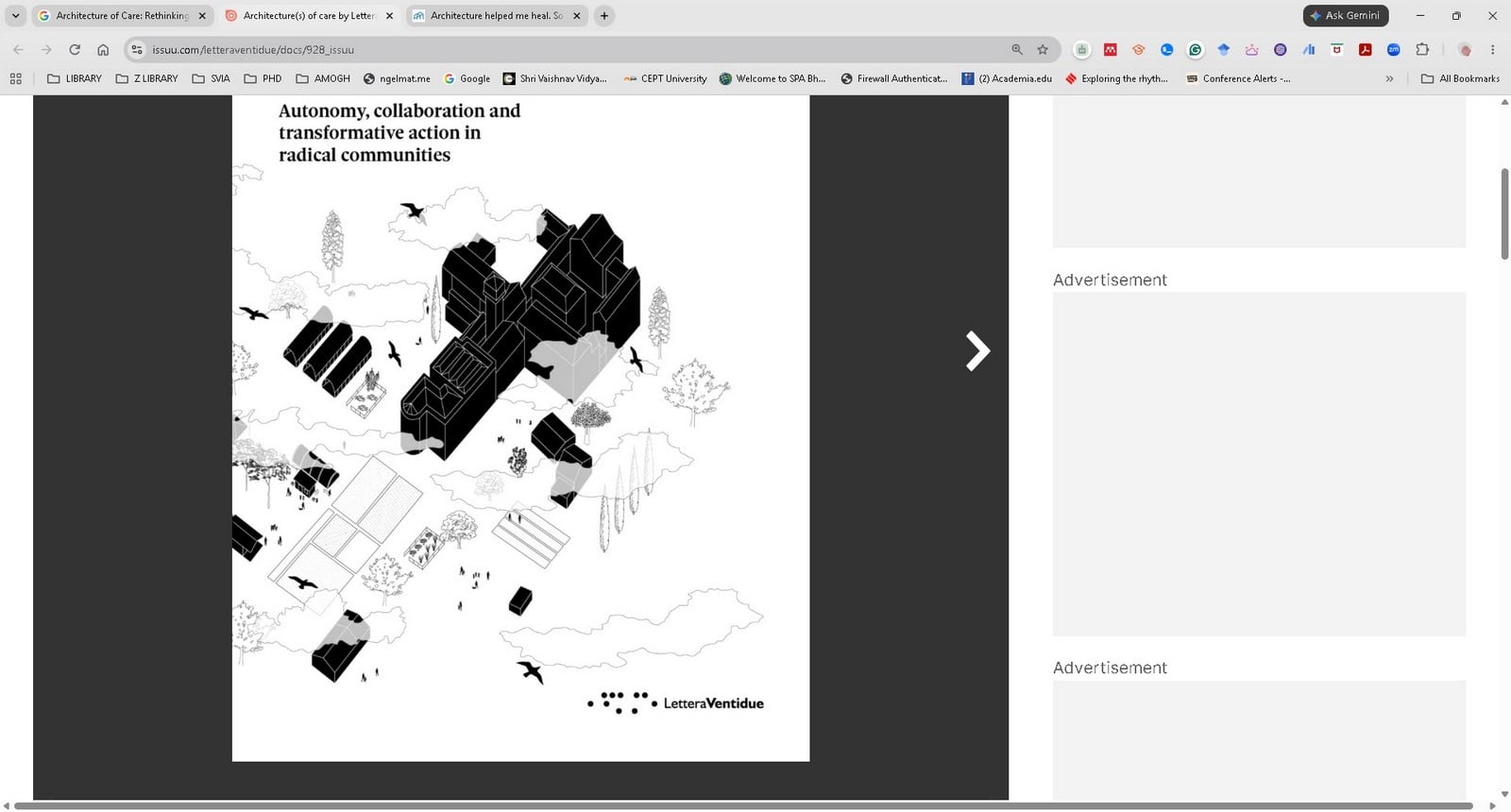
LetteraVentidue Edizioni (2024, November 22).Architecture(s) of care. Issuu. https://issuu.com/letteraventidue/docs/928_issuu