Architecture and fashion may seem to exist as parallel design fields, each with its own rules and regulations, but on closer look, they intersect in more ways than one. Architecture is the art of spaces, how forms can be bent and manipulated to provide a narrative of emotions. Fashion is the art of manipulating forms, twisting fabric around the human form to elicit drama. An architect and a fashion designer are both concerned with construction, be it tailored fabric or actual brick and concrete. Buildings and clothes exist as a living record of the times, as they arise out of and shape culture. The advent of technology has started to blur the lines as software and design inspiration further merge. This article explores just how interconnected the two design forms are, from the past to the current innovations.
Fabric: The common material wrapping steel and skin
Perhaps the earliest point of intersection of fashion and architecture is the common usage of fabric. The versatility of fabric lies in its ability to adapt to any shape and span and the freedom it offers in form manipulation. Animal hide was used for both shelter and clothing in prehistoric times, setting the tone for the future. Now, cloth is everywhere, from a small handkerchief tucked into the pockets of a dress to the specially woven large sheets spanning roofs of stadiums.
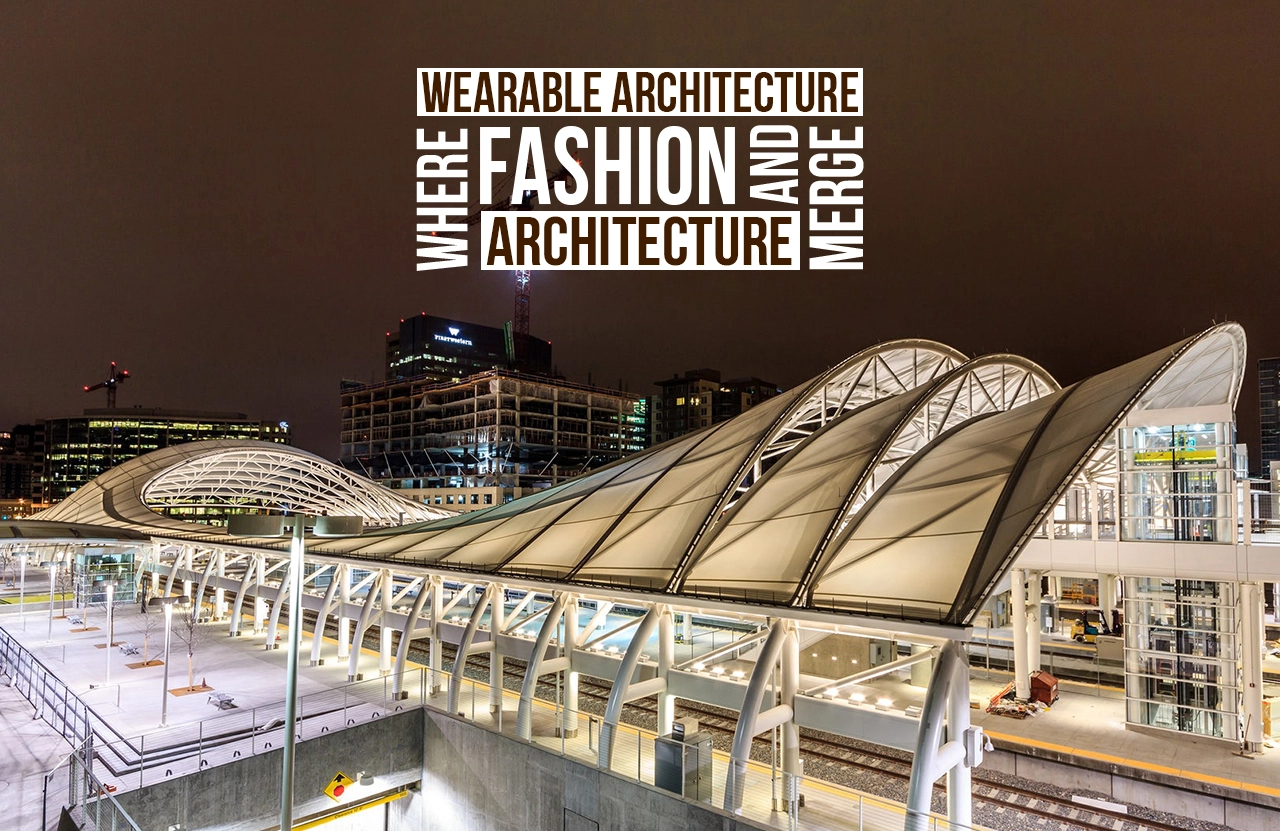
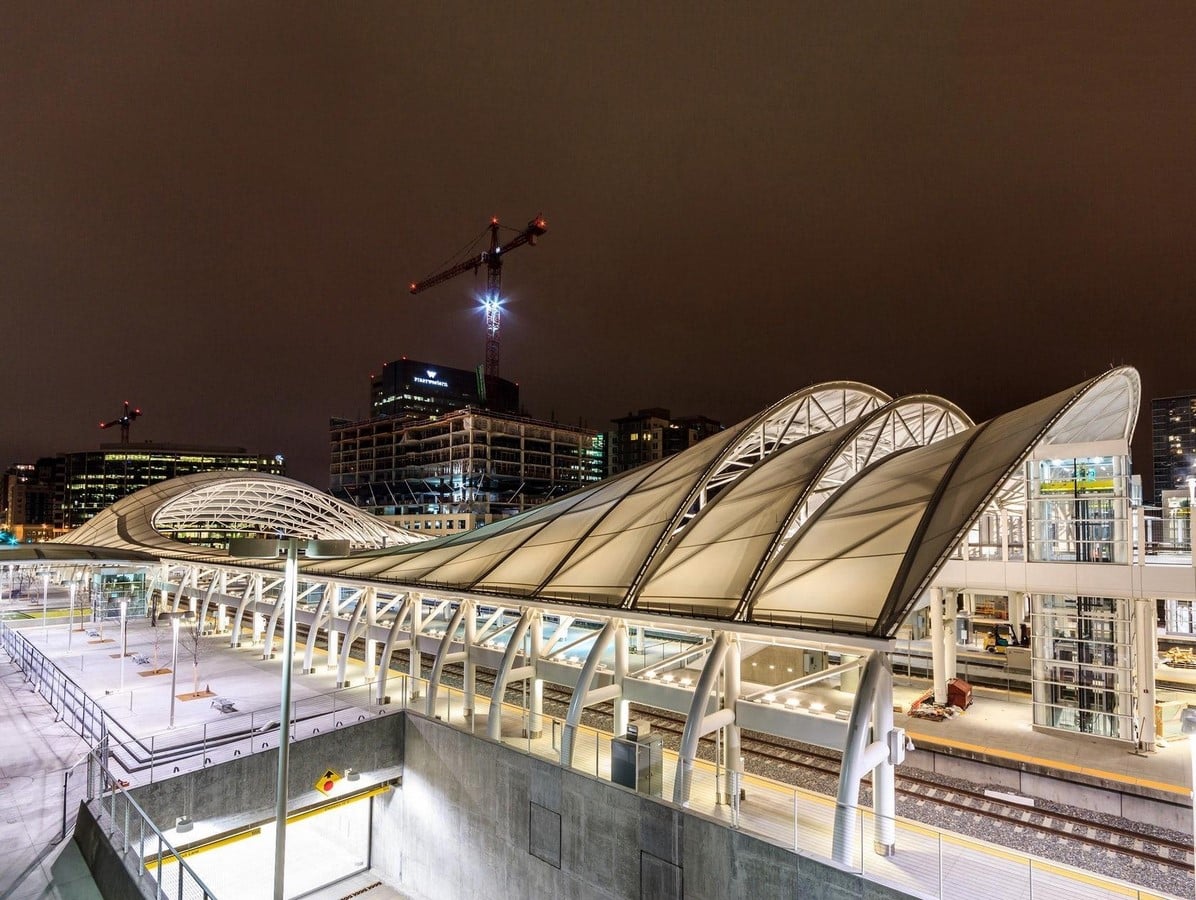
One of the more recent innovations is tensile fabric structures. Capable of spanning large distances and heights, the use of fabric as a covering has allowed for lightweight structural solutions. The easy manipulation of the material while maintaining its unique aesthetics lends itself to these creations, with heightened properties such as acoustic insulation as an added benefit. Fabric becomes more than a material wrapping steel and skin; it affords the flexibility to achieve the improbable.
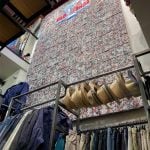
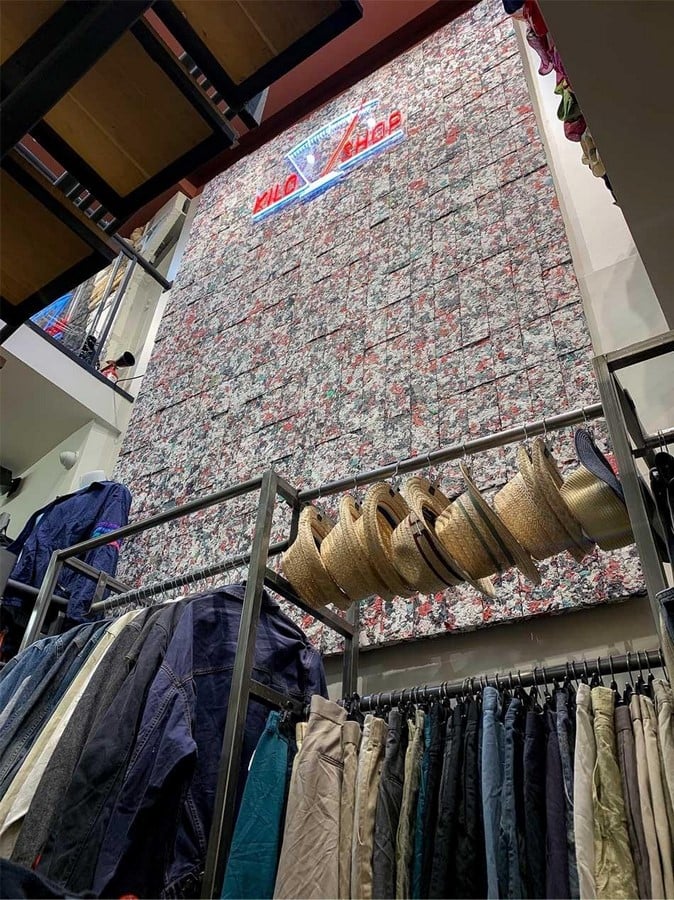
Even recycled fabric finds its purpose as bricks in a building. FabBRICK is a unique material that recycles textile waste into non-load-bearing bricks. The unique collage-like texture adds to any interior while reducing the staggering number of clothes ending up in the landfill. The founder, Clarisse Merlet, whose background in architecture has aided her in designing bricks with excellent acoustic and thermal properties. The strength of the product allows it to be used for a wide range of uses from furniture to statement walls, aiding sustainable design.
Twin art forms that inspire each other
Fashion and architecture are enduring records of history and culture. Cyclical trends in both reflect the state of the world, with some fashion trends giving hits to upcoming economic recession or depression. Both reflect the needs of the people, providing answers to the past and to the questions of the future in every twist and turn of materials. When both forms of shelter are interlinked to the fabric of society, it is no surprise they often inspire each other too.
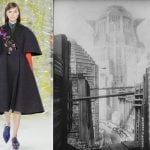
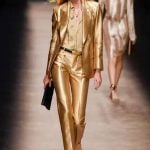
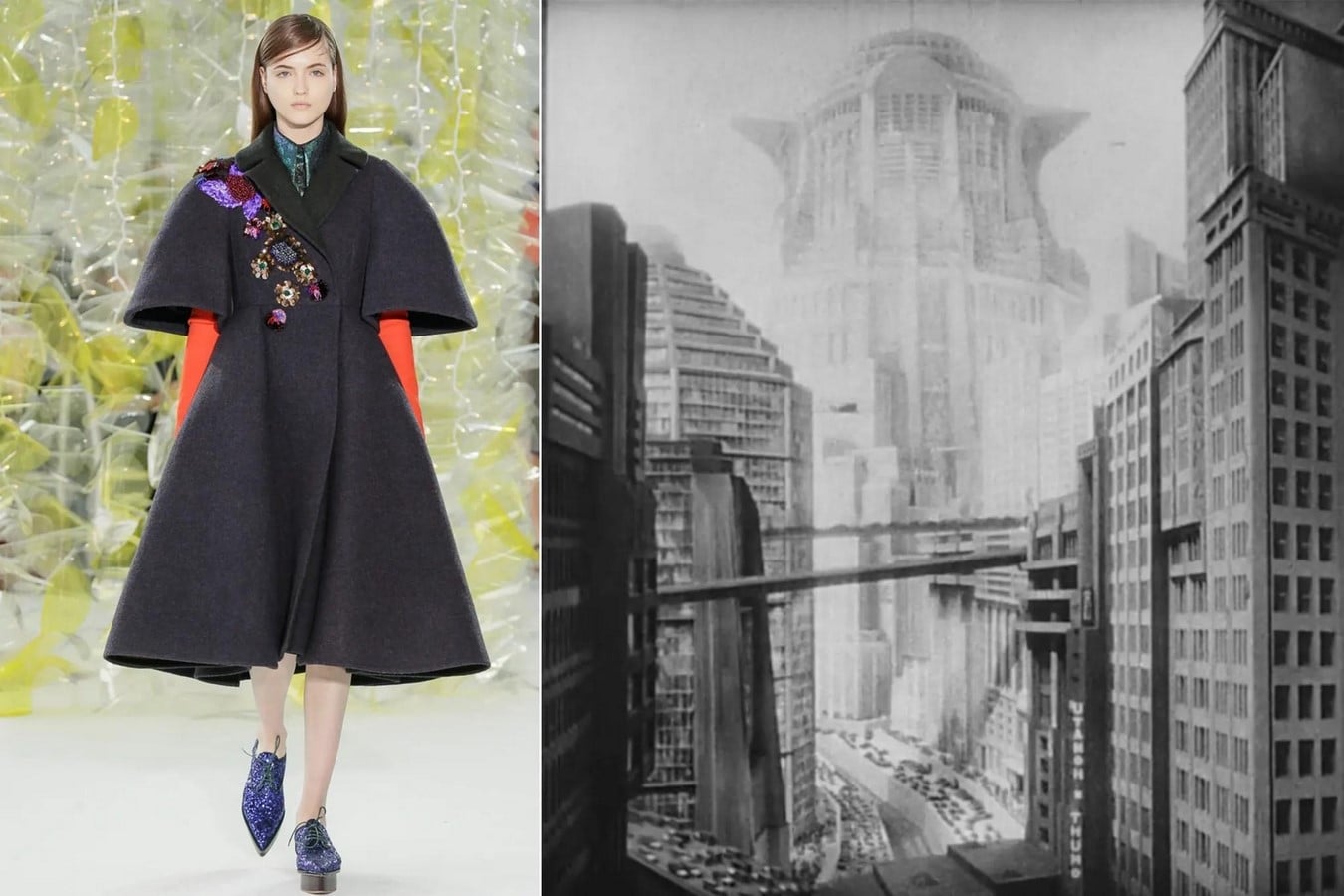
Fashion draws inspiration from architectural movements and architects’ design language. The metallic geometric glitz and glamour of Art Deco have influenced Delpozo’s Fall/Winter 2016 collection. Volume and proportion of space are translated into proportion of fabric on the body, creating bright and structural looks. Fluid curves framing the sky are reimagined as striking sweeps of fabric wrapping models. De Stilj’s influence extends to clothing and structure, from Yves Saint Laurent’s legendary Mondrian dress to the modernist icon Rietveld Schröder House.
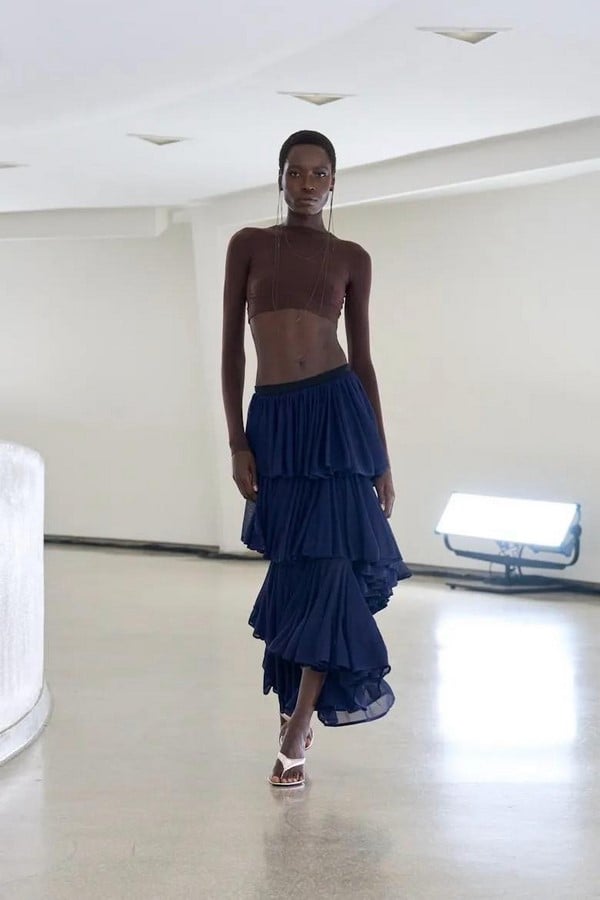
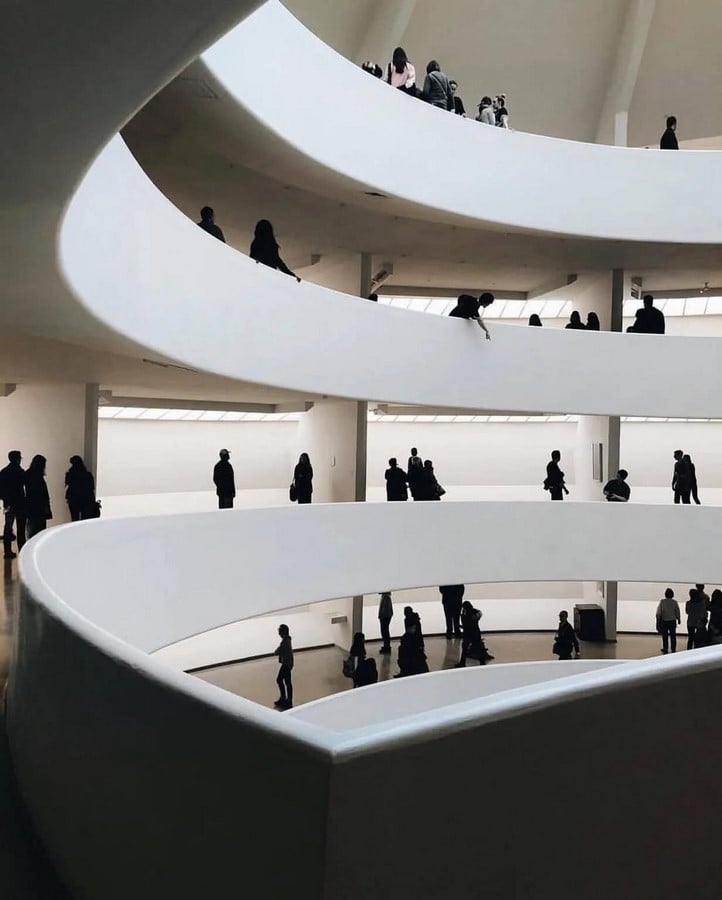
Architecture can also host fashion. FL Wright’s Guggenheim Museum has welcomed the strut of supermodels for the Alaïa’s Spring 2025 collection. The museum’s architecture made the perfect setting for the brand, which has an engineered approach to dresses. The spiral ramp made a natural showcase for fashion, gently reminding us that both fashion and architecture are best experienced through movement.
Retail Architecture: Physical manifestation of fashion
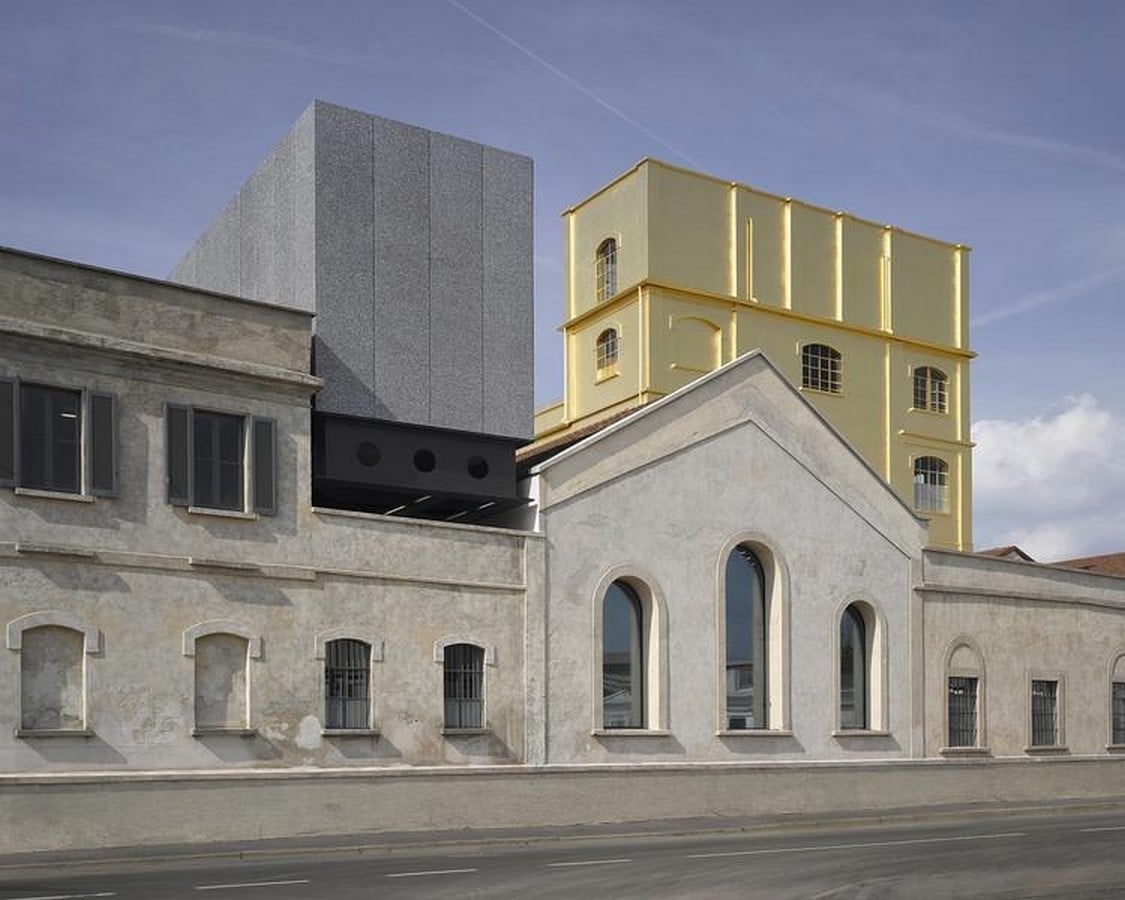
Architecture is a powerful tool to create fashion’s ideology as a physical space. Fashion houses collaborate with architects to create spaces representative of their brand. The space created also speaks to the brand’s principles, creating a holistic experience in all dimensions. One of the iconic collaborations includes Fondazione Prada, a cultural complex by Prada and OMA. The office led by Rem Koolhaas has preserved the industrial heritage while weaving together spaces to encourage exploration. Minimal intervention to the facade by adding 24k carat gold leaf makes the building stand out while still belonging to the context. Art and fashion are showcased in this space where both preserved buildings and new ones co-exist. This aligns with the brand, which made ‘ugly chic’ cool. Luxury is redefined as something that is understood more than felt, integrating awareness into clothing. The design becomes a statement for both the firm and the fashion house, indicating that their influence extends across the old and the new and the abstract.
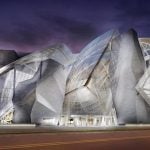
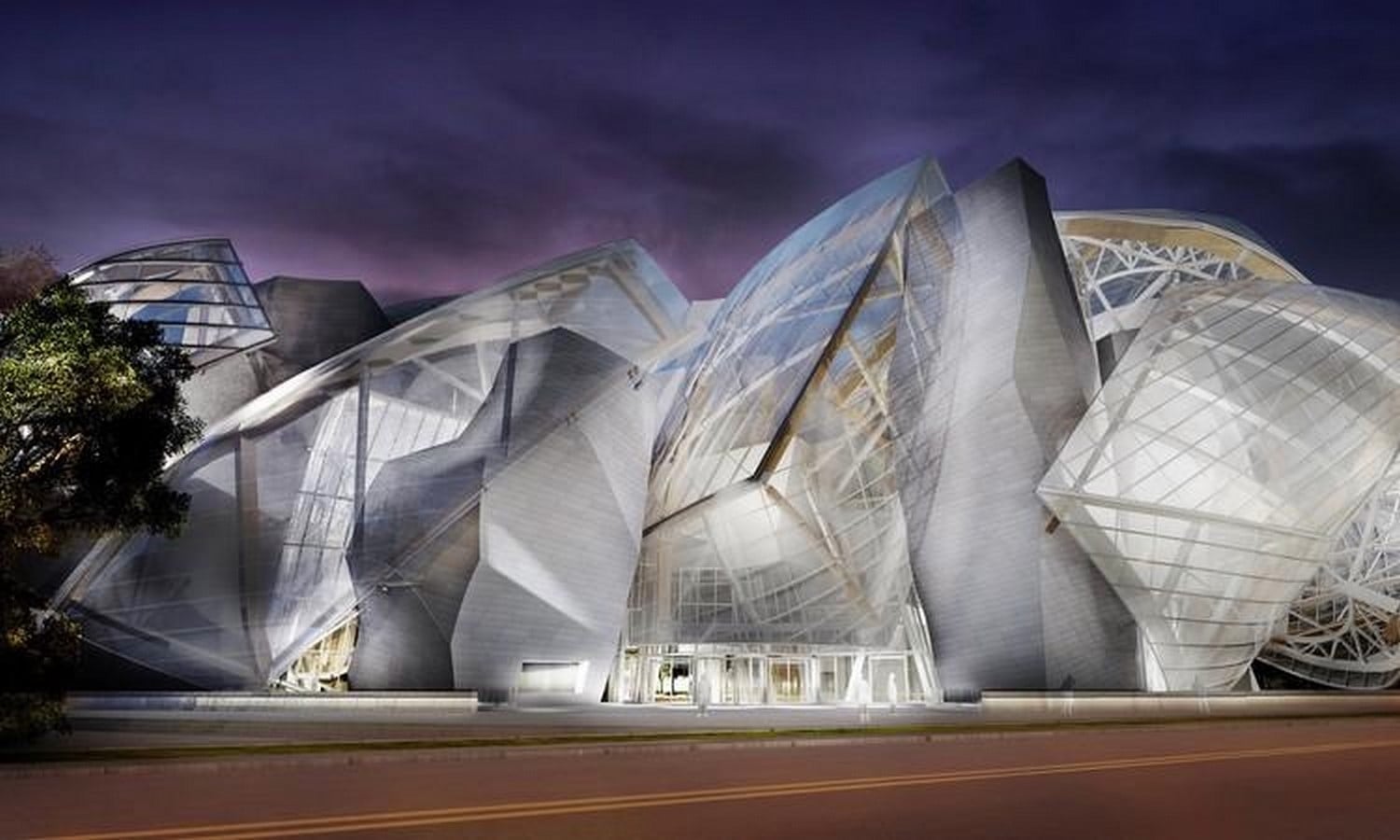
Another iconic example is the Fondation Louis Vuitton by Frank Gehry and Louis Vuitton. Creativity, sophistication, and adventure are a few of the columns upholding the brand, and who better to express it in form than Frank Gehry? The deconstructivist structure conceived for Foundation Louis Vuitton is inspired by the form of icebergs. Dramatic contrasts in volume and height, which are forever static due to moving natural light, mirror the brand’s constant reinvention. In both these examples, architecture takes the physical form of fashion’s identity, creating a physical space to experience it in all forms.
Architects turned fashion designers who’ve shattered glass ceilings
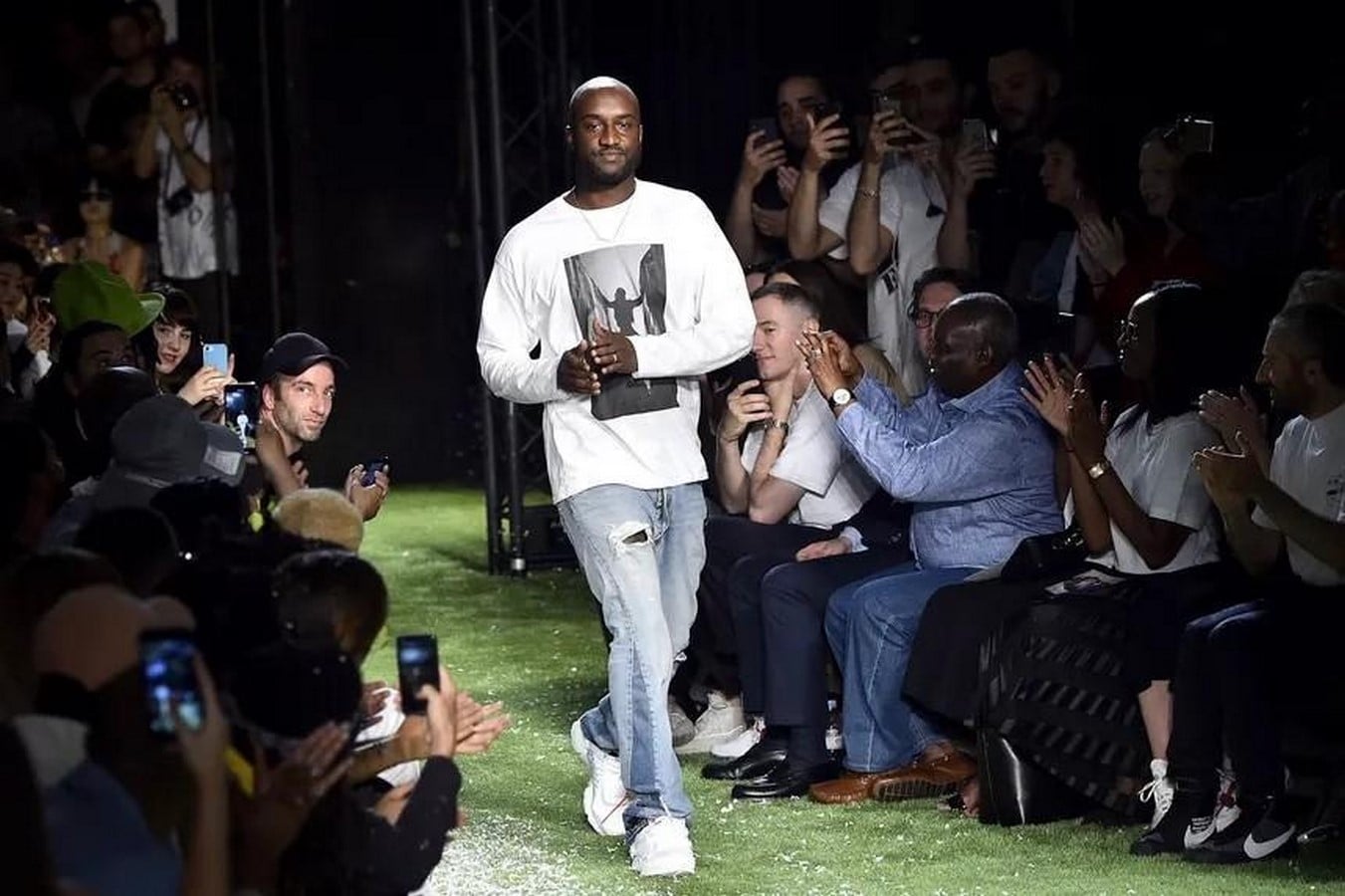
When architecture and fashion are intertwined, it’s no surprise that the people who’ve set the fashion world on fire often come from architecture backgrounds. Among these icons is the late Virgil Abloh, the founder of Off-White and then artistic director of Louis Vuitton. His background in civil engineering and architecture helped shape his vision for fashion, creating structured looks that blurred the lines between streetwear and luxury.
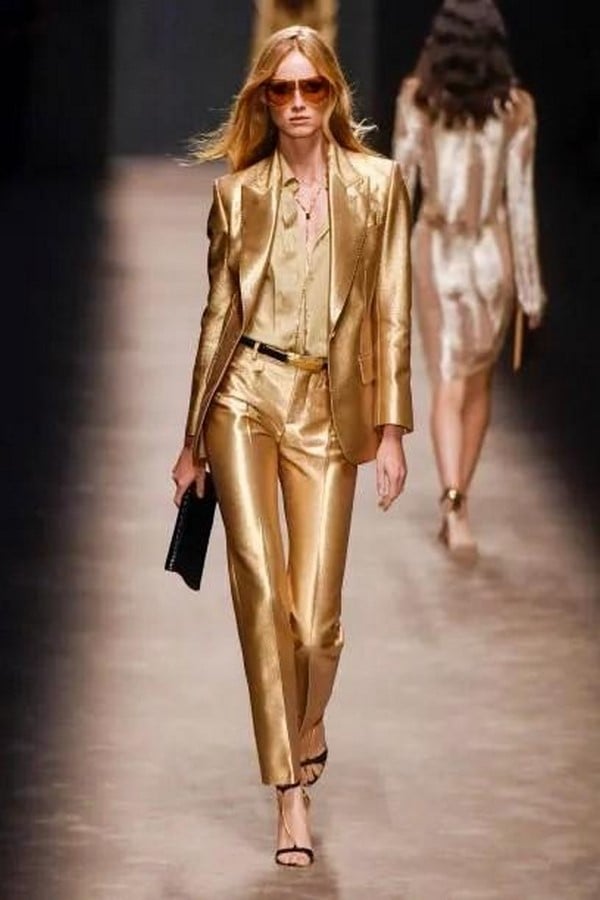
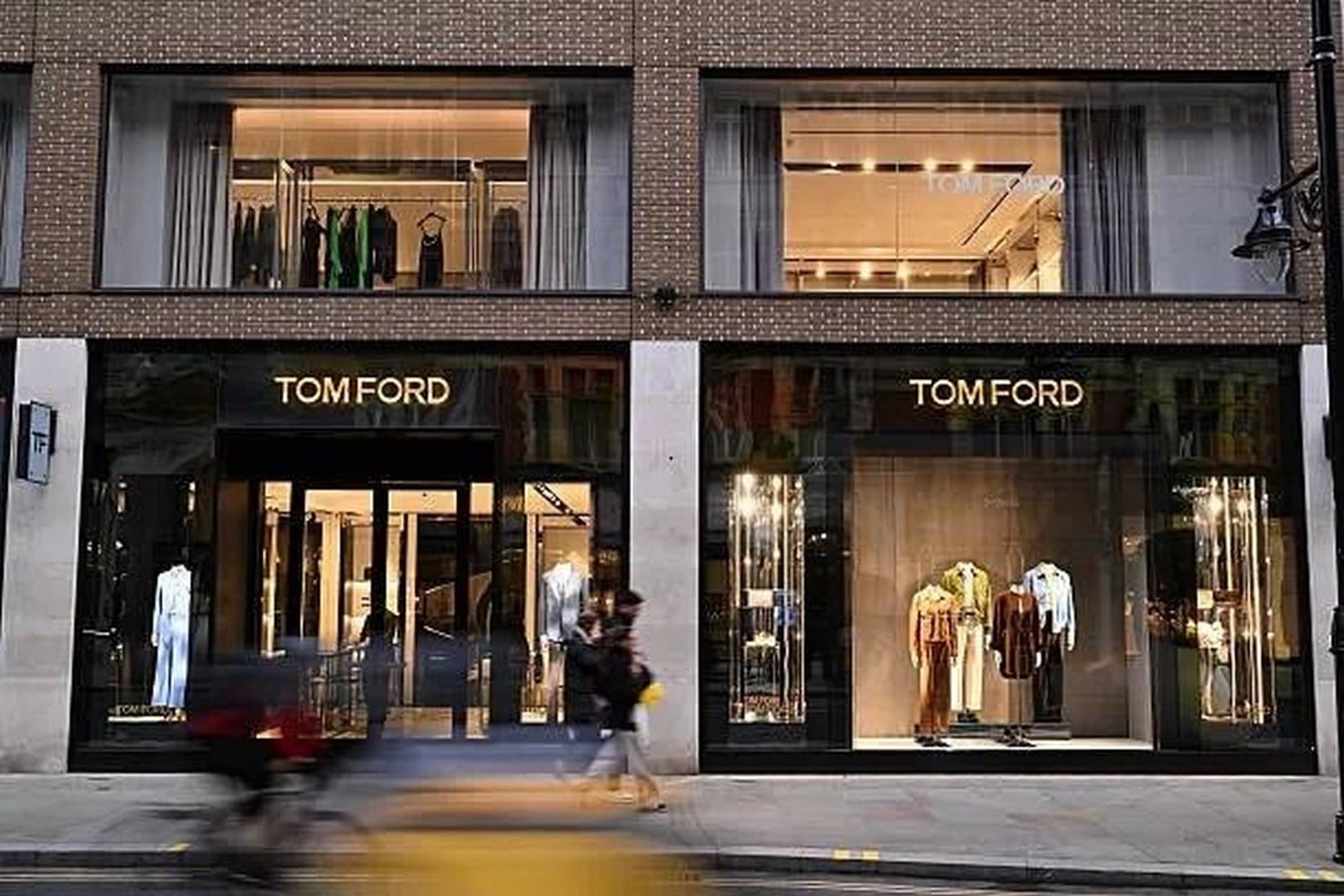
Another icon is Tom Ford, whose architecture education is translated into design. The precision inspired by architectural design is one of the key brand identities for his fashion empire. He built a true American luxury brand and rewrote the playbook on brand identity and commercial performance. Precise cuts and fits make the brand a classic. The experience extends to their retail stores designed by Tom Ford himself. They feel more like private clubs, maintaining an air of luxury. Architecture has produced some of the more interesting pieces of fashion, as the disciplines collide in creative ways.
Zaha Hadid and Fashion
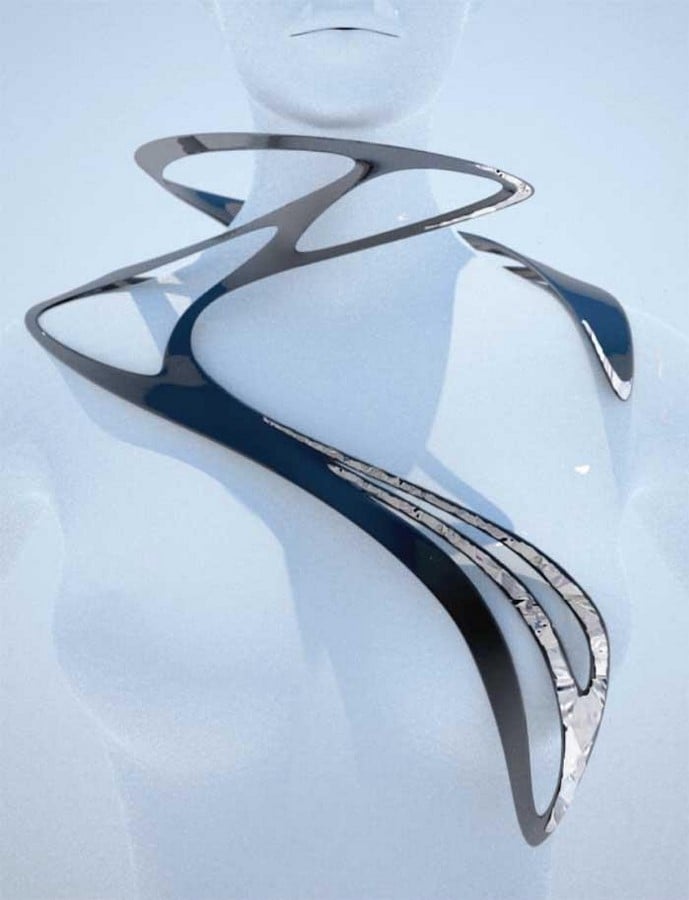
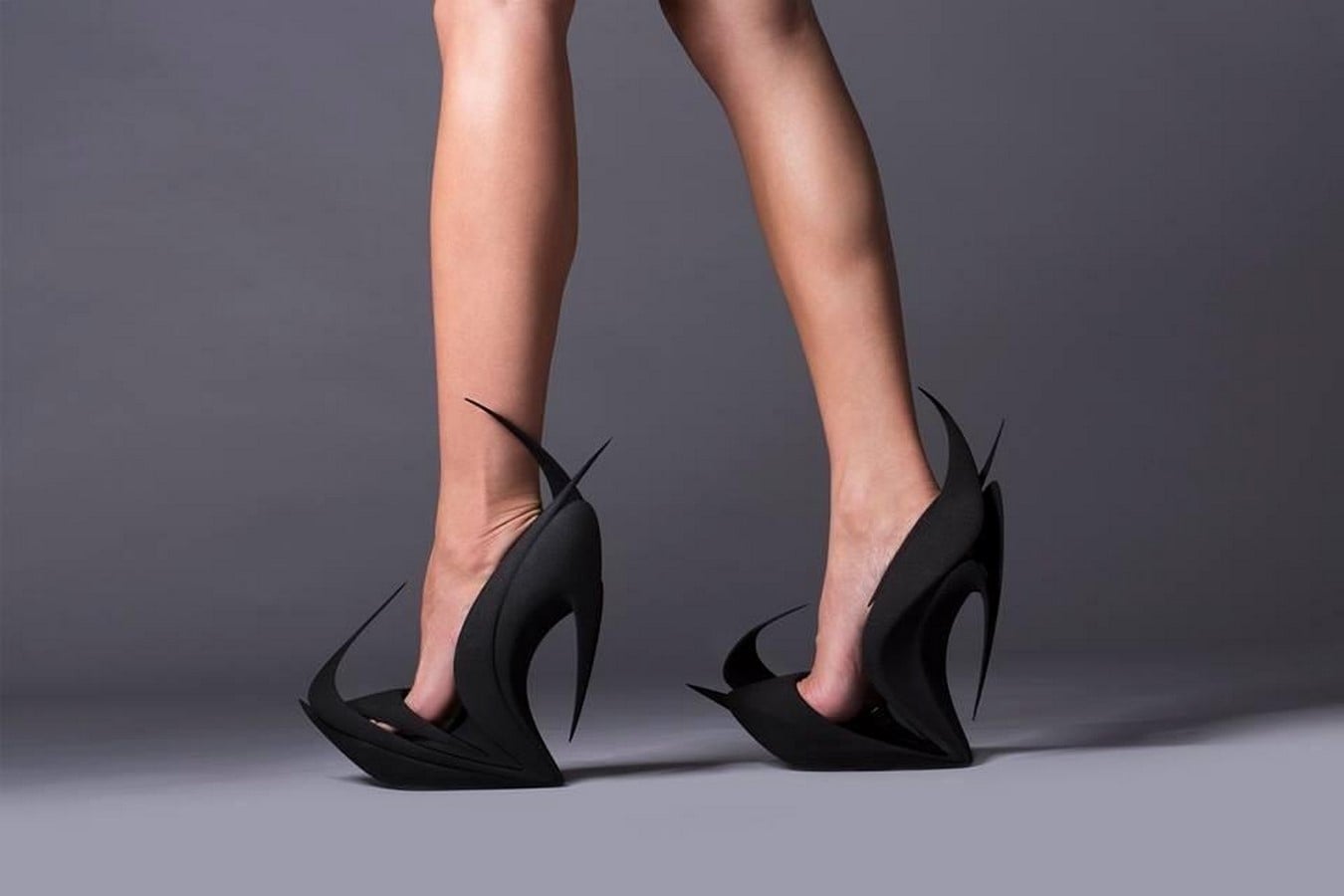
The ‘Queen of Curve’ did not stop at just buildings – she extended her fabulous curves to clothing and more. Her collaborations with various fashion’s biggest names over the years have brought together her iconic style and clothing, redefining wearable architecture. Sinuous curves spanning buildings are scaled down to fit the human body. Zaha Hadid x Swarovski has created flamboyant curves that wrap around the neck, creating a sense of movement. Jewelry is redefined as architecture, with a style of molding that constructs metal to float on the body. Flames Shoe United Nude x Zaha Hadid created shoes that look like flames given form. The architect’s signature gravity-defying design language has extended to fashion, creating iconic pieces that embody wearable architecture.
Iris Van Herpen’s ethereal wearable architecture
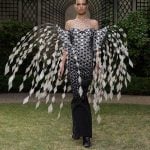
The brand has pushed beyond the limits of fashion by bringing together architectural construction and experiential materiality. From collaborations with architects to designs inspired by aquatic architecture, the brand further dissolves the illusory boundaries between the disciplines. The designer often takes advantage of construction methods usually used in architecture. For example, the brand teamed up with Benthem Crouwel Architects to fabricate a 3D-printed skeleton dress. Their alluring collection titled ‘Architectonics’ is inspired by aquatic architecture and the architectural dream of floating cities. The Haute Couture line treads the line between reality and a dream, transcending into a life where humans live on the land and on the water. The collection blends geometric construction with billowing fabrics, a testament to wearable architecture.
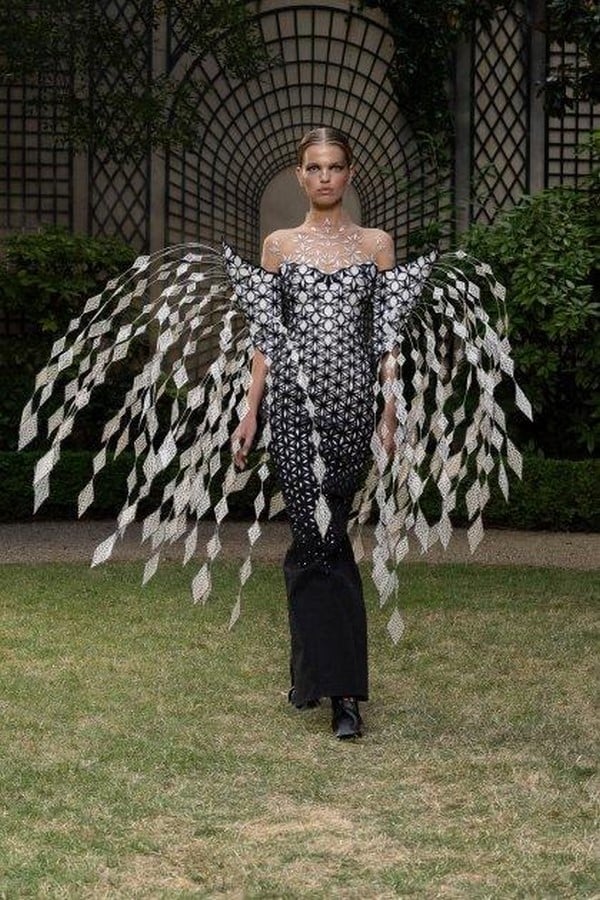
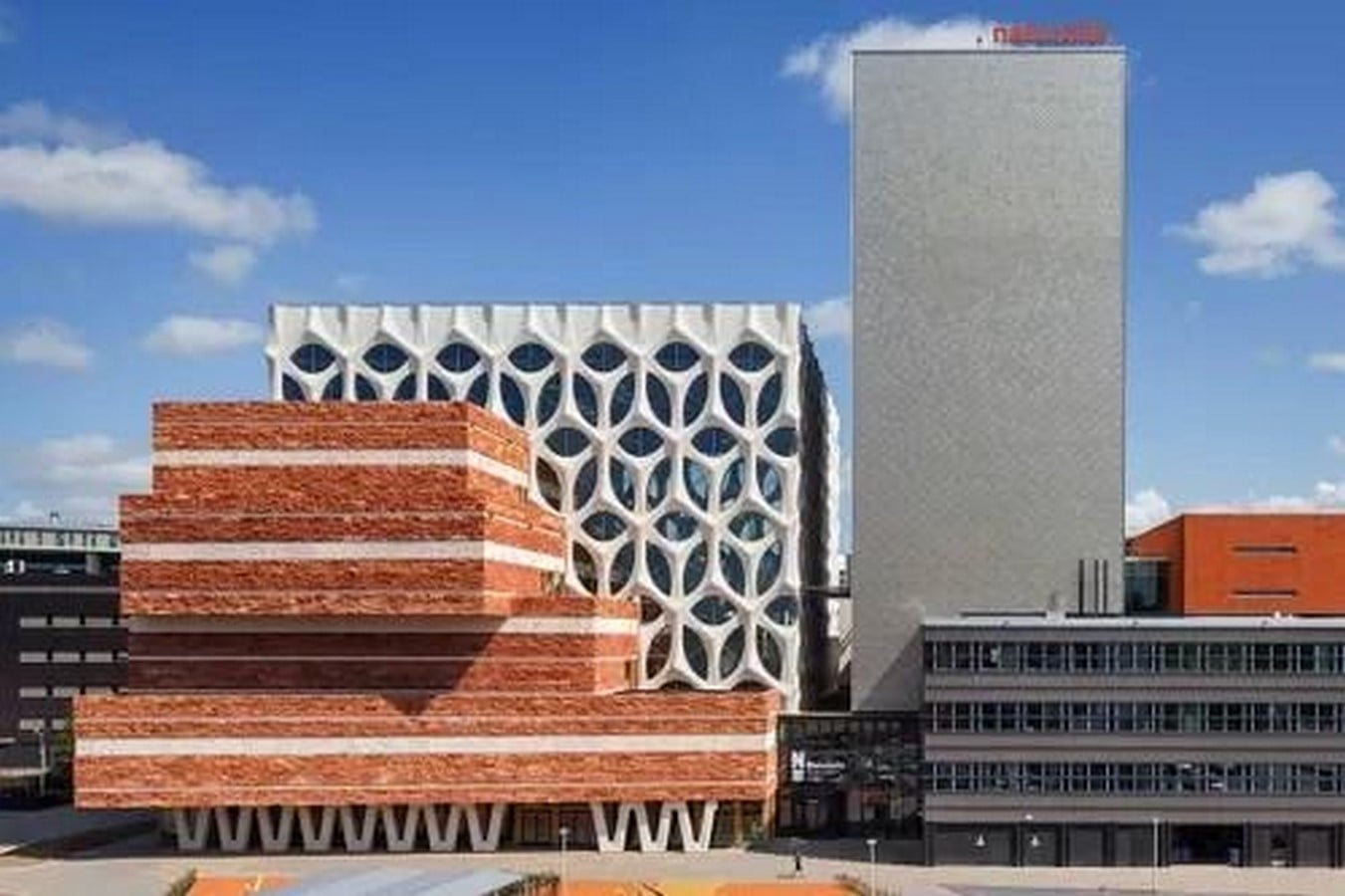
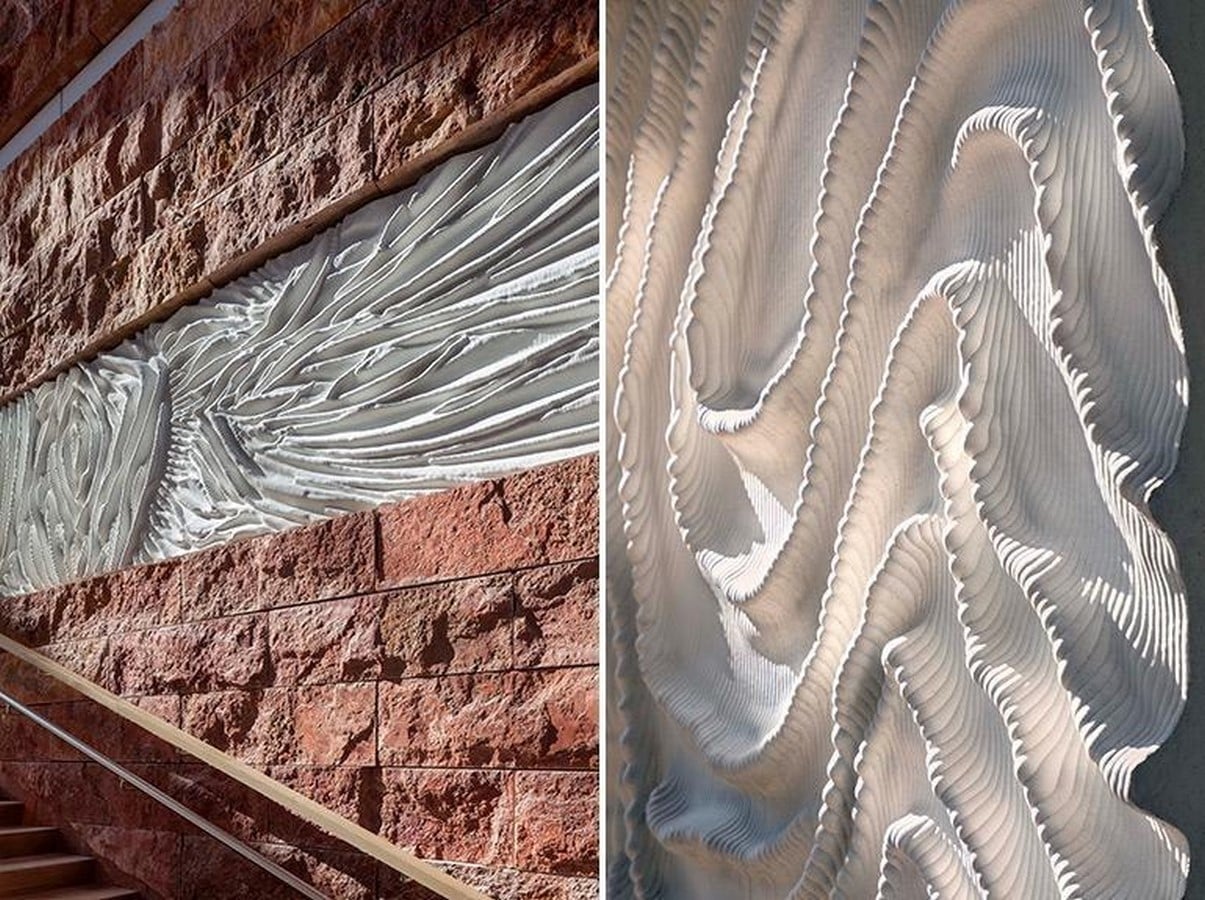
The designer’s creativity has extended to architecture too. She teamed up with Neutelings Riedijk Architects in 2010 to create sculptural panels to adorn the facade of the Naturalis Biodiversity Centre in Leiden. Directly inspired by fossil forms and refashioned in her own style, the design for Naturalis places humans back in nature. White nature-inspired panels come together to create a striking geometric facade amidst brick and glass. The interiors are adorned with concrete and marble mixed friezes akin to the appearance of textiles. Fashion has collaborated with architecture to create a unique experience of space, experimenting with materiality.
Architecture and Fashion: Intertwined art forms
On closer look, both art forms are alike in wondrous ways. From materiality to serving as inspiration for one another, the disciplines have long been interlinked since their inception. This interlink also allows designers to experiment with both, as architects have dabbled in fashion design and some of the best fashion designers have a background in architecture. Collaborations between the fields have led to spaces and clothes that combine the best of both worlds, blurring the lines between them. Perhaps in the future, these lines will further blur until both disciplines merge into one.
References:
- What happens to architecture when form follows fashion? – arch2o.com. Available at: https://www.arch2o.com/what-happens-to-architecture-when-form-follows-fashion/ .
- Crewe, L. (2010) ‘Wear: Where? the convergent geographies of architecture and fashion’, Environment and Planning A, 42, pp. 2093–2108. doi:2093 doi10106B.
- Özge TuncaByÖzge TuncaÖzge Tunca is the Video Content Manager at PA, Tunca, Ö. and Tunca, B. (2026) Fashion & architecture: 5 iconic collaborations, Parametric Architecture – Architecture News and Computational Design. Available at: https://parametric-architecture.com/fashion-architecture-5-collaborations/?utm_source=parametricarchitecture.beehiiv.com&utm_medium=referral&utm_campaign=wearable-architecture.
- Lucien, L. (2016) 9 fashion designers tell ad how they are inspired by architecture, Architectural Digest. Available at: https://www.architecturaldigest.com/gallery/fashion-designers-architecture-inspiration?mbid=social_facebook&utm_source=Pinterest&utm_medium=organic&epik=dj0yJnU9NFVwVTlJYmdnd0dQZzZIajhTR3M3bWNxOFJQQUUzSDgmcD0wJm49TFRFYXNWYjVDbjlOXzdJa19aVnREZyZ0PUFBQUFBR3FaaDFv.
- Fysa, E. (2025) NYFW – Alaïa at the Guggenheim: A bold intersection of fashion and Architecture – Bungalow 28: Fashion, Culture & Luxury Digital Agency, Bungalow 28 | Fashion, Culture & Luxury Digital Agency. Available at: https://www.bungalow28.com/playground/alaa-at-the-guggenheim-a-bold-intersection-of-fashion-and-architecture.
- Sen, E.A. (2026) Architecture and fashion: How buildings inspire clothing design, illustrarch. Available at: https://illustrarch.com/articles/9644-architecture-and-fashion.html.
- Beyond the runway: 7 architectural masterpieces created for fashion’s biggest names. Available at: https://www.tatlerasia.com/homes/architecture-design/beyond-the-runway-architecture-design-fashion-brands.
- Louis Vuitton: A brand personality that resonates with its audience (2025) For the Love of Luxury. Available at: https://luciesjean.wordpress.com/2025/09/04/louis-vuitton-a-brand-personality-that-resonates-with-its-audience/.
- [email protected] (2026b) Five architects who made their way in Fashion, Connections By Finsa. Available at: https://www.connectionsbyfinsa.com/five-architects-in-fashion/?lang=en.
- Almendral, C. (2026) Tom Ford History: From architecture to fashion, Social Life Magazine. Available at: https://sociallifemagazine.com/the-archive/tom-ford-history/.
- Stylisphere (2024) Fashion in the hands of Zaha Hadid, STYLISPHERE. Available at: https://stylisphere.com/fashion-in-the-hands-of-zaha-hadid/.
- Carte Blanche: Haute Couture (no date) Iris van Herpen. Available at: https://www.irisvanherpen.com/collections/carte-blanche.
- Iris van Herpen and the Architecture Fashion Couture: Hommés Studio (2022) Hommés Studio | Modern Interior Design. Available at: https://hommes.studio/journal/iris-van-herpen-and-the-architecture-fashion-couture/
- Nature meets fashion: The design of Naturalis (2024) Neutelings Riedijk Architects. Available at: https://neutelings-riedijk.com/news/nature-meets-fashion/.