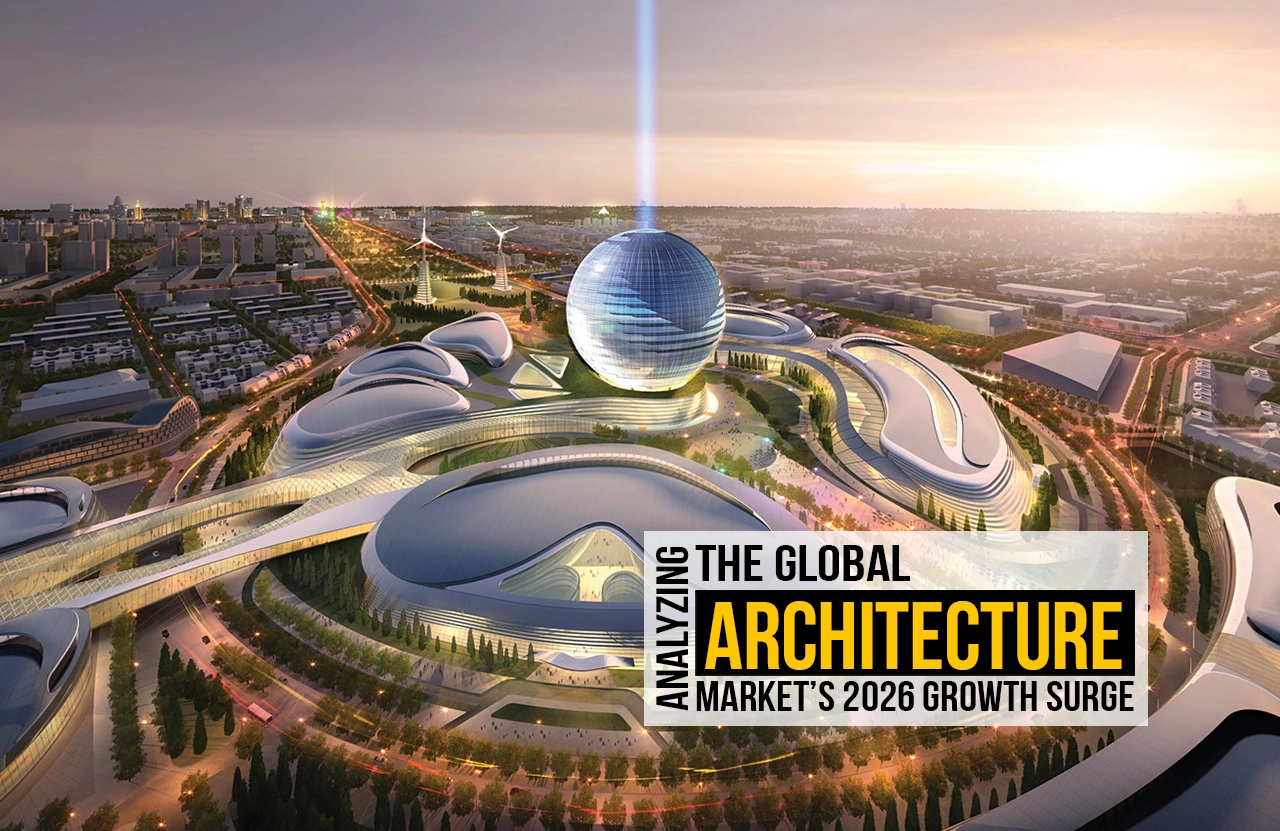
Today, the world is witnessing exponential growth in the global architecture and architectural services market, driven by rapid urbanization, large infrastructure investments, and a strong shift toward technology-oriented and sustainable design.
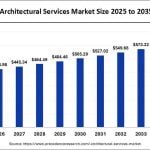
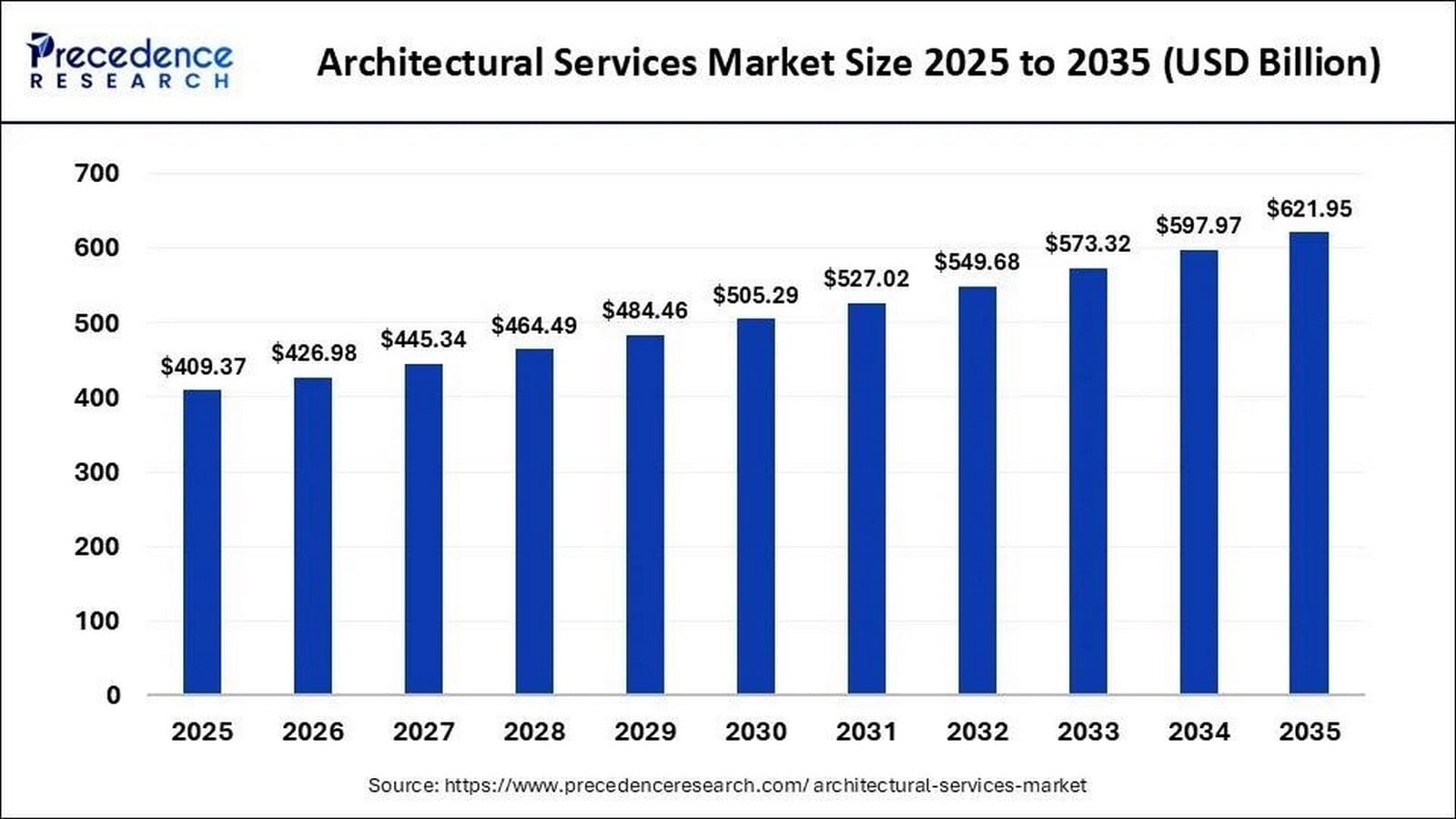
Economists saw the market value rise from $398.33 billion to $411.7 billion in 2025. It is estimated to rise from $414.43 billion to $430.91 billion in 2026, and over $600 billion by the early 2030s, maintaining a steady Compound Annual Growth Rate (CAGR) of 4.2% to 5.2%
The current boom is driven not only by growth in market volume but also by changes in how physical space is conceptualized, created, and maintained.
Global Architecture Market:
The scope of architecture is vast and growing, driven by rapid global urbanization and the need for sustainable, smart city infrastructure. The Global Architecture Market consists of planning, designing, and dealing with the construction of physical structures in the context of architecture. It deals with everything, from private residential homes to high-rises and commercial projects, and public infrastructure projects like roads, pipelines, schools, and hospitals. Every year, the demand for interior, exterior design, and construction is evolving exponentially.
The main structural drivers of the market comprise industrial and infrastructural projects that top the global market, residential projects, and government and educational projects.
The Trends Transforming 2026
The financial success of the architecture industry is now being driven by two massive revolutions – Generative Technology and Climate-responsive design.
1. Artificial Intelligence and Automation
Digital systems are a necessary expense nowadays; they are important to compete in the race of Digitalization.
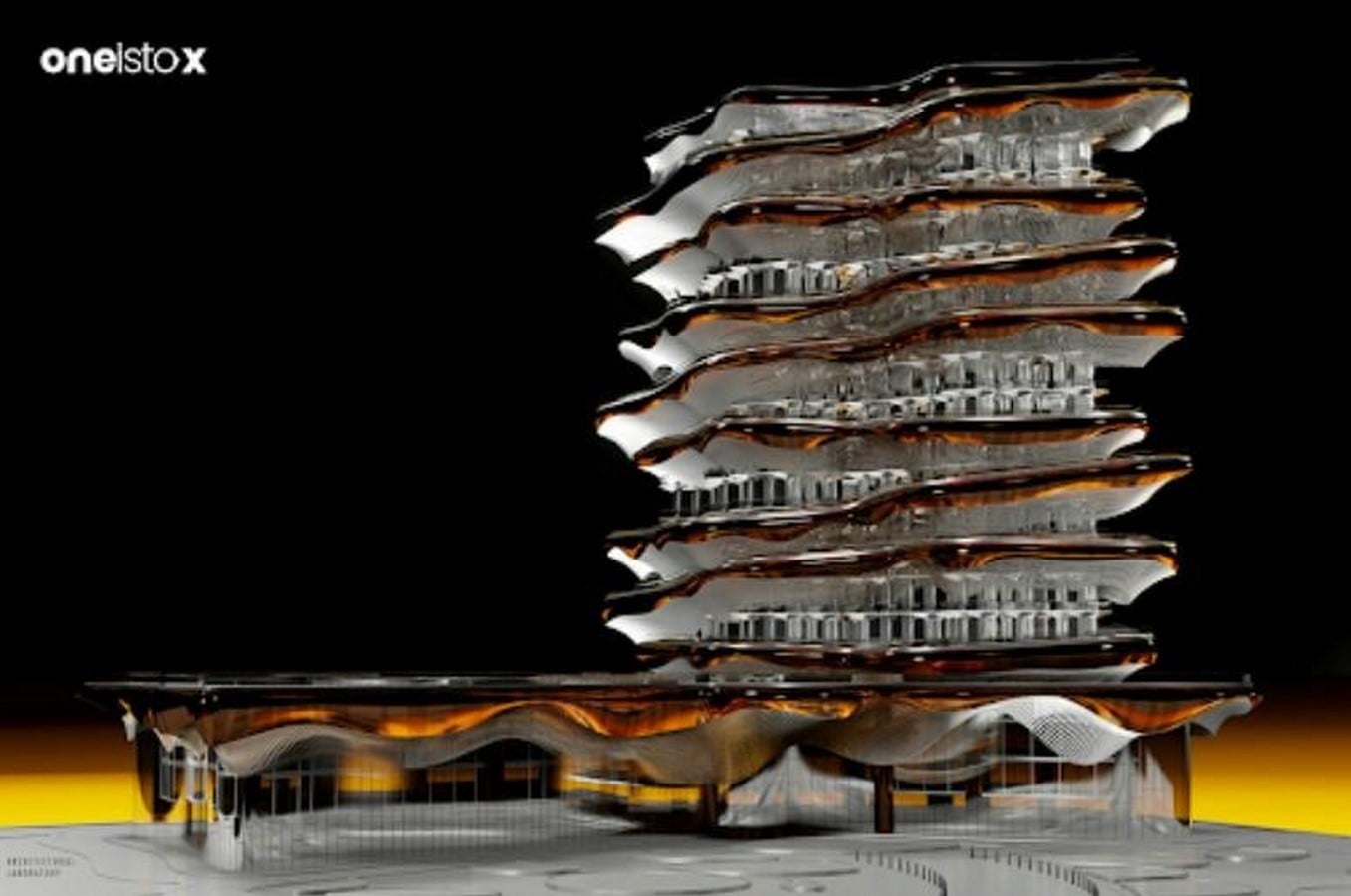
Some companies have been successful in compressing the iteration windows for designing through automation tools. Some companies have been able to integrate generative AI design tools within their existing workspace through algorithms to automatically output material, cost, and energy footprints. The majority of firms around the globe have been using BIM for managing project timelines. For technology-centric regulatory markets such as Singapore, the use of BIM has increased drastically.
2. Climate Resilience and Sustainability
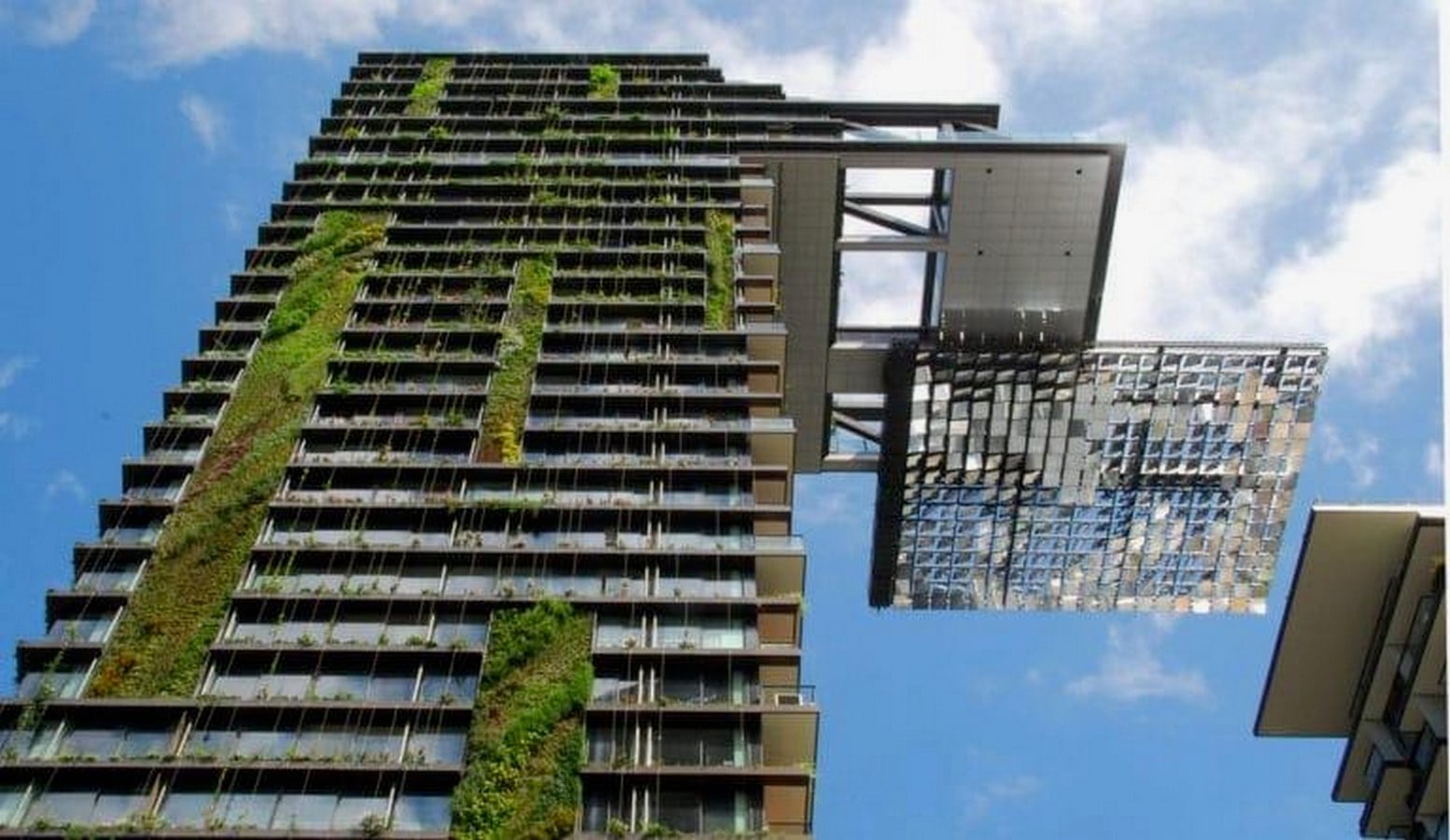
Due to extreme climatic conditions, the real estate industry is disrupted. The architecture industry has shifted towards principles of climate resilience and sustainability. Architects and engineers follow circular design principles, preferring local, infinitely recyclable or low-carbon materials.
Adaptive reuse principles have been adopted. Old structures have been preserved by transforming non-useful spaces to useful ones.
In addition to this, architects are working on integrating flood-resistant, fireproof, and wind-resistant structures within building codes.
Beyond the Numbers: What the Current Growth Surge Means for Architecture as a Practice
From the figures, we can infer that global architecture market growth is a sign that architecture is now operating as a business. Due to automation, technological advancement, compressed fee structures, and shifts in the overall climate and trends worldwide, the core deliverables of architecture are also undergoing a change.
The Death of Visualization Creativity
Visualization software is expensive, and if someone does get their hands on it, they need to hire an expert who can produce realistic images of the desired product. Instead, AI– generated images are used to understand the 3D form of a 2D plan. Today, a firm can hold as few as 3 employees in place of a 20- 50-person firm and produce deliverables that rival the famous firms. That means many start their own business without having proper training and knowledge of the architecture business, with AI doing the crux of the design work.
Also, with that, not only can high-end clients afford architectural services, but clients with a low budget as well.
Circular Design
By hearing the word, the principles of local materials and following the 7Rs pop into mind. The rapid pivot towards adaptive reuse and designing buildings with a low carbon footprint has become a necessity, although the intention differs from being altruistic to being forced to follow due to capital availability and risk mitigation.
The Boring Infrastructure Boom
Globalization and following-the-trends culture has brought universality and erased uniqueness. What used to be a speciality of a specific place now sits within us. Whatever inspires the clients and the architects from Pinterest and Behance or any famous trend is brought to life.
Industrial and infrastructure projects dominate the market, and so do prefab components that are main components of today’s skyscrapers, high-rise buildings, and data centres. These projects demand quality, environmental controls, specialized MEP mechanical, electrical, plumbing) and extreme energy efficiency.
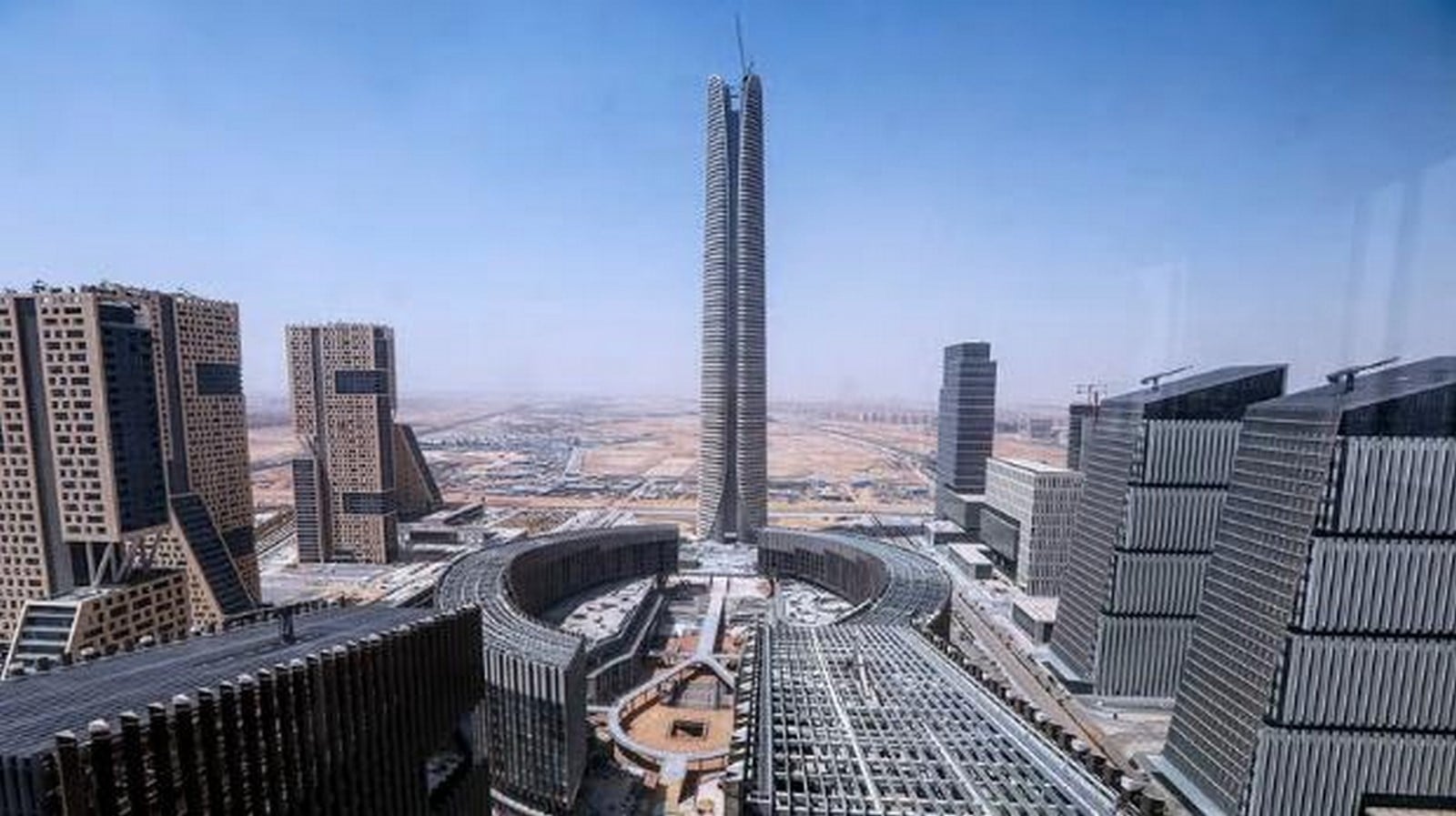
The growth in the architectural market signifies that architectural services volume is increasing, but the standard is shrinking.
Firms that survive in this $400B+ market will not be those who design aesthetic buildings. They will be those that master automation, climate-responsive design, and are energy-efficient to compete in the race of growing tech to cater to their clients.
References:
https://www.ibisworld.com/access/api/
https://omimashub.wordpress.com/2024/04/09/market-segmentation-for-architects-a-guide-to-finding-your-niche/
https://www.kenresearch.com/mena-architectural-services-market
https://www.imarcgroup.com/middle-east-smart-cities-market
https://www.reanin.com/reports/architectural-services-market
https://www.fortunebusinessinsights.com/architectural-services-market-113729