“Next Monday, everybody needs to be ready with their concepts and present them.” As the professor proclaimed this, the Hermiones of the class were thrilled. The Rons and Harrys of the class moped in silence; for them, this proclamation felt more like a curse. For the Nevilles of the class, it sounded like Avada Kedavra, the killing curse.
Concepts – Divination or Potions
Articulating concepts is much like divination; we are asked to make predictions that we are never taught how to. Professor Trelawney from Hogwarts teaches her students all the same, but only Lavender and Padma seem to be able to grasp the subject, while Ron and Harry spend most of their time faking it. Does this mean Ron and Harry do not have the sight, the talent, the intellect? What about in Potions, every student follows the same steps and procedure, but only Hermione stands out in terms of performance. Here, we discuss two different subjects: one, Divination, which is quite vague, uncertain, and relies on intuition and interpretation, and the other, Potions, which is very structured and prearranged.

Concepts are much like the former. A site is introduced to the class, students are to study it, research on it, conduct case studies, produce mind-boggling concepts, followed by designing, prepare 3d models, both digital and physical, attend the jury, the end, and move on to the next semester, in which the same process is followed for a different topic and brief. This whole method sounds systematic, but in reality, it’s quite a mess, the toughest thread being Conceptualization. It has always been said and felt that a good design is one that has a hypnotic concept, like a spell that puts you in a trance. If the concept is a hit, then you have the most extraordinary design; you are the greatest wizard of the age. However, this isn’t everyone’s cup of tea, regardless of what is taught and how much is taught; some get it naturally, while others struggle.

The Unforgivable Curse – Averagium
“Average” is just one such word students are tagged with when they are unable to convey concepts through the same lens used by the rest of the class, within the stipulated time. Concepts, then turn into a narration, a debate, a mixture of fancy words, to convince everyone why it makes sense. It becomes dramatic and pretentious and loses its purpose of evoking curiosity and the appetite for knowledge. Ignited by the fear of grade anxiety, extravagant presentations with dominant colours and complicated explanations are presented on screens to attempt to cover up the absence of the “essence”.

Neville, too, found it hard to express his opinions and ideas in class, but we see that through the course of time, he becomes more confident with his ideas. Unfortunately, unlike Neville, there are a few students who tend to remain misunderstood and seldom taken seriously. Taking more time to process ideas, being forgetful, struggling to perform well under pressure, and lacking confidence or not being an ideal student shouldn’t lead to being labelled as “not fit.”
The Downside
Creativity was never meant to be linear or instant, so why are students grouped based on the time they take, or how quirky or intelligent their concepts sound? Hermione never struggled with academics, and this was because the system was made for students like her; her strengths aligned with the ones the school upheld. The rest were simply considered weak, average! This disparity in the system fosters doubt, confusion, and even hatred for the subject – architecture. This snatches away the process of steadily understanding and evoking passion for design.
Now, imagine this: a student graduating with this attitude and being asked to design a home, how is this architect to give their best when architecture school lets them down and limits their design development? Such students don’t lack creativity; what they need is time and an environment in which each one has the liberty to learn at their own pace and produce irreplaceable concepts as unique as a Patronus.
Rethinking the soil
Ways that could help might include assisting students in understanding their strengths, accepting their approach to realising a concept, and not forcing them all to follow the same path traversed by past designers. The idea can arise from anything and should be respected irrespective of what the norm is; each student has a different upbringing and has to face quite unique circumstances. It’s not natural to box their perspectives and approach.
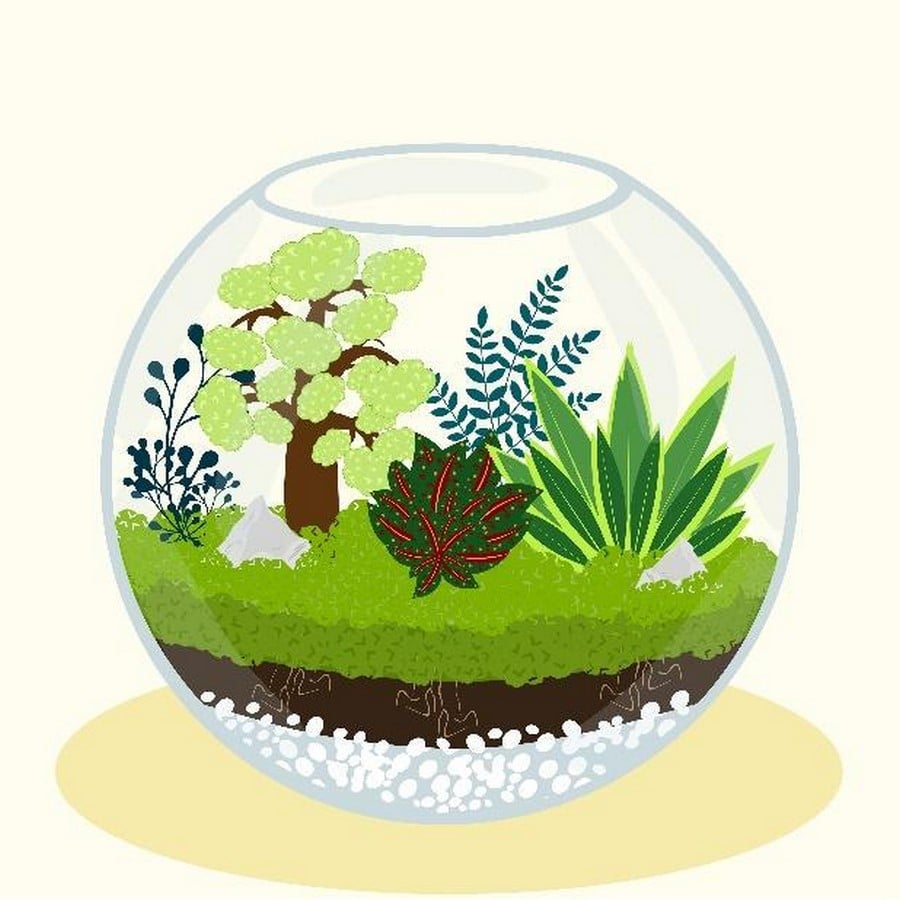
Harry, Hermione, and Ron, each of them in a way belonged to three different “ecosystems”; in the world of architecture, it is the same; each of us is a seed of a different species trying to propagate in the same soil that nourishes only a few and neglects the rest. But this can be managed by the addition of nutrients, improving the soil structure, water management, and a number of other ways. Until then, uneven development will be called out as “lack of potential” when in reality it is the system that fails them.
References:
- Archimash(2026). What Is An Architecture Design Concept (And What Makes It Great). [online]. Available at: https://archimash.com/articles/architecture-design-concept [Accessed 09 April 2026].
- Rowling, J.K. (1997). Harry Potter and the Philosopher’s Stone. London: Bloomsbury.
- Rowling, J.K. (1998). Harry Potter and the Chamber of Secrets. London: Bloomsbury.
- Rowling, J.K. (1999). Harry Potter and the Prisoner of Azkaban. London: Bloomsbury.
- Rowling, J.K. (2000). Harry Potter and the Goblet of Fire. London: Bloomsbury.
- Rowling, J.K. (2003). Harry Potter and the Order of the Phoenix. London: Bloomsbury.
- Rowling, J.K. (2005). Harry Potter and the Half-Blood Prince. London: Bloomsbury.
- Rowling, J.K. (2007). Harry Potter and the Deathly Hallows. London: Bloomsbury.