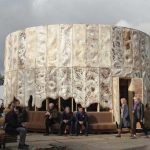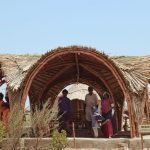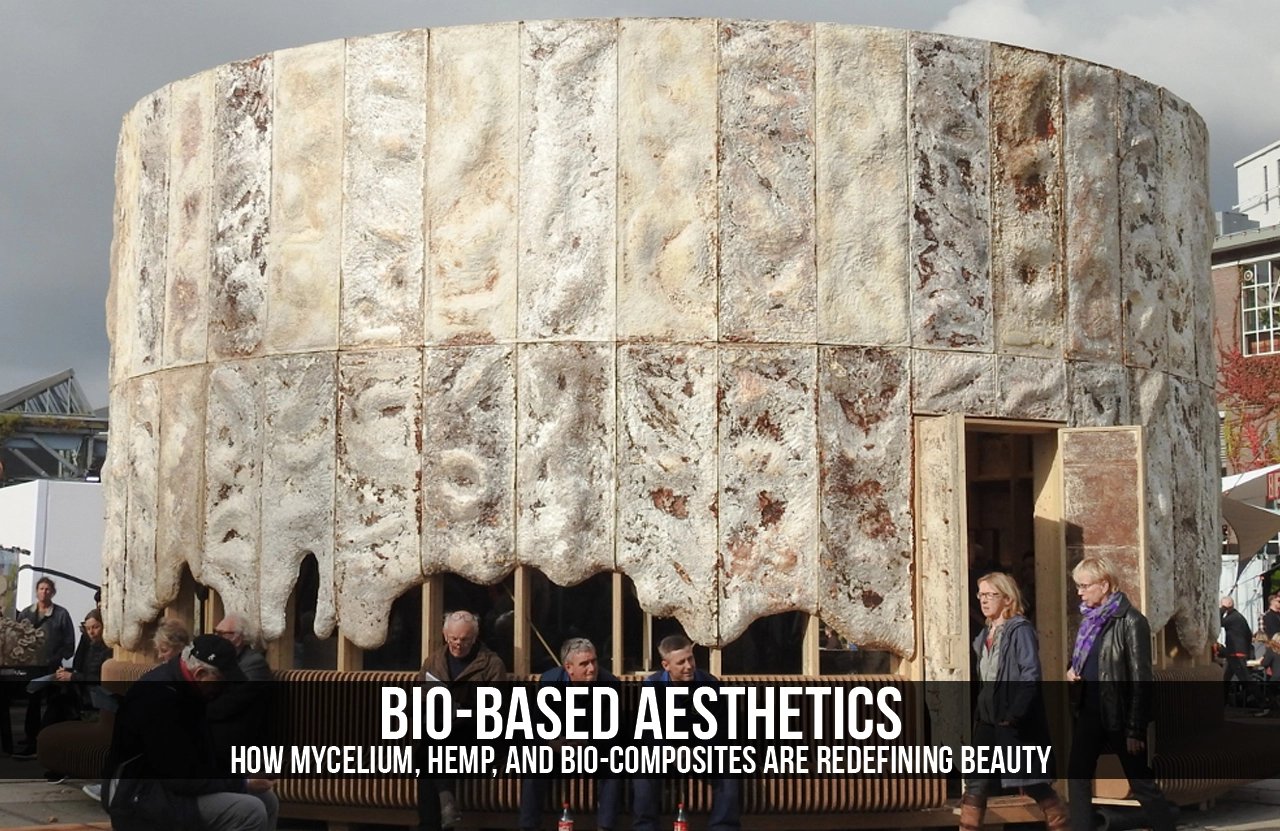
Bio-based Aesthetics is a vast field of architecture and design that has recently gained popularity in modern practices. As the world shifts toward sustainability, designers are moving from synthetic materials to those derived from biological sources such as wood, rammed earth, straw bales, and bio-composites. Bio-composites are a fusion of plant fibres, recycled timber, fungi, and agricultural waste products. Materials like MycoPly, Mycelium bricks, hempcrete, and bamboo-straw composites are redefining industry aesthetics. Now, surface coatings or finishes are unnecessary to achieve expression. The living material itself acts as a medium, generating pigments and textures through different environmental treatments.
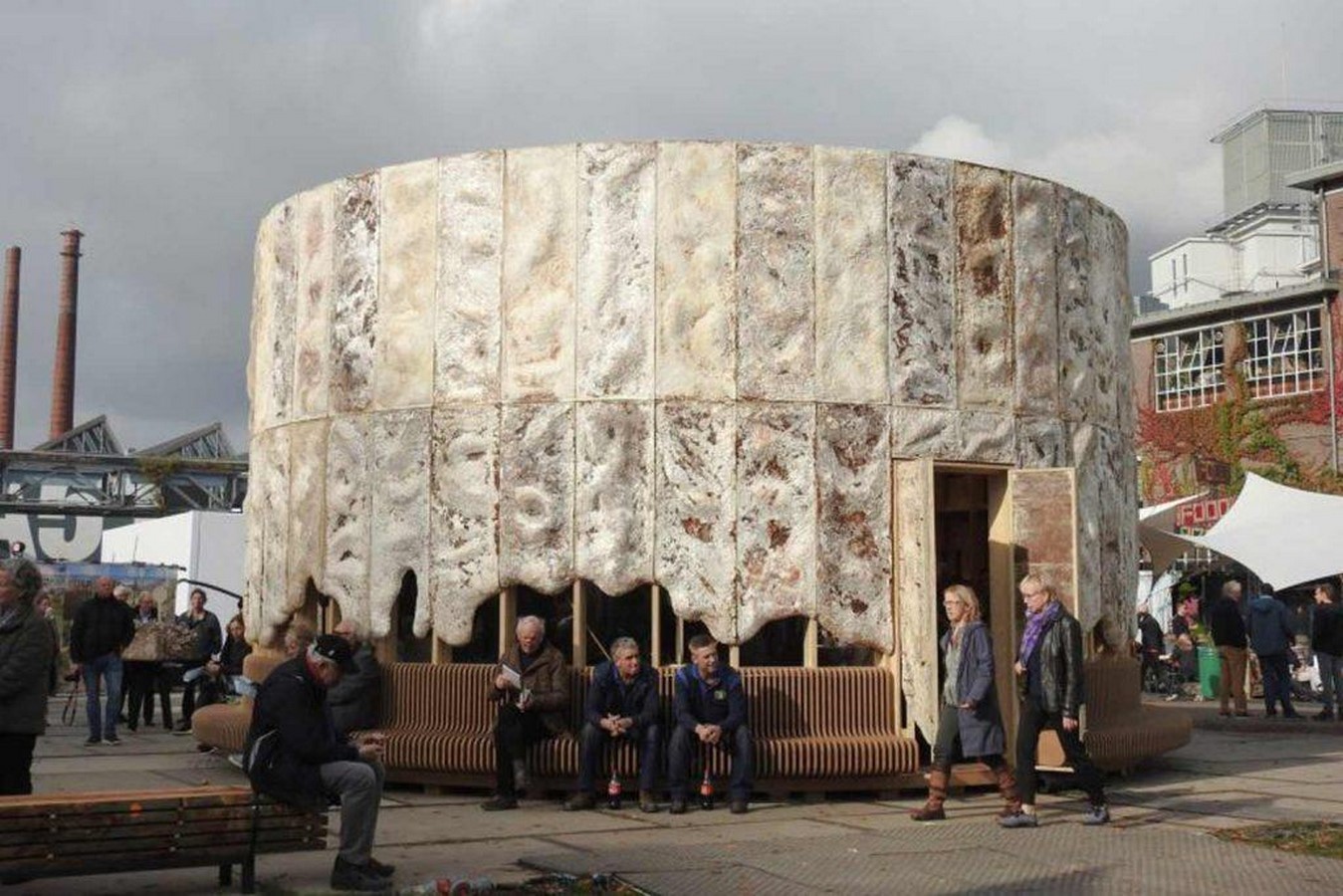
These building materials have given a new direction to sustainable practices. Sustainability now no longer means simply using naturally derived materials or being energy efficient. It also considers the entire lifecycle impact of a built form. Traditional building materials such as steel, concrete, and glass present a variety of aesthetic applications. But at the end of the lifecycle, they cannot be returned to the soil with minimum environmental impact. Demolishing these built structures adds to the carbon emissions that are already poisoning the earth. However, using bio-composites such as mycelium, hemp, wood fibres, and fungi-based materials ensures that even at the end of the lifecycle, they can be reused, recycled, and regenerated.
Examples of Bio-Based Materials
Initially, bio-based materials were only used in framing structures, such as art installations and pavilions. But with the advancement of technology, these materials are making their way into self-supporting structures, building blocks, facade panels, insulation panels, furniture, and surface finishes. Bio-composites are manufactured through various environmental and industrial treatments such as compression, grinding and milling, fungal growth, grafting, hot pressing, fermentation, and plasticization. The composites thus obtained have a variety of uses as textiles, packaging materials, and construction materials, etc. (Salazar Sandoval et al., 2024).
Some examples of bio-based materials that are now being widely used in architecture and design are:
- Bamboo
- Straw bales
- Rammed earth
- Natural cork
- Cross-laminated timber
- Mycelium composites
- Hempcrete
- Compressed agricultural waste
- Bioplastics
- Cellulose fibers
- Algae limestone
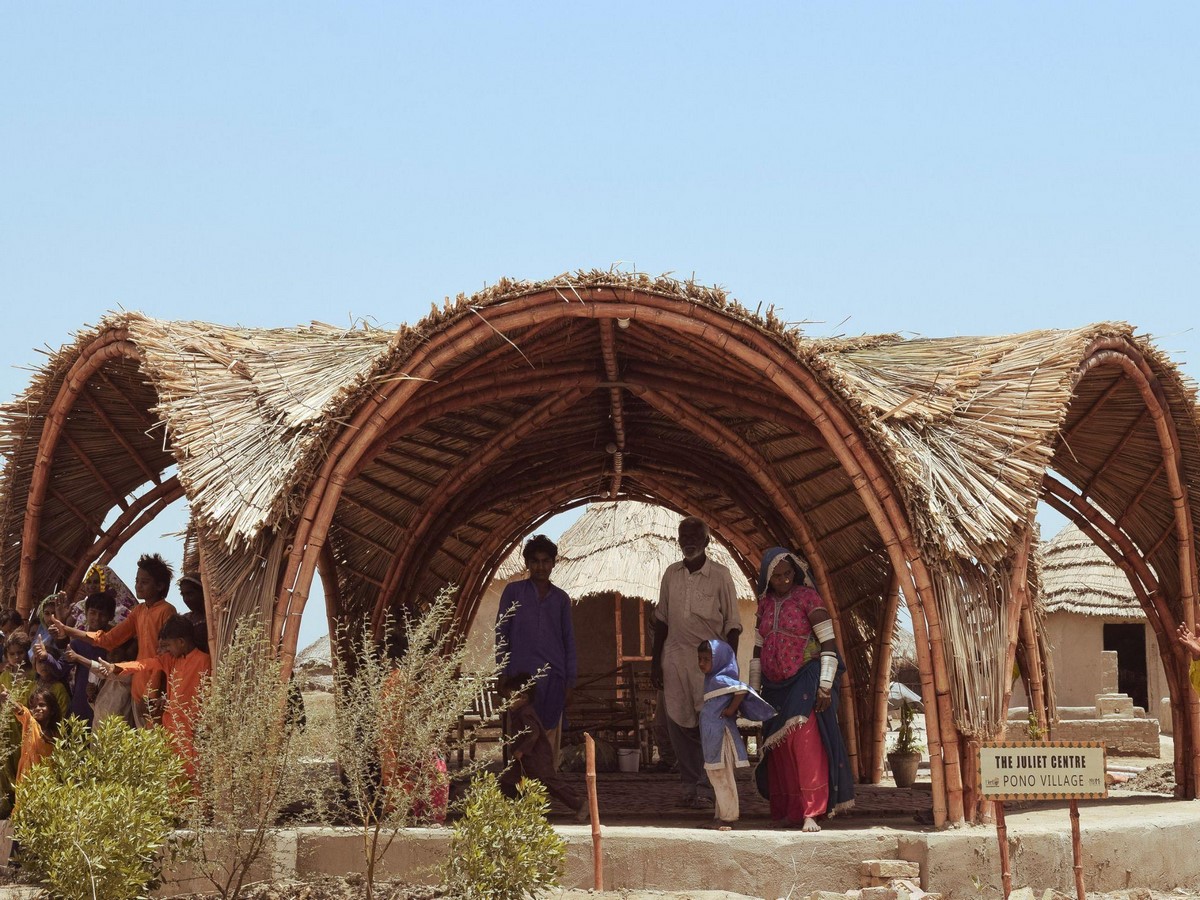
Mycelium as Building Blocks
Mycelium has emerged as a significant source of bio-based materials. It is an organic material obtained from the living body of fungi. While mushrooms are the visible part of fungi, mycelium is the vegetative, root-like structure that propagates below ground. One of the most common applications of mycelium-based composites is using them as building blocks. The bricks developed from mycelium are sustainable, biodegradable, and lightweight. They also feature the natural organic mycelium patterns on the surface. Through natural processes like “delayed growth” and choices in species and substrate, different colours and textures can be reflected in these bricks. As a result, the building blocks do not have to undergo chemical coating and surface finishing (Globa, Soh and Le Ferrand, 2025).
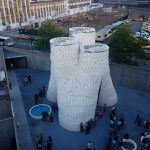
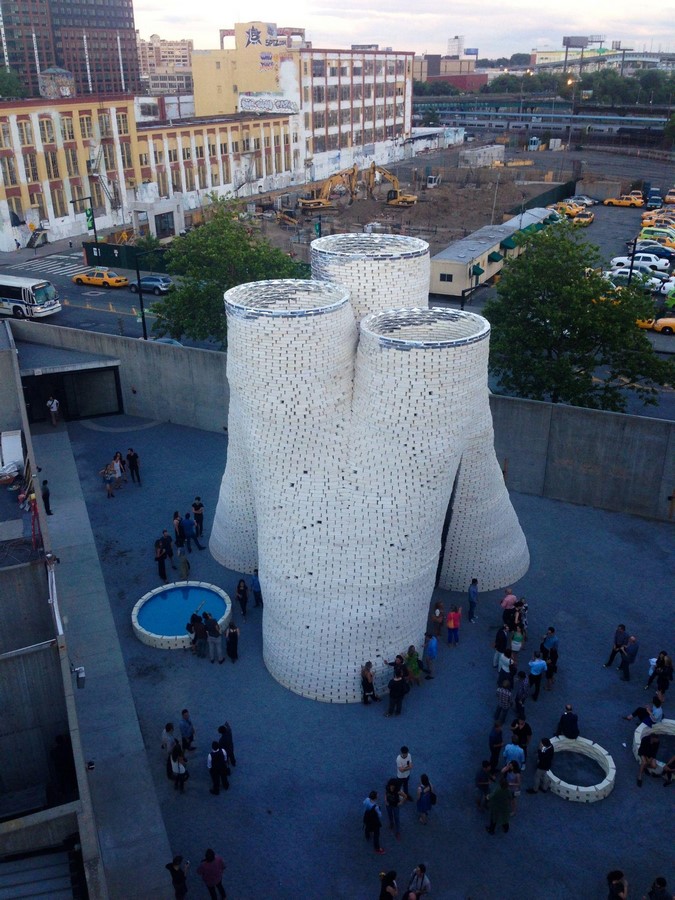
A notable example is the Hy-Fi Tower by The Living, inaugurated as the centrepiece of MoMA PS1 Young Architects Program in 2014. It is the first large-scale structure to use mycelium bricks grown specially for this project. About 10,000 organic bricks made from a composite of corn stalk waste and mycelium formed this 40-foot-tall structure of three interlocked cylinders that provided shade, seating, and water to the festival’s attendees. After the end of the program, the structure was dismantled, and all the bricks were shredded and composted. Thus, the Hy-Fi Tower proved to be sustainable not only in its materiality but also in its complete lifecycle as it generated zero waste and zero carbon emissions (Architizer, 2015).
Mycelium Panels in Facade
Mycelium can also be used as facade panels and interior wall panels. MycoPly is an example of laminated mycelium composite panels that have a variety of architectural applications. It is lightweight, renewable, and cost-efficient. These panels can be used in structural walls and facades, and in the construction of compression-optimised vaults and arches. They can be prefabricated and assembled on site, thus resulting in quick and efficient construction. Reinforcing these panels with materials such as woven jute layers can further add to their tensile strength and broaden their structural applications (Wisniewska, Boghossian and Heisel, 2025).
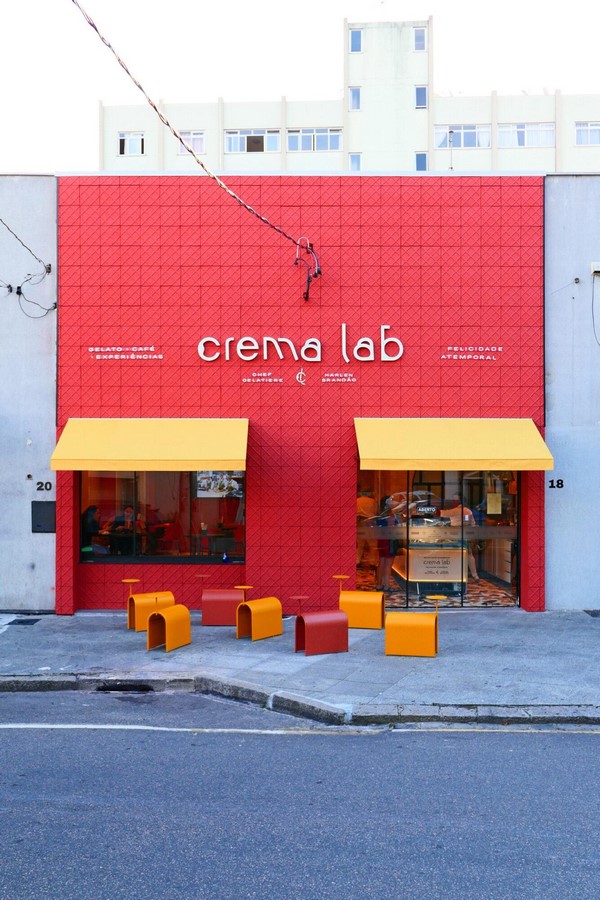
Furf Design Studio, in partnership with Brazilian startup Mush, explored mycelium panels in the facade of Crema Lab. It was the first commercial facade made entirely of mycelium panels, inspired by the patterns on ice cream cones. These panels absorbed carbon dioxide upon production and exhibited remarkable thermal insulation properties. The vibrant colour also adds to the appeal of the facade, making it easily spottable and matching contemporary commercial facades for bakeries and cafes. Using mycelium facade panels reduces the overall carbon footprint of the building as compared to using conventional facade panels (Greco, 2026).
Self-Supporting Mycelium Structures
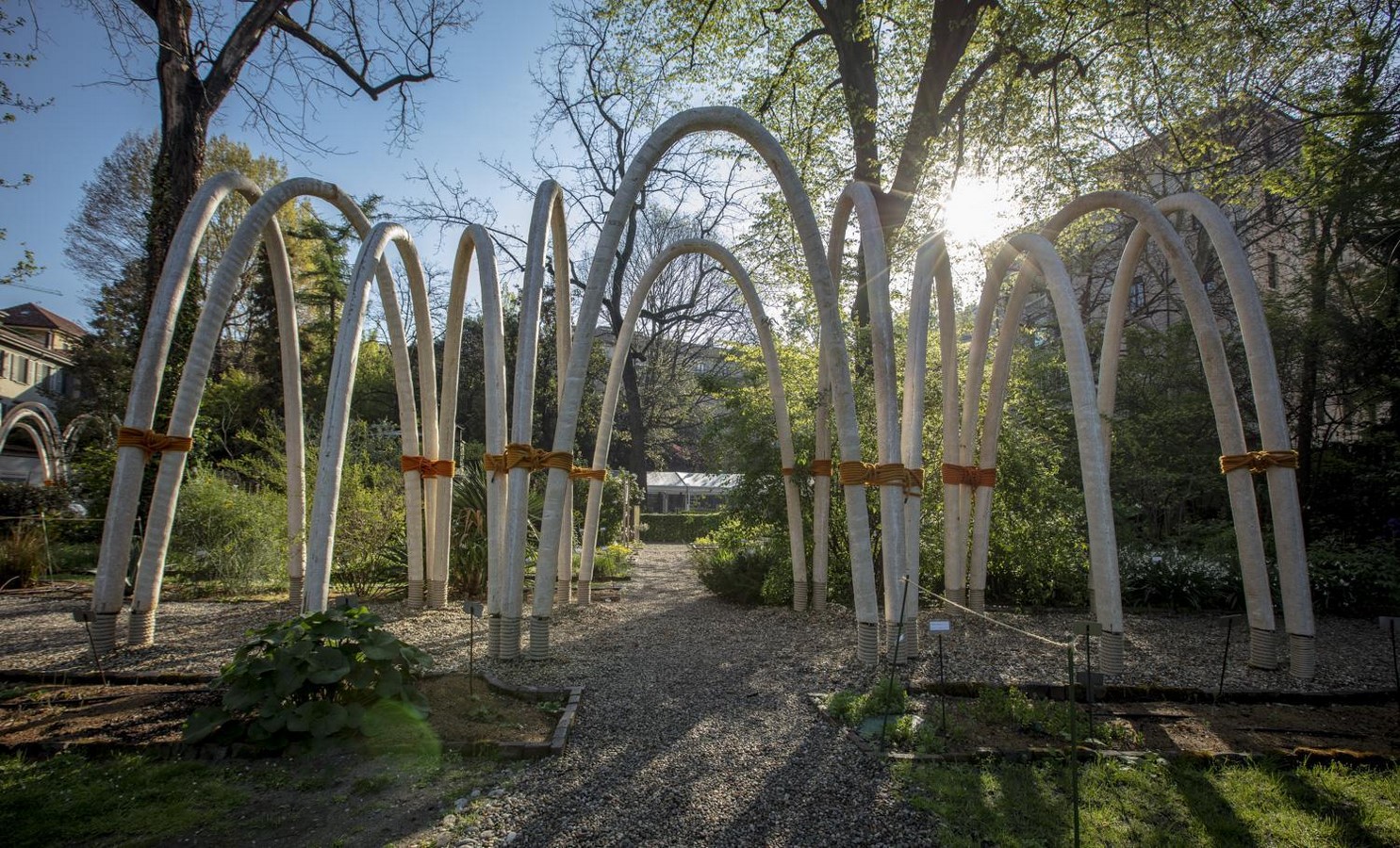
Aside from being used as bricks and panels, mycelium has also been explored in self-supporting structures. Imagine a structure that is fully grown and later returned to the ground at the end of its usage. Carlo Ratti Associati explored this concept in the Circular Garden installation in Milan. Inspired by the catenary arches used by world-famous architect Antoni Gaudí, these self-supporting mycelium structures were grown at an architectural scale, forming a series of 60 4-meter-high arches arranged in a circular composition. The mycelium in these structures took two months to grow and was returned to the soil at the end of Milan Design Week. This project added to the known applications of mycelium fibres, demonstrating a new direction in generating full art installations and pavilions that could be composted at the end of their lifecycle, further enriching the nutrients of the soil they were composted in (Carlo Ratti Associati, 2020).
Hempcrete in Surface Finishes
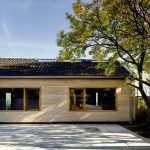
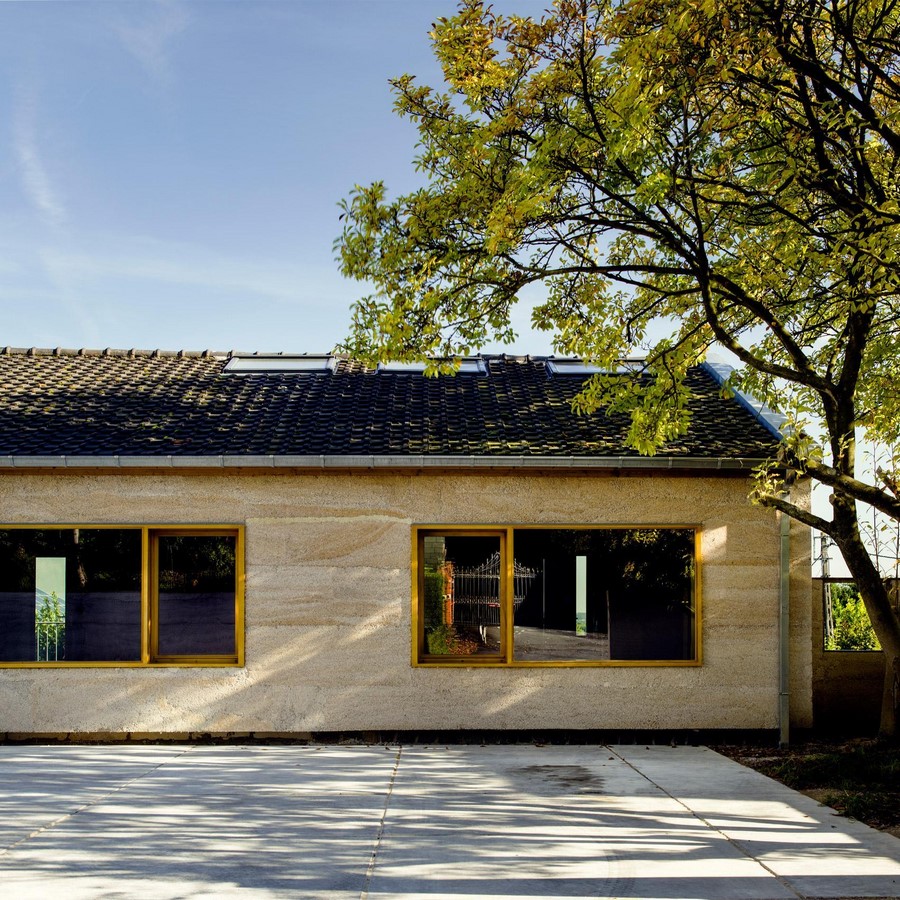
Hempcrete is an effective alternative to cement or concrete-based surface finishes. Made by mixing hemp with lime and water, hempcrete forms a sustainable surface finish that is weather-resistant and renders the same textured finish as that of rammed earth. It reduces building costs, is easily manufactured, and does not emit harmful carbon emissions as compared to concrete manufacturing. A renovated house in Belgium by Martens Van Caimere Architecten exemplifies the use of hempcrete in wall finishes. They demonstrated that hempcrete combines the insulation and finishing in one layer, thus reducing additional building costs. The lime added to the hemp gives the surface a striated finish, which is aesthetic and low-maintenance. Hempcrete can be used in both exterior and interior wall finishes. It can also be used as an insulating wall infill, insulation blocks and panels, flooring and roofing applications, as well as building retrofitting (MVC Architecten, 2016).
Bio-composites are redefining aesthetics in the architecture and construction industry. These living materials become a sculptural medium for architects and designers to explore colour, texture, and organic patterns. A variety of these bio-based materials are already being used in sustainable building practices. Not only are these composites naturally derived, but they are also lightweight, reusable, and generate zero waste or carbon emissions. Thus, the future of building construction is in further exploration and application of mycelium, hemp, and other bio-composites.
References:
Architizer. (2015). Hy-Fi by The Living. [online] Available at: https://architizer.com/projects/hy-fi/.
Carlo Ratti Associati (2020). The Circular Garden. [online] Carlo Ratti Associati. Available at: https://carlorattiassociati.com/project/the-circular-garden/.
Globa, A., Soh, E. and Le Ferrand, H. (2025). Living Textures and Mycelium Skin Co-Creation: Designing Colour, Pattern, and Performance for Bio-Aesthetic Expression in Mycelium-Bound Composites. Biomimetics, 10(9), p.573. doi:https://doi.org/10.3390/biomimetics10090573.
Greco (2026). Crema Lab | Furf Design Studio. [online] Furf.it. Available at: https://furf.it/projeto/crema-lab/ [Accessed 14 Mar. 2026].
Lewandowska, A., Sydor, M. and Bonenberg, A. (2025). A Review of Mycelium-Based Composites in Architectural and Design Applications. Sustainability, 17(24), p.11350. doi:https://doi.org/10.3390/su172411350.
Materials Assemble (2023). Bio Based Archives. [online] Materials Assemble. Available at: https://materialsassemble.com/materials-library/product-category/bio-based-materials/.
MVC Architecten (2016). GUILLEMIN. [online] MVC Architecten. Available at: https://www.mvc-architecten.be/guillemin [Accessed 14 Mar. 2026].
Nasir, O. (2024). From Bamboo to Mycelium: 10 sustainable construction materials. [online] Parametric Architecture. Available at: https://parametric-architecture.com/from-bamboo-to-mycelium-10-sustainable-construction-materials/.
Nyami Studio (2024). Juliet Centre. [online] Nyamistudio.com. Available at: https://www.nyamistudio.com/Juliet-Centre.html [Accessed 14 Mar. 2026].
Salazar Sandoval, S., Amenábar, A., Toledo, I., Silva, N. and Contreras, P. (2024). Advances in the Sustainable Development of Biobased Materials Using Plant and Animal Waste as Raw Materials: A Review. Sustainability, [online] 16(3), p.1073. doi:https://doi.org/10.3390/su16031073.
Wisniewska, M.H., Boghossian, A. and Heisel, F. (2025). MycoPly: Laminated, natural-fiber-reinforced mycelium-based composite panels for architectural applications. Structures and Architecture, pp.297–305. doi:https://doi.org/10.1201/9781003658641-36.