Digital burnout is the mental and emotional exhaustion caused by spending excessive time in the digital world. In the 21st century, society operates like a digital organism, constantly demanding our attention and blurring the boundaries between reality and digital spaces. This has created a widespread need for refuge from these coded environments. The concept of the architecture of digital burnout addresses this issue by introducing spaces designed for digital detox. With remote work now commonplace, homes have transformed into workspaces accessible anywhere via smartphones. While this convenience benefits some, the nonstop informational load can overstimulate the brain, leading to fatigue and a loss of spatial identity. In response, retreat spaces have emerged to restore the sky’s natural blue light, as opposed to the artificial glow of screens. These spaces encourage people to disconnect from digital devices and reconnect with their physical surroundings, fostering calm and reflection.
The setting
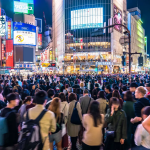
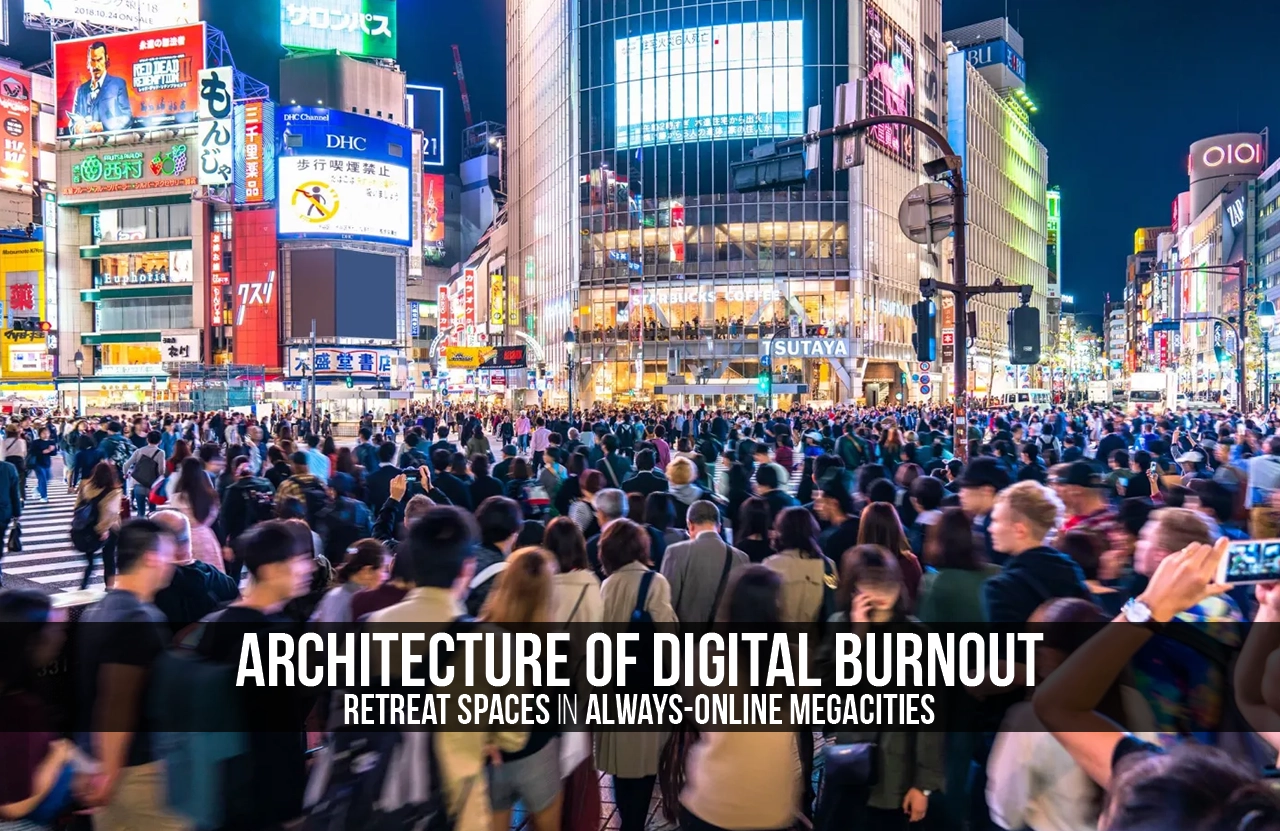
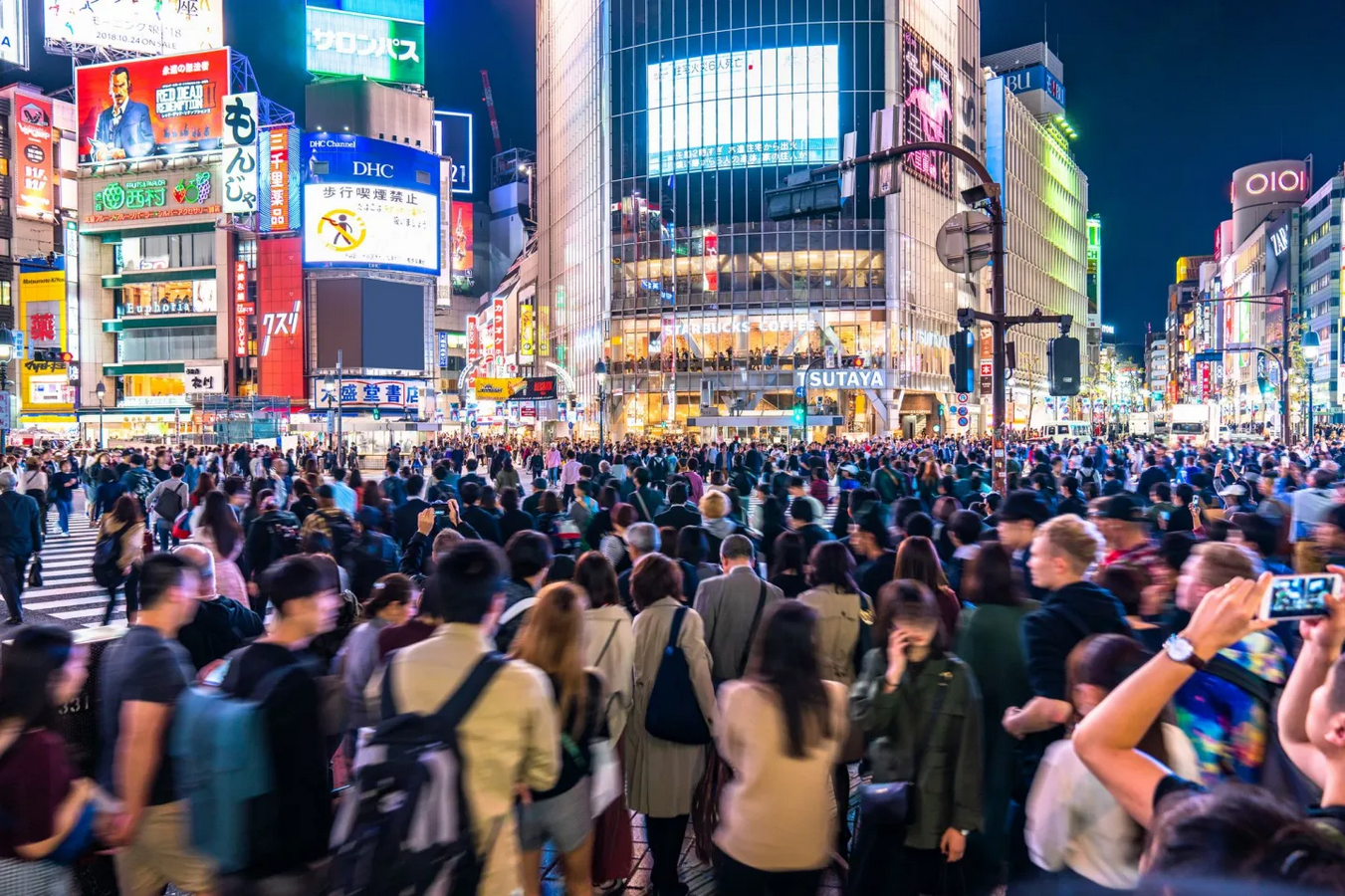
To design the remedy, threats must be understood first. In all the major urban cities, from New York, London, Dubai, Tokyo, to Bengaluru or Delhi, life is ruled by smartphones. Real-time GPS, social media platforms, and a home office navigate an individual. When every corner offers 5G connectivity, a triggering mode is initiated once it fails to provide the service. As a result of this, the physical environment of cities mirrors the pace of the digital world. Public spaces often swap into interactive screens, and buildings rely on data systems, creating an expectation that individuals remain reachable and responsive at all times. This system enhances efficiency, along with increased stress levels.
Architecture as a shield
To understand the architecture of retreat spaces, one must first identify the environment they possess. It’s a challenge to reclaim the physical essence of each space, experimenting with materials that can also act as passive blockers. Consciously separating the human physical experience from the virtual world requires a multi-sensory approach to architecture.
-Creating a sanctuary space that encourages meditation, reading, or quiet conversations acts as a boundary, isolating individuals from the city noise.
-Biophilic designs integrating nature into the built environment are essential to lower the stress levels. This incorporates natural light, acoustic insulation, and natural materials like raw wood, stone, or clay, which can also provide natural scents.
-Using urban materials like concrete to naturally shield from the outside zone, or providing green escapes in high-rise environments like rooftop gardens or vertical gardens.
-Fabricating a buffer space to transit between a busy street and a calm interior.Muted-tone corridors, winding pathways, or other spaces to shift the attention from the digital to the physical.
Re-treating Urban spaces
The world is a constant feed of information; the best thing architects can provide is the chance to hear oneself think. This does not mean the return to a pre-technological past,but a sophisticated use of the same materials and art to create zones of digital silence. The coldness of a raw stone, the warmth of wood anchor the inhabitants to the present. Watching the slow movement of a vine with the wind, the patterns in the leaf, clouds, or shadows moving across a rock imply a connection within themselves and reduce stress. New urban typologies such as Silent libraries or Digital free tea houses support this architecture even through a simple arrangement of furniture that encourages eye contact rather than screen-gazing. Retreat spaces are not a luxury; they are a necessary infrastructure for public mental health.
Thoughtful urban planning can ensure that these sanctuaries are integrated into the fabric of the city, making them a part of daily routines. These spaces should be easily reachable from the busy areas and can be designed to allow people to calibrate their peace. The concept of time is another major consideration in the design. Spaces that encourage slowing down and savoring the present moment can counteract the fast-paced nature of digital life. The maximum use of the natural arc of the sun,using glass to maximize daylight while providing zones for evening reflection as well, is one such example.
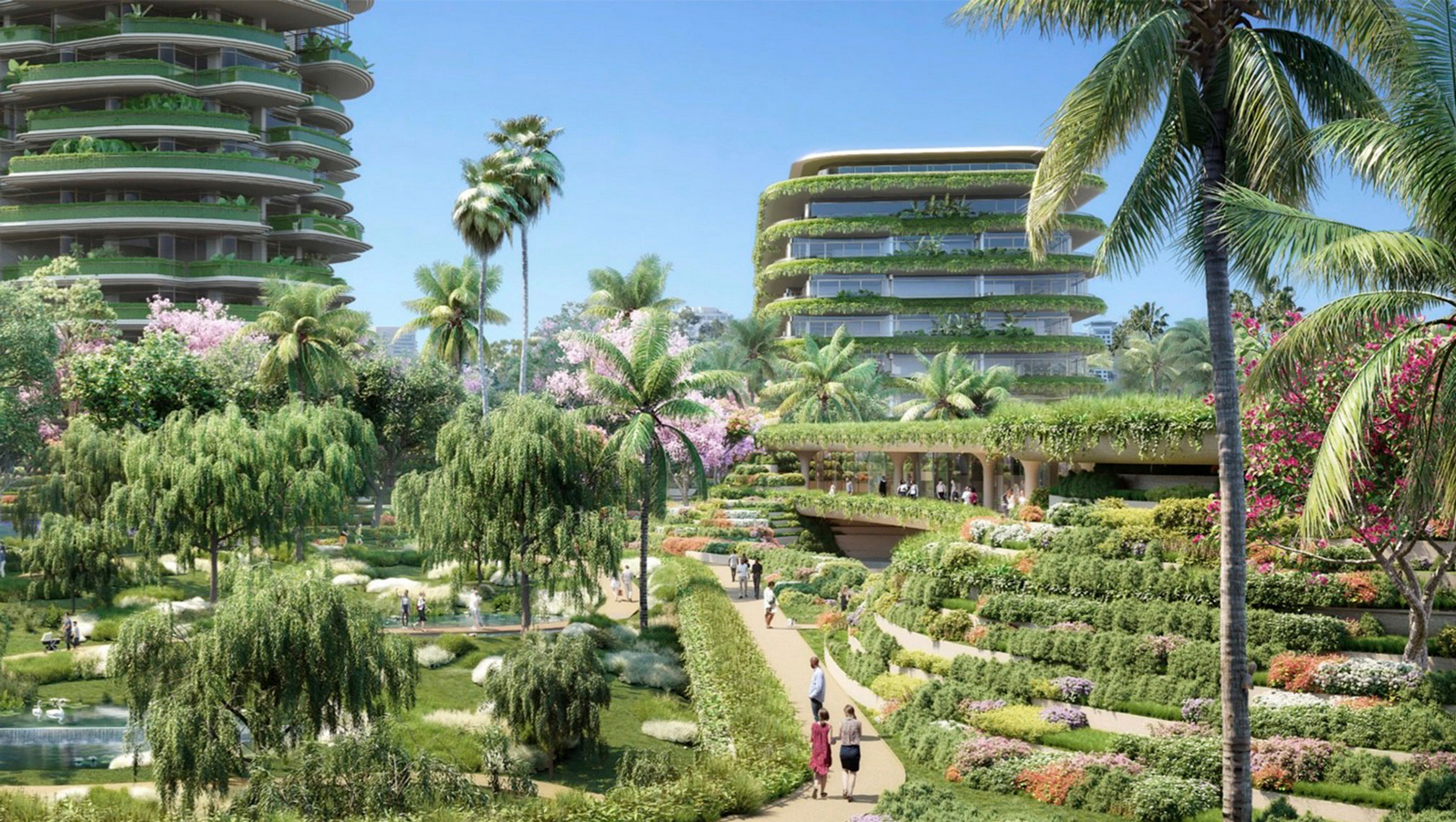
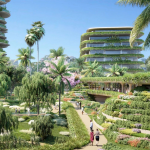
One major upcoming retreat is the Aman Beverly Hills, set to open its doors in the upcoming year. This luxurious resort itself is a serene oasis within a city. It integrates the Californian landscape and architecture as a shield from urban distraction.
Reclaiming the soul
Historically, architecture has always responded to the challenges of each era. From the Egyptian era to the industrialization time, new housing typologies and other civic spaces were developed to counteract crowded and polluted cities. Similarly, the digital age demands spatial strategies that address constant connectivity. Retreat spaces represent a new typology designed to support mental well-being within digitally saturated environments. Transition zones such as gardens or corridors serve as a psychological boundary between the outside world and the retreat environment. Nature has always been a long-recognized powerful antidote to stress. Within megacities dominated by concrete and glass, biophilic design strategies reintroduce natural elements to the urban environment. The goal is to create an equilibrium allowing the inhabitants to step out of the digital streams into their natural habitat without losing the technology.Utilising materials to control the digital signals, incorporating geometry and sensory designs to slow down movements, helps in creating a sanctuary that shields our essential resource- human attention. Architecture contributes to fulfilling this goal by crafting environments that enable the vital pause and by creating a tomorrow that is not just smart but sustainable for well-being.
References
Image 1:
https://wilo.com/en/Pioneering/Stories/Understanding-Megacities-Dynamics-and-Realities-of-Urban-Centers-Worldwide_40512.html
Image 2:
https://urbanhotblog.wordpress.com/2020/05/04/shibuya-japan-scrambling-with-technology-in-hand/