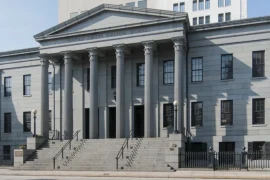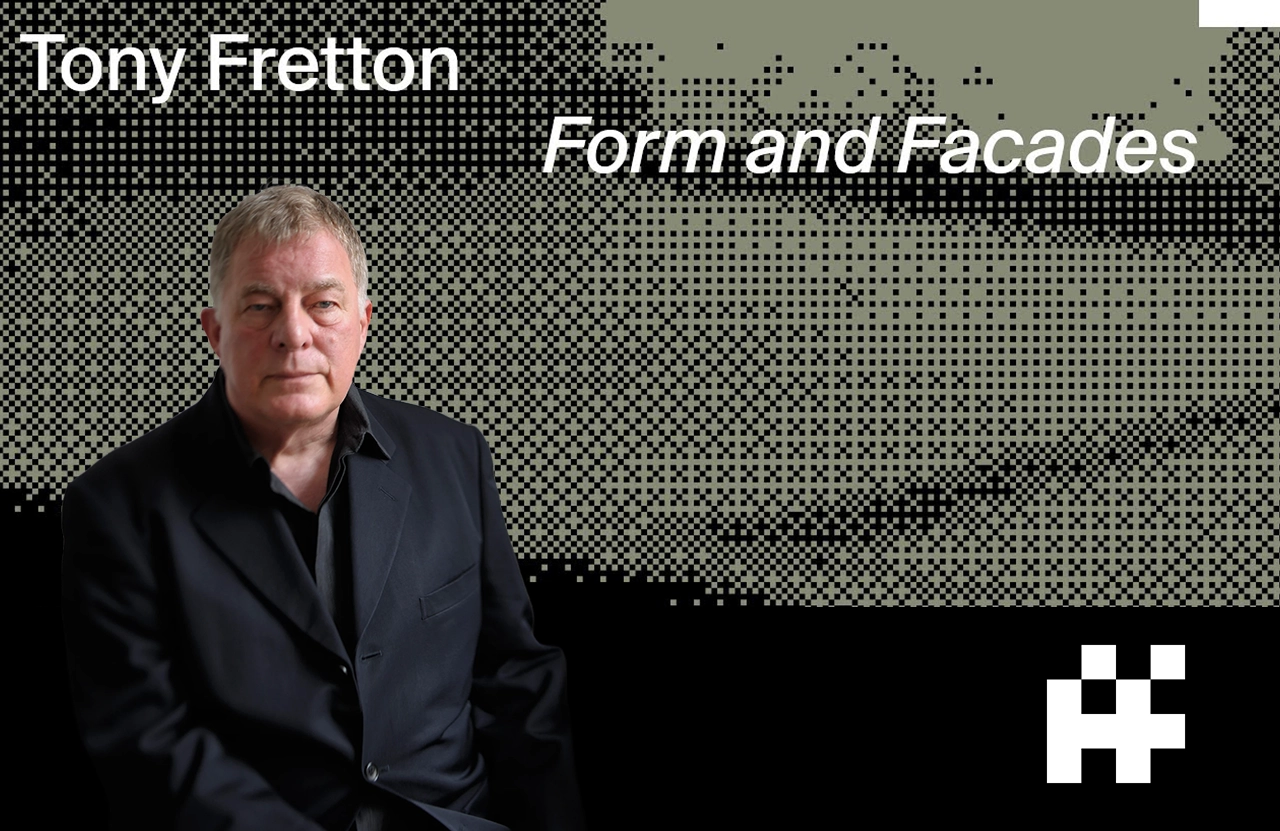
Architecture meets the world first through its exterior. Before we enter a building, experience its spaces, understand its plan, or notice the details of its structure and material, we encounter its form and its façade. The façade therefore becomes the building’s first dialogue with the city and its users. Through proportion, openings, materials, and composition it begins to communicate something about the building itself, its scale, its character, and sometimes even the life taking place inside it.
In the lecture “Form & Facades”, British architect Tony Fretton begins with an observation: while architects learn to understand plans quite naturally, because we experience spaces by moving through them, the making of façades remains far more mysterious. Plans are easy to relate to lived experience, but façades involve decisions that are not always governed by clear rules. Rather than offering a formula for designing façades, Fretton approaches the subject by looking carefully at buildings. Through a series of examples, from modern masters like Le Corbusier, Alvar Aalto, and Mies van der Rohe to later architects such as Lina Bo Bardi, Louis Kahn, and Álvaro Siza, he examines how different architects design meaningful façades. The lecture becomes less about prescribing a method and more about learning from observation: studying how great architects design and compose the face of a building and how those decisions influence the way architecture meets the world.
The mystery of the Facade
One of the central ideas in Fretton’s lecture is that façades do not follow fixed rules. Even in classical architecture, where systems of proportion and composition existed, architects interpreted them differently. Facades therefore emerge less from formula and more from individual architectural judgement. Each architect develops a particular way of organizing openings, solids, materials, and structure to give a building its presence in the world.
Fretton explains that the making of a façade often begins intuitively, but the most compelling façades reveal another layer of thinking beyond that first response. Architects begin refining proportions, aligning openings, thickening or thinning walls, and carving portions of the mass to bring light inside. Gradually the surface begins to resolve itself through a balance of solid and void, light and shadow, weight and openness. What first appears as a simple exterior becomes a carefully composed form where structure, light, proportion, and material begin to work together. For this reason, Fretton turns to buildings themselves as the best way to understand façades. Rather than prescribing rules, he studies how different architects compose the face of a building. Through these examples, façade design begins to appear not as decoration applied to a structure but as a compositional act through which architecture expresses itself.
Reading Facades through buildings
Le Corbusier’s work shows how façade design can be both rigorously composed, following a clear geometric order, while at the same time responding closely to the use of the building and the life inside it. In Villa Stein, the upper part of the façade follows a clear visual order, defined by two long horizontal bands of windows running across the building. The ground floor, however, responds more directly to practical needs, with the entrance and garage positioned according to how the building is used rather than strict symmetry. A similar concern for human experience appears in Maison Clarté in Geneva, where Corbusier designs a glass façade that responds carefully to the way people occupy the interior. Translucent glass below waist level preserves privacy, clear glass at eye level frames outward views, and translucent panels above diffuse daylight deeper into the room. In both projects, the façade balances compositional order with the practical realities of inhabiting the building.
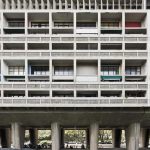
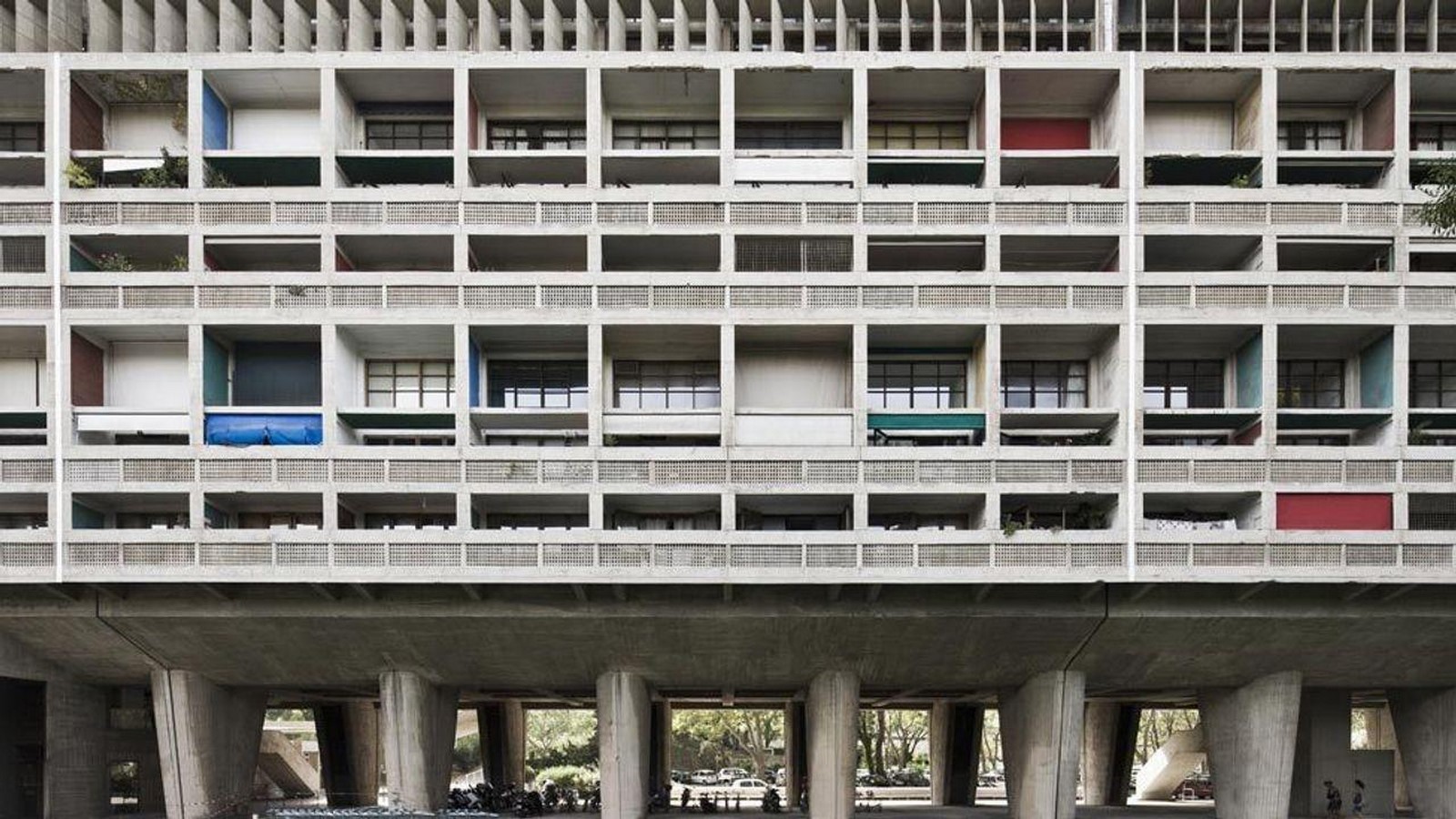
These ideas reach a larger scale in the Unité d’Habitation in Marseille. The building is composed of interlocking duplex apartments stacked within a concrete frame, and this organisation appears on the exterior as a rhythmic pattern of deep balconies and coloured panels. The façade therefore reflects both the internal arrangement of the dwellings and a carefully controlled visual composition. Corbusier was often regarded as a master of façade design, able to organise windows, balconies, and structural elements into compositions that are both functional and visually coherent. Across these projects, his façades demonstrate a consistent approach: establishing a strong visual order while allowing the life of the building inside to shape its expression.
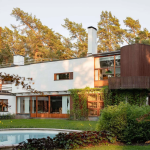
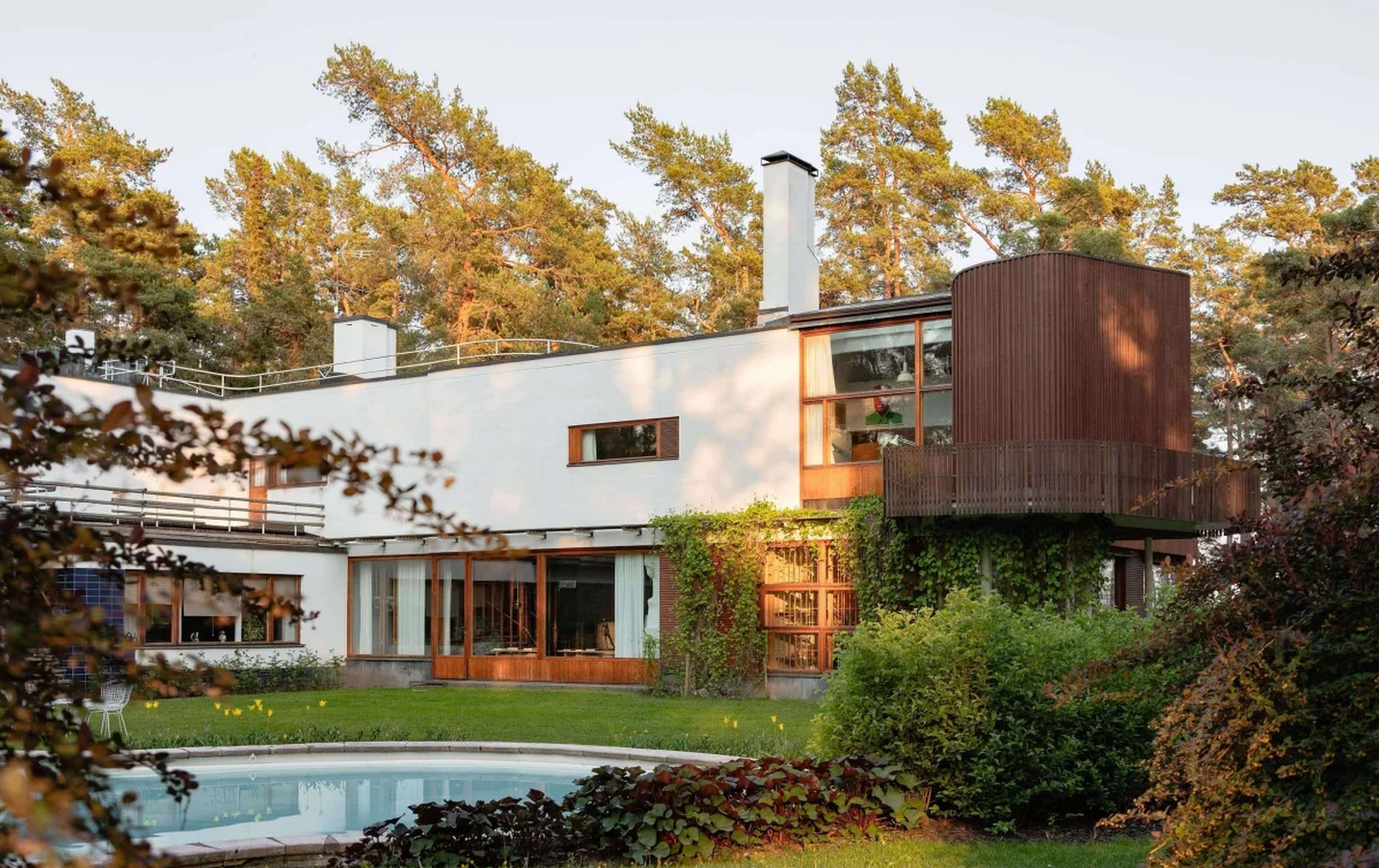
Alvar Aalto’s approach appears far more fluid and responsive. In projects such as Villa Mairea, the façade is not organised through a single rigid system. Windows vary in size and placement, and surfaces shift between plaster, timber, and stone, creating a composition that appears informal yet carefully balanced. Aalto understood how openings and wall surfaces interact: by adjusting the size and position of windows, he allows the surrounding wall to remain visually present rather than disappearing into the background. His architecture often reflects its natural setting. In Villa Mairea, for instance, the grouping of slender columns inside the house echoes the rhythm of the trees in the surrounding forest. In later projects such as the Enso-Gutzeit headquarters in Helsinki, Aalto works within the repetitive façade of an office building but introduces subtle asymmetry within each window. The larger pane provides a clear view and connection to the outside, while a smaller operable panel allows ventilation. In this way the window fulfils both of its practical functions while also giving the façade a more varied composition.
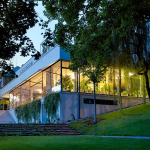
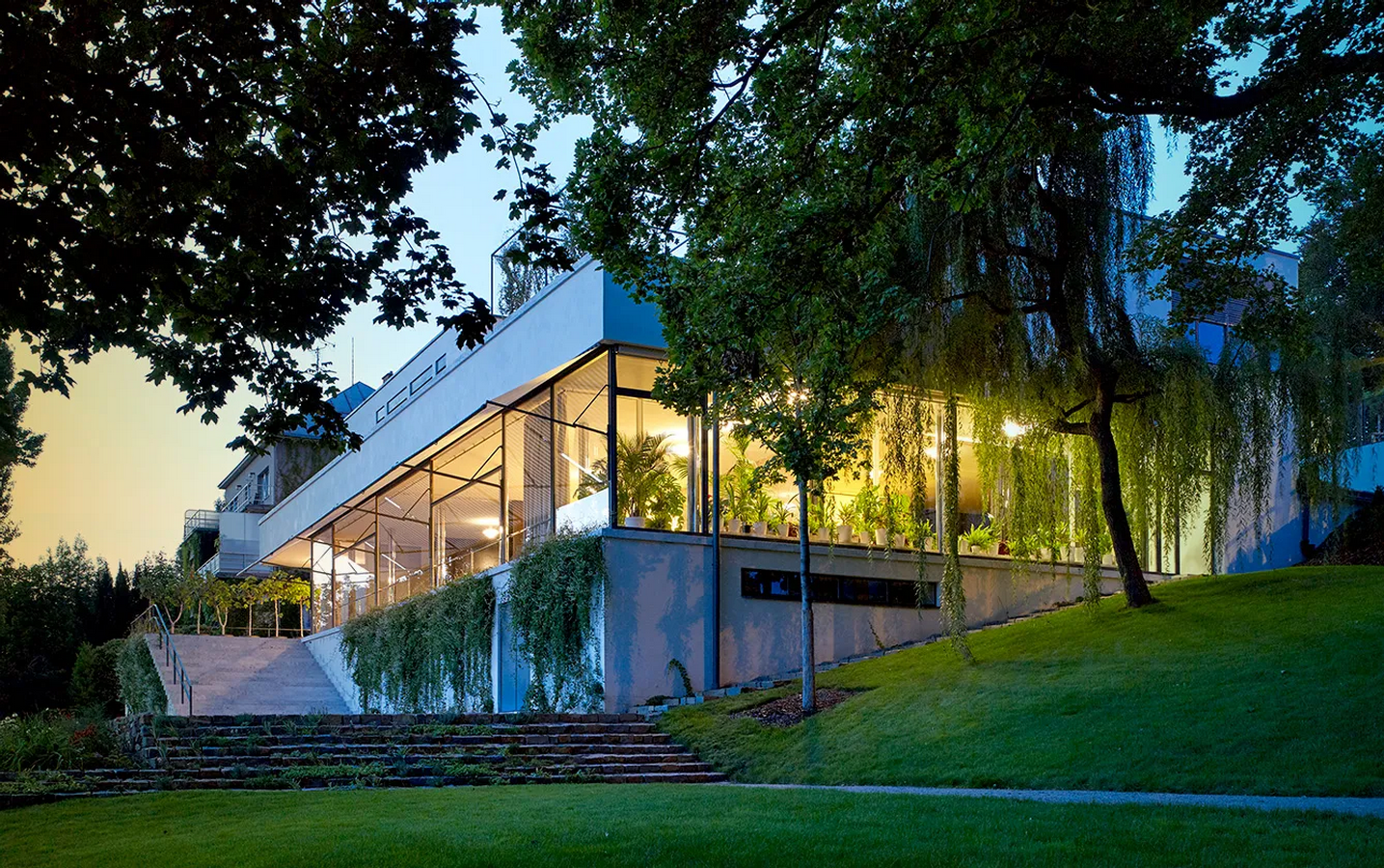
A different attitude toward façade design appears in the work of Mies van der Rohe, where clarity of structure and precision of materials become central. In the Villa Tugendhat, large glass surfaces dissolve the traditional boundary between interior and exterior, allowing the surrounding landscape to become part of the living space. This reflects Mies’s belief that architecture should not isolate people from the world but create continuity with it. The idea develops further in the Seagram Building in New York, where Mies confronts the repetition inherent in modern office towers. Rather than resisting it, he accepts repetition and organises the façade through a calm and disciplined vertical rhythm. By setting the tower back from the street—despite the high value of land in New York—and creating a plaza in front, he turns the building into part of a larger urban composition., where the building gains its presence not only from its surface but from the space it creates around it.
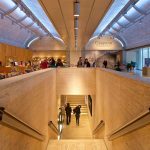
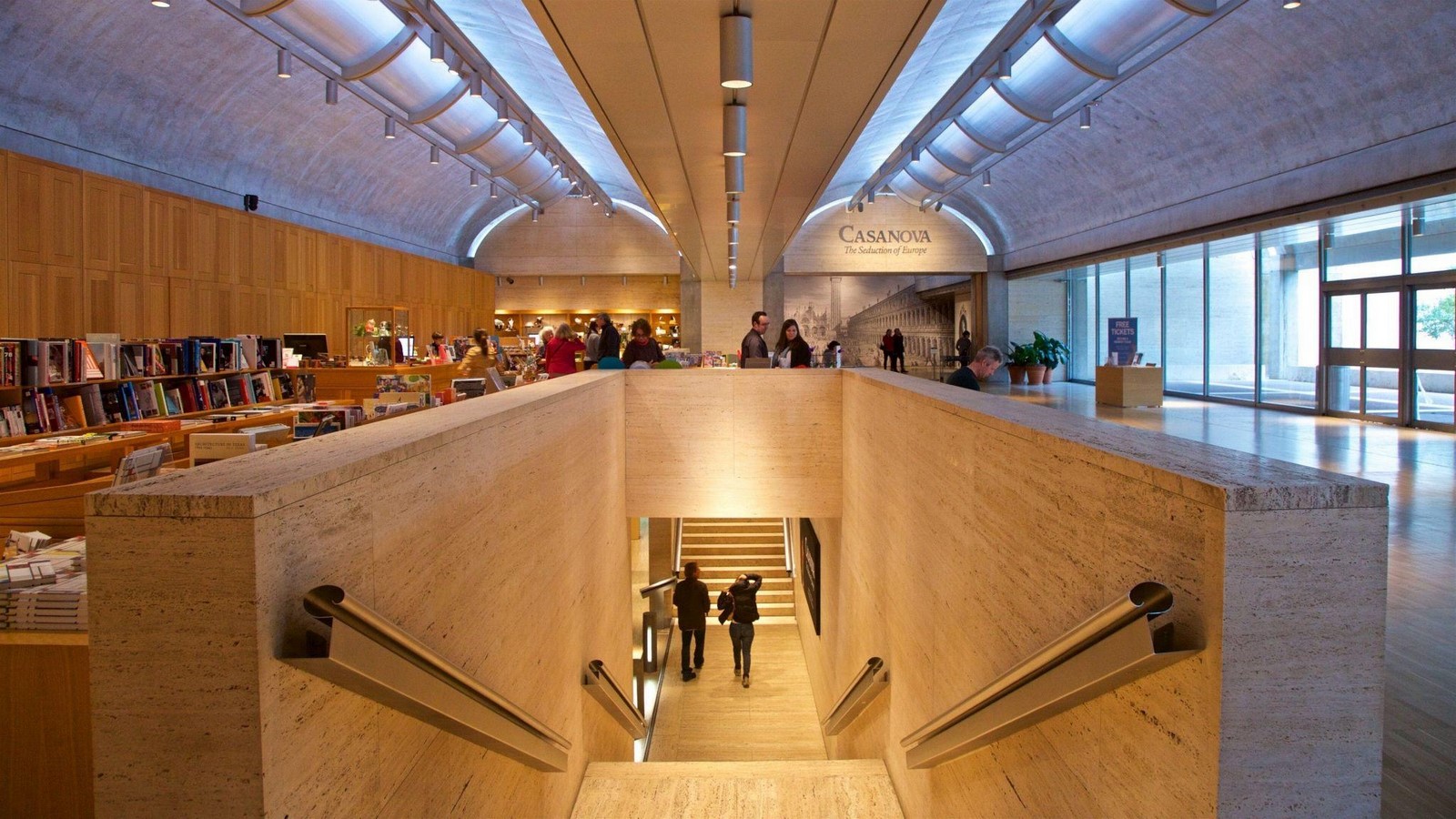
In the work of Louis Kahn, façade design emerges from geometry and light. The Kimbell Art Museum in Texas is composed of a series of concrete vaults that shape both the interior galleries and the exterior form. Narrow openings at the top of each vault allow daylight to enter and reflect off curved metal reflectors, producing a soft, almost silvery light across the galleries. Although the building appears solid from the outside, Kahn opens it up through a sequence of courtyards that bring light and relief into the interior. Rather than treating the façade as a separate surface, he allows it to grow directly from the structural and spatial logic of the building.
Fretton concludes by pointing to several architects whose work demonstrates how diverse façade design can be. In Lina Bo Bardi’s São Paulo Museum of Art, the building is lifted above the ground to create a vast public space beneath it, turning the façade into a powerful urban gesture. Álvaro Siza often allows the form of a building to reveal itself gradually as one moves through the site, while architects such as Charles Rennie Mackintosh, Antoni Gaudí, and Sigurd Lewerentz explore façade design through expressive forms and material character. Even in more contemporary work, such as Frank Gehry’s Chiat/Day Building, the façade can become a sculptural element in its own right. Through these varied examples, Fretton reinforces his central point: façades are not produced through fixed formulas but emerge from the particular intentions and sensibilities of each architect.
A Critical Reflection
Tony Fretton’s lecture is valuable precisely because it avoids presenting façade design as a rigid theoretical system. Instead of offering formulas or stylistic rules, he invites architects to study buildings carefully and understand how façades emerge from a series of architectural decisions. Through the examples discussed—from Corbusier and Aalto to Mies and Kahn—it becomes clear that façades are not independent surfaces applied at the end of the design process. They grow out of the structure, spatial organisation, materials, and the life that takes place inside the building.
One of the most compelling aspects of the lecture is how it reveals the individuality of architectural thinking. Fretton shows that façades are not produced through a universal method but through the particular experiences and sensibilities of each architect. Le Corbusier, for instance, drew from his study of historical architecture to compose façades with strong geometric order and monumentality. In contrast, Mies van der Rohe’s early training in a stonemason’s workshop shaped his sensitivity toward materials and construction, which later became evident in the precision and discipline of his façades. In this way, the lecture suggests that the way architects approach form and façade often grows from their background, experience, and personal understanding of architecture.
Another important insight is the careful attention given to proportion and scale. Many of the buildings discussed appear deceptively simple when seen from a distance, yet their clarity often results from extremely precise adjustments. Window dimensions, wall surfaces, mullion spacing, and material joints are carefully calibrated so that both solid and void remain visually active. As Fretton notes in relation to Aalto’s work, one of the subtle skills of architecture is allowing both the window and the wall to speak simultaneously.
At the same time, façade design must also respond to practical and structural realities. A window, for example, cannot simply be enlarged for visual effect—“if you make a window too big, it fails,” as Fretton remarks—because structural forces, wind pressure, and usability must also be considered. In many of the buildings he discusses, the façade reflects the underlying structural system of the building. Decisions about openings, spans, and materials therefore influence both how the building performs and how it appears.
Fretton also highlights the importance of visual organisation. Beyond the initial intuitive response to form, many successful façades reveal a deeper compositional order imposed by the architect. This visual structure helps organise openings, surfaces, and proportions so that the façade reads clearly at different scales.
Another revealing point is the relationship between plans and façades. Students often assume that the plan is fixed and the façade simply follows it. Yet in practice the two evolve together. As Fretton suggests, architects frequently adjust plans to improve the façade, or refine the façade to better express the spatial organisation of the building. In this sense, the façade and the plan develop through an ongoing dialogue rather than a linear process.
Equally significant is the idea that façades are not experienced only as drawings or elevations but as parts of urban space. Mies’s Seagram Building is a powerful example of this thinking. The façade gains meaning not only from its composition but also from the plaza created in front of it. By setting the tower back from the street, Mies transforms the façade into part of a larger urban gesture where the surface of the building and the space around it become inseparable.
Ultimately, the strongest takeaway from Form & Facades is that façades are not merely external surfaces. They are the visible outcome of architectural thinking. Structure, space, material, and urban context all leave their trace on the face of a building. Understanding façades therefore requires looking beyond appearance and recognising the layers of decisions that produce them.
References:
Korman, R. The Architecture of the Facade.
Knaack, U., Klein, T., Bilow, M. and Auer, T. Façades: Principles of Construction.
Fretton, T. (n.d.) Tony Fretton – Form & Facades. Available at: Watch on YouTube (Accessed: 20 February 2026).