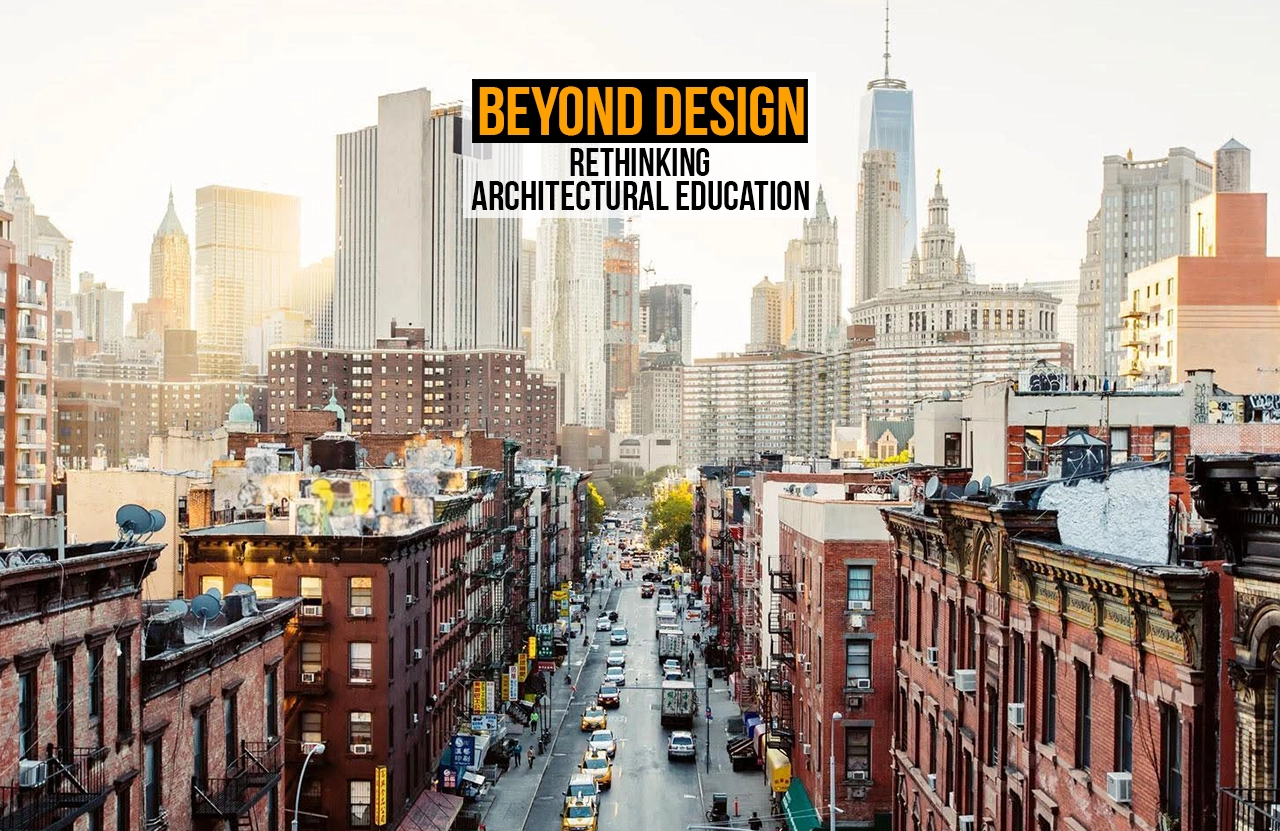
“Architecture is the learned game, correct and magnificent, of forms assembled in the light,”
While this famous quote highlights the artistic nature of architecture, in today’s sense it goes far beyond just forms and aesthetics.Architecture shapes the cities, lives , how people work , heal , learn and interact. As cities keep growing and the need and more complex and global challenges intensify in this field of work, there is an essential need for architectural education to expand beyond traditional design training. It must integrate and involve knowledge from psychological aspects, environmental science, engineering , sociology and digital technology.
An interdisciplinary approach is no longer an optional requirement, but its very essential for preparing the future architects to acknowledge contemporary realities.
Architecture Is Not an Isolated Discipline
The existence of architecture has always been an intersection of multiple fields. The famous roman architect Viturvius , in de Architectura has described architecture through three main principles: firmitas (strength), utilitas (function), and venustas (beauty). These principles essentially demonstrate interdisciplinary. Structural stability focuses on engineering knowledge, functional efficiency demands the understanding of human behavior , whereas beauty connects to art, culture and philosophy.
However, contemporary architecture education often separates these subjects into independent courses and subjects that operate in different methods. This fragmentation of the modulus can prevent students from understanding the practicality of the interaction between various subjects and how they work together in the professional practice. In reality, every design decision affects environmental cost , performance and user experience. An interdisciplinary approach would encourage a newer way in architectural education as well as encourage students to synthesize these ways holistically rather than treating them as unrelated architectural subjects.
Solving Real-World Problems Requires Multiple Perspectives
Modern life problems are very varied and are deeply interconnected to each other. Issues such as affordable housing, climate resilience and urban inequality cannot alone be solved by spatial design alone. The famous urban theorist , Jane Jacobs , in the Death and Life of Great American Cities , cited that the urban cities work on the relationship of social and communal networks rather than merely physical structures. Her works mainly focused on the core understanding of social dynamics in planning and design.
For example, when thinking about the design of a public housing project , it requires the economic feasibility of the locality, the spatial needs, and sensitivity to the cultural and community needs. Similarly, when designing a climate responsive urban planning square , that requires another set of requirements like collaboration between sustainability, climatic changes and physiological aspects. Architectural education should also therefore include interdisciplinary workshops and collaborative studios that actually expose the students to multiple viewpoints. By learning to engage with professionals from various fields students tend to develop critical thinking skills and produce more inclusive and viable design outcomes.

Technology Is Changing the Profession
In the modern era , the rapidly changing technology has also fundamentally transformed architectural education. Today’s architects work with building information modelling(BIM), parametric design software, virtual reality simulations and analytical thinking beyond hand- drafting. Historically there was an integration of art with industrial production in institutions like Bauhaus which has redefined the design education of the 20th century. Similarly , in the present era there has to be an integration between architecture and digital technology.
Interdisciplinary education involving computer science and practicality can help students understand the subject in more deeper terms. For instance, parametric tools allow designers to test multiple structural or environmental variations improving efficiency and performance.
Without these interdisciplinary integration of subjects, architecture graduates may struggle to adapt to the professional environment. Therefore, architecture education must encourage innovation and design thinking together as a whole for better outputs.
Human-Centered Design and Psychology
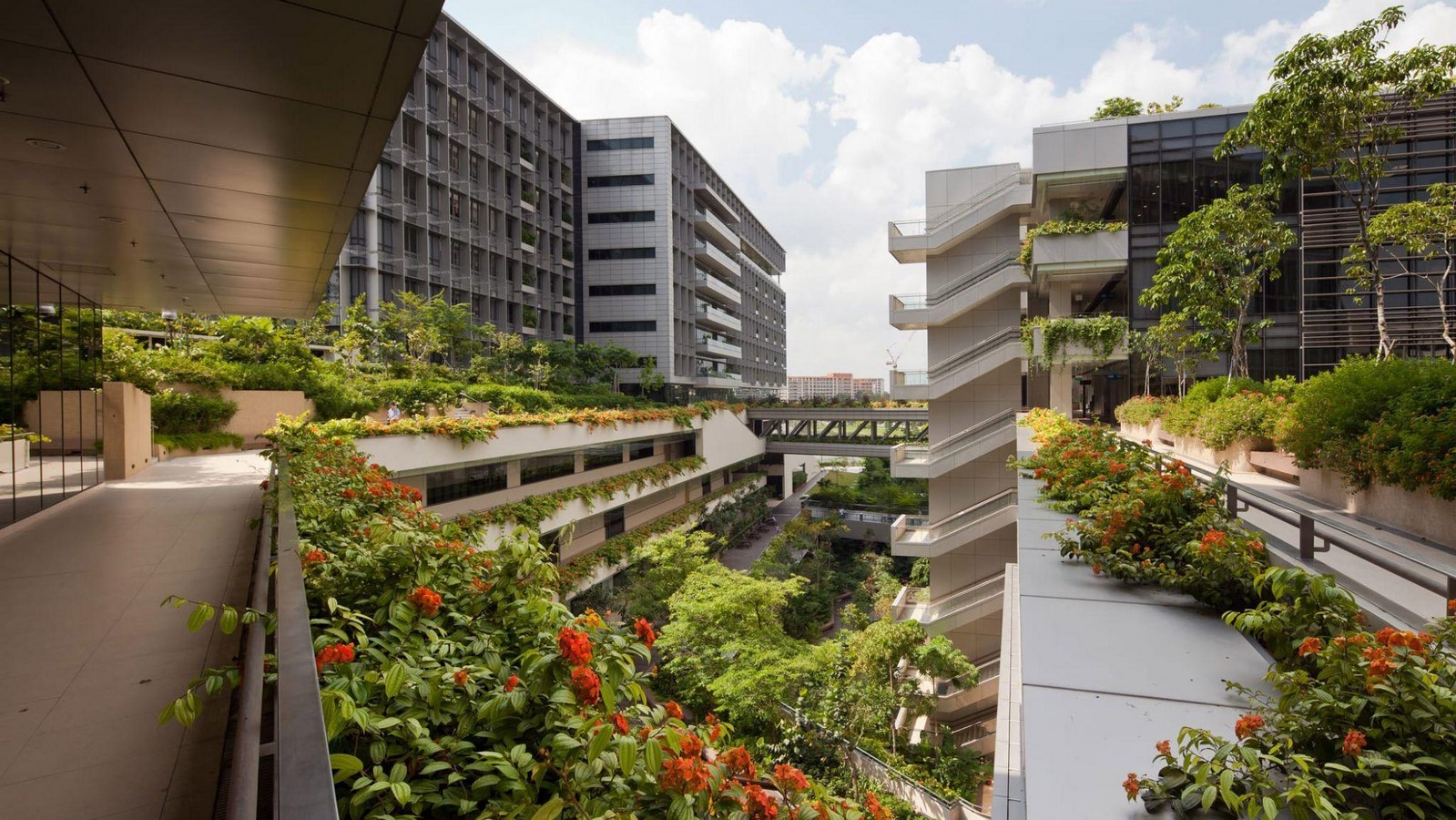
Architecture variously affects human thinking and the way of living by working its way through human emotions , cognitive intellect and well – being. Many psychological studies show that a good well ventilated and spatially proportioned room directly impacts the stress levels, intellect, concentration and comfort of the body. Healthcare sectors also similarly demonstrate that patients recover faster in an environment with spaces that are better lit and have access to greenery. These emphasize the fact that architecture is not only about physical construction but also a psychological experience.
If architectural education incorporates physiological studies, behavioral sciences, students can design spaces that promote mental health and well- being. For example , understanding sensory design is very much essential when designing special schools , which requires a grave amount of knowledge on ergonomics , cultural anthropometry and psychology of the students which enhances the familiarity of the design making it more responsive to the specific community.
Therefore , architectural education being interdisciplinary makes it more emphatic, it makes the architects view the space from different perspectives rather than solely from the designers point of view. Human centred design principles enables better inclusivity and creates a strong design solution.
Encouraging Innovation and Creativity
Interdisciplinary exposure enhances the ideology of the way things are seen, it evolves and becomes a revolutionary creative thinking. Learning from biology, fine arts, economics, and even philosophy broadens a student’s conceptual horizon. Bringing out concepts of biomimicry from nature meanwhile adding the life of how it works can lead to innovative and sustainable solutions.
When architectural education encourages cross disciplinary exploration, students move beyond limitations and develop design approaches rooted in diverse knowledge systems.
Professional Readiness and Collaboration
Architecture practice requires teamwork. Architects work and coordinate with structural engineers, landscape architects , contractors, and regulatory authorities. Therefore, effective communication and collaborative skills are very much essential to thrive in the field.
However, many educational models restrict and isolate the architectural education within the studios without sufficient interdisciplinary engagement. Introducing joint studios, research activities,debates can stimulate confidence, adaptability and capability to handle complex responsibilities in diverse contexts.
Architectural education must evolve from strictly studio oriented to reflecting the interconnected complexity of the modern world. From the foundational principles of Vitruvius to the technological innovations of the digital age, architecture has always been in between art, science, and society. Today’s environmental crises, urban challenges, and technological transformations demand even deeper integration of all the disciplines.
Interdisciplinary learning does not weaken the architectural identity, rather it strengthens it by expanding its foundation to a deeper level. The question is no longer whether architecture should be interdisciplinary, but whether it can remain relevant without it.
REFERENCES:
- Vitruvius. (1960). The Ten Books on Architecture (De Architectura). Translated by Morris Hicky Morgan. New York: Dover Publications.
- Jane Jacobs. (1961). The Death and Life of Great American Cities. New York: Random House.